Topics / Creative decisions
Influence & homage
102 commentaries in the archive discuss this, with 264 total mentions and 35 sampled passages on this page.
Filter commentaries
Filter this topic by the film's decade or the type of commentary.
Showing 18 of 102 commentaries
Clear filtersBy decade
Across the archive
ranked by mentions · click any passage for the moment in the transcript
-
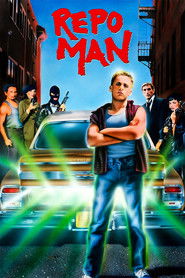
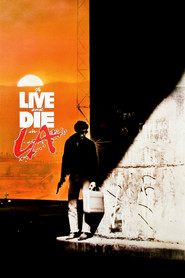
director · 1h 31m 6 mentions
Alex Cox, Michael Nesmith, Victoria Thomas, Sy Richardson + 2
-
Si's a real cool cat in real life, too. Well, this is my film to try. I had quit acting for two years and did nothing but go to school. So when I came back to this film, it was Si Richardson's doing his thing. I had to find my place in this industry. And my place was supposed to be a black Humphrey Bogart. Oh, yeah. That's the inspiration. So the first thing you do is steal a Camaro. That's what I would do. Yeah.
31:34 · jump to transcript →
-
Oh, here comes a great line. And there they go. And how long did that take? 60 seconds. Wow, that's beautiful. This is my favorite scene. Yeah, it's one of the best scenes. We've got a little homage to Robby Müller here in Kings of the Road, the glasses. The glasses, yeah. I love this, the tape.
32:02 · jump to transcript →
-
Fox and McTaggart Pharmaceutical Company. Because J. Rae Fox was J. Rae Fox and Lynda Burbank's previous name was McTaggart. What are they humming there? Valkyrie. Right, right, right, I forgot. And that was meant as a little homage to Clockwork Orange to show you that they're not really as bad as... No, I mean, it's really hot. Very nice of you, Al. Yeah, it's kind of like a mix between Apocalypse Now and Clockwork Orange. Exactly. Exactly.
47:27 · jump to transcript →
-
-
-
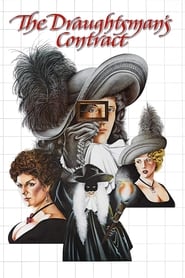
Peter Greenaway
a long way back to be influenced by classical Roman drama, but of course very much organized around contemporary subject matters. But there was a way in which the actors on stage presented themselves very formally and very frontally. You must remember that the theatrical apparatus of that time would not have allowed for very many great theatrical effects. Notions of artificial light would be very limited.
18:37 · jump to transcript →
-
Peter Greenaway
sheer use of color. I can think of a number of films which would relate directly, in a sense, to be a homage to painting. I can think of films based upon the paintings of Renoir, for example, or even Luce Lautrec, which would deliberately pastiche and borrow the coloring. But apart from one or two films, maybe like Godard's Pierre Le Fou, who uses primary colors in a very, very self-conscious way.
1:02:30 · jump to transcript →
-
Peter Greenaway
was a whole new phenomenon again influenced by a frenchified italian painting i've mentioned the names claude lorraine and poussin whose influence was now pervading uh france and traveling across the continent to england and very shortly a few years after this period
1:23:44 · jump to transcript →
-
-
-
Tim Lucas
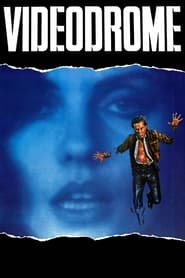
Civic TV was inspired by Toronto City TV, launched there in 1971 on UHF Channel 79, very much a progressive maverick station. One of their early distinctions was a Friday night broadcast called Baby Blue Movies, which ran softcore erotic features after midnight. Because of the City TV connection, it's often said that Max Renn was based on its founder, Moses Znaimer, but that's not really true. Max's partners, Moses and Raphael, are played by Reiner Schwarz and David Bolt.
4:48 · jump to transcript →
-
Tim Lucas
Its cover art by H.R. Giger may have influenced some of this film's ideas. This was practically Lally Cadeau's first feature film, but she became a major Canadian television star in such shows as Hangin' In, Road to Avonlea, which won her the Genie Award for Best Actress in a Continuing Leading Dramatic Role, and Five Years of X-Men, episodes before the feature franchise was launched. Her character of Rena King is said to have been inspired by Dini Petty,
9:17 · jump to transcript →
-
Tim Lucas
My wife Donna reminded me that there was a payphone on this set, and that during the scene blocking, Jimmy asked David if he might go over to the payphone and fish around inside it for loose change. David vetoed this idea, but as I look back, I think Jimmy must have been inspired by Roger Corman's cameo in Joe Dante's The Howling, which was in theaters around this time. Roger is briefly seen in the film, waiting to make a call in a telephone booth, and when he gets inside, he fishes around in it for loose change.
48:19 · jump to transcript →
-
-
-
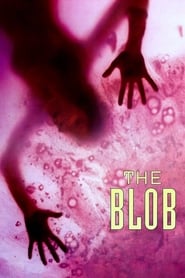
the man who just dropped two and a half hours of an interview that will probably be cut down to 11 minutes. I couldn't stop talking about myself. They had a million questions. And also the blob itself, co-writer and director Chuck Russell. Thank you. Welcome. Thank you all for joining us. Guys, this is a commentary. 31 years in the making for me, even before there were commentaries, I was hoping to get you guys in the room because this film is the film that made me want to be a filmmaker. I was so influenced by this film.
1:08 · jump to transcript →
-
Ghost Town USA to having a huge football event, like, that was designed in the script? Oh yeah, that's from the script. The whole town is at the game. It didn't, it helped the extras budget though. I didn't have to populate the town at that point. This is a lot, this is really inspired by my life in Park Ridge, Illinois and some of my crazy friends. Honestly, some of these stories are true. Some of the interactions with the kids and all this.
3:43 · jump to transcript →
-
It's not like a third party, you know. These are all inspired by things that were going on in high school. Yeah, but like you were just saying, like there's four to five different uses. By the way, you're right. The tentacles were very good right there. Yeah. Those were great. So now you're looking at a sideways car in a gravity gag. What do you mean by gravity gag? When the blob comes up over him a couple of shots ago.
31:52 · jump to transcript →
-
-
director · 1h 24m 4 mentions
The Naked Gun: From the Files of Police Squad! (1988)
David Zucker, Robert K. Weiss, Peter Tilden
-
He did all this. There he goes. He wiped that guy's forehead himself. Here's our homage to the Three Stooges. Not many people realize this movie's based on Shakespeare's The Tempest. Yeah. Which started the same way.
2:20 · jump to transcript →
-
A lot of stuff was cut out of this scene. After testing? Yeah. Actually, we discovered that stuff that took a long time to shoot, was enormously expensive, was not as funny as Nice Beaver, so... Out it went. The cheapest stuff got the biggest laughs. Now, this started off as an homage to Jacques Tati. Jacques Tati, yeah, we had them. And ended up as a critical care patient in the Joe Clinic. This is, yeah, we had to apply the paddles to this scene. Yeah, got to defibrillate this.
44:16 · jump to transcript →
-
Cut to the statue's smile. See, he's a little dazed, and that's how we... That's almost a Clockwork Orange homage. It is. It is very good. Thank you. This is Mayor Bradley's office again. This is Nancy Marchand. This is the real Mayor Bradley. This is the real Mayor's office, because we were so cheap.
47:56 · jump to transcript →
-
-
multi · 2h 34m 3 mentions
James Cameron, Gale Anne Hurd, Stan Winston, Robert Skotak + 8
-
Pat McClung
The Sulaco. This was a Syd Mead design that was fiberglass body. Some of the detailing was based on that Syd Mead sketch and then Pat and Dennis and myself did a lot of the fine detailing for the front, the side, the top, all the microscopic detailing. This was not a particularly large model. It was about five or six feet long. The detailing we would do after hours because we had to be on the stage to shoot all this stuff, get everything organized, and once everybody went home, we'd go up to our little effects office and start another shift of microdetailing. It was so cold, we were wearing our winter coats. It was hard to move around and use these tiny little Exacto knives, and these pieces of plastic that were maybe half the size of acomma on a textbook, sticking them on meticulously, one after the other. So this was our biggest set, I guess. Or the biggest volume, I guess. The hanging chains, these little widgets and things, this was all inspired by the tone and feel of the opening scenes of Ridley's film. We were trying to create that same sense of the ship having its own life and being an eerie, interesting place.
25:57 · jump to transcript →
-
Bill Paxton
My crew actually helped dress this whole set because it had to be cocooned bodies, and so we created all these bodies and all the dressing over it, to help out the art department. I remember being terrified that the set wouldn't be ready in time. Because it was very complicated. Everybody had to pitch in and make the movie work. It was a lot to do in a short period of time. No one else would have really been able to do it, even this stuff. I even doubled for Vasquez. Did you? Do you remember the shot? Of course I remember the shot. I'll show you later on. Our homage to what everyone needs to see in this movie is about to come up. This was a very tough scene to create, which was the chestburster scene. Again, a duplication of head and entire body and then we built an entire puppet of her for the chestburster and the burn sequence.
1:10:46 · jump to transcript →
-
Bill Paxton
James Horner came up with this music sting here and I always thought it was totally over the top. When I saw the whole film put together with the score, I thought "No, that's what we need." I thought "How can you sting somebody opening their eyes?" But it works. Oh! Mm-hm. She shouldn't have had the bangers and mash. Kill it. Fry it. Come on. What are you doing, Hicks? Bad-ass nasty shot. That's a nasty shot of that thing. That's a good shot of it there getting fried. Gosh. Here they come. I think our chestburster looks a little cooler than the one in the first film. Stan Winston's guys really did a good job on it. John Rosengrant and Shane Mahan. Look who's back. Another one of our problems to solve for this movie was creating the whole army of warrior aliens and being legitimate to the original movie but having to improve on it for movement and for the look of being able to study them. In the original A/ien they were rubber suits and very difficult for the actor to move around in. And yet he was very tall and very skinny. And Jim wanted to do a lot of very interesting moves with the warrior aliens, so we came up with a technique to create the suit that really involved a lot of spandex and pieces on it. And then we designed the set pieces for the aliens to fit into the walls, like the one that is behind him there, so that the camouflage would work. An enormous amount of wirework for all of these stunt alien performers, which required that the alien costumes be extremely user-friendly. This was inspired by the scene in the first film where Dallas is in the air vents and they see the signal moving and get a little freaked, and Veronica Cartwright says "Get outta there" and he makes the wrong move and gets killed. That's one of the most suspenseful scenes in the first film. I took that idea that they're getting these readings that are getting them spooked and then they make some bad moves. Form follows function. This is a perfect example of it. You start with what it is you wanna achieve, and once you have that, you can design it, so the actions and the performance is consistent with what you want in the finished film. Believe it or not, very few people work that way. They just wanna come up with something that's cool, and then you spend hours and hours trying to get it to work for the ultimate film. I happen to agree with Gale. My background is as an actor. I really come from a place where the creatures and the characters are wonderful to look at, but it's always about their performance. We have to figure out how they're gonna be able to act, and create a good performance, or it's a waste. And so that's really always at the top of the priority list when we're creating any creature - what is it gonna do and how is it gonna do it? What he does is create a character, and that's why I think his work is So unique. When you look at a film, you can always tell who's done the creatures, if they actually have a character. Because he creates a character that can act and perform. The whole film builds to this moment, where the power transfers from the authoritarian structure to the individual who takes action. Ripley's not supposed to do anything. She's just there as an observer. We're coming up to a sequence where Sigourney takes control of the APC and this sequence is comprised of live-action shots, but as it comes down this hallway and is banging into pipes and walls and sparking, that's all done in miniature. In some cases, the cameraman - cos the set was mounted at an angle - was on a cart, a wheeled cart, and was rolling backwards as the radio-controlled APC was coming at camera. There was a point when he was just put into free fall, rolling backwards downhill, photographing what was in front of him as he went backwards. Here we go. - This is the shot. This is also miniatures. There was a shot with the full-size when the brakes didn't work, and took out the camera, and luckily it was a remote-operated camera. It was the shot where we were actually crushing an alien warrior, when it broke through. This is the shot, actually, when it took the camera out. Then there's another shot where it takes down an alien.
1:12:00 · jump to transcript →
-
-
-
Paul Davis
here we're gonna have one of the uh one of the it's now become a huge horror trope i mean john took this from repulsion but i think everybody who who does this little trick now with the mirror does it as an homage to an american wolf in london
43:02 · jump to transcript →
-
Paul Davis
just turned around a corner and gone from Piccadilly Circus to Clink Street, which is down by Borough Market. And this street looks completely different now, but it's still there. You can still go down and pay homage to the final resting place of David Kessler. There was a moment here that was actually cut, where one of the police officers actually chases the wolf first.
1:31:44 · jump to transcript →
-
-
director · 1h 30m 2 mentions
A Nightmare on Elm Street (1984)
Wes Craven, Heather Langenkamp, John Saxon, Jacques Haitkin
-
Was that a series of articles? Yeah, it was three articles spread over a year and a half. And the LA Times never correlated them. They never commented from one article to the next. Incidentally, that movie was Sam Raimi's, I believe, Evil Dead. Because he had to put a poster of one of my films in the basement of one of his films. Who's an homage to whom? Sam Raimi. This is so romantic that he climbs up my rose trellis.
34:55 · jump to transcript →
-
She's having a spasm. She's off the scale. That's my homage to The Exorcist. We couldn't afford to fly her. The famous gray streak.
50:23 · jump to transcript →
-
-
-
It was like a rock musical or whatever. So that's a fucking nonsense, really, if you don't mind my French. The actual look of it was influenced by a French graphic artist, illustrator called Nicollet and Caza. And it was something that Clive and I had discussed and looked at their works, Nicollet and Caza.
12:14 · jump to transcript →
-
cemented in some critics' minds the idea that the film was influenced by pop video, that that kind of music seemed to have that sort of MTV vibe to it in a way that you'd not anticipated. Yeah, undoubtedly. I mean, nowadays, it's very modern, this kind of music, isn't it? It's in practically every film. Well, the guys that were in Frere ended up forming, as you probably know, a group called Underworld.
1:21:41 · jump to transcript →
-
-
-
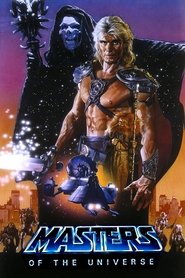
Gary Goddard
These guys are mine. This was inspired by one of the renderings that Claudio Mazzoli did, a production designer. Skeller's coming into his own, making preparations for the moment the great eye opens. Chosen by destiny! Frank delivers just a great performance. The details, the costume, look at the staff he's holding, every element, every amount combines now to the total end result. Witness to it.
1:27:27 · jump to transcript →
-
Gary Goddard
It was done two months after the production shoot. Now here, this was a little homage to Wizard of Oz. The idea here was this is, you know, after the battle, everyone's returned. You can see everybody's cleaned up. Detectives decide to stay there. Life is better on Eternia. Why would he go home? Gwildor is a bit of a tribute to the Cowardly Lion, the bows and the hair. And in fact, there was a larger scene here.
1:36:54 · jump to transcript →
-
-
-
I had that sort of... I had that in me, but I didn't do it, you know, I didn't do it as much. And then I really started hanging out with women more during the making of the movie. And I was kickboxing all the time, so I wasn't really... I just was... I got inspired by seeing in the reaction women had to Lloyd that, man, maybe they don't need Fabio. You know what I mean? Like, they... They... Certainly they like good-looking...
49:53 · jump to transcript →
-
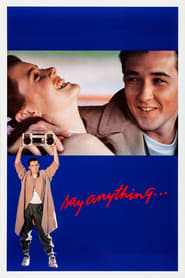
And that's how we came up with the end of the movie. And it's a little bit of an homage to The Graduate that ends on the faces of two people facing a dare-to-be-great situation. But it ends on them waiting. Yeah, it ends on them waiting. Where's the ding? It's coming. Any second now. Any second now.
1:34:28 · jump to transcript →
-
-
-
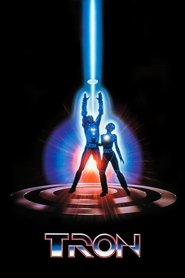
technical · 1h 35m 1 mention
Steven Lisberger, Donald Kushner, Harrison Ellenshaw, Richard Taylor
-
director · 1h 29m 1 mention
Jeff Kanew, Robert Carradine, Timothy Busfield, Curtis Armstrong
-
-
-
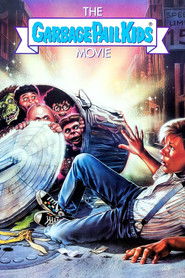
cast · 1h 36m 1 mention
The Garbage Pail Kids Movie (1987)
Mackenzie Astin, Katie Barberi, William Morris
-

Related topics
Other topics that frequently come up in the same commentaries.