Topics / Performance
Improvisation
65 commentaries in the archive discuss this, with 154 total mentions and 68 sampled passages on this page.
Filter commentaries
Filter this topic by the film's decade or the type of commentary.
By decade
Across the archive
ranked by mentions · click any passage for the moment in the transcript
-
director · 1h 37m 9 mentions
John Cameron Mitchell, Justin Vivian Bond, Sook-Yin Lee, Paul Dawson + 1
-
and I wanted a totally new character to fit into that slot of the film. And she gave an incredible audition, made me crack up, she made me cry. But it was really a year into the workshop process, which is the way we created the film, which was through improvisation over two and a half years with all you guys.
2:47 · jump to transcript →
-
And he's gorgeous. He was hot on you, too, honey, you told me. He was? Why doesn't anybody ever tell me that in person? Well, you know. But he is so beautiful, too. You know, stunning. I love fighting with him. This was the funnest scene to shoot. You guys were so great at improvising here. When his purse spilled out, he had pot, and then all his pot spilled out. That's an...
25:52 · jump to transcript →
-
wonderful musician and performer. What did your very best orgasm feel like? This scene was really long. The original version was like 15 minutes. And we improvised our heads off for this, right? So it was such a looseness. There's JD there. That was just so comfortable. We have a nice long version on the DVD.
27:17 · jump to transcript →
-
-
-
So this, uh.... What's interesting about a lot of this movie is we would always put fake snow down. The foam and stuff. - The foam, and that's really... We had a Wisconsin ski... A bunch of guys who worked for this ski resort in Wisconsin put down snow. But... - That poor statue. Yeah, the statue was a running gag, and this guy... A lot of this movie was made on an extremely small budget. At the time, the picture was at one studio... ...and that studio didn't wanna make the movie, because of a $2-million difference... ...and it went over to Twentieth Century Fox. And we still were... We still made the film for a little above $18 million... ...which at the time was still a small budget. So we had to make things stretch, which we'll talk about through the picture. One of the great things about working with Pesci, I have to say... .IS his improvisational skills were terrific. And it was because of his training with Scorsese that... ...even on a picture like Home Alone, really comes in handy. He's a very funny guy, Joe. - Yeah. And his comedic instincts were really something I'd never seen before. Little snippets in pictures like Raging Bull and Goodfellas. But his ability to improvise was just phenomenal. And then John Heard. I cast John Heard because John Heard was someone I was always a big fan of. He was in this picture... It was called Cutter and Bone. Now it's called Cutter's Way. And his performance should've gotten an Academy Award. I've never seen it. It's Jeff Bridges and John Heard, and he is just amazing in that film. I was a huge fan, and it was always a dream to work with him. He also did this old film called Head Over Heels. And he was kind of a leading man back in his day. He's just a wonderful actor... ...and another guy who didn't really know why he was in this movie. At the time, he was sort of like, "Why am I doing this?" I remember feeling a certain amount of discomfort from him. He was like, "Why do I have to do this? Why am I in this kids' movie?" You know? "I'm a good a--" Understandable. No one really knew what this movie had the potential of becoming. We had always hoped it would be successful, but we never knew. Um.... Pfft. I always knew. You always had an idea. - I always knew. Now, this scene. Do you remember coming in on a Saturday to rehearse this scene? Yeah. - We had to rehearse this because it was so... Which was so chaotic with everybody. We ate so much pizza. I didn't wanna eat lunch. And this is something that was interesting. We... You'll notice that there's a rare shot in the film where... There's your brother. - Yeah, there he is. How are you guys--? He's working now, right? He's doing very well. Oh, yeah. He's doing very good, very well for himself. Un, this is typical of the style of this movie. Not the vomiting, obviously... ...but the separation of actors in certain scenes. Because Macaulay's time was so valuable... ...we needed to shoot Macaulay separately... ...and sometimes other kids as well. So you'll always see... I tried to block sequences where I could sort of keep Macaulay off by himself... ...and keep the other actors in another space... ...so I could shoot people separately. Child labor laws again. - Child labor laws. And we're-- And Kieran had to reshoot the chair in the face, I remember. Oh, yeah. - Like, he had to come back later. He was upset he had to get his hair cut like Fuller again. Oh, he was? - Ha-ha-ha. Well, he-- We made a special, very light rubber chair... ...so when it... - Yeah, that's... Yeah. That's-- I remember that. Catherine O'Hara was someone who I had, uh... ...Just loved her work on Second City TV. - Yeah. I mean, I was, uh... Aside from Saturday Night Live at the time in the '70Os... ...Second City Television was the-- Sort of the place where you learned about comedy. And for me it was... I was just such a huge fan... ...SO It was, again, a real honor... ...to be able to work with her on both of these films. Yeah, no, she's incredible. Even just the stuff she's doing now. She's still--? Oh, it's great. It's great stuff. Both of his kids are still going to school here. I guess he missed the family.... You got a pretty good cast. Yeah, it's kind of interesting for a film that... But we treated it... The weird thing about this film... ...and the reason I think the film has kind of stood the test of time for a lot of kids... ... IS because we always treated it with respect. We never felt that we were making a movie for kids. We were making a movie for the parents as well. It had a lot of appeal. And you never-- You wanted to... You wanted the photography to have a certain elegance about it... ...and the camera to be moving. And it was really never... So many times today, people try to make kids' movies... ...and they always cheapen them. And we never-- I mean, certainly we got cheap with our jokes. Let's not pretend that we didn't. - Ha-ha-ha. Oh, yeah. No, I mean, it's Three Stooges, you know? - Anything for a laugh. I
7:04 · jump to transcript →
-
This is a... You know, this is an interesting scene... ... because, again, the comedy... These two really worked well together. You believe them as a couple... ...and the comic timing is really pretty sweet, I have to say. I remember when I watched a lot of the dailies... ... they would always fool around whenever you... You wouldn't yell, "Cut," and they kind of just... They'd keep going a little bit and do some silly stuff. I think they really-- You know, again, it was a kind of... At times, it was tense being on the set... ...because these actors, who are so good, didn't know why they were there. And on the second one, that eased up completely. Because everyone felt that they had a responsibility... ...because they knew a lot of people would see this movie. Now, here's something I always felt pretty horrible about because... ...particularly once you have your own kids, this is the last thing you want them to do. This was a big worry, I remember. - Oh, yeah. Whether or not this was gonna stay or not. See, no one really ever understood when I'm lining up the sled... . that it doesn't exactly line up with the door. There's people who watch it who actually giggle, I remember... ...saying, "That doesn't line up. How is he gonna do that?" Yeah. You would've smashed into the wall. Yeah. But that was Larry. I remember watching the dailies. That was hilarious. Larry, our stuntman. - Yeah. Stuntman, literally. - He was probably 20... No, maybe he was about 30 back then. - Yeah. And he was your size. - Yeah. He was built like me too. Now, he was amazing. He would do anything. There's one moment coming later when we'll talk about Larry. Where he falls? - Where he falls, and he froze that day. He didn't wanna do it, but Larry had... As most of the stuntmen did in this movie... I don't know if these types of stuntmen exist anymore. Yeah, I know. - Willing to kill themselves for... It's amazing. I have a lot of that, yeah.... ...a lot of memories of these guys doing all kinds of crazy stuff. Oh, yeah. - They were my favorite, the stunt guys. The stunt guys were great. - When you're 9... ...they can do all kinds of neat stuff. - That's true. Ha, ha. Oh, yeah. They were always my best friends. We'll talk about-- A little later, we'll talk about Troy Brown and Leon Delaney... ...the two stuntmen for Joe Pesci and Daniel Stern, who were truly... Truly went above and beyond the call of duty. I haven't spoken to them in years... ...but they probably are still in a great deal of pain... ...because of some of this stuff. Daniel Stern is interesting... ...because Dan Stern was my first choice for this role... ...and the studio didn't wanna pay him at the time. We cast another actor, unfortunately-- This is the only time in my career this happened. and we did a screen test with the other actor and Joe Pesci. And the screen test was flat... ...and the other actor just couldn't really improvise with Joe... ...and you didn't believe him in the role. And I had the-- I had the horrible situation of actually telling the actor... ...I couldn't use him. Basically firing him. Oh, boy. And then the studio then understood. They saw the screen test, and they were willing to hire Danny... ...which was really an amazing working situation for me. He's one of the funniest guys I've met. And he truly was up for anything, as we'll see later in this commentary. I still have that sled in my office.... In my office here in San Francisco. I just saw it before I came over here. Signed by everyone. Signed by everyone. That's really cool. - Yeah. And when I get a little older, and things start not working out in the career... ...1 can sell it. - EBay. Yeah, eBay.
25:39 · jump to transcript →
-
- I love this guy. I love when he says that. It's just, like, a great improvised moment. "I
39:21 · jump to transcript →
-
-
-
Darren Aronofsky
Now we introduce little Jenna. She was created to help create some sympathy for Max Cohen and also to set up his sort of math brilliance. Very quickly with this math problem, we set up his, you know, his incredible skills in math. And the second math problem was actually improvised to have him keep going on .181818.
2:42 · jump to transcript →
-
Darren Aronofsky
One take, I was like, Sean, just keep saying 1-8, 1-8, 1-8, and walk down the stairs the whole way. And when he did it, everyone applauded. It was really great. This shot, the Tai Chi shot, is perhaps my favorite shot in the film. And it was actually improvised. We showed up on set at 8, 9 AM. And there was a bunch of people doing Tai Chi. And I talked to my first AD, Laura Zuckman. I was like, let's shoot it. Let's get them. And they were up for it. So we did it.
3:08 · jump to transcript →
-
Darren Aronofsky
some of my interest in the subject matter in Pi. This was Mark Margolis' improvisation, sticking his pinky into the fishbowl, which I loved. And of course, you know, he improvised, and so we banged him for a close-up.
23:44 · jump to transcript →
-
-
director · 1h 29m 6 mentions
Jeff Kanew, Robert Carradine, Timothy Busfield, Curtis Armstrong
-
Oh, you poor bastards having to sit through this. Now, they told me they were going to put good violin over me, and you guys had to sit through me practicing. I remember that. And here's a semi-scripted, semi-ad-lib card game, which became a running bit between Booger and Takashi. Yeah, you guys made that up. That was improvised because once we were in the place, he just came through and told us to make up something. Yeah.
21:01 · jump to transcript →
-
Whose idea was it to keep your glasses on in the shower? This little scene was not in the script, but it seemed that after this little spat in the shower, we needed a healing moment between our heroes. And so we just set up the camera and said, why don't you guys try to make up before you go to bed? And they ad-libbed this right down to that little tandem eyeglass removal.
21:58 · jump to transcript →
-
There's Michelle Meyrink. And who didn't get this part, I'll tell you who didn't get this part, am I allowed to say? Sarah Jessica Parker auditioned Joan Cusack, Jami Gertz, and we picked Michelle. I actually think Julia Louis-Dreyfus came in, too. Tony and Michelle also did a lot of improvisation in their scenes together. This was an animation that is kind of a... You have to sort of suspend your...
23:21 · jump to transcript →
-
-
-
were so exhaustively trained and that also you guys were really putting a beating on each other. There was nowhere to hide. No, and we wanted... You're looking for the accidents. And so there's moments where I really get kicked and I'm down on the floor and almost in the latrine. That was improvised. Those guys were so fantastic. All of their dialogue is improvised. I didn't know anything they were saying until...
30:59 · jump to transcript →
-
Who reviews the movie? Okay, now, hold it. I love this moment from Sean. I love this moment. Henry realizes. Yes, I'm starting to tremble. And I like this. And I like his. What? I'm sorry. It is. I love the what. Yes. When you wrote that line, it's just, look at him. It's just the job. No hard feelings. Everybody here was having fun. Okay, now, Alec. Alec, improvised line.
1:26:11 · jump to transcript →
-
That was improvised as well. And it was, again, just Alec, what he brings to it. Just having so much fun playing this character and being in the movie. And the audience are in the palm of his hand. Every time I've watched this movie with a crowd. They just, and you just love it. And the choice Lorne made here. This music is the end of a movie. Yes. And it was a really bold one.
1:26:44 · jump to transcript →
-
-
-
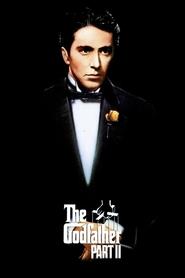
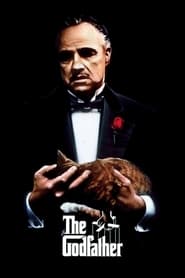
Francis Ford Coppola
improvising and adding lines and touches of his own. He would basically rewrite his part to make it bigger, but it was always really good, so that was always fun. And definitely he made a contribution not only for the interesting senator, but for some of his own dialogue that he came up with.
16:16 · jump to transcript →
-
Francis Ford Coppola
I always like to use a lot of improvisation when we rehearse and big, long improvisations. And what we did in this sequence in Lake Tahoe in Godfather Part II is we had the cast there a couple of weeks right on that location. And I went around and said, okay, this is...
17:37 · jump to transcript →
-
Francis Ford Coppola
Sonny's widow and where she lives and she lives in this house and this is Duval and so on and so on. Go around in places where Kay lives and had them spend an entire day, including Michael, basically doing a day's improvisation of like playing scenes about doing business or the kids and then going across the courtyard and then going into one of the other family members house and improvising scenes with them and they did it all day.
18:00 · jump to transcript →
-
-
-
and who knew it could improvise, and Fran came out of nowhere, and this is her. She's just going here. She has no... None of these lines are written. She's just... She's so perfect. She's just smacking it. Yeah. We went to every major studio in town, I think, with this 20-minute demo under the four of us, Rob and Chris and Michael and I, and you've never seen blanker stares on the faces of major film executives after they'd seen this 20 minutes, and they'd say...
7:05 · jump to transcript →
-
He would be running around the room like a real documentary cameraman. That's why he had that documentary experience. Rob would be walking, you know, crab walking with him, whispering in his ear, you know, because he might have a better sense of whom... Of where the focus of the scene was going. But Peter's instincts were very, very good. And those pans off of people, because the improvisation mimics what would really happen, he was able to instinctively just do what he would do as a cameraman if this were a real documentary.
15:32 · jump to transcript →
-
Because it was in documentary form, if you have a written script, there's no way to really make that seem spontaneous. There's just no way to act that. And we just knew that that was not going to work. And we knew enough people that could improvise convincingly to portray this as a real life experience that we felt confident that this would work. I did go to one screening where they showed the four and a half hour version. There's a bootleg copy of the demo that's around.
32:12 · jump to transcript →
-
-
-
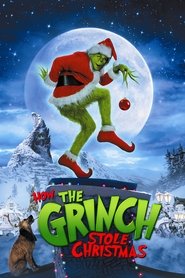
Ron Howard
Some of my favorite scenes in the movie are just Jim Carrey alone in his cave. Again, it gave Jim such a chance to improvise and play with the ideas.
21:10 · jump to transcript →
-
Ron Howard
That was actually a line that Jim thought of on the day for Taylor. So he's not only improvising for himself, but it was like having a world-class joke writer on the set with you at all times.
40:57 · jump to transcript →
-
Ron Howard
There's my dad again. Another improvised line on the day.
50:45 · jump to transcript →
-
-
director · 1h 45m 5 mentions
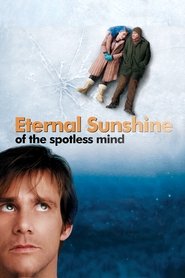
Eternal Sunshine of the Spotless Mind (2004)
Michel Gondry, Charlie Kaufman
-
It was interesting to shoot this moment because most of the time Jim was really in the bed and his character was really restrained and he saw those two guys, those two young actors coming in and improvising and
44:07 · jump to transcript →
-
In between the texts, he would jump on the bed and sing this crazy song called Pecan Pie, which is like a mock-up of Elvis. And he felt, sometimes I think he felt challenged by those guys. But it was funny the dynamic between Mark, Elijah and Kirsten, because Kirsten, she was not so happy to have to improvise. And they were getting so much of the script that sometimes she would get pissed off.
44:37 · jump to transcript →
-
So here you see the smoke again. Yeah. That's Kate improvising. Remember this line about, do you ever inhale hairspray? Yeah. I stopped because it caused cellulite. Yeah. We didn't keep that, but that was her line she improvised. That was in her apartment, the first time that they're in her apartment.
48:33 · jump to transcript →
-
-
multi · 1h 25m 5 mentions
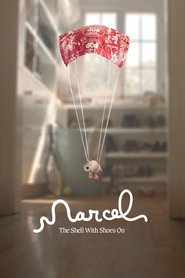
Marcel the Shell with Shoes On (2021)
Dean Fleischer Camp, Jenny Slate, Nick Paley
-
There's a whole section of this thing that we had to cut out that was another wonderful moment. I believe fully improvised about the pizza delivery guy. Yeah. Oh, yeah. And how she was wearing the clothes that she sleeps in, ordering pizza. Mm-hmm.
16:14 · jump to transcript →
-
I mean, there are some things that really, really stick in my mind of like, oh, I remember when that happened, especially in the recording of this. This is you playing. Yeah, I mean, I just, it's so crazy how I like improvised that violin piece, but then it turned out to be like exactly a really, you know, famous violin.
17:57 · jump to transcript →
-
His friend's son. And that's his sister. Wow. They're very convictive. Thank you. Oh, someone's coming. Gotta go. Follow for more celebrity homes. Kid improvised that. Wow. I know. It's great.
29:36 · jump to transcript →
-
-
-
Jonathan Lynn
Or when we zoomed in or zoomed out, that's the camera moving, and there's a newspaper just spinning on a piece of black velvet. So we were able to do that sequence for about $1,000 instead of vastly more if we'd done it computer-generated or optically. And it was beautifully cut by my editor, Tom Lewis. That was an ad lib by Bruce, which is pretty funny, I thought. He just improvised that on that take, and only that take.
8:20 · jump to transcript →
-
Jonathan Lynn
Hey, it's been good. I'm glad we got to know each other. This joke was improvised by Matthew and Bruce on the set. Me too. You can go now. Right. I love it. Oz! Yes, dear? Thank God you're home. Thank God I'm home? I had an idea. I figured out a way we can pay off Daddy's debt. Rosanna's Montreal accent is...
14:44 · jump to transcript →
-
Jonathan Lynn
That wasn't product placement either. What the hell did you do that for? I felt bad. I like him. I liked him. So you don't like him no more? Well, it's a little hard to maintain a friendship with somebody who wants to kill you. I love the joke at the end of this scene about the gap in his teeth, which Matthew ad-libbed on one take. You know, I can close that gap for you. Really? Yeah, you'd be in that one. You kidding? No, not a problem. Wonderful character touch.
39:29 · jump to transcript →
-
-
-
Francis Ford Coppola
Bring home some cannoli. And then in the scene at the end, Ritchie improvised the famous line, you know, drop the gun, bring the cannoli, off of that earlier reference. But I do believe it was Ritchie's improvisation, that famous line. Leave the gun.
57:08 · jump to transcript →
-
Francis Ford Coppola
I'm a big believer in all my films I always try to have a couple of weeks that get all the cast together and very often if the first time the actors work together they do so in improvisation especially sensual improvisation eating together or preparing food together or doing some activity that you touch and
1:18:25 · jump to transcript →
-
Francis Ford Coppola
My sister Talia, as the girl in the family often would, as I remembered it, was bringing the platters of food. And I just told them to have an improvisation as a family and just talk while eating, pass me the sausage or what have you. And I very much believed that it was in that first improvisation that they established what it was like for them to be a family.
1:19:21 · jump to transcript →
-
-
-
William Friedkin
Peter Lorre and Sidney Greenstreet used to in the films of the 1940s and late 30s. And this was, again, created by Turturro. I loved his accent, which was not his own sound. The way he sounded, his attitude, a lot of the dialogue which he improvised from what had been written and took it a step further and took it a step wilder. I loved the way he had this...
28:28 · jump to transcript →
-
William Friedkin
and then everything comes out of improvisation. Improvisation is a word I probably used a couple of times on this recording now, and it's something I very much believe in when you're dealing with an American contemporary film, where you want the acting style to be loose, you know, not sound like the words were typed first. You want it to sound as though the actors are just making up the words as they go along.
1:35:24 · jump to transcript →
-
William Friedkin
You want the photography to almost be caught by surprise by what the characters are doing. And so I let that attitude follow me into the cutting room, where I'm improvising not only the structure of scenes, but the order of scenes. I'll very often change the order of one scene or another while the film is telling me what it wants to be in the cutting room.
1:35:53 · jump to transcript →
-
-
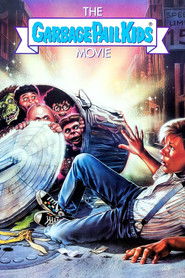
cast · 1h 36m 3 mentions
The Garbage Pail Kids Movie (1987)
Mackenzie Astin, Katie Barberi, William Morris
-
encouraged, allowed to improvise on a large scale at all? Or would it be, you know, just those moments, like you said, where, you know, Amato pulls you to the side and encourages something. But, you know, like you bringing up Tangerine, how much were you able to put things into that that were not necessarily in the script? I mean, I'm going to be very, very honest. I later became what's known as a telenovela star. Their turn, not mine.
1:02:23 · jump to transcript →
-
which is actually scripted improvisation, like most of the lines are not what's in the script, and you get one take and you move on. And so I became very good at improvisation, but I think at the time we were filming, I'm going to be very honest, I don't think I would have trusted myself to improvise that much. I was still too young to trust my instrument enough to improvise in scenes. Mac? Yeah, the moonwalk and the Dukes of Hazzard slide. That was it. That was the stuff he got to try.
1:02:51 · jump to transcript →
-
especially in a skirt I'm not interested in doing that but Mac was all over it that was a really really cool moment for him you know what I think also maybe halfway through the film we realized it probably wasn't a good idea to give her money yeah make the day there was already quite a bit of improvisation happening around us I just want to point out that's a beautiful car right there that's probably the nicest prop in the film oh come on
1:04:13 · jump to transcript →
-
-
-
Tony Scott
and what you think is improvised and little moments that we see here where chris walken is tying his shoelace um or little smiles or little paws he puts in they were not seen they were i watched him build and construct his character through that scene whilst he's playing off camera to dennis the day before yeah and what i always i always thought with chris so much was improvised and shooting from the hip i realized it was
49:57 · jump to transcript →
-
Tony Scott
Nothing. Forget it. And here we have Brad doing his classic stoner, watching Super Trucks on TV and asking Dick Ritchie when he comes back to bring some cleaning products. That was an improvised line. That was Brad's line. Yeah, so when you bring some cleaning products. That was out of Brad's brain, that line, and it was brilliant. When he said it, I thought, that's great, because that is the character.
1:30:57 · jump to transcript →
-
Tony Scott
the insanity and the ridiculousness of quality of life of these characters. And then all these guys, all the heavies that come through the door, and Brad, for him, after just having a huge hit on his bong, you can't work out whether it's reality or it's the dope talking. But with Brad, Brad did improvise all these little moments here, improvised which, you know, pieces which weren't on the page.
1:37:39 · jump to transcript →
-
-
multi · 1h 54m 3 mentions
Jean-Pierre Jeunet, Hervé Schneid, Alec Gillis, Tom Woodruff Jr. + 5
-
I love this shot because it's a simple effect. The ball is on the hand at the beginning of the shot, we do just a pan, and it works. I remember, Sigourney Weaver didn't believe me. She told me "Jean-Pierre, it doesn't work. It's so silly, so weird." I said "Believe me, I am sure." But I was pretty worried about this shot. And it works. There's a shot that you could claim, Pitof, as a digital shot, except it's real. When she throws that ball? It's amazing. This shot was supposed to be digital. What Jean-Pierre wanted is to make an impossible throw. Sigourney did it for real. This shot is real. Look at that. How many takes? I think it was six takes. - Six takes. Yeah. I was here when we shot that, and I feel in her eyes that something was weird. And she made it. Wow. - I had a little problem with Sigourney. The ball is going out of the frame and then back in the frame. I said "Sigourney, I'll fix that and I'll make a perfect path." So you feel the impression that the ball is always in the frame - like this ass - and... That's a silicone butt that we made. That's my favorite shot. I love this part of the film. And... Tell the story of this shot, Hervé. That's one of the famous Jean-Pierre Jeunet's favorite scenes, where somebody's putting polish on his shoes. When I got the rushes, I said to Jean-Pierre: "Well, you remember you did already that scene before." And you just didn't realize it. You didn't remember. The design of the wheels, something Eric Allard had developed way back, right after Short Circuit. Each wheel, instead of treads, they had ball bearings that would roll independently, so it could turn and maneuver. I think he had it patented, and I think NASA was using the design as well. This is a stupid idea. When you arrive in the States the first thing you see is the TV, because you don't sleep. And what do you see on TV? This kind of show. This miniature was not very big. This was pretty small - three meters diameter. That's nine feet to you non-metric folk. And this - you composited Aliens. Exactly. That's miniature and greenscreen. A very composite shot. Was a lot of passes to have the light and the texture and the depth and the atmosphere. For the alien, obviously, it's man in suit. It's very difficult to shoot an alien with a man inside, because it looks like a man inside. You are obliged to shoot very close. Here's Tom Woodruff. - Here's Tom. You were talking about being on the set. Here's the deal for me: being on set in these suits, it's even more claustrophobic than being on set, because I'm literally... I've got some slots for my eyes and breathing, but there's no real interaction between what I'm doing and anybody else on set, in terms of talking or just getting a break. I can interact with the actors and they can respond during the course of the action, but then, once the shot is over, it's like total isolation. But people love you when you're in the suit, Tom. Brad Dourif was great here. It was creepier for me on my side of the glass than it was for him being on his side watching me. I like Brad Dourif in this film. Yeah, he's twisted. Wonderfully imaginative actor. Brad and that creature were dating for a few months right after they completed this scene. I love what Darius did - the slime. He put a lot of care into shooting these and designing the lighting. He, at times, would almost build a cage of fluorescence around the alien, so that you'd get a million little kicks off of the slime. so that you'd get a million little kicks off of the slime. He kept coming back to us and asking for thicker slime, because the stuff in the other movies was too runny. He wanted a quarter-inch build-up, so we went to a slime that was almost like gel. It really had a different look. It was a pleasure to work with Winona Ryder. I remember, sometimes I tried to direct her, and she told me: "Jean-Pierre, take it easy." "I have a lot of imagination. I'm going to give you some improvisation." Remember, at the editing room, everything worked, all the time. In this scene, Winona was feigning drunkenness so she could slip out. Since she's a robot, she can't be drunk. This is a nice shot with the 10mm. It was a very short corridor and it looks so huge. This is a matte painting from a French guy, Jean-Marie Vives. He worked on Delicatessen and City of Lost Children, too. It's fascinating how there's a hint of City of Lost Children in the look of the sets. That's what I love about style, ultimately it just permeates everything that somebody does. That's a clever idea. That's gotta be Jean-Pierre. Very Jean-Pierre. It's great. This set is pretty high, and we used it again at the end of the film in the chapel. The same set but horizontal. - Really? Yeah. - I didn't know. When Jean-Pierre started the movie, he spoke little English - he always had an interpreter with him - and by the end spoke better English than me. Than I. - You see? That's what I'm talking about. It's amazing, because he didn't speak a word of English when he started. Sigourney Weaver loves to have the director very close to her. She hates when the director is very far away behind the video. It was a very good relationship, because, I remember, after a take she looked at me and it was unnecessary to speak. Just one look and we knew if the take was perfect or not. It was unnecessary to speak about the take - just a look. This is a scene that's almost vaguely erotic between Ripley and Call, the two females discovering each other inside of that tube.
27:46 · jump to transcript →
-
We built a miniature version of the newborn as well that we never photographed. We didn't have the time or the money, I think. There was a lot of hard choices being made. Jean-Pierre's idea for the newborn was that he wanted it to be like a toddler that was curious and prone to tantrums and completely unaware of its own strength. And, like toddlers, eat people's heads. I remember at the beginning we thought about Sigourney inside a cocoon, but when we arrived on set in the morning, she told me "No, it's a mistake. I can't stay in a cocoon. It's a mistake." We had to improvise something. We had to improvise something. It's not easy for a director to change their mind when you have a lot of special effects and these kind of sets. It's pretty difficult. But she was right. We had all these technical words to say in English, which is very difficult for a French actor.
1:38:13 · jump to transcript →
-
The newborn was supposed to be digital, and, again, for budgetary reasons, it was decided Jean-Pierre would have to do everything with the newborn as animatronic. I think it was a problem for him because initially he wanted to have a real chase. He wanted Ripley to be chased down the halls by this thing. The beast was so big, the animatronic. It was a nightmare to shoot the scene when he tries to catch Winona Ryder. I remember I had to improvise, to change my mind, and it wasn't an easy time for me. I cheat on this shot because it's like a point of view of the newborn and it's fake, he is inside.
1:40:42 · jump to transcript →
-
-
-
Barry Sonnenfeld
This was all ad-libbed. The speech was much shorter. We did many takes and had Will say angry, mean things to those people. We combined a lot of different takes. We're sometimes on his back because we're adding additional comedy lines. And we're about to be back actually shooting in New York City. This was at Central Park West
10:40 · jump to transcript →
-
Barry Sonnenfeld
What time? - Lunch. That section was ad-libbed at the last minute. I wanted a comedic rapid-fire discussion... ...between them to really help us understand... ... there was an immediate connection between them. I love Danny Elfman's score on this part of the movie. He's starting the romance in a lovely way. Elfman did an amazing job on this movie... in terms of comedy, action, romance. Before we're taught how to think... ...
21:40 · jump to transcript →
-
Barry Sonnenfeld
Dental? Funny joke. The most advanced technologies.... So this globe never existed. This was done in the computer. This is a typical joke for me that I love. That's me, by the way, screaming, "All is lost! All is lost!" I love whenever we can play with scale... ...and play with the sense of things affecting whole worlds or universes... ...because of the dumbest, less-planned... ...not-expected ways to do that. I love that something like your finger going into the sky of a world... ...could create tidal waves. It's, to me, what the whole series is about. This was ad-libbed by Will in a very funny way.
32:31 · jump to transcript →
-
-
-
Fuck you had us doing this scene all day and night. Well, you kept improvising. You kept on coming up with new stuff. Yeah, and I like... You just sort of fed up. Remember Nick Nolte falling over in the chair?
11:47 · jump to transcript →
-
another actor had a ditch dug for them so that they could remain taller. But it's nice to be taller than you in one scene. I loved this day, man. Yeah, this was great. You and I became like film lovers on this day. Yeah, this is where we had some fun in terms of just improvising. Yeah, you pushed me right over the edge. Yeah.
36:04 · jump to transcript →
-
Well, you did need to get your comeuppance for doing this, right? Hey, I feel it was like karma on the spot. Why you still doing this chicken jaw shit? I have no idea. Neither do I. It's beyond me. It's beyond me. You confused. I am a little confused. I know. That's you improvising with Brandon. But are we cool? Oh, yeah. Not really. You really are not okay. Oh, no, damn. This to me, it doesn't get any better than this. Everybody shut their fucking mouth except Jack right now. Hey, so if it's no big deal, I think I'm just going to hang back here for the mission.
1:11:08 · jump to transcript →
-
-
-
Tom Hooper
This was one of the funniest things I think I've ever shot. Sacha would just constantly improvise stuff with the props and just at the end of singing that section would just go back and re-sing and again because you're live he could just pick up and start and stop.
50:18 · jump to transcript →
-
Tom Hooper
It was more interesting if the soldier really thinks there's a special intimacy going on between them, but it's all really in the surface of stealing from him. I love the music in this. We had this great band of seven or eight players who did a huge amount of improvisation based around the score. And we'd kind of watch the scene together at Abbey Road and mark up certain beats I'd want to hit with the gypsy violin or with the accordion.
51:45 · jump to transcript →
-
Tom Hooper
because half the time he'd be writing messages that really had nothing to do with work or were just sort of jokes. And this is again, this is inside T-stage, the Richard Attenborough stage. This improvisation that Sacha does is
53:31 · jump to transcript →
-
-
writer · 1h 35m 3 mentions
Simon Barrett, Adam Wingard, Greg Hale, Eduardo Sánchez + 5
-
so anyway so yeah so I mean every time you see Kelsey here he's wearing this weird rig and you know and then we have to do so it's funny because I wanted to kind of encourage improv because I feel like spontaneous performances work really well in found footage it gives it like kind of a cool authenticity and then I realized that every single time I was going to use something I'd have to capture it from other camera angles precisely so to edit together and therefore no one was able to improvise anything and I probably seemed like
40:40 · jump to transcript →
-
Okay, well, we'll get it. Timo Chajanto takes story credit, but when it comes to the dialogue, yeah, shit on the white guy. No, no, no. I mean, like, I'm saying that he's a fucking master of improvisation, man. Yeah, he is good. The thing is, like, obviously, we fucking wrote a lot of shit, and Epi couldn't even, couldn't remember most of it. Yeah, yeah. And in all fairness, like, we didn't give him time to sort of...
51:31 · jump to transcript →
-
And so then, you know, every time we went for a take, it was like, stop now, and then we check, and then we can go again. But on one occasion, he decided to do a second take without stopping, and then when he came back... He decided to play the cowboy. Yeah, and then I had to play angry dad then on set. Okay, so this scene is actually totally improvised by us on that day, right? Yeah, literally about like 10 minutes or something before we were to lose sunlight. We were actually panicking because...
1:10:55 · jump to transcript →
-
-
-
They improvised and fashioned a bed for Antoine. We asked co-screenwriter Marcel Moussy how Truffaut had cast his first feature, and Moussy told us this. For the main role, Truffaut placed an ad in France World that said something like, seeking young boy of 13 to act in leading role in a new film. He didn't even spell out any physical characteristics. So lots and lots of boys came to audition, and they came from just about everywhere.
36:35 · jump to transcript →
-
a group that moves up together, each one with his own special expertise. And we were constantly improvising, particularly since we weren't shooting on the set where the scenery has been designed to match your plans. We changed everything around as needed, but that contributed a distinctive flavor of life to the film. The actual locations determined the mise-en-scene.
41:28 · jump to transcript →
-
-
-
Tim Lucas
Another Remington. That's enough. Up to now, we think of Tuco only as a wily scoundrel, someone who has survived more untimely betrayals than skill. But here Leone shows us Tuco as a real technician of his craft. Supposedly Wallach, who knew nothing about guns, improvised all of this action after simply being told by Leone to have fun.
34:06 · jump to transcript →
-
Tim Lucas
Afterwards, they were primed to draw up a contract for the next picture there and then. All they needed was some idea of the story. There was no script for a third film as yet, of course. Vincenzoni hadn't even discussed such a thing with Sergio Leone. But finding himself in a literally no-lose situation, and imagining that he would be doing his friend an immense favor by taking advantage of the psychological moment, Vincenzoni improvised a log line, which he admitted later,
1:01:21 · jump to transcript →
-
-
-
Now, where are we here, Monte? We're in the plaza in Santa Fe, New Mexico. And this was one of the few scenes in the picture that's totally improvised. The camera is hidden in a department store window. And Laurie has a wireless mic on her.
13:16 · jump to transcript →
-
And sure did talk to you, which is Warren's retort. Right, right. He ad-libbed. I see. Oh, that's great. One of them Dodge Chargers letting go by. Not today.
1:11:40 · jump to transcript →
-
-
-
John Mackenzie
Yes, it was like it was personally tailored for me. And of course, we do do things in certain scenes where we slightly change the dialogue or we improvise it a bit just to make it even more holy or completely his. Oi. Which one's Errol's house? Never heard of him, mate.
39:03 · jump to transcript →
-
John Mackenzie
Bob came out with this half improvised, half written speech. He kept adding to it and I kept encouraging him. That's the sort of thing I think you could do with Bob. At that stage, Bob was a wonderfully raw talent.
1:47:22 · jump to transcript →
-



Related topics
Other topics that frequently come up in the same commentaries.