Topics / Production
The first day of shooting
107 commentaries in the archive discuss this, with 262 total mentions and 37 sampled passages on this page.
Filter commentaries
Filter this topic by the film's decade or the type of commentary.
Showing 18 of 107 commentaries
Clear filtersBy decade
Across the archive
ranked by mentions · click any passage for the moment in the transcript
-
-
Tony Scott
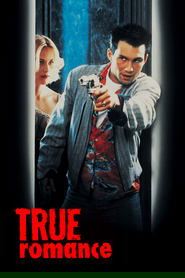
I went to Charlie Sexton, who recorded this particular track for us. At the time, I thought, God, nothing can ever be as good as Elvis. But in the end, I think it served his purpose, and it's a great track. And Charlie has a great voice. This first scene was the first scene I shot in the movie. It was my first day of shooting.
2:32 · jump to transcript →
-
Tony Scott
Um, and, uh, it was my first day with Christian, you know? And Christian and I had been talking about the characters and who his character was, and I felt, you know, we're never quite in sync with what we were both thinking, who this character was, yeah? And, um, you know, you never really truly get an understanding of where the actors, or what the actors, where his head's at until you start to do the scene, yeah? And, um...
2:56 · jump to transcript →
-
Tony Scott
Anyhow, after my first day of shooting, I realized that Christian was off to the right and I was off to the left. And I said at the end of the first day of shooting, you know, I want you to take a look at Taxi Driver. And I wanted Christian to take a look at Taxi Driver in terms of the darkness of the character because I felt his character in this first scene in the bar, he was pushing it a little too light. And I wanted a much darker soul. And...
3:26 · jump to transcript →
-
-
-
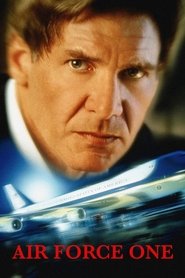
Did you work with the writer on the script of this? Yes, I mean, Andrew Marlowe is the writer, and we worked a lot in this month before we started shooting. And even into the production, we constantly, we always do it like that. It's never really like that. You have a script, and then you shoot it, and that's it. You constantly, film is always sort of things in development to the very end. And so we work, yes, on a daily basis with the writer. And then we had also Paul Attanasio,
7:30 · jump to transcript →
-
So this is back on LAX airport, but it's meant to be, of course, Russia, where Gary and his bad boys are coming. And this was, I think, Gary Oldman's first day. Yeah, it was. We shot that pretty early on. And boy, from the first day on, when I saw him doing this part, I just fell in love with this guy. Great choice. He was very good, very good. Yeah, I thought he's great. He's wonderful. Did you have a voice in the casting? That's always people ask me, do I have a voice?
9:19 · jump to transcript →
-
Yet I can tell it again, the story here, that I always wanted Glenn Close from day one, but it's a part that's only really a supporting partner, very big. I did not have great hope that we would get her. She's a big star. Cut to Harrison Ford a few weeks later, and there was a...
37:06 · jump to transcript →
-
-
multi · 1h 54m 4 mentions
Jean-Pierre Jeunet, Hervé Schneid, Alec Gillis, Tom Woodruff Jr. + 5
-
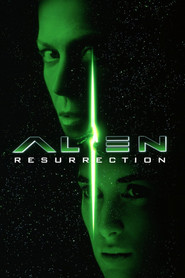
Hello. My name is Jean-Pierre Jeunet. I'm the director of Alien Resurrection. Hi. I'm Dominique Pinon. I played Vriess, the guy on the wheelchair. And I'm Hervé Schneid, the editor. My name is Sylvain. I was a storyboard artist and a concept artist on Alien Resurrection. This was designed, composed, shot almost entirely and never used, because we couldn't complete it for budgetary reasons. But initially, in the first opening of the film, we looked at the mouth. The mouth of an insect. Except we didn't know it was an insect. We mistake it for an alien creature. And the camera backs out and actually reveals a little bug. And in one camera move, as it keeps on backing up, we see a finger crushing that insect and sticking the insect into a straw. And splattering that insect against the glass as we recede... And we go all the way back into outer space and actually reveal a giant spaceship, which is where the story begins. I remember especially about the main credit. When I arrived in LA, I was waiting for an offer from the studio. You can imagine - a poor French guy like me, I was very scared. I was in a hotel, waiting for the answer, and I didn't sleep because of jet lag and because I was scared. I thought "OK. To prove to myself I am able to make this film, I have to find a good idea for the main credit, for the first shot." Immediately, I found the story of the guy alone in a big spaceship, with the milk shake and the pipe. He scratches insects, he puts them in the pipe, he blows the insect on the camera. I was very happy about this idea. I told this idea to the studio and they were happy, too. We began to work on it, but it was very very very expensive. One day, my line producer told me, if you could find another idea, because we have not enough money to finish this idea. This is a secret - I was pretty relieved. In fact, I think it was a little bit too funny for the beginning of Alien. I didn't say anything to the people. I said "You want to cut my idea?!" But, in fact, I was very happy, and I prefer the credit we have now. This is a model, and at this time, we hesitated about to use CGI or models for the spaceships. And Pitof preferred to use models. Maybe it was one of the last films with spaceship in model. That was very impressive. I came once on the set while you shot the models, and it was really big. - Yeah. Not really big. It's never enough big. And Pitof made a lot of parts, and he mixed the different parts.
0:03 · jump to transcript →
-
Pitof, was that making fun of Americans, the way those soldiers are chewing gum? Yes, sort of. It's very Jeunet. And they're chewing in sync. And it's... Yes, it's... - Making fun of Americans. Tom Woodruff and Alec Gillis made this fake Sigourney. It was a real pleasure to work with this guy. Here's our first shot. The body of this little girl was based on photographs of Sigourney as a child. Then we worked them into a sculpture based on a life cast of an actress that the casting agent got for us. Look at this beautiful morph. Oh, yes, indeed. We morphed to Sigourney as an adult. That face looks an awful lot like the way she looked in Alien 3, when we took a life cast of her. That's right. And we used a body double to cast the body, didn't we? That's right. And we used a body double to cast the body, didn't we? This is the surgery scene. That was a nice little mechanical chest I made with some digital help there. The laser beam is digital. So it's part of my stuff as a second unit director. That's right. This was a fun little surgery scene, with some of the interactive tissue. Silicone chest that was laid on top of Sigourney. I love the look of this. Darius Khondji did a great job. The way the slime looks is almost metallic-looking. It's got such a beautiful reflectivity. Isn't that great? I love this. It's really disgusting. How it's... Then pop! The head pops.
3:31 · jump to transcript →
-
Dominique Pinon plays in all my films, and for me he is the perfect actor. He's so inventive, so nice, so perfect. It was amazing for me to bring this actor to the States, because Sigourney Weaver and the studio asked me to have Dominique Pinon. I told this story a lot of times, Dominique, but it's true: I didn't hire you, the studio wanted to work with you. I was very happy, obviously, but, I remember, when Sigourney wanted to call you by phone, and we called you in Paris and you didn't believe me. You said... "No. It's a joke." I remember very well that call, actually. The studio were a little bit worried about Ron Perlman. They appreciated the guy, but they weren't sure it was the right guy for the character. By luck, it was the first day of shooting and they saw the dailies. They came to see me on the stage and they told me "You're right. He is perfect." The set is basically what we call the Betty cargo bay, which is just a lovely, beautiful industrial piece of design. All the rust in the back of it. It's hard to convey just how incredible it was in real life, when you walk through it. It was just absolutely staggeringly detailed and gorgeous. Pitof, none of the ships were digital. That's all models? Pitof, none of the ships were digital. That's all models? I would like to make more digital stuff, but Nigel really wanted to have the real texture. I guess he was right because... They're beautiful. They are gorgeous. Is that background digital? Or was that a model also? The background is a mix with the digital and models. We had a model, but the size had been enhanced in postproduction. Also, it's a lot of layers of small things to make the texture real. So it's not just shooting the miniature as it is. There's a lot of work after that - to have the texture, to get the smoke, to give the depth, and all these things. Is shooting miniatures more time-consuming than doing it digitally? It was more efficient to shoot miniatures because the technology of digi was not as flexible as today. The idea about this film is that these guys are a bunch of hoodilums that are smuggling weapons on board a military ship. The thought was: they'll get strip-searched, and they have to have weapons at some point, so Jean-Pierre's take was that the only way you could bring weapons is by hiding them in plain sight. The two places where he thought you could hide them was a Thermos - which somebody is carrying, which turns out to be a gun - and the wheelchair. The thing about the wheelchair was designing it as a breakaway piece of technology, where every piece could reassemble itself into a weapon. Although the idea's really good, at some point the focus on that was a bit lost - you see all the characters breaking out weapons. I'm not sure how clear it is that they're recombining the wheelchair. But that's the way it was designed, as you could actually take pieces of it apart and snap them into weapons when the scene demanded it at some point. That little wheelchair was built on a structure which we called a mule, which is a six-wheeled radio-controlled robot which is a six-wheeled radio-controlled robot that's designed to lift enormous pieces of equipment in industrial settings. That mule was available to us, so Fox said: "If you can design the wheelchair around this, it'll save us money." So that's what we did.
17:58 · jump to transcript →
-
-
multi · 2h 19m 3 mentions
Martin Scorsese, Nicholas Pileggi, Ray Liotta, Lorraine Bracco + 9
-
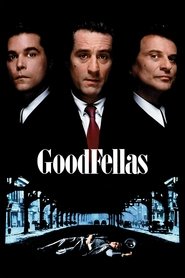
I was more excited about the acting part. I didn't look at it as a break. I didn't look at it, you know, at that time you have no idea how the movie's gonna come out. You just know you're working with legends in the making. I mean, you know, already Bob and Marty had such a massive work that it was great just to be playing make-believe with people who were so passionate about that, because I loved the stories that they were telling. You know, I remember the first day of rehearsal,
46:50 · jump to transcript →
-
I think it was easy for him to jump in that position of my father figure or my older brother that would take care of me in a way. And it's easy for him to get so upset when I get killed in the movie also. Working with Bobby was great. I'd always wanted to work with him. And after the first day we worked together in the scene where we go to get Henry Hill to come back, I remember, and it was very touching to me,
49:10 · jump to transcript →
-
threw himself back so violently at the first shot that he went flying against the bar and cut his hand. They had to take him to the hospital. He cut it on a pitcher that fell. I mean, I think everybody in that room felt, including me, felt like I killed that kid. Sick maniac. I don't know if you're kidding. What do you mean you're kidding? You're breaking my fucking ball?
1:11:41 · jump to transcript →
-
-
-
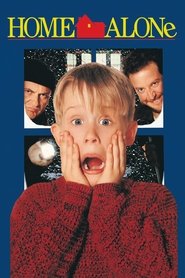
The stuff John Hughes would write, things that I hadn't heard... ... John must've known by talking to people from Chicago. "Silver tuna." - "Silver tuna." The Big G. You know, these kind of things. First day of shooting. - Yeah. First day of shooting on the picture was this scene. And we knew we kind of had something special... ...with your performance and just the look of the film. We did a tremendous amount of setups in one day. I think probably 31 setups in one day, which was... That's a lot. - Which is a lot... ... for something that wasn't being done for television. And, uh.... "I
38:45 · jump to transcript →
-
And, now, I can't remember if this was you... ...or the stuntman running across the bridge. Or even just-- Or one of the stand-ins. I remember I had like 10 stand-ins. Oh, that's true. That is true. And so then you guys would do a lot of, like, just stuff after I'd go off... ...or at the same time, even. "I'm a criminal." I think this was the first day too. Yeah. - Yeah. This entire concept of the Wet Bandits... ... I'm trying to remember if that was in the original script or not. I don't know or.... I think possibly it was. I thought... For some reason, I had... I have a memory of Dan Stern coming up with it, and I could be wrong. You know, that's why I really wish John Hughes was here because he could... But Dan, for whatever reason... ...was obsessed with the concept of the Wet Bandits. The Wet Bandits and the Sticky Bandits. - Yeah. But this whole look of Dan's is this sort of white-trash, trucker look. It's just something that didn't catch on, unfortunately. And just the contrast in size between the two of them... ...and just height and just build. But the, uh... All of these were little touches by Dan, which, on a movie like this... ...people, you know, don't talk about, don't notice... ...but putting the snow globes from each house with the... You know, attaching them... There's a scene on the deleted sequences... ...where Dan wanted to... He's stolen a cappuccino maker, and they share a cappuccino in the truck. I remember that. - I think it was that scene. This was all shot backwards. - Oh, yeah, that's right. Coming up here. This. So I would scream, and then the car would back out... ...and I would walk backwards. And we did it several times. And it looked pretty awful each time... ...and then finally, that one shot, it worked out perfectly. Well, you had somebody shaking the van, right, you know, at the beginning. And I had to walk, like, backwards, like, heel first or whatever.
40:48 · jump to transcript →
-
Are those microwave dinners.... Uh, it was interesting, I have this funny... You know, you'll sometimes read reviews about films... ...and people will accuse filmmakers and studios of using product placement. But it's such a difficult question sometimes in movies... ... because if you see orange juice that doesn't look real... ... then it takes you out of it. So it's a very... We had no product placement for any of this movie... ...because no one thought it would do any business. I think the only product placement came later... ...with something called Juicy Juice. That was it. - I remember that. But all of this stuff... Well, I-- Remember when I'm doing the--? Saying grace at the table? And we did one where it's like, "Macaroni and cheese dinner"... ...and the other one was, "Kraft Macaroni & Cheese Dinner." We did two different takes of that. - Oh, my God. Okay, this was scripted, and then at the very end... ... you just told her to keep asking questions. I'm just like.... I forgot what it was. I think you ad-libbed that, "You're a stranger." That was... "Can't tell you that, because you're a stranger." And that got, again, a big laugh. Oh, this was good. - Day one. I had to let go of the strings on the inside of the bags. Oh, yeah, you controlled it, right? Yeah, at the right time, I just let go of the strings... ...and the whole bottom would fall out. Earlier I was talking about the furnace. I had forgotten to mention, when you were eating the candy... ...when you were watching Angels With Filthy Souls for the first time... ... you fell asleep. And you woke up to the entire house coming to life and chasing you. So there were nutcrackers and toy soldiers, and it was a... It was just a sequence I storyboarded for months... ...and the studio said, "You don't have enough money to shoot it."
52:47 · jump to transcript →
-
-
-
That father to have a beard, sort of an older guy. And when he showed up the first day, he was cleanly shaven. And I told him, why did you shave your beard? I told you I wanted the beard. But for some reason, he thought he looked better without the beard. So we actually had to put a fake beard on him. So when I look at a close-up, I don't want the audience to not think that I don't notice what they notice. But John was his name. But he was great. He was a great guy to work with.
14:37 · jump to transcript →
-
It worked so well like that. Yeah, I was, I mean, again, I'd said I was a writer and a producer in television for a lot of years, but I'd never directed. And I thought I thought I would be easier. But the first day on a set as a new director, boy, you get you get baptism by fire. But, you know, I had a lot of good people and a lot and a great crew. And and Warwick was terrific. And there's eating the bug. And I love that.
22:00 · jump to transcript →
-
from day one from the very first draft and here it is and his mother was there and he was like eight years old and he had to say it in front of his mother and we got permission but uh... and that's the one where i have a memo that the trimark memo was take it out and i said no it's gonna work and oh it's it's one of the biggest punch lines out there and i do have the memo i might even take a picture of it because i know
1:25:32 · jump to transcript →
-
-
-
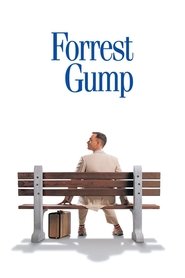
I always saw Sally in this part. I don't know why. You know, Wendy Finerman, the producer, suggested her in, like, the first day or first week that I, you know, signed on to do the movie. And it's just like, wow, yeah, Sally. And I sent Sally the script, and I was very worried about it because, you know, she has to play, you know, ultimately Tom. I mean, when you say it, it's not really that way. Say, Sally, why don't you play Tom Hanks' mother?
6:05 · jump to transcript →
-
You know, like, for example, when Kennedy's got the football at the very first shot, that was actually in Rose Garden. But we found that image of him and we put him in the Oval Office with our, you know, background plate. Stuff like that. So we just looked at everything. And then when we found the bits of film, we went back, revised the script to try to weave the story into what we had. And I know the joke of, like, when Kennedy says, I believe he said he has to go pee.
30:52 · jump to transcript →
-
from day one of shooting. He's editing. I don't look at it, but he's there cutting because, you know, there always comes that moment where you got to like maybe see something and see how the movie's coming together to see where you are. So my endless conversation with my editor in dailies is, oh, you know, don't throw that out. Don't use that. That's never going to work. You know, it's like just cut it all out. But there's also that's
1:16:29 · jump to transcript →
-
-
-
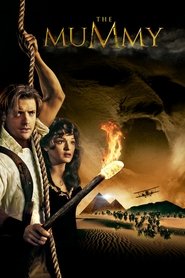
I really wanted to get the feel of Cairo in the 20s, and I think this is about as close as you can get. I don't think Cairo nowadays even looks anything like Cairo in the 20s. And so Marrakesh doubled very nicely, and the people were great, and the extras were very authentic looking. It was kind of a fun scene, especially the next one coming up where we had 500 prisoners. It was a lot of fun. This is, I think, the first day of filming, actually, this scene right here.
19:59 · jump to transcript →
-
leads, they seem to work with the audience. Especially this little thing right here where Brendan about gets his head blown off. I added this the night before we started shooting it right here, this whole thing. And I was just hoping that they wouldn't take Brendan's ear off before I finished shooting the movie. I'd say that actually looks quite dangerous. I think the look on his face was, I'm going to kill the director. I mean, those squibs are awfully close to his head, but you know, whatever. Yeah, Brendan was such a trooper, but no...
30:39 · jump to transcript →
-
The first shot of the CG mummy. Although Arnold Vosloo, who plays the mummy, plays Imhotep, he was a little disappointed because he was hoping it would be like, you know, gooier or scarier. But being PG-13, we had to, you know, there was a certain limit as to how gooey and scary and disgusting a mummy could be. These next special effects shots, we shot them at dusk, right as the sun was setting.
1:00:32 · jump to transcript →
-
-
-
Paul M. Sammon
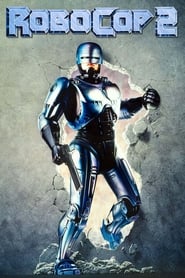
Now, Tommy Noonan goes through a lot of changes in this film's costumes, and interestingly enough, they didn't develop this in the final shooting script, but the idea was that he was not only a very powerful drug dealer, but he was a religious figure. In fact, that first shot you saw him sitting in the dark surrounded by the wall, the actual scripted version had him in a priest costume in an auditorium with 2,000 followers who were on their knees singing hallelujah.
11:30 · jump to transcript →
-
Paul M. Sammon
Here's a funny joke coming up. Now, this little lead that's supposed to be feeding information into Robo's head, when we first shot this, you'll see in a second that Robo becomes more independent, and he will pull this thing out of his head. What the crew did is they glued it for the first shot, and he couldn't do it. And he couldn't do it and kept trying, and then he goes, all right, you guys, and he started to laugh, and the whole crew busted up. There were more crew people in the back. That's Dennis Pollack.
57:08 · jump to transcript →
-
-
-
wonderfully beautiful, you know, dancers. Well, I'll tell you, it was again, a nightmare where, you know, for the amount of money that we couldn't pay, we had like really, really bad people kind of swirling around. And I was going, oh, this is not gonna look the way I want it. And suddenly what happened in the days before we started shooting is that someone in that community visited the site and said, this is gonna be a really cool movie. And suddenly every stripper in town
34:27 · jump to transcript →
-
music right from day one. And so people already get used to this completely, this temporary score of scores from other films. And so in a way, they've already made the decisions. This film will have piano and orchestra. I mean, look at the instruments that are in this film. Who could have possibly temped in, you know, a shehnai and a piano? It's not possible. And so the fact that we came up with that concept
52:56 · jump to transcript →
-
-
-
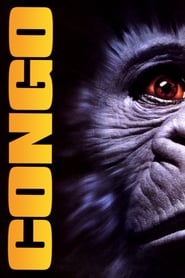
Frank Marshall said it was pretty standard that Raiders of the Lost Ark was 73, but they had no gorillas, and it wasn't an ensemble. They started shooting September 26, 1994, and went through January. As we're starting to get into the technological aspect of this movie, and we're about to go into the Travacom company and whatever you'd call it, control room,
2:27 · jump to transcript →
-
amassing whatever knowledge he could. And at one point, he crashed the set of Marlon Brando's One-Eyed Jacks and watched cinematographer Charles Lang creating the gorgeous VistaVision images of that film. And that's what really hooked him on the idea of becoming a DP. When he graduated from high school, he bought a 16mm camera and started shooting everything he could, you know, student films.
1:14:22 · jump to transcript →
-
-
-
multi · 2h 24m 1 mention
Alex Thomson, Terry Rawlings, Alec Gillis, Tom Woodruff Jr. + 3
-
-
-
-
-

Related topics
Other topics that frequently come up in the same commentaries.