Topics / Production
The first day of shooting
107 commentaries in the archive discuss this, with 262 total mentions and 42 sampled passages on this page.
Filter commentaries
Filter this topic by the film's decade or the type of commentary.
Showing 23 of 107 commentaries
Clear filtersBy decade
Across the archive
ranked by mentions · click any passage for the moment in the transcript
-
-
Paul Davis
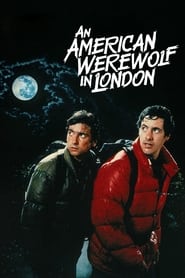
started shooting. So that's what the little dedication for Jimmy O'Rourke is all about. And now you know. Interestingly enough, this opening montage, which is the Brecon Beacons in Wales, the Black Mountains, it was originally cut to Cat Stevens' Moonshadow. And if you actually take the sound, if you take Bobby Vinton out and actually play
1:46 · jump to transcript →
-
Paul Davis
And this was the first day of shooting on an American Werewolf in London on the 2nd of February in 1981. This was in Hay Bluff, which is kind of on the border of Hereford and Wales. And that little sign there in the middle of the street had a little Easter egg on it. So they had East Proctor, which of course is the fictional village that they are about to walk to.
3:01 · jump to transcript →
-
Paul Davis
And that's when references are done right, I believe. I'm torn between feeling very sorry for you and finding you terribly attractive. So this is back to day one of filming when they were up on Hay Bluff. Dr. Hirsch is going to do some investigating into what happened to the two boys.
47:19 · jump to transcript →
-
-
director · 1h 31m 3 mentions
Alex Cox, Michael Nesmith, Victoria Thomas, Sy Richardson + 2
-
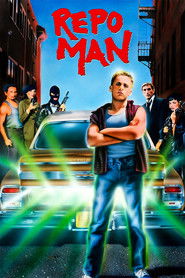
riding bob richardson's motor guzzi and i'm doubling fox and now now robbie muller is shooting the original part of repo man with fox in the car varnum behind because this opening sequence is a composite of two different days of shooting the first shot by robbie muller who did this shot and the second day done months later by bob richardson
3:00 · jump to transcript →
-
It wasn't near as traumatic as when the Malibu got stolen. That was bad. We'll get to that, won't we? Well, this is that car. It is. Because when we started shooting, we only had one of these Chevy Malibus. Yes, and I kept saying, don't rent the picture car. Buy them. Let's buy three. Yeah, but we only ended up getting one. And the Teamsters suggested to me that I should, since I didn't have a car, I should drive that car to the set every day. And this went on for about a day and a half, and then the car vanished.
3:49 · jump to transcript →
-
I like the fact that the Slim Jim makes the car alarm go off inside. It doesn't make them bat an eye. I know. I know. Yeah, you're wonderful on this side. Beautiful. That was my first scene. My very first day. This is the first thing you did? Yeah, first thing I did. That's great. So calm. Because you have to break the steering wheel column, don't you? Yeah. Yeah. But, like, it's very methodical.
31:08 · jump to transcript →
-
-
-
John McTiernan
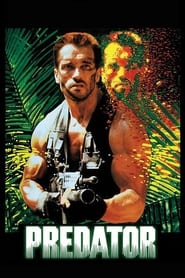
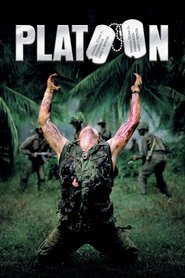
It was very difficult to maneuver in the jungle at all. We just didn't know how. We started with... First day of shooting was the worst nightmare I've ever seen. They had 300 Mexican crew members from Mexico City. Just crowds and crowds of people, and most of them had nothing to do when we didn't have any way of truly organizing, or communicating, in what we were trying to do. So for the first week or so, there were about six of us who were making the movie. And what we did was we negotiated with the, it's called the Cyndicado, the old union down there. It just got much better since, but at the time it was filled with these old lifers, guys who had movies in the '30s, and they're old. And we got the union to send half of them home. We had to pay them but we sent them home. So we got it down to a reasonable number of people, I think we had about 100 crew people.
14:45 · jump to transcript →
-
John McTiernan
This right here, was the first shot I shot in the movie.
35:01 · jump to transcript →
-
John McTiernan
Arnold was a trooper throughout the mud. The mud was disgusting. After the first day of working, it stank. Something terrible. He was great about it.
1:18:56 · jump to transcript →
-
-
-
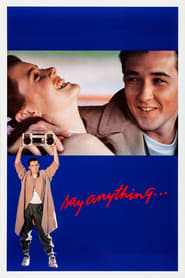
Oh, yeah. Why does he have to be guilty? If he's not guilty, everybody's having fun. And Jim would be the one that would say, well, there's no movie if he's not guilty. He was great. He was protective and inspiring in the way that you want someone to be. Yeah, and he's fierce, and he wanted to know. He wanted to know why and what. This is all kind of interesting. This was the first day. Oh, yeah. We shot this the first day. I was scared to death.
46:19 · jump to transcript →
-
Yeah, I remember. I didn't want to come out of my trailer. It was like, we filmed the first day. It was like, hey, that's lunch. I'm like, hey, everybody, thanks. I went in my trailer, and I did not want to come out. I was so terrified. This was the first scene I shot. This is so funny. We shot this wide shot. This shot was the first shot of the movie, the first shot I ever did as a director. And Johnny did it, and you're standing there, and it all looked great. And I just kind of went off to the side, and I said, well, it's good. Are we done?
46:49 · jump to transcript →
-
He said, oh, he totally got it. Everything gelled, I think, after this night. When we finished it, I remember we started a night shoot. By the time we started shooting, we were done by 12.30. That's right. We finished really early. We had shot everything we could. We would just take one, take two, this way, and we were done by 1 o'clock in the morning. Look, as to you, I'm not going to be somebody like Diane Corda to kegger. This girl was different, man. When we go out, we wouldn't even have to go out, you know? We'd just hang out.
1:10:29 · jump to transcript →
-
-
-
The first day of shooting was we drove through the mud to go to Nate and get the tool made to cut the safe in Los Angeles. The Burning Bar. Which was the Burning Bar, yeah. The infamous Burning Bar. Actually, Nathan Davis is Andrew Davis's dad. He's an old Chicago actor. This is Robert Prosky's first film performance.
1:22 · jump to transcript →
-
I just came on the set and was frank, you know? Which is a reason I should always do that kind of work, but I don't. This was truly a labor of love, I think. I don't think, I know. We worked real hard, but... Yeah, by the time we started shooting, you were frank.
27:42 · jump to transcript →
-
-
-
I love what you said about Spicoli has to be the spice. It's so true. Because people have... I know you've probably been bombarded over the years on people saying, hey, let's do a Spicoli sequel. Just Spicoli. You remember the first day we saw the movie in Westwood, and I guess, who was it from the studio? Was it Thom or Sean? Somebody said, okay, guys, Spicoli goes to college. Yeah, they were just ready to go. They're ready to go. It wouldn't have been the same. Spicoli without Brad.
29:26 · jump to transcript →
-
I can't let you go unless you have a ride home. Oh. Actually, the head of the studio one day pulled me in a week before we started shooting and saying, we can't make this movie. We got a letter from a stockholder saying, this movie's not going to make any money. And how could you have these first-time people making a movie? And what are you thinking? And we've all seen these California kids in their hot tubs and all of that. And it's like, enough.
1:06:33 · jump to transcript →
-
-
-
This sequence, I was told by the assistant director... ...would never wind up in the movie because it was too silly and too crazy. But it is definitely one of my favourite, favourite scenes in the movie. And, yes, it's silly, but, you know, it's just great fun. This is-- Hoyt, you were there shooting. - That's my first day of shooting. Kind of woke me up, because after the explosion... ...we looked at our matte box and it had melted the front element of it... ...so it got pretty hot.
1:31:49 · jump to transcript →
-
Now, we're looking at a lot of stunt people running around... ...because they all participated in this sequence that came up... ...as the F-16s lock in on the heat source... ...of our Blue Thunder helicopter. And Scheider gets his plane where it's up against the sun reflection. He's hoping to decoy the helicopter into this. That was the miniature helicopter, too, going across right there. There's the miniature helicopter. Certainly the idea of it going into a building like this... ...was viewed by us as complete fantasy. And it never, ever occurred to us... ...that somebody would actually do something like that, you know. It's just beyond the range of thinking. At the time of 9/11, you couldn't have shown an image like this. Everybody got so sensitive. And then, suddenly, they realised... ...that people weren't as terrified of it... ...as we were saying they were going to be. Remember, people were saying, "We'll have nothing but Doris Day movies." Or, you know, whatever today's version of Doris Day movies is. But then, suddenly, the video stores started telling us... ...that every terrorist movie they had was gone from the shelves... ...that everybody was suddenly fascinated... ...with the very thing we said they wouldn't be... ...which proves William Goldman's old adage of, "Nobody knows anything." And you'll remember, when I talked about the first shot... ...with Malcolm McDowell. Well, here it is. This is the one where he comes... ...and has to jump inside the helicopter and take off. We probably won't be able to get permission... ...to do practical work like was done on Blue Thunder. In other words, I think the laws have changed... ...and people's concern for safety has increased. So we won't be seeing the same kind of amazing, live stunt work... ...which is really, you know, just some of the best ever done. They would depend on visual effects, other methods, to achieve the look... ...but it wouldn't be the real thing, which is what we got here... ...which is a real treat. So he didn't know he had the option of-- No option here. No, no option. But it looks really good. I mean, it looks like he's taking that helicopter off. And the pilot, Karl Wickman, was-- I don't know where Karl was, but I couldn't see him. At that point in Los Angeles, in the early 1980s... ...lots of new, giant structures were being built... ...and here we got to use one where we could shoot through it. And this is where we lost this helicopter... ...this little Hughes 500 helicopter. Its engine blew up. And the helicopter auto-rotated down to the ground... ...onto those parking lots that you see. And only because we had cleared the lots out... ...and had no traffic down there and no cars, no people, was it safe. And we thought we had killed Karl Wickman... ...because the engine blew up. But he was a Vietnam helicopter pilot... ...and he had rehearsed auto-rotating to the ground hundreds of times... ...and he took his helicopter down to the ground... ...and it only bent a couple of skids. And as it hit the ground, he actually was jumping out of it... ...right simultaneously backwards with a fire extinguisher... ...in his hand to put out the flame. But now you can see, we're down 40, 50 feet... ...above the Music Center in Los Angeles. That was not Bill Ryusaki. Good for him.
1:34:03 · jump to transcript →
-
-
director · 1h 30m 2 mentions
A Nightmare on Elm Street (1984)
Wes Craven, Heather Langenkamp, John Saxon, Jacques Haitkin
-
The strange thing about being in these movies is that you see things that actors do that you sometimes have never seen in real life, and you're sitting there looking at a hanging man and you say, is that what a hanging man really looks like? You know, and you yourself don't really even know. So now my image of a hanging man is Nick Corri hanging from a sheet. Wasn't this the first day of, for me, I remember the first day of shooting was the cemetery. Was it? I believe so. Which cemetery was this, Wes? You probably know more. This is Boyle Heights.
45:29 · jump to transcript →
-
You know, people will always say, well, I didn't know you had that in you, Robert. No, he takes it so seriously. From the first day I met him, I realized he was so perfect. He carried it through seven features. The other issue was, I remember on Nightmare 2,
1:30:06 · jump to transcript →
-
-
-
The look we wanted was a graphic novel style look to it, and hence the lighting, the gels, the colours. So we have Steven Berkoff here, who was riding high very much so at the time with, I think his play West had just come out, hadn't it, just before you started shooting this? Yeah, I think he just came off Beverly Hills Cop. He had indeed, yes. And he complained that he felt his acting was constrained and he was, you know...
14:02 · jump to transcript →
-
So next for you was Rawhead Rex, and that was pretty quickly afterwards, was Rawhead Rex in, I think you started shooting that, didn't you, within about six months of finishing this? Yeah, about eight months after this. About March and April of 1986, I think. That's right. So yeah, just a few months after the London Film Festival screening of Underworld. And that was a surprise. They just suddenly announced, hey, we're shooting this. I was in Paris at the time.
1:29:54 · jump to transcript →
-
-
multi · 2h 34m 2 mentions
James Cameron, Gale Anne Hurd, Stan Winston, Robert Skotak + 8
-
Bill Paxton
Here's a panning shot of the armored personnel carrier. This was done with the twelfth-scale armored personnel carrier. We had the camera flat on the ground and at the beginning of the shot, behind the APC, is the fiftieth-scale colony complex. Because we're flat on the ground, the audience doesn't see the scale differential that's going on there. Literally, the bumper of a twelfth-scale was next to a fiftieth-scale. The shots of the APC driving into the atmosphere processor were also done as miniatures. There was no full-size entryway that was built for the film. That's why we built one as a miniature. The sequence inside the atmosphere processor is a location that was a decommissioned power station at Acton, inside London or just outside of London. Rather than building a set from scratch, they used what was there and then added the alienesque bits to it. Look at that. - This was my first day. At Acton? - First day ever on a film. You won't see me there. - Ever on any film. I'd no idea what "back to one" meant or anything. What does it mean? 30 years later I'm still trying to figure it out. That's a real gun. That's a German Sten gun. It was cool until we started firing the weapons and then this fine snow started raining down on everybody. I think they checked it out. - It was just asbestos. We had to practice shooting flame-throwers. We did the close-quarter battle stuff. Approaching a building or going down a hallway, you leapfrog along. We did that. Al Matthews who plays Sergeant Apone had some kind of military background. I think he had served in the Vietnam War, and after the war he had come to England, where he'd become a radio disc jockey, I think. He was either really good at bullshitting us, but he seemed to know what he was doing. His orders were so authoritarian that we followed him.
1:04:49 · jump to transcript →
-
Bill Paxton
Another technique that's not used any more to create the size of that set. A hanging miniature that was the previous shot, where you saw the expanse of the inside of this alien virtual universe, which is what you're seeing here, setwise, the cocoon aspect of what these aliens do. A hanging miniature, which is a technique, is a small set piece that hangs in front of the camera and then the full-size set is behind it and the actors are behind it. The illusion is that the set is huge and expanding up and over everyone, when, in fact, the foreground of the set piece is a miniature, the background of the set piece and all the actors is normal size. It's basically a forced-perspective shot. This is my first on-camera line coming up. This was the first day. We started at Acton. We started here. I thought you guys had already been shooting. They had to reshoot. We went back and picked up here. I see. And Dick Bush, the cinematographer, was replaced by Adrian Biddle somewhere in this area at the same time. A few changes were made in the lineup about two weeks in.
1:07:05 · jump to transcript →
-
-
-
Good to see you. Thank you. You know, there's some facts that you can't deal with. You can say it, and people nod. I didn't have Holly Hunter until two days before we started shooting. And there's no way that sentence conveys what it should.
1:43:12 · jump to transcript →
-
And I think therefore, you know, almost everybody connected with the picture, their lives are a little different because she walked in two days before we started shooting. Did he really? Yes. What? Come here. Come here.
1:43:47 · jump to transcript →
-
-
-
Eleanor Bergstein
When I had had in my mind a little dark girl with little curly hair all over, a little skinny girl, and Jennifer came in the first day of casting, and she danced, and then we had everybody dance, because I said, if they don't move the way I want, it won't make any difference. And so Jennifer came in and danced, and then she finished, and she said, I know I can do it better. Please let me do it again. And she just closed the baby space in our minds. And after that, though, we saw a lot of other people. It was just done. I mean, we just couldn't imagine anybody but Jennifer, and I think she...
18:07 · jump to transcript →
-
Eleanor Bergstein
the most respect and love and gratitude for Patrick and Jennifer. I love the way she pulls her dress down. That was just wonderful. The first day Patrick came in that day, he and Jennifer had worked together on Red Dawn. Then they came out and did a dance, and I told Jennifer just to circle around behind him and put her hand down on his rear, as finally she does in the cry to me scene. And we were all standing around, everybody from the studio, everyone,
20:34 · jump to transcript →
-
-
-
Gary Goddard
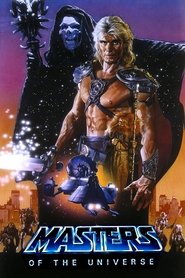
Oh, I'm sorry. I'm sorry. Gwildor. Gwildor, we must get back to Eternia. So if you're through clearing your gill slits, maybe you can tell us where we are? We could be anywhere. Any planet in the galaxy. Any planet in the thousand galaxies. I had no time to renominalize my coordinates. By the way, this actually was the first day of the shoot right here. This was day one. We did not start with an easy shoot. Let me tell you, to get that little creature...
17:55 · jump to transcript →
-
Gary Goddard
halfway in the water, pull him out, have the special one sitting by with the ears that have the water tubes made for him. There's three separate different... There's two stuntmen dressed like Billy, one with the ears with the water in them. Billy's got the movable ears. You just saw them there. And, you know, this was supposed to be the easy day. Day one was going to be the easy day. This was not an easy day. Now here's how we introduce Earth. I think it's kind of a...
18:24 · jump to transcript →
-
-
-
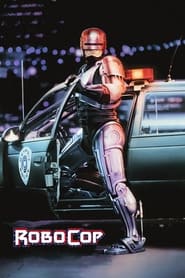
Now, the other thing that happened in this thing here was that Paul wanted to make sure that they had some really good shots of the targets getting hit. And Randy Moore, the crazy Texas armorer who had a French machine gun, brought it in and started to show. And Paul said, no, I want to see it hit the target as it comes towards us. So he started shooting and shooting and shooting. And as the target came forward, he had to elevate the barrel. And then he shot the ceiling. And then the track fell down. And I don't think anybody had ever done that before at that shooting range. Sure. Any time.
33:24 · jump to transcript →
-
This is something we built very early in Dallas. Yeah, it's the first day. First or second day, yeah. I always like it, yeah, and we got on the set and Paul was upsetting people because he took part of the set apart to get the camera down so low to see Ronnie's legs in the scene.
42:38 · jump to transcript →
-
-
-
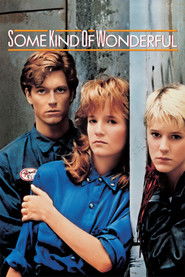
This is the first scene I remember where we got up to about 25 takes. Something went wrong. And also reminds me that Eric's hair was shoulder-length when we first shot this scene. We had to go back and reshoot it because Ned Tanen decided after he saw it, rightfully, that he didn't like his hair that long. And I hadn't told anybody that his hair was that long because this was only my second movie and I didn't really know everybody had to know that his hair was that long. I mean, nobody had seen Polaroids of him because I came back to the movie after another director had been replaced by me. So, a lot of things that are normally checked and double-checked weren't happening, and as a result, we had to kind of reshoot about two days after we gave him his haircut, and he wasn't happy about his haircut. You know, you got to remember Eric Stoltz did a movie called Mask where his whole face was covered up, and had a great time doing that. So, here I cut his shoulder-length hair off, which was, you know, a little bit like Samson, I think, to him, and he felt a little naked, understandably. So we got off to a rocky start. Look how it doesn't even match from those two shots. It's a completely different hairdo.
3:51 · jump to transcript →
-
This is the first day I shot. I remember I started crying. I was freaking out 'cause Howard the Duck just came out, and I was like, "I can't act." You had to talk me off the ledge... - I don't think this was the first. It was. Look at my hair. It's not the way it's supposed to be. Well, I think it was. So I rescued you from Howard the Duck? Yes, from the opening of Howard the Duck. You've never been grateful for that. I remember how Eric bicycled all the way up Laurel Canyon to give me the script for this.
37:56 · jump to transcript →
-
-
technical · 1h 35m 1 mention
Steven Lisberger, Donald Kushner, Harrison Ellenshaw, Richard Taylor
-
-
-
-
director · 1h 29m 1 mention
Jeff Kanew, Robert Carradine, Timothy Busfield, Curtis Armstrong
-
-
-


Related topics
Other topics that frequently come up in the same commentaries.