Topics / Performance
Casting
128 commentaries in the archive discuss this, with 465 total mentions and 72 sampled passages on this page.
Filter commentaries
Filter this topic by the film's decade or the type of commentary.
By decade
Across the archive
ranked by mentions · click any passage for the moment in the transcript
-
-
You know, I always like to add as much reality as I can to the film, so casting is a key already to try to get real faces, real, you know, Russians in this case. And there she is, and Glenn Close. Story has it that this movie originally was written for somebody else besides Harrison Ford. I believe it was Kevin Costner? Correct, yes. Beacon Communications, the company who developed the project,
1:51 · jump to transcript →
-
So this is back on LAX airport, but it's meant to be, of course, Russia, where Gary and his bad boys are coming. And this was, I think, Gary Oldman's first day. Yeah, it was. We shot that pretty early on. And boy, from the first day on, when I saw him doing this part, I just fell in love with this guy. Great choice. He was very good, very good. Yeah, I thought he's great. He's wonderful. Did you have a voice in the casting? That's always people ask me, do I have a voice?
9:19 · jump to transcript →
-
The real question is, does somebody else have a voice in the casting? No, it's all my voice. I mean, I cast the picture, period. And he was your first choice for that part? Yes. I mean, I would, of course, call Harrison Ford and say, Harrison, my idea for that is Gary Oldman. Is that okay with you? And he said right away, absolutely, yes. So, you know, if you have a movie star like Harrison for the main two, three parts, you double-check with him. You don't want to have somebody, when he feels totally uncomfortable, I wouldn't do it.
9:49 · jump to transcript →
-
-
-
I went to New York with Dino, and I was very nervous. This was Tony, Anthony Hopkins. The thing I did know and what I was confident about was the type of movie I wanted to make. Like I said, I went in there knowing the tone of the movie, my approach to the movie, how I wanted to not show any of the gore. I didn't want to make a horror film. I wanted to make a film that was psychological, emotional, and smart. That was what was on the page. And the only scene that Tony had a concern with when I sat with him was this scene right here. Tony was concerned that as originally written, his attack on Graham here was too graphic. By the way, it's an interpretation because 10 directors would direct a scene in 10 different ways and show various degrees of violence. It's about showing the details of the guts falling out of his stomach, or the blood, how much blood to show. And I chose to play it mostly on their faces. Once the attack happens... Here's my little homage to Silence. You see the... - I see the bug. You like that. So I chose to play the violence part of this scene on their faces. I love this book. This is an original. My prop guy, Brad, found this original book from France, Larousse... When I read it, I had no idea what the hell it was. It's the bible of cookbooks. - Yes, I learned that quickly. He found this real old French cookbook. There was a lot of dialogue about how do we sell his moment? It's really just a subliminal thing. It wasn't really supposed to be so pointed where it was like, "Oh, sweetbreads." I thought sweetbreads was brains but it's not. It's actually... Thyroid. -... thymus. I learned so much about anatomy on this film. If you work on a Lecter movie, you learn a lot about cooking. I thought Edward was fantastic. There is a tremendous intensity of performances in this movie. And really a dream cast as Brett already said. If you could have anybody in the world for these parts and be lucky enough to get them. It's pretty much what happened to us. Great actors want to play good characters. They want to play great characters and all of these characters, down to Freddy Lounds, and other smaller roles, were just written so well. They were interesting and dynamic. And these actors were interested in playing this. To convince these actors to do a third in the series, all that went out the window when they read the script. Certainly once they started working. There's our cold opening. I'm very proud of this title sequence because it was actually done two days before we had to lock picture. My editor, Mark Helfrich actually was the brainchild behind this because... You re-shot the journal here in a very interesting way. Initially, this was done in a much more straightforward way with the images very flat against the screen. Yes, a lot of times. Mark is kind of... Everybody on my team, from my AD to my production designer, are filmmakers. Mark is a filmmaker in his own right and he just understands the visuals and storytelling. I love how, you know... But this was written. - Yes, it was. But the way that the camera roams over these pages and when we go in very close and it gets grainy, the camera movement left to right, up and down, is all not scripted, of course. This is something I don't really have the patience for. Mark kind of took this book that he was fascinated by. I think he has a copy of it in his closet at home. He just knew every page, every frame and went with Dante and literally just shot. This is a wonderful opportunity. This kind of title sequence is sort of old-fashioned in a way. But it's a wonderful opportunity for a screenwriter to get information in quickly to cover a lot of ground between the arrest of Lecter and where we are when the movie is going to start. Covering a period of several years, you are doing that without any dialogue just by these images. It's a very useful shorthand. Danny did the same thing that Ted did with the script in this sequence that Mark did with the visuals in this sequence. Danny did the same thing with the music. I think the music here is so fantastic. It's very much like a Bernard Hermann score, which I knew was a big inspiration for Danny. Danny is a big fan of Bernard, and this was his chance. He's done darker scores, but they've had a kind of lightness, or comedic darkness to it. Danny did something here that kind of made people's skin crawl in the theater, like, "You're in for it. "If you're gonna sit through this movie, you'll experience some stuff. "Shit's gonna go down."
6:02 · jump to transcript →
-
It's hard to pull off this stunt with rising excitement, meanwhile. I'm amazed by him in this scene. It is a very hard thing to pull off. This is an example of a scene that my editor, Mark, was particular about, collaborating with me and telling me, "Brett, how are you gonna pull this off?" I said, "I don't know, I'll just shoot it." He had me bring Edward to the edit room and took a video camera and shot the scene for me, before showing the way it might intercut since there are devices in here which are the flashes, and you've seen it in hundreds of films and I didn't want it to be false. He said, "I have an idea of how to do this." He shot the scene for me before I shot it. It was a great reference. We adjusted and tweaked things, but this is all protecting the cliché. You can see the power that editing brings to a sequence like this. It startles you and moves the story forward in a way that the story is always a leap or two ahead of the audience. And pulling them along behind it. That's a function of great editing. It is important here because once the audience is ahead of you, you're in trouble, they are sleeping. It's the same thing on The Silence of the Lambs, I used to worry that we were cutting so many tiny beats that the audience would be confused. And Jonathan Demme said, "Better if they're confused "for five minutes than bored for five seconds." And this film is very tightly edited. Gentlemen. Ladies. This is what the subject's teeth look like. The impressions came from bite marks on Mrs. Leeds. This degree of crookedness... Here we... Where was this? - This was shot in LA. This is shot in LA in a government building that the city gave us. Here's Bill Duke. - He's one of my favorite actors. Again, an example of the meticulousness that Brett brings to casting. These wonderful actors who could be the stars of their own movies, who are playing supporting parts in this. I literally called them and begged them to be in the movie. I love actors. I love great actors. I spend as much time on the smaller roles as I do on the bigger roles. It's important because an actor who has one line can take you out of the movie and hurt it in my opinion. It goes back to the whole question of tone. A single wrong note will make an audience self-conscious, and pull them out of the movie. This film is the opposite of any of the films I've ever done. Family Man, that had dramatic moments, was still a comedy. So you can go farther with realism, but this especially, when it's dealing with the FBI, forensics, and scientific... -[t has to be grounded in reality. - Very grounded. In order for the audience to accept the extravagant parts of the movie, the more baroque characters in the movie like Dolarhyde and Lecter, scenes like this have to be very credibly rooted in police reality, in procedural reality. Would you give that up? The other thing also is, when we're talking about the tone, the choice... I was thinking about It, why I really chose not to show, not only because of Silence, because even Silence might've shown more violence than this film. Really, because the only scene we have is the biting of the lips. We certainly tried to hold it down. But I think the reason was because when I went to the FBI at Quantico and started looking at all these visuals of serial killers' work, it was so disturbing to me. It really bothered me. I said, "Why do I want to do this to audiences? "It'll completely turn them off." As with Silence, what you really want to do with this movie is a detective story. You really want to do a psychological thriller, a detective story. You're not trying to make a horror movie at all. Sometimes they're referred to as horror movies. I've never understood that. To me, these are thrillers, detective movies. In this scene, Harvey's Jewishness really comes out. "You're the light of my life." He sounds like my grandmother. I love that line. I can't answer more questions. Here's Philip Seymour Hoffman, a great actor. Who we should not have been lucky enough to get for this small part. Yeah. He actually wanted to play Dolarhyde, and I wanted Ralph to do it. I had dinner with him, and then called them back a week later. He wanted to play Dolarhyde, and his schedule wouldn't let him do a bigger part anyway. And then I called him and said, "I think you should do Freddy Lounds." He said, "Let me read it again." Then he called and said, "I'll do it." He would've been good as Dolarhyde, in a different way. He would've been amazing. - I mean, a great actor is a chameleon. Remember? With the tubes hanging out of me? Forget that prick. This was a very difficult scene, too. This was difficult because... And this was a scene where Edward had a Iot of input as we were revising the script before we shot. Edward said, "This is a difficult transition for this character to make." Here he's out of the loop, he doesn't want to be involved in the investigation. He's sort of done a favor for his friend and mentor, Jack Crawford, but he doesn't want to get deeper into this 'cause of psychological and physical scars. Because of his commitment to his family, he doesn't want to do this. Now he has to do the most difficult thing he could possibly do, which is to confront Lecter again. There was a lot of back-and-forth and a lot of revision, and a lot of talk about how we might credibly motivate this transition in the story. Edward was actually very helpful here with his thoughts. I think it works. Because it's not the cliché of the guy jumping back... Getting back on the horse and showing off. I'm proud of how it turned out. Again, it was really Mark's editing of the scene. It's also Harvey's matter-of-fact performance here. It could, potentially, have been a real glitch in the story. Where the audience says, "He wouldn't go back to see Lecter again. "He's scared to death of Lecter."
21:36 · jump to transcript →
-
I love this. You did this kind of stuff in Family Man as well. I love doing it. Doing home videos within a movie. It must be fun for you as a director. It is. It's a lot of fun. I love the kitsch kind of... And Kristi has an unerring eye for this kind of middle-class Americana. She has a lot of fun with these designs. And the casting of this is very important. You don't ever really get to know these people. They're dead before the movie starts. But it's important for them to seem like a family and to be real, and to be someone that we feel we could've gotten to know and care about. And this dialogue was great. These little lines. I literally read, like, 300 women for this part, because I was like, "I want her to be the all-American, real, likeable..." Yeah, she's wonderful. It's such a small part, but I couldn't... It was the last thing I cast. Marguerite Macintyre. Great actress. All right, you want a kiss? - I want one. The big romantic kind.
37:50 · jump to transcript →
-
-
director · 1h 34m 6 mentions
Scott Stewart, Jason Blum, Brian Kavanaugh-Jones, Peter Gvozdas
-
you know, they're not cast-driven. You know, it's about casting who you think is really right for the role, and a lot of times because of various considerations and the cost of movies, you know, getting exactly the right actor for the role isn't necessarily always the first, you know, thing on everyone's mind.
17:05 · jump to transcript →
-
Sometimes it's about casting an actor that has a particular value that's going to help you get financing for the picture or have a certain name recognition in a particular kind of movie or kind of role. Well, I think the joy of that, too, I look as somebody who works with the financiers on this, the joy of it is that we allow the stars to be really the director and the producer, Jason. I think that those are the stars that we build the world around.
17:28 · jump to transcript →
-
There we see Josh. He gets into it. In terms of casting, as we talked about Carrie and all the qualities she brings, she's beautiful and she's warm and she's empathetic and she feels reliable. She feels like a reliable narrator and I felt like that was an important quality for Lacey because she's the first adult character to believe in the movie as to what's happening.
23:06 · jump to transcript →
-
-
-
They improvised and fashioned a bed for Antoine. We asked co-screenwriter Marcel Moussy how Truffaut had cast his first feature, and Moussy told us this. For the main role, Truffaut placed an ad in France World that said something like, seeking young boy of 13 to act in leading role in a new film. He didn't even spell out any physical characteristics. So lots and lots of boys came to audition, and they came from just about everywhere.
36:35 · jump to transcript →
-
Francois was able to eliminate most of them on the basis of interviews. And then he had a few do some screen tests, including Jean-Pierre Léo. Jean-Pierre had run away from his boarding school in the southern provinces of France to take a train up to Paris to audition for the role because he had seen the ad in the paper. So quite apart from his actual screen tests, which were immensely successful because he showed a vivacity and a liveliness that were decidedly uncommon.
37:05 · jump to transcript →
-
working in cabarets in Paris, whom he could cast in minor roles. For instance, in the scene of the English teacher with stammers, that was a guy who did a nightclub act where his gimmick was stammering. Now, I'd written the script for the English lesson, and Truffaut had him do it with the stammering added. Truffaut's basic objective, since he wanted to go against the grain of what was usual in the movies, was to have fresh faces. In the case of his 13-year-old hero, that took care of itself.
42:31 · jump to transcript →
-
-
-
Tim Lucas
These questions may well have led to Lee Van Cleef being cast in a pair of Italian westerns as the anti-hero Sabata, the so-called man with the gun-side eyes, who wears much the same clothing and whose name means Sabbath. The bartender here is Ricardo Palacios in a very early screen appearance. He went on to much bigger roles. In fact, this same year, he managed to get bit parts in Dr. Zhivago, as well as a funny thing happened on the way to the Forum.
8:10 · jump to transcript →
-
Tim Lucas
Manco is greeted by a little hustler named Fernando, played by Antonito Ruiz, who the following year would be cast as the youngest son of Stevens, the boy we see riding the mule in circles to operate a watermill in the opening scene. As you know, this film is going to set up a kind of father-son relationship between Mortimer and Manco. And in this relationship between Manco and Fernando, we see a kind of son-grandson relationship taking shape.
31:41 · jump to transcript →
-
Tim Lucas
Of course, with a face and bosom like that, she couldn't help but attract the attention of Federico Fellini, and he cast her in an orgy scene in 1969's Fellini Satyricon. Her husband is played by German actor Kurt Zips, who provokes a hearty laugh when he steps down to reveal his true stature. He worked almost entirely in German television, and this Italian western appears to be unique in its exception.
33:50 · jump to transcript →
-
-
-
Tim Lucas
and a number of West German crime pictures, including The Carpet of Horror, Hypnosis, and The White Spider. Strangely, no German director ever had the vision to cast him in a Karl May western, though Franz Josef Gottlieb later cast him in Wild Kurdistan, an adaptation of one of Karl May's Orient adventures. It took his casting in Sergio Corbucci's Minnesota Clay to get him started in westerns.
10:04 · jump to transcript →
-
Tim Lucas
In fact, in 2003, when he was directing a film called Mystic River, Clint Eastwood had the wonderful idea of casting Eli Wallach in the film as a gun store owner.
33:37 · jump to transcript →
-
Tim Lucas
Sergio Leone valued the familiar, and he first offered the role of Tuco to Gian Maria Volonté, who had played Ramon Rojo in A Fistful of Dollars and the formidable Indio in For a Few Dollars More. Obviously, the casting of Volonté would have taken all of the humor out of the character and made this a very different film. Leone claimed that he got the idea of casting Eli Wallach, who started out in such hard-edged film as Elia Kazan's Baby Doll and Don Siegel's The Lineup.
1:07:46 · jump to transcript →
-
-
-
John Mackenzie
It's quite interesting, a lot of these characters have sort of gone on and become, you know, quite well known in other areas. Now here we had a guy who came out of the blue. We cast about three different people for this part of Charlie until, for one reason or another, it fell through. And then we had this, I think, a brilliant idea to cast Eddie Constantine.
17:34 · jump to transcript →
-
John Mackenzie
They were all Irish, these guys, who are cast in those parts. This is the Lamb of God who takes away the sins of the world. Happy are those who are called to his supper. It was nice to show that, you know, the Hoskins character, the Sian character, was such a sort of...
19:53 · jump to transcript →
-
John Mackenzie
really make them so effective. He feels it all so personal, it's a personal affront to his amour propre. I had a great casting, a lady called Simone.
43:28 · jump to transcript →
-
-
director · 1h 30m 5 mentions
A Nightmare on Elm Street (1984)
Wes Craven, Heather Langenkamp, John Saxon, Jacques Haitkin
-
I got to go. I think there's been an accident out there. This was a practical location also, I believe, in Venice, if I'm not mistaken. That's right. We were in Venice. The end of this scene is the scene that we used for the audition. I remember really clearly when I read for Wes at the audition, they picked this one scene with Tina. And it seemed like I did it a million times by the time we finally got to it.
6:44 · jump to transcript →
-
There's an interesting story with Johnny's casting. We headed down to four guys, and the other three were like surfer dude and, you know, the typical handsome kid and everything else. And at the time my daughter was visiting, she was about 13, with a friend of hers, and I said, what do you think, surfer dude? And they both at the same time said, Johnny Depp. There was like absolutely no doubt in their mind. It was completely unknown at that time, but they just fell in love with him by seeing him once or twice in casting sessions.
7:16 · jump to transcript →
-
Yeah, it's all there. You had that quality of the girl next door, the all-American girl, right? The first casting, I just thought, well, I found Nancy. The brick. The brick. Is it the brick? I think it was Marilyn Monroe. Their hair looks a lot better than mine. You know what I mean. Yeah, well, the camera likes you. Thanks, Josh. That's very kind of you to say that.
58:17 · jump to transcript →
-
-
-
It's that Loudon Wainwright song, there wasn't a man who couldn't speak. And who's this woman? Wasn't she actually married to someone like... Oh, she sure was. She was married to a real rocker. I thought she was... Was that Jackson's girlfriend? Maybe that was Jackson's girlfriend, but she'd been married before to someone else. As far as the casting goes, there were situations like, for example, Howard Hesseman. His character did not exist until the day before we shot it. Originally, it was going to be a rock and roll...
24:51 · jump to transcript →
-
There was a scene that was only a bit of which came into that montage, but there was a piece in which we were so blasé and tired and weary of the road that we had the girls destroy the hotel room because we were too tired to do it, so we just told the girls to do it. And the only thing left from that was Tony hitting the TV set with the cricket bat. I miss you too, darling. This is again the Bonaventure Hotel downtown. We had great casting sessions too.
27:41 · jump to transcript →
-
Wonderful Smith. Originally cast in the part was a man named Spodey Odie. But he died right before, you know, his call time. I also had this experience for real. My friend Danny Rifkin is occasional manager of the Grateful Dead, who have years of occasional management to their credit. And he invited me to see them at Madison Square Garden. I was living in New York. Madison Square Garden has a circular rotunda to it. And I went around and around and finally went in the wrong door and was in Felt Forum and watching two light heavyweights boxing.
49:00 · jump to transcript →
-
-
-
Eleanor Bergstein
And without understanding that, you didn't understand most of the story. That's the kind of line that you later realize is so important and only when you consult people. Here, of course, is our wonderful Patrick. I should talk a little bit about casting and how we first found Patrick, but first I'd like to talk about Emile Ardolino, also...
6:43 · jump to transcript →
-
Eleanor Bergstein
We spent days and days rehearsing the dirty dancing steps, and we had a theory. We had eight dirty dancers who we had cast in New York, and Kenny Ortega, our wonderful choreographer, and I had danced for them, and we'd hired these kind of gypsy dancers who were great, who you will see. And then we had a whole crew of dancers here in North Carolina, and we, for three days, shot the dirty dancing sequence. When...
13:58 · jump to transcript →
-
Eleanor Bergstein
Jennifer is absolutely wonderful. We had had a camera running in the dance department all the time that we were doing rehearsals, which was very useful, because when Jennifer went back to dance, she said, I was never that bad, and we had to show her the early sequences to show her. There is Cynthia, who is so beautiful. I think it's just wonderful. And now comes the sequence that I think everybody remembers so well, when a baby comes up. Now, we were talking about casting earlier,
17:38 · jump to transcript →
-
-
-
And here's the introduction of our hero, Peter, or Murphy. Of course, when we were casting, we were not only looking for a good actor, we were also looking for an actor that had a good jawline. Because that's the only thing that you can see when he puts the mask on later, the robot mask. And we felt that if it would be a weak jawline, that that part of the face that was visible would make him look weak. So it was not only that Peter...
3:29 · jump to transcript →
-
Nicely done, Mr. Verhoeven. Yeah. I don't know if it was a stuntman. I think it was an actor. No, no, that was one of the stuntmen that... We had a lot of stuntmen who had to have lines in this, and they did really well. Right. Well, we cast 80% of the movie in Dallas, isn't it, Jon? Yes, because we could not take the entire cast from Los Angeles. Because we had no money, isn't it? Right, of course. And it worked out very well, because we were forced to be extremely creative, and the casting women...
35:49 · jump to transcript →
-
Yeah, I remember the day you shot this, Paul, it was a real acting challenge, because you said both of the actors wanted to really act, and all you wanted them to do was be as cool as they could. As possible, yeah. And you kept bringing them down, and it reminds me of a tape we did when we were doing the casting, and Armand Assante, who's a brilliant actor, came in, and maybe not the right actor for this kind of a part, and he was reading this moment where the guy sees himself, and he started to scream and tear his hair and fall on the floor, and I always think of that when I see that scene, and thinking...
1:22:24 · jump to transcript →
-
-
-
Freddy Shoop, remedial English, right here. Everybody just calls me Shoop. Okay, Shoop. Why am I here? Oh, thumbtacks. What a talent, though, huh, Carl? I remember when she came in to read and how torn away you were with her. She was terrific. You know, the same reaction I had to her is the reaction that when she first came out from the Midwest, Kansas, and the first audition was for
8:12 · jump to transcript →
-
Sweet Bird of Youth, I don't know. What was the play? Yeah, she had done that at the Taper. Yeah, Sweet Bird of Youth. Maggie the Cat. She hadn't done anything big before and back home. She came and auditioned and got the job. Yeah. I mean, that's an extraordinary talent. I saw her in that. She was wonderful. For someone to reach on down through the sleaze and the slime, pick him up and hose him off. I mean, who knows? If we fail with even one shot, we might be losing the next Ted Koppel.
8:40 · jump to transcript →
-
Wow, this went so wrong, so wrong. Nothing went wrong on this whole shoot. These kids were so nice and so cooperative. You were terrific with them. I remember that each and every day they all had different ideas. They'd come to you every morning and they'd say, how about this, how about that? And you'd listen. You were so patient with every one of them. The whole trick of being a good director is casting correctly. And by casting correctly...
12:14 · jump to transcript →
-
-
multi · 2h 19m 5 mentions
Martin Scorsese, Nicholas Pileggi, Ray Liotta, Lorraine Bracco + 9
-
shot purse and a beret and a writing crop. I am the von Stroheim of my book. That's my book. I put the music in if I want music. I cast the book. I describe people I want to do. The movie has nothing to do with the book except it is the basis of the movie. But the vision of it and the mood of it and the color and the real casting for the movie, all of that's the work of the director. What the author of the book has to do
15:05 · jump to transcript →
-
of a world filled with gods. You know, this guy who had been up there with the gods up in Olympus and then was cast down. But he'd look back and he'd say, ah, there was Jimmy two times, you know. And he'd go, I mean, disreputable characters all, but in his mind as a young person, they were gods. And yeah, great warmth and affection between them all, even though within maybe a year or two they'd be shooting each other. Beautiful.
18:57 · jump to transcript →
-
I had auditioned for After Hours. And Marty has been the only director that has ever called me to say, Lorraine, I'm really sorry that I'm not going to give you this part, but I want you to know that I think you're extremely talented and I know we'll work together one day. So it was a big blow.
40:23 · jump to transcript →
-
-
-
The way he first came up as a candidate to direct this movie is kind of interesting because it actually... Teague's name came up while Marquand was still technically assigned to the movie. What happened was Brenda Feigen was visiting her brother on the set of Oliver Stone's Wall Street. Now, this was obviously a couple years before Charlie Sheen, one of the stars of that film, was cast in Navy Seals. But Brenda Feigen's brother...
16:02 · jump to transcript →
-
Go back to school. I'll do the college route. I'll stick to the plan. And he booked his first audition, which was Grizzly 2, which wasn't released for many years. Right, think about until like 2020 or something. Even though it had George Clooney in it and Laura Dern, Deborah Foreman, Louise Fletcher, John Rhys-Davies. I don't know why it wasn't released exactly. But anyway, the fact that it wasn't released, it kind of spooked him. Like he felt encouraged that he booked the job, but he was kind of spooked and...
50:17 · jump to transcript →
-
And then he moved to Hollywood. And his first week here, he auditioned for a non-union karate film that paid $90 a week. So it wasn't like he wasn't getting a SAG card. He wasn't getting a lot of money. But it led him to work with drama coach Vincent Chase, which kind of makes me wonder if that Entourage character is named after him. But Vincent Chase's other students were Michael Biehn and Bill Paxton. So again, we're back in the same circles.
1:10:49 · jump to transcript →
-
-
-
One other interesting note about this scene, that is a real keg with real beer, and Jacob Pitts, our delightful Cooper, really liked these scenes a lot. It's what we like to call method acting. That's one of the things we learned. Or simply drinking. - Aren't they the same? I guess we should introduce our cast, now that you've been watching for ten minutes. Scotty Mechlowicz as Scott Thomas. - Which is why we cast him. Make it very easy on ourselves. The beautiful and talented Michelle Trachtenberg as Jenny. And Travis Wester is her twin, Jamie. And that's Jacob Pitts going off to take a leak. And this was another one of our delightful cameos that we got because we were in Prague. Yep, that's Matt Damon, which... Everyone in the theater sort of goes, "It can't be. Is it? Is it really?" Why is his head shaved? He was actually in Prague shooting Brothers Grimm for Terry Gilliam at the time. And we actually went to college with Matt years ago. So we've been sort of friendly ever since. And he was in Prague and we asked him to do a day of work for us, and he agreed. The biggest favor ever. - Thank you, thank you, thank you, Matt. Yeah, Matt's just hilarious here. Matt's not watching this DVD. We're going to make him watch it. That'll be another commentary. That would be the biggest favor he's ever done. But the band was actually started by some other friends of ours from college. I guess this is as good a time as any... A couple of them were of Matt Damon's roommates in college. The band Lustra... - One of them. The band Lustra, good guys. And they wrote the song, which is really fun. We've known each other since college. I'm going to just talk now 'cause no one's listening to what I'm saying, because there's a naked girl on the screen. I wasn't listening. What were you talking about? Now this, in the unrated version that we're watching, she started off topless. In the theatrical release, if you saw it, we actually cut a different version where she started off with her top on and Cooper talks her out of her top. - He convinced her to take it off. And it was very strange, sort of, when you get into this whole nudity thing. Obviously, it's a hot tub scene, but somehow when her top was on and he talked her out of it, while it was a very exciting moment that he talked her out of it, it oddly made her dumber, even though she is sort of a stereotypical dumb blonde. - Right. And we always liked it this way, the way you're seeing it. We liked the scene to answer the question, "What is beyond gratuitous?" That's the answer. - There it is. And there they are. The answers. The other stuff we added back into the scene is just more of him screwing around with her. Because, to us, once you're at the nudity, it's how far he goes. This scene... - It's not about nudity. No, this scene was always about the crazy extent to which he got her to play with herself, as opposed to just getting her to take her top off. By the way, the banner in the background originally... This is what happens when you work in Prague. It's a big congratulations banner. The first day when we got there, it just said "congratulation," like one singular congratulation, which is a word we didn't know existed. Sort of a funny story about this scene, which, hopefully, we can tell. We were actually rewriting another movie, which I guess we'll leave nameless, that had a hot tub scene in it and we came up with this idea, which was the fact that a guy saying, "You have a smudge. You've got something on you." And we were really enjoying what we were doing so much that we didn't put it in that script. And we're like, "We'll use it one day." And here it is. Screw it. The movie was called Out Cold, I think. Yeah, exactly.
7:55 · jump to transcript →
-
The other thing I was gonna mention... We're constantly behind in the mentioning. Part of the reason we ended up in Prague and actually ended up with Allan was because of Neno. - Yeah. Neno Pecur, who was Croatian. We hired him as an art director to scout Prague and to scout the real European locales before we knew we were going to Prague. Basically, he would go to Paris and go, "This is what it really does look like." Then he went to Prague and said, "We could do something like this here." And from his pictures, we used some of his actual locations that he took photos of and made the decision to go to Prague. And then Neno has worked with Allan for many years as his art director, and he helped us get Allan. The two of them, their team... They brought Bill... Cimino. Our set decorator. - Cimino. That's right. Just fantastic and along with the guys from Prague. I think it's now time to mention, though, at the robot scene, which was the first time... We've been writers for a long time and you sort of go, "Look, I think we know what this is gonna be. This is gonna be really funny. It's gonna be a slow-motion kung fu fight scene between two people being robots." You write it and it seems funny. There's the old joke about the writer writes "Rome burns," and the director has to realize that. We were on the spot here because it was easy when we wrote it to just hand it off, but now we handed it off to ourselves. Actually, this is one of the things... - At one point, we cut this, actually. At one point... - We cut it from the script. We talked about cutting it. We were afraid we didn't know how to realize it. We just were like, "What is this? This could be bad." Left it in for a table read. - We left it in for the table read. And it got such huge laughs at the table read that we realized, "We gotta at least try and shoot it." We then initiated a worldwide search for a robot man. This is J.P. Manoux, who's an incredibly talented actor. We found him here in Los Angeles. Yeah. We looked at all these mimes... We looked at real French guys. - ...weird acrobats, and French guys whatever, and, of course, a guy from LA who was actually a friend of a friend and was in the Groundlings, of course, ended up being a really good guy. He is just outstanding. - And he came in with this ability... I mean, a lot of what you're seeing, like him laughing and just his attitude as a French guy, was in his audition. We were also very lucky that Scott... - Scott, exactly. ...knew how to robot. I guess Scott grew up watching Shields and Yarnell... No, no. J.P. - Was that J.P.? Scott had an acting teacher... - Who was in the Barney costume. Yeah. - Okay. And we went there on a Saturday to basically work it out. And we had blocked off an entire Saturday. We choreographed the fight with little bits of Enter the Dragon and some Matrix in about... Twenty minutes. - Yeah, like, 20 minutes. And the first time we did it in Our crazy wide shot... because we knew to get a master... the crew laughed, and we were like, "Oh, okay." It was also-- This was pretty early in the schedule. And I think it was maybe the first time the crew thought, "Okay, these guys actually know what they're doing." Like, "This is something we haven't seen." Wrongly, but they thought that. - But they assumed it.
29:59 · jump to transcript →
-
We're in the French restaurant. You cannot tell by looking at everybody, but it is over 100 degrees in there. They turned off the air conditioning at this restaurant. No one told them to, but they thought they would help us by turning off the air conditioning. And the kids are just sweating. I mean, you can't even... If a take went wrong, we'd have to stop. You couldn't just keep rolling because they're dripping. And we actually had a guy, this poor English actor that we cast, who was actually really funny, who came in and was so hot and sweating so badly that he just couldn't focus. It's in the deleted scenes. You'll see some very funny scenes with a French waiter and some funny French waiter flashbacks. We just had to cut it, 'cause it wasn't... Featuring Jim Morrison and General Patton. The other thing... It'll come up again later, but them putting the food down leads to the food map joke, which will be coming. I'll tell that story later. It's good to-- We'll earmark it. - A little preview. This is the main Prague train station. And our production... - Again Allan and... Allan and Neno dressed it, so that people actually got off the train, a couple of people, and thought they were in Paris 'cause they saw the signs and they were very weirded out 'cause they had gotten on a train in, like, Hungary somewhere and they thought they were in Paris mistakenly. Michelle being a fantastic sport. The first of many indignities that she was forced to suffer. And Coca-Cola being a great sport. This is what shooting in a train station is about. Another one of these, "We are idiots, we don't know, so we'll set a scene in a train station." If you notice in the background... This is a game Alec likes to play: train, no train. Okay. This is my little game in this scene. Behind him, green train. That train is gone in the next shot. - Okay. No train. But who cares about the train, I mean... Train. - Again, the lesson learned... It's my game, I'll play it. - I know, but look at these backgrounds. No train. - These great, deep backgrounds. We are in a train station in Europe. We are not in Vancouver. No train. Train. - Michelle's scream turn is one that... She's just... - She did it fantastically. Different train. - We caught that attitude a little bit from our own little Seinfeld experience. It's what we like to call a Julia Louis-Dreyfus, Elaine move. The sort of being sweet, screaming and then going back to sweet. And Buffy was a hilarious show. - Can't say enough about Michelle. And I don't know if Michelle always got a chance... You know, she was sort of a supporting character on that show. And on this, she got to really shine with her comedy. Anyway, here's the maps. What I wanted to say is this is a Raiders of the Lost Ark map parody, which is a joke that is about, I don't know, ten years old. It's something we wanted to do a million years ago and again something we saved. There's the Jackie Collins book again. And the headline, "Merde Alors! L'Hooligan! I actually-- I don't know if I even told you guys this, but I was at an Iron Maiden concert about six months ago and I saw a guy wearing that Deep South Monster Truck 1987 shirt. Was that guy you? - Or whatever it is-- Rally '79. No, it wasn't me, but I envied him. Fred Armisen. - As what we... In the script, he's called the Creepy Italian Guy. Not, as some people wrote down in the test screenings, the Train Homo. We actually call him Creepy Italian Guy. And, again, just production-wise, we're shooting on a moving train here, which is yet another of our naive mistakes. - Do not shoot on a moving train. We thought, "Just put them on a train. It'll be easy." Just the most cramped quarters, limited angles. We actually shot this one scene in three different compartments. We had a compartment where we could look one way, a compartment where we could look another way... We pulled out walls so we could shoot different ways. And then we had one compartment where we were shooting in, one that we were shooting out. It was madness. - Plus... Fred, by the way, is just so funny in this. We, last minute... - We also... I'm sorry. I do wanna say that we also then shot it both moving and then did other shots not moving so that we could do the light effects of the tunnel. Which is a poor man's process, because there's no tunnel. This is obviously on a moving train. - 'Cause you can see the window. And then when we do the shots where it goes from light to dark or from dark to light, we pulled the train inside a barn and blacked it all out and then did the lighting effect by hand. So, the Creepy Italian Guy, Fred Armisen from Saturday Night Live... This was another thing where we originally went into this thinking we will find a genuine Italian guy. And, again, we searched the world for a real Italian guy. A lot of Europeans are not funny. They just didn't get the joke. - It's a language problem. They were simply performing the words of the script, but didn't necessarily have any idea what they actually meant. And Fred is someone who's just fantastic on SNL. That little shrug is awesome. So, that shot, for instance, is inside. I think we hired him... - And that's inside. We hired him on a Sunday and he was out there on Tuesday. Yeah. - So, really amazing. And, again, these are all these little touches that he added. I think Travis, who plays Jamie, is fantastic with him. They were a great pair. This was something we never landed on. - I don't think we ever got this right. We had a bunch of different things we shot for this darkness sequence. We had a lot of flashing lights and weird little things of Fred in various stages of undress. - What was going on in the dark. In the end, it was just undercutting... - This end reveal. Which, again... - And, I think, for the unrated version, we put this back. For the theatrical release, we kind of cut right here somewhere. No, exactly. - And then, for this one, we decided to let it roll. - This is something we just enjoyed. It's just that a guy with no pants sees more people and goes in. Actually, that's where we're sitting. That's the compartment where we are sitting with the monitor. To do it all over again, one thing that might've been enjoyable was had we come running out of the compartment. Just, the idea that the man with no pants... This is the very first thing we shot. - First shot ever. It's actually an interesting way to see our cast. The train revealing our cast and us seeing them for the first time. It was a neat experience. - A horrible-looking little train station. The first time we visited it was in winter and just looked awful. And, again, Allan and his guys just came in there... And I think, actually, the manager of the train station asked them to leave everything. Left it all, those flower boxes and the shutters, and just turning it into this beautiful, little French countryside place. That was always a fun shot, where he lays down and jumps back into it. You know, and again, day one, we must've done 30 takes on everything on day one. One of the things about comedy... - We also shot close-ups of everything. Every angle. Everything. - This is more toward the end. This is one of the two days we shot outside of Prague. This is not a great example, because this is more towards the end, but I also think we screwed up here. That's the thing, you look back... - We did it all in one shot. Which I think is the way to do this. We did do it all in one shot, but... One of the things, I think... When I look back at the movie, a lot of our starts of scenes, I find we... Definitely something we were never thinking enough about. So that you're kind of going, "We're going to this beach." And then they're just sort of walking. And maybe had we come off a sign... - That was one of my favorite things. Definitely a fun joke. - Also, it was freezing. You can see Scott... - It's freezing. The gray sky. Wish we'd gone in and maybe colored the sky blue a little more. 'Cause the sun does come out. But just something that maybe... If the camera had moved or something to kind of say "beach," as opposed to that weird stock shot of nothing and then this. And this scene seems to get a lot of people in an uproar. Everyone sort of sees it-- and people... There we are. - Right. This is one of the two days we shot outside of Prague. This is in Rostock, in former East Germany. This was apparently one of Hitler's favorite beach resorts. It's very close to where Wernher von Braun used to develop the V-2 rocket. Wall of cock. - Speaking of V-2 rockets... Everyone seems to laugh at this scene and also go... It is everyone's favorite and least favorite. In all the test screenings we did, it was the most favorite scene and also the least favorite scene. And I think a lot of it had to do with... There were a lot of, like, 18, 19-year-old guys who felt obliged to put it down because they needed to state that they weren't gay. We originally started off shooting it with sort of an idea towards an Austin Powers kind of a thing. You know, you could even see a couple of guys with ridiculously long cameras and stuff trying to cover penises. - Kind of strategically... And once we were there, it just looked dumb and we realized, to some extent... I mean, to us, the only rule is ever: "What's the funniest thing?" And, ultimately, 50 penises was the funniest thing. Everyone goes, "How did you get those guys to take their clothes off?" It's like, "This is Germany. We showed up with a camera. They were already naked." The most surprised people on the set were those 50 naked German guys when they found out they got paid. It was really weird. Like, we'd take a ten-minute break and usually if there's any nudity on an American set, people dive into their robes. These guys were just letting it hang out. If these guys could've taken more clothing off, they would've. We had this amazing German AD that day. Andreas. - Andreas. Who just yelled at them and yelled at their penises. By the way, Michelle, who was very nervous about the bikini scene, couldn't look more beautiful. She was, you know, "The bikini scene, the bikini scene." And it was sort of this big thing in her mind, which... She was nervous about it for no reason 'cause she... But I think also David went out of his way to make her feel comfortable, and also to light her beautifully. Also, again, this was very near the end of the shoot. And I think there was more of a comfort level with the crew, too, and the main camera team. The comfort level was bothered a lot by the fact that Jacob, once he took his pants off for that first naked shot, wouldn't put them back on 'cause he knew it bothered everybody. I think he really enjoyed how nervous he made everyone. And poor Eggby. Poor Eggby had to go up there with the light meter. That guy-- There was a lot of protest, a lot of discussion about the old man yelling, "Chica, chica." Which... For whatever reason, it's one of our favorite things. You get a shot of him. There he is again. "Chica, chica." Which always gets a nice rise out of the crowd. This is the most beautiful shot in the movie. Not shot by us. Shot by... - Gary Wordham. ...Gary Wordham and his unit, his second unit. And it's just absolutely beautiful. And here we are on another train. But, again, we are... Because it's a night shot, we are faking this. It's a poor man's process. Occasional lights moving on the side. Because we could not do a moving train at night. So, we are inside for all of this. SO, this is, like, our fourth version of a train car. And, originally, there was... You'll see in the original script. There was another train in the deleted scene. There was another train scene of them running onto a train. This had happened earlier. It was just too many train scenes and the movie just not moving. That, again, was another one of the lessons we learned. As a writer and then a director, there are lots of things on the page that are really funny, but sometimes, when you're actually then watching the movie, "Why are they still in Paris? Why is it taking so long? Why have they not gotten to the next place?" There were too many train scenes. That one flew out, this one was in. Even if the individual scenes are funny, sometimes the cumulative effect of all these funny things makes it worse. - That's exactly it. This is a joke we created after we had shot what we did. Thanks to our music supervisors extraordinaire, John and Patrick Houlihan, who found this amazing music that was playing under this fantasy. They found this piece of music and said, "What do you think of this?" We thought it was hilarious. We said, "What is it?" And they said, "Well, it's David Hasselhoff." We thought it was so much funnier if you knew that it was David Hasselhoff. So we were like, "Is there a video?" "Yes, there is." And not only is there a video, but this is the video. And it looks something like this. Which is incredible. - That is a real David Hasselhoff video. We're still not sure whether David Hasselhoff knows that his likeness appears in this movie. I think we licensed this... - David Hasselhoff, if you're watching this with Matt Damon, thank you. Thank you both. If the two of you are just hanging out and watching this, you were fantastic. But, yeah, the German company licensed it to us and he may or may not know. And Fred back again. Which makes everybody very happy. When we were cutting the TV spots and stuff, we tried to use this lick. It's one of the things that people felt we couldn't put in television spots. We had a really hard time cutting spots that... Even though it's an R movie, I guess spots for TV need to meet both... They have to be G. - They have to be G. 'Cause trailers need to be G. You can't have anything in the commercial that isn't in the trailer. Plus, you also have to meet network standards. So, we had a really hard time putting things in the commercial. - Showing people what's in the movie. Yeah, telling people this is a good movie. Now we're in Amsterdam. This is interesting... Except we are in Prague. - We're still in Prague. This is... Yeah, it's the Kampa section of Prague. Again, one of these early locations, they found this little canal from the original scouting photos. "My God, we can even do Amsterdam there." This is also-- In Prague, there's a very famous bridge called the Charles Bridge, which is basically right above the kids. There are just hordes and hordes of tourists lined up watching this. Yeah, it was like shooting with bleachers there. This was spring, when it was packed with tourists. And this is an example where on the deleted scenes, originally when they arrive, they go to a youth hostel for a very funny scene that we ended up cutting out because, basically, there was too much Amsterdam. They had an adventure and then they had these separate adventures. It's another one of these tough things, where the scene itself was funny, but its overall effect on the movie was negative. And then actually, oddly, if you go back, originally, Amsterdam was actually very different. Originally, in the script we sold, there was a scene where, instead of going to this sex club... - With Cooper. Instead of going to the sex club with Cooper, there was this whole nother scene. Actually, everything was completely different. The original spec script we sold is on the DVD, so you have to go back and check that out. Definitely worth checking out. - By the way, we should mention her. Lucy Lawless. - Lucy Lawless. Just funny, just hilarious, obviously, and gorgeous. The entire crew was just in love with her. So we shot long on these two days. By the way, when we were shooting on these days, you've never seen more grips and crew members holding lights that used to be held by stands and holding fans that used to be hung. Everyone needed to be in this room at this time for some reason. And she also-- She, being from New Zealand, knew our A camera operator, who we should also mention. - Peter McCaffrey. Peter McCaffrey, who is absolutely fantastic. The whole A camera team, our main guys, were just incredible. Just never a problem, and just really patient and wonderful with us. The brownies. I remember these brownies... Michal, our Czech prop man, would always come in and say, "I've got more brownies for you." He'd show up with these piles of different kinds of brownies from every bakery in Prague. Which, oddly, social decorum dictated that we eat. We didn't want to be rude. So we'd start these meetings looking at all these props with all these brownies and by the end, you had chosen a brownie and also eaten it. You weren't sure which one you actually liked. You were sick to your stomach because of the meeting and how badly it went and also because we'd eaten 50 pounds of Czech brownies. This is the lovely and talented Jana Pallaske who we found in Germany. We did casting in... - London. Here. We started in LA. We did casting in New York. We did casting in Chicago, Vancouver, Atlanta, I believe, Miami, and then we went to London, Munich, Berlin, Prague. We had people in Paris. We had people in Italy. - Rome, Paris. She came out of this, and again, this was another area where things moved around in the script. Originally, this was in London. - In the original script, this was Cooper... This was Cooper in London before they met the hooligans. When Scott and Cooper first got to London, they went to a pub and they met these girls, and this was a Cooper scene. Cooper went out in the alley and was getting blown and got robbed. Which happened to a friend of ours, by the way. And we just decided that there was... - Named Out Cold. There was too much... There was too much stuff going on in London, so we moved it to... You wanted to get to the hooligans. And originally in our script, Jamie was with Scott and Jenny at the brownie bar. While Jacob was at the Anne Frank House. We just decided that they should all split up and have their own stories here. And also, what if Jamie has all their money and all their stuff and he's the one who gets robbed... - It seemed like a good plot point. I mean, it is sort of traditional, but with Jamie playing... I'm sorry, with Travis playing Jamie as sort of the somewhat traditional, you know, stick-in-the-mud, him having a little bit of a sexual escapade as opposed to Cooper, who's more lascivious, it became a funnier scene. It also helped Cooper out because Cooper wants sex and he keeps getting... He gets a version of it in this scene, but not what he wanted. Not quite the version that he wanted. - Not what he was expecting. As opposed to going to London immediately, hooking up with a girl. It oddly felt a little strange that we were going to get him together with Jenny at the end of the movie after he had gotten blown in an alley. Also, he's looking for crazy European sex and he got it right off the boat. That is a crazy outfit. - Yeah, that's the sex superhero. She is the sex superhero. As are these guys. - One of these guys is a Czech policeman. Vilem. Guy on the left. - I can't remember what the other guy does. The other guy is a large Czech clown. They were just sweaty and having a ball. Their names are Hans and Gruber, which is a small inside joke, the name of Alan Rickman's character in Die Hard. Hans Gruber. And this is a very odd scene. Anytime you're not actually seeing our two main actors, a lot of this was done second unit. - Like the shot of his ass, the shot of him with the clamps was second unit. We had a limited amount of time with Lucy. We had two days. - That's second unit, not Jacob's hand. So everything that we had to get done with her and him, we did, and then what was really helpful was we edited it... Not we, our editor edited it. - Roger. Oh, yeah, mention him. The whole editing staff, actually. We had them over in Prague with us for reasons like this. Roger Bondelli and his assistant. Marty Heselov. - Marty Heselov and Davis. Davis Reynolds. And basically, he edited what we shot and it allowed us to go... "We need this, we need that." This is things we're missing which we could instruct the second unit to get, such as guy wheeling in cart, close-up of guy doing the shocking. And it did help having the editor there, which was something originally... The editor was not going to be with us in Prague. Very helpful to have the editor there to be able to look at scenes to know what we wanted to change. That-- We're a little behind. That was Diedrich Bader from The Drew Carey Show, who was hilarious. Really funny in Office Space and in The Drew Carey Show. And flew all the way out to Prague to help us out and did a day of work. He said the last time he was there, he'd actually been here in '89. He'd gotten drunk, climbed up a statue, fallen down and broken his arm, so he was happy to come back. The pot brownie scene-- It's so funny. When you show them in front of an audience, all the sort of younger kids, just the very fact... The mention of Amsterdam got people to go... And then the fact that they're actually doing pot makes them laugh. This, we were writing on the fly. We realized the scene needed something. He needed to say something embarrassing. So he came up with the gay porno stuff. But we tried, like, three or four things. When he was a little kid, he ate dog poo. "They told me it was a candy bar!" - Really high-class stuff. But this guy, who plays the Rasta guy... - Go Go Jean Michel. ...| think we did probably ten takes with him and he got each line right one time and we ended up using it. But he cuts together great. I'm not sure, when we were doing it, I ever actually thought the microphone was picking up a word he said. Yet, oddly, it was there when we got to the edit room. Helder with his walk-off home run right there. "These are not hash branches." Because I think he had been eating hash branches earlier. Yeah, he was not an actor as much as a man who had smoked a lot of pot. And again, ultimately, this was a longer scene. There was more to do about not being able to name the safe word and the monkey was originally brought out and you just start trimming 'cause, again, you're just in Amsterdam too long. We went into this scene... There was another beat where she brought out golf shoes with big spikes and was hitting him in the ass. - We cut that almost immediately. That we cut on the day we never filmed, because we were way over time. And we ended up shooting... - This actually cuts together great. These few moments. It's a huge charge to see this thing. That is a huge charge. - Then to the f#ugelkenhaimler. The flugelkenhaimler. Gotta mention Jeff Jingle real quick. Jeff created that. - Jeff designed and built that and then came over to Prague with it, traveled with it. How he was not arrested and thrown into jail by the customs people, I don't know. - Just did an amazing job on that. There you can see the Charles Bridge. - Yeah, the Charles Bridge is behind him. We lost out. We should be making these Vandersexxx T-shirts. Someone is selling them on eBay, but they're one color. They're wrong. If you're the person who's making them on eBay, just make them the same way. But it's a fun shirt. You can see all the bugs that are flying around there. We did it as a crew shirt, actually. We gave it out to the crew. Well, this is dawn. We shot all night. This is dawn for dawn. No, no. We shot this... This is dusk for dawn? - This is dusk for dawn. This is the first shot. We were shooting nights on the bridge, and that was the first thing we did, because we were shooting that Jamie thing and we ran out of time 'cause It was getting too dark. If you go to your deleted scenes, you will see a scene that sort of happens right about now, which is Jenny... Michelle Trachtenberg-- saying, "Look, boys, I'll take care of it," and she tries to sort of strip to get them to hitchhike on the autobahn, which is impossible. Again, we were out here on this highway way too long. This is the same deserted highway where we shot the bus driving around. Also, it was freezing. - We were here way too long. It was 30 degrees and drizzling. - This was, again, continuing the rule of every time we tried to do a close-up on Michelle, it rained or hailed. She was such a trouper. Cooper's shirt, by the way, says, "I Love Ping-Pong." This phone joke was interesting. We originally had the first one which took place on the bridge in London, and that always got a good laugh. And this one never really gets that good a laugh. But there's a third one later, the comedy rule of threes, that only really works as good as it does because the second one sort of exists. And so we left it in, even though we never loved it. This is Dominic Raacke, who is basically like the Dennis Franz of Germany. He's a big cop show star in Germany. Our casting woman-- What was her name? Risa Kes found him. And actually, there's another... We were talking about the clearance stuff earlier. God, yeah. - We shot about eight takes of this guy and you can see that thing hanging from his rearview mirror. Originally there was a Tweety Bird, a Warner Brothers property, hanging from that thing and we shot about eight takes and we moved on to a different shot and somebody was looking at playback and said, "Is that Tweety?" And we looked at the playback. "We'll never clear that." - And we just decided we'll never clear. So we had to go back and reshoot everything we had done. And the camera guys thought it was so funny that we had screwed up that it became a running joke. They kept the Tweety Bird and they began adding it. Every time we would set up to do a shot, they would roll a little film before we ended up doing the shot and they would put the Tweety Bird in front of the camera, so we have a reel somewhere of that Tweety Bird in every location that we shot. - And it's fantastic. He's wearing a pope hat. He's in the hot tub. We'd love to show it to you, but Tweety doesn't clear, so we can't. So just imagine every shot in the movie with a Tweety in it.
33:13 · jump to transcript →
-
-
-
How did you get that out of her head? She was open to having a craniotomy. I was like, look. Keri is so perfect. She will do anything for... Okay, now, here we go. We got Fish. You can't say enough about Fish, bro. Fish, I've known since I was a teenager. Isn't that amazing? I know. And I can't believe this is the first time that we've worked together. That's incredible. I know. He's one of those guys, and when we were talking about casting the movie, it was so important. Did we miss my... I missed the chocolate. Okay.
27:57 · jump to transcript →
-
He just said the chocolate line. Did I miss the chocolate line? I love the chocolate line. But it was so important that we cast the movie, for me, that we cast the movie with actors who, if I see them on screen with you, will hold their own. Because I did feel like it was a risk, given that it was you in this movie, that you wouldn't really be paying attention to other people. And so when you have actors like Billy and like Fish, who...
28:26 · jump to transcript →
-
This is my favorite kind of a thing, classic Mission: Impossible style, where you've got two IMF team members playing roles in front of other people to make them believe that something is what it is not. And there's a whole other thing where you have to remember her. Yes, that's right. It's important in terms of casting her. And the music here, no question. Look at this. There's Academy Award winning Philip Seymour Hoffman just...
55:07 · jump to transcript →
-
-
director · 1h 37m 5 mentions
John Cameron Mitchell, Justin Vivian Bond, Sook-Yin Lee, Paul Dawson + 1
-
and I wanted a totally new character to fit into that slot of the film. And she gave an incredible audition, made me crack up, she made me cry. But it was really a year into the workshop process, which is the way we created the film, which was through improvisation over two and a half years with all you guys.
2:47 · jump to transcript →
-
Paul and PJ were in a relationship before they were cast in the film. And, you know, the beautiful energy was... I just remember when I heard that you guys got together before the film got cast, and I was like... I just had this thrill in my heart. It's like, because I loved you both and admired you both as actors so much, and I'm like, oh, my God, they're together. And look, they're together there. And it's like this...
15:06 · jump to transcript →
-
You know, I didn't want to tell you, but, like, I wanted all of you guys in the film before I started auditioning. But I wanted you guys to go through the audition process just in case something felt wrong or the other actors didn't have a rapport. But all four of you, I wanted you guys in.
15:35 · jump to transcript →
-
-
-
Matthew Vaughn
We did a DI grade, which film can't quite cope with, but HD can, the way of the future. Clark and Evan, who are Marty and Todd, they were in the first ever read-through. Before I go out to the public with a script, when I say the public, Hollywood, I like to do one read-through with the actors. So I actually flew to LA and I said to the casting director, just get me some,
2:48 · jump to transcript →
-
Matthew Vaughn
kids, you know, some American actors, so I wanted to make sure it feels American, so I didn't look like an idiot putting the script into the system. And we ended up casting Clark Duke and Evan as Todd and Marty, Lyndsy Fonseca as Katie, and Omari Hardwick as Marcus, and Garrett Brown as the father of Dave, otherwise known as Kick-Ass. So, yeah, so that was...
3:18 · jump to transcript →
-
Matthew Vaughn
The one thing that I try to do, because Hollywood's so silly how the casting process, they sort of cast everyone individually. Or they'll say, hey, let's put George Clooney together with Tom Hanks. That's going to be great. And then it might not be great. You have to see chemistry. It's either there or it isn't. You can't create it. And it's naturally done. So the way I cast is I don't actually cast anyone until I get them all in a room. And I sort of mix and match. And it's pretty tough, because some poor kids got
25:36 · jump to transcript →
-
-
multi · 1h 33m 5 mentions
Wes Anderson, Peter Becker, Roman Coppola, Jake Ryan + 3
-
Peter Becker
We should talk about the casting of the two leads.
26:31 · jump to transcript →
-
Wes Anderson
So it was very clear when Roman and I had finished this script that the crucial thing was going to be who plays Sam and who plays Suzy, our two main characters. And that's really-- There's no movie if they aren't great. Well, we got our casting director, Doug Aibel, on very, very early, and we spent, I want to say, six or eight months or something searching for them. And along the way, we picked up all our scouts. There were lots of people auditioning, and we'd say, "Well, this one's still not quite the right one for Sam, but this is a great one. This is a kid at this moment in his life who's gonna be very interesting." And so by the time we did find the two of them, which was quite late in the game, we had all the other kids too. Jared, I remember, in his audition, was just... It wasn't his audition, it was him that really was entertaining. And Kara, in her audition, she played this scene as if she was making it up completely herself and just seemed completely authentic. And they were great to work with. They were very invested in the movie. And sometimes when you work with very young people, they learn the script and they know it better than anybody on the set. And they know everybody's lines. And they brought some special kind of emotion that only they know that has to do with they're really that age. They're really like these people. They understand them in a way we can only try to recall. If the movie works for them, it works because of these guys. Yeah, I remember seeing the tests, and Jared just stood out. I remember thinking, you know, he had such a different energy than I expected in our lead role 'cause we had sort of described him with his corncob pipe and kind of a little bit of a JD, and he had just this other quality, but I couldn't totally see it at first. But then, of course, it just couldn't have been better. It was just so right for it. But it wasn't really written in the way that he portrayed it. At least my mind's eye didn't see someone like Jared, but he's so one of a kind, it's hard to even imagine that till you meet him.
26:35 · jump to transcript →
-
Wes Anderson
Yeah, also I remember when we were casting Rushmore, Jason was not really what we had in mind. We had in mind somebody that I had always said-- Owen and I had this description of a young Mick Jagger, which Jason is a completely different-- Jason's like a young Dustin Hoffman.
29:01 · jump to transcript →
-
-
-
There we see they have a past. She's got a... They're in kind of an adventurous place in that photo. And you can think that maybe this couple has had an interesting and exciting past with some adventure. Anyway, there's the sweetest little girl in the world, played by Paisley Cadorath. Paisley Cadorath was an amazing little actress. We did auditions in Winnipeg because we knew we couldn't fly another person out from anywhere, and she was the only girl that could take directions. But more importantly, you can tell that she was really enjoying the process. And we, you know, make them do four or five takes of the same thing just to see how they'll fare. And she was just excited. Every time she'd run out of the room, we'd get the cameras all ready, and she'd run in and we'd rehearse, and she was perfect all the time. And I think when you watched the audition tapes... I remember getting a message from you saying, "We have to get this girl. I'm so happy that we matched perfectly on her." Fuck!
8:17 · jump to transcript →
-
Or was? So these guys, the Russian Mob guys, these are all immigrants from Russia living in Winnipeg. There's a community of about five or six thousand people, which was perfect for us. So there was an audition Saturday and Sunday where I looked at 200 people. And these three were... - They're great. Right away, I was like, "Well, they're not professional." This is the first time they ever appear on camera. And I thought they did a really good job. - I think they do a great job. Boy, they look like great actors to me. And Alexey, he works all the time. We were very lucky to get him 'cause he also lives in Canada. Yep. - Part-time. So, tell us about Alexey's acting career in Russia. Will he walk again? There's a lot of films to talk about. I think the one that I suspect some people have seen in the West would be Leviathan. The Zvyagintsev film which was nominated for an Oscar, which I think had a very good chance for winning if it wasn't for the political situation at that particular point in time, unfortunately. Alexey, he's just always been...
39:34 · jump to transcript →
-
He's been one of those actors where he is in big films, but he's not, like, sort of the... What's the right term? He's a sign of quality. That was very important, apart from obviously him being the great actor that he is, and just, he doesn't approach it like show business. To him it's a job. "I just do my job and I like shooting." He's very simple in that way, which is interesting. It's like a Michael Caine thing. Is that what you're saying? I think so, if I understand correctly. Quick story. Why I was reminded of Michael Caine is the Jaws Story. I haven't seen the film, but I've seen the house. And the house is nice. - Yeah. But the story with Alexey is that before going to the producers with the choice of Alexey, I spoke to you, and then I asked Alexey to just make a demo, do a phone audition. Obviously, usually guys like this don't do that. But I said, "Look, this is a studio film, certain expectations need to be met. "Can you do a scene in Russian and English and do us this stupid dance? "Just do us any silly old dance." And he sent me, through WhatsApp, a bunch of those videos. I forwarded them to you. You loved them. And then as soon as everyone else saw him, there was never a question. As soon as they saw those auditions, they're like, "Yep, that's him. That's the guy. Let's just get him." And we were actually very close to... I think we were like a week away from production. - I was with Marc Provissiero... - Yeah. ...and Marc Fischer, our executive producer, in a room. And because Alexey doesn't have an agent in America, we were... I remember translating... He doesn't speak English very well, so I was translating, negotiating the deal. That was kind of fun.
40:37 · jump to transcript →
-
-
-
From this point on, from this point on, we stop looking at him in the same way. Yeah, he also becomes... Yeah, there is... He's also mad. I mean, that's... Yeah. He's right and he's romantic, but he is also insane. Isn't there a touch here of Jack Nicholson in The Shining that really he's pretty much over the edge right from the beginning? Oh, yeah, yeah. There's nowhere for him to go. He's Bruce Dern. In fact, Jack Nicholson wouldn't have done this film because he was a bit... He'd moved on to doing different types of movies. But he would have been in the frame for the casting.
28:04 · jump to transcript →
-
Again, according to Mark Kermode's book, the original casting for this was Larry Hagman. Of course, later on known for Dallas. But at that time, he'd been in I Dream of Jeannie playing an astral, hadn't he? And that probably was... But he decided he'd been offered a chance to direct a film.
28:34 · jump to transcript →
-
Here is a film which gives an opportunity to differently abled actors who couldn't get any other work. The irony is that we didn't know until the end credits that the drones were not machines. Yes, true. And it's the thing of casting amputees, people who couldn't possibly fit into the devices. Watching them now, that sort of waddling look is...
35:53 · jump to transcript →
-
-
director · 1h 24m 4 mentions
The Naked Gun: From the Files of Police Squad! (1988)
David Zucker, Robert K. Weiss, Peter Tilden
-
That guy happened to have that birthmark. That's how you cast him? Yeah, he had the birthmark. It was going to save time. Did anybody ever notice it's in the shape of North Vietnam? No, no one commented. A wasted joke. Well, there was going to be a contest, you remember, like a geography thing. We never did it. I meant Gorbachev's real birthmark. It's actually in the shape of Vietnam. Do you remember our worries when we released the picture? We were concerned that the Ayatollah would kick off before the picture came out ruining this joke.
1:21 · jump to transcript →
-
This is Ed Williams, who was also on the TV show, who's a high school teacher in Northern California. This is true. I kid you not. And you cast him out? I don't know how we cast him originally. He came in in red? Paid us money. You've done it again. But he's again. Good work, Ted. What will you lap boys think of next? That was a little movie joke there. Yeah. To the casual observer, an ordinary shoe. I don't know if we did that one in the show.
26:17 · jump to transcript →
-
Oh, that's my mom. Well, you put her in a lot. She's in every movie. She's the banker in Ghost. Is that a casting process? No, it's a flat deal. She just signed on for every picture. Is there something wrong, Mr. Ludwig? Oh, no, no. It's nothing. Then may we get down to business. Did he like doing comedy? He loved it. All except for that Our Lady the Pickle thing. Well, you know, if that's the worst it got...
28:43 · jump to transcript →
-
-
-
Hey, that's you. - That's me. So this was, uh-- I guess we... We could start about... Talking about the beginning of how this whole movie came about, really. I was in dire straits at the time, in terms of my career. I had just come off of a complete disaster, a big bomb. I didn't know if I was gonna direct again. I thought I'd have to go back to writing. So I was in Chicago staying at my in-laws' house... ...and my first daughter was just born... ...and John Hughes sent me, out of the kindness of his heart, two scripts. One was called Reach the Rock and the other was called Home Alone. One of them, it was rumored... I think it was this one. was written over a weekend... ...which some critics would probably jump on the bandwagon... ...and say, "Well, we always knew that." - Exactly. Ha, ha. So I read Home Alone and immediately responded to it. I thought it was just a great, great piece of material. And it talked about some of the things that I was interested in making a film about. Now, we had a meeting, I remember, in New York. I just-- It was-- You and my father were talking most of the time... ...and I was just imitating everything you were doing. Everything I was doing. - Yeah. You'd drink your water, I drank my water. Like that. I think I did that... I think I way overdid it. I think I just kept doing it the whole, like, hour. Well, you know, the interesting thing is we... Again, it was the kind of situation where we looked at hundreds of kids, again. And I was like-- Even though I didn't know if I'd ever direct a film again... ...I was like, "Well, you know, Macaulay was in Uncle Buck... ...and I don't wanna just cast him based on John Hughes producing the movie... ...because then it looks like I'm gonna give in to John Hughes and be a wimp." And I met all these... I met hundreds of kids. And when I met Macaulay, there was just no one else who came close... ...to what we needed for this film. I mean, really, in terms of an actor... ...a Child actor, at the time, you were the most unique, original kid I'd ever seen. So that was pretty... - Oh, thank you. I mean, I totally agree with you, but thank you anyway. But it really is-- It's sort of, uh... Because it was the fact that you, um... The camera loved you, obviously. You see the shots from the film. The camera loves you, but at the same time, uh... ... you were relatable to every kid in America... ...because you weren't an idealized version of a kid. Kids are used to-- Accustomed to seeing this ridiculously... Shirley Temple, and the curls and the whole thing, you know. And there was just something enormously real about you. That, and I could remember my lines and I had a lot of energy. That is true. You did have a lot of energy. Almost a sad amount of energy. It was, I mean.... Still do too. Uh, now, do you remem--? Like, this particular scene. We're starting from the beginning of the film. And I'm curious, because there were so many scenes in the film... We were talking before we started. where we would shoot your coverage first and then send you home... ...or I'd still be in jail. - Child labor laws. Yes, I'm still well-versed in the child labor laws. So there are obviously certain elements of the film-- Like this. Do you remember this being shot? - No. Because you weren't here. - I remember we did the whole... There was a whole sequence with, you know... ...people coming up the stairs, down. - Right. He's there, and the pizza guy's there. I remember that, and just like, you know, trying to coordinate that whole thing. But, no, in general, there's a lot of stuff... There's a lot of holes in it... In my memory. And this guy went on to do something on Nickelodeon. My kids know him. Yeah, Pete & Pete. - Yeah, Pete & Pete. Is it still on the air? - No, no. It lasted a couple years. It was actually a really kind of neat show. Yeah, my kids loved that show. But what was interesting about the whole look of this film... I guess we could talk about it a little bit. You'll even notice... Some people will think, "Well, this wasn't intentional." But we intended the film to feel like Christmas sort of. I wanted the house to feel very warm. You look at... - Greens, reds. Macaulay's wearing greens, a green and red shirt. There's a green and red jumper sweater on this guy back here. The wallpaper is all... - That's very clever. All conveying a warmth of Christmas and something that, uh... It just was interesting to us. So it wouldn't be over-the-top, but it'd feel warm. I wanted the house to feel like a warm place. Joe Pesci. What do you remember about Joe Pesci? What is, like, your first--? My first-- Gosh, I don't even... I have-- I still show this. I have a scar on my finger. - Uh-huh. We'll get to that part near the end... - Ha-ha-ha. ...when, you Know, he says, you know: - Okay. "I'm gonna bite each one of your fingers off, one at a time." During rehearsal, he actually bit my finger a little harder than I think he thought. I still have a little scar on my finger. It's my little Joe Pesci tooth mark. I'm telling you something, I believe... And I know Joe would probably get a little upset with me about this... ...but there was a little professional jealousy from a lot of the actors on set... ...because you were the star. There's this little kid who was the star, who we were all paying attention to... ...who was carrying the film. And there was a lot of passive-aggressive stuff going on. And I don't think Joe meant to bite through your finger... But, heck, you know, you never know. He was not particularly happy during the course of making this film. And I don't-- I think he would probably say the same thing. He had just come off of Goodfellas and Raging Bull, and he was... I don't know, did he win the Academy Award? He won for Goodfellas. His acceptance speech was, "Thanks," and that was it. Okay. Well, there you go, so, um.... And when he... I remember I was such a fan of his. Asking him to do the Goodfellas... The clown speech, you know. "Make me laugh," you know? "What do--? Am I funny to you like a clown?" And he would do that every day, and it was great. But at the same time, I could feel it from the actors. Because there's always a sense of rivalry between actors. There was this feeling of, you were the star of this movie, and that was un... That was not really common at the time. - Yeah, yeah. It created an interesting tension on the set, I have to say. Yeah, see, I never really felt that, but I was 9. Everyone around here knows he did it. It'll just be a matter of time... ...before he does it again. What's he doing? He walks up and down the streets every night... ... Salting the sidewalks. Maybe he's just trying to be nice. No way. See that garbage can full of salt? That's where he keeps his victims. The salt turns the bodies... ... Into mummies. Wow. - Mummies!
0:21 · jump to transcript →
-
Branch was never one of my favorite shots. Always looked fake breaking off there. We could never get it right. We never had money. Shh! Movie magic. Shh! Don't say anything. Movie magic from 17 years ago. - Mm-hm. It's hard to believe. - It really is. Now, this guy was my driver. I have a nasty habit of casting my drivers in my films. A lot of these guys are Transpo. - Both of those two guys are Transpo. And that guy was Pete, who drove me every day to both Home Alone films.
13:28 · jump to transcript →
-
This is a... You know, this is an interesting scene... ... because, again, the comedy... These two really worked well together. You believe them as a couple... ...and the comic timing is really pretty sweet, I have to say. I remember when I watched a lot of the dailies... ... they would always fool around whenever you... You wouldn't yell, "Cut," and they kind of just... They'd keep going a little bit and do some silly stuff. I think they really-- You know, again, it was a kind of... At times, it was tense being on the set... ...because these actors, who are so good, didn't know why they were there. And on the second one, that eased up completely. Because everyone felt that they had a responsibility... ...because they knew a lot of people would see this movie. Now, here's something I always felt pretty horrible about because... ...particularly once you have your own kids, this is the last thing you want them to do. This was a big worry, I remember. - Oh, yeah. Whether or not this was gonna stay or not. See, no one really ever understood when I'm lining up the sled... . that it doesn't exactly line up with the door. There's people who watch it who actually giggle, I remember... ...saying, "That doesn't line up. How is he gonna do that?" Yeah. You would've smashed into the wall. Yeah. But that was Larry. I remember watching the dailies. That was hilarious. Larry, our stuntman. - Yeah. Stuntman, literally. - He was probably 20... No, maybe he was about 30 back then. - Yeah. And he was your size. - Yeah. He was built like me too. Now, he was amazing. He would do anything. There's one moment coming later when we'll talk about Larry. Where he falls? - Where he falls, and he froze that day. He didn't wanna do it, but Larry had... As most of the stuntmen did in this movie... I don't know if these types of stuntmen exist anymore. Yeah, I know. - Willing to kill themselves for... It's amazing. I have a lot of that, yeah.... ...a lot of memories of these guys doing all kinds of crazy stuff. Oh, yeah. - They were my favorite, the stunt guys. The stunt guys were great. - When you're 9... ...they can do all kinds of neat stuff. - That's true. Ha, ha. Oh, yeah. They were always my best friends. We'll talk about-- A little later, we'll talk about Troy Brown and Leon Delaney... ...the two stuntmen for Joe Pesci and Daniel Stern, who were truly... Truly went above and beyond the call of duty. I haven't spoken to them in years... ...but they probably are still in a great deal of pain... ...because of some of this stuff. Daniel Stern is interesting... ...because Dan Stern was my first choice for this role... ...and the studio didn't wanna pay him at the time. We cast another actor, unfortunately-- This is the only time in my career this happened. and we did a screen test with the other actor and Joe Pesci. And the screen test was flat... ...and the other actor just couldn't really improvise with Joe... ...and you didn't believe him in the role. And I had the-- I had the horrible situation of actually telling the actor... ...I couldn't use him. Basically firing him. Oh, boy. And then the studio then understood. They saw the screen test, and they were willing to hire Danny... ...which was really an amazing working situation for me. He's one of the funniest guys I've met. And he truly was up for anything, as we'll see later in this commentary. I still have that sled in my office.... In my office here in San Francisco. I just saw it before I came over here. Signed by everyone. Signed by everyone. That's really cool. - Yeah. And when I get a little older, and things start not working out in the career... ...1 can sell it. - EBay. Yeah, eBay.
25:39 · jump to transcript →
-
-
-
Now, in terms of the people that you've worked with throughout your career, I mean, you've had very interesting and very eclectic casts for all of your movies. And this one's no exception. In fact, re-watching the movie again, I was reminded of the fact that even the small parts, like you've got C.J. H. Pounder and Stephen Root and Daniel Von Barg and a lot of really great character actors in these roles. How much input did you have into casting?
11:00 · jump to transcript →
-
real New York voice. It was very funny. I said, oh, he's pissed now because he's doing his New York voice. Well, we have James Lawrence from Street Trash there. Exactly. Wonderful actor. I cast him just based on that. And Frankenhooker, I said, this guy's got to be in the movie. Great choice. So, yeah, if we want to talk a little bit about Remy Ryan there and her character, because I have to admit, when I first saw the movie,
16:26 · jump to transcript →
-
Yeah. I mean, it's become quite a powerhouse for film and television production in the last 10 years. And at that time, there wasn't that much. But it was ramping up. It was starting. And you have Jill Hennessey here playing Dr. Lazarus. I was curious about how you cast her. Has she done Law & Order at that point? Oh, no, no, no. This is way before that. Yeah, I thought so. She had done a picture called The Paper for Ron Howard with Michael Keaton. Right, right, right. But I think this was her...
31:01 · jump to transcript →
-
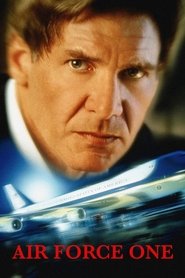
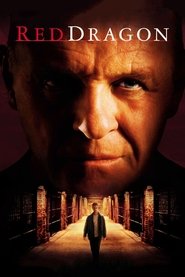
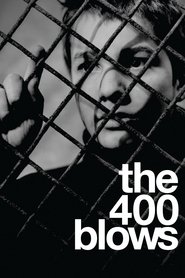

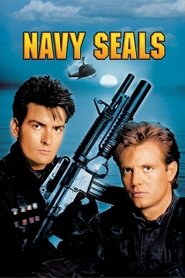
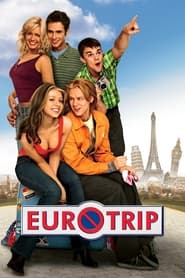
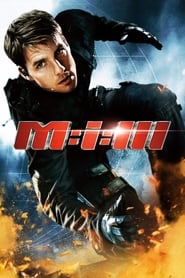
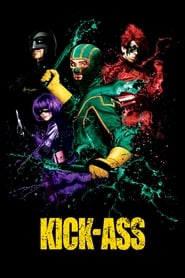
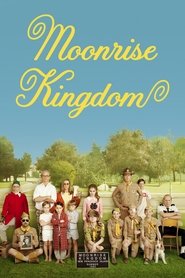
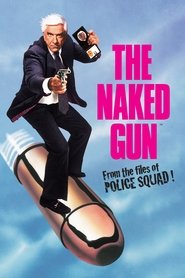
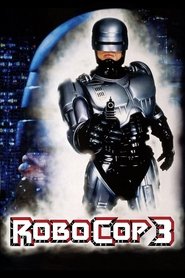
Related topics
Other topics that frequently come up in the same commentaries.