Topics / Performance
Casting
128 commentaries in the archive discuss this, with 465 total mentions and 70 sampled passages on this page.
Filter commentaries
Filter this topic by the film's decade or the type of commentary.
By decade
Across the archive
ranked by mentions · click any passage for the moment in the transcript
-
-
made interesting casting choices. And definitely Black Angel is one of the most bizarre. You have an actress like Anna Galiena, very different from kind of the brass actresses. And then a soap opera actor like Gabriel Garko. So that definitely generated a lot of attention, although it didn't generate significant box office takings. Yeah.
15:36 · jump to transcript →
-
Carla Cipriani and we commented obviously on the fact that as most people know she was most often than not this continuity or script supervisor for her husband although we we know that she she was also very much involved in the casting in the pre-production and even in the locations but it is first with the frivolous Lola
24:48 · jump to transcript →
-
Yeah, one can't help but wonder if some of the changes and kind of shifts in tone and staging and just generally also casting choices of Cheeky depended also on trying to appeal to a slightly different audience. Because it has to be said, for example, that in Italy around this time, there was also a big...
51:42 · jump to transcript →
-
-
director · 3h 29m 4 mentions
The Lord of the Rings The Fellowship of the Ring (2001)
Peter Jackson, Fran Walsh, Philippa Boyens
-
And I don't quite know whether that comes across like that, but I guess it's sort of interesting. I think it does. Yeah. I remember seeing audition tapes for worms and spiders and earwigs. Oh, it was horrible. I hate them. Yeah. But that was really funny, after seeing hours and hours of audition tapes of actors that have to audition spiders and worms. Oh, yes. But the weirdest thing was we had, was it a weta? And that big centipede. Yes, we had a weta and a centipede. And a weta is, you know, this New Zealand, it's rather...
54:44 · jump to transcript →
-
Yeah, a five foot tall gymnast on three foot high stilts that made them look like big people. We had fun casting this scene because we basically wanted to get extras that were the most unusual, odd, seedy looking people that we could possibly find. Because I thought Bree was a great moment to make the hobbits feel very much like fish out of water that...
1:00:14 · jump to transcript →
-
fight that Vigo did was his very first day, wasn't it? This is day one of Vigo, wasn't it? Yes, it was, yeah. He had just been cast in the film, as most people probably know. He came to the movie very late that he was cast after we started shooting, in fact, and he had to get on a plane immediately and come down to New Zealand. And within like two days of getting off the plane, once we'd made sure his costume fitted, he was put on set. And this scene that we're looking at now, it was the very first thing that he shot on day one.
1:13:50 · jump to transcript →
-
-
-
Noah Baumbach
Now, this is Noah, Noah Baumbach. That's me in the back there. Playing the role of Phillip, Zissou's aide-de-camp. I mean, Drakoulias's. I was cast during a writing session. You said, "Who could play Phillip? Well, you could play Phillip." That was casting. - That was it. We chalked that one off the list. Drakoulias's glasses, by the way, are modeled on Sergio Leone's. The stoplight on Owen's hat, I believe I saw on a kid outside of Bar Pitti. Oh, yeah. - He had a hat with a stoplight on it. So these things, the significance of them is left open.
34:41 · jump to transcript →
-
Noah Baumbach
We had-- This was actually something we did a little research on was sort of the more modern-day pirate situation, sort of inspired at least the sort of design of these pirates and the vibe that we get from these pirates. Yeah, I know we talked about the pirates being kind of-- Trying to make them feel like documentary style and that the movie would suddenly snap into kind of a William Friedkin-type of very real, very energetic. In the end, however, the pirates arrive while a guy's playing a David Bowie song on the deck of the ship, and Bill's sitting here in a blue-tiled-- There's so many things to undermine it, and it ends up being some-- And also, by the way, my idea of what the pirates would look like is not reflected in the film. This is what we kind of-- This was trying to do, but somehow it ends up being much-- They end up being funny and... We cast people who we had in Rome. They're not real pirates. They're-- And they brought-- You know, there's more about these-- You know, they brought themselves to it and the feeling on the set. And it ends up, I think, being different from what I envisioned and being more like the rest of the movie. I don't know. I think it affects different people in different ways. You're talking about... the editing style of the movie. I was thinking about it there with the quick cuts as the pirates come rushing in. Sort of... Another thing I've sort of thought about, which I didn't mention, is like when he opens the correspondence stock, and then suddenly we just cut right to the-- You know, rather than take the time to show him opening the-- Yeah. - You know, and-- You know, but at the same time, you like to do a lot of long takes and a lot of, you know, let the actors really kind of behave in scenes, and I think it's a-- We've talked about sort of a French New Wave style of editing... Yeah. - ...that we respond to, sort of, you know, just getting the boring parts out of the way, but taking time with the stuff you think needs to take time. And I feel for some people-- A movie like this, for a lot of people, I think it plays as deliberately paced. And then for other people, it seems like breakneck. But I think for a larger number of people, it's slow. But, you know, it's just sort of-- Now, here's something we do here. We go to a very... Very cool timing, in blue, for this section of the film. During this pirate attack thing here. And then it comes back to the warm, because most of the movie's time, very warm, very yellow, a lot of red. And... And in the end, I think the way the movie looks, it's also very saturated colors. The way most of the movie looks is sort of inspired by the way the Ektachrome stuff looks, which was not the original idea. It's just sort of what felt right as we went along. Although this sequence, to me, looks more like... Like Bud Cort looks like the way the photographs look, the way they're printed on the front page of The New York Times. - Right. The way that has some documentary kind of feeling. Yeah, there is that Friedkin feeling of sort of '70s color, or at least '70s color as we now experience it on television. Yeah. These things are filtered through things like that... I like how Bud does the Portuguese. Yes, Bud studied very carefully how to get his dialogue in Tagalog, I think, it's Filipino. He'd originally learned it in Indonesian, but then he had to switch. And he had it very precisely figured out, although we also had his Filipino translator on the set with us, who Bud ruled over and... ...is his sidekick.
59:21 · jump to transcript →
-
Noah Baumbach
Was there a picture of Antonioni also? Yes, Antonioni and some Avedon photographs that were taken in Italy. I'm just gonna comment further on Roman. Roman Coppola, who then-- Roman kept saying he would help us with the second unit of the movie, which I'd never had second unit before and I never knew what to ask him to do. And finally, Roman just showed up and started shooting things, and ended up shooting all kinds of shots. Shots of the boats at sea, from the helicopter, and things that were difficult to get, and things that we couldn't do, and Roman made a great contribution to the movie with a variety of shots, and did it with a lot of enthusiasm. That's true. What happened to me? Did I lose my talent? Am I ever gonna be good again? This sequence is set in Ravello, above the Amalfi Coast. It's supposed to be Alistair Hennessey's villa. Villa Hennessey. - In West Port-au-Patois. West Port-au-Patois, maybe kind of like Haiti or something. In the background, down below here, when Zissou and Eleanor are on the balcony at Hennessey's place. There's a guy who she calls Javier, her research assistant. His name is Muzius, and he lives there. He was the guy who showed us the place. So we cast him in the scene because he sort of comes with the house. I was thinking, like, "What perfect casting." But he actually came with the house. - He was local. That was also based on a photo. There's two cigarettes kissing. Yeah, it was.
1:15:53 · jump to transcript →
-
-
-
has such an incredible face and command and intensity. At her audition, me and Carmel Cochran, the casting director, just started to, like, cry when she was saying this, which there's nothing to cry about, but she's just so intense. And I immediately got up and said, you have the role. She's something else.
1:20:25 · jump to transcript →
-
depiction of Oðinn, but that's how he generally appeared to people, if he did, is in a cloak. I see my father and mother. So, Fweylin, who plays Cormleth here, like, her audition for this character was so excellent that this scene became a lot larger. And originally, you didn't see this woman being sacrificed, but Fweylin, when she auditioned, she said, are they going to kill me?
1:43:14 · jump to transcript →
-
And I said, yeah, you're right. So we really kind of expanded this sequence because of her cool singing voice and her excellent audition. So this is really based quite closely on Ibn Fadlan's account of a Rus Viking funeral. The main difference being that this ship is being buried. You can see it's half buried in a mound.
1:43:43 · jump to transcript →
-
-
-
David Kalat
This scene represents another of the transformative changes wrought by Honda on the material, casting such an admired actor as Takashi Shimura turned Yamane from an alienating kind of mad scientist into a heroic central figure. Yamane's upset that the government's response to the problem is to try to kill Godzilla. He wants to study it.
30:35 · jump to transcript →
-
David Kalat
There's this ambiguity as to whether Serizawa or Ogata really constitute the male lead, because Serizawa is clearly the more complicated and interesting figure, and the more narratively important. Akihiko Hirata had been cast as Ogata.
39:21 · jump to transcript →
-
David Kalat
and Akira Takarada was cast as Serizawa. Honda swapped them at the last minute. Although it is now hard to imagine them in the reversed roles because they're so iconic in the performances they actually gave, if you watch Ishura Honda's earlier film, Farewell Rabaul, you can understand what motivated him. In that picture, Akihiko Hirata played a romantic young man opposite Ryo Ikebi as a brooding, deeply conflicted Serizawa-like character.
39:36 · jump to transcript →
-
-
-
Francis Ford Coppola
of the arch-villain Fanucci, played by wonderful actor Gastone Moschin. Of course, in my mind, I had no assurance that Robert De Niro was really gonna work out in this audacious casting idea to have some young contemporary actor portray Marlon Brando at an equivalent age, so it's one thing now that the film is
47:00 · jump to transcript →
-
Francis Ford Coppola
This actor is Carmine Caridi, and in the early casting shuffle of Godfather, he played an interesting role because I was so frustrated at the inability on the first Godfather to get some of the cast that I wanted, including Pacino and stuff. I thought, well, in the role of Sonny, I'd at least get
1:10:56 · jump to transcript →
-
Francis Ford Coppola
stone sculptor and acclaimed, I believe, and he was a character. Fred Roos had found him in a casting call and thought that this strong stonecutter was a presence that was interesting.
1:27:16 · jump to transcript →
-
-
-
Well, you saw a ton of people for this, right? Didn't you see... I have to tell you, I found an old casting sheet in my garage, and I actually saw my agent, and he came in to read for Brad. Wow. Amazing. But you saw all of those people that ended up doing the Hughes movies and other stuff? Yeah, we saw Ally Sheedy, do you remember her? Yeah. And Meg Tilly, and...
1:49 · jump to transcript →
-
Because those guys don't know the joke. Or at least then, all the stoners would just be funny in ways they had no idea they were funny. And so it was really kind of almost a violation when Don Phillips said, we've got this kid coming in from TAPS, and he's supposed to be great. And then it was Sean, who I don't think even read. I don't think he even auditioned. We just hired him.
26:08 · jump to transcript →
-
Or we brought him to you, I think, at that point? I think you guys saw him and talked to him and you just were blown away. And then I was going to meet him and he was going to read. Right. And I just remember walking through the casting, the outer office, and he was sitting on the floor and he looked up at me and his intensity. Yeah. And it wasn't like, oh, my God, he's like a stoner character or anything. It was just like the intensity of Sean Penn. Wow. And it was like, wow.
26:36 · jump to transcript →
-
-
-
Roger Moore
sort of get your mates around you to work, it's always much more pleasant. So I always have a list I give a casting director of people I like and it would be nice to be working with. Of course Cubby Broccoli was the producer and Michael G. Wilson, who produced together with Cubby, would always
11:24 · jump to transcript →
-
Roger Moore
A fellow sportsman. What about fishing? Fly casting? I'm neglecting my other guests. Enjoy yourself, you'll find the young lady's stimulating company. I'm sure they will.
33:48 · jump to transcript →
-
Roger Moore
I love working in San Francisco. I made a film there before. I made an Italian-American production called The Sicilian Cross. It was one of those unlikely bits of casting where I was the consigliere, anything less Italian as me. But it was wonderful shooting in San Francisco.
1:03:04 · jump to transcript →
-
-
multi · 2h 34m 3 mentions
James Cameron, Gale Anne Hurd, Stan Winston, Robert Skotak + 8
-
Pat McClung
This is Pat McClung. I was the model-shop supervisor on the film. They're wearing modified costumes from Outland, or the basic suit is from Outland and it's been redesigned and they put some stencils on it. This is microglitter and fuller's earth blown on there. I remember in this scene the batteries in the flashlights kept going out. You would think this would be an easy scene to do, but, as with everything in this movie, it was harder than it looked. There are no easy scenes with Jim. There's that nice dissolve, the contour of the earth matching her face. When we shot this, a matte painting combined with miniature and perspective, there are some perspective gags going on there. We used a clip of Sigourney's face in the viewfinder to line up the curvature of the earth, so we had a nice match. I wrote the piece obviously with Sigourney in mind for the character. I was told she was on board and I should just toddle off and write the film when in fact no deal had been made with her whatsoever. So here was a script that was written that everybody wanted to make, in which she was in every scene, and they hadn't made a deal with her yet. That's why she got her first big payday of her acting career. She got a million bucks, which was a big deal. She might have been the first actress to get a million dollars for a movie in movie history. It was all because it was mishandled by the producers. She was the main character and they hadn't made the deal. She was worth every penny of it and more. When people saw the film, they realized that. I Knew what a phenomenal actress she was. I'd never met her. I had her picture up while I was writing the script. I went off the character that had been created in the first film, took her much further. Of course, this is Paul Reiser. I certainly had no idea what a great comic actor he would prove to be, and certainly that's how people think of him, not as a dramatic actor. I just read him in a lineup of actors in the normal casting methodology, and I thought he was really interesting, that he could play this really sincere but slightly smarmy guy who could then turn evil. This is a dream sequence, but you don't know that yet. I remember from the premiere screening of the film that the incomplete chestburster scene here really got people cranked up and on edge, set the tone for the whole movie, that you were here to be messed with, which is a good way to start off, I think. The way you get a cat to hiss like that is you put another cat close to it. I had no idea. I didn't know what you did to make a cat do that. But that's standard procedure. Bring a cat it doesn't know close to it and it'll do that.
4:32 · jump to transcript →
-
Bill Paxton
Everybody's archetypical in this thing. I don't remember all the stuff hanging off of Mark. Chicken bones. I look like a boy. That's what we liked about you. Was this the day, Michael, you were passed out by the lockers and Sigourney walked by and said "There's my leading man"? Am I mistaken with another day? Somewhere around in here. I had to audition. They made you audition for Fox. No, it wasn't for Fox. They had a limit on how many Americans they could bring over. So they auditioned a lot of Englishmen for that role. The casting director, Mary Selway, and I had to meet every member of the North American registry from British Actors' Equity who was interested in being in this film before we could bring anyone from the US. I think we must have met and auditioned 3,000 people.
34:24 · jump to transcript →
-
Bill Paxton
Carrie Henn, who plays Newt, was an astonishing find. Mary Selway, our casting director, and her associate, Sarah Jackson, searched throughout England and, in fact, I think the entire British Isles, trying to find a young girl who could portray this character. And we had every young girl who wanted to be an actress, or whose parents wanted them to act, to come in and audition. Almost all of them had done commercials, and every time they delivered a line they would smile. Of course, this is a little girl suffering from traumatic stress. She's watched her family wiped out, every other person on the mining colony wiped out, and I think we probably had 500 little girls on tape. And Carrie was found at a US Air Force base in England. Her father was a US serviceman serving there. And she came in and auditioned, never having acted even in a school play, and was dead on from the very first reading. She's such a good little actress. Has she done anything since this? She has a normal life. She did not pursue acting as her career. One of the things that we were very concerned about was whether or not this film would traumatize her. It's very intense and unlike now, where we could composite creatures in seamlessly, or create one digitally, she really was terrorized by the alien warriors in the film, and she understood it was make-believe. Her parents were tremendously supportive and she really had her feet on the ground. This really is acting.
58:31 · jump to transcript →
-
-
cast · 1h 36m 3 mentions
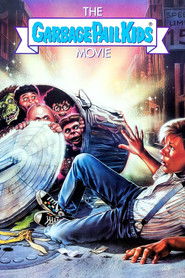
The Garbage Pail Kids Movie (1987)
Mackenzie Astin, Katie Barberi, William Morris
-
This was all fun to do for the most part. You know, it was a movie. We were both working on a movie. We were both working on a major motion picture produced by, you know, a big company. That, by the way, everyone auditioned for. Everyone? All of the young actors and all of the young actresses from the 80s that became, some of them became A-listers and some of them didn't. They saw them all. And we wanted the choices. No kidding.
6:34 · jump to transcript →
-
for this project, for the Garbage Pail Kids movie. Those were the real guys. They showed up in their motorcycles and everything. Amazing. That guy actually lost a toe during filming. He did, but in another part of the movie. Right. Not at the hand of Alligator. Yeah, no, these were real biker dudes. These were real tough dudes. These were not central casting experts. These were the real guys. Amazing.
45:34 · jump to transcript →
-
There you go. And now we watch the guilty as charged. The guilty as charged. That's actually, I remember that being particularly interesting that Phil got a separate credit, which I think is rad. I mean, that guy's a talented actor with a long and distinguished career. Well, and the thing is, is that Phil also, he became kind of the ringleader. He was from the beginning, but he was a ringleader. He was casting. He was a lot of things for the little people on this movie.
1:33:57 · jump to transcript →
-
-
multi · 2h 24m 3 mentions
Alex Thomson, Terry Rawlings, Alec Gillis, Tom Woodruff Jr. + 3
-
The light coming from the top was a 4K xenon lamp, which gives you very straight beams, which I thought would be quite a good idea. I shot it up through a mirror because you can't tilt them down or the condenser burns. But we had a mirror above the set and I shined it from the floor onto the mirror. This autopsy scene was a favorite of Fincher's, too, because we had created a body of Newt that had multiple layers of tissue, skin and musculature that could be cut through, and the bones opened up. It's a lot of graphic coverage that's not in the final movie. The body of Newt was actually based on... Alec and I had done a life cast of Carrie Henn during Aliens, and while we were in London Bob Keen's shop actually had a casting of the head. We were able to get that and remold it, so we were able to duplicate what the actress had looked like some five or six years previously. There is intercutting here with the real girl as well. She has a lot of fuzz on her face. - Yeah. Backlit fuzz.
17:31 · jump to transcript →
-
Yeah, there's that... There's all those cuts now. So now we're back into footage that was shot with the creature in LA. And this was actually... We built what we called a teenage alien and retrofitted it to use in this scene. Originally we built what we call a "Bambi-burster." That's the teenage alien which spits acid at one of the guys in the vent shaft and served us double duty here. And we built a little rod-puppeted version. This is a CGI version, which we had the benefit of the CGI in the 21st century here, which we didn't really. We built a rod-puppeted version, and we also tried a little dog in a costume. We tried a whippet in a costume. And he did pretty good at the audition. Then once you got him in front of the camera with all the rubber on, he kind of froze up a little bit. It was pretty funny. He was a nervous little doggy. And once we got him in situ, with all those frightening chickens around him in their cages, he kind of seized up and couldn't perform. But we built a Bambi-burster rod puppet, which was a one-to-one scale rod puppet, which had some mechanical stuff in it. I think we may have shot some elements with it. But it was never comped, it was never completed. The decision came down that they were going to go... Use the Rottweiler instead. And then when we got back to LA, we started building Rottweilers and mechanical dog parts and stuff like that for the scene.
29:33 · jump to transcript →
-
It was a marvelous cast, actually. I'd never worked with Sigourney before, but she's quite intense about what she does. She cares a great deal. It would be very easy, having established Ripley, to just walk through it and say "Well, Ripley does this and Ripley does that." But she really searched for the meaning of what she was doing. A consummate actress, I must say. And Charles, of course, was most beautifully cast as the doctor. He's very accommodating. He knows filming, he always hits his marks and he's very kind and considerate. He knows everybody's name on the film, right down to the girl that gets the tea. He's very, very nice. Absolute gentleman. Actually, the color of the sets helped what I was trying to do, because they were gray. White walls are terrible because they sing back at you, but this gray helped. I could get light onto it, and yet it wouldn't blow back on me.
40:05 · jump to transcript →
-
-
-
while we were on a lunch break and we had to evacuate stage 16, which is the largest soundstage on the Warner's lot. And we had to stop shooting for a day. But all of this was really, really interesting because all the... Wait a second. Andre Gregory and Jesse Ventura. That's a great combination. That's a credit you don't see every day. That pretty much encapsulates the casting of this movie. Like we got my dinner with Andre and Jesse Ventura. The governor.
8:27 · jump to transcript →
-
Nigel Hawthorne, who was nominated for an Oscar for Madness of King George. I got the sense he thought he was slumming here, but he really does a great job. Absolutely. And just when you think things are getting serious, Glenn Shaddix, who I work with on Heathers and from Beetlejuice, comes in. I cast him because of Beetlejuice, actually. That was the reference. And then the hairdo and the kimonos and all that. And he's a great character because he actually has an arc. He actually, like, he just goes from...
29:38 · jump to transcript →
-
Edgar Friendly. Dennis Leary, another man who took my script as a starting launching pad. Well, the biggest launching pad is coming up right now, Dan, because this is the first ever screen appearance of Jack Black. Oh, yes. Who I cast as, basically, it was a non-speaking role. And...
1:22:03 · jump to transcript →
-
-
-
We asked another kid who came into audition. He said, you know, a kid that sort of vaguely resembles me or looks like he could be offspring. And he took me straight to this kid. So he was a real find because he had a lot of natural ability. Most of the other actors here we found in Ireland. This guy was from Dublin.
2:52 · jump to transcript →
-
I'd done virtually nothing before. I think she just finished a drama education at Oxford. And, you know, whenever I do the audition process for, you know, casting, it's... I don't make anyone read because I think you don't find much else out than whether they can read or not. It has very little bearing on...
30:22 · jump to transcript →
-
So of course I cast her.
31:23 · jump to transcript →
-
-
director · 4h 13m 3 mentions
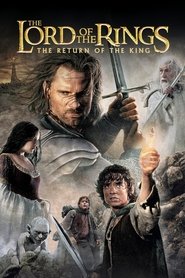
The Lord of the Rings The Return of the King (2003)
Peter Jackson, Fran Walsh, Philippa Boyens
-
John Noble's a really interesting actor. He's someone that is not very well known, just from the mere fact he hasn't made many films, but he's a very experienced stage actor in Australia. And Denethor's a very Shakespearean character, and John's done a lot of Shakespeare. And when we auditioned him, he was making the lines come to life and giving them meaning in a way that I'd never heard before. The archaic language was suddenly making sense to me because he was putting
45:45 · jump to transcript →
-
all the emphasis on the right words and delivering it in such a wonderful way. And that's one of the reasons why I wanted to cast him, was I just loved his interpretation of that language. But it is not now. We also didn't want to put a beard on him, because I think when you read the book, he's even described as having a beard in the book, but we just ended up with so many...
46:13 · jump to transcript →
-
Couldn't even scratch his nose. So was this Sean Astin's audition scene, wasn't it? Yeah, it was. We did about three scenes for Samwise and actually Sean struggled. I was a bit dubious. I remember how he would handle the English stuff. Actually, what was funny was a lot of the English actors who were auditioning found this scene really hard. Sean Astin just nailed it. It was really moving.
2:27:17 · jump to transcript →
-
-
-
Andrew Niccol
and coming up the mountains of Afghanistan. It was harder to find authentic looking extras, but I had a great extras casting director, Mito Skellern, who did an amazing job finding faces to populate the various countries that Yuri visits in the course of the film. That's not one of the extras.
17:02 · jump to transcript →
-
Andrew Niccol
his bed, casting better live up to it. Liya Kebede and Jasmine Burgess
56:50 · jump to transcript →
-
Andrew Niccol
Amir and I wanted to give the sequence a different look from the rest of the film. The woman who played this prostitute, Carlin April, is a good actor. I just wish I had more for her to do. And this young girl in the scene actually does have an arm. I just digitally removed it. I just couldn't bear the thought of a casting session with actual amputee children.
1:23:22 · jump to transcript →
-
-
-
You know, we wanted to shoot this in front of Grand Central. It was one of the trickiest things. The city had never shut this viaduct down before, and we needed it for six days. So they let us do it over three consecutive weekends, six days. So we would actually shoot for two days, go away for a week, shoot for two days. We really lucked out again with weather. You know, there was one moment where you see the mannequin move, and we had actually had a little thing running where we cast people to play our mannequins. And in the background of some shots, you can see they're real people playing the mannequins and not
46:17 · jump to transcript →
-
I'm running in on the haze. I always liked the idea that, you know, you might think it's his wife and daughter, but then you quickly see that it's not. It's kind of a hot Brazilian girl. Hot Brazilian girl. That's Alice Braga, whom we love. We cast her first off. She was the first person we met with. She was...
1:02:27 · jump to transcript →
-
beautiful and genuine and talented. We'd all seen her work in City of God. And we fell for her. Yeah, she was the only person that came in and met with us and read with Will. And we sort of played a joke on her and brought her back in one day when we were testing with all the creatures. Brought her back in and she thought she was going to be put through the paces again and we gave her the job on the spot the very next day. And one of the things I think that Will and I really liked about casting a girl from South America was that because our whole movie takes place in New York,
1:02:56 · jump to transcript →
-
-
-
to kill. So what do you do when you have a lot of time? You get into complicated puzzles. This was also the scene we used when we were casting. So I heard this text thousands and thousands of times and we've gone through it thoroughly.
21:01 · jump to transcript →
-
grown up, though they're so young. They are 12 as they are in the film. And we had a casting process that lasted over like 12 months and we met I think a thousand kids to find those two. But they really make this film a lot and
31:15 · jump to transcript →
-
A critical moment for the actors, Kåre and Lina, to kiss. Of course, everything else was nothing compared to this. But they do. And for me, this is the best film kiss ever. With blood. I love this. What did you think when you saw them first? Well, the first time I saw them together was you showed me this early casting thing.
1:37:34 · jump to transcript →
-
-
director · 1h 26m 3 mentions
Underworld Rise of the Lycans (2009)
Patrick Tatopoulos, Len Wiseman, James McQuaide, Richard Wright + 1
-
This was part of what we described as our Spartacus sequence... ...where we wanted to have the slaves working on the rocks. Yep. This again, Dan Hennah and his.... It's an astonishing scale that we were able to get for the limited budget. Look at Larry. Larry's got the cruellest villain face. Ever. - Yeah, he was. I mean, Larry Rew's fantastic. He's just great, great expressions. And he was a local New Zealand actor, right? We found good actors in New Zealand. He was from there, and when we started to consider him... ... he actually decided to move to England. He came back from... What's the deal? - Yeah, that was weird. You will not always be his favourite, and when you fall... ...I will be there. I gotta say about Michael, really, because I was talking about Rhona. We just went through this. Michael... The first thing when I did the movie, I thought this is a bit of a fun little ride. He took the character and the part so... You guys saw that. He was so into it. And he was a real, real strong.... He was very big part of actually the way the character developed. He was very professional. Completely professional. And brings so much to the-- Yeah. I think you have to, you know, for these, it's.... You know, It's a different kind of film, but, you know, people that are... You know, If you were really into this kind of genre... ... you'd take it as seriously as anything else. And he is, actually. When you ask him what he likes, he likes Stephen King. He like that kind of stuff. - Oh, yeah, oh, yeah. These two actors are actually very well-known New Zealand actors... ...normally doing theatre and considerably more high-brow stuff. But they had a great time playing these roles. Orsova and Coloman. - Yeah, he's great. I remember seeing him early on... - David Ashton, yeah. David Ashton, yeah. Yeah, when we were going through all the casting and everything. He popped out. He was great. They're very solid actors. They're fantastic people. We're very lucky to have them onboard. And Elizabeth as well. - Yeah. This is so different from the type of roles... ... that she normally gets to play. They had such a good time, though. And who was the--? I Know we had a couple of different... . like, arrangements for their costume design. Who was doing for this stuff here? Who did these--? - Because I know that... Beanie did all the costume except for Rhona. Except for Rhona, right. Wendy Partridge did Rhona. Jane Holland, New Zealand? - Yeah. She did absolutely every costume in the movie. The only thing she didn't touch was basically Rhona's wardrobe. I remember when I showed up on set telling Gary that, you know... ...producing this one rather than, you know, directing... ... that I was jealous of the detail that you guys got out of it. It's like, in the costumes, in the sets, everything. I wanted to make you jealous about some things. I heard that, and you did, and you did. I'm already terribly, over the accent itself.
9:10 · jump to transcript →
-
Bring them in. SO, like, the nobles are coming now. When we just started to play with the movie... ...and the look, the nobles should be the one that... The only touches of colour in the movie. Because we're in the Underworld world... ...Which is very blue and brown. We're trying to bring colour from those guys. They're the only few people that should be looking... ...also like the actual period of time, which is 12th century. And, you know, the vampire world is a little tweaked. It goes, you know, it feels futuristic and past. Those guys should feel like the period. That's more or less, the way the people look at the time. So it was fun to do something, in some ways, truly period-y. This is our biggest set, the great hall set. When you see the wide shot, the entire thing is set. We built the entire thing. There's no set extensions at all. lt was a huge set, but it was one of the first things that we shot in the film. And being in that big cathedral-type space... ...Was great for everybody, because it really got everybody... ...1nto the spirit of the film, and really feeling positive... ...about the production design and how great everything was gonna look. Tim Raby, I mean, when we did the casting... -... Tim Raby is playing the, you know... - Janosh. I just love the way... Yeah, he was fun. He's good actor. He's fantastic actor. I also love the way you did when Viktor actually rushes over... ...I love that you stayed in Coloman. Yeah. - You just see that... It's almost like, watch this look, and it looks like: "Oh, God, here we go." And he just, I guess, supernatural freak of motion... ...and Coloman's look was like, "Oh, shit." It's coming now, and now. Remember this, though? The first time we shot this stunt, they forgot to turn the camera on. The guy had to go back and do it over again. "What do you mean the camera was not on?" It's, like, one of those classic movie moments. So I always felt we went slightly overboard on the impact. But, you know, it's an old castle. You could believe the rock Is bit... - I love that shot. Oh, yeah, this one. It was littlke much, but... Viktor giving benediction to the other nobles.
31:53 · jump to transcript →
-
Now, there's a very Underworld prop. Yeah, it shows up all over the place. - You know, this was something that.... There's many things to.... Actually, that I can actually address now. I'm hearing questions that are asked, and I don't really get to answer them. The.... The Sonja back-story... You know, Sonja was always the one that.... Well, Selene reminded Viktor of his daughter... ...and there was a similarity between them. And when we actually shot the death scene of Sonja... ... ln Underworld 1, we actually... People talking about, "Why is she blond?" "And now you've got Rhona Mitra, and she's got dark hair." "And couldn't the filmmakers just go back and watch the first film?" Of course we watched the first film. And it really just came down to a budget in the first one. And, Richard, you'd probably remember... ... that we literally, we had... We were given the okay to actually shoot that. One day. We got one day. - That back-story. One day, and no money, and one actress... ... that even remotely had an interesting look, but had blond hair. And at the time... Then we had, like, a day to find her too. And it bugged me at the time, I'm thinking: But it's supposed to be Sonja who reminded... Viktor. - Viktor. And so she has to have dark hair. And we asked the actress to dye her hair... ...she wanted more money. It was one of those things that you just think... And it just couldn't happen. We literally did not have the money to pay to dye her hair... ...and then have it coloured back again. And we didn't have time to build a wig that looked appropriate in one day. And so there we have it. And Sonja was more of a blond girl. And so that's.... I would actually now love to, in some version... ...take the death scene that we have now... ...and put it in Underworld 7. Funny you should say that. That's what I was doing all day today. - What do you mean? Recutting the genetic memories using footage from 3... For fun? - Yeah. For who? For a future... Exactly, just to have it in the bank. Cool. - Yeah. You know, there's a.... You know, I'd love to see this whole series all put together... ...because I think, unlike a lot of series... ... this actually does tie in fairly well, hopefully, to the other films... ...and actually arrange them in a proper timeline. With this one first. - Yeah, it really does. And therefore, kind of swap out... And also, just money-wise, we didn't have the ability... ...to do the kind of set and setting for her death scene in the original one. We had to revamp the crypt, which I never think really sold... There was an interesting thing when I watched it again... ...While we're doing this one, that there was actually Lycans... ...people standing around the room. Yeah. It was interesting. Actually, when you first talked to me about directing this one... ...I was thinking she was gonna be blond... ...because of that, because you had established that. I was not thinking. When I was starting to think about casting... ... I was like, "Oh, so she's Eastern European blond. That's what she's gonna be." - No, not at all. I was actually.... I was amazed at how many people actually, for a scene... ...that shows up for, you know, maybe 30 seconds... ...1n the original film, how much everybody really remembered... ... that she had, you know, blond hair, and.... I guess of course they're going to. For me, it's just... To do an entire film where the whole basis... ...of Viktor saving Selene is that there was such a parallel... ...to his own daughter that she had to be dark hair.
36:47 · jump to transcript →
-
-
writer · 1h 35m 3 mentions
Simon Barrett, Adam Wingard, Greg Hale, Eduardo Sánchez + 5
-
Yeah, I've heard this one before. The first time I saw this was in the editing room, and I actually didn't know that your dick was on camera. I was here on this location, but I was upstairs flirting with the girls upstairs. I think Mindy was just really happy when she showed up on set and there was an actual crew there, as opposed to me and my iPhone. I mean, it didn't really help that during all the auditions you just had that American flag Speedo on. And just kept rubbing butter on my chest. But that set the tone.
1:18 · jump to transcript →
-
Epi, actually, a bit of background about him, he was actually more a comedian on TV shows in Indonesia. A very harmless comedian. Yeah, known for doing comedy mostly in Indonesia. And then Timo decided to cast him as a pedophile jerking off in his ABC's of Death short.
46:41 · jump to transcript →
-
And so suddenly then we saw him in a new and different light. We decided to figure out different ways that we could cast him. Did you know that he survived fucking brain tumor? Yes, I do know he survived a brain tumor. That fucking drives you everywhere. Yeah. He's an incredible guy, super passionate about acting and about the theater as well. And he just brought so much energy to this film. It's a standout performance, really. It's amazing. So...
46:59 · jump to transcript →
-
-
director · 2h 10m 3 mentions
Mission: Impossible - Rogue Nation (2015)
Tom Cruise, Christopher McQuarrie
-
while we were shooting it. And I was always hoping that someone will build a store like this. That's what you hope. You make a movie, you go. Yes. Everybody's like, I want people to want to be in this store. There's Sean. Sean Harris hiding in the record booth there. And this is Hermione Corfield. Very talented. Absolutely wonderful, wonderful actress who we cast off of a headshot and came in and just really was, she really clicked with you. It was a really surprising chemistry with you. She was terrific.
6:23 · jump to transcript →
-
The armor, our props. Simon Atherton. Yeah, he did. Our whole crew. I mean, the crew on this movie, thank you, because these sequences don't get done without that kind of commitment. And you can't take for granted the fact that what's happening in the midst of all of this chaotic sequence, that's a full opera that they have staged. And a separate opera director came in. We cast the entire thing. And all of that had to be...
31:53 · jump to transcript →
-
and replace him with Jeremy. Yes. Saying those lines. Saying those lines. So there's actually a really subtle but a very beautiful use of visual effects. I do have to say, look, you have to understand the kind of writing to get this story across. Keep the characters moving and have wit. That's why it's like your casting choices and the writing of this scene. I love this scene. I love reading this scene and all of us acting it. I mean, it's so much fun. And having an audience...
1:42:23 · jump to transcript →
-
-
director · 2h 43m 3 mentions
Mission Impossible Dead Reckoning Part One (2023)
Christopher McQuarrie, Eddie Hamilton
-
I sent the faces to Eric, who really had the world of submarines in his head. I said, just from these, pick the ones that you feel are of the appropriate age and bearing for their different positions on the boat. And Eric sent me his selections of all of these actors. And regardless of their level of acting experience, I cast them for the simple thing that Eric said. Each one of these guys has a face that says...
2:46 · jump to transcript →
-
This was the very last day of shooting on our movie. This was the last scene we shot. This is Alex James Phelps, and for fans of the Mission Impossible franchise, you'll get a kick out of the fact that his last name is James Phelps, a character in Mission Impossible 1 and, of course, in the TV series. He was cast a week before we shot it, and he came to work that day, the day before, actually, to walk the set.
7:22 · jump to transcript →
-
This was, God, there was so, we had so much fun with Vanessa. She spent a lot of time playing with the comedy and finding the right balance. And again, here are the brown eyes. This is, and here's Jonathan, the guy standing behind Henry Cerny. The bodyguard. Who was, he was cast as, we just, we needed another, another of the widow's,
1:57:51 · jump to transcript →
-
-
-
He thought that we had just cast from his mold or duplicated his mold somehow and cast prosthetics. But the truth of it is we sculpted it from scratch, copying his original piece as best we could, but basically side-by-side sculpture as opposed to the casting and molding process.
1:19:36 · jump to transcript →
-
Mike O'Brien, who is one of the guys in our shop, great job. Dan Crawley, who was an all-around kind of, you know, artist jumping around from sculpture to molding to casting to gag effects. Brock Pope played a big part on practically every effect. He's just a good all-around lab tech. I mentioned Mark Killingsworth.
1:23:21 · jump to transcript →
-
We sculpted, we digitally printed the molds, and then we did traditional casting from all the digital work. I would say about 35% of the effects that we did for this film, we did digitally. And again, I just explained what I meant by that, but they are practical effects. But because we did them digitally, it really gave me the ability
1:25:39 · jump to transcript →
-
-
-
interested in having dialogue and using more about the dialogue, whereas it seems to me the dialogue here is just functional. It's basically just helping to illustrate each separate stage of the marriage. And also the change in Kane. People will think what I tell them to think. Yeah. Welles lamented at one point when he was talking about an actor that he says, I'm the sort of actor who always gets cast as a king.
53:25 · jump to transcript →
-
It has to do with his bearing, his voice, his size. But he was fond of makeup as well, and was fond of the makeup in this film, and enjoyed getting older. Also, I mean, he was treated as a king while he was growing up. I mean, you know, it seems like that has a lot to do with... Well, that may be so, but I think as an actor type, if you're casting a play, he's a king type.
53:54 · jump to transcript →
-
-
multi · 1h 49m 2 mentions
John Cork, Ursula Andress, Eunice Gayson, Margaret LeWars + 20
-
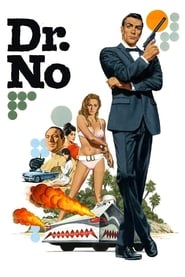
A little background on actor Timothy Moxon, who plays Strangways. At the time of Dr. No, Moxon was making his living as a charter pilot and crop duster in Jamaica. But before he moved to the Caribbean, he had been an actor in London, where he knew director Terrence Young, which led to Moxon being cast in the role of Strangways. Actor Anthony Dawson plays Professor Dent. Dawson appeared in many films for director Young, beginning with They Were Not Divided in 1950 and continuing with Action of the Tiger in 1957.
2:52 · jump to transcript →
-
Sean Connery seemed an unlikely person to become one of the world's top actors. He grew up in the impoverished Fountainbridge section of Edinburgh, Scotland. He joined the Navy at age 17 and was discharged three years later. He took a series of menial jobs before traveling to London for the Mr. Universe tryouts. There, he auditioned for a part in the chorus of South Pacific. Soon, Connery became serious about acting, and in 1957, he was cast by Terrence Young
23:12 · jump to transcript →
-



Related topics
Other topics that frequently come up in the same commentaries.