Topics / Performance
Voiceover & narration
43 commentaries in the archive discuss this, with 75 total mentions and 48 sampled passages on this page.
Filter commentaries
Filter this topic by the film's decade or the type of commentary.
By decade
Across the archive
ranked by mentions · click any passage for the moment in the transcript
-
-
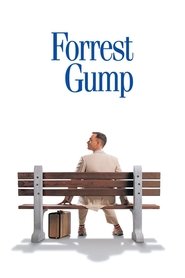
You know, Tom said, this is like, he said, this is like taking a warm bath. It's like, I'm so comfortable in this character. He was at a point where he got the character, he narrated the entire movie, and I shot every line of narration on film because we were there for, I think, three days, just doing him narrate, doing the bench. And, of course, those big shots and stuff. But I knew that if we didn't shoot every line on film,
3:15 · jump to transcript →
-
it would sound more read than performed. It would sound narrated. So he performed every line of narration. And then after that, we just, you know, completely powered through Forrest. He just had it down for the rest of the movie. And then, of course, those were all the heavy scenes we had to do came after we were done. When we were on the stages here, we were done with On Location. I think the other thing that happened on this movie as a process was...
3:45 · jump to transcript →
-
The narration worked like this. There were obvious pieces of it that were scripted very early on. They were always in the script. We recorded all the narration that was scripted ahead of time before we shot the movie. And I had it with me on a little cassette player that I gave to the script supervisor. Because I had to build these pauses into...
32:17 · jump to transcript →
-
-
-
Jim Piddock
The character in the hat here, never actually called by name in the movie, this sniggering hat character, began the film, as you'll recall, with a splendid bit of narration, setting the mood for so much of what follows. Well, his speech, as it now stands, over the opening plate shots, not the plate shots, the shots, the opening speech now includes a rather clangorous non sequitur. Having discussed the story's Texas milieu, this character says...
26:15 · jump to transcript →
-
Jim Piddock
Now in Russia, they've got it mapped out so that everyone pulls for everyone else. A very wonderful speech, this opening bit of narration, marred only by that incongruous reference to communist Russia. Naturally, the line feels awkward because that line was never meant to be spoken. The line as originally written and performed was, In Bulgaria, Dad's got it mapped out so everyone pulls for everyone else. In Bulgaria, you see. And a reference to
26:43 · jump to transcript →
-
Jim Piddock
And so little appreciated. How many of us watching this movie even realized that a flying insect didn't just happen to be there? At any rate, in Bulgaria, dads got it mapped out so that everyone pulls for everyone else. This is what the line was meant to be. This was the introduction to our narrator, this man with the fly. Some more sweat here, very artfully applied.
28:52 · jump to transcript →
-
-
multi · 2h 19m 4 mentions
Martin Scorsese, Nicholas Pileggi, Ray Liotta, Lorraine Bracco + 9
-
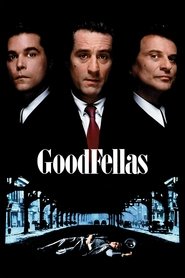
through the voiceover, and then I started making pictures through the voiceover, and Nick would work out the scene that the voiceover, that another part of the book described, and I would say, but that's so wonderful in the description of the voiceover, let's use that voiceover over that scene, etc. And so it was very clearly constructed that way, every shot. Because he knew what the movie looked like, he would say, now this scene, I want this, think window, think we're in a window, because I want the scene to be in a window, I want to be looking out the window at something.
24:36 · jump to transcript →
-
I wanted the soundtrack to the voiceover to become, especially by that point, the last day as a wise guy, by that point to become almost like a piece of music. It even doesn't matter what he's saying anymore. It's just rattling words, rattling words until finally the cop
2:02:44 · jump to transcript →
-
policeman holds a gun in his head and says, don't move, I'll blow your brains out. And the most unexpected thing comes out of his mouth and voiceover. He says, I knew it had to be cops, because if it was wise guys, I'd be dead. They don't tell you. They just shoot. So he was relieved. And the relief on his face is a relief of the whole film, really. His whole life, in a way. If they had been wise guys, I wouldn't have heard a thing.
2:03:02 · jump to transcript →
-
-
-
Alan K. Rode
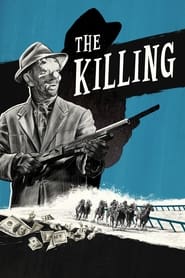
and Stanley's partner and collaborator over three films and a fine director in his own right, Jim Harris remains with us at age 93, and I'll be referring to some of his published observations and comments. One of the killing's distinctive attributes is this voiceover narration by the legendary Art Gilmore, who should have been credited but wasn't.
1:27 · jump to transcript →
-
Alan K. Rode
I've read that this voiceover was imposed on Kubrick and Harris by United Artists, and some believe it detracts or dates the film. And I'm not one of those who feel that way. I grew up listening to Gilmore's voice on literally thousands of movie previews and television shows like Highway Patrol. For me, the voice of Art Gilmore is always a welcome presence. The cast of The Killing is a virtual character actor hall of fame, and this wasn't by happenstance.
1:56 · jump to transcript →
-
Alan K. Rode
Don't make it sound so ominous. It's not like you're going to eat me alive. I'll make you do that. The fade-out implies the sex occurring between Vince and Marie. All we need is a voiceover saying, and the next morning, or having them eat bacon and eggs in the morning at the breakfast table.
16:51 · jump to transcript →
-
-
-
It all affects one side of your body, so he had to flip-flop, and then the lighter, which was a right-handed lighter, he had to learn how to operate with his left hand once his hand was to unfold. I'm assuming you've seen the movie already, so I'm not spoiling anything for you with this narration. I'd say if you're listening to this track now, having seen the film for the first time, then we haven't done our job keeping your interest. And what you're going to see now...
3:55 · jump to transcript →
-
This voiceover was actually written standing on the set of... Standing on the set, standing on the...
28:04 · jump to transcript →
-
...Disney lot, when I got a call from John Ottman saying that we needed a new voiceover... ...and I was on a cellular phone trying to make it make sense. There's another scene in the apartment here, which wasn't really necessary... ...and I shot a bit of with Edie, but... It came just prior to this. Yeah, but I removed it and went for the voiceover instead. It seemed more punctual this way.
28:11 · jump to transcript →
-
-
-
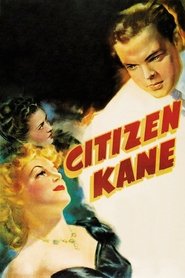
had his own media empire, and Welles had worked for the March of Time, and he's doing a pretty accurate parody of this. Yeah, it's even the prose style, you know, which had a ways of turning the sentences kind of backwards, you know, is even, that's imitated. Yes. And the guy who plays the reporter, William Alland, is the one who's sort of imitating the guy who did the narration, which was Van Voorhis.
5:08 · jump to transcript →
-
But I think that that's really what the point of the original story is. And we don't get that in Citizen Kane, really. Yeah, to the extent that the Bernstein section mirrors Bernstein, it's because it's memories of a happier time. And he's not going to be the narrator of the darker versions of Kane that we see as the film goes along. So, I mean, in fact, all the versions that we get of Kane are considered accurate and truthful.
47:35 · jump to transcript →
-
-
-
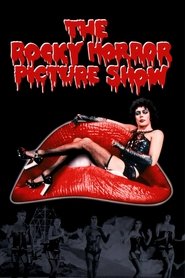
And Sinatra phoning every day. Yeah, did Sinatra... - Phone Ava every day? Did he? - Yeah. Heavens to Murgatroyd. There's the lovely Jonathan Adams who was our original narrator. Brilliant. Yes. - Plays Dr. Scott in this movie. And Brian Thomson used to put in hidden detail in those things, so there would be stuff inside that file. There might have even been stuff in those files behind him there. In that it was relative, but nobody was ever going to see. No. Well, to me, Brian Thomson's set was astonishing. It was unbelievable, and I've just been to see he King and /... Mm-hmm. - ...and the set he's just done for that. I adored it. - Yes, good, is it? Mm-hmm. Pity about the... - Sumptuous. Nah, nah, nah. - What? I didn't say anything. Nothing. You didn't say a thing. - Never heard a dicky bird there. Yeah. What a charming person. He'll be remembered in my will, actually.
11:02 · jump to transcript →
-
And this was cut from a lot of the original versions. This song was cult. 2 Toftind the truth ? And we cut straight to the narrator's verse. He says to tell the truth and never lied. We cut Brad and Janet's verses in this song and went straight to the narrator's verse on the original movie. And it made no sense whatsoever. - I see. 'Cause we needed this. There was a very long intro that Richard Hartley had devised for this song. And I suggested they cut straight to Brad's verse. And they cut straight to the narrator's verse, which was cutting both Brad and Janet's verse, which was rather stupid because it's kind of nice to have these two verses. Make the whole thing tie up, the whole song tie up.
1:34:35 · jump to transcript →
-
-
-
Roger Moore
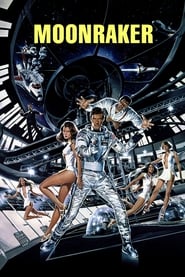
He was a larger-than-life character, Ricky di Portanova. He had wonderful voice. He would say: "I could never act, but I had a wonderful voice. I did voiceovers." And Sandra was a beautiful Texan lady. Sadly, they both died within a few weeks of one another. And not knowing that the other had died in the same house. Great tragedy.
51:42 · jump to transcript →
-
Roger Moore
Ricky was not born into wealth. He was a working actor. And as he said, you know, one who just did voiceovers. And then he came into an enormous amount of money. I'm not sure whether it was from his stepmother. But he was exceedingly wealthy and had two beautiful homes... ...and a home in Monaco. He was great fun to be with. He was also a friend of Cubby's... ...and a friend of Frank's.
52:18 · jump to transcript →
-
-
director · 1h 31m 2 mentions
Alex Cox, Michael Nesmith, Victoria Thomas, Sy Richardson + 2
-
We had lots of improvisations, too, of you being pushed in the pool and stuff like that. We did voiceover, didn't we? I'm supposed to be the host, guys. Yeah, joke's a joke, but I'm supposed to be the host here. We were waiting the shot so you could get the lights to go off. Do you remember that? That's right. And the guy who had to turn the lights off was called Mr. Knickerbocker. Do you remember? Well, I remember you waiting to get the lights off. Did they go off? Yeah. Okay, when did they go off?
8:00 · jump to transcript →
-
who was interested in the film left. And a whole new regime came in, none of whom cared a whit, a toss about the music. So it was tough going. Alex, take these people through these, this big character introduction scene. Now that's- Well that, the Vonetta McGee, who from last, seen in a wonderful Spaghetti Western called The Big Silence. Sy Richardson just came in and that line that you said, somebody piss on the floor again, was a voiceover line afterwards that you had wanted to say and so we squeezed it in.
13:50 · jump to transcript →
-
-
-
I don't really know what happened with it, but in 2011, he had made a statement that it was 20 years ahead of its time, so he felt like it should be ready now. So I don't know where it is now, but I would like to hear it. And he was also doing voiceovers for commercials, which was pretty early. I mean, again, usually that's for somebody who's like a statesman. His father was doing them. Charlie, out of the gate, was like, no, I'm doing those. And...
1:00:10 · jump to transcript →
-
worth checking out if you can find it anywhere. We're about to get to Dennis Haysbert's death, which might be a good time to talk about Dennis Haysbert, who, speaking of the voiceover work, usually being from elder statesmen, we hear him practically every day as the spokesman for all state insurance. You hear his such a recognizable voice. But he was born in California, the son of a sheriff.
1:05:35 · jump to transcript →
-
-
-
Darren Aronofsky
The shot was actually shot without our makeup artist. She had to leave early and it required some makeup because I had to put blood onto Max Cohen's nose and I was convinced that Ariella was gonna beat me up the next day, but she turned out to be real nice about it. And the voiceover you're hearing was written by me and Sean. It was a collaboration that we started about eight months
1:49 · jump to transcript →
-
Darren Aronofsky
I bought the ants. He still doesn't know what they mean. So this little voiceover segment was written by Sean. Here we have the tree that I was telling you to look out for if you remember what it looked like in the first act. It was a little bit more contrasty. This we wanted to go for a lot more moody, and we also changed the frame rate. He's moving a lot slower, and the tree itself is moving a lot quicker and a lot more manically.
21:16 · jump to transcript →
-
-
-
-
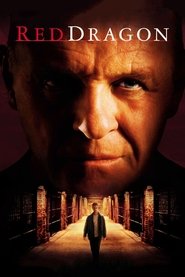
This is the scene where, as scripted, we began to hear the Dragon's voice. We dropped it because... We dropped it because it turned out that it's much more effective to just see Ralph hearing it without the audience hearing it. In a performance, a voiceover is used when you need to help tell a story... In fact his performance is telling the story, there are voices in his head. In a way, it might have just detracted from his performance. It's a great shot. It's actually on a stage. The character is in so much pain. He's very tormented. It's not something you usually see in the bad guy in one of these movies. He's fighting it. He doesn't want to be the bad guy. He likes her actually, he's fond of her. He is. And this is a great scene that really expresses that. I think this is where the audience Starts to go in... Usually, this kind of character in this kind of movie is just a sort of sadist. - Bad guy! He's a bad guy, a sadist, who really enjoys the things he does. The audience has to get empathy for him at this point. This character really doesn't enjoy what he does. He feels driven to do it. He feels that he's forced to do it by the Red Dragon. He would almost rather kill himself than go on in torment. It's an amazing thing for the bad guy in a thriller to be seen in that kind of light.
1:33:48 · jump to transcript →
-
That was a little storytelling thing, you know, helping, because you really couldn't hear her lines. Of course. There goes Grandma. There was a very complicated lighting set up for this. I read a cinematography article where Dante talked about how many different kinds of banks of lights that he had to set up for this one shot, right here. This is a real fire, but we enhanced it with CGI. This is a real fire. He's got this fire, but he's got to light the actors with extra instruments that are hidden out of shot. He's got the natural light of the cars. The lights flashing around. Francis Dolarhyde! Where is he? Look how many things are happening with light in this one nighttime shot. I put my hand in it. He set fire to the house. It's all justified because the headlights of the... It's red, it's blue, it's yellow. That was such a big explosion. You had to be half a mile away from it. All these stuntmen... I guess some people are wondering, "Why is there such a big explosion?" Actually, in the book, Dolarhyde has dynamite stored in this house for some unspecified future project. And you'd written a shot when we looked in the safe... I'd written a shot where we saw the dynamite, it didn't end up in the movie. We finally just decided, it's an old house, it's got... Let's lose the dynamite and keep... It's got oil tanks in it and the tanks blow up. I love this close-up of Emily. She just... What a face. Who could resist a charmer like me? You know, whatever part of him was still human... We really wanted that hair job to work, so we went crazy. You didn't draw a freak. Okay? It's a good scene for Edward, too. ...with a freak on his back. I should have known. No, sometimes you don't. Trust me... Initially, this scene was written as a sort of voiceover. Actually, it was one of Brett's, you know. Brett is very, very good on text, too. Just like Dino and Martha. And Brett said, "The audience loves this character "and we have to honor her by having a farewell with her." We have to see her. We have to give her some closure with him. They have to have a real scene together. The last time we saw her she was crying outside the house. And it was one of the best ideas that Brett had as the script was being revised, before we even started shooting. Dr. Voss, please call Pharmacy 4421. I love this scene that we came up with. This helped pay off the end. This is setting up the ending in a way that's not really in the book, I don't think. We needed for him to have knowledge of Dolarhyde that he could only have if he'd seen this big journal. So we went back and forth about how could he find this journal if that house blew up. Finally we thought, if we put the journal in the safe, it could conceivably have withstood that explosion. We were torn between, do we do a kid's drawing or a picture?
1:49:42 · jump to transcript →
-
-
director · 3h 43m 2 mentions
The Lord of the Rings The Two Towers (2002)
Peter Jackson, Fran Walsh, Philippa Boyens
-
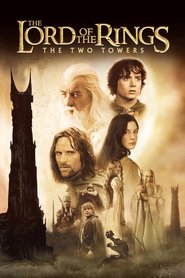
We used to call this the pizza, didn't we? The pizza place. This was funny. We rewrote this voiceover about 50 million times and the last time was when Pete was about to record with Christopher Lee. I was in Malta actually doing ADR with Gimli and I was out shopping in a gift shop and my phone rang and it was Fran saying, we've got to fix this line, Pete's about to record it. Which was the line? It was the fires of industry line. The old ways of burning in the fires of industry. That's right, we couldn't get it right. It is, it's a Stephen line.
19:18 · jump to transcript →
-
But when we came to cutting it, we wanted to create a much more emotional ending. And so all of what you're hearing Sam say is something that we had him go into a recording studio and record for us. It was never originally shot. It exists here only as voiceover. Thank God we had him walking over to the window and at least starting to say something. Yeah, you could cut away. Because it enabled us to create this feeling of a resolution. And in a sense, it's tying the separate threads of the story together, isn't it? Yeah. That's why we did it. In the end, you have to think what
3:22:03 · jump to transcript →
-
-
-
Andrew Niccol
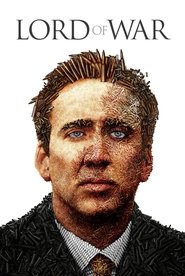
Yuri's journey, Nicolas Cage's character. He also starts life in Ukraine and eventually is responsible for the death of child soldiers. Hopefully this sequence sets the tone for the film. I wanted the film to be subversive. It's the reason this peacenik anthem is playing in the background. It's the same with Yuri's narration in the film. The narration was...
3:06 · jump to transcript →
-
Andrew Niccol
There was a line of narration here about, I think Yuri says there's a shortage of coffins in Sierra Leone because demand is so high. But I took it out because it was too flippant, even for Yuri. This shot coming up in the truck is actually a pickup. It was done in the Czech Republic because I didn't have time to do it in South Africa.
1:46:25 · jump to transcript →
-
-
-
James McTeigue
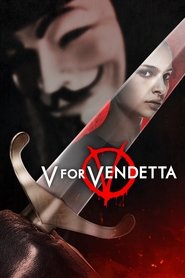
I know there's no way I can convince you... ... this is not one of their tricks, but I don't care. lam me. My name is Valerie. I don't think I'll lve much longer. I wanted to tell someone about my life. This is the only autobiography that I will ever write and, God... .../'m writing it on toilet paper. There is always that great history of the first people... ...picked on or imprisoned are minorities. And it was important to, you know, show the Valerie character... ...and where she starts off with... ...and where, you know, where her life leads her... ...and then, you know, how the government come in... ...and they sweep up all those people... ...and then... ...and then how it affects Evey... ...and how Evey comes to, like, understand what has happened to those people... ...and how it, I guess it really sparks her political consciousness after her parents. Natasha, who plays Valerie is really, really lovely. And she, I mean, incredible actress. And James had her on set so that when I was reading the letter... ... that she would be reading it live for me... ...Which made it so much more human, instead of... I mean, not to disparage script Supervisors in any way... ...but a lot of times when there's voiceovers that you hear... ...the script supervisor will just read it from the script. And obviously they shouldn't be trying to act it out or anything... ...but that can be a very cold feeling. When you have the actual actor there, that's pretty amazing. For me, it's a point in the film where you're both propelled on... ...and also you're propelled backwards. And so you're going down this fantastic rabbit hole... ...at a point in the film where it expands the film... ...and it expands your mind. And you have to stay on the train you're on, but also at the same time... ...get onto another train. And I love it when films do that. So It's a fantastic thing to do at that point in time. It also is a very important back-story for V as well. Because it's to that note... ...1S something that links all three characters. And, you know, I love that all that... The thing that changes them... ... IS written on a piece of toilet paper. I think that is, like, totally fantastic. You would. I'd always known what I wanted to do with my life... ...and in 2015 I starred in my first film, The Salt Flats. lt was the most important role of my life. Not because of my career... ... but because that was how I met Ruth. The first time we kissed... ...I knew I never wanted to kiss any other lips but hers again.
1:12:51 · jump to transcript →
-
James McTeigue
I wanted to trick the audience, I guess. You know, I absolutely wanted you to keep guessing... ...or not really Knowing. And because Tim Pigott-Smith, the Creedy character... ... had just been up there, and he'd just... ... he'd just bashed Stephen Fry, yeah, the Deitrich character. When you got into the interrogation, I wanted you to think it was him. Maybe it was Creedy. But I changed his voice. You know, I got Tim Pigott-Smith... ...but I got another actor to come and voice over him... .1n the same way that when Natalie gets her head dunked... ...it's done by Hugo. And it's done by, like, the V character. But I put a different voice on the guy. I also wanted to play into, you know, with the Creedy character.... The two characters are actually broken up. Which you sort of get, but you don't get. One's called the interrogator and one's called Rossiter. It's essentially like the good cop and the bad cop. And the Creedy character was the bad cop... ...and the stuff that Hugo says... ... IS essentially the good cop, Rossiter. He comes and he pleads with her. "Just one little piece of information." And they're little, they're just one-liners. So you can kind of get away with that. Yeah. - Yeah. Then you have no fear anymore. You're completely free.
1:18:52 · jump to transcript →
-
-
director · 1h 42m 2 mentions
Len Wiseman, Patrick Tatopoulos, Brad Martin, Nicolas de Toth
-
Don't touch me. Len, can I take off my shirt? I mean, do you mind if I, like... Like, Speedman, man. Look. At some point. Len, if I wear high heels, nobody will see me because you shoot me from the waist up. Why does Kate get to wear them and I don't get to wear them? What's up with that? We, at one point, did have that line over the close-up of the hands. Yes, there was a voiceover of Alexander saying...
1:36:08 · jump to transcript →
-
Yeah, this is real water. Is it? Real water. We shot this in Vancouver. This is actually a... We were kind of actually, honestly scraping by to find something for the voiceover. Originally, the voiceover was just in black. And we didn't have anything to put behind Kate's voiceover. And so we pulled some of the Vancouver aerial footage that we shot to put in behind it just because the voiceover ended up being a bit longer than... It was too long in black.
1:38:05 · jump to transcript →
-
-
-
Joss Whedon
It became apparent that the two of them walking into a dark room, looking for something, and then talking to someone who had clearly called them there, gave us the information that we needed, and also kept them a little more mysterious. The scene was so mundane, and they were So... Just such normal bickering siblings, that it didn't... Didn't really add to their grandeur. This is the first time we see Ultron. And I look back, and I'm... The fact of him sitting in that chair is very, sort of, based on the great, sort of, John Buscema kind of... "The tortured king and the weight of the throne" kind of thing. But then he stands up, and that's how he's revealed. And I thought, "That's less cinematic than it could have been," after the fact. Children... This little bit that he says here is also really important in the theme. Simply because one of the first things I ever wrote when sort of just freestyling about Ultron in my head, was that children all kill their parents, because once you have them, you no longer care as much about yourself. You accept your place in the cycle of the world, and you know that you'll die, but there's something more important to you than that. And then, in parenthesis, I wrote, 'cause I was sending this out as a memo, "Don't worry, nothing like that will ever appear in the film." And then it actually did. But I do think that a connection that even I didn't make is because so much of this is about power... Yet also, so much of it is about family, and the responsibility we have not just as leaders or as heroes, but as parents. There is no time when anybody in the world understands what the truly powerful can do and go through, unless they're parents. Until the moment they're parents. And then, suddenly, they have complete mastery over somebody's mind. Not forever. In the case of my kids, not even for that long. But there is the ability to uplift or destroy. It is a perfect connection between what is going on in this movie, politically and thematically, and what is going on personally. This shot here is one of my favourite shots in the film, just the way Ultron listens. Again, ILM, they had James Spader's performance to work off of. They had face-capture on him, so he wore cameras on his face the whole time. But they really took it and used it, and managed to make a man who's made out of metal not just sound, but move like Spader and give the performance. When James took the gig, he said, "I don't wanna do voiceover work. "I wanna be able to give a performance." And, my God, he did. And they did such an extraordinary job of capturing it, so much so that when he is standing there doing nothing, I cannot stop looking at him. I developed a huge... Not even a man-crush, like a teenage girl-crush on Ultron. Like, I want a picture of him over my bed, and I wanna write about him in my diary, and I wonder if he's thinking about me. He's just gorgeous. 'Course, there's a lot of gorgeous to go around. This bit, there was a lot more of. We played the mystery of "What's up with Barton?" a lot. Is he still possessed? Is he villainous? Is he something terrible? Ultimately, we just kept the fact that he says, "I don't have a girlfriend," and then later says, "Girlfriend." My issue with it was simply... I mean, people felt, "Can we get some time out of here?" My issue was, I've just felt that people would only think that he was talking to Fury. Since he had been a S.H.I.E.L.D. agent, and we've never seen Fury, and we know that S.H.I.E.L.D. is gone, that they wouldn't think that he was up to something dire. They would just think, "Oh, he's listening to his old boss." And the dancing I would have to have gone through to make that clear that he wasn't just didn't seem worth the effort. So we kept just a little bit of it. I miss it. I miss the idea of, "What's his dark secret? "What's his dark secret?" 'Cause I think it's important. His dark secret is obviously the crux of the film. And, I mean, the fulcrum, the thing upon which the entire film revolves, um, changes.
36:29 · jump to transcript →
-
Joss Whedon
It's just that I don't understand. I can't say enough about that moment. I was sitting next to Paula, the script supervisor, Paula Casarin, who's the best in the biz, and I looked at her, I was like, "Did he just say 'oh'? "Do you think he'll do that again? "Do you think he'll do it again?" Because James learns everything word-for-word. That's his M.O., like it's a play. And I was like, "You gotta do the 'oh.' You gotta do the 'oh. And then he did it when we rolled. And I went up to him, and the first thing he said was, "I added an 'oh.'I hope that's okay. "Il can do it again without, if you like." I'm like, "No, I love you." I don't think I said that, but you could see it in my eyes. The idea that Ultron is emotionally so capricious is just something I hadn't really seen in an AI movie, particularly one where the robots are going to decide that all humanity must be killed. For him to be the most human, the most temperamental, was very important. And it's why Spader's the only guy. Because he can do that sort of classic Keith David, "You want me to do voiceover "because I make the subwoofer explode "with the gravitas of my basso profundo." But then he can become completely goofy.
45:45 · jump to transcript →
-
-
-
reminiscent, with the sorcerer speaking a voiceover with ominous drumming. This is Mount Hekla, a volcano in Iceland, which early on in my research I found was referred to as the Gates of Hell, and thus became a large story point.
0:38 · jump to transcript →
-
Dafoe did this voiceover right after we wrapped all the scenes we shot him in, and we did it in the longhouse, and it's quite impressive. These hammers are based on amulets of Mjölnir, Thor's hammer. And Tommy Dunn, the armorer, did a fantastic job of...
56:01 · jump to transcript →
-
-
-
-
multi · 1h 59m 1 mention
David Naylor, Guy Hamilton, Tom Mankiewicz, John Barry + 14
-
multi · 1h 43m 1 mention
The Taking of Pelham One Two Three (1974)
Nathaniel Thompson, Steve Mitchell
-
Related topics
Other topics that frequently come up in the same commentaries.