Topics / Studio & business
Sequels & franchise
86 commentaries in the archive discuss this, with 211 total mentions and 34 sampled passages on this page.
Filter commentaries
Filter this topic by the film's decade or the type of commentary.
Showing 18 of 86 commentaries
Clear filtersBy decade
Across the archive
ranked by mentions · click any passage for the moment in the transcript
-
-
to make sure that people knew the daughter had to be older. Joel pitches a sequel. He goes, we've got to get Meryl Streep to play the daughter, and she's the new Cocteau. I'm like, oh, my God.
36:18 · jump to transcript →
-
Do you know why McDonald's turned us down? Just R rating. Yeah, R rating. Yeah, but Taco Bell, they're made for R rating people. In some regions, there was an alternate. I had to shoot an alternate with a different franchise. Pizza Hut is in the British version. Pizza Hut also works. Pizza Hut's better than McDonald's and Burger King. But Taco Bell's the best. And Taco Bell has really...
53:25 · jump to transcript →
-
90s cameos. See, I guess that food works for Pizza Hut and Taco Bell. And now franchise, you know, the idea of franchise even...
57:59 · jump to transcript →
-
-
-
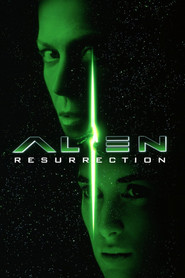
how they make it is actually end up more fascinating than the final result yeah this is a this is a great example of that yeah well yeah and that's what i love about the idea of how this movie kind of originated with this wooden planet by you know vincent ward had these monks and stuff who were living on this world they created this kind of very bosh looking movie with this like you know cathedral like design and a world of very thin atmosphere where
3:25 · jump to transcript →
-
full of monks, which is a really striking idea, but at the end of the day, makes absolutely no sense whatsoever. And it doesn't really belong in the Alien franchise, to my mind. Yeah, I think because down to the fact that Alien 1 and 2, there's always kind of based around sort of physics and reality to a certain extent, where things were believable, how you flick this switch and do that, and the monitors, and how things, and a sort of, you know, it wasn't clean like Star Trek, where you had this kind of sense of like, it's too far in the future, where...
5:17 · jump to transcript →
-
Well, we know there's other scripts, isn't there? Because during the genesis of this, I know David Garlis said they weren't really desperate to make a sequel, but everyone wanted a sequel, and they didn't know where to go with it, because where would you go after the second one? And they had other directors involved. I know they had Renny Harlin, who very much wanted to do the world of the aliens. He didn't want to be... But he found himself after a year not getting anywhere, because it was all just repeating what they've already...
11:43 · jump to transcript →
-
-
-
to sort of change the direction of the franchise at this point? Well, a funny thing happened was that this original film and then the second one were extremely violent and dark and edgy and full of drug-dealing children and just mayhem and mutilation. I mean, as R-rated as you can get, despite the fact that they're comic book movies. But somehow or other, kids were watching the first one on video or cable or whatnot.
4:34 · jump to transcript →
-
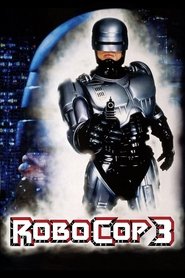
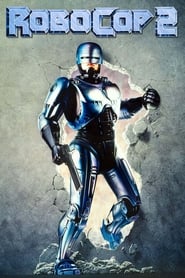
Back to the PG-13, looking back at it now, do you feel that that was a major factor in the problems you have with the movie? It was fatal. Having this be a PG-13 movie was absolutely fatal because it needed to be really rethought as opposed to sort of a sequel to the last movie. RoboCop 2 is in some ways even more offensive than the first one. I don't mean that in a pejorative way, but in terms of the violence and the tone of it.
6:53 · jump to transcript →
-
Any other movie has it, including these two sequels. So I see—when I watch this, I see—I love the sunglasses. I mean, Han Nguyen, who also is not with us anymore, fantastic costume designer. I mean, look at that. He just cuts such a figure. There's so much in this movie that just promises greatness, and then it doesn't pay off, and we're disappointed. But the humor in the movie is—
48:00 · jump to transcript →
-
-
-
Hyper on 2." Any luck? No. You know, I... The studio rejected my idea of a sequel, which was years... You know, now, you actually... You being in jail... ...coming back to take revenge on Joe and Danny... ...who live in the suburbs next to each other, and they've got their families. Gone straight. - Gone straight. And you've got your... - That's great. I see something there, but they... For some reason, the studio just won't go for it. Crazies.
33:30 · jump to transcript →
-
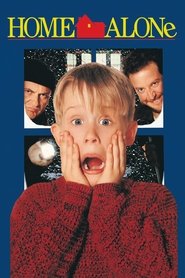
Look, honey, the kids are.... You had Ally Sheedy in the sequel. Ally Sheedy was in the sequel. Yeah. - Yeah. But we-- I think we were piggybacking movies at that point. We were just finishing Only the Lonely, and Ally decided to do it as a favor. We were mixing and matching cast. - That's true. Ha, ha. I did a little stint in that one, Ally did a little in that. Is that okay? - Yes. I'll wait. A bit of the New Jersey influence here. We had one of my favorite bands at the time... Still pretty big in England and places like that. Southside Johnny and the Asbury Jukes... ...recorded a version of "Please Come Home for Christmas." It was my opportunity to get to work with some great soul singers... ...and some people I'd always wanted to work with for the soundtrack as well.
34:55 · jump to transcript →
-
One of my favorite lines, "dangly ones." I Know. I don't know why that's a... People still, like, come up to me and say it. They'll say that sometimes. "Dangly ones." And I'll know exactly what they're talking about. I wonder how many kids who watch this today remember Johnny Carson... ...which was, again, a perennial, you know. He was sort of David Letterman and Jay Leno wrapped into one. But this was also right near the end. I mean, this... He only had about two, three more years after this. Yeah, yeah. Now, do people still recognize you from the film? Yeah? - A lot, yeah. You know, it just... It comes with the territory, but, yeah. It's a curse and a blessing. I have the... I pretty much have the same face. Right. - Just a little bit older. Only a little bit older. Yeah, here's the other one. Look at this. I mean, you have to say... You can't imagine, in dailies, adults just dying of laughter... ...because you were a ham. Yeah, I was a ham. - I mean, if you wanted to.... I love how I never brush the back of my head too. It's such a child thing to do. My son said to me that... Years ago, when he saw this movie, he was like... He goes, "Dad, it hurts much more to spray your armpits... ... than it does to put shaving lotion on your face." And considering I didn't even shave, either. Yeah. Do we--? Didn't we do--? We were... I think we even shot one of those kind of sequences for the second one... ... with, like, an electric razor or something like that. Yeah, yeah. But we actually never did that gag in the second one, did we? I can't remember. People accused us on the second one of just remaking the first one. Which, to some extent, we did. Yeah, that was what was enjoyable about it. It was fun because you actually got to push the envelope a little more... .In terms of how painful the stunts could actually be. Yeah, gosh, I mean, if John Hughes said he could write this on the weekend... ...I wonder how long it took him to write the second one. Just, like, a little bit of cut and paste and, boom, you're done. You're there. Sequel, bam.
50:40 · jump to transcript →
-
-
-
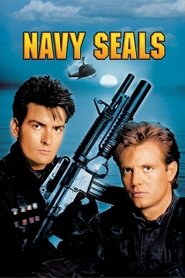
And during one of those breaks, she got to chatting with Michael Douglas. And she told him that she was producing a movie about Navy SEALs. And Michael Douglas said that she should think about Louis Teague as a director. Because Douglas had just worked with Teague a couple years earlier on Jewel of the Nile, the Romancing the Stone sequel. And he really liked him. Now, of course, at this time, Richard Marquand was still set to direct. So Brenda Feigen basically thanked Michael Douglas for the...
16:55 · jump to transcript →
-
And by the end of the year, Teague had another film in theaters, Jewel of the Nile, the movie I mentioned before, which was the Romancing Stone sequel. That movie gave Teague a massive hit on his biggest budget to that point, somewhere around $25 million. And so that really was kind of a big, big, big movie. Technically, on his resume, this is his next movie, Navy Seals. But he actually made a movie in between them.
1:04:11 · jump to transcript →
-
And he had also, his first big role in a movie, because mostly it had been TV, maybe some TV movies, but his first big role in a movie was with Charlie Sheen in Major League. He was Pedro Serrano, the Cuban player who was into voodoo. Yeah, yeah, yeah. And so that was a really funny role. And then, of course, he's in the sequel also. But that film role came 11 years after his first TV credit. And then...
1:06:31 · jump to transcript →
-
-
multi · 2h 19m 2 mentions
Martin Scorsese, Nicholas Pileggi, Ray Liotta, Lorraine Bracco + 9
-
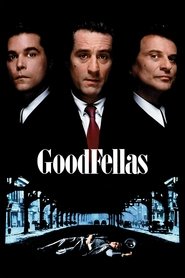
in front of the others, it's a problem. So you have to do it in such a way. And it was a very big negotiation. So the reason why that scene had to be done in one take through the underground labyrinth of this world and then to emerge in the spotlight like a king, you know, king and queen, this was the highest he could aspire to. And he hit it at a very young age.
31:41 · jump to transcript →
-
of this world, or at least a little taste of it, because I didn't know anything about it, and I don't know if Lorraine did, but we had such a great, fun time that night that I think just right from the beginning, we were both sitting there with Martin Scorsese, and then here's these real guys around us, and we were kind of like the new kids on the block. And
42:14 · jump to transcript →
-
-
-
Paul M. Sammon
Okay? So don't worry mothers, or fathers, or children lovers. Maybe latex lovers should worry. To go back to the history of the film, what happened very briefly was that Orion made so much money unexpectedly on the first RoboCop. They made approximately $50 million in 1987. They immediately wanted to go into production for a sequel, particularly because they were in financial trouble at that point.
13:47 · jump to transcript →
-
Paul M. Sammon
sequel is, I think, a monument to the true beauty of behind the scenes Hollywood craft. Kirsch came in with very few weeks, no prep, did this entire film on the fly.
47:14 · jump to transcript →
-
-
-
Mark Amin said, I think I see something in the picture. Yeah, I think as the footage rolled in, it became clear there was a vision behind it. And I think we felt that as each day went on. Every setup is a decision you're making, Mark. And we quickly, you could feel everyone getting on board, understanding this world, which it really is its own world, which is also what makes it fun. It's totally out of time and space, like a cartoon. And...
21:30 · jump to transcript →
-
There were no laurels for him to fall back on. Everything was being built from this experience, and it became monumental for me. Like, wow, this guy's amazing. He was terrific. He got into it. He understood it. He brought his own personality to it, and I think that's the reason all the leprechauns work so well is it's Warwick. It's the character. Yeah. And that's why, you know, I'm disappointed they're not using Warwick in the new reboot of Leprechaun, but...
23:24 · jump to transcript →
-
-
-
And then Marshall would return to the fold for the Jurassic park sequels, as well as the Indiana Jones sequels that Spielberg and James Mangold directed. And Kathleen Kennedy was involved with the James Mangold, Indiana Jones movie as running Lucas. So it's all very, they kind of keep going in and out. Um,
56:39 · jump to transcript →
-
In that period between Amblin and Lucasfilm, when the Kennedy Marshall Company was thriving, some of the movies they made included The Sixth Sense, The Bourne Identity and its sequels, and The Curious Case of Benjamin Button, as well as more Spielberg collaborations like Munich and Lincoln. In recent years, Frank Marshall has also gotten into producing Broadway plays and musicals. As we record this, he has one.
57:22 · jump to transcript →
-
-
-
Darren Aronofsky
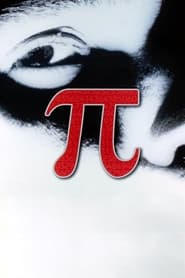
Euclid predicts AAR at six and a half. AAR hasn't been beneath 40 in 20 years. Explanations for anomaly, human error. Me and Abe Lincoln share the same birthday. So Max tries to reboot the computer and now we sort of introduce his sort of homemade brain
19:19 · jump to transcript →
-
Darren Aronofsky
And that's King Neptune, who's a character that I've dealt with in several different projects that I've written. King Neptune is actually the living King Neptune who's somehow lost his trident in this world of evil and is searching for it with a metal detector on the beach of Coney Island. And right there, he finds something else. It's not his trident, but it's almost as good. And it intrigues Max and brings him over. The original King Neptune that we cast was a...
38:41 · jump to transcript →
-
-
-
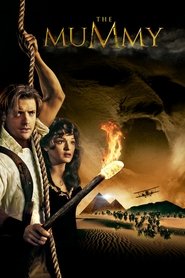
They wouldn't be just spewing gibberish. It's actually what this professor believed ancient Egyptian would sound like. Arnold was pretty good at it, but Anck was terrific. If we do a sequel, we'll bring her back big time.
3:05 · jump to transcript →
-
which I'm sure will be important in the sequel. Thank you very much for tuning in. Hope you enjoyed the movie. It was very, very, very informative.
1:56:48 · jump to transcript →
-
-
-
-
multi · 2h 24m 1 mention
Alex Thomson, Terry Rawlings, Alec Gillis, Tom Woodruff Jr. + 3
-
-
-
multi · 1h 54m 1 mention
Jean-Pierre Jeunet, Hervé Schneid, Alec Gillis, Tom Woodruff Jr. + 5
-
multi · 2h 12m 1 mention
Andrew Sarris, James Ellroy, Brian Helgeland, Michael Nathanson + 10

Related topics
Other topics that frequently come up in the same commentaries.