Topics / Studio & business
Sequels & franchise
86 commentaries in the archive discuss this, with 211 total mentions and 47 sampled passages on this page.
Filter commentaries
Filter this topic by the film's decade or the type of commentary.
Showing 23 of 86 commentaries
Clear filtersBy decade
Across the archive
ranked by mentions · click any passage for the moment in the transcript
-
director · 3h 43m 8 mentions
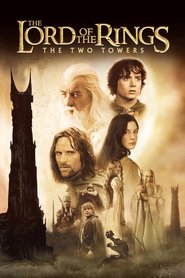
The Lord of the Rings The Two Towers (2002)
Peter Jackson, Fran Walsh, Philippa Boyens
-
I do love this scene. I mean, this was another favourite scene. I really did want to try to hang on to this stuff for the theatrical version. I love them talking about the Entwives. It's kind of just, you know, it's a shame. Anyway, it's here. Hey, we shouldn't mourn it too much. We have DVDs. Thank heavens for technology. But I am very happy with the way that the extended cut DVDs are now fleshing out the trilogy. This one was, I think, about 43 minutes longer than the theatrical version.
1:11:18 · jump to transcript →
-
Good, but the Mamakil are obviously having a little cameo appearance here. I have to say that the scene that I've been looking forward to doing ever since we began the trilogy is the Pelennor Fields battle in Return of the King where these creatures attack in their full battle mode. We're only seeing them here in a very brief appearance, but in the next movie, Return of the King, they play a great part in one of the...
1:44:55 · jump to transcript →
-
maybe if we can't make sequels that's actually a great idea because we can't make sequels anymore we can only make three maybe we could make three more where we embellish the three we already have and we just sort of fatten them all out and that's the way that New Line could make more money is you just kind of fatten these films out without technically going beyond the Lord of the Rings as the licensed property do New Line need to make more money? no
1:54:33 · jump to transcript →
-
-
director · 4h 13m 5 mentions
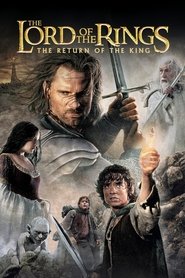
The Lord of the Rings The Return of the King (2003)
Peter Jackson, Fran Walsh, Philippa Boyens
-
for a franchise pattern, as it were. When we realised that we had available to us this Schmeagle Deagle scene, it seemed like a counter to how the two towers opened. I know that Andy was really disappointed that it was cut out of the two towers, because he was aware it was his moment to have his real face seen on the screen. And then we cut him out, and I think he was never quite believing that we were actually going to use the scene at all. No, probably not.
3:15 · jump to transcript →
-
and the elves on their way through the forest. But because in the editing of the film, the two moments from Isengard to here got separated by all of the inner sequence, it was no longer a very useful thing to do. We also wanted to signal the fact that this world was going to end one way or another in this movie. And that's the knowledge of Treebeard and Legolas, that there's not going to be room in the world for these creatures anymore. Great moment for the 25th anniversary edition, if I can remember. OK.
37:09 · jump to transcript →
-
And so we wanted to sort of have this about her, that this is a conscious decision that she makes and that the longer she stays in this world, the more vulnerable she is. And we push it to a point where she literally is becoming mortal and that any grace that was conferred on her
1:39:36 · jump to transcript →
-
-
-
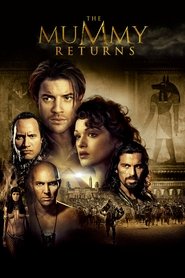
If I'm going to do the sequel, I would like to make it a little more scary, a little less broad. And so that's sort of what we went after. And surprisingly enough, I think we did that. But it also gets as many good laughs as the first one, if not more. I'll tell you, the scorpions and tarantulas, they must leap up on that guy's shoes. Yeah, if you notice, we called that, wasn't that the bug magnet shoe? What was the name of that? Bug magnet shoes.
12:22 · jump to transcript →
-
it gets a little ridiculous. One of the difficulties about making a sequel is that you have to reference the first picture a bit, but at the same time you need to make it a stand-alone movie so people who haven't seen the first movie can still enjoy it. In that last sequence there's all this business with the chest, which specifically relates to the first picture, and it isn't really all that necessary for an audience that's seeing
52:07 · jump to transcript →
-
you know, within the same sequence. And I think that's one of the reasons that it's so effective. It's funny, in the wide shots of Patricia, in the first movie, to paint her body took like 12 to 14 hours. So in this scene, like there, the paint she's wearing, that took 12 to 14 hours, because that's all she's wearing is paint. But in the sequel, we just use the wide shots.
1:11:12 · jump to transcript →
-
-
-
Ron Howard
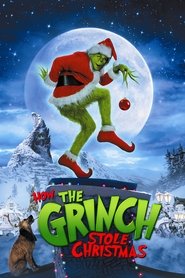
that Seuss's book give us. And so our idea was to do the pre-story, to kind of let the first half or so of the movie be the prequel to the book. In doing so, we had to take a lot of creative license, including creating the myth of how the Grinch came to live on the mountain. It was fun and interesting in the writing, and also I was always very proud of the way audiences responded to this particular sequence that deals with the young Grinch.
24:12 · jump to transcript →
-
Ron Howard
From a structural standpoint, this marks sort of the end of the prequel. Soon we're going to be into the more faithful adaptation of the book, How the Grinch Stole Christmas.
58:51 · jump to transcript →
-
Ron Howard
Again, I can't say enough about the design team, led by Michael Corenblith, but also really assisted strongly by Todd Hallowell, and then every department. People were so delighted to be making a Dr. Seuss movie, and thanks to Universal, Ron Meyer and Stacey Snyder and Mary Parent, the executives gave us the tools that we needed to really fulfill the potential and create this world.
1:07:49 · jump to transcript →
-
-
-
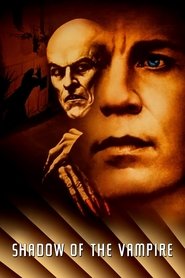
E. Elias Merhige
the human and the mechanical science and invention that is leading and giving birth to this completely new world, this world of the cinema. And the first image that we see of Greta with the cat is the first image of the world that we see. And this image of the world that we see is the image of a cinematic, artificial world.
6:45 · jump to transcript →
-
E. Elias Merhige
This bunker, Assheton and I were talking about this World War II bunker, this subterranean place where the final ritual, the final scene of the film is gonna work itself out. And here we have Cary and Udo
1:07:34 · jump to transcript →
-
E. Elias Merhige
It was something that I had storyboarded from early on with this idea of moving from this world of black and white into the world of color. You know, you have Willem very poetically staring into this lamp, this light. At first he was concerned because he thought it was the sun, but now as he flings the lamp away he sees...
1:23:26 · jump to transcript →
-
-
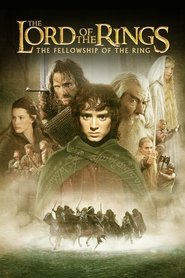
director · 3h 29m 3 mentions
The Lord of the Rings The Fellowship of the Ring (2001)
Peter Jackson, Fran Walsh, Philippa Boyens
-
a script that was written by a Hollywood screenwriter for, I believe it was an animated version in the 1950s or 60s. He had particularly objected to what he called the use of the eagles as Middle Earth taxis. Right. But yes, he had a very specific reason, which was that the eagles are their own race. They're not necessarily part of this world and they do things for very specific reasons. Welcome to Rivendell.
1:26:12 · jump to transcript →
-
Yes, yes, there are other forces at work in this world besides the will of evil. And the other great message in this scene is all you have to decide is what to do with the time that is given to you. That is the essence of it. Well, that's about free will, which again plays directly to the powerful themes that underlie the story, which really...
2:09:17 · jump to transcript →
-
who was very loved by members of the crew and the cast. And he did a fantastic job on this film. And really, we would have been sunk without him. In a sense, filming The Lord of the Rings, the trilogy of The Lord of the Rings, all in one big hit over 15 months,
3:24:06 · jump to transcript →
-
-
-
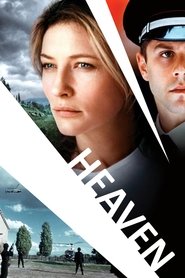
Tom Tykwer
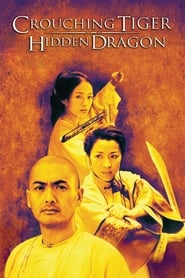
Kieślowski and his co-writing partner Krzysztof Piesiewicz. Both of them had written an amazing body of work before that. The famous series called Dekalog, based on the Ten Commandments. The trilogy of three colors, blue, white and red. And among others, a film called The Double Life of Véronique.
1:34 · jump to transcript →
-
Tom Tykwer
of the outside world that is going to be closed and that is going to endanger those two characters who behave as if they were in a bubble that is outside of reality and this world. So this is also a reminder for them
59:25 · jump to transcript →
-
Tom Tykwer
outside of this world and towards that sky and towards this heaven, which for me is anyhow a projection field for, much more projection field for utopias and because it represents endlessness. And in a way, of course, because of endlessness, it also represents eternity. So here they are, our two strange, weird heroes.
1:27:30 · jump to transcript →
-
-
-
I think you arranged that hair yourself, didn't you? Oh, I always arrange the hair. We gotta figure something out for the sequel, some kind of moulded shell... ...some helmet that looks perfect, that doesn't move. I might do that Olsen-twins movie myself. Well, it sucks because there's so many elements in a shot... ...and the fact that the hair makes you do the shot over is really frustrating. But if the hair falls in your actor's face... ... you just can't use it. And it was just an ongoing battle. Did you ever let the art department do this... ...or were you busy all over this thing as well? No, I let them do it. For these shots, I would arrange it... ...and just pick a bunch of stuff off and put it together. They went crazy around the office. Actually, the first attempt to do that bulletin board... ...which I said should look like some really creepy homicide board, was... They went and took a lot of pictures of people in the production office. You actually see people at drafting tables. And other people are kind of looking and smiling into the camera. And I said, "It's supposed to be surveillance photos." It's a little bit too chummy. - Yeah, a little bit too aware. You've got a guy with an illustration of a crypt set in the background.
1:27:19 · jump to transcript →
-
He'd try that, though. He'd try to get the scarf and maybe a little piece... ...of jewellery or whatever. - He'd come out... ...of the wardrobe trailer, "And what do you think about these bracelets... ...and these earrings?" I was like, "I don't think it fits with your character." He liked that pink spectrum and the fuchsia. Remember when he kept coming out... He wanted to wear the eyeliner... ...and with the eye shadow... - Which would've looked so dumb. No. Like, "Scotty, nobody else is wearing lip gloss." So.... And also, remember, he wanted, like, the really blown-out hair, like...? You know, he wanted his hair longer. Yeah. He had this obsession with the whole Dukes of Hazzard... ...and getting that very.... Maybe we shouldn't out him like that. - Of course I should. His own daughter. He was a chick in the movie, and he didn't get any of the cool chick stuff. I can understand him being upset. - No, I can too. He'll have a pocketbook next time. He'll come into his own in the sequel. He's gonna have Hello Kitty accessories head to toe. Nice pink boots. Great hair, though, right? - Yeah. It was worth fighting with him on that one.
1:36:54 · jump to transcript →
-
And here we are, setting up our sequel.
2:04:59 · jump to transcript →
-
-
-
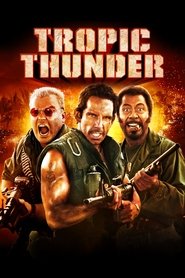
Lincoln Osiris or Kirk Lazarus or what would you? Just Lincoln, thank you. Lincoln, okay. Goddamn. Sergeant Osiris. Fuck, dude. Wait, wait, wait. Listen to VO. Here it come right now. Here we go again. Again. Again. Yeah. You see? That works. We took it and we took it one more time. That was good. I actually heard here we go again in a real trailer for a sequel this summer.
1:17 · jump to transcript →
-
Which was sort of ironic. Okay, Jack, here's your fallback franchise. That's me. They're all me, except for that guy. Did you draw on people you know in your life? No, but I did spend a lot of time in the mirror figuring out the best faces.
1:47 · jump to transcript →
-
Death of a franchise. Yeah. You guys are really fucking with my livelihood here. It's like all the goodwill that Kung Fu Panda built up for us was just totally killed there. I remember seeing you shooting this scene too. Oh, were you there? Really? I was walking by. I was about to shoot something else. Yeah. Man, these guys work together like a charm. Yeah. It was great to see these two guys work together. They complement one another.
49:46 · jump to transcript →
-
-
-
James McTeigue
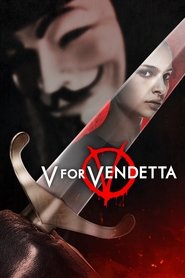
Mmm. It's delicious. - Good. God, I haven't had real butter since I was a little girl. Where did you get it? A government supply train on its way to Chancellor Sutler. You stole this from Chancellor Sutler? - Yes. You're insane. I dare do all that may become a man. Who dares more is none. Macbeth. - Very good. My mum, she used to read all his plays to me... ...and ever since, I've always wanted to act. Be in plays, movies. When I was 9, I played Viola in Twelfth Night. Mum was very proud. Where is your mother now? She's dead. I'm sorry. Can I ask about what you said on the telly? Did you mean it? - Every word. You really think blowing up Parliament's going to make this country a better place? There's no certainty, only opportunity. You can be pretty certain that if anyone does show up... ...Creedy'll black-bag every one of them. People should not be afraid of their governments. Governments should be afraid of their people. And you'll make that happen by blowing up a building? The building is a symbol, as is the act of destroying it. Symbols are given power by people. Alone, a symbol is meaningless, but with enough people... ...blowing up a building can change the world. I wish I believed that was possible. Every time I've seen this world change, it's always been for the worse. Roger Allam, who plays Prothero, is a fantastic theater actor. Those shock jocks exist in every country... ...whether it's America or whether it's England... ...or whether it's Australia or wherever you are. I think the common denominator is they are in every country in some form. And he really embodied that. All the awfulness... ...and the disgustingness and the duplicity that a lot of those guys have. He's the voice of Britain, so he runs a television program... ...in which he rants his particular beliefs... ...which are also the beliefs of the government. I mean, very much like, I suppose... ...some of those evangelist kind of programs that you have in the States. Only his evangelism is a kind of nationalistic fascism, I Suppose. Roger really relished the role. I thought that he really did a good job. So, you know, I made him.... You know, he has those shirts that have the, like, the squeezing neck... ...and I put him, like, in a fat suit... ...and I made him a bit colorful and really made him over the top. One's initial impulse is to be quite big. Then you think, this is a movie. I better be smaller. And they were sort of also, "Oh, no, be big." You know, so. So, you know, you pick up influences... ...and direction and encouragement from wherever you can, really... ...and just sort of hope it all stitches together. Don't worry, I've made sure our reunion won't be disturbed by... ...any pesky late-night phone calls, commander. Stop. Why do you keep calling me that? That was your title, remember? When we first met, all those years ago. You wore a uniform in those days.
31:22 · jump to transcript →
-
These tracks lead to Parliament. Yes. Then it's really going to happen, isn't it? It will if you want it to. What? - This is my gift to you, Evey. Everything that I have: my home, my books, the gallery, this train... ...l'm leaving to you to do with what you will. Is this another trick, V? No. No more tricks. No more lies. Only truth. And the truth is, you made me understand that I was wrong... ... that the choice to pull this lever is not mine to make. Why? - Because this world... ...the world that I'm a part of and that I helped shape, will end tonight. And tomorrow, a different world will begin... ... that different people will shape, and this choice belongs to them.
1:50:03 · jump to transcript →
-
-
-
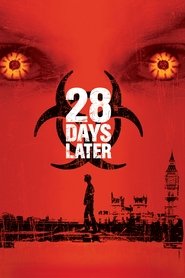
The CCTV cameras in this movie is an element that conveys that the city's under control. Everything is under control, which is part of the... it's one of... it's part of the process when somebody's trying to rebuild a city like this. With Rose Byrne, the character of the doctor, we introduce the concerns about the infection. Maybe it's not under control and they need more time. A little conflict in the militaries about if they are doing the right procedure, in terms of they are bringing kids to this world which is something maybe dangerous.
19:00 · jump to transcript →
-
It's driving them crazy, because, you know, it's so difficult to see who is infected and who is not infected. And, again, a character taking a difficult decision, which is one of the leitmotifs in the movies... in the movie. A right decision or a wrong decision? But always it's a decision that implies destruction. Yeah, and all these decisions have been taken from the fear. The fear is... Everything is around the fear here. Everybody takes a decision in this... in the presence of the fear, which is moving everything forward. When you're watching the movie you understand why people take these decisions, because I think when we feel this fear in the real life, you're in trouble. It's not a cold decision, it's not a decision taken from a quiet moment. It's... when you're surrounded by something really powerful as the infection. This tune, this theme, was taken - musically - was taken from the first movie. This is a tune we always loved from the first movie, from John Murphy's soundtrack. And we had no time for John's... He had only two weeks to compose the music of the film. This is absolutely amazing to say that, but it's the truth. And we decided to bring this theme again back here in this sequel, and to work it in different ways. For me, it's hypnotical. I... I like the way we use it here. I like the way that John orchestrated and arranged absolutely in a different... It's different from the first one. We are going to hear this tune four times in the movie, in key moments. This is one of them. And that... this sound, this music, reminds that the infection is a building process. The infection is spreading. That's why the music is building up and, you know, getting this kind of big, intense moment with the guitars, which is the best combination with the infection around. On the other hand, the music has a kind of heart, emotional heart, which is telling that this movie is about character, it's about people... who try to survive. Now there's the moment of Doyle's dilemma. Another decision to take, another difficult decision to take, which is to put out of his misery his colleague.
54:07 · jump to transcript →
-
-
-
James Mangold
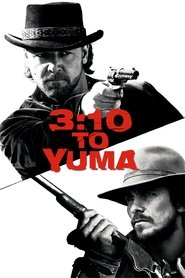
And I think what you see here among these men is a tremendous sense of confidence and comfort in this wardrobe and in this world. The other thing that I think is important with actors is that, and this stems from what I was talking about a moment ago, good guys and bad guys, villains and heroes, no one, no person in the world, including Hitler or Osama bin Laden, walks around believing they're a bad guy.
21:27 · jump to transcript →
-
James Mangold
a rebellious figure against a kind of change, an inexorable change that is coming. All these things, I mean, I hope you see, we're really, we were very conscious of in assembling the journey of this movie. We wanted every one of these forces represented very clearly so that people might see, in a sense, our current world through the prism of this world.
24:53 · jump to transcript →
-
-
director · 1h 36m 2 mentions
Aliens vs. Predator - Requiem (2007)
Colin Strause, Greg Strause, John Davis
-
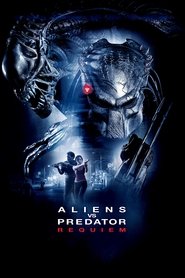
extensive cost to do a feature film, but to be able to actually do the sequel to Alien vs. Predator and to have the writer from the first Alien vs. Predator join us, one of the writers, which was Shane Salerno. Unfortunately, Shane can't be here today. He was going to join the commentary, but the writer's strike in Hollywood has prevented him from coming in and actually doing video commentary, so we're going to have to thank him for his script and all of his hard work without him being here. He's here in spirit, I guess.
3:42 · jump to transcript →
-
That allow for the sort of space travel that we saw in the other films. Yeah, and it ties into Predator 2, which was the whole idea that they were trying to, you know, secret government organizations trying to capture the Predators and get their technology from them. So it's like that scene to us sets up for what could be the, you know, the AVP3 and, you know, how it bridges to the Alien franchise. And the last thing I'd like to say is just...
1:35:12 · jump to transcript →
-
-
-
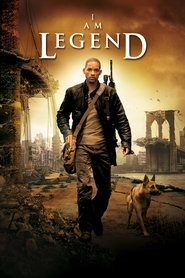
influenced by the Blair Witch Project for this sequence. And I think one of the key ideas was that the actors in that film were really horrified in all of those sequences. They weren't the hero that were going up against the villain, you know, with courage. But here we have Will petrified, and you just never see that. And I think we are just living in this world in his shoes, and if he's petrified, we have to be petrified. Remember we had a version of this sequence years ago that was in the U.N.?
28:06 · jump to transcript →
-
somewhere it's a yeah it was a closed actually it was a closed hotel well it's next door we would go in through a closed hotel the hotel was taking it over right right right but yeah we found this vault which is one of the reasons i wanted to shoot here it had these great stairwells and narrow tunnels and it was sort of wrecked and we went with the idea that it was a burnt out bank and i also loved the idea of this money this you know that in our world now all that cash laying on the ground is so enticing but here in this world it means absolutely nothing
29:34 · jump to transcript →
-
-
-
Rob Cohen
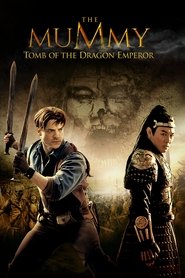
the country of China, the geography of China, the spirit of China, and the history of China. It's the reason I did the film. I did not ever, I haven't done a sequel to my own films. The Skulls had a series of direct-to-video sequels. xXx has had two sequels, now a third one coming. I mean, The Fast and the Furious has had
1:39:43 · jump to transcript →
-
Rob Cohen
two sequels and a third one coming, and XXX had one sequel with a cast change. And, you know, I didn't do those for reasons. There are too many new ideas and too many new things to explore.
1:40:14 · jump to transcript →
-
-
-
-
-
-
-
multi · 1h 3m 1 mention
Star Wars: Clone Wars, Volume Two (2005)
Genndy Tartakovsky, Bryan Andrews, Paul Rudish, Darrick Bachman
-
-
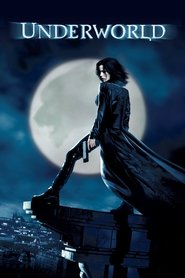
director · 1h 26m 1 mention
Underworld Rise of the Lycans (2009)
Patrick Tatopoulos, Len Wiseman, James McQuaide, Richard Wright + 1



Related topics
Other topics that frequently come up in the same commentaries.