Topics / Studio & business
Sequels & franchise
86 commentaries in the archive discuss this, with 211 total mentions and 33 sampled passages on this page.
Filter commentaries
Filter this topic by the film's decade or the type of commentary.
Showing 19 of 86 commentaries
Clear filtersBy decade
Across the archive
ranked by mentions · click any passage for the moment in the transcript
-
-
Paul Davis
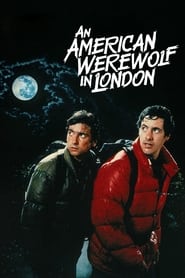
I've always said there are only two things that really age this movie, but not in a negative way. The hairstyles and the fact that John Woodvine asked for a Campari and soda. It's really sad to me that we never got John Landis' sequel for An American Werewolf in London.
49:59 · jump to transcript →
-
Paul Davis
which he did write a first draft screenplay when PolyGram was sold by Peter Guber and Jon Peters in the early 90s. I can't remember the name of the guy who took over, but he came to John and asked him to write a sequel. And John deliberated about it. He thought about it for a long time, didn't really have anything that was significant
50:28 · jump to transcript →
-
Paul Davis
But anyway, going back to the sequel thing, the reason that we never got that version is because when John handed in the screenplay, the guy who ran PolyGram was pretty much offended by what he read and said that there was absolutely no way they were going to make it. And he asked for a bunch of changes and John said no. So that's what happened. I love that those two little girls are credited as Creepy Little Girl 1 and Creepy Little Girl 2.
53:44 · jump to transcript →
-
-
-
like privy to this world and it had nothing to do i mean we had one mother say one line and that almost seems like a violation to me because she's good night stacy and other than that it's like here's that world they function in here's what you grown-ups don't see and that's what was cool about it i need to now put in a plug for amy short getting it over with which i hope
21:11 · jump to transcript →
-
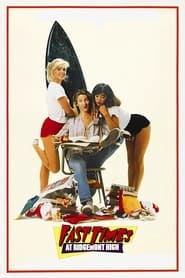
I love what you said about Spicoli has to be the spice. It's so true. Because people have... I know you've probably been bombarded over the years on people saying, hey, let's do a Spicoli sequel. Just Spicoli. You remember the first day we saw the movie in Westwood, and I guess, who was it from the studio? Was it Thom or Sean? Somebody said, okay, guys, Spicoli goes to college. Yeah, they were just ready to go. They're ready to go. It wouldn't have been the same. Spicoli without Brad.
29:26 · jump to transcript →
-
Oh, and you had an idea for the, we sort of play in our heads about a sequel, the last high school movie while we were making this, and that she would say, you know, she wants to break up, but we'll still be friends, that then the actual ending to that scene would be he'd pull out a gun and shoot her through the head. No, see, we could get that movie made today. Oh, yeah. In fact, it's already been made. I know, a few times by other people who messed it up.
34:15 · jump to transcript →
-
-
multi · 2h 34m 4 mentions
James Cameron, Gale Anne Hurd, Stan Winston, Robert Skotak + 8
-
Bill Paxton
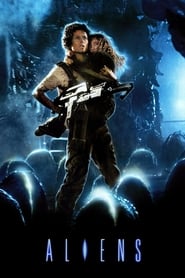
Because 7he Terminator hadn't come out yet, there was the perception that Jim was somehow not up to the creative responsibility of directing a sequel to Ridley Scott's masterpiece. There was a lot of resentment, and really no understanding, or very little, of what he was trying to accomplish. We had people who were, I think, completely on our side - John Richardson in practical special effects, Brian Johnson in visual effects. There were people who understood Jim's vision, but there were quite a few people who simply looked at him as the know-nothing, upstart Yank, which drove Jim crazy, considering he's a Canadian. It was his right hand, his AD. The leader of the rebellion, the first assistant director, not only behind Jim's back but to his face would call him "Guv'nor" and roll his eyes, as if Jim hadn't earned the title yet. We were shooting very long hours and people were pretty frazzled, and by our standards in America at the time a 12-hour day is not a long day, it's average, but 12 hours at the time in England was a very long day, and there were times when we'd go into a 14-hour day. At a certain point our assistant director, basically, said: "We're not doing this any more." So we fired him. And he felt that he really should be directing the movie. He was a frustrated director. He had directed second unit before. I think he even had directed a small film. But he really felt that he was better qualified than Jim was to direct the film. He went to all the departments and some cast members and everyone walked off the set. It was the most difficult moment of my entire career, even to this day, trying to rally everyone back. In fact, we were able to turn it around so that the outcome of that mutiny was that we were united, after we resolved the issues, for the first time on the film and going onto the rest of the production schedule. We actually were a unified group. So it was an example of something good coming out of a really difficult situation. I remember talking to people and going "This is a wonderful movie." "Everybody's working as hard as they possibly can." And hoping that no one would lose the energy. Fortunately, because of how you handled it, it all came together. Because it was scary. It was very scary. We were at that point - what are we gonna do, hire a new crew? Not that the thought didn't cross my mind, but England was very busy. We didn't have the option. There weren't other key crew members even available. When you have no options, you make it work, and we did. This is probably my favorite movie of my career, and the only movie where I've experienced anything like what we went through. I will also say, on the positive side, of the English crew... I brought a handful of guys from the States. We started all our designs and our builds in the States and then built a workshop in Pinewood and hired all but a half a dozen of the key coordinators from my studio from England. And everybody worked very hard and did a great job. They were wonderful artists and committed and everybody wanted to do a good job. They just had slightly different work habits than we did. I was shocked when suddenly, at a particular time mid-morning, everybody would be gone. I'd go "Where is everybody?" They'd go "They're at tea." I said "Hello?" Just gone. The other thing is that Pinewood Studios at the time had an entire crew on staff that were assigned to a movie. Right now it's four-wall, which means you hire the crew you want, it's freelance. But you ended up with the crew that was assigned to the stages you were working on and there was no selection process involved. It made it really difficult because some people really were punching a clock. They didn't want overtime, didn't wanna do anything other than work an eight-hour day. Shooting this film in England wasn't just a culture clash. For me, it was also a transition from a non-union guerilla-filmmaking mentality, which started at Roger Corman's New World Pictures and continued on 7he Terminator, which had a non-union crew, to a union picture. And also the particular way that they work in England was very, very different, and so there was an adaptation to that. And, frankly, I thought there were a lot of people on the crew that were, to use a charitable term, comfortable, and that was completely foreign to me. I'd been used to working with young, eager, hard-core, dedicated film folks. They all had something to prove. But a lot of the people especially at the Pinewood Studios at that time were lifers. They had permanent employment. It didn't matter what movie they were working on. And they got pushed on us. If you did Pinewood, you had to use their people. It was a whole different mentality. So I pushed against that as hard as I could. If I hadn't, we wouldn't have got the film done on budget and on schedule, which we did. I know probably a lot of people there at Pinewood at the time didn't care for us, with our guerilla-filmmaking ways and styles - we were not polite. By the end there were a number of them that came to respect the fact at least that we knew what we were doing, which I guess is OK.
1:30:33 · jump to transcript →
-
Bill Paxton
This is, to me, the creepiest part of the movie. This thing running around, that sound effect he did of the facehugger. The first scenes of this movie when he did the chestbuster. The sequel, A/en - he took care of it in five minutes. That first scene. That it was a dream. - That was great. I thought it was so smart. It was just great. His storytelling. - The sound effects. That scrabbling noise. The way this whole thing was laid out in the first Aven and the second one, the whole genesis of the way it would start out in the pod and then it turned into the facehugger and then it turned into the alien.
1:47:16 · jump to transcript →
-
Bill Paxton
This movie laid the foundation for me for a lot of stuff. Again, it was working for Jim that was really fantastic. I remember running into Jim when he'd been hired to write this. I was at the airport. He was handing off a parcel to some courier. I don't know why. I guess because they were setting up shop in England. He said "I'm writing the sequel to Aven." I said "Write me a good part in there." I kidded him. Six months later I tried out for it in England and I didn't think I'd gotten it. Your friends are usually the last people to hire you. Cos you have no mystique with them. And then I got a call. I almost took Police Academy 3 or something, and then I got this. More money than I'd ever seen in my life. They hired Bob Wildcat Goldthwait instead. I don't know who got the better deal, but I think I did. Everybody was looking at the film as well-made in the sound and visual effects, but we were pleasantly surprised when Sigourney got nominated. Not that we didn't think her performance was worthy, but there was no precedent for a horror film being honored by the Academy for acting. The fact they took it seriously I think still is a real milestone. Interesting thing coming up. Another shot that Jim stuck me with but it's really kind of fun is when we meet the queen alien. This is gonna come much later. She ends up back in the elevator shaft. In fact, the elevator shaft is not nearly big enough to hold the queen alien, so only her front half is in the shaft. The rest of her is sticking out the back of the elevator on the set, but you never really think about it in the movie when that elevator opens and the queen comes out, that she would never be able to fit in it. And since 90 per cent of the queen alien stuff in this movie is all full size, we had to deal with the sets based on the reality of her size and the reality of the sets. I never forget Jim coming to me when he first had written the screenplay. He said "I've got this idea for the queen alien." "We'll get a couple of guys in a suit. It'll have four arms. We'll carry it on a crane arm." "We'll have puppeteers working the legs." I'm going "He's completely out of his mind." Then a split second later "No, it's Jim, so it probably'll work." Remember when we did it with the... The garbage-bag test. Exactly. Do it first and make sure it works before you do the design. So we rented a little crane behind my studio and built a little body form for two stunt men, ski poles for arms, foam-core legs, rod puppets, foam-core head, and looked at it and "You know what? It works." Same with the power loader. We did all that in foam core first to make sure the concept worked. Unfortunately, it was too heavy and had to be supported by the crane. By the wires. But you'd never know that in the movie. No. The queen, when she drops out of the dropship, she's virtually a huge marionette, and there are wires in the shot and we never see 'em. Wires on each of her legs, her entire body, when she comes down out of it. It's a 14-foot hydraulically operated marionette. I learned to have a great deal of respect for second unit directors doing this movie cos I had to shoot second unit, small shots and big shots. And to have to make sure that every light and everything was exactly the way Jim wanted it so that it fit in seamlessly makes you realize that that job, which fortunately I haven't done since working with Jim, is a rough job, because it's not being creative, it's making sure you're doing what the director wants. It originally started that Sigourney was supposed to have run into Paul Reiser and he did a cocoon scene as well, and she gave him a grenade. And later on in the movie, there's a part where it's a big old boom, and it was supposed to have been him setting off the grenade. But obviously no one really knows any of that because it was cut out of the movie. I run into Sigourney once in a blue moon at an airport lounge or something. She's always great. She remembers Louise's name, my wife's name. A very thoughtful woman. - Gracious. She made this series what it is. Without her, it just wouldn't be the same. Also Ridley Scott and Jim, they both really showed up loaded for bear on these films. I've never followed the other movies. I couldn't tell you much about... I thought Ridley was doing the third and Jim the fourth. That was David Fincher. I've seen a lot of his movies and liked 'em. Yeah, he's great. I personally installed Carrie in this cos I wanted to make sure it was done in a way that wouldn't hurt her or create any discomfort. So I'm smearing this gak all over her and she looks up at me and says very quietly "It should be illegal for you to do this to little kids."
2:06:24 · jump to transcript →
-
-
-
Eleanor Bergstein
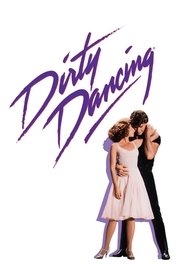
The movie was shot in two places, in North Carolina and Virginia. This is Virginia, the big front reveal that shows how big and beautiful this world seemed. Very important was that, and we carried fences. You'll see these white fences. We carried these fences from North Carolina to Virginia, so it's really quite seamless. The actors walk two inches, and they're from Virginia to North Carolina. We made up Kellerman's. It exists in no geographical place, only in...
3:20 · jump to transcript →
-
Eleanor Bergstein
So I said, well, you must promise me to go. And he, about a week later, I called him and I said, Lonny, did you go? Did you go? And he said, well, yeah. And I said, well, what happened? And he said, well, I was sitting there and when I said, sometimes in this world you see things you don't want to see, a girl in front of me said, like your face. And he said, it just made me feel bad. And I explained to him over and over again that it was because he was a wonderful actor. But it's interesting how these lines cross. Now, Lonny is so wonderful that what he plays is...
23:51 · jump to transcript →
-
Eleanor Bergstein
I will tell him I... I don't believe you, baby. Through all this, I'd like to make clear that while we were making it, we had no thought in this world that many people were going to see it, that it was going to be a movie that years later people would see repeatedly.
1:10:42 · jump to transcript →
-
-
-
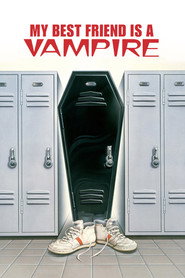
Yeah, it's just sort of fun to contemplate. Had there been a part two, like where he might have wandered off to with David at the end of the movie, you know? Yeah, yeah. Yeah, that's an interesting thought. And maybe we could get Bobby and Cheryl back together and do a sequel now. Except Bobby wouldn't still be the right age, I guess. Unless we set it in the future, we could do that. Right, his son could be half vampire or something like that. Yeah.
51:40 · jump to transcript →
-
Yeah, I mean, their relationship would hit a few snags down the road, I think, you know, but... Absolutely. Yeah, I still think we could use, like, you know, a belated sequel, you know, for a Netflix sequel or something, catch up with these guys, because I'd really like to know what happened to them. Well, we could figure that out, but I think you'd have to have a bigger audience than this probably has to make that happen, because the young audience that it would have...
1:08:58 · jump to transcript →
-
are not old enough to have seen the first one. Right. So you'd have to make some sort of package deal. Right. Well, it's what they call a requel. It's like a reboot sequel where if you haven't seen the other movie, it doesn't really matter. Yeah. But yeah, we'll see. When the Blu-ray comes out, we'll see how it does. You never know. Well, it would be fun.
1:09:30 · jump to transcript →
-
-
-
So this is a slice of... This is the true story, gang. In Park Ridge, Illinois, it really happened to a friend of mine. I'd be proud if it was me, but it was a famous story in our high school that this happened. Whatever happened after that? Could he be in the sequel? The real guy is now, you know... 12 kids later? Exactly. May I say, Ricky Paull Goldin, the swagger this kid has is true to him, undirectable.
13:02 · jump to transcript →
-
Oh, this was a California unit? Yeah. Again, wonderful background folks in all these. Nice work. Again, nice work by Tony. Subtle work. Yeah. But perfectly set up, though, with just that one shot where you go, oh, now I see where he kind of ended up. But did you guys have any plans or just anything in your head about a sequel? Sure. Not detailed, because I really...
1:29:14 · jump to transcript →
-
Never respected that, okay, we're doing a franchise and we're going to make three and this is number one. We're going to call it Blob One. It's up to the audience. You were in the studio going, I got a blob cinematic universe ready to go. Easily. Only three decades to wait, kids. Never grow up. So I wanted to make a hit film, but I wasn't sitting there sketching out the Game of Thrones arc for seven sequels. So the 12-year-old kid who had seen this movie and was so inspired by it. Look at this. Great work by Tony.
1:29:43 · jump to transcript →
-
-
-
Doing a sequel, we thought for a minute about doing a plot film like Help, which purported to be taking place in 1967, when they were in their first flash of fame, a quickie American international film. We didn't make any money off the first film, so who's gonna ask us to do a sequel? After a while, we did. I mean, as the 80s rolled along and the film had some kind of adherence, people came up to us and said, when are you gonna do the sequel? You can't do the same form again.
29:27 · jump to transcript →
-
I mean, that was clear. We weren't going to do another backstage documentary about this band. So, like, a sequel just seemed to be out of the question. We looked too old to do the thing. Well, that's true, too. I think if we had done it right afterwards, we could have gotten away with it. But like I say, the profits were not the point. I'm not really sure this was such a great idea. I mean, I don't feel any better than I did at the hotel. He was going to do a TV special from here. This was shot...
29:55 · jump to transcript →
-
-
-
John McTiernan
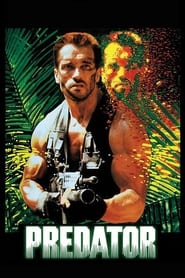
That was one of the back to the drawing board parts. The only image of an alien life form that had captured the imagination or looked halfway plausible, or functional was this stuff that came from H.R. Giger. Illustrations that became Alien. You know, one of those images of the ultimately terrifying other life, only shows up once in a generation or more. You're not just gonna, you know, hire some cartoonist and say, "Come up with a next H.R. Giger." 'Cause H.R. Giger only comes along as I said, once in a generation. And I didn't see how you could do anything associated with it without just being that derivative also-ran. And, frankly, having seen what they did in the sequel, that's exactly what I thought. I thought it was, it was best that they didn't shoot it. Here you see Jesse actually carrying Painless. He had no ammunition at this point, that's why he could carry it. And there's obviously no battery connection and it wasn't operable that way. We shot this in Palenque, where we could get a real snake. The worry was that Painless would buck and get away from him, and spin. Even if you had everybody clear out in front for 50 feet, that the man firing it might not be able to control it. And that he could wind up in the way of all this wading and bits of brass and stuff that was flying out of the front end of it. So the first time, they fired it, they did a Iot of... They anchored it. And yet tried to give him a chance to figure out if he can control it, so it was like bungee cords and things. So that if it started to get out of control, they could yank it in and protect him. But to let him see, you know, what other... You know, what other concussive forces... You know, what happens when the thing starts spinning. We learned that there was enough gyroscopic force in the spinning of the cylinder, that it kept it online. That actually was very difficult to move it around or aim it, and in an odd way, it was very safe. You couldn't have it wind up aiming where you didn't want it, 'cause it wouldn't move. Because of all the gyroscopic force and the spin, but it took us a while of experimenting with it, and I think he first tried it out over, with the second unit. And it was like half a day, you know, we kept hearing reports of, "They're gonna fire Painless, "in 45 minutes. "Well, no..." It's like a count down to the moon launch or something, "They're gonna fire Painless." And I think later that afternoon it fired, and we were about a mile up the valley. I could hear tt. It sounds like, it's the loudest buzz-saw in the world. Some people, I guess, were concerned about how impractical it was, but the notion was that, Painless was... Look, it's a movie prop. You know, we never would've used it, but it's a lot of fun to watch. Here we got Bill Duke to fire Painless. You notice he is not walking while he does this. Now, this particular sequence, I made when I first went to work on this project, I had the feeling that people had a sort of perverse fascination with pictures of guns firing, literally almost a pornographic desire.
44:06 · jump to transcript →
-
John McTiernan
There are a number of scenes in the sequel that were things I campaigned like crazy not to have in this movie, like the journey inside the spaceship to see the various preserved bits of stuffed humans and things which was just yorkie. I tried to throw all sorts of handicaps in the way, because I thought it was just a yucky notion. I didn't think one could ever do it successfully, that it would be silly-looking and repulsive. Because this was my first studio feature, I had a limited amount of, a short leash on how much I could change the screenplay, but the... I wrote this sequence, which they used later. Arnold remembered and used later on. I wrote this sequence where I wanted them to, instead of going in by helicopter, I wanted them to go in in a halo jump, which is, to go in an airplane that, where the back end opens up, and they jump out.
1:12:32 · jump to transcript →
-
-
-
-
-
-
director · 1h 30m 1 mention
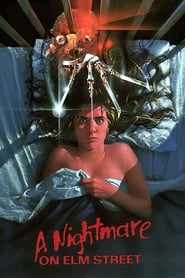
A Nightmare on Elm Street (1984)
Wes Craven, Heather Langenkamp, John Saxon, Jacques Haitkin
-
-
director · 1h 31m 1 mention
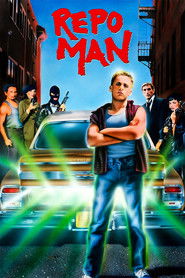
Alex Cox, Michael Nesmith, Victoria Thomas, Sy Richardson + 2
-
-
cast · 1h 36m 1 mention
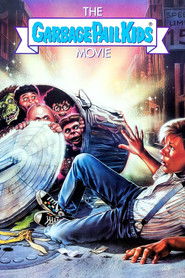
The Garbage Pail Kids Movie (1987)
Mackenzie Astin, Katie Barberi, William Morris
-
director · 1h 24m 1 mention
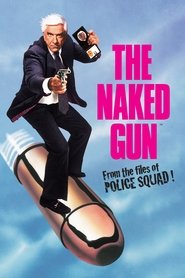
The Naked Gun: From the Files of Police Squad! (1988)
David Zucker, Robert K. Weiss, Peter Tilden
-


Related topics
Other topics that frequently come up in the same commentaries.