Topics / Writing & development
The screenplay
147 commentaries in the archive discuss this, with 1,188 total mentions and 72 sampled passages on this page.
Filter commentaries
Filter this topic by the film's decade or the type of commentary.
By decade
Across the archive
ranked by mentions · click any passage for the moment in the transcript
-
-
Tim Lucas
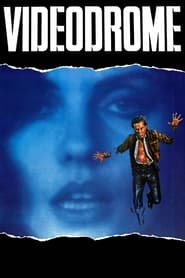
It's also the red of the Videodrome set on the television screen, so they are literally being bathed in the signal. Just before this film was cast in July 1981, Debbie Harry released her first solo album, Cuckoo, whose cover, designed by the Swiss artist H.R. Giger, showed her face being horizontally penetrated by four skewers. That cover may well have influenced Debbie's casting and the directions taken by Cronenberg's screenplay.
16:31 · jump to transcript →
-
Tim Lucas
You know, every shot of Debbie that was included in Universal's official still set was from a scene that had been cut from the picture. It was not her fault. The real problem was that the film had to go before the camera before there was a finished script. And as David and Ron Sanders rewrote the picture in the editing room, Debbie's scenes tended to be those that pointed the way to narrative directions no longer taken. But she figures in a number of Videodrome's most memorable scenes.
22:47 · jump to transcript →
-
Tim Lucas
He was actually nominated for a Genie Award for Best Actor in a Supporting Role for Videodrome, as was his partner in crime, Peter Dvorsky, but they both lost out to Michael Zelnicker in that cult film to end all cult films, The Terry Fox Story. The Accumicon helmet was described in Cronenberg's script as being bizarrely beautiful, like a modern techno-interpretation of a medieval piece of armor.
51:59 · jump to transcript →
-
-
-
Richard Donner
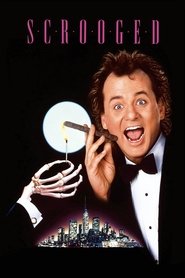
Is she a beautiful woman or is she a beautiful woman? What a wonderful actress too. That was a funny story. I read the script and... My agent sent it to me and...
10:33 · jump to transcript →
-
Richard Donner
My agent sent me the script, and I liked it a lot, and I didn't Know who was gonna be in it.
11:20 · jump to transcript →
-
Richard Donner
Anyway, six o'clock, Bill didn't show up. Seven o'clock, Bill didn't show up. Eight o'clock, Bill didn't show up. Nine o'clock, Bill didn't show up. Ten o'clock, my wonderful wife, producer Lauren Shuler Donner, who you all know and respect and love her work... We got in bed. The doorbell rings. It's Bill Murray, twelve o'clock. I said, "Bill, I'm going to bed." He said, "I just gotta come in and talk to you a minute." I said, "But..." I said, "Okay." So I went downstairs... and charming Bill came in, and I mean charming. And we had this really funny conversation, had a couple of belts, had a couple of more belts. Feeling no pain whatsoever. It's one o'clock in the morning, and Bill said, "Where's your wife?" I said, "She's asleep." He said, "I gotta tell her about this script." And at one o'clock in the morning, he walked upstairs to our bedroom, woke Lauren, said, "Talk this guy into it," which she just said, "Go do it so I can sleep." And I ended up making the movie, and dear Bill became a good friend. Don't see much of him anymore, because he became a big star. But, that's Hollywood.
12:24 · jump to transcript →
-
-
-
Tony Scott
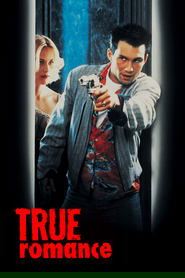
My last note on the music, I think, more than anything, perfectly captures Patricia's character, Alabama, because she's got this childish innocence. And really, the movie is the movie seen from her point of view as we open with her voiceover. It is Patricia's movie. You know, what was unique for this script with me was that I went out to...
5:50 · jump to transcript →
-
Tony Scott
And I couldn't, in the end, I couldn't understand why I was looking elsewhere, because Guy was so perfect for the role. He was actually, when I talked to him about the role of Drexel and he read the script, he said, fuck, this character's great. And he was actually in the middle of shooting Romeo's Bleeding, which is a very different character to the Drexel character. So I said, Guy, you know, I've got some ideas about Drexel, and he said, okay.
19:39 · jump to transcript →
-
Tony Scott
...and part of the story. And, you know, Taxi Driver is again... Taxi Driver and Badlands are two of my all-time favorite movies... ...and they're both very one, strange... ...has a bittersweet quality and a violent quality... ...and Taxi Driver is very dark and very violent and very unforgiving. And I think that's what I was wanting to do here... ...and I think, you know, that's what Quentin had in mind... ...when he wrote the script.
31:39 · jump to transcript →
-
-
director · 3h 43m 9 mentions
The Lord of the Rings The Two Towers (2002)
Peter Jackson, Fran Walsh, Philippa Boyens
-
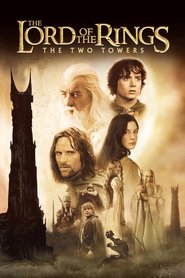
This particular script is credited to Philippa Fran and myself, and in addition there's Stephen Sinclair. Stephen was involved back in the Miramax days when it was two scripts. We felt it was obviously fair to credit him, though he wasn't really involved in the screenplays over the last three or four years. This is quite a big miniature, the Baradua Tower. It's something like 20 feet tall, and even just to do a shot where we're rotating and going right up to the summit of it is quite a big move for the miniature team to do.
19:47 · jump to transcript →
-
I love the idea, way back when we were writing the screenplay about, you know, us, the audience, thinking that Mary and Pippin might be dead. I thought that was just really cool. And we wanted to stretch that out a bit and, you know, make people who were unfamiliar with the books, obviously, really wonder and believe that they might be dead. Amazing shot. Yeah, this shot was done by Geoff Murphy, again, down in Alexandra.
31:30 · jump to transcript →
-
We had no idea really how to visualise this moment. In the script it said something like death, birth, cosmic, weird, and that was all that we ever wrote in the screenplay. But rather than have it just dialogue, I thought of some visuals to add support to this transformation. And so you see the death of the balrog and then you see this kind of weird metaphysical kind of transformation that he does. I had a whole other version in my mind of this sequence which I took in a literal way from the book because it talks about him being naked in the snow
54:46 · jump to transcript →
-
-
director · 1h 45m 9 mentions
Eternal Sunshine of the Spotless Mind (2004)
Michel Gondry, Charlie Kaufman
-
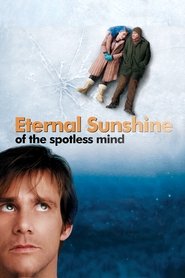
so we should introduce ourselves, Charlie. Okay. You want to go first? Okay. The person with the French accent, it's me. I'm Michel Gondry, the director of the movie. And I'm Charlie Kaufman, the writer of the movie.
0:24 · jump to transcript →
-
And that's all the job I did. The pitch was pretty short, though. It was like five minutes. It went surprisingly well. Yeah, it was great. Maybe we can talk about the image. We wanted to have snow. You had written a lot of snow in the script. I wrote snow many, many times. But we found out really quick that we could never afford it. So you wrote again without the snow. I just...
1:58 · jump to transcript →
-
It's so great to watch actors make the characters come alive and to see all these new things that you didn't anticipate when you're writing it. I wrote a script I'm going to direct and I cannot believe how painful it is when you give the paper to somebody and they just cross his line and stuff. I started to realize how
10:14 · jump to transcript →
-
-
director · 1h 37m 9 mentions
John Cameron Mitchell, Justin Vivian Bond, Sook-Yin Lee, Paul Dawson + 1
-
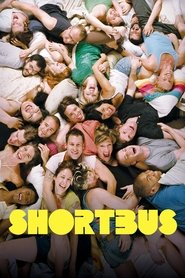
It's a secret. Or oysters, which is a natural source of both. PJ, coming in, wondering why his four orgasms that were in the original script were completely eradicated throughout time, and now I'm forever blue-balled. Is that a Neil Diamond song? That's a blue-ball face right there. Aww. This is my favorite moment of Raf's right here, is when he...
7:34 · jump to transcript →
-
Seeing the chip wagon annoying, uh-oh, here it goes. There's the long bus. Yeah. But remember, we shot so much footage because we were just learning how to work in this improvisational way where the script was set, but I encourage you to paraphrase. Is that Central Park West? Yes, that's around 110th Street. Okay. I love your reaction there, Suki. I want to see when it goes monogamy is for straight people.
10:53 · jump to transcript →
-
going underwater. There's no stuntmen there. Covered in red makeup. There he is. Okay, he's not even, there's not even a trouble. He's dead. And in the script I said he has to be benignly and benevolently dead. And look at that. He had that beautiful expression on his face that helps James go where he wants to go or he thinks he should go. This was a, remember every time we had to do the flicker of the light was always a problem and we'd lose power and everything would fall apart. Yeah.
13:11 · jump to transcript →
-
-
-
Tom Hooper
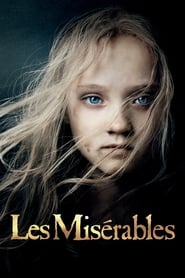
That's pretty much it for the film. At this moment, I was originally inspired by this first draft of the screenplay that William Nicholson wrote, where he immediately saw...
3:21 · jump to transcript →
-
Tom Hooper
I mean, it might be worth talking about why I chose to do the musical sung through. I mean, first of all, it's to honor the musical itself, which is sung through form. But Bill Nicholson's first screenplay draft was actually dialogue interspersed with songs. But I worried that
22:18 · jump to transcript →
-
Tom Hooper
You know, I remember for the very first time I met Russell, we went for a walk in Hyde Park in London, and he'd just seen the musical, and he talked about his major obligation, his major responsibility, being how to set up the suicide of Javert as effectively as possible. And I was very happy to share with him this script inclusion I wanted to make from the book. And Claude-Michel Schönberg and Alain and Herbie helped us work it into the existing music. In fact, I believe it's the music that follows the car crash
37:12 · jump to transcript →
-
-
-
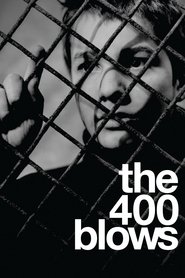
is a theme that echoes not only throughout this film, but throughout Truffaut's career as well. The camera, by tracking the girly picture's course, lets us in on the secret, so that when young Antoine Douanel is caught red-handed, we are, in a sense, caught with him. From this moment on, Truffaut's script, Henri Deca's camerawork, Marie-Joseph Yoyot's editing, and Jean-Pierre Léo's performance will all encourage us to identify with the feelings and the experiences of Antoine.
3:31 · jump to transcript →
-
As a passionate moviegoer all his life, Truffaut is more saturated than most directors with the films that preceded him. We are not far removed in this scene, for instance, from the classroom scenes in Josef von Sternberg's classic film The Blue Angel, where a girly postcard gets some other boys in trouble with the teacher. This teacher, called Little Quiz in the script, humiliates Antoine publicly by assigning the class a sentence to conjugate based on Antoine's clumsy graffiti.
6:48 · jump to transcript →
-
After reading Hot Blood and your TV script, I'm convinced that you can be of immense help to this film which I'm confident I'm going to shoot in September. I know that you are a fast worker and that you have a sense of construction which I sorely like. On the other hand, I think I really know the universe of 12-year-old kids that I want to film.
26:04 · jump to transcript →
-
-
-
Logan's Run from the George Clayton Johnson, William Nolan novel. Even a little later, there was a TV miniseries of The Martian Chronicles from Ray Bradbury. Not a very good series. And these are all around this time. What's the thing that's different about this film from those movies? Go ahead. I've just told you, this isn't based on a novel. It's an original screenplay. And the thing about those other films is...
11:42 · jump to transcript →
-
the thing that runs throughout his films. And it's odd that we were talking earlier about how the science fiction aspect of this film, the background, the world building, is very poor. But on a micro level, the technology is very good. It's very credible. And it's almost like that was what he was interested in. I mean, the writers of this script, who are a very...
41:23 · jump to transcript →
-
mixed bag isn't it it's a technique it's Deric Washburn ampersand Michael Cimino so the team of Deric Washburn who is obviously the least known of the writers of this film but he co-wrote The Deer Hunter with Cimino or in Mike Cimino he's built as he is but then
41:49 · jump to transcript →
-
-
-
John McTiernan
John Davis had developed this script,
0:22 · jump to transcript →
-
John McTiernan
They shot in the, in the front... The spaceship arriving wasn't post-production but it was just one of those things that's always in the script but never showed up until about an hour before the movie was opened. All right, here we are. This is a sort of credit sequence that we made up in Puerto Vallarta.
1:22 · jump to transcript →
-
John McTiernan
I made up this thing about the generator going across... You should be careful, I am sure loads of people will claim they did it. But in order to break up... It used to be... In the script, it was, I don't know, they just charge in and attack, or something like that.
24:05 · jump to transcript →
-
-
-
Um, to the extent that there isn't really draft of Ted Talley's screenplay where they were unsure if they were going to be able to get the rights to the characters from Dino De Laurentiis. Hannibal Lecter almost became Abel Gideon, which if you've seen the TV show Hannibal, you'll know is a separate unrelated character who was created for that show played by Eddie Izzard, who is very heavily inspired by the novels version of Hannibal.
18:59 · jump to transcript →
-
But Thomas Talley's screenplay never really describes this character as anything other than quote-unquote Mr. Gum or quote, a man. Yeah, basically, to use the terms that the dolls are using, a very clocky trans woman, essentially. Like, Thomas Harris is trying to make the call here, and it's like, sit down, sir, at certain points. But, yeah.
32:44 · jump to transcript →
-
Taking these hormones and even just the sort of case description that Crawford and Clarice have in the book goes a lot more into detail of sort of criminal records, of talking about gender identity problem. That gender identity is never even uttered once in this screenplay or in the movie as filmed. And it's fascinating to sort of see the sort of distancing.
33:12 · jump to transcript →
-
-
-
this young woman that has a very, very significant place in his past and certainly he does in her past as well. And the two of them form this very odd relationship that's quite toxic and which is going to extend their respective grief. So it's a very complex idea. And from the very beginning, I knew that the script was sparse, that there were going to be these very strong images, these very strong...
5:59 · jump to transcript →
-
visual motifs, but we needed an amazing score. And what was so beautiful about this is that Mychael and I had been working already together for 10 years, really, since Family Viewing. And from that very first film, we developed this language, this ability for me to write a certain type of script, knowing that Mychael's collaboration and artistic understanding
6:28 · jump to transcript →
-
You are drawn to certain characters and moments. I mean, you know, things develop unexpectedly. I mean, in this case, obviously, you know, Arsinée Khanjian got pregnant with our son, Arshil. So the whole notion of pregnancy became something that I had to work into the script, you know, very quickly as I realized that, you know, a few months after the shoot, we'd be giving birth to our son. And so there are a lot of things that are just quite intuitive and are dealing with
18:30 · jump to transcript →
-
-
-
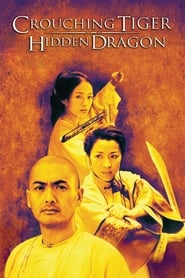
Hi, I'm Ang Lee. I'm the director of this crazy film. And my name is James Schamus. I served as executive producer and as one of the writers on this movie. Which one is this? Crouching Tiger, Hidden Dragon. That's a lot of music for one little title there. I tend to like to make music, the modern music, that shock people. Bang! I like to do those bangs.
0:21 · jump to transcript →
-
was the layering after layering of wuxiapian tradition, the kind of generic tradition. They don't say things like that. They don't talk like this. So it was, I remember after the first draft. I don't know why they don't talk like that, or the writer never wrote it. But when you're facing not only Western audience, but the modern Chinese audience, that's not sufficient, what it used to be. But it's hard. I remember after the first draft, and people would say things like, well, this is great, except he just wouldn't
32:16 · jump to transcript →
-
But here's an introduction of a theme that was nowhere near the first draft of the script, which is so central to the movie and obviously to the tradition, which is, of course, the question he's just about to ask her. Which is coming up.
37:29 · jump to transcript →
-
-
-
And Tom, he likes the idea, and he totally agreed with me. And then he and the writers and Robert Towne came up with a triangle love story, which really interests me. You can carry them together? Safely? Yes. And so that's why I accept this project.
2:33 · jump to transcript →
-
For the traditional Mission: Impossible, Ethan Hunt usually gets the message from the tape recorder. And then for the tape recorder, it seems to be so old and it's not interesting. And then also, I must say, I don't remember if it was the writer's idea or Tom's idea, they were suggesting using a sunglass. You know, that makes it feel a little more high-tech and more modern, you know.
10:09 · jump to transcript →
-
During concerts, we also using the flamenco dance, guitar music, and the sound of a footstep. And the footstep, and getting stronger and stronger, and the concerts are getting much more crazier, and it feels so much of an energy and romantic, you know? And then I came up with the ideas, you know, of the flamenco dance, and also to make Thandie's character as a thief. In the original script, she was one of the spies or something like that. I think a spy is not interesting.
12:51 · jump to transcript →
-
-
-
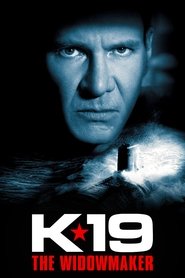
dealt with on a daily basis and it was virtually unimaginable the kind of environment in which they lived in and worked in and fought in and so that really helped me shape the work in the script and then finally the work on the set and so when we were leaving the naval base again back in the
11:49 · jump to transcript →
-
on multiple occasions, arriving at the set at call time or before call and meeting Jeff there. And we would look at each other and say, how are we going to not repeat ourselves? And I mean, because in some cases, certainly in the command center, there's probably almost three quarters of the script takes place there.
22:08 · jump to transcript →
-
I was out in the galley capturing one. Initially, when I was invited to read the script and met with Catherine and Stephen Jaffe, one of the producers of the picture, it was a wonderful, wonderful script. And instantly, I became enthralled with it. And the opportunities to do a period movie and to do a period movie on the submarine
27:31 · jump to transcript →
-
-
director · 4h 13m 8 mentions
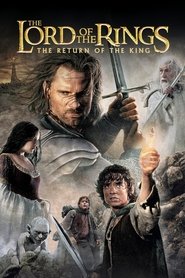
The Lord of the Rings The Return of the King (2003)
Peter Jackson, Fran Walsh, Philippa Boyens
-
that we wanted to use the blinking one, so we had Weta, the CG guys at Weta freeze his eyes, so we removed the blink from his eyes. This was a sequence that Freya directed. We built the set very quickly, because it was an idea that you had that wasn't really part of the script to show this deterioration.
4:36 · jump to transcript →
-
But when we put it in the movie where it was, we thought it had to push in, otherwise it wasn't really working properly. To take you into the hall. She was watching them leave in one and then watching them arrive in this film. This was actually a rebuilt Edoras because this entire party, or the banquet scene as we call it, didn't actually exist in our original script and we'd never shot it. And we had this giant big set of this golden hall that we'd built. Fortunately, when we were done with shooting, we put it in storage.
18:43 · jump to transcript →
-
It was these little obstacles that Tolkien's book kind of presented in terms of, as you say, if you were doing this as an original screenplay, some of these things you would actually not do. You'd change the storyline. But Dunharrow was something that we needed because it's the entrance to the Path of the Dead and that's ultimately why we had to go there.
1:08:36 · jump to transcript →
-
-
-
Noah Baumbach
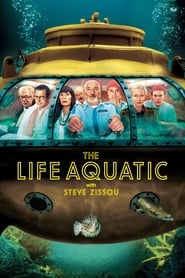
And I'm Noah Baumbach. We're the co-writers, and I'm the director of The Life Aquatic. This is the Criterion Collection edition of the movie, which I think is the only one. Right. And we are at Bar Pitti in New York, sitting at a table where we wrote the film. Right, we actually came here every day from-- Usually for lunchtime around 1:00, sometimes 1:30, sometimes 2, depending what-- It was later. When we got up or when we went to bed the night before, and we would write together all day and into the evening. And have two meals. - Yeah. The films within the film, maybe we could say something about... Right. - Steve Zissou, his documentaries are sort of inspired by... Jacques Cousteau's films, and are more than a little... And we shot these on Ektachrome stock, a reversal stock, to get this highly saturated, dated feeling. To feel like a 16 millimeter. A number of the parts were written for the people who play them. Bill Murray's role and Owen Wilson's... Anjelica Huston's, Bud Cort... - Right. The Bond Company stooge was always Bud. - Yes, the Bond Company stooge. And then also on Team Zissou we have a favorite actor of ours, Noah Taylor, who plays Wolodarsky. Robyn Cohen, came out of Jeff Goldblum's acting class. Right. - She plays Anne-Marie Sakowitz, the topless script girl. It's not all science.
0:35 · jump to transcript →
-
Noah Baumbach
This is his ship, the Belafonte. We bought this ship in South Africa and sailed it up to the Mediterranean and renovated it and made it into this research vessel. It never ran that well, but we really did fall in love with this ship. The crew of the film was always very sort of loyal to it. Now, we have Michael Gambon, who plays Oseary Drakoulias, the producer, a sort of Carlo Ponti, Dino De Laurentiis-style mogul, although he does produce these documentaries. He has the longest fingers that I think I've ever seen in real life. He understands. Amin needs to make a projection of the world grosses to see if he can get a tax break and run it through his output deal. I think that Zissou sees himself and wants to be the kind of person who gives kids secret messages in the cereal boxes. Right. That's an inspiration for him. And the movie is about this, theoretically, a real person, but he's inspired by a sort of fantasy version of himself. And there's things sort of peppered throughout the movie, but this whole red caps and the uniforms and the whole thing. And Owen, in some ways, is our stand-in, I mean, of the child who looks up to this person. And I think another layer of that that we were always dealing with was how our cinematic idols in some ways were like surrogate fathers for us. Movies we loved that sort of took the role of things we looked up to, things we sort of wanted to live vicariously through. And I think Owen and Ned's character sort of stands in for that. This is a kind of an unusual role for Owen Wilson, I think. Right. He has a sort of recognizable comic persona that he's developed. And this is, I think, very different from that. I think when we were writing it, we often talked about that even though Ned was, as written, very naïve and kind of an innocent, I think there's always a kind of somewhat devilish nature to Owen. You can see the light is on behind his eyes all the time. There's some Zissou in him. Yeah, that's interesting. And I think also it made us feel more comfortable writing such a naïve character because I think if it was played too much that way, it would kind of wash out. Yes, and I think Owen's concern was, he was like, "What am I gonna do?" Because he felt like the character is so innocent and so sincere that he's not used to playing someone who's that sincere. He usually plays somebody who's a little bit wily on some level, or something like that anyway. And I think for him, when he really became comfortable with it was because we were sitting on the roof of this hotel in Rome, and he told me this funny story about Will Patton on the set of Armageddon, and he did Will Patton's voice, this southern accent. And I asked him, "Do you think you could do this whole movie in that voice?" And what he ended up doing-- He liked it. We read through the whole script reading all his lines with that, and it was funny and it gave him a sort of genteel feeling and something a little bit not quite real. And the accent's certainly not real. The accent hasn't existed certainly since the Civil War. Right. - Even if then.
9:42 · jump to transcript →
-
Noah Baumbach
Script girl uses these for continuity. Here. Oh, no, no, no. - No exceptions. Everyone gets one. Anne-Marie, do the interns get Glocks? Glocks. Glocks were inspired by Anjelica's husband who had... Anjelica's husband's a sculptor. I relate him to-- Ciao, Simone. I relate him to Zissou somewhat. Yeah, when we first started writing, you were telling me about the Glocks and, you know, didn't they fry a turkey? Yes, in a vat of boiling oil. And there's something-- He's drawn to making something in a very dangerous circumstance, and he has some of the sort of size of Zissou's personality, and he's a great guy. He appears in the film very briefly. He's the Venezuelan general near the beginning of the film who's standing on the deck of the ship. I don't know, but I just inherited $275,000. Would that amount make any difference? What sort of expression is the lad wearing on his face? Can you fly a chopper? Now, we had-- We crashed one of these helicopters. Later, you see-- I'll point it out. There's a place where we see a little tag on this. These helicopters had a thing on them that said, "This is a home-built helicopter, not approved for any official kind of navigability," something like that. Basically, it just said that don't count on this helicopter. And in fact, one of them crashed, and we had to get another one just like it.
32:54 · jump to transcript →
-
-
director · 1h 36m 8 mentions
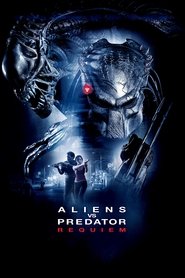
Aliens vs. Predator - Requiem (2007)
Colin Strause, Greg Strause, John Davis
-
extensive cost to do a feature film, but to be able to actually do the sequel to Alien vs. Predator and to have the writer from the first Alien vs. Predator join us, one of the writers, which was Shane Salerno. Unfortunately, Shane can't be here today. He was going to join the commentary, but the writer's strike in Hollywood has prevented him from coming in and actually doing video commentary, so we're going to have to thank him for his script and all of his hard work without him being here. He's here in spirit, I guess.
3:42 · jump to transcript →
-
You know, it could have been easily interpreted in the first runs of the script that he was a little bit more of the dorkier kid getting kind of picked on, and we wanted him to be a little bit more kind of a... not a jerk himself, but he's basically trying to be what his older brother is, which is a little bit of a kind of a fuck-up. So, you know, we wanted to make sure the kid had enough of an edge to himself that, you know, it's like when you see him, even though he's getting kind of roughed up by three guys here, he also will, you know, he doesn't have a problem talking shit back to these guys or...
12:42 · jump to transcript →
-
look into the chest cavities of people before he implanted the embryos. And it was something that was originally in the script, and then, you know, as we started designing out in the movie, we were just, you know, I don't know, we didn't want to... It became too much of a demystifying thing, so we decided just to, you know, we wanted all those out of the movie to keep it more mysterious. Yeah, but we had that slime dripping down on her in no takes without it, so in order to get the dialogue line, there was no way to cut around that. So, uh...
43:03 · jump to transcript →
-
-
technical · 1h 22m 8 mentions
Måns Mårlind, Björn Stein, Gary Lucchesi, Richard Wright + 1
-
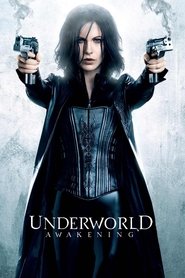
Richard Wright, producer. Mans, director. Bjorn Stein, director. Gary Lucchesi, producer. James McQuaide, executive producer and visual effects supervisor. What, you get two titles? - Well, you know. Big shot. So here we are... ...at the beginning of the fourth Underworld movie. That's right. Been a lot of them. The first appearance of Len Wiseman's... ...new logo. - New logo. The world premiere. - In 3D, no less. Oh, my God. It's like our life flashing before our eyes. Yeah. We've lived through these. Exactly. I think it's fun to say that... ...I think we cut the... Edited the whole film for eight weeks... ...and then we spent three weeks editing the first three minutes. That's exactly right. - It was crazy how to get it... And it was, "Shall we do a recap or shall we not? Does it feel cheesy with a recap or is it good?" But I think that everybody agreed in the end... ... that we have this wonderful library or cupboard of wonderful images... ...SO let's use it. And it's a wonderful way to get into the mood... ...and this is the world. lt has been a while too, since Underworld 2... ...where this one picks up from. We're reminding ourselves of all the characters. It's not cool, but in the end it... Wow, it really works. Yeah, I had a friend-- We had a premiere yesterday, actually... ...and I had a friend who hasn't seen the prior ones... ...and she said it was helpful... ...to just get into the soul of what this is, so.... And it's so nice to see Michael Sheen... ...and Scott Speedman and Bill Nighy. Yeah. - Losing their heads. killed the elders.... Yeah. One of the things we really liked when we got the script... ...was that number four... That it was the beginning of something new. That it was not just number 17 or something. It was.... The trilogy was done... ...and now we got into something new... ...which is exactly what we're watching right now. And this was a big thing how... That we wanted it to be brutal... ...and hand-held and gritty, using a camera language... ... that hasn't been used in Underworld before. Yeah. To turn everything upside down. This is another part of the film where we did... ...a tremendous amount of work trying to figure out... ... how to frame the fact that we're 15 years in the future... ...and the world has changed... ...and how you do that economically... ...In a different camera style than the rest of the film. Because this is in 2D, not in 3D as the rest of the film is. One of the biggest inspirations for this intro... ...Was actually the Gavras video, the M.I.A. video. What's the name of that? "Born Free." - "Born Free." Oh, that guy. - He's great. This guy, he's just at casting... ...and we realized that we need something... ...and we cut this rollout and then suddenly we needed him... ...SO this is his casting tape. - His audition tape, yeah. Yeah. - Yep. Used it in the film. I love that head shot. James really enhanced this with the visual effects he put into it. These creatures, yeah. The creature shots. Because they weren't shot that way. Yes. They're hard to come by, these creatures. That one was a real one. That's a real one. - Yeah. A real Werewolf. Yeah, we had a few. - Yeah. We can cast them in the forests of Vancouver. What we just saw... That girl on the wall... ...IS Kate's stunt double. - Yeah. She did... - Alicia. Alicia Vela-Bailey, yeah. She took iPhotos of her body for each bruise she got. She was black and blue, this girl... ...and she's the toughest girl I've ever met. Went to the hospital more than once too. Yeah. - Yeah. But as he said, the toughest girl I ever met. Yeah, always with a smile. Always with a smile. And you will see her getting thrown around a lot in this one. All of those flying-into-the-wall sort of things... . It's actually a person, Alicia, getting thrown in. Or Kate sometimes, as well. - Yeah. So we wanted to start off in 2D, gritty... ...and then since this is 3D movie... ...we wanted it to... Really make it big... ...when we see Kate for the first time, and that's when we switch to 3D. This shot was actually planned to start inside the fire... .In the beginning, inside a skull... ...and then going through the flames... ...a Vampire skull, but it became too tedious. That was the four-hour version. Yeah, this... We're very European. European version. Very... It was also a shot that we fought to keep in... ...and there was some obstacle to that... ...but we succeeded in keeping it in. Obstacle being money. - I love the way you say that. We ran out of money. And you see the surroundings here is-- We tried to create... Since this is the first time we introduce a man really... ...In the Underworld franchise... ...we wanted to find architecture... ... for the city that wasn't, you know, just another city. And after a lot of thinking and looking.... You know, we were thinking the first film was shot in Budapest... ...and it had that gothic feel to it and... By the way, great blood splatter there. - I love it. That was beautiful. And then we found something-- If you haven't been to Eastern Europe... ... you see all these beautiful houses... ...but next to them you have these concrete, hard, depressing buildings. And there's something called brutalism. You mean brutalism? - Brutalism, yes. A word we've heard 700,000 times during the making of this film. You were insanely annoying by just trying to put brutalism in... ...brutalism in, put brutalism in... ...to find what we call neo-Goth. Which is a new Goth. - Neo-Goth, yeah. This plate's actually from Underworld 2. This was.... We were doing tests for that boat that exploded... ...and we went back and found the footage... ...and stole that plate and revamped it here for what you see. Yeah. The secret of every great artist is knowing where to steal. Where stuff is hidden, in this case. - Yeah. It was one of the biggest challenges that we didn't have Scott Speedman. So that was a face replacement of a stuntman... ...and I think that was the trickiest part to pull off, I think, in the movie... ...because we're setting up this love story. She's running for her love and we don't have the real guy. Yeah. - But I think because of the recap... ...we do get that.... Do you see that city in--? That city is all CG behind her that's burning. And I remember James had said, "What do you think?" And I remember we asked about that, like, months ago... ...or half a year ago, and I forgot about it... ...and then you just come up with this. It was like a birthday present. I was so happy. All these backgrounds in it... ...makes It so much richer. And remember this next shot coming up too of Kate swimming... ...was really the last footage that we shot on the movie. Yeah. In the tank. We all had this great concern that, you know... ...can Kate swim or not? She ended up being a fantastic swimmer. She was great. She was.... This is more than swimming. It's performing underwater. She held her breath so well. lt was unbelievable. We were.... - Yeah. Well, that's typical Kate, you know. Everything she does, when she does it is, like, perfect. Yeah. - Yeah. But filmmaking's about being afraid... ...things aren't gonna work. - Right. We had anticipated the worst and we were wrong. And this is-- Originally the Underworld title was here. This is our homage to Tree of Life. - Yes. We had the title here at one point... ...and this is a transition... ...which is very abstract and weird, actually. But I'm happy with it. These were the things... ...that I remember it was hard to describe. We were very sure exactly how we wanted it... ...but we couldn't really say "this is how to do it"... ...because we'd never seen it before. But now when I see it... James, who did this? - Celluloid. Fucking great. - It's great. Yeah. It's great too, because we added the spin... ... sort of late in the equation. This may be an intellectual idea. Hopefully it works. To sort of make the audience... ...particularly when you see it in 3D, disoriented. Kind of like Kate was as a result of being underwater... ...being Knocked out and waking up 12 years later. There's something about spinning... ... that sort of makes you visually confused. Also, not only the spinning, but also the kind of... ...stop and motion feel to it, that it's... - Time passing? lt has a time-lapse feel to it... ...which, you know, was a subtle way of saying time has passed... ...actually, 12 years. - It's one of my favorite shots. Yes. - This is beautiful. Another very disorienting shot, though. So this is actually Alicia hanging here... ...and it's Kate's face replacement on her. Yeah. And the ice is CG. - Yeah. Smoke is CG. I am glad that we put the name on the glass there, "Subject 1." Yeah. So nobody would get into the wrong tank. No, but the thing is, I don't think it's just for like: "Oh, it's for the idiots." But I think it looks good. Subject 1 sounds brutal, I think, in a very good way. There's that word again. - Yeah. And remember that set initially... ...when we first saw it, had all these shower curtains in front of it... ...and we asked Claude to remove them. Yeah. - Oh, right, yeah. One thing that we really wanted to do in this movie was that... And we told Brad, who was the excellent second-unit director... ...and stunt coordinator, we said that we very.... We want to hurt Selene a lot. "Could you find somebody we can do that to?" Yeah. Because she wasn't that hurt in the other movies. We said, "We really want to--" Do you think anybody's listening to you right now? The naked girl, I'm watching that instead. Everybody's so nervous when you shoot something like this... ...but Kate was so cool. She was. Yeah. - Yeah. It was nothing. - Here we have Stephen Rea. Yep, there he is. Our Irish. - Yeah. I think, yeah... I really liked working with him. He was... Stephen is a handful, but he's also.... He gives you what you need. Is there anybody in this film that ended up doing their native accent? The North Americans were doing English... Kate. - Yeah, Kate, that's true. Everybody else was doing a different accent. Sandrine Holt there. - Sandrine Holt. Hurry. Releasing... ...maximum dose of fentanyl.
0:10 · jump to transcript →
-
By the way, there's my daughter, I should say. In the car. Ashley McQuaide, her big cameo. She's great. She's gonna go do good. She's very sought after in Hollywood. The one thing I can say is this. This crash coming up was a bit of a fuckup. The taxi was supposed to fly over the other car. SO we were disappointed... ...but I think that the shot still looks pretty bitchen. It looks fantastic. Your eye is drawn to the Lycan. Which is what it should.... - Could have been better. And here-- You know, Paul Haslinger did the music here. I love this, you know, how we changed into this new... ...Style in the music exactly when we get into close combat here. Paul, being an old hand... ...having done the score for Underworlds 7 and 3. He did an amazing job. - Amazing job. Yeah. - Yeah. Every-- All these Lycans are CG Lycans... ...but they mostly are.... There were guys dressed in blue with funny heads. So they look like really big... - Suits kind of looking like... This was a big moment. - Looks great. And India's face.... We really didn't do anything to it. She was able to scrinch up her face. - Yeah, she's a badass. Well, there's a bit of CG going on. We changed her eye shape and the color of her skin, obviously. But she was good. - This is an old trick, you know. The guy dry his fist across his mouth. I told Theo to do that. But it really always looks good, I think. It's the moment too, where Selene realizes... ...that this creature back there has... ls connected to her. - ls connected to her. She saw a level of power in there she hadn't imagined. Here's the Kris Holden-Ried introduction. Yeah. Here's where he comes in. Might have... And it's not even the last new character. In the script, this is the third time we see Kris... ...or Quint. - Quint. And here, we talked about that scene... In the apartment when she throws the guy out of the window. If you look at the monitor, there's actually a shot from... ...coming out of the club... ...which was Prey. So we used footage for that as well. lt was not a waste of time shooting there. Very expensive stills. - Those two days... ...that we spent shooting there. - That town is all CG, and then we.... Somebody gave us that in the last... There were so many people working so hard... ...for no money for this one. I love it. - Yep. How did you find me? Now we have an actual conversation. An actual dramatic scene. Yeah. - The first of the entire film. There's not a lot of talking. - Yeah. I think Michael Babcock, who did the sound design... Which is so beautiful, I almost cry when I think about it. When we heard about... "What did you do, Michael?" "I did Inception and Dark Knight." We're like, "Okay, good." And I think when he showed us the first reel... ...we had, like, no notes. lt was perfect. Anyway, he said... ... after we'd done this, "I really enjoyed working with this. ll even do a talkie with you guys." That's nice. - Yeah. I remember at the end of this scene, when we did India's side... ... that Kate went up to her and complimented her and said: "You did a really great job." - Yeah. And it was a.... It shows Kate's consideration... ...for other actors, and really the.... The person that Kate is. You know, because here's this young girl... ...who was clearly a little bit nervous acting... ... against a movie star, and an actress of Kate Beckinsale's quality. Yet Kate was very generous with her. The funniest thing-- Not funny, but extraordinary thing about India... .IS that she is like a very old soul in a young body. Oh, my God, yeah. She's 17 when we shot this movie. But she's incredibly mature. - Yeah. Incredibly. And sometimes when I talk to her, I feel very like a kid... ...and she's the old-- Yeah. Yeah. - She's the grownup. But she knew this character. And so many times, "No, let's do it like this." And she always stood her ground, saying, "No, she wouldn't do that." And I love being told that... ...because that means the actor knows. Are your fingers crossed? - No. No. No. Okay. All right. Okay. No, I like it when the actors know their characters, so they... Yeah. This is also our first day shooting. I loved shooting this scene. Oh, God. This scene. "Blight of nature." That's, you know, epic Underworld dialogue. It's one of those scenes that in 2D doesn't look great. In 3D, it looks spectacular. - Yeah. Why is it raining? Because it looks nice. Why is it thunderstorms? - Because it sounds nice. Theo James, stunt driver. - Yes. You can actually see that a bit. Yeah, and if you look at the van, I mean.... All the.... We wanted everything to be low-tech... ...as all the other movies. The low-tech is very important. That combined with the Vampire aesthetics that you see. The Celtic signs of Kate's corset... ... the weaponry and stuff like that. This area here is actually shot in that dam. In the actual hydroelectric dam. What's the name of that dam, Richard? I can't remember. Spencer Dam or something? - I don't know. It's outside... Up above Vancouver. - Up above Vancouver. Nobody shot there. Like, 20 years ago... ...someone shot there. I can't remember what film. It's been closed down, so.... We were the first to... - Part of the water supply. Amazing location. - Yeah. Absolutely beautiful. And brutal. - And remember how it--? Brutal as well? - Brutalism. But it also rained... ...torrentially before we shot. We thought we'd get two streams of water... ...and we got the whole megillah. lt was fantastic. This is one of the things I love about Underworld. These, you know.... The looks. And it feels... It makes me believe that this world exists. Now we're also back in... This is Underworld. We've been in brutalism. - Yeah. Now we're back in-- Oh, yeah. This is a wonderful set that Claude Pare designed. Our production designer. Wonderful production designer. Award-winning production designer, might I point out. And this, actually, was fun... ...ecause I was walking the streets and suddenly: Here in L.A. before we started shooting. I started talking to Kate and Len, and Len... And Kate says-- I don't know how she came up with it... ...but she says, "I know Russian." So I said, "We must get some Russian in, then." So.... Because I think it's so sexy. - Yeah. Of course that means Charles Dance... ...as to Know Russian too. Yes, and Theo James. That's Kate's mother, by the way. The Sony people, when they heard that, were excited. Because internationally, Russia is now a big territory. So.... At a certain point, they said, "Can you have more Russian in the movie?" This, again, being Charles Dance... ...a well-known British actor. Charles Dance is one of those fantastic old-school actors who... ...when you give him direction, he looks at you and he says: "Thank you, sir." Then he does exactly what you asked him to. He does exactly what you ask for... ...and It's such a pleasure to work with him. Listen to me. I start speaking British. And the actress here playing the doctor is... Her character's name is Olivia. Is Catlin Adams... ...who is Kate's.... Acting coach? - Occasionally. Kate recommended her. - Happy family. That's how Underworld is. - Yeah. Or SCars. I've never seen a child... We should have had more Swedish in the film. We have a little. Underworld 5, actually, I've heard that there's a big Swedish subplot. I had Kate say: Which all Swedes will understand, but she said it. It's very cute and.... So she, you know.... Because she's.... The musicality of it here. Her Russian is perfect and it... She speaks, I don't know, how many languages? Five languages. - A lot. Yeah. And she could just start speaking Swedish. That was insanely fun. I love this sequence... ...because it's so many things at the same time. I think it's terrifying, but I also think... ... It's, you know, touching, but also sexy. I think it's one of the most disturbing scenes in the movie though. Where you realize that this girl... ...who you thought was this innocent child... ...now has this voracious taste for blood... ...and has now gone to a different place. She is a creature of the night. - Yep. The blood on her face was great. You added that afterwards, James? - It was all CG, yeah. Good.
25:58 · jump to transcript →
-
"You could talk about pebbles, Charles, and I would be listening... ...going, 'Really?" - Mesmerized. "Wow, pebbles. You can put them next to each other?" - Look at this. There's a girl in shiny trousers here, and you don't think about it. It's crazy how well it works... ...how completely you buy this mythology. Yeah. - I never really understood... ...why she has the latex, but... Because that's what one wears... ...when one's a Death Dealer. - Kill with style. Well, it also protects her against the sun, doesn't it? It's, like, SPF 200, that thing. But Alexander Corvinus gave her a gift, so she.... Protect them? They leave tonight. So there's.... "Is cowardice, plain and simple." This is-- I love this kind of dialogue. - Well, this is also... ...the father-son conflict. - Yeah. Yeah, you go, Theo. This was made up on the day, I think. - Yeah. This was Kate's suggestion, actually. Yeah. We had such a hard time. The entrance of the movie. - The entrance of her coming in... . Just felt clumsy. And what is she doing? She's just sitting there. And then Kate suggested, "What about if she cuts herself... ...ecause she's just realized that she, you know, can self-heal. She's drunk blood." - There was always this contemporary... This is like a contemporary version of a teenage-angst scene, I think. That's why it's so great. But it's not just that. But it's also about seeing actual physical cutting... ... looking at It heal, seeing the blood. lt works both as a teenage-angst thing, and as a just... A "who am I, what am I" kind of thing. And this scene-- This is actually one of the things that I really miss. And if we're ever gonna do a director's cut... ... this scene will be longer, because in the end.... The whole film would be a bit longer. Yeah, two minutes. But when the little girl... Kate gives the blood to her daughter here... ... later on, in the original version.... And it's my favorite shot of the movie because it's so beautiful. When she pulls the hand away and you saw her. And it's that perfect combination of beautiful and sexy and touching... ...at the same time. But it had to go. I'm not bitter. Just pissed. - I am. Very bitter. No, but and also Kate here. Seeing Selene like this is truly wonderful, I think. That was one of the things we talked about when we got the script... ...and we read it. So what we have here is Selene being a mother... ...which means she's more vulnerable... ...and emotional than before. She's also more ferocious and, you know, protecting her cub kind of thing. So she kills more uncontrolled, you know. She's not in control. That was one of the things we wanted. We don't-- We want to bring her out of her safety zone... ...was one of the things I remember saying in our pitch for the movie. I remember shooting that scene we just saw... ...and I'd say, "This is ultimate Goth." These girls in this room, talking about what to do. It's so Goth. That's why you guys took the movie. - Yeah. Actually it was. I just must say-- "
39:05 · jump to transcript →
-
-
-
Nia DaCosta
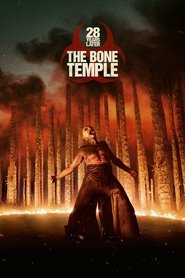
So, starting out, we did this sort of soundscape over the credits or over the main titles because we wanted to have a reason for the 28 Years Later chyron to pop up. In every other film, you see a scene from a point in time, and then you have the chyron, whether it's 28 Days Later or Weeks Later or Years Later. And it wasn't built into the script that that would exist, so instead of shooting a scene that was sort of in the past, we decided to do... Hello? ... that. And have Jim's voice, and then, 28 Years Later. And that's Jim's voice from 28 Days Later, when he's holding his little plastic bag, looking for people on the streets of London. Now this... So this sign did not originally say "no children beyond this point." It was something else, like, "no floaties or something beyond this point." But we thought it would be funny, at the top of this film, just to let maybe parents know, and children, you know, it's not for you.
0:45 · jump to transcript →
-
Nia DaCosta
This is why Kelson wanted a friend. He was like, "I want to get high and dance and sing at you." Which I guess is all of us, isn't it? We all just want an audience for whatever we're doing. I loved reading this scene in the script. I was just like, "Alex, what are you talking about, babe?" But this is what he was talking about, and it's really fun to see in a movie like this, something so strange happening that has nothing to do with violence. It's just like this is the other side of the human experience. It's like this is how far we're gonna go on this side, just... loopy and dancing. And then what we're doing with the sound here is, like, the ghost of the actual song with the beat and everything kind of comes into it. And does that belong to Kelson? Or is that also Samson having moments of memory from his own past? So, this bit where Kelson and Samson start literally dancing together and Kelson is like, "What's going on?" was another great ad-lib from Ralph and Chi that I think is so important to kind of connect where we end up going, not just with how the Jimmies and... Jimmy Ink in this moment sees them, but also where Kelson goes as a character.
31:52 · jump to transcript →
-
Nia DaCosta
So, look how long this child's legs are in this scene. Like, the way that Alfie Williams, who plays Spike, was growing throughout Danny's film and this film is so funny. And there's so many ways in which I was like, "We have to make him feel smaller because he's supposed to be." I mean, in the script, he was 10. And then aged him up because Alfie was the right person, and I think he's meant to be 12, but when we shot this, he went from ages 13 to 14. And his dad is, like, 1,000 feet tall, and he's gonna be 1,000 feet tall. So it was just a really funny problem to have, trying to figure out how to make this teenager look two years younger and sort of pre-puberty. So now we're going back to the peace of the Bone Temple. The theme comes back in.
36:23 · jump to transcript →
-
-
-
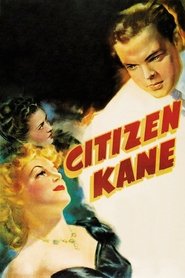
One was a book by Mrs. Fremont Older. That was the way she signed her name. It was the authorized biography, and it was called William Randolph Hearst, American. And you just saw in the newsreel here, I am only one thing, an American. And the original screenplay for this, the first draft of it, was called American. And the other book was Ferdinand Lundberg's Imperial Hearst, which was a left-wing attack, and that became a foolish lawsuit that Lundberg claimed that they had somehow plagiarized his book.
7:57 · jump to transcript →
-
Whatever her gifts as a writer was not a scholar. And what she had to say about the authorship of the script and everything was not based on any real research. ...attempted to sway, as he once did,
12:09 · jump to transcript →
-
because it seems to me that you reach very different conclusions. And the scholars are all on the side of the independent, I have to say, too, because, you know, the whole idea that Welles didn't write any part of the Citizen Kane script has been definitively and authoritatively disproven. He actually had a very active and creative role in much of the script. There were seven drafts.
24:22 · jump to transcript →
-
-
-
Tim Lucas
Just stop and listen. Those sounds that we hear are not being made by the writer in the distance. The whistle, the striking of a match, the sounds of something being assembled. That whistle, by the way, was provided by Sergio Leone himself. But these collective sounds amount to a personal portrait and trumpet the arrival of new technology in the Old West.
0:31 · jump to transcript →
-
Tim Lucas
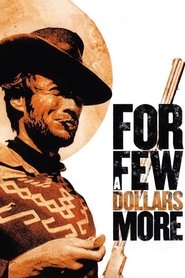
Whereas the previous film told a story cribbed from Akira Kurosawa's Yojimbo, which required at least as much fidelity to Kurosawa as to Leone, this was an original script by Luciano Vincenzoni, which he boasted of writing in only nine days, but further embellished by several different hands, notably those of Sergio Donati, the later author of Once Upon a Time in the West, The Big Gundown, and Duck You Sucker. This is an Italian Western at its most Italian.
2:24 · jump to transcript →
-
Tim Lucas
so changes were made to make him an arguably different character. The cigar-smoking man in this poker game is screenwriter and future film director Fernando de Leo, who worked on the script, uncredited, and wrote dozens of well-known Italian westerns before the times demanded he modernize his stories, which then became classics of the contemporary urban crime genre known as Polizioteschi. It should come as no surprise to us that Baby Red Kavanaugh looks nothing like his wanted poster either.
14:32 · jump to transcript →
-
-
multi · 1h 43m 7 mentions
The Taking of Pelham One Two Three (1974)
Nathaniel Thompson, Steve Mitchell
-
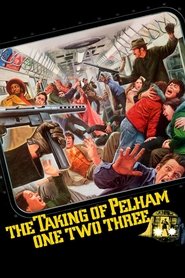
Part of the narrative doesn't quite get the play in the film. One of the things that's so nice about this screenplay is Peter Stone wound up taking a book that was a natural for a feature film. And then ultimately what he did was just say, all right, I got to stay with the good parts and stay with the part of the story that propels.
5:34 · jump to transcript →
-
And I just told him, I said, listen, Mr. Stone, I'm a big fan of yours. He had also written charade. I think he got nominated or won an Oscar for father goose. And he was like a major screenwriter in the sixties. And, but I said to him, I said, but Mr. Stone, I just loved your screenplay for the taking of Pelham one, two, three, you took a great book and you turned it into an even better movie. And he thought about, he smiled. He said, thank you. And he said, well,
6:21 · jump to transcript →
-
I added a little humor to it. And one of the things that this movie has is it has a lot of humor, but it's all character based. And, you know, again, I've watched this movie a gazillion times and I never get tired of the quality of the writing and the screenplay. That's James Broderick, who is not a real motorman, but they're letting him drive a subway train, which I thought was kind of cool.
6:47 · jump to transcript →
-
-
-
Roger Moore
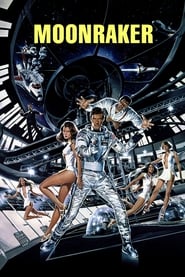
This script was written by Christopher Wood. It wasn't the first time he had been associated with Bond. He had also co-written the script for The Spy Who Loved Me. He was a good friend of Lewis. He had.... Of Lewis Gilbert, the director, and he had... ...made his-- Sort of first name was with Confessions of a Window Cleaner.
12:45 · jump to transcript →
-
Roger Moore
And Kenneth More wanted to make The Admirable Crichton. But the rights belonged to Korda. And so Korda was approached. Korda said, yes, he would produce the film with Kenny... ...and that Lewis would direct it. Well, one day he said to Lewis, rather as I had: "How did you start?" And Lewis said, "Well, I was a child actor." He said, "You were that boy?" And Lewis said, "Yes, and I'd like to say thank you." Two days later, Lewis had an appointment... ...a script conference, with Sir Alexander Korda. And he called the secretary just to confirm the time. He said, "I'd like to speak to Sir Alex." And she said, "I'm afraid you can't." He said, "But I'm supposed to be meeting him this morning." She said, "I'm afraid you won't be. He died last night." You know, "I was always glad that I could say thank you."
29:23 · jump to transcript →
-
Roger Moore
This was not the first time I had been in Venice. I remember distinctly the first time I was in Venice... ...Was in 1961. And I had been offered by Lew Grade a series called The Saint... ...and had read the script out there. My agent came out to talk to me about it. And I said that I thought it was just a little long... ...for a half-hour series. I said, "It is a half-hour series?" He said, "Oh, yes." I said, "Well, let's find out." He checked back with an assistant... ...who no longer.... Who shortly after that was not an assistant. Because when it came to... All my contract was built on... Based on it being... ...a 30-minute series. And, in fact, it was an hour. Then I came out of the press conference... ...We did a little readjustment, Lew Grade and I. I remember Venice very well for that. But it is the most beautiful city. It has this extraordinary history. It's a wonderful place to work if you like boats. Not if you like swimming. And I went in the canal a couple of times... ...Which is not quite as bad as falling in the klongs in Bangkok.
34:00 · jump to transcript →
-

Related topics
Other topics that frequently come up in the same commentaries.