Topics / Writing & development
The screenplay
147 commentaries in the archive discuss this, with 1,188 total mentions and 72 sampled passages on this page.
Filter commentaries
Filter this topic by the film's decade or the type of commentary.
By decade
Across the archive
ranked by mentions · click any passage for the moment in the transcript
-
multi · 2h 12m 13 mentions
Andrew Sarris, James Ellroy, Brian Helgeland, Michael Nathanson + 10
-
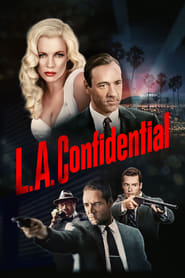
I really believe the best way to get the movie greenlit was not to have Arnon read the script. The best way was for us to describe this movie, and most important was to have Curtis describe it, because Curtis was the movie, the movie was Curtis. ...
1:05 · jump to transcript →
-
original and independent as you could want. I didn't think he wanted an imbalance. For instance, if one of the detectives was George Clooney, the writing would be tilted toward the George Clooney character. But by using these three virtually anonymous actors, he was free.
10:40 · jump to transcript →
-
that he plays, his persona, really well. So he sort of upped it a little, to my mind. He sort of blew it up a little, but it was right for the guy, you know? It was, hey, here's one of these kind of guys, you know what I mean? Like this. So. The movie premier, Pat Busk. Take care of them right down at Hollywood Station. I'll get the evidence. I first heard about L.A. Confidential through Curtis Hanson, the director. I read the script.
11:58 · jump to transcript →
-
-
-
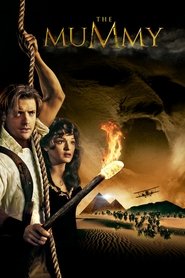
Hi, this is Stephen Sommers, the writer-director of The Mummy. Actually, Steve Sommers, but my mother makes me use Stephen professionally. And with me is Bob Ducsay, who's been editing every one of my movies since we were in film school. We've been together for 12 years. 12 long years. Don't make it sound that long, Bob. It's mainly been enjoyable. Mainly. So what do you think of this logo? We're not big fans of the new logo. We like the old logos, but maybe we shouldn't say that here. Anyway, this shot...
0:03 · jump to transcript →
-
Her petting the cat was my idea, I have to say. That was a nice touch. She was good. By the way, all the ancient Egyptian spoken is as close as we could get to ancient Egyptian. The language hasn't been spoken in over 3,000 years or 2,000 years, but we had a professor of Egyptology go over the script and phonetically write out how he thought the ancient Egyptian would sound, and then he put it on cassette tapes for all the actors so that it wouldn't just be...
2:37 · jump to transcript →
-
it's very well executed too it's interesting because i mean it's it's one of the the cheapest gags in the right in the book i mean it's it's a really it's it's shameless in fact but but it works it's it's fun to be in a preview audience or or even better with a paying audience and sitting there watching them all jump when he uh pushes that mummy out now i shot this scene in this in the script i told john hannah that he was going to be drunk
16:20 · jump to transcript →
-
-
-
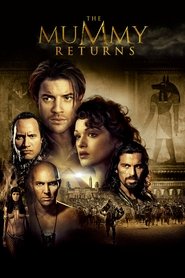
Hi, I'm Steve Sommers, the writer-director of this thing. And to my left is Bob Ducsay, the executive producer and editor. Hello, everybody. Here we go. Didn't we just finish this movie? So, as we sit here in ADR 6 on the Universal lot a couple months after this movie is open, the picture is closing in on about $200 million at the domestic box office, and
0:01 · jump to transcript →
-
What I love about this, and I love this in the screenplay, is these guys came prepared. You know, they knew that the potential was there for these nasty little bugs to show up, and they had a plan. Those giant flamethrowers did the job. I just love this whole set.
19:36 · jump to transcript →
-
Well, it's a really great movie house because, I mean, it's just so excessive and so much fun. It's interesting, in the development of the script, this fight sequence that you're going to see in a few minutes was originally staged... Jonathan was going to have a casino, and that was one of the few concessions that was made to get the budget down a little bit.
24:39 · jump to transcript →
-
-
-
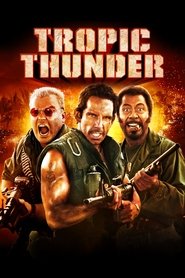
head writer or whatever hold on me like the writer you show up here tardy and now you talking about another fucking commentary you're not even listening to the end of my story though all right bring it forget it you're right
23:29 · jump to transcript →
-
Yeah. I got a bad feeling. This was all... I love that part, man, where you're trying to tell him to get back in the scene. He doesn't know. Yeah. This scene to me was when we were writing the script just to have the chance to do some sort of bad, over-the-top Vietnam movie dialogue. And this character you created, Jack. Give us a little of that. Well, yeah, no, I saw a guy in platoon who had a voice like that.
30:32 · jump to transcript →
-
This is like the show within the show inside another show. There you go. It's crazy. Clever, right? Real clever. Fuck, man. So, yeah, that was... So you thought of the head coming off and licking the blood from the head? Like... We did a writer's room. But just like a week before we started shooting? It was like the last thing? Not a week before. Like a week before we went off to location. So, you know, we just do a punch-up. You go through the script. So you had been writing this thing for 20 years, right?
31:57 · jump to transcript →
-
-
multi · 1h 33m 13 mentions
Wes Anderson, Peter Becker, Roman Coppola, Jake Ryan + 3
-
Peter Becker
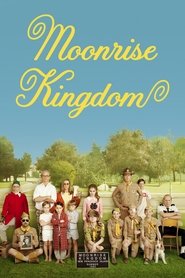
So when you start a film, and I mean, the opening of a film, in the script and all that, what are you thinking about when you establish a scene?
2:53 · jump to transcript →
-
Wes Anderson
With this movie, I didn't have any actors in mind. I only thought about the characters. It was only once we had a script that I started thinking, "Okay, who are these guys?" But Edward was certainly the top of the list for our character that he played. What I'm curious about is when I read Moonrise Kingdom, I was really... I loved it, and I was delighted by Scoutmaster Ward because I... I loved being a camp counselor, and the pleasant surprise to me was that Wes somehow saw that quality in me. 'Cause we had met, I guess, but it's not like we had hung out and spent a lot of time talking, and it's not as though a lot of what I had done up to that point would have led a person to see the inner Scoutmaster Ward in me. So I was sort of curious why-- Is it American History X?
11:37 · jump to transcript →
-
Wes Anderson
No. No, it's just not the right blend. But there's also certain things that when you read a script, I always find-- Sometimes I have the experience you're reading something, you like it, it's good, and then you read a single line by a character and you say-- I can't explain it. There was a couple of things in Moonrise, like, you were reading along, it was cute, it was whimsical, it was things-- And I remember being really struck by the scene where Bill and Frances are in the bed, and they say, "We're all they've got," and the father says, "It's not enough." And when you're reading a script, like, those are very small lines and it's very easy reading things fast to go past things like that. And I remember flipping back and going: "Wait a second, that's a really different color underneath this." And then once you realize that there's an emotion underneath the surface of something like that, it changes the way you look at the whole piece because you realize there's something cooking under here that's actually, you know, deeper than the kind of fun of the surfaces of it. And I like it when you hit something like that and it all comes together in one line. And I had that experience on reading that one.
13:30 · jump to transcript →
-
-
-
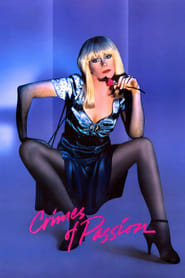
My name is Barry Sandler. I am sitting here with Ken Russell, the director of Crimes of Passion. I wrote the screenplay, and we were here to discuss the genesis of the film and how Ken perceived many of the scenes and how we worked together. And we're just going to take a look at the movie now. We started out with a group therapy session in which the hero of the movie, Bobby Grady,
0:11 · jump to transcript →
-
It's all part of her fantasy now. We worked on the script for some time, and as new ideas came, we fed them into the... Yeah. And, uh... Barry's found a computer brain.
14:44 · jump to transcript →
-
Yeah, and it was a great experience. Directors don't respect the written word as much as you do, most directors. Yeah, but most writers don't write the written word as well. The dialogue's brilliant in this. I think it's some of the most brilliant dialogue of any film of its type. It's absolutely fabulous. And the actors were pretty good about keeping to the script. They did. I don't think there was any ad-libbing at all.
15:13 · jump to transcript →
-
-
-
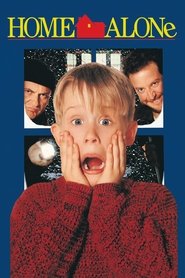
That's also the reason I got the part. I'm such a ham. You are such a ham. - I'm such a ham. But what's amazing is, at the time... ...I was only the father of an infant, really. My daughter... - It was Rory's age. They were both born same month. Yeah, and, uh.... So I was, uh.... I thought, "Well, he's-- This kid is really kind of over-the-top... ...In terms of the way he treats his family. He's kind of a brat." Little did I realize then, after four children later, that this is kind of par for the course. This is the way kids just treat their parents. John knew what he was talking about. - Oh, yeah. He had lived through it. John-- The meetings on this film... We would be in preproduction before we'd shoot... ... then I'd have to go to... John was a night owl, so I'd have to go to John with a... John Hughes' house from about 9 at night to 5 in the morning. I would get home and get in a half-hour's sleep and go back to the set. It was just insane, and he liked to work those hours, and we'd... That's how we basically worked on the script... ...and worked on the production design. It was literally a 24-hour-a-day job. Now, oddly enough, you know, which is gonna sound odd to some people... .all of this sort of imagery... ...Was inspired by David Lean's Great Expectations. So I was-- Obviously, we didn't fully get to that point... ...but some of the black-and-white photography in that film... ... really inspired this sequence for me.
11:55 · jump to transcript →
-
This is a good place to bring up the score. John Williams was not the original composer. If you have one of the early posters of Home Alone in your attic somewhere... ...It says "Composer Bruce Broughton." And Bruce Broughton was the original composer... ...on a film that I wrote called Young Sherlock Holmes. And I loved his score for that film, so I met with him and hired him for this. He was not available to do this... ...and he essentially was doing The Rescuers Down Under. I think that's what it was. So we lost him. So we had no composer while we were shooting... ...the second half of this film. And we went to John Williams thinking, "He'll never do a film like this." But he saw the film, loved it and decided... Amazing what he did. - His score is unbelievable. The score is beautiful. No. - He doesn't miss. Well, the thing is, comedy's very difficult to score... ...because it can always sound stupid or goofy. And John never really let that happen. I think one of the great things about John Hughes' screenplay here... .IS that John really filled in every possible... ...logic hole here. - Yeah. Little loophole. Any-- You know, in other words, by putting this kid into the back of the van... ...he took care of the fact that you would be counted... The head count worked. Also adding Buzz here, confusing her... ... Just added to the... I don't wanna say the reality... ...because the film has a heightened reality, but the reality of what's going on. Yeah, and how it all happened. - And the audience always bought it. They bought the fact-- Particularly, we were concerned about mothers... ...because mothers would say, "How can you leave your kid alone?"
14:15 · jump to transcript →
-
Didn't you shoot at Midway? Yeah, we shot at Mid-- I think we shot... There is my daughter, Eleanor. And my mother-in-law, right there. Eleanor just started high school today, so there you go. Oh, wow. - Yeah, so.... I'm getting old. - Time has passed. And there's my wife, Monica, as the stewardess, so it's a family affair. You're in the second one with your daughter. I'm in the second one. - In the toy shop. Yes, having looked as if I'd eaten most of New York City at the time. Yeah, yeah. - I was enjoying myself. Uh.... - Welcome to my world. Uh, this was one of the funniest shots, I remember. When people first saw you open that door, and your hair was all sort of... Because usually in movies people don't think: "We're gonna mess up his hair to look like he had a night's sleep." People wake up and they look like... - The Lindas. Hair and Makeup. Scratch my butt. - That was in the script, actually. That was a John Hughes-ism. That was very-- John was very perceptive, and the script read wonderfully, you know? It was like... It was a movie on paper, essentially... ...and you realized that this had a lot of potential.
17:07 · jump to transcript →
-
-
-
James Mangold
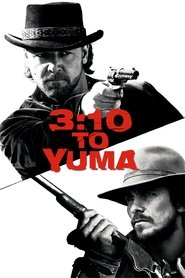
One of the first tasks in terms of adapting and updating this story by Elmore Leonard was figuring out what we wanted and what we didn't in terms of how we were going to attack it and what story elements we were going to emphasize differently than the original film and what we thought they really got 100% right in the original film. One of the reasons that Halstead Wells is the first credited writer on the screenplay of this film
2:46 · jump to transcript →
-
James Mangold
is because we felt an awful lot that Halstead did in his screenplay in 1957 for the original 310 in Yuma was really right, was dead on right, and there's some great writing in that film that, out of ego, I wasn't gonna just dispose with. I thought these actors, Russell, Christian, Ben Foster, Gretchen Moll, et cetera, would have a great time doing this stuff and playing these words anew.
3:13 · jump to transcript →
-
James Mangold
The very act of marching him to that train was a struggle. Boys, we're going to round up the herd, and then I'm going into town. What are you going to do in town? The other aspect that I think we really wanted to accentuate in our script for this film was Dan's relationship with his children. Maybe we should just shoot him like Will says. One of the things that I felt would motivate any man to do almost the irrational and the impossible is sensing that his own family has stopped believing in him.
5:07 · jump to transcript →
-
-
-
Tim Lucas
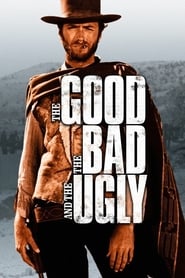
and its guitar soloist is Bruno Battisti D'Amario. The character of Angel Eyes, played by Lee Van Cleef, is introduced with a long ride into close-up, much like Omar Sharif in David Lean's Lawrence of Arabia, a film that, like The Good, the Bad, and the Ugly, was largely shot in Almeria, Spain. In the original script by Luciano Vincenzoni, Angel Eyes is referred to as Banjo, possibly in response to the popularity of the baleful Italian western hero Django, introduced in 1965.
6:34 · jump to transcript →
-
Tim Lucas
Topkeeper, who in the original script is named Mr. Jackson, is played by Enzo Petito, born Vincenzo Squitieri in Naples in June 1897. His other films include Dino Risi's Il Vidovo, The Widower, 1959, and Il mattatore, Love and Larceny, 1960, Sergio Corbucci's Totò Comedy, Chi si ferma è perduto, 1960, and Vittorio De Sica's Il giudizio universale, The Last Judgment, 1961.
32:40 · jump to transcript →
-
Tim Lucas
It's an interesting recurring feature of this script's construction that we are presented with one interesting scene only to discover that it is wrapped inside another, so to speak. Another interesting story or a breathtaking vista that is unfolding just off to the side of a scene we initially consider to be enclosed and finite. That's very good.
43:48 · jump to transcript →
-
-
multi · 1h 59m 11 mentions
David Naylor, Guy Hamilton, Tom Mankiewicz, John Barry + 14
-
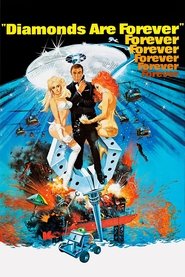
Mankiewicz was hired after Richard Maibaum had completed a first draft script. Director Guy Hamilton remembers working with the writer. Tom Mankiewicz came out to Universal, and we sat down and we started to write the script, and we had a lot of fun writing it. Here's Tom Mankiewicz's memories of writing the script. When I was hired to rewrite Diamonds Are Forever,
5:15 · jump to transcript →
-
And I think Guy really helped to set that up, that irritated relationship. Stuntman Joe Robinson, who portrays Peter Franks, made his film debut as Sam in 1955's A Kid for Two Farthings, which was directed by Carol Reid from a screenplay by Wolf Mankiewicz. It was Wolf Mankiewicz, no relation to Tom Mankiewicz, who introduced Cubby Broccoli to Harry Saltzman.
21:27 · jump to transcript →
-
In the Richard Maibaum script, the primary villain was to be Goldfinger's twin brother, back for revenge. When Tom Mankiewicz came on board, the storyline changed, influenced by a dream of Cubby Broccoli's. Broccoli dreamt that he'd gone to visit his old friend Howard Hughes, but when he called out Hughes's name, the man who turned around was a total stranger. Using that idea as a launching point, the producers decided to bring back Bond's arch-nemesis, Ernst Stavro Blofeld, who is impersonating a Howard Hughes-type industrialist.
35:15 · jump to transcript →
-
-
-
William Friedkin
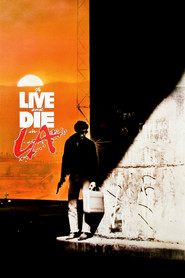
According to him, a number of the incidents in the book were based on his experiences which he had fictionalized. And I acquired the rights to the book myself. And I wrote the screenplay. I wrote a draft of the screenplay myself. And then I found myself calling Jerry from time to time.
10:57 · jump to transcript →
-
William Friedkin
This is a new scene. It's not in the book. I have an idea for something else. Why don't you write it and send it back to me and I'll change it or maybe it'll be fine. So I initiated a collaboration with him. And when it was finished, I decided to put his name on the screenplay because I thought it was a genuine collaboration. Although it didn't set out to be that way.
11:49 · jump to transcript →
-
William Friedkin
My feeling at the time was I was going to buy the rights to this book and then do the screenplay alone and that would have been that. Now I felt that it would be good to show the audience how counterfeit money is actually made. And so Jerry Petievich
12:17 · jump to transcript →
-
-
-
When you read the script? Or did you... What was your... Um... No, it's just... I mean, it's heartbreaking to find out what he's like, but... And then everything looking back becomes so dark all of a sudden, because you think of how involved he got with my relationship. It just... Then it becomes just sick. Mm-hmm. And gross. There's always that great undercurrent in the film. And everybody you... Everybody that was...
3:00 · jump to transcript →
-
which was very important to the finished movie. But in the script, I saw him a little more as a blatant optimist. And I remember talking to Johnny on this day and saying, can you smile more? And it was the beginning of a conversation that became very important to me, where you basically said, I can do that. But I also can play that in a different way.
8:49 · jump to transcript →
-
Just great little notes like that. Look, Dan, I'm sorry, but I can't allow you to leave the country without attending the leader's graduation event. This gentleman is 22. I love the way... This gentleman is 22. Now, that's collaboration. That's Johnny bringing that. This gentleman is 22. No, that was in the script, wasn't it? No, it's... You know, and you're not in England yet. You know that, of course. But by the way, I wanted to just tell you that I lived... Gentleman is you. ...in England. And Jeremy and I can give you an enormous amount of tips. English tips.
17:46 · jump to transcript →
-
-
-
on his prison were going to be chased by this alien and killed. And yeah, I didn't have that much of an issue with it. It was only kind of later on you kind of see the sort of the failings of the studio manipulating the film and changing it and not knowing what they wanted. David Fincher making a movie without a finished script.
1:20 · jump to transcript →
-
which is one of the most ridiculous movies you will ever see. John Fasano wrote that script. I mean, my God, he must have had a brief moment where people were taking him seriously and they jumped on him, but that didn't last long. But you can see, like, during the course of this movie, where Vincent Ward's ideas are still kind of embedded in the film, because he's still credited as, you know, the story...
7:10 · jump to transcript →
-
explored in the first two. William Gibson's script, which was then turned into a radio drama a couple of years ago, which people seem to gush over. I think it was a terrible script. Well, terrible is a harsh word, but it just didn't do anything really exciting for me. And it does bring over, obviously, Newt and Hicks stay alive, but Ripley's in a coma for most of it. So she's out of the movie and you've got like...
12:13 · jump to transcript →
-
-
-
they did it originally for Kevin Costner. And then it happened that Kevin was not available when the script was ready to go, and he was, I think, gentleman enough to say, okay, I know you want to go forward. Why don't you go with Harrison Ford instead of myself? And that's how it happened. And here we are already. So you see, this is... I'm pretty proud of this because we... First of all, I must confess, you know, the whole thing, the beginning here, it's all...
2:17 · jump to transcript →
-
Did you work with the writer on the script of this? Yes, I mean, Andrew Marlowe is the writer, and we worked a lot in this month before we started shooting. And even into the production, we constantly, we always do it like that. It's never really like that. You have a script, and then you shoot it, and that's it. You constantly, film is always sort of things in development to the very end. And so we work, yes, on a daily basis with the writer. And then we had also Paul Attanasio,
7:30 · jump to transcript →
-
another writer who helped us with some dialogue work, especially in all these political scenes with the White House and for Gary Oldman, some scenes and so. So, yeah, it was constant work with the script. And again, here Harrison Ford with a great speech. And I think it's a great introduction here for a movie star. Don't you think when you say he is my friend, the President of the United States, and then
7:59 · jump to transcript →
-
-
-
Jonathan Lynn
And I also had talked to Randy Edelman a lot about Charlie Mingus's band Blues and Roots. We use a bit of their music later. Mitchell Capner, the writer, had suggested this in an early draft of the script. And we talked a lot about Gerry Mulligan and the baritone saxophone and all of those things come up in the score later. Thousand? For what? You know what your father would be proud?
1:59 · jump to transcript →
-
Jonathan Lynn
the outburst here with the wheel in his car, banging on the wheel and the mirror and everything. This was in the script. But what gets a bigger laugh with the audience is when he starts up the car, drives away, stops and does it again, which was a wonderful idea that Matthew brought in that morning. Here we go.
2:56 · jump to transcript →
-
Jonathan Lynn
In this scene, the dog belongs actually to our hairdresser, Peggy Semtop. The dog was not in the script, but Rosanna saw the dog in the makeup trailer of her day and thought it would be just the kind of dog that her character would have. I thought it was a very welcome addition to the scene. And he acted pretty well.
9:50 · jump to transcript →
-
-
director · 1h 34m 11 mentions
Scott Stewart, Jason Blum, Brian Kavanaugh-Jones, Peter Gvozdas
-
Hi, I'm Scott Stewart. I'm the writer and director of Dark Skies. I'm Jason Blum. I'm the producer. I'm Brian Cavanaugh-Jones. I'm the executive producer. And I'm Peter Gavazdis, the picture editor. You know, I came to Jason and Brian with this idea of a story. I knew that they were making these films, these scary movies where they were letting directors, you know, kind of make some scary movies outside of the studio system
0:03 · jump to transcript →
-
Yeah, well, what it ended up doing is it ended up requiring me to write a real script. So I went off for a summer and indulged my fantasy of writing a suburban drama that was scary as well. And we did. It was very fast. We shot in August 2012 and were in theaters in February 2013, so six months.
2:35 · jump to transcript →
-
up to that point. He was, you know, just a little rain man. He knew the script by heart. Literally on our first day of rehearsal, you know, Josh and Carrie, you know, years have been acting since they were his age. And they were laughing when, you know, I would say, let's work on this particular scene. And Caden would already say the first line and they would flip through their scripts going, what scene is that? I don't even know my lines yet for this. And there is our six-year-old who already knows all of his lines by heart. But it was really important not to make him
7:25 · jump to transcript →
-
-
-
Francis Lawrence
This is actually something that Justin and I, Justin, the writer, Justin Haythe and I debated quite a bit. We spent a lot of time thinking about Dominika"s living conditions. And part of it was from research that even though it seems like quite a glamorous job to be a principal ballerina with, you know, a real high-end ballet company in Moscow, that the living conditions would be quite modest. And I also thought it was important that they remain modest, because as she's fighting for survival, when she needs help from her uncle to survive, it's not about material things. It's not about getting a nicer place to live in, or keeping a nice place to live in, or keeping a nice car or anything like that. It's just keeping things as they are, in terms of the simple life that she actually has with her mother. And her mother is played by the great Joely Richardson, who was I think one of the last people we cast for no real reason. I think it was the last role that we got to. But she came in, and it was a bit tricky for her, and she was a trooper, because I think we cast her maybe 10 days or so before she started shooting, and she had a lot to do, you know? We had decided that her character, although you never hear it, had MS, and so we wanted her to meet with experts about MS, so she would know how to move, and how to make it look like she had trouble using her hands and trouble getting up. And she had to learn the subtle Russian accent that everybody had been training for, and she also had to learn how to play the violin. It's now a scene. I'm sure she's not happy about it, but we ended up cutting it 'cause she spent a bunch of time learning a song on the violin while giving a speech to Dominika. But she was a real trooper. She also did something interesting that I had never seen an actor do before, which was that she was really curious about the tone of the movie as she came in, and wanted to immerse herself in it. And so she came to Budapest a few weeks early, and she would come to set on days we were shooting other things, and she would just, kind of, watch and see what other people were doing, and see what I was doing, to get into the tone of the world a little bit. And I think it's honestly gonna be something that I carry into other movies that I do now, and inviting actors as they come in, so that nobody really starts completely cold again. Sonya? Hey. How are you? What is it? /'m scared. I went to see her at the hospital. The way she looked at me, she knows. She doesn't know. What we have done is a sin. They've always favored her. No one else ever got a chance. Is that fair? This was a fun sequence. This is another one of the dynamic sequences in the movie that really sets up the tone, and really specifically sets up how Dominika is truly an unlikely hero. I think without this, and this is something that we, you know, the producers and the studio and the writer and I debated about a fair amount, just in terms of how violent this sequence gets. Really sets up what Dominika's capable of. We shot this in a basement of an art school in Budapest, and Maria brilliantly changed this empty basement room, series of rooms, into a steam room, and locker room, as if it was at the bottom of a ballet company. And I think it looks really beautiful.
11:19 · jump to transcript →
-
Francis Lawrence
This was one of the tougher sequences to shoot. You know, leading up to this movie, quite honestly, I was afraid, even though I wanted Jen to do it, I was really afraid she wasn't going to want to do it. Because she really just had never done anything that had this kind of content before. So, before she had read the script, I started... We were going on a lot of press tours, and spending a fair amount of time together, promoting the Hunger Games, the last Hunger Games film. And so I would dole out information bit by bit. But really, she didn't know the full extent of what was gonna be in the movie, content-wise, until she read the script. And she read the script, and she thought about it for a little while, and then she said that she was ready to do it, and she wanted to do it. And we Started to have really lengthy conversations because I wanted to make sure that we got all these moments really tonally correct. And that she was prepared for what it was gonna be like to shoot these kinds of days. And I would talk a lot about how we would handle the days, and handle the content, both practically on the day, but also in the movie. I wanted to make sure that it was always really narratively important. The idea was never for the movie to be erotic in any way. But that it would become part of her survival story, and that there was always something tough about it. There was always a very specific emotional value to it. The scenes were always moving the story forward, and it was part of her struggle to survive. This idea of getting pulled into this horrible world of espionage from her uncle, and she was gonna have to do things that she didn't want to do to survive. One of the things that she and I spoke about was that I promised her that she would be the first person to see the movie. That Alan Bell, the editor, and I, and I think two of his assistants that were obviously gonna have to handle the footage and help organize things were gonna be the only ones to see all of the footage. So, you know, dailies like this scene were always held back from the producers and even from the studio, so that when we came up with our cut, which I think was about six weeks after we had wrapped production, I went to New York and I showed Jen the movie first, so that she had the first chance to Say, "Yes, this can be in," or "No, I want that to be out." So that she had the power to make those decisions before anybody saw anything. And she saw the movie, and she loved the movie. I think it was a fair amount longer than it is now. I think it was two hours and 35 minutes or something. But that's kind of the way we worked.
22:28 · jump to transcript →
-
Francis Lawrence
And off to the side, in some side room, was this broken down bathroom that had this really strange tile. And you can see the tile here. We duplicated it. But it's based on a tile that was actually used in a bathroom. And it was this green, splotchy tile. And if you were to see the detail of it it actually looks wet, which I thought was really strange, because it basically makes it look like the bathroom is wet and moldy. And Maria and I really fell in love with it. And she did a mock-up of it. And at first, this is the only set that she and I went back and forth on a little bit. The rest we were in complete agreement right away. But this one, for a while, I was worried was too striped. It wasn't the color that bothered me, and it wasn't the tile specifically, but it was once you put all the tile together, it felt a little too designed for me. And what we ended up doing, and Maria ended up doing, was working on the contrast between the dark green stripes and the lighter stripes in the middle, so that it didn't become sort of too hypnotizing. It was almost gonna be too distracting before. I'll be able to take care of us now. You don't have to do this. Sparrow School. It was so well-described in Jason's book as being this place out in the middle of nowhere. And I think in the book, you actually have to take a hydrofoil over some sort of water to get there. But here we didn't do that. We just had that big snowy landscape with that drone shot of the car driving. But we found this place about an hour and a half away from central Budapest called Castle Dég that was a private estate at one point. And then I think, post-war, it became an orphanage. And oddly, I think an orphanage for Greek boys or something, which was really strange. But now it's, kind of, a museum and empty, and they really let us use it a bunch. And this was toward the beginning of our schedule. It was quite cold, and everybody was really sick. Pretty much people were sick from the first day we started shooting, but by the time we got here, which was about three weeks in, it had really spread like wildfire, and everybody was really sick. Which of course had to marry up with primarily shooting outside in sub-zero temperatures, which was pretty brutal. But I loved this location. And of course, this was the beginning of our work with Charlotte. I'm a huge fan of Charlotte's work, always have been. Loved her movies, think she's a fantastic actress. But the idea to cast her as Matron came when Justin Haythe and I were working on the script, and he had seen 45 Years, which had come out recently, and suggested I see it. And I did, and just fell in love with it, and just started to think about her. I mean, it's completely a different character, but just started to think about her for this role. And so we sent her the script, and at first she was interested and she was intrigued, but she thought that her character was a little thin. And Justin and I had some ideas, and so we ended up flying out to Paris where she lives and meeting her in an apartment that she uses to paint in. And we had a great little meeting. And I think sat with her for maybe an hour, hour and a half, and pitched her the take that we had on her, and some of the secrets that I have about her. So that if we get to make another one of these, that we can carry on into new stories. And then she said yes. And we got very lucky. And it ended up being really good for Jen, because she was there for one of Jen's, probably Jen's hardest scene to shoot in this movie, which was something that's coming up in, I don't know, 15 minutes or so. But it was great for Charlotte to be there for Jen.
28:11 · jump to transcript →
-
-
multi · 1h 49m 10 mentions
John Cork, Ursula Andress, Eunice Gayson, Margaret LeWars + 20
-
The window breaking is very exaggerated. All of that was exaggerated, but it made it exciting. It made it tension. Sound editor Norman Wanstall recalls Hunt's editing. When Peter started to see the rushes of Dr. No and had read the script, he began to get an immediate picture of the sort of film we were making. And I remember him saying, if this film's going to work, we've got to move it along very, very quickly so that people don't analyze things. Production buyer Ron Quelch.
5:14 · jump to transcript →
-
My sets on that picture came to just over 20,000 pounds, 21,000 pounds. To convert Ian Fleming's novel into a workable screenplay, Cubby Broccoli hired a writer he'd worked with often before, Richard Maybaum. Jerry Durow remembers this remarkable writer.
14:11 · jump to transcript →
-
in the Cold War drama, Action of the Tiger, as Terrence Young's daughter, Juliet Neeson, recalls. He'd worked with Sean before, Action of the Tiger, and Sean played a tiny little part in that. And apparently he came to him and said, you know, I think he'd read the script of Terrence's next film, which I can't remember what it was going to be in. Sean said, you know, can I be in it now?
23:42 · jump to transcript →
-
-
-
Nick Pinkerton
Cimino had contributed to the script for 1971's Silent Running, the directorial debut of special effects maestro Douglas Trumbull, and there he had his first feature credit. Let's take a moment just to appreciate this very lovely scene, strolling along the riverfront, cracking open a sixer of Olympia beers as we look out at the water. We are now in Fort Benton, Montana,
39:52 · jump to transcript →
-
Nick Pinkerton
and also stage productions at the Bowery Theater and National Theater. So at the heart of this very 20th century script, a 19th century romanticization of the criminal life, a capital R 19th century romanticism that in Cimino's film is placed against the very quotidian and unromantic backdrop of the contemporary West. We are now at Meadowlark Elementary School 2204,
42:50 · jump to transcript →
-
Nick Pinkerton
This particular package began with Stan Kamen at William Morris Agency, head of the motion picture department, whose client, Cimino, had written a script with Eastwood in mind, written it in six weeks to be polished over the next couple of months. Eastwood was always the intended Thunderbolt, but the other role, that of Lightfoot, wasn't custom-built for anyone.
44:58 · jump to transcript →
-
-
-
Was this in the script like this? - Yes. It was designed like this in the script? I don't remember. Yes. This is called Do Anything. - The music? Do Anything.
1:24 · jump to transcript →
-
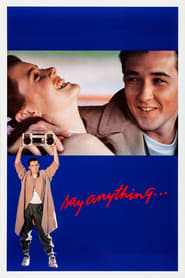
It was an amazing thing the way John took teenagers' lives so seriously, you know. It's an amazing thing. And that's why these... I think his stories hold up and endure over time because these characters are real personal to him and they're real. They are not characters he wrote for business, to make a script and make money. He did it because he needs to write them. They live for him. When he writes them, I watched him. He would laugh and cry as he wrote.
14:50 · jump to transcript →
-
This script went through big changes, too. Yeah. From the first time you offered it to me. I remember there were planes, and it was a completely different movie. Remember? There was the planes flying over the restaurant. I mean, the idea was kind of the same about a perfect date. And that love triangle, but... - I always loved this line, by the way. "
15:21 · jump to transcript →
-
-
-
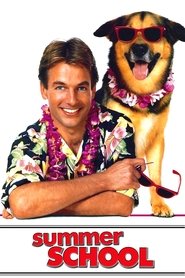
Originally, the script had us chasing a Cabbage Patch doll. And then the Cabbage Patch people thought this was a dumb idea, and so they took the Cabbage Patch away. But in the meantime, they had trained this dog to chase a Cabbage Patch. Oh, I didn't know that. Yeah, and so we decided to call the little figure he's chasing Bob. So Bob became what this movie was about, and that's what Wondermutt chased. Thank you, Principal Kelban.
2:25 · jump to transcript →
-
You're good, Carl. Yes. Yeah, I used to be an actor. Still are. That guy's in Ocean's Twelve and Ocean's Thirteen. Now, Jeff Franklin wrote a really wonderful screenplay. When a director gets a screenplay that good, it's so easy to make a picture funny. You just stay with the script, and then whatever additions the actors bring is gold.
3:52 · jump to transcript →
-
Well, I thought you made it better than the script was, Carl. I really did. Well, I think you're supposed to if you're directing. If you make it worse, you shouldn't be there. I can name a lot of them who do. I love the little kick you do on the way out the door.
4:24 · jump to transcript →
-
-
-
We always had in mind, uh... we are huge fans of submarine films. You know these films where everybody is locked in a very small, tiny place? And we love the idea to start a film doing something... trying to keep the detail of everything. People is... Watching, it's very interesting watching. Where are these people? This scene wasn't in the original script by Rowan Joffe. It's a very strange sequence about surviving. Critics and audience love these scenes. We also love these scenes. In the process of writing, we always thought that was... We wanted to make the film... all the film about this scene. And, uh... it was really a real challenge to... to make the rest of the film better than this. It was, from the very beginning, a real challenge. Especially because, I think, in this moment, we build the movie from probably, to me, the heart of the story which is the family. And how this family, how this husband and wife, are talking naturally about their children, and then we, as we see, we introduce other characters in this house. The story begins with them talking about their children and then we see how now they are not alone, they are living with more people in the house. And these characters now are introduced step by step. We are adding these elements of weirdness and strangeness. We think, at the very beginning, that this couple is alone, then we are introducing all the characters around the table. It's very... We love, Juan Carlos and l, we love, particularly, Luis Buñuel and his sense of humour and surrealism. Obviously, that wasn't about that, but we tried to bring to the horror movie some kind of weirdness in this moment. For example, in the moment when Shahid is reading the newspaper, it would be very, very easy to put a close shot of the windows locked. We prefer the audience notice this naturally, instead of working with them in this... in the sense of trying to give them the elements directly. Especially in this sequence, we can feel somebody who is not in the cottage - the boyfriend of Karen. And then through this conflict about if he's coming or not to the cottage, we see how now somebody is knocking at the door, it's a kid, and then we realise that there is something, something in the exterior, which is a kind of menace.
1:38 · jump to transcript →
-
This sequence was one of the ones we loved the most during the writing process. The first moment that the father confesses, in a way, his betrayal. But we see this in two different angles because we know the truth. We assist, in the first sequence, to the truth. In a way, in terms of the story, we put the finger on the big issue for this character, for Don, which is when he abandoned his wife in the cottage. Now he's with their kids and he needs to tell them what happened in the cottage, which is something really hard for him. And this is one of the moments, in terms of visuals, that the style of the movie, again, is changed because it's a confession. And I thought it's good to change from the handheld stuff to something static, which delivers, you know, the importance of the moment.
21:26 · jump to transcript →
-
To me, it's the best way to penetrate in the mind of this character, to feel and to notice what a difficulty it is to tell the truth. Robert Carlyle is amazing in this sequence and the whole film. He made something very difficult easy - to believe that the infected is a human being. But, precisely in this sequence, all his character is built from the ambiguity. And this guy is something... You sympathise with him, even if he made his surviving act, which is to escape from the house leaving his wife there. I think you really... It's sympathetic to you. - Yeah. And I think it's funny, but I remember we shot four takes for this moment and the take that we used in this editing is the first one, because from the first moment, I think Robert understood very well the essence of the character, which is a kind of mix between weakness and survivor feeling, as well. In a way, the dilemma of the character, which is in that terrible moment he decided to follow his survivor instinct, I think everybody could do the same. That's why I think we feel this sympathy that we are talking about. It's an immediate identification with the character. I think that's also the reason he decided to do this movie, which is a genre movie. It's not the kind of films he made, but he decided to accept this as a challenge. And this sequence was, in the script, one of the ones he likes the most. On the other hand, this shows one of the concepts we developed, which is from something really microscopic, which is the guilt, we build something bigger later on. And, in a way, it's a kind of metaphor between the infection and then the human feelings in this movie. The infection, as well, is a microscopic thing who can destroy your world, and, in this sequence particularly, we see how the guilt of this character is something destructive and dark that can destroy this family, as well.
22:30 · jump to transcript →
-
-
-
Alan K. Rode
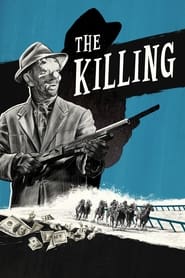
One of the many character alterations made in The Killing Script from White's novel was Jay C. Flippen's Marvin Unger. Lionel White's Unger was kind of a dyspeptic nebbish who hoarded his money and is alternately suspicious and resentful. Instead, Kubrick and Thompson turn Unger into a gentle, sad, lonely old man whose affection for Johnny Clay, as played by Sterling Hayden, has an interesting gay subtext to it.
3:34 · jump to transcript →
-
Alan K. Rode
Problem-solving stimulated him. Particularly in his later post-Spartacus films, when he had total control, Kubrick spared no one in his quest for perfection, least of all himself. Novelist Terry Southern, who worked on the Dr. Strangelove script with Kubrick, said the director, quote, "...scarcely let as much as a trouser pleat go unsupervised. No detail was too mundane, all the way down to stationery and paperclips."
21:36 · jump to transcript →
-
Alan K. Rode
Jim Thompson's angst over being denied a shared writing credit with Kubrick for the killing became a grudge he nursed with great care for the rest of his life. For his part, the director never promised any such thing, so it was not an instance of him reneging. An apology or even an acknowledgement of Thompson's gripe was not forthcoming from Stanley Kubrick. Thompson's wife claimed her husband filed a grievance over the matter with the Writers Guild and won the arbitration.
26:58 · jump to transcript →
-
-
-
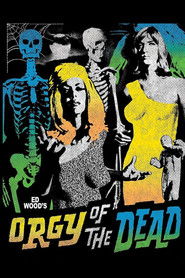
It was filmed using a widescreen process and exciting color. I love that word, exciting color. It could well become a classic in its field. As well as enjoying the film, you might like to read my novel from which the screenplay was written. It too is entitled Orgy of the Dead. And, you know, he said it's a classic and he's kind of right about that because this film was really, really, really out of step.
7:01 · jump to transcript →
-
sexy side to it. And he mentioned a screenplay he'd already written called Nudie Ghoulies. And he gave me a very, very brief synopsis of what was eventually became Orgy of the Dead. And I said, that sounds good. Now you, you brought the, you have the script here. Yeah. I got it. Yeah. And is there anything more than, I mean, how many pages is it? Well, it's obviously, you know, the first incarnation of the film.
21:05 · jump to transcript →
-
The guy who distributed Orgy was Fred O. Gephardt. May he rest in peace. So his initials were F-O-G, Fog. I should have known something. So Freddy gave me three checks for $5,000 each in advance. And what do I do when I have the money? I make a picture. So I had Eddie Wood write a script about a transvestite detective. Transvestite detective. Now, who else, right? Who else? About a transvestite detective in Paris called Seven...
1:00:20 · jump to transcript →
-




Related topics
Other topics that frequently come up in the same commentaries.