Topics / Cinematography & lighting
Lighting
110 commentaries in the archive discuss this, with 371 total mentions and 72 sampled passages on this page.
Filter commentaries
Filter this topic by the film's decade or the type of commentary.
By decade
Across the archive
ranked by mentions · click any passage for the moment in the transcript
-
-
the chairs and all the devices were custom made for the film. And often they tend to reuse things. And in this film, we were able to create original, a very original look. And I wanted it to be very monochrome. I hired Alex Thompson, whose work I really liked from David Fincher's Alien. And he was just marvelous to work with. And the lighting and the camera was fantastic.
17:24 · jump to transcript →
-
Everything was built. I don't think there were any locations on that film. They didn't love you as much as Tim at that point. Yeah. So when you have to use locations, it gets very complicated to maintain the tone and maintain the feeling of being in this future. Yeah. I remember the first time I met David Snyder, he goes, every inch of the movie is future. So nothing is left to chance. And a lot of that is the color palette and the lighting. Yeah.
56:37 · jump to transcript →
-
Getting out of a manhole. See, again, the art direction here, all that I had at my disposal here, these backlights, these fluorescent lighting units, and you can see how using these all over the city in every location really tied it together. And here we go with war. Yeah, that's great. No explanation given. Show the elevator, show the car. We don't need to know how it actually all worked, but it's good.
1:30:40 · jump to transcript →
-
-
-
that they aren't as lavish, they aren't as stylized. You'll notice here earlier, for example, that shot, you know, in all Tinto Brass films, usually there's a scene where characters are framed by windows that usually tends to pop up a lot. But in this one, it's much more natural. You sort of have this natural landscape behind them, whereas instead, before, you had these sort of stylized backdrops with sort of the crazy colorful lighting and things like that. You don't get much of that in this film. It's much more kind of very golden, natural sunlight, like you see here in the shower scene, for example. It's not quite as stylized as he would have done in the past. There is one scene coming up later on that's very strong red lighting,
27:00 · jump to transcript →
-
you know, very much part of the brass world, something you don't really feel in subsequent films. Fallo, for example, doesn't really have that sort of brass light, that sort of very recognizable lighting, despite a very competent cinematographer such as Federico Del Zoppo, who had actually worked back in the 70s with brass as a camera operator,
41:28 · jump to transcript →
-
Here, Di Venanzo manages to still keep the film very coherent with the Brass world, and I think does a good job. Di Venanzo actually mentions his favorite work with Brass is The Voyeur. He considers The Voyeur to be the best lit film out of the ones he made for Brass. But still, this one has a very...
41:57 · jump to transcript →
-
-
-
Jonathan Lynn
small or inexpensive lighting package. Yanni's guys are downstairs? Yes, come in. So we had music that seemed to suit that atmosphere. And Natasha played her entrance with tremendous style. Yanni sent me to see if you were on the level.
30:48 · jump to transcript →
-
Jonathan Lynn
I would hate to... I would really hate to have to kill you. I would hate it. I hate it more than mayonnaise. You know how much I hate mayonnaise. In order to make the lighting go faster, we went for deep tones on the walls. You can see the deep blue behind them. It made it quicker for David to light the scenes. We were always in a tremendous hurry.
57:01 · jump to transcript →
-
Jonathan Lynn
expect. For me, some of the comedy of the scene lies in the fact that it's not lit in a kind of spooky way, but the fact that these macabre happenings are all taking place in ordinary light as if it's ordinary daily activity. That's what Harry Lefkowitz thought. What happened to Harry Lefkowitz? I don't want to know what happened to Harry Lefkowitz.
1:09:27 · jump to transcript →
-
-
-
Ridley Scott
All these rooms in the Palazzo Vecchio are magnificent. They were all the, you know, the palace, I guess, was, I'm not sure, absolutely, but I think it was Parmedici. And so the rooms are stunning. And if you're having a lecture in there, you know, and the room was lit by a projector, then you'd have this kind of almost, you know, candlelight, actually.
1:14:23 · jump to transcript →
-
Ridley Scott
And add to the mood in the room, I add some candles. They had candles in there, so I just lit them. But they really believe in living with that, you know, culture of their past. They're very conscious of their past and very conscious of what they have around them and how beautiful it all is.
1:14:52 · jump to transcript →
-
Ridley Scott
The Third Man, that's one of my favorite films. And I kind of would like this to have been at night. Would have been more dramatic. And I liked it to have been lit so I could control the lighting with such dramatic scale like The Third Man. But we couldn't do that either. We couldn't control it. We couldn't afford to do that. And the amount of lighting it would require to light at night would have been enormous. So that went out the window. But basically, I think it works out fine.
1:36:31 · jump to transcript →
-
-
director · 4h 13m 4 mentions
The Lord of the Rings The Return of the King (2003)
Peter Jackson, Fran Walsh, Philippa Boyens
-
What I love about the beacons is the concept of who actually are the guys who have to sit up there all day long with some matches or a flint waiting to set light to them. And I imagine that it's been hundreds of years and these things have never been lit. It's a job that gets passed down from father to son. And some old man hands his young son the matches and says, now it's your turn, my boy.
1:05:00 · jump to transcript →
-
people have to do before they get a real career. When Pippin and Gandalf were writing to Minas Tirith the beacons were already lit so we obviously changed the position in the story for our beacon sequence. A lot of the flames that we see in the distance are little CG flames that we added in post-production. The beacon that you're looking at here was actually built on the mountains and we helicoptered the beacon in and the little hut that these guys live in and we
1:05:49 · jump to transcript →
-
And we're having to go somewhere else, not to Gondor, which you would normally do in a film. You'd have them all set off for Gondor. But in actual fact, we needed them to go to Dunharrow, which again took quite a bit of sleight of hand. And that's how you explain that to an audience, to say, well, they're rushing off. They've got the emergency beacons have been lit now, and they've got to rush off to help the Gondor. But no, they're actually just going to pop off to a place called Dunharrow that we don't know nothing about and wait for a while instead of rushing.
1:08:06 · jump to transcript →
-
-
-
It wasn't necessarily physically accurate in terms of the size of the blades and the helicopters, and there were certain things that we had to account for when we actually were shooting it. Practical and with ILM physics. And also just the fact that we were shooting, you know, nighttime, these windmills that are not normally lit. If you noticed, we had to light all those windmills, and that was Vic Armstrong, to the T, giving us what the animatic required, you know, on all of these exterior shots.
23:54 · jump to transcript →
-
This is all downtown LA inside the truck. And this is downtown LA at Lower Grand, which Scott Chambliss dressed with lights. In fact, if you look down the roadway behind you guys, we did sort of forced perspective lighting to make it look as if
1:31:13 · jump to transcript →
-
See how the buildings are lit? We actually had to get permission from the Chinese government to get those buildings lit so that they'd stay lit. Vang and Maggie and Jonathan came to China basically for that... Just for that shot. And I won't see you back home. Better get back.
1:33:36 · jump to transcript →
-
-
director · 1h 42m 4 mentions
Len Wiseman, Patrick Tatopoulos, Brad Martin, Nicolas de Toth
-
Yeah, it was always, you know, we were wondering how that was going to look and does it explode in just a spray and a splat? Do we see chunks? Actually, a lot of thought goes into just how somebody's head gets cut off. This was a reshoot for lighting-wise. We did Kate's close-ups. We shot actually, I think, the last day of shooting. We did some of those over.
15:58 · jump to transcript →
-
really small you make it look really big though this is a 14 mil lens yeah and whenever you whenever you put on a wide lens on that but it was really really i i loved how the satellite it was it was kind of for us it was sort of a nothing yeah it was the last we didn't we didn't really give it that much um and he comes he comes out i think the lighting looks great in there yeah i agree yeah another compliment
20:56 · jump to transcript →
-
But we landed him, I think that was maybe a 14 lens that we shot it on. He landed a foot from camera consistently every time. CG for the folding back there. Actually, CG for the wing, period, on this shot. That's right, yeah. The wings are CG and the rest is makeup and the guy, stunt guy in a suit. And it's a good trick to have the texture and the lighting and everything on Marcus' suit, which I think really
29:47 · jump to transcript →
-
-
-
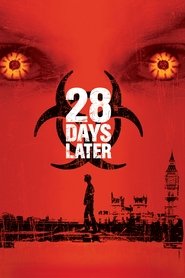
this thing that in this movie horrible things happen, but it's always right in the corner of your eye. Somebody, if they just turned their head in the wrong or the right direction, they would have seen it. Somebody can always see what's happening, but nobody does. Yeah, it's very close. It's always close to others, the violence. And you could see the cars moving in the background too. It's very neat. Lighting here by Hoyte van Hoytema and the lighting crew.
9:25 · jump to transcript →
-
fantastic example of Hoyte van Hoytema, the director of cinematography. His very special way of lighting and the light comes from very high above to sort of recreate the feeling of moonlight. So there is almost
34:28 · jump to transcript →
-
no shadows anywhere and you really cannot see any particular direction from the light so it's extremely soft lighting. Which also makes this scene even more effective. It's this sort of scene where you would have played with light and shadow to make it more dramatic. Yeah, that would be the most obvious way to do it. This makes it very mundane.
34:55 · jump to transcript →
-
-
multi · 1h 33m 4 mentions
Wes Anderson, Peter Becker, Roman Coppola, Jake Ryan + 3
-
Wes Anderson
Well, we're talking about doing something hard. Doing something like a 180-degree whip pan on a moving dolly, for instance, is a hard thing. - Bob's specialty. Operating is a complicated and performative kind of action. You take it for granted. That, you know, after a few years, you don't even realize how hard some of the things that I'm asking him to do might be. But sometimes when you operate a shot, you suddenly become aware that if I mess this up, I've messed up all these different people's work all at once. There's so many people doing things at once. But, you know, most of Bob's job is about lighting. It's the balance of making a circumstance where you can get everything to happen together. And he's in tune with all of that. One big thing about the photography you probably talked about already is the choice to shoot it in 16 mm, which had a lot of effect on the look in terms of the weight of the cameras, the portability, and so on.
1:00:42 · jump to transcript →
-
Peter Becker
I mean, when you say, what is our approach to lighting or what is our attitude to lighting, does that change film to film, or is that something consistent for you?
1:03:23 · jump to transcript →
-
Peter Becker
So in this film, what was the attitude to lighting? What was the feel?
1:04:07 · jump to transcript →
-
-
-
Francis Lawrence
This moment here was also another piece that we kind of debated, this phone call. This is something that's quite easily lifted, and she could just go home after having seen the blood on her hands. But this idea that she could do something so violent in the steam room, but then have this moment of conscience and call the action in was very important. And then we have this moment here of finding her mother, which was the moment where she knows that the ballet company that's been supporting her has kind of pulled the plug on any money and any help for her mother, and she is gonna have to go and find help from her uncle. I'm going to take care of us. So one of the fun things about this job and in terms of the world-building, was finding all the various kinds of architecture that exist in this world. And this place here was actually in Bratislava. So we went on a search. We shot primarily in Budapest, but we also shot in Bratislava, which is in Slovakia, and Vienna, and London. And we went on a big search for buildings and sites that could feel like Moscow or places near Moscow. And Maria, the production designer, had found these great Brutalist buildings in Bratislava, including this one, which we decided would be perfect for Matthias's character's office building. Just a big monolithic, very Stark, stark building. The problem here was actually... We shot this scene very, very quickly, even though there's a lot of dialogue, because it gets front-lit quite quickly after about 7:00, 7:30 in the morning. This is near the end of our schedule on the movie. And so we Set this up at sunrise and dawn, with multiple cameras, and shot the whole scene within about 45 minutes, I think, 'cause otherwise, if the sun came up, it was gonna be really unflattering, and it wasn't gonna feel as bitingly cold as we wanted it to. Do this for your mother, Dominika. He has dinner at the Hotel Andarja every Friday at 9:00. A car will arrive at your apartment to bring you to the hotel. Now, you carry nothing with you. We will arrange a room and something for you to wear. This is back in Budapest, shooting in a hotel in downtown Budapest. We were originally modeling the idea of this hotel in Moscow, with the Metropole. Which is a classic, really upscale hotel that's been around fora really long time in Moscow. And then we, kind of, ended up going in our own direction. We searched, you know, in London for hotels, searched all over Budapest for hotels, and we pieced together various things, and we used the exterior of a hotel in Budapest, and we ended up using a room... This room is part of an abandoned building in Budapest. And Maria built that bathroom attached to the room in that abandoned building, and just did a great job. She brought in these great Italian scenics to create all that fake marble. It's actually just wood that's been painted, but just looks unbelievable.
16:11 · jump to transcript →
-
Francis Lawrence
Here's a little cameo. This is one of Jen's best friends, Laura, who also acted as her assistant on the movie. What a pleasure. May I join you? There's a fair amount of cameos in this movie, probably more than I've ever done in terms of people who work on the movie. And friends, and things like that. If you notice the policeman in the beginning of the film that's on the subway train with Joel, in the furry hat, is actually Chris Surgent, my first assistant director, who I've worked with since I Am Legend. I actually met him on I Am Legend. He was the first assistant director of the second unit, and did all the big New York City lockdown sequences for us, for the opening, and I was really impressed with him. And we've become good friends, and work together all the time now. Tell me the real reason you are here. This was actually a really, really beautiful location in downtown Budapest. It's the New York Cafe, which is attached to the hotel that we used for the exterior. And it's become a very popular tourist attraction, and a place to go eat because of its opulence. But I just thought it would be a fantastic spot for this character, for Ustinov's character to hang out. One of the things that I wanted to do, and also Maria, the production designer, was to show different facets of Russian architecture, right? The kind of classic, opulent stuff like places like this, or the ballet, the kind of socialist, Brutalist structures like her uncle's office. Some of the government housing-type environments like where she lives with her mother. But one of the things that really excited me that we got into was the idea of color. I think, honestly, people tend to expect in movies like this for it to be very gray, you know, just bleak. And what Maria and I found in our research was that there is plenty of color throughout the environments. And we had decided to really try and utilize that, and she pulled, I don't know, hundreds and hundreds and hundreds of photos that we used, that gave us a real sense of color palette and a sense of mood and a sense of light. And we ended up using that also for Jo, the cinematographer and I, in terms of how the movie kind of looks in terms of lighting styles as well. And that led us into a direction of, you know, post-World War I/ Russian art, and found that a lot of the, kind of, colors that are in that art were also found in a lot of these environments that we were finding in Central and Eastern Europe. And we ended up really trying to utilize those. And it was something really exciting for me, because to discover that this movie could be quite colorful was a lot of fun.
19:29 · jump to transcript →
-
Francis Lawrence
In the book, this portion of the story took place in Helsinki, but since we ended up shooting in Budapest, we just decided, "Why cheat Budapest for Moscow and Helsinki, "and why not just have the Helsinki part take place in Budapest?" So we decided to use Budapest for Budapest, which was nice and really fun. And this is Thekla, who's a Dutch actress, who read for the part of Marta and is playing Marta, obviously. But I remember seeing her reading for the part of Marta, and she was quite good, but Marta was described as being a little rough. And Thekla, to me... She is a very, very beautiful woman, and there's something very sophisticated about her, in a weird way. I don't even think I ever told her this, but there's something about her. When you see her in person, she feels like she could be part of a royal family or something. There's just something about her. So I actually asked her to read again. And she wasn't wearing a ton of makeup. But I just wanted her to sort of try and tone down whatever she had done in terms of, like, nice lighting and the hair and all this kind of stuff, and to do it again, because she couldn't be quite as beautiful as she really is. And then it was perfect. She sent me a new tape that was not quite as glamorous as the original. Usually two men on a girl. No relationships to speak of. That woman right there that we just tipped up from is Valentina, one of the costumers who has worked with us many, many times on all the Hunger Games movies. Again, another one of the cameos. And this is Douglas Hodge, who my casting director brought in. I think, yeah, Denise brought him in to play this role, and he just, I think, did a fantastic job playing Volontov.
50:44 · jump to transcript →
-
-
-
Alan K. Rode
Lucien Ballard was a legendary Hollywood cameraman who began with Joseph von Sternberg, who was probably the only director before Kubrick who could light a set by himself. Kubrick himself literally knew everything about lighting and photography, beginning with working as a photographer for Look magazine for four years before he embarked on a career as a filmmaker. British cinematographer Jeffrey Unsworth, who shot 2001,
7:13 · jump to transcript →
-
Alan K. Rode
him to shoot the scene with a certain lens and a certain track and Ballard changed it without telling him. When Kubrick called him on it, Ballard downplayed it saying, hey, don't worry about it. No one will know the difference. Now, Stanley Kubrick was not a screamer or temperamental, but he quietly told Ballard that he would either accept his direction or have to leave the set permanently. Ballard acquiesced and as Kubrick became granularly involved in the staging and lighting of every shot in the movie,
8:18 · jump to transcript →
-
Alan K. Rode
Only this, I went through his clothes while he was showering. I'm quite sure George went there tonight. Kiddo, I think we got something. Nice shot here with a low-key light coming ostensibly from the lamp with both of their faces lit in a dark background. George's cut's going to be peanuts compared to this whole thing. We've got to find out more about the overall plan. You think he'll tell you any more? Not a chance. I could see he was scared stiff because he talked as much as he did.
18:30 · jump to transcript →
-
-
-
Barry Levinson
I thought John Seale did a terrific job in the lighting of this. It's sort of a very handsome kind of look to the film. We talked about it. We didn't want it to be overly pretty or in some ways to make it look much a little harder than that. So it was kind of finding a middle ground where you might say it's sort of what I refer to just as a kind of a handsome photography.
40:56 · jump to transcript →
-
Barry Levinson
but it was fairly loose. We let the camera people know basically where we were going to be, and we let the actors work very freely within that. I thought John Seale did a terrific job because it's all basically lit from the various vehicles and the flares. We didn't do any big lighting overhead. It is supported by all of the headlights. You want to get off the highway, Zach? Would that make you happy? Yeah. Yeah, well, you've got to
49:23 · jump to transcript →
-
Barry Levinson
Yeah. Again, I think John Seale's lighting of this was very good. Very simple. Handsome kind of look. Has some nice depth to it. Yeah, you go right where you like it. 18 and a bit.
1:16:25 · jump to transcript →
-
-
director · 1h 24m 3 mentions
The Naked Gun: From the Files of Police Squad! (1988)
David Zucker, Robert K. Weiss, Peter Tilden
-
There's the reveal of Ricardo's very clever lighting trick that we did. And you actually didn't notice that till the premiere. No, I had no idea Bob Stevens handled the whole thing. See, wet paint. A lesser talent would have been tempted to cut to the sign. But you, secure in your art. Here's the old pie in the face. See, that's a classic gag.
6:50 · jump to transcript →
-
We shot, that was the least, that was most under the top one. That's why we used that one. Oh really, he made bigger facial reactions? Oh yeah, he was much bigger. As big as all outdoors. Because you wanted him to, or? Now here's the one, this is the scene that Bobby Stevens lit, and it actually looks like an interior. Yeah, this is a location that we made look like a stage. Which takes a lot of doing, by the way. We were out there freezing, and it took us off, and it looks completely fake. How long did it take him to light that so it could look fake? A couple weeks.
51:51 · jump to transcript →
-
We had a big canasta game while he was... It does look like a set. It looks like a set. It looks like from Batman 3 or something. Big expense. How many trucks did we take out there? We were lighting for a... Now, did you know that immediately when you saw dailies? Location directors, yeah. This is the one where the guy cut down the tree.
52:20 · jump to transcript →
-
-
multi · 2h 19m 3 mentions
Martin Scorsese, Nicholas Pileggi, Ray Liotta, Lorraine Bracco + 9
-
Robert De Niro mentioned me after something wild, and I met Marty, and then like eight months later, you know, I would meet him every now and then, but it was a long, long process. It was horrible. But it was a real, I think I was one of the first people he met, and then maybe eight or nine months later, I finally landed it. Because at that time, like I said, I'd only done three movies. One was popular. The other two I thought were good movies, but weren't exactly lighting the box office on fire.
37:05 · jump to transcript →
-
how this looks here, that's what I want to see on the screen later. So I worked a lot with available lights, with light fixtures. It was not the kind of normal movie lighting that I was planning on this. It was basically trying to keep the same atmosphere that these places had. And I think it worked pretty well. It should never look, in a way, never look lit and never look like beautiful because it wasn't.
1:47:34 · jump to transcript →
-
I think it was the day after, and I'm not a smoker, but I think I was the only one on the set that Marty allowed to smoke real cigarettes. And I don't think I'll ever do it again in a movie, man, because take after take, and if you're just lighting one. So my voice and everything was hoarse, and Henry's brand wasn't exactly what it would have been the brand that I chose.
2:03:58 · jump to transcript →
-
-
-
But there's a bunch of shots when they're running about in the corridors later on where... It's on the ceiling. Yeah, it's on the ceiling and it gets the door slammed in its face a couple of times. And I would have bet money that those were CG. Not because they don't look like rod puppets, but because it's lit so horribly. It's exactly that early 90s CG, which they still do it now. They just can't help but...
1:06:17 · jump to transcript →
-
Such an art, comping. I mean, we've talked about this before, but what people might not realize, and I think it's still the same now, is that to create a CG monster in a scene like that, more time will be spent on the 2D, which is the comping, than on the 3D. So the CG monster needs to be created. It'll have a whole lighting guy come in, a surfaces guy, and all these people. But to then put it in the scene...
1:22:17 · jump to transcript →
-
that shot, it gives it away. I think that shot we saw, it hangs on it too long. And it's not lit right either. And that shot, that scene there is a prime example because there's all this fire around and looked in detail. I dare say they've done something clever to try and reflect that fire in the surface of the monster. But whatever it is they did wasn't working for me.
1:24:02 · jump to transcript →
-
-
-
In the picture. Oh, that's right. You've got to stop hiding behind me. It's true. She did. She would do that. She would hide behind you. She would find the only... And Gail, the cinematographer, would say, you can't find the only dark spot in the room. You actually want to be lit and on screen. I told her. I said, you won't be in the movie if you can't see the camera, okay? So if you can't see the camera, then move to where you can see it.
25:22 · jump to transcript →
-
If I want to see the girl next door, I'll go next door, you know? I want to see, you know, this big, beautiful, well-lit, you know, film that you made, you know. That, I remember that. So we were at this mine, this copper mine, to shoot a lot of these huge, so that a lot of the equipment was already there. And then Catherine just moved it around to make it.
37:39 · jump to transcript →
-
And I love the design of the nurse's hair. It just added to her coldness. And then we go to the scene where we meet Subgirl, and this is one of my least favorite scenes. Well, it was... Honestly, it was oddly shot and lit. And that's because... You know why? No. It's, you know, because I'm...
44:23 · jump to transcript →
-
-
-
Kat Ellinger
totally surrender themselves to these very primal instincts the instincts to have sex the instincts to be violent with the aspect of sex and the fact that you have all this unsimulated sex as well it's really interesting the director's approach to how they decided to frame this because the film was made completely with natural lighting and
36:28 · jump to transcript →
-
Kat Ellinger
the way that the unsimulated sex is framed then is so without lighting and if you think of mainstream pornography it's very artificial usually nowadays and this was certainly a shift in the industry throughout the millennium to these very artificial types of bodies women were made to look very artificial loads of makeup
37:21 · jump to transcript →
-
Kat Ellinger
Lots of lighting to bring in this glamour aspect. And Baise-moi does almost the opposite of that. Even when the girls are dressed up to be sexy and alluring, there's something about them that is unartificial. Even when they put on their own artifice, they look completely natural. Even with makeup, they're not too made up. The scenes are not heavily lit.
37:51 · jump to transcript →
-
-
-
They haven't talked yet about the lighting style of the film, and particularly your choice of Peter Pau as a director of photography, and how this relates to some of the world. Seeing like Lizzie go totally artistic, the oil painting, what have you, Bermuda, Hammershaw,
46:23 · jump to transcript →
-
You know, glaciers, streams, and also the lighting. He's lighting a lot on their faces here. Because it's so baggy, the glacier, so much reflection. But it gives it a very, you know, mystical kind of feel. This was a miserable day, first day. We did the opening ceremony, we prayed to the water, which symbolized money.
1:10:23 · jump to transcript →
-
And we measured the place of the outer court. That's right. And built another set. In Beijing. In Beijing. Yeah. Now here's again something that Western audiences don't follow, that she's lighting incense for her- That place she could not marry for all her life. Right. For the- For her dead husband. Her dead, yeah, fiance. Husband. Husband, fiance. That's the same thing back then. Well, it's starting to be the same thing now.
1:27:04 · jump to transcript →
-
-
-
was shot at three separate times of day. Juliette's, all of Juliette's coverage in this scene is shot at 10 o'clock at night on a process trailer in a parking lot, and I am standing to her right, just outside the door. Wow. And I'm watching the monitor and jostling up and down with my fat ass on the trailer to create the motion of the car. That's good. Dick Pope's great. Dick's phenomenal. And who was the lighting guy?
23:26 · jump to transcript →
-
to get this whole thing in. And... How much did you control the lighting? I mean, it's a real movie, so you weren't dealing with true indie, like, guerrilla filmmaking, but were you real concerned about that from a lighting design, from your visual design for the film? I had no idea what I was doing. I can't say that I had any idea. Well, that's good. You know, it was simply a situation Dick and I spoke about.
56:11 · jump to transcript →
-
And how economic, how efficient he is. Look at the lighting there. It's like the coloring is so 70s. And her screams are so real. What did you say? It's like a seal being killed. She said, I don't think I got it on that one. I said, Juliette, it sounds like someone sawing a seal in half. You got it. We can go home now. The great thing about this whole scene, everything that happened here, I threw everything out that was scripted, largely because it was bad. And I went with...
1:29:40 · jump to transcript →
-
-
director · 3h 29m 3 mentions
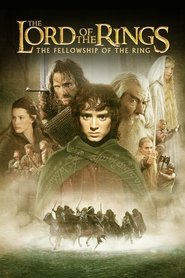
The Lord of the Rings The Fellowship of the Ring (2001)
Peter Jackson, Fran Walsh, Philippa Boyens
-
Pete, you were talking about some of the women vocalists that were around and things like that. I said all the dwarves were male and that's when your eyes lit up and said, a male choir. You were thinking of the great Welsh mining choirs. It took off from there and then of course Howard managed to find an incredible Polynesian choir here in New Zealand. We have a sequence coming up which was cut
2:05:04 · jump to transcript →
-
I think it usually appears in quite a different type of video. Alex Funke did a wonderful job of lighting these miniatures that we're looking at. The only computer part are the people running and the column that crashes down is the only computer part. Everything else is a miniature. This is one of my favourite shots. I was so excited to see this. This is a great shot. The music is wonderful here too. The Balrog was always difficult. He was a real problem.
2:25:04 · jump to transcript →
-
large model trees, huge big model trees that were shot and the people were composited and they were computer people that were walking up the stairs there. This was, Paul is saying, did a lot of conceptual artwork for this. Yes, Paul did a couple of wonderful paintings of Lothlorien that we really took the look from his paintings, the way that the lighting.
2:33:25 · jump to transcript →
-
-
-
even as an adult, always returned to as part of your childhood or something, the feeling of going back there. Hence it's kind of lit to be yellow and the feeling of warmth and, you know, the way you remember your childhood really, I suppose. So the music here is Abide With Me, which is a...
22:58 · jump to transcript →
-
And he agreed if we signed some posters for him. He's a big fan of train spotting. He would let us use the store too. And we filmed through the night in it. And we did this very interesting thing, which is that we didn't light it. It's actually self-lit by overhead neons. And what we decided to do is that the only way that we could do it in the time to get a scene shot was to actually remove, avoid the neon lights as much as possible. And then in shots like that,
47:27 · jump to transcript →
-
the clear, the digital house, we'd paint them out, the neon lights. So they're actually self-lit by the lights in the supermarket store. So we didn't have to do any lighting, but they just took it all out in post and we tried to avoid it as much as possible. That was a little Homer Simpson homage there. And in a way, the whole scene is a respectful nod towards George Romero's Dawn of the Dead set in a shopping mall, which is...
47:53 · jump to transcript →
-
-
director · 1h 37m 3 mentions
John Cameron Mitchell, Justin Vivian Bond, Sook-Yin Lee, Paul Dawson + 1
-
The Chinese characters for John, what is it again? Help me. We were very careful about all of our characters' decor. All the actors had input. I really like the lighting in this scene for some reason. I just love those. This is our first day of shooting. This is our very first day of shooting. We're so excited. First scene. It was a rough day. I loved arriving on set with you guys in the van.
10:25 · jump to transcript →
-
It was a combination of public domain. And Jay's domain. And Jay's domain. And also, as you'll see in the deleted scenes, originally the stalker is on the phone while watching the national anthem. We have some patriotic themes in this film. Sook-Yin Lee demanded we shoot this before we had finished lighting. Because why? Well, because I wanted to, you know, I wanted to be for real.
37:48 · jump to transcript →
-
You got it. Yeah. Paul was outside the window. Yeah, I was really in the other window. Really? He was right there. That lighting is so gorgeous. I know. I was trying to figure it out so they could actually look into each other's eyes. They did for some shots, but others they had to imagine, but luckily they imagined really good. Yeah, it's like John Travolta and the Boy in the Plastic Bubble.
1:27:39 · jump to transcript →
-
-
-
I really love how that was lit. Yeah, well, that scene really is amazing looking. I mean, that's John Toll doing his thing and finding just like a little pinpoint on your eye. Makes my eyes rain. Oh, dang. Gilligan catching a kidney shot.
1:12:39 · jump to transcript →
-
Get the thread up. It doesn't look like you're really threading the needle. And you don't even give a fuck in the scene. Man, you was tripping on him. I felt like John Toll, the cinematographer, put a little extra effort and magical mustard sauce on the lighting of this. Yeah. Because he's known as the greatest outdoor cinematographer ever.
1:16:58 · jump to transcript →
-
And I think he bristles a little bit when people always put the outdoor at the front of his title. Yeah, bullshit. He's like, yeah, well, check this out. This is indoor. What do you think about this? Boom. I have to say I was blown away as much, if not more, by the interior lighting that he did on the movie, especially in that cell and all that stuff. What's sad is I think I was trying to suck in the gut as much as I could when the camera was on me. Man, I don't mind your titties. There you go. I mean, I look right at them.
1:17:23 · jump to transcript →
-
-
director · 1h 26m 3 mentions
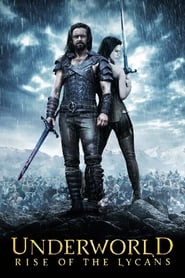
Underworld Rise of the Lycans (2009)
Patrick Tatopoulos, Len Wiseman, James McQuaide, Richard Wright + 1
-
The fights are really nice in this picture, Patrick. They're really on par with the other two, certainly. Allan Poppleton was our New Zealand stunt coordinator. He did a fantastic job. - He did a great job, yeah. So, what you're seeing here is actually the set... ... you're gonna see later in the movie, an early stage of the castle. We tried to minimalise the dressing so it felt a little different. But it's basically the same space that you'll see later. And this was the first day of shooting. - Yeah, the balcony part. Yup. The big reveal. Wanna tell you a story about the castle. The castle is such a gigantic structure. Of course, there was no way to build this. We ended up building the, what you would call, the courtyard of the castle. How many feet tall, Richard? - About 20 feet. Twenty-five, 30 feet, yeah. Which was a little challenging for the lighting... ...because we were there on top of the set. When we started, it was difficult for CGI guys to kind of extend that. Yeah, it was terrible for Sound too. Every time it rained, we'd stop shooting. The train outside, the train station? - Yeah, the train... Note to self: Do not build set next to railroad tracks next time. We have a few transformation... ...but this one actually is not a transformation. It looks like one, but everything is practical. There's nothing mechanical or anything. I love it. It's a little more American Werewolf in London approach. There is no CG help whatsoever, though. Unlike the others.... This took a while to get right, just this whole prelude... ...and Kate's voiceover, and getting people caught up. There is a lot of history, and to decide, you know, where exactly to start... ...and how much to prep it with. Hopefully, we covered everything we needed to. It looks like we moved really quickly through. I wish we had a little bit more space, a little bit more in the... Yeah. - There's so much story to....
1:59 · jump to transcript →
-
There's nobody else that could deliver a line like that. Right. You think about it, you don't see him often with blood around the mouth. It's so great to have those moments. There's one moment where Bill is sipping blood on a cup. And that was really kind of like almost a request. "Wouldn't it be great if we see actually us--?" You know, sometimes you just out this aside... ...and work on the rest of the story, but it's so important. This was all day for night. Day for night, yeah. All the night stuff in the forest. One of those things that you're really nervous is not gonna work. But it did. Actually, I do like that look here. It's actually more natural. We all grew up watching these heavily lit night outdoor scenes. So you think that's what's normal. But this is actually what your eye would actually see in the dark. This is more close to the way it actually Is.
54:43 · jump to transcript →
-
Remember, that was gonna be a much bigger scene too. That's not two stunt doubles. We did this again. That's another one we pulled. So you know that set you're looking at, the underworld of the castle? The underground part is actually the same wall... ...we used to make the canyon at the beginning for Sonja. Now, Patrick, explain this. Some people have asked me what Viktor is holding. I was tempted to cut that out. We built a doll as something he give to his daughter. The only time you see it before that is in the memory. It is there. I think it's just a wide shot. It's also there when he gives her the necklace. Yeah. - But you don't... We haven't been able... At one point, I was ready to lose that. I thought... But it is something he gives the daughter. I have a question here. What is in these barrels? I never quite figured that out. It's kind of like some very special oil... ... from mediaeval time. Like mediaeval napalm or something? What's in those barrels is me going that we have... ...No different kind of... You know, we can't do just swordplay after swordplay. It's some kind of explosion element, mediaeval version. Yeah, we need to have that. I think this scene works great. It's very successful. I love him screaming against the door, there's so much energy there. I tried to have him have a little dialogue moment here. Just didn't work. - No, it didn't work. It just felt totally awkward, so. There's something about them looking at each other... ... that they have a poignant... Now the rain. Pain in the ass, but I think it worked well. It worked very well. Everything that's a pain in the ass looks better. And conversely, everything that looks good is a pain in the ass. All the elements of snow and wind and fire and all that. Remember on the first Underworld... ... you were adamant about wanting... ...a lot of these scenes to happen in the rain. "No, dude, we can't do it. It's gonna be such a--" And you stuck to your guns. Thank God you did. It looked great. Do you remember how much I had to fight for that rain? Yes, I do. When you're on the same set for the entire movie... ... you'd better find ways to reinvent it. And the rain was one way for us to give it a different tone. I just think that something horribly... Just tragic happened... ...1n Richard's life with rain. Did you have the same problem on number one? But it does. It makes everything a kind of a nightmare to... The equipment... - But the result is... Hey, two words: Romania, winter. Imagine if we had had to shoot this in Romania in the winter. But the other thing that you get with the rain is you're able to do.... Have your stunt doubles replacing these primary actors... ... 1M a way so that you really don't even know the difference. I can't picture this in a dry... I mean, this gives such a different energy. Yes. And the lighting on top of that. Just flashes and... All right, next movie I won't argue about the rain, I promise. It's about time, Richard.
1:00:19 · jump to transcript →
-



Related topics
Other topics that frequently come up in the same commentaries.