Topics / Creative decisions
Happy accidents
132 commentaries in the archive discuss this, with 443 total mentions and 53 sampled passages on this page.
Filter commentaries
Filter this topic by the film's decade or the type of commentary.
By decade
Across the archive
ranked by mentions · click any passage for the moment in the transcript
-
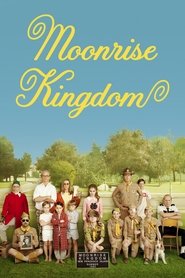
multi · 1h 33m 3 mentions
Wes Anderson, Peter Becker, Roman Coppola, Jake Ryan + 3
-
Wes Anderson
Well, in the case of this one, sometimes the beginning isn't the thing you're coming up with first, in my experience. But with this movie, it was. With this, I had an idea that I wanted to do a movie about young people, an island like this, and this opening scene, which is the children in their house during a rainstorm where they're stuck inside, and listening to this record that I happened to know that was a record I liked, Benjamin Britten.
3:02 · jump to transcript →
-
Peter Becker
That actually opens up the question that I was gonna ask. You know, Wes, you're obviously known for having a very controlled aesthetic approach that nothing is on-screen by accident. And you can feel it. When you're in a Wes Anderson film, you can feel it. You can stop your frame. And there's some filmmakers you can stop on a frame, you go, "I know who made that." And Edward, as an actor, what is it like to come into that space? Is there freedom in that? I would call it freedom in bondage. No, I think it's great. I actually really like it. Look, there's experiences you have that are very much about discovery. Sometimes people paint very real armatures of scenes, and as actors you try to discover something, and that's a very difficult kind of work in its own right and it's something different. I find whether it's Wes or someone like Fincher, or people who have very specific visions, I find it very comforting because you move into a different gear where you're fulfilling, like, an incarnation of a very specific character idea. There's a lot less uncertainty and you're able to-- Just sort of use the instrument and trust that what you're doing is bringing the instrument of your ability to manifest a character into the service of something very specific. And that specificity is great. It's like having a lot of your work done for you. And I find that very relaxing, ironically.
14:51 · jump to transcript →
-
Wes Anderson
We had a great time working with him. And I did have this idea. I would love to have someone who was-- This is a lonely, solitary policeman. And maybe one inspiration is Roy Scheider's character in Jaws on this island. But I had this thought, "I would love to have somebody who you really believe 100% is the police." And there's nobody who you believe more is the police than Bruce Willis. I particularly loved him in Pulp Fiction, and obviously so many other things. So we were lucky enough to lure him into this one.
39:10 · jump to transcript →
-
-
director · 1h 34m 3 mentions
Scott Stewart, Jason Blum, Brian Kavanaugh-Jones, Peter Gvozdas
-
And I think also we haven't talked about it yet, but Carrie is a big part of what makes that work, too. We were really lucky to get her in the movie. She was the first one in, right? Yep. This is a good place to talk about all things Carrie because she's just spectacular. And she really sells this, which is really hard to do, and a lot of actors aren't able to do it. And I think Carrie and Josh and Carrie...
14:36 · jump to transcript →
-
And then, look, we've got really lucky in getting fantastic actors who are also meaningful, but I think that it's really wonderful to be able to give you guys that level of creative autonomy built around just the idea, the concept, and you guys. Well, it's interesting because it's sort of like it's... There's certainly been plenty of examples of scary movies with very famous people, but there's been probably no other genre has more examples of...
17:55 · jump to transcript →
-
You know, you're still the last one to keep holding the candle. And so he sort of committed his life to this cause. And he's not selling it. I think that's, I mean, that has to do with obviously how you directed it. But the minute he tries to sell, this whole scene falls apart. And he's not, he's just not selling. He's just saying, this is my experience. You can either take it or leave it. But this is what happened to me. And that tone makes what he's saying, even though it's outlandish, it makes it land.
1:09:04 · jump to transcript →
-
-
-
Joss Whedon
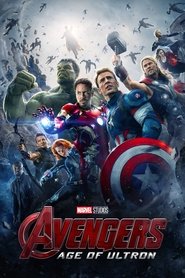
It was a big decision whether to go off on her smile or this grab. Ultimately, the grab very specifically said, "We have a problem, and the problem is Tony." And, um, one of the things that also sort of hit me late in the game is that you can really look at this film and just straight-up Say, "Tony Stark is the villain." It's not just the beard. He's a good man who is corrupted by his own anxiety, by this vision of a disaster, and makes what is obviously a really bad decision. And I spent so much time in the writing process and during filming trying to protect Tony Stark. Trying to make sure that he was still a heroic figure. And at one point I watched the movie, and I went, "You can just go ahead and lean into this, "that he's now evolved into a villain." Obviously, he's not just that. He's redeemed, and he is a hero in so many ways. But it was very freeing to be able... And I think it's not something you get to do a lot in something like this, narratively. To just go ahead and Say, "Your guy just might not be okay." And again, that's something that, thematically, the entire movie is about. It's been commented on, and it's not by accident that the word "monster" is used by most of the team about either themselves or each other. Feels good, yeah? I have a "Jarvis is my co-pilot" sticker on my laptop. Because how could you not? That's one of those things that I thought of and asked for while we were shooting. "Can we just throw that in?" And the prop guys just disappeared and came back with the perfect one. And, of course, it comes right after he says, "Jarvis, take the wheel," so clearly we're already leaning into the Jesus thing. And that's, um, again, not by accident. We're not saying anything specific about religion, but we are playing on Christian iconography a great deal, partially because both Tony Stark and Ultron have god complexes, and partially because the Vision himself does represent an ideal. And when he picks up the hammer, it's... I don't want to say a miracle, but it's playing on that idea of... When we think of that kind of religious figure, we are thinking of the best idea of ourselves. Of what we wish we could be. And this play is so much about the best and worst. This little bit's a bit of embellishment that Robert and I came up with on the day. The two Enhanced? It's always nice to be able to have people who know their character so well that they can give you what you've asked for, but then make it feel lived in. I love this shot. It is very much of the idiom of the first movie, in the sense of, "Look at this big, expensive space. Isn't it grand?"
12:11 · jump to transcript →
-
Joss Whedon
Stop trying to scare us. I liked the idea, the texture of the idea that Thor has something that could actually get Captain America drunk, because, as he explained in the first movie... I don't know who that actor was, by the way. He's really good, he's very familiar, uh, the veteran. But we were lucky to get him. I just... The name isn't coming to me. Um... No, it was so much fun to be able to do that. And he used "Excelsior" here as "I'm so wasted," um, since I grew up with that phrase.
25:20 · jump to transcript →
-
Joss Whedon
Where he says the thing we're all thinking. And it plays, and It's also his little power talk, his little pep. It's emotional. His whole relationship with these characters... I knew what I wanted to do with Pietro, and I knew that he was gonna have a relationship with them that was incredibly contentious. But part of it came simply from the fact that all of their action together in Italy was because it was the first thing we were shooting, and they were the only actors available. And everybody else was off having babies or doing publicity or making another Marvel movie, or one of the 19 movies they had all made during this. I mean... So they said, "Well, we're gonna start in Italy, "and you've got these three characters." And so what was a sort of matter of convenience became a real arc. I said, "Well, okay, then these guys are really gonna have a relationship "that progresses and means something." And for the guy who likes Pietro the least, who discounts him completely, and who is sort of a father figure to these kids, for Pietro to prove himself the truest hero of the bunch by saving him is, I think, much more interesting and emotional than if it just happened to happen.
1:46:20 · jump to transcript →
-
-
-
he doesn't have, he doesn't need to talk with her. He's past all that, like he explained himself or like, I think part of him wants to feel human and less evil about what he's doing, that deep inside he knows that is a bad thing, but he's trying to be, he's just, of course, turning a blind eye on what he's doing. And that's why I think he explained himself a little bit, like, hey, I'm not a monster. If you could see the ways, the things that happened to me, like you'll understand, right?
1:05:40 · jump to transcript →
-
We came up with turkey baster and the sperm. It's actually the way you do it. It's actually medically accurate. If a single mom was to have kids at home and we go to the sperm bank... It's still pretty twisted. It is, but at home insemination is the way you do it. You take a turkey baster and that's the way you do it. It was a twisted idea, very twisted. But it happened to be that...
1:09:51 · jump to transcript →
-
And this is definitely one of those moments that we got so lucky on the shooting. Like again, very hot day, the wrangler showed up and he had just one ladybug, just literally one ladybug. And I'm completely determined to not do a CG ladybug because I didn't do it at the beginning, I wasn't gonna do it now. And he puts the ladybug on her hand and does the perfect thing that spread the wings.
1:18:42 · jump to transcript →
-
-
-
Nia DaCosta
So I love the scene for Jimmima as well, 'cause she really gets to shine. And I think kind of all these scenes with these characters, you get, like, this... you can really project what their life was and how they ended up in this space. And I think this scene, when it ends, you kind of hear Jimmima and the way she treats him at the end. Like, you're kind of like, "I think I know what happened to you."
44:34 · jump to transcript →
-
Nia DaCosta
To be fair, I don't Know what I would do either if I were Cathy. Like, how am I gonna fight them all? Yeah, so this whole thing where she's, like, grinding on him basically, and then she's like, "You thought, you know, you think... "thought I was weaker?" Clearly, something happened to her.
46:07 · jump to transcript →
-
Nia DaCosta
So in the background, you can hear, like, the rope loosening the hook. And I love this shot. It's a bit longer than in reality, anyone would need to realize what's happened to her. But I just love this progression so much. My cat... Like the blood seeping into her eyes, blood coming out of her nose. Sometimes in film, it's nice to just have these moments outside of time. Cloud space! Cloud... Cloud...
46:46 · jump to transcript →
-
-
-
Alan K. Rode
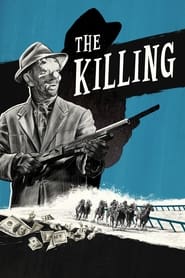
Of course, Hayden doesn't buy Marie's transparent lying. Sterling Hayden was a fascinating man, a handsome fisherman, a man of the sea, who happened to be good-looking enough as a young man to stumble into a Hollywood career that alternately shamed and enriched him. I have a 40-year-old paperback edition of The Killer Inside Me that includes a back-cover blurb from Stanley Kubrick that reads, quote,
25:45 · jump to transcript →
-
Alan K. Rode
And there's one more thing. Suppose by accident you do get picked up. What have you done? You shot a horse. It isn't first-degree murder. In fact, it isn't even murder. In fact, I don't know what it is. But the chances are the best they could get you on would be inciting a riot or shooting horses out of season. Killing horses out of season.
34:20 · jump to transcript →
-
-
-
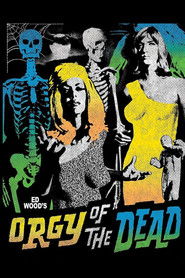
you know, people in the adult film business, softcore, hardcore, anything, they did a fabulous, lengthy interview about whatever happened to Pat Barrington. And it was pretty good and pretty sad. And then a couple of weeks later, it was gone from the site. I didn't read an explanation. I mean, maybe they did, but I don't know whether... So I don't want to quote from anything, really, because I don't know what's really true and what isn't, okay? But apparently...
26:19 · jump to transcript →
-
Now, Apostolof says this is a real skeleton. That's what he told me. Yeah. He's got some nice camera work on this. Well, I think... I think Caramico knew his stuff. You know, what's interesting about Caramico, he did all these number of low-budget films. Guess what happened to Count Dracula? Stuff on that level. And then, years later, he's shooting Dallas. He became a big TV DP. You know? He's passed away now, but...
1:08:27 · jump to transcript →
-
-
-
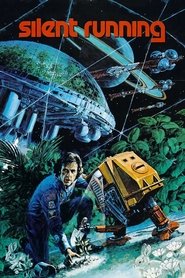
Maybe experts are not the best viewers for any kind of thing. But one thing in this film that has kind of come into its own in the 21st century, it's a film about the depletion of resources. Yes. Now we have what's happened to the rainforests. This is about the preservation of forests. Yeah, but it's interesting. It's about the preservation of forests, but it's not considered what a world without rainforests would actually be. Here, it's almost as if...
16:02 · jump to transcript →
-
over a project. And you feel that he probably would not have been a great actor's director. It's the nuts and bolts that appeal to him. He is very lucky to have Bruce Dern in this film. My memory is that in Brainstorm, Louise Fletcher is brilliant.
39:08 · jump to transcript →
-
-
-
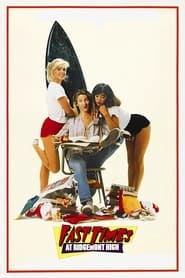
That having been said, welcome the entrance of Mr. Jeff Spicoli. Yay. Hey, you guys had shirts on when you came in here. Something happened to them. And just for the record, I'd like to point out that he's wearing half a wig. That was like his taps hair on the top and a wig on the bottom and fake braces and red
5:27 · jump to transcript →
-
And the shot of the light, so it's what she sees and not the idealized version. It's so cool. Well, the graffiti, that was in the book. It was like that was the thing that she was reading, Surf Nazis, as she was losing her virginity. So we were on the same wavelength. Yeah, but you wrote it. Well, I got lucky. Well, we both agreed. This is good. Well, it's powerful. That sort of starts to really send a message, I think.
19:50 · jump to transcript →
-
-
technical · 1h 35m 2 mentions
Steven Lisberger, Donald Kushner, Harrison Ellenshaw, Richard Taylor
-
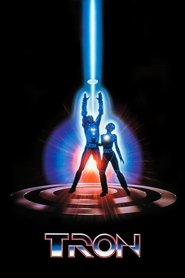
One little thing I noticed... I mean, I didn't catch it when I was directing Jeff with this, is that when he plays Clu, he plays it with this strange computer accent, this mechanical accent. And now, when he's being tortured, he loses that, and I wonder whether he noticed it. We got so caught up in being in the scene that nobody realized that at the time. Clu's torture sequence is a great example of how light is used to create emotion. Lots of different filters were used on him as a part of that torture sequence. There are, basically, ripple glass effects, there's silk screen steel mesh, exposure changes, hand-done animation. When he's energized by the MCP, there are other filters that were used on the camera to give him that multiple-effect look. In this particular case, it was silk screen mesh, steel silk screen mesh that was on the taking camera and was spun around on the lens as a part of that effect. Dillinger's arrival to ENCOM in his personalized chopper was an interesting sequence. I took drawings of the chopper, schematic drawings, and created the design motif that you see on the chopper. And then over a two-day period, I applied these designs to the chopper myself with these varying sized, 3M reflective tapes. So, when we are shooting this sequence, what we are basically doing is flying air-to-air in another chopper parallel to this chopper. And we have a very low-intensity light source right near the lens of the camera, which is shooting across and reflecting directly back at the camera off of this 3M material. And it was a red light source, so it gives you the appearance that the chopper is either backlit or has some kind of neon lighting system on it. Again, there was the attempt to, for the outside, the window, to have the grid type of atmosphere and, kind of, cross-pollinize the electronic world with reality. Oh, I remember this stuff. Nice desktop computer built right into the glass. Touch screen. - Touch screen. I still want this desk. This was done with rear projection under the desk. The whole set had to be built up on the stage so that we could put a giant mirror under the set and project it in the old-fashioned way. There were technicians who were basically controlling light switches to different light boxes underneath this desk to light up different areas. The type itself, when it writes itself on, is actually matted into the scene from a computer graphics created type. And again, the view behind Dillinger is indistinguishable from the electronic world. And whose voice is the MCP? It's David Warner's voice. - Yeah. Yeah. It was just electronicized a little bit. End of line. Someone pointed out that they finally figured out that the reason that Bruce Boxleitner's character was wearing glasses is because he was supposed to be a little bit of a nerd. I think that was the intent. Just the readouts on the computers in the real world had to be pre-programmed ahead of time so that they wouldn't have rolling bars on them when we photographed them. Here you see another attempt to link the electronic world with the real world. The cubicles that the office workers are in are not dissimilar to the cubicles that the game players are in. And the intent was to have them go on forever or almost for infinity. Now, what thematically is happening is that at the time, computer people... Programmers were very concerned that the IBMs were going to take over the world of computers and exclude people. That they were going to be... That the system was going to be tyrannical. And what we're trying to show here is that the... Corporately, they've put a stranglehold on the system, and that the programmers are not being allowed the access that they want. And access for them is vital for their work. This character, Alan/Tron, is still inside the world of ENCOM and is more in balance. He seems... He's one of the people that's going to deal with the system from the inside. He's got a very methodical program in Tron, whereas Flynn is no... He's a renegade now. He just doesn't fit in and he's at war with the Dillinger character. The name Tron is derived from electron. Some programmers think it refers to "trace on, trace off." But that... We learned about that afterwards. There's a program in Japan called TRON, which is an educational school program, which has been running since 1985. And ENCOM was the only name we could find that wasn't already registered as a corporate name. Whereas Alan and Flynn are aligned with their counterpart programs, Dillinger has aligned himself with the tyrannical Master Control Program. So, the MCP is the ultimate controller, the big mainframe, the antithesis of the personal computer. The sequences that take place at the Lawrence Livermore Laboratory were interesting in their concept and in production. It was a very complex place to work. It was a very tight area, and we worked on this film with 65-millimeter equipment. And Bruce Logan, the DP, had his hands full. Sixty-five-millimeter film technology is quite cumbersome compared to Panaflexes and Panavision cameras. The size of the camera body itself, the limitations of the lenses, blimping the cameras... They're huge, so to get them in these cramped quarters was difficult. We were the only ones... Only film company ever allowed access to shoot in there. And nobody's been back since. A lot of this was lit, practically, by the fluorescents that are in there. It almost looks like a set. Yeah. We were very lucky that Lawrence Livermore let us use this facility. Because the cost of building a set this elaborate would have been astronomical. The Lawrence Livermore Lab is where they had the largest laser in the world. I don't know if it still does today. And they did a lot of research for NASA. Lawrence Livermore Lab was very cooperative with us, and allowed us to, really, kind of, run free through this particular area of the laboratory, which was their linear accelerator. So, we went into the one particular area, which we found most interesting for the area where Flynn gets de-rezzed, and where you first see the matter transportation effect, where the orange is digitized and deteriorated and then reassembled. In this particular case, we are seeing an orange, which was created by CGI by Triple-l. Animation that was done by the effects animation department, which was headed up by Lee Dyer and the effects animators, John Van Vliet, and John Norton, Barry Cook and Michael Wolf, Chris Casady. The name of that laser, by the way, Is Shiva, the Hindu goddess of creation and destruction. The 16 billion-year life cycle, she's got the drum of creation in one hand and the fire of destruction in the other. ...femain suspended in the laser beam. Then, when the computer plays out the model, the molecules fall back into place and voila! So simple. Why didn't I think of that? - That's right. Use that on Star Trek all the time. It's funny how they just kind of, just blow it off. Another afternoon's work down in the lab. Exactly. - Teletransportation, okay. Just digitized matter, no problem. Tomorrow we'll do watermelons. In a week, a human being. No, that comes sooner than that. A-ha! Oh, you're giving it away now.
7:08 · jump to transcript →
-
So, the maligned Flynn, the persecuted Flynn, has completed his journey. Right. He has returned with the information. Look at that printer. - Yeah. That looks pretty funky. - I know. Lucky it's not a Teletype. Yeah, I was just going to say that's what it reminded me of.
1:29:02 · jump to transcript →
-
-
-
You guys were schoolmates? We're not university material. Harry, you were gonna play a southern guy that came into the band... ...but then it just became more fun to do accents from another country. It's just more fun. I was living at the Chateau Marmont. This was in the 70s, in fact. And a band came into the hotel lobby. I happened to be sitting there.
17:01 · jump to transcript →
-
flashy lead guitar player who could also sing a million times better than David. And so what happens is we shot some scenes. We found this kid who was in fact this rock and roll guy. What was his name? I don't remember his name. Lucky? Peter, I think. Lucky sounds good. Not because that was the name, it just sounds good. But he really had, I mean, all the women on the crew. Yeah, very handsome, blonde, dazzling guitar player, could sing. And we shot scenes where
1:04:38 · jump to transcript →
-
-
-
William Friedkin
extras, our own extras. But I wound up shooting a lot of people who just happened to be there. And one of the other restrictions that they put on us was under no circumstances could Petersen get up on those rails and run along the rails, largely for his own safety. They felt that their insurance wouldn't cover it if he got hurt. But Bill assured me that he could run those rails with immunity. And Bill had been an ex-college football player, very athletic.
26:04 · jump to transcript →
-
William Friedkin
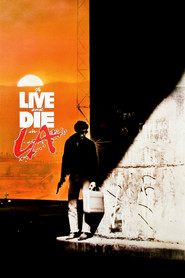
What happened to your daughter? I don't know. She was in a park in those little monkey bars. You do see in the scene where Turturro leads Chance astray, ostensibly to a hospital, which was the Queen of Angels Hospital in Los Angeles, to visit his daughter, who's supposedly sick in the hospital. It's all a ruse. And you see Chance let his guard down there.
1:03:49 · jump to transcript →
-
-
-
Gary Goddard
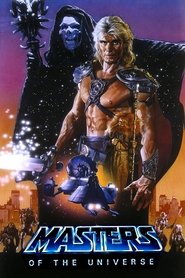
I was able to pull a shot out where he happened to snap his head in a direction, and you'll see how we were able to do that after the fact and make it appear as though he was in the area, and therefore no one any longer questioned the fact that he was in the area close enough to help save her. So just put that in the back of your mind. That'll come up later. Now they're investigating the key, having no idea that they are, of course, sending signals back to the attorney every time they turn it on.
27:49 · jump to transcript →
-
Gary Goddard
set up the fact that there's a conflict between good and evil. You'll see the soldiers swarming over the rooftops here in a minute. Those are the rooftops that were gone in the earthquake, so I always thought back, I thought, you know, we were really lucky the earthquake didn't hit while we were shooting. Because we were on every one of those roofs. And the roofs that the actors weren't on,
1:12:51 · jump to transcript →
-
-
cast · 1h 36m 2 mentions
The Garbage Pail Kids Movie (1987)
Mackenzie Astin, Katie Barberi, William Morris
-
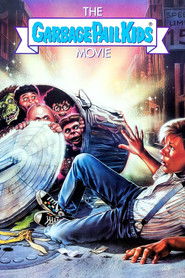
Lucky or not, we were the ones that were chosen. Once again, how many golden raspberries was the film nominated for? Three. And how many golden raspberries did the film win? We didn't win any, but that's OK. We can enter again and see if we have a shot. They got to make Leonard Part 6.
7:04 · jump to transcript →
-
with everything that had happened to them throughout the film. But in the editing, they decided to put these little pranks in the middle because they felt like the kids might get bored. And to this day, kids, I mean, child viewing audience. To this day, it concerns me when studios come in and the editing department or the marketing department says, no, the original story isn't going to fly. Well, we don't know that. You know, it's narrative. And when we sign on to a project...
30:25 · jump to transcript →
-
-
-
Barry Levinson
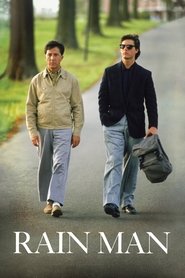
The who's on first routine actually happened by accident. Dustin originally has written in the script there was...
22:19 · jump to transcript →
-
Barry Levinson
This sequence, we got lucky in that when we went back to Cincinnati to shoot the scene when they were walking around the Buick, the light was so...
27:11 · jump to transcript →
-
-
-
I know from my own experience that you do sometimes dream of ill-formed figures, faces that are not... You dream of puppets. I felt they were dreams. But the intensity of Whitley's experience is what impressed me. I don't have any doubt that something happened to him. I don't know what it is. Neither do I. And when you talk to Whitley and when he describes these kinds of experiences...
1:14:32 · jump to transcript →
-
Well, Whitley, I think, is lucky in many respects, but certainly in as much as he's a writer, he can write this stuff, he can get rid of these demons, if that's what they are. But then, of course, there are a whole lot of other people who can't and who are living with these psychological issues. And I just have to wonder where all that's going to go if...
1:16:20 · jump to transcript →
-
-
-
did not prepare him for when it happened to him. He was still very taken aback by it. And I think didn't have a ton of time to get used to it because it was just one movie after the other. So he rarely had any downtime. And when he did, he couldn't go to a regular bar anymore without people coming up to him all the time. Also regarding Platoon, Emilio had been offered that
56:33 · jump to transcript →
-
Happened to him after that. He's kind of a hard guy to find any biographical information on. Well, it's interesting since you mentioned Quest for Fire. The bad guy here that they can't leave behind, that they have to kill in the end, is played by Nicholas Caddy. Katie Caddy. And he is the son of a Middle Eastern career diplomat, but he moved to the U.S. as a kid. And then he went on to study acting at Juilliard and mime in Paris.
1:39:29 · jump to transcript →
-
-
-
Release after that, I think it was what, the True Trans EP has a still of the dance scene on the cover. Yeah, I was an Against Me fan before even Lorde came out. And it's kind of weird to have one of your idols be on the same transition timeline as you, which is what happened to me. But yeah, that was major. And I know there was...
1:37:22 · jump to transcript →
-
is not without its baggage but again as i said when kind of looking closely ahead sort of the sort of textual elements of this character and what happened to them like i'm sympathetic to every degree and i would say even to some extent that demi is like demi does kind of see a broken bird here
1:38:22 · jump to transcript →
-
-
-
He's so, and I didn't realise he was in this. I was like, I recognise that guy. But obviously, I picture him much older and kind of- He's very thin. Sturdier, shall we say. Yeah, yeah, yeah. But you've got Clive Mantle in this, you know, who, famous of Casualty, but was, you know, to me, he was in Superman IV, the first nuclear man. But I spoke to Clive over 20 years ago, and I said to him, what happened to you in Alien 3? You don't see him get killed.
26:45 · jump to transcript →
-
You only find out what really kind of happened to her through a little tiny flashback in the film, but also just as a prologue trailer they put out that was directed by Ridley Scott's son, where they're on board the ship and they're trying to fix things. She's fixing David. And what else was there? Some other little tidbits before they arrive on the engineer's planet. So that was just released as a trailer. It wasn't part of the movie.
1:14:46 · jump to transcript →
-
-
-
Tony Scott
When we shot the sequence of the three of them driving around in the car, I gave Patricia a disposable camera, and she kept shooting shots of the top of Christian's bald spot on his head, which pissed him off. Shots of Dick Richie's big nose. And I don't know what actually happened to those stills that she took, but I remember I kept them, and I wanted to do some sort of animated sequence.
59:54 · jump to transcript →
-
Tony Scott
My God, what happened to Patricia? She looks terrible. Yeah, so obviously the makeup guy had done a good job. Floyd, you sure that's how you get to the Beverly? Yeah, man, I'm positive.
1:29:23 · jump to transcript →
-
-
-
explain it rationally, but that's why I think the film does have this psychoanalytic sort of structure, right? It is about revealing these layers and being able to strip them away so that the characters themselves are able to come to terms with what they've experienced. They know what has happened to them, but they haven't fully absorbed the levels at which that's affected them.
25:13 · jump to transcript →
-
that she can actually tell this story for the first time in terms of what's happened to a complete stranger. But that stranger has actually been designed and planted there. You've been there?
1:10:22 · jump to transcript →
-
-
-
I understand. I mean, even while we were making it, I knew I loved it because I was recreating sections of my own life. And I really thought when it was done that all of my friends were going to love it, too, for the same reasons. But I had no idea that somebody who didn't live through these times was going to find this so fascinating. But obviously, the character transcended the time. And it became, in a sense, a period movie that happened to be our period. Mm-hmm.
25:54 · jump to transcript →
-
and his mouth like open a lot like that, you know? So that was his, I can't take credit for that. Lieutenant Dan sure knew his stuff. I felt real lucky he was my lieutenant.
43:02 · jump to transcript →
-
-
-
we see that my character is losing it. All of a sudden, he gets totally freaked out after what happened to Melanie. And he thinks he's the next. And he wrote it down and came and showed it to me. And I liked it. So let's do it. Let's shoot the scene. It's a powerful scene. It's very good. So when you asked before about, do we change sometimes things with the script, you change all the time. I think it's always a constant work in progress.
1:08:21 · jump to transcript →
-
Iraqis. It was more like they, more or less by accident, now run into Iraqis because they go just over the border to Iraq, and now the Iraqis come and fight Air Force One. And it was a first try to do something like a dogfight, but I think it didn't really work that well, because we were then thinking, what can we do to connect it more to the story, and to say, well, why not just
1:43:25 · jump to transcript →
-
-
multi · 1h 54m 2 mentions
Jean-Pierre Jeunet, Hervé Schneid, Alec Gillis, Tom Woodruff Jr. + 5
-
This one I love. With the hair on the shoulders - it's great. I asked him to take his T-shirt off, but he didn't want. Another scene from Pitof. In fact, he made everything. He made one scene with me. - Exactly. Later on. This guy was great - a flash-frozen soldier. We were lucky this guy was so big. We could hide his arm behind his back when we added the artificial extensions to his limb so his hand could break off. This was breakaway pieces. Garth Winkless did a lot of design work on this. I think, Steve Kuzela as well. I remember, I asked the studio about the violence. They told me no problem with the violence, because for this kind of movie... the teenager wants violence. They want to have gore, gory shots, and this kind of stuff.
41:30 · jump to transcript →
-
Can you imagine? This is almost 20 years later. She's still playing Ripley. Yeah, and you have to understand, this is take after take, after day after day with this emotional commitment. Very, very heavy. All the permutations from where that character started in the Ridley movie to where she sort of journeys, leading... This is, like, the culmination of it all. The future and the present and the past all sort of melding together. And you're right, she really... You see sequels, you see people kind of walk through them. She's... you know... She has a notebook filled with... She keeps herself up to the moment, connected with her character, for every take, every scene, every day of shooting. It's an amazing thing, especially in a genre like this, in sci-fi. It's not like Terms of Endearment here. But just as an acting exercise to play the same character for almost 20 years, as you grow as an individual and you see that character in so many different situations and grappling with technologies and the relationship of where she finds herself with regard to her humanity. It's fascinating and she is in this film. Her commitment to it is off the chart. These were the victims of the chestbursters. We had to come up with a very simple way to do this because of the numbers of them. We sort of took our cue from those T-shirts that came out after Alien and Aliens that just had these rubber bones applied to them and we made these slip-on appliances that had the broken-out ribcage and all the guts. We made a male and a female version and I think there were a couple of guys that ended up getting women's torsos on them. They were lucky. There he is, ladies and gentlemen. The beautiful and talented Mr Leland Orser. My friend and, if you knew him, yours. This is Leland Orser. I love this actor. I saw him in a very small character in Se7en of David Fincher. For this scene I used maybe four cameras because I had just one day to shoot this. I remember. I hate that because I prefer to shoot with a short lens very close to the character but I had no choice for this scene. I had quite a lot of material for this one. This is pretty rare I use many cameras, because I prefer to make a storyboard to be very precise, and usually for all my films I put maybe at the end one minute and a half in the garbage, especially with Amélie, the last. But I remember at the editing room you didn't have a lot of material. I prefer to shoot exactly what I need and it's better for everybody. You save money. You save time. You save energy. I don't understand a director - they make some film with three hours and you have to cut one hour at the end. It's so silly. I prefer to think before. That's the reason I like to make a storyboard, because it's a pretext to find ideas when you have the time to think. Because when you are on the set it's too late. You have to run. The master is the clock. It's too late to find ideas.
1:01:40 · jump to transcript →
-



Related topics
Other topics that frequently come up in the same commentaries.