Topics / Production
Costume & wardrobe
111 commentaries in the archive discuss this, with 315 total mentions and 45 sampled passages on this page.
Filter commentaries
Filter this topic by the film's decade or the type of commentary.
Showing 23 of 111 commentaries
Clear filtersBy decade
Across the archive
ranked by mentions · click any passage for the moment in the transcript
-
-
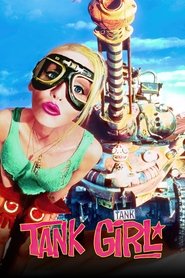
And seeing Stan Winston's credit and all the things that he did for us, which when we get to some shots of the Rippers, we can talk about. But how much I learned from that man. Arianne Phillips, one of the greatest costume designers. And Catherine Hardwicke, a production designer who has gone on and become quite the amazing director. She twilighted the world. Yes, exactly.
1:56 · jump to transcript →
-
And same thing with, because Jamie was very involved in costumes as well. So the collaboration with Ariane Phillips was also very, very strong. Ariane's been nominated several times, I believe. Besides creating Madonna's 10 billion looks. Yes. I think the biggest battle for me was hair.
5:46 · jump to transcript →
-
But then you build them and you're like, wow, they work and that's incredible. I know that Malcolm kept all his wardrobe. He did? He kept all his costumes? Yeah, he loved what Ariane designed for him. And he just kept it all, which is pretty complimentary.
10:44 · jump to transcript →
-
-
multi · 2h 12m 7 mentions
Andrew Sarris, James Ellroy, Brian Helgeland, Michael Nathanson + 10
-
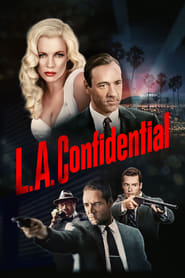
Sometimes things happen when you actually put a costume on. Something changes. And I suspect that I began to discover, you know, as you do, when suddenly you have a prop or you have another actor or you have a set where it's no longer a concept. It's now flesh and blood and you've got to deal with the environment. So all kinds of things just occur. And very often my favorite...
48:02 · jump to transcript →
-
that can be very helpful, very informative. Curtis had this traveling bag of 10 to a dozen period photographs that he had found, some of which, as I recall, were places and some of which were people in costumes and just general sort of dog and pony show photographs that he showed everyone when he was selling the movie.
1:04:40 · jump to transcript →
-
brought the film to life. I think everybody got their element right. I really do in the film. The cinematography, the acting, the costumes, the design. I think that's what's great about the film as well is that everyone got their elements right. To create that tone that is not only appropriate for the film but is such a cliche to say but it's almost a character within itself to establish that world is so important and it's amazing. I mean aside from the
1:19:49 · jump to transcript →
-
-
-
For some reason, this blue dress you're going to see is one of my favorites. She has blue shoes. Holly Davis, who was terrific, was our wardrobe girl. I just think that was a nice outfit for her, and we should have kept her in that dress. She has beautiful legs. Yeah, cute. Notice I put mushrooms there in front, our production design. That's a colorful little mushroom, plastic mushroom. Again, trying to kind of get a...
11:56 · jump to transcript →
-
You see the paintbrushes on Ozzy's shirt, which was made, I think, again, our wardrobe, Holly Davis. And they were specially made. Hi, I'm Alex. Nice to meet you. This is my friend Ozzy. How you doing, Ozzy? Hi. So, you boys need any help out here? I remember Mark would, every now and then, when we were on the sound stages, much to the horror of production, when he was bored, he would just yell out, cut!
17:20 · jump to transcript →
-
You put the cast in all over the place. The wardrobe ladies were serving and to the table to the left I'm wearing the baseball cap and Warwick is there with his wife Samantha.
38:44 · jump to transcript →
-
-
-
Michael Mann
Right here, there's a father shamelessly putting his daughter, who's in the light blue dress in the background, in the film. She was 12 at the time we made the film and went to work with me every day and worked in wardrobe, getting extras ready with makeup and put in the same 16- and 17-hour days that everybody else did. And then she and many other people became extras.
52:14 · jump to transcript →
-
Michael Mann
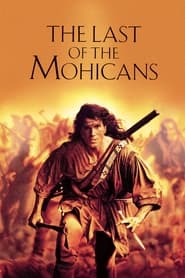
was determined by what kind of bow was in vogue. And the kinds of bows that aristocrats did changed every couple of years. And they would redesign the coats and put weights in the hems so that the sides of the coat would furl out in certain ways as to amplify the bow. This is quite specific. There's also a brilliant piece of costume design here.
1:04:12 · jump to transcript →
-
Michael Mann
And if you look at the braid on General Montcalm's coat, they have woven in shadow as if the braid, in fact, three-dimensional and cast a shadow on it. This is also highly accurate and elaborate, but it's not the kind of thing you could just rent from a costume house. You have to do it yourself, which we did. And it was, again, one of those fortuitous circumstances, such as the fort, where either the real uniforms didn't exist
1:04:41 · jump to transcript →
-
-
-
as the costume designer for Paul Schrader's American Gigolo. He created all of Richard Gere's suits for that movie, which was hugely influential on both other films and American culture in general in the 1980s. Another one of Armani's most important films was Brian De Palma's The Untouchables, which has extraordinary period costumes. But he designed for a ton of movies.
24:46 · jump to transcript →
-
For a specific actor, as he did here for Joanne Wally Kilmer. You know, for Inglourious Bastards, for example, he designed Brad Pitt's evening wear. And then he also contributed wardrobe to Streets of Fire, which Rick Rosovich was in. And Bill Paxton in like a small role. That came up too. Oh, okay. And yeah, and he did Christian Bale's non-Batman clothes in The Dark Knight, Schrader's Comfort of Strangers, you know, among other stuff.
25:12 · jump to transcript →
-
comtois i hope i'm pronouncing that right i don't know if it's comtois or comtois c-o-m-t-o-i-s and veronica hadfield um who they had actually worked together 10 years earlier on roger spottiswood's directorial debut the jamie lee curtis horror movie terror train um on that film guy was the production designer and veronica was the costume designer um she was actually credited on that film as penny hadfield though penny rather than veronica you know but anyway um
1:38:07 · jump to transcript →
-
-
multi · 2h 24m 3 mentions
Alex Thomson, Terry Rawlings, Alec Gillis, Tom Woodruff Jr. + 3
-
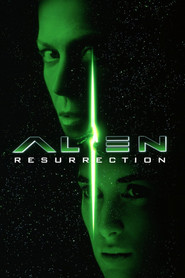
Yeah, there's that... There's all those cuts now. So now we're back into footage that was shot with the creature in LA. And this was actually... We built what we called a teenage alien and retrofitted it to use in this scene. Originally we built what we call a "Bambi-burster." That's the teenage alien which spits acid at one of the guys in the vent shaft and served us double duty here. And we built a little rod-puppeted version. This is a CGI version, which we had the benefit of the CGI in the 21st century here, which we didn't really. We built a rod-puppeted version, and we also tried a little dog in a costume. We tried a whippet in a costume. And he did pretty good at the audition. Then once you got him in front of the camera with all the rubber on, he kind of froze up a little bit. It was pretty funny. He was a nervous little doggy. And once we got him in situ, with all those frightening chickens around him in their cages, he kind of seized up and couldn't perform. But we built a Bambi-burster rod puppet, which was a one-to-one scale rod puppet, which had some mechanical stuff in it. I think we may have shot some elements with it. But it was never comped, it was never completed. The decision came down that they were going to go... Use the Rottweiler instead. And then when we got back to LA, we started building Rottweilers and mechanical dog parts and stuff like that for the scene.
29:33 · jump to transcript →
-
We had the one on the ceiling? - Yeah. Tom could actually run through shots in his suit. I remember you standing there with your Adidas shoes on, other than the alien suit. They were Nikes. I still get sponsorship money from Nike. But we built at one-third scale. There it is. That's the suit still. This was a fun shot where you can see the alien up on top tearing into this guy. We were up there for a good part of the day because I had to have leg extensions on because there's one leg hanging over the wall. We got to a lunch break, and I stayed up there in costume during lunch. And this is the mechanical Bishop. This is one we built animatronically. We talked with Fincher and decided to go animatronic on this, as opposed to makeup, so that we could really crush the head in. The idea was that she jump-starts him by hooking him up to some battery devices. Parts of this are... That's our gelatin guy again, a dummy guy. That's my hand, right there. We built one in London for these connecting shots, but we didn't feel that we would have the opportunity, the resources to build it quite the way it needed to be to do lip-synch and this kind of facial emotion, so when we got back to LA we built one. Dave Nelson was the mechanical designer. David Anderson did a sculpture of the Bishop character, basically working from reference from an old head cast, but it's got about, I think, 25 servo motors in it. Fincher really wanted you to feel real pathos for him, he kept saying like Robert Kennedy when he was shot. We had all the white blood pumping out. It was a great sequence, guys. - Real hand in the foreground, um... Again, translucent skin materials. This was urethane. This was before silicones. We really started using silicones with animatronic skins on Death Becomes Her, which was about six months after this. So this was urethane. It was stiffer, but still had some translucence. There was a beautiful profile shot of this that Fincher opted not to cut into the film, but it really showed the translucence of the skin. There's a scene in here where the Bishop doll is all trashed up. I did that voice for the doll. I was quite pleased with this practical lamp, which is creating the source of light on Sigourney's face, as you Can see by the moving shadow on her forehead, created by the practical lamp. I'm pleased because normally you'd like to film a scene with the lamp itself but the source becomes so bright it flares out the lens and doesn't give you the effect required, so you have to augment it with another kind of lamp. But you really get the feeling that she's lit by this lamp. The separation between the shadow side of her head is created by just lighting a bit on the wall behind her, so that you see the shape of the head. I think it's quite an effective shot. Not on this particular picture, but when you have actors with false hairpieces, often you can see the join. You have to help it with the lighting by just shading it a bit or changing the angle of the light so that you can't see the neck join, in a wig for example. And quite often contact lenses are quite noticeable. If the light's at an acute angle, you see the edges of the contact lens, so you've got to help that as well. Those little things, you know. You have to keep your eye on the actors all the time because they're not aware of how they look, and also they get so absorbed in playing the part that they forget quite often their instructions about lighting. You can only suggest it, you can't tell them what to do because you're there to help them.
55:01 · jump to transcript →
-
Was Fincher on set when you puppeteered those shots? For some of it, not all of it. But Laine Liska and his four cronies, Bill Hedge and... Forgotten the other guys' names now. Rick Fichter was my cosupervisor on the show. Did real good work. There's another good shot comin' up here where it runs across the railroad tracks. For some of these, you had plates shot, where I would run through the scene in the alien suit, for lighting reference. And I remember this one, running through, and I had to... I was almost blind in the costume, looking out through holes in the neck. And I had to run over the tracks, and also make it through the doorway, and there was at least one take, where I slammed into the side of the door. I was bruised for weeks. My whole shoulder. Slammed into it at full speed. In the take I bounce back, take a couple steps, and then run through the door. Here he comes. This shot is over in about... It's comin' up. I was disappointed you didn't have the model alien bounce off the wall. There he goes. 20 frames. - If that, huh? The very warm light at the far end of the set, I had red filters on the lamps to try and suggest heat cos they're trying to induce the alien into that pit so they can destroy it with the molten lead. So I was trying to give the feeling of terrific heat in there.
2:00:16 · jump to transcript →
-
-
-
Tony Scott
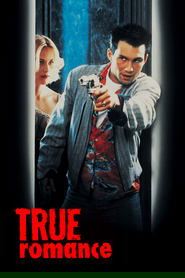
And Val looked just like Elvis. He, you know, he put on a little bit of weight. We had the hair right, the wardrobe right. But in the end, nobody can play Elvis other than Elvis. So the first morning, it was a two-day shoot in the bathroom. Actually, it was a three-day shoot in the bathroom overall. And at the end of the first morning at lunchtime, I said to Val, I said, Val, come on my trail. We should talk. And I said, listen, you're great. You know, you are Elvis, but...
23:41 · jump to transcript →
-
Tony Scott
he's in trouble but the scene i think with that music guy's personality and and it was actually cut from christian's point of view really puts you around the edge of your seat and i think it's a really that's a really it's a powerful sequence young guy's wardrobe i struggled with guy's wardrobe i thought wow guy's so wiped out and so outrageous so can i
27:58 · jump to transcript →
-
Tony Scott
with time and with age. Wardrobe is easier to do. Sets are easier to do. But cars are particularly hard to do. So I ended up, I saw a real pink Cadillac driving around. Actually, it was in Hollywood. And I got the number and got the guys to track it down. We bought it. And we found a second one of the same age and painted it the same color. So that was our backup. And we transported that Cadillac to Detroit and then brought it back to LA again.
42:11 · jump to transcript →
-
-
-
I'm glad we remembered it. I have to say a word about costume here. It was by a gentleman called Charles Node, who, what a find. I mean, he was able to put all this together at a reasonable rate, believe it or not, and have it look good in interviewing costumers.
1:14:04 · jump to transcript →
-
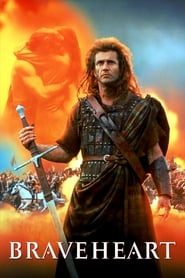
We shot one shot in Arizona. It was the frontal shot where the horses really hit the spears in the front, where you see spears breaking off on them and stuff. We couldn't get these horses to come close enough to the camera, so we got them to come close enough in Arizona. We put the costumes on some Western-type wranglers, and they got right in there. They boogied in, and we were able to digitally manufacture the spears, impaling them and so forth.
1:28:17 · jump to transcript →
-
and all have their place. That took a tremendous amount of organizational skill. Again, you know, ten points for David Tama, you know. He's got the Guinness World Book of Records for having the most people ever in a crowd scene. He did 300,000 people in Gandhi by simply throwing a camera out there on a holy day when the people of India went to the Ganges, and essentially the wardrobe hadn't changed for 30 years, so he was in safe territory there. But he's a smart guy, and he...
1:53:36 · jump to transcript →
-
-
multi · 1h 54m 3 mentions
Jean-Pierre Jeunet, Hervé Schneid, Alec Gillis, Tom Woodruff Jr. + 5
-
There is a funny story. You will see Kim Flowers, the woman. She dives after the other character. I had to find an idea because the first day of shooting Sigourney wasn't happy about her costume. She saw the costume of Kim Flowers and she said "But that's exactly what I wanted." I said "But Sigourney, we show you the sketches and you refused this costume." She said "I didn't understand. I want this." In one day we had to build another costume for Sigourney. But this day we had to shoot with Kim Flowers. She had no costume at this time. We had to invent another costume for her. I had to find another idea to justify she was late because she is not on the next shot because we had to build a costume this day. You know this kind of story? The water was very warm. I remember when we first got into the water it was too transparent. They had to pour in milk and garbage in order for the camera to pick up the actual substance of water for the light to hit it and give it texture. We were virtually blind under here. You would swim towards a light. That was it. You could not identify a single object underwater. You couldn't see your hand in front of your face. No. I think they put flares down on the ground for us to see. You'll never get a shot of them but...
1:09:16 · jump to transcript →
-
Has anyone other than me broached the idea of... of peeing when we were stuck in that pool for two weeks? Did you pee in the water, Leland? - It was kind of an honor system. I never broke it. - It's five years later. On the record, I never peed in the pool. I'm never gonna speak to any of these people again. Did you pee? I never peed. There were times when we were in there for an hour and a half, two hours. Under our costumes were wet suits. - I didn't pee. It wasn't that I was uncomfortable peeing in the pool, but in my own wet suit. So you did pee? - No. Not for the sake of the pool. For the sake of the suit. That's a little makeup where we had to put Gary into an appliance to show his face all eaten away by acid.
1:15:55 · jump to transcript →
-
There's what Jean-Pierre called "the vipers' nest" - a seething mass of alien texture. We built a 20 by 40 set piece that had articulated pieces worked into it. Tails and I think we had... I don't know if it was Tom. Was that you in an alien suit? Yeah, we had me and Mark Viniello in costume. Empty heads lying there. Sigourney was lowered down through a diaphragm and she disappeared. We've had people ask "What exactly is that?" and we said "I don't know." It's kind of like a nest, kind of like a... I don't know, a Spawning ground. Who knows what it is? I love this shot. Sigourney too. I remember the studio wanted to - do you remember? - cut one or two of them. These shots? - Yeah. I called Sigourney and she said "If they want to cut this scene I won't make the promotion." And we kept it. With the music it's pretty nice. Kind of romantic, though, isn't it? - Yeah. I made that instead of another action scene. I prefer this kind of poetry. It's pretty weird, pretty strange.
1:30:17 · jump to transcript →
-
-
-
Paul M. Sammon
Now, Tommy Noonan goes through a lot of changes in this film's costumes, and interestingly enough, they didn't develop this in the final shooting script, but the idea was that he was not only a very powerful drug dealer, but he was a religious figure. In fact, that first shot you saw him sitting in the dark surrounded by the wall, the actual scripted version had him in a priest costume in an auditorium with 2,000 followers who were on their knees singing hallelujah.
11:30 · jump to transcript →
-
Paul M. Sammon
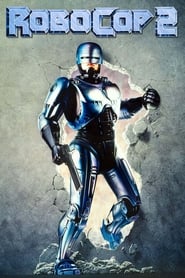
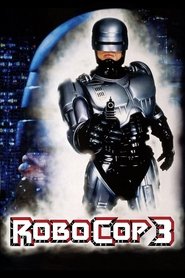
anti-smoking campaign. So I guess this is one way of doing it. Whenever you see the, this is one of the one that says avoid Orion meetings. Whenever you see a close-up of Robo putting his gun back in his leg, that is a separate construct of cable control that is not connected to any part of the Robo costume. That's why you always see it in close-up.
56:37 · jump to transcript →
-
-
-
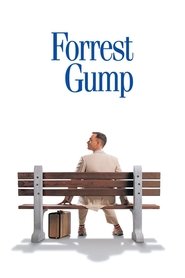
The running sequence was really the most complicated sequence to incorporate to shooting this movie because we had to create a timeline for Forrest taking this extraordinary run, crisscrossing the country a number of times. And he went through a whole evolution of his hair and makeup and wardrobe and found characters along the way that followed him.
1:53:14 · jump to transcript →
-
opening a new set every day because that meant you had to go into something new. You had to light it. You were, you know, you had a whole new group of atmosphere people. You had a whole new group of costumes. We had so many different periods of time that the movie wove through. That was hard. And the other thing that was hard was designing the run at the end in terms of beard continuity and
1:54:12 · jump to transcript →
-
-
-
But there's also a woman in that Amy costume. So basically, when they're all talking to her, like there's an actual woman in there. Actually, there are two actresses who alternate playing her. So they had two Amy suits because they were an inch or two apart. But they were like 4'9", 4'10". Little, you know, smaller women. And they wanted Amy to be smaller and cuter in general and wanted a woman to play her. So they were...
18:26 · jump to transcript →
-
paid homage to that by giving them sort of club hands and they into the costume built these kind of they almost look like a stamp but or a stilt like connected to their fist the actors to make their arms like longer and more like clubs but they are humans in there um and uh they also did you know extreme workouts for the greys to make certain muscles big like
1:19:27 · jump to transcript →
-
-
-
The paintwork on Evie's costume there was a little bit too sheer. That shows my professionalism. I was so concentrating on her performance and her face that we didn't realize until we got the dailies that basically it looked like she was completely naked because, well, the white little gauze thing she's wearing, when wet, it's completely see-through. So we had to do a paint job, which many of my assistant editors were not happy with.
33:12 · jump to transcript →
-
And actually, it kind of worked well for the scene. Afterwards, they all told me they were just wondering if they should continue on or what they should do. And their lack of reaction actually makes it more humorous. Now, this next scene coming up with the warden, as we mentioned earlier, he was supposed to, as he was coming around one of the corners, he was supposed to moon us, meaning, you know, that his underwear and pants were pulled down. For some reason, the costume department thought that maybe it would be better that if he wasn't wearing any underwear at all. And so, which turned out to be
45:55 · jump to transcript →
-
-
-
-
-
-
-
-
-
-
-

Related topics
Other topics that frequently come up in the same commentaries.