Topics / Cinematography & lighting
The cinematographer
95 commentaries in the archive discuss this, with 192 total mentions and 40 sampled passages on this page.
Filter commentaries
Filter this topic by the film's decade or the type of commentary.
Showing 20 of 95 commentaries
Clear filtersBy decade
Across the archive
ranked by mentions · click any passage for the moment in the transcript
-
-
loved Godard and, you know, people like that. He worked as a production manager on the classic rock documentary Woodstock in 1970. Can you imagine being production manager? Yeah, I cannot. It's quite a tough job, I would imagine. And that same year, he was a production assistant on Irvin Kershner's Loving and a cinematographer on a movie called Bongo Wolf's Revenge, which I have never been able to see. But so he was, you know, doing all these kind of...
36:26 · jump to transcript →
-
you know, as a kid, that it was clear he was the standout. And Charlie viewed himself as more the DP. You know, he still was like, I'm not the actor, I'm the behind-the-scenes guy. But apparently Terrence Malick saw these movies, some of them, and he thought they were amazing. So, I mean, if you make 200 of them, and, you know, the Penns have Leo Penn as their father, who's a director, you know, they know a bit. So I would love to see those films. I wish they would...
48:19 · jump to transcript →
-
But there were creative differences, I guess, and Medak left Cujo two days into shooting, taking his cinematographer, Anthony Richman, with him. So Teague stepped in, along with cinematographer Jan de Bont, who at that point was very early in his American... I didn't realize he did Cujo. Yeah, it was very early in his American career. It was kind of after he had done this series of Dutch films with Paul Verhoeven. And so de Bont and Teague did Cujo together, made a really terrific horror movie. It's, you know...
1:02:55 · jump to transcript →
-
-
multi · 2h 19m 7 mentions
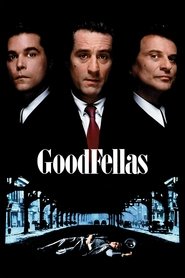
Martin Scorsese, Nicholas Pileggi, Ray Liotta, Lorraine Bracco + 9
-
Come on. Yeah. You know, take a chance. What's the worst they could do? If he's going to try to kill you, you could maybe duck, you could punch him. Some guys would separate. There are a lot of guys there. They'll probably separate him. You know what I'm saying? But he doesn't do that. He doesn't have the balls to do it. He's a dead man in that group, in a sense, socially. He won't be invited to the next dinner party, you know? Director of Photography, Michael Ballhaus. We had, like, two cameras rolling.
22:48 · jump to transcript →
-
You know the look of the movie. You know the rhythm of it. And that's something very interesting and very good for a director of photography to know. Without using a gun,
35:08 · jump to transcript →
-
In the scene when you see Karen on top of Henry, I remember it being very difficult to shoot, especially since when you learn filmmaking with Marty Scorsese. I really did that to the camera, not so much to Ray. Michael Ballhaus, who was our director of photography,
1:13:20 · jump to transcript →
-
-
-
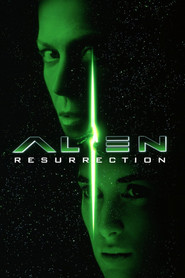
One of the things that they did is they worked with Casey Cannon and Van Ling, who are the people who actually did these screens. And they worked to develop screens that were bright orange, or that read orange, you know, where computer screens always read blue. Because Alan Davia, the DP, it drove him crazy how he would have to light a scene basically for the computer monitors instead of...
3:46 · jump to transcript →
-
interact with but it was also rigged to fall down at the end so it's meant to kind of crumble and um be destroyed so they they crawled around on it for months and then like over the course of three weeks they destroyed it all would this be a good time for me to talk about alan daviau at all yeah sure um the cinematographer you've mentioned him uh earlier in terms of the monitors and stuff but he's definitely somebody
1:13:38 · jump to transcript →
-
amassing whatever knowledge he could. And at one point, he crashed the set of Marlon Brando's One-Eyed Jacks and watched cinematographer Charles Lang creating the gorgeous VistaVision images of that film. And that's what really hooked him on the idea of becoming a DP. When he graduated from high school, he bought a 16mm camera and started shooting everything he could, you know, student films.
1:14:22 · jump to transcript →
-
-
-
But he does come across as quite level-headed and quite fair with his kind of putting his foot down with Fincher. But it's interesting that all the cast and a lot of the technical guys really liked Fincher. Obviously, Alex Thompson, you know, the DP had come in to replace the guy who had photographed Blade Runner, who clearly had Parkinson's. But he said, you know, David was a little bit kind of short with him and
15:26 · jump to transcript →
-
But I think he had Parkinson's for a long time, but Ezra, the executive producer, turned up and goes, yeah, he's got Parkinson's. He has energy, he says, but he couldn't do certain things where a guy has to crawl into certain bits and measure the light and stuff. He just couldn't do that. You can't put a cinematographer with Parkinson's at the top of a ladder to check the light levels, can you? No, no.
30:05 · jump to transcript →
-
wheat field or something like the high sort of grass and you can see him coming in and that would do that with the alien we can see it from above shooting down with these guys getting chased i mean that was a great kind of setup where what we're about to see now is um the chase through the corridors um and alex thompson the dp said you know it all it's all great when they you know the steadicam operator flips the camera which you've never seen before but
1:53:04 · jump to transcript →
-
-
multi · 2h 24m 3 mentions
Alex Thomson, Terry Rawlings, Alec Gillis, Tom Woodruff Jr. + 3
-
My name is Alec Gillis. I am the co-designer of the creature effects for Alien³ of Amalgamated Dynamics Incorporated. I'm Tom Woodruff, Jr. I'm Alec's partner in Amalgamated Dynamics, co-creator of the Alien effects, and I was in the rubber monster suit. I'm Richard Edlund. I was the visual-effects supervisor on the show. It's the last movie we ever did totally photochemically, actually. Right. This was on the cusp of the digital age. We did have some digital elements. When the alien's head cracks at the end it was a digital shot. That was the only one. Styrofoam floor. - Yes. We had a better Styrofoam floor for that where we'd covered it with metallic dust. It made a more interesting effect. I've always been a little self-conscious of those Styrofoam floors. Plus, that alien juice is pretty mean stuff. I think it's interesting that you can fly through space in a Styrofoam ship! Hey, there's a glimpse... Was that it? That scan, that was a fun scan. There it is - the multilayered sculpture. Are those your star fields too, Richard? - Yeah. I'm Alex Thomson. I was the director of photography on this movie, Alien³. I actually got involved because the original cameraman was Jordan Cronenweth, who did Blade Runner for Ridley Scott, beautifully in my opinion. But Jordan became ill in the first four days of shooting and had to leave the production. I was asked to take over, and I was honored to be able to try and match to his lighting. All I heard, and I wouldn't know if there was any other reason whatsoever, was the fact that Jordan wasn't well. We knew he had got Parkinson's. We knew he had that. You could see he wasn't a fit man obviously when I used to go and talk to him. He was a great character. I liked him very much. I knew him from Blade Runner. I'd met him on Altered States, too, cos Stuart cut that, didn't he? But I'm convinced it was the fact that he wasn't well enough to continue. I know it was a sad loss, but at the same time, I love Alex's work. I did Legend with him. I did Legend with him. Yeah, and I love him anyway. And I did The Saint with him. I love this shot, and I love the fact that it's a model. I just still feel that these miniatures have a quality that CGI spaceships just don't have. Do you think that, Richard, or is that just me? Am I being old-fashioned? Well, it can and it can't. I mean, it depends. On Air Force One I would never have made any models now. It depends on the kind of stuff. This is obviously special effects. These are models shot by the second unit, by Tony Spratling, up in the north of England.
0:59 · jump to transcript →
-
You notice in these sequences, the camera is near the ground so the ceiling becomes more important than the floor and one is shooting up people's nostrils. This was an approach David Fincher wanted, which I think is terribly effective indeed and makes it more distinctive than the other three, rather, in my opinion. I tried to keep it fairly shadowy, so that it looks moody. Where I could, I brought the light from the top because it's unusual for the light to come from the floor, but one had to be careful about it obviously. The difficulty was getting light into the eyes so we could see what the actors were thinking but not at the expense of the mood. I remember at Pinewood Studios when the sets were going up, Fincher would have us walk through the sets just looking at the scope of them. It was truly amazing to see these things go up. Norman Reynolds is a great production designer. He builds the world. It's very difficult to control him cos George would tell him on Star Wars "Don't build that. We're gonna paint it", and the next day - "It's too late. It's built." When they sent us over, we said "Why are we going to London?" They said "It's the sets, the set design, the artistry and the craftsmanship." And it really was very true. British actors is another good reason to go there. Somehow the British accent does a lot for these movies, I think. Vincent has had a deep, abiding interest in Luddite monks, and had done a great movie called The Navigator, where these monks dig their way through the earth, coming out into the 20th Century. It was a great movie. But, anyway, the original idea was that this was a wooden planet built by the Luddites and in the bottom of the planet, symbolically, the reactor was kind of hell. The technology that kept this thing going was emanating from the bowels of Lucifer. What drew me to the project first was that it wasn't a retread kind of sequel. It was a completely new idea, and some of it survived in the final script. David was entirely in control from the beginning. He put his stamp on it. He was the director and nobody ever questioned it. He was completely in control of the set and everybody hung on his words. He was definitely doing it. There was no weakness in it at all. He was very, very confident in what he was doing and wouldn't be swayed. He had this vision and that was what he was going to do. He came under quite a lot of pressure from 20th Century Fox to hurry up or do it the quickest way or the most expedient way, but he wouldn't listen. He would do what he wanted to do, quite rightly, in my opinion. As I say, his compositions are marvelous and the use of the frame, and so on. David had been a cinematographer before he became a director, so he knew lighting. He knew what was good and what was bad. That's not to take away from David Worley, the operator. His contribution was enormous as well.
10:16 · jump to transcript →
-
It's part of the artistry of a cinematographer, if you have a leading lady who's probably getting on in years, you have to put the light where they'd look their best, unless, of course, they are playing a part where they have to look bad, but that's rare. You have to kind of iron out the wrinkles if you can, make them look their best. This is not confined, of course, to female actors, but male actors as well cos they get old in the same way that anybody else does.
1:00:06 · jump to transcript →
-
-
multi · 2h 12m 3 mentions
Andrew Sarris, James Ellroy, Brian Helgeland, Michael Nathanson + 10
-
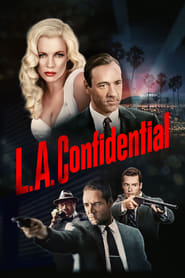
as if he was saying to you, listen, this is a reality which I take away, and I'm giving you my reality, so look at the elements that I'm telling you to look at. You know, I remember translating for my Italian colleagues back in the days a book written by John Alton, who was the head of school cinematographer in the time of the film noir.
1:22:13 · jump to transcript →
-
The scene between Guy and myself was a very long scene, and it went all night. It was a very powerful scene. There was a lot to be said, a lot of dialogue. I just remember cinematographer. I mean, the light that you walk into, and that's a lot 40s lighting and your beauty light and the way a lot of things are not done anymore. So that's so specific and so...
1:34:28 · jump to transcript →
-
You're so enveloped in this aweness, you know, from a cinematographer. And you don't ever really, you don't have those many moments in film the way it's really done today, you know? So that was spectacular in itself. I see Bud because I want to.
1:34:57 · jump to transcript →
-
-
-
Paul M. Sammon
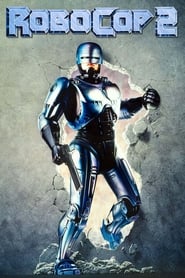
And by the way, Belinda Bauer always saw me with a recorder, tape recorder, when I wasn't shooting film because I was writing a lot about this film. As some of you may know, I did a lot of journalism for magazines like Cinefix, Cinefantastique, American Cinematographer, and so on. And she actually asked to borrow my tape recorder. So that's my tape recorder, my audio tape recorder right there that she's using. And here we are in L.A. again. And...
1:07:38 · jump to transcript →
-
Paul M. Sammon
I have to admit that, you know, basically it just, of course, does not hold up to the first one. However, the first one is a completely different kettle of fish, not done under the extreme pressure and circumstances of this particular film. And considering everything that happened on this movie, I think that it has aged fairly well. I'm amazed that the new Mark Irwin, by the way, the director of photography,
1:51:26 · jump to transcript →
-
-
-
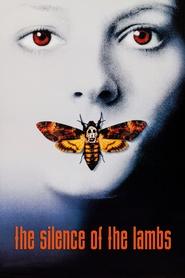
like descent into hell that Clarice has to undergo in order to, you know, meet Hannibal Lecter for the first time where Jonathan Demme and his cinematographer, Tak Fujimoto and, um, the rest of the crew are just using every trick in the book to kind of create this atmosphere and this mood and this ominous feeling, uh, including like the submarine sound effects and the red gel lighting. And, um, what is really the defining, um,
12:27 · jump to transcript →
-
His sort of style has always kind of been a little jankier, especially at Fujimoto as the DP. But in a way that I always found kind of very appealing, this is a lot more, I would say, it has a certain restraint, but also a very sort of disciplined eye. It's a lot more deliberate.
13:50 · jump to transcript →
-
-
-
This is sort of my homage to it, but if you notice, there's a lot of bold colors that probably somewhat are cartoony colors, especially when we get into the house, and that was by design. And I did have a terrific DP, Levi Isaac, who obviously gets credit for shooting this and making it look like a great movie.
2:25 · jump to transcript →
-
And it's funny, I look at, there's Levi, Levi Isaacs, who really, this is my first directing ever. I had written and produced a lot of television, but this is my, you know, my intro into directing, and Levi was terrific because your DP, as everyone knows, is your right-hand person. And he was, he taught me a lot, actually. Ah, that was our...
5:01 · jump to transcript →
-
-
-
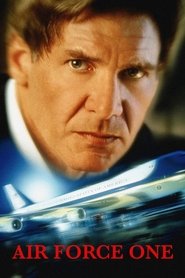
This here is a second unit shot in Moscow, Red Square, done by Michael Ballhaus, the cinematographer's son, Sebastian Ballhaus. And he did much more there in Russia and Moscow. We will come later back to that. This, of course, is back in Los Angeles in reality, even if it's meant to be in Russia. But it's a big, I don't know, banquet room somewhere here in Los Angeles where we did that.
5:36 · jump to transcript →
-
He has such a dry sense of humor. It's amazing. We were cracking up. We called the whole shoot Air Force Fun because we had so much fun. We had a lot of jokes. Maybe it had also to do with, first of all, the personalities was great. I mean, Harrison Ford, myself, and Michael Ballhaus, the cinematographer, a great guy from Germany also, Gary Oldman. We just...
31:48 · jump to transcript →
-
-
multi · 1h 54m 2 mentions
Jean-Pierre Jeunet, Hervé Schneid, Alec Gillis, Tom Woodruff Jr. + 5
-
We had a larger size for this close-up. They ended up making some oversize pinchers to hold it as well. But it gave us the detail we needed to articulate the face and have the head extrude from that silicone sheath. Nigel Phelps the production designer worked with Darius Khondji the DP. They worked during the preparation. It was very important for Darius to have some sets with the light included in the set, because there's some small corridor - it's very very small, very tight - and it was very important to include the light.
5:28 · jump to transcript →
-
I remember these signs - this is the psychological tests - and Jean-Pierre had something specific in mind, in terms of the primitive drawings of apples and pears and cows and cherries and things. He went through an amazing amount of artists trying to get primitive-looking drawings of fruits and little tidbits. It turned into such an assignment. He couldn't find anybody who could nail that style. Which had something to do with what he had seen as a Child - basic, primitive illustrations, which actually come back in his film Amélie. We get a sense of that naive, childlike graphic thing, which comes from a children's book, which, I think, is a really big deal in Jean-Pierre's imagery. I love Dan Hedaya. I love the Coen brothers' movies. You remember, he played in Blood Simple, the first movie of the Coen brothers. Interesting casting. I wondered if Jean-Pierre would have picked Dan Hedaya had Jean-Pierre grown up in America and seen Cheers. I love the lighting. You had a lot of lights coming up from the floor. Exactly. We used an optical process, and the folks were very nice with me because they made all the prints in the world with the process. And it was very expensive. And they made maybe 3000 prints with the process. The name of the process is ENR. It was invented by Storaro, the Italian DP.
8:49 · jump to transcript →
-
-
-
Darren Aronofsky
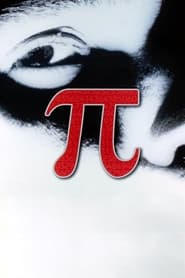
Brooklyn in the mid-80s, I was really a product of hip-hop culture. Matty, too, the DP, was from Queens, and Eric was from Oakland. And, you know, there's always been hip-hop music, rap and hip-hop dance, breakdancing, hip-hop art, graffiti, but hip-hop techniques haven't really quite made it into film. And so the idea was to sort of, you know, just sample different types of shots and create some type of story element out of it. So we sort of wanted this repetition of the film montage through the film
25:04 · jump to transcript →
-
Darren Aronofsky
This bodega we shot in is actually the bodega beneath the building where me and Eric shared an apartment while filming the film. Actually, while we were there, Matthew Libetique, the DP, who lives in L.A., as well as Laura Zuckerman, the first AD, and occasionally some other people lived in that apartment. It was five or six filmmakers living there, working 24 hours a day to get the film done.
27:19 · jump to transcript →
-
-
-
Alexander Payne
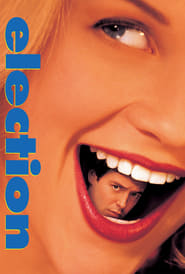
I used many, many, many of the same people between Citizen Ruth and Election. The production designer, Jane Stewart, and the DP, Jim Glennon, and the editor, Kevin Tent, and the composer, Rolf Kent, and even the same assistant cameraman, and the same prop master, and a lot of the same grips and electricians, and Omaha crew people, a lot of the same actors. In a way, Citizen Ruth was something of a dry run for Election.
13:48 · jump to transcript →
-
Alexander Payne
like the school mascot. So that's the one visual reference we have to George Washington Carver. I have exactly 48 minutes to make all the arrangements. You finish early, just sit quietly and check your work. I'll be right back. Jim Glennon, the cinematographer, is very proud of this shot because it involved a, I think a seven stop
59:30 · jump to transcript →
-
-
-
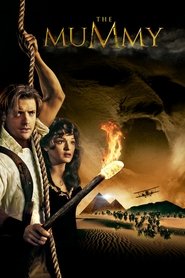
And Adrian and I, my cinematographer, had gone over it and discussed it, and when I arrived, the lights were... He had already pre-rigged the whole thing, but unfortunately the lights were at the top on the ceiling, and I realized once we got there that we were going to see them. And Adrian tried to talk me into doing a 180 camera move instead of a 360-degree camera move. And I kind of held out, and he and everyone else was very pleased when it worked.
14:00 · jump to transcript →
-
Now, this scene, I was running out of time. I shot this entire sequence in one day, the whole camel race, and with my cinematographer on his back in a truck. Very, very sick. I think almost every member of the crew got sick at some point. I, however, did not. I learned in India making The Jungle Book that when I was in Morocco, every day all I eat is mashed potatoes and chicken. I don't know what it is, but in India I almost died from being...
38:03 · jump to transcript →
-
-
-
-
-
-
-
director · 1h 31m 1 mention
David Steinberg, Dave Foley, David Higgins, Jay Kogen


Related topics
Other topics that frequently come up in the same commentaries.