Topics / Cinematography & lighting
The cinematographer
95 commentaries in the archive discuss this, with 192 total mentions and 43 sampled passages on this page.
Filter commentaries
Filter this topic by the film's decade or the type of commentary.
Showing 24 of 95 commentaries
Clear filtersBy decade
Across the archive
ranked by mentions · click any passage for the moment in the transcript
-
-
um no sort of venetian atmospheres nor north of italy uh territories being shown it's um it it's quite clear that is it's something different yeah it definitely is and um if you're watching the credits here you'll see some names here that are familiar but not always in the ways that they were before this uh for example we had a credit on here for the cinematographer here was uh Massimo Di Venanzo who was the son of uh
3:11 · jump to transcript →
-
frequent Federico Fellini cinematographer Gianni Di Venanzo, but he was a camera operator on Paprika who moved on to becoming the DP on All Ladies Do It, Così fan tutte, which you and Troy did the honors for, as well as The Voyeur, Monella, this film, and after this, Black Angel or Senso 45, which I think is probably one of the more beautifully shot of his later films. But again, as we said, this is sort of a transitional one towards that direction. And then we also had our
3:37 · jump to transcript →
-
a camera operator on this film, who is Andrea Doria, who went all the way back to films like Miami Cops, the Bud Spencer, Terence Hill film, and Cross of the Seven Jewels. But he went on to become a full-fledged cinematographer at the very end of his career with Mon Amour and Kick the Cock, which is kind of one that gets overlooked. It's not a feature film, it's kind of a long short, I guess, but it's sort of a little bit of a footnote in his career after he stopped making full-on features. Yes, well, I was...
4:01 · jump to transcript →
-
-
director · 3h 29m 4 mentions
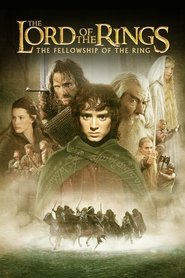
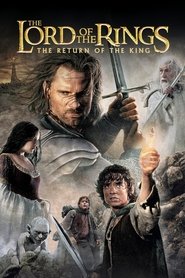
The Lord of the Rings The Fellowship of the Ring (2001)
Peter Jackson, Fran Walsh, Philippa Boyens
-
This is day one. He'd just come off X-Men, flown to New Zealand January 2000, and this was the very first scene that we shot. He really hadn't quite figured out Gandalf, but he was doing a pretty good job for his first day. The Ian Holm shots were actually done inside a studio from the location of Matamata, that's Ian McKellen, and then when you cut to Ian Holm, we're inside a studio. Andrew Lesney, our cinematographer, did a brilliant job of matching the indoors and outdoors. Now, some of the scale things
15:50 · jump to transcript →
-
that represents that sort of foggy area at the beginning of the shoot. Another brilliant shot coming up. I think this is one of the best moments in the film, actually. Why they're going on like this is that some of this was directed by Philippa and Fran. The shots of the Witch King, the stuff of the Witch King coming towards camera were particularly their shots. That moment there, I got called by Pete saying, watch the sharps on the blade, and I turned to Alan Guilford, our DOP, and said, Pete wants the blade sharpened.
1:12:52 · jump to transcript →
-
The model of the caverns below Isengard had already been packed away, so I got them to drag the model out and set it up again just to do this shot. And we did the blue screen with Christopher Lee very late as well. He flew back out to New Zealand to do that. These are all miniatures? All miniatures, yep. This was a huge big model that Alex Funke, our miniature DP, shot. One of the very first miniatures ever to be shot for the film. Yes. This was a hellish...
1:54:38 · jump to transcript →
-
-
-
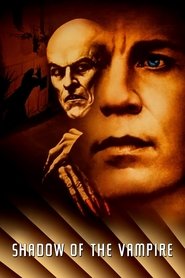
E. Elias Merhige
In here, Wolf, the first cinematographer, he says, more light. As if this illness, this kind of hallucination that he's having, this fever that he's in, has sort of taken the light away from him. And as a cinematographer, he needs more light.
17:57 · jump to transcript →
-
E. Elias Merhige
The cinematographer who wanted more light is now in the deep cavern inside the tunnel. I also remember at the end of that night's shoot
26:58 · jump to transcript →
-
E. Elias Merhige
60 or 70 feet onto this landing pad that was inflated from below. So now it's out with the old and in with the new. The old cinematographer has been replaced with the new enthusiastic one who brings new techniques, new ideas, new energy into the film.
54:38 · jump to transcript →
-
-
-
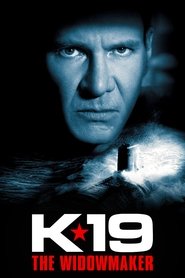
This is Catherine Bigelow. I'm the director of K-19. Jeff Kronoweth, the cinematographer on K-19. Jeff and I went to Russia about four months before we started shooting in the fall of 2000.
0:35 · jump to transcript →
-
the control and we had a very gifted second unit director DP named Gary Capo who came in and helped complete some of the sequences that we weren't able to finish or pick up some of the pieces that we had missed along the way and without all the subtle details and inserts and the movie wouldn't have
1:29:00 · jump to transcript →
-
He did them so flawlessly, marrying stuff that we shot live action to the CG work, to the models and anything else that was involved. For me as a cinematographer,
1:33:28 · jump to transcript →
-
-
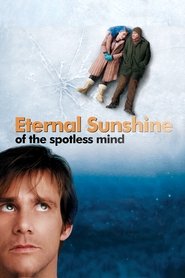
director · 1h 45m 3 mentions
Eternal Sunshine of the Spotless Mind (2004)
Michel Gondry, Charlie Kaufman
-
The interior at night was done on stage. And I made sure that the ceiling was sealed. Because if you don't do that, the DP and the gaffer, they open the ceiling and they put big lights because they want to make sure there is enough depth of field to have a sharp focus and it looks theatrical. What was the reason to have the actual apartment and then have a mock-up of it?
13:40 · jump to transcript →
-
And that's it, he doesn't need anymore. He never looks at the dailies or anything. He's just there doing his job. I'd like to mention Hélène, the DP, the director of photography. She always wanted to put smoke in the scene, which sometimes I would argue, but I have to say there is a sensation of being real. That's exactly what we wanted.
27:29 · jump to transcript →
-
That was one of those days when they, despite my recommendation, they open the ceiling and put a strong light. And there is some of the shots where when we look at them with Hélène, the DP, she goes, I should not have done that. And it's fine, nobody notices. You can tell it's a little more theatrical.
51:35 · jump to transcript →
-
-
-
Andrew Niccol
There are times when people work for nothing on a movie. In this case, people actually paid the production to work on the sequence. The background plates were done in three days without a motion control camera, which is something of a miracle and something none of us want to try again, especially my gifted cinematographer, Amir Mokri, who had to operate himself.
2:08 · jump to transcript →
-
Andrew Niccol
The cinematographer Amir Mokri can't actually even watch this scene because the weather kept changing as it does in South Africa or in Cape Town. And the skies don't match, but of course only Amir is looking at the sky. This scene has an actual precedent.
19:29 · jump to transcript →
-
Andrew Niccol
Amir Mokri, the cinematographer, and I have a lot of experience making commercials, which probably helped in the making of this scene.
45:20 · jump to transcript →
-
-
-
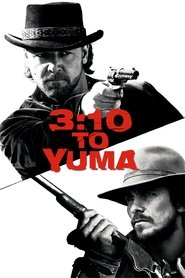
James Mangold
about Christian's character if Christian wasn't offering something magnetic and interesting to a man as bored and disinterested as Wade that he might lock onto. This is my third film with director of photography Faden Papamichael. And he's a great friend of mine and we really enjoy making movies together. And I think he did incredible work here. And one of the things that I think is most important
34:40 · jump to transcript →
-
James Mangold
when working with a director of photography is that you are on the same page about how the film's going to look. And it doesn't mean that every shot is planned or storyboarded. Much more importantly, it means that you both understand what you're doing with the camera and the actors in this film. And we thought a lot about the Spaghetti Westerns, which featured many close-ups and did not emphasize the landscape as much as they did the eyes.
35:08 · jump to transcript →
-
James Mangold
The day I was shooting this sequence where the marshal walks out, I literally went downstairs and we were shooting their surrender, where they put down their guns, which is going to happen in a moment. And I watched them putting down their guns and stepping outside, and Faden Papamichael turned to me, he's the director of photography, and he said, don't you think this looks stupid? And I said, yeah, it does. They should kill him. And we decided there and then, on the set that day we shot it,
1:31:44 · jump to transcript →
-
-
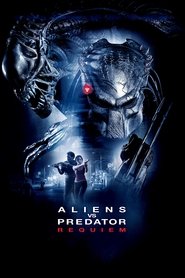
director · 1h 36m 3 mentions
Aliens vs. Predator - Requiem (2007)
Colin Strause, Greg Strause, John Davis
-
really understood the genre well. They were unbelievably prepared to do this movie, but until they rolled a foot of film, we actually had no idea what we were gonna get. And literally seeing the first day and these dailies and how they shot it and the DP they picked was great and his visual style and the way they boarded and shot this scene, it was the first beginning of a sense of, oh my God, this could be and will be a great film. These guys really not only know this,
5:10 · jump to transcript →
-
not only great visual effects artists, but they're actually going to be able to direct a film that's going to be really awesome. And this scene in particular I really like with what Daniel Pearl, who's our cinematographer, brought. His whole big thing is getting shafts of light and making the forest look like that. It was just such an amazing thing. Guys, how long did it take to do a lot of these visual effects? What's the process?
5:39 · jump to transcript →
-
Yeah, well, there was a scene that got cut out. Here's the really uncomfortably long other butt shot. That was actually a funny thing was because editorially we had a blocking issue where Ricky was standing and we actually couldn't cut to a different angle to get around it. So we're like, I guess we're holding on her butt for a little bit longer. And yeah, so we just kind of had to deal with that. Yeah, here again, it seems like this where I'm really grateful for our DP because I thought a lot of this stuff he lit and shot so beautifully.
48:32 · jump to transcript →
-
-
director · 4h 13m 2 mentions
The Lord of the Rings The Return of the King (2003)
Peter Jackson, Fran Walsh, Philippa Boyens
-
We flew around in the helicopter and shot it being set on fire. But what you see here is real. None of this is a special effect apart from the distant beacon that lights at the very end. But the hills are real. Those beautiful clouds that are in the valley were all real. It was all just absolutely the way it was in the morning that we shot it. And then we just added in those distant flames. This is a helicopter sequence that David Knoll, wonderful aerial DP, shot for us. Obviously, none of these fires are actually there. We added the flames in later on the computer.
1:06:15 · jump to transcript →
-
One or two shots. So here we are at the beginning of the second disc. We're only halfway through. And I can't believe that some of you are still listening to this. Shouldn't you get some sleep or something and maybe come back tomorrow? This was the cameo scene, wasn't it? Where everybody thought it would be fun to dress up as a pirate for the day. We've got Andrew Lesney, our DP, Rick Porius, co-producer. Richard Taylor and Gino from Winter Workshop are there.
2:07:32 · jump to transcript →
-
-
-
Noah Baumbach
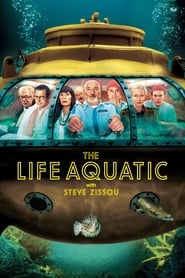
This actually was filmed in Rome. You know, the whole film was shot in Italy. The Explorers Club was at a palazzo in Rome, and Zissou has taken to wearing an earring at the beginning of the film. Here's where he decides he's humiliated out of-- He loses his confidence. Did you place a second earring there that Owen knew where it was? I don't quite remember. - Probably. I think it was more Owen just went over and acted like he was picking something up because he could never quite find it. This is revealing some of the secrets of the trade. The deliberately low-tech effects. Yes, yes. Something I was thinking about this ship, which we didn't say in the cross-section area, but I do think is definitely another thing about the film, is the sort of deliberately artificial and sort of the things that are invented, certainly the fish and the cross section of the boat, sort of living in the same world with stuff that's very real. You know what? Okay, so this is one of the big concerns for me. How-- We want to make, you know... Most of our time is spent in how do we bring our characters to life. That's what we're inspired by, that's what we spend all our time with as writers. And then as a director, I'm working with actors, and those are my actors, and then the cinematographer, the production designer... And how can we have them come to life and have a feel for them in an environment that is so strange and unreal? Well, and I think what's sort of interesting about that too is that Zissou is somebody who, you know, makes his living sort of, you know, in some ways... - Making fake documentaries. Making fake documentaries or documentaries that are highly indulged or embellished upon. And, you know, so, you know... Yeah, so the artifice of it, for me, it doesn't actually-- This is like intellectualizing something, but for me, part of the inspiration of the movie is to create this world that's going to be set, and they're gonna wear these crazy outfits, which comes out of his character, and he's going to fly for Air Kentucky, and, you know, we're going to make these animals. But the hope is that through the fact that we've made so much, and invented so much, and through the artificial feeling, that it would make it interesting enough or have enough excitement in just the fact we're trying to create so many things. That's basically what I feel like. We're just trying to try as hard as we can to put as much life into it as we can and as many ideas into it as we can. And there's even something that you were saying, which was that the fact that the animals being this sort of handmade, stop-motion, old-fashioned style, and how it's not very real, is related to the whole concept of a movie being about people who make things and create their own world. That's what the movie's kind of about, some sort of self-invention, and making their own art and all those things. Which in this instance, there's a bunch of plastic domes with light bulbs blinking inside them on a beach in the south of Italy.
18:16 · jump to transcript →
-
Noah Baumbach
And Bill's reading one of your actual notebooks. Yes, the notebooks in this-- Jane's notebooks are modeled on the notebooks that these movies are written in. So The Life Aquatic is-- Originally, while we would sit here talking, I would write everything down in longhand in these notebooks like this, then take it home and type it up, then bring in the pages next day, then we'd write more in the notebook, more on the pages. That's what the notebook-- I mean, I guess it's worth noting that the way we write these things or not, we don't both do separate scenes and then bring them in together and try and sort of edit them or anything. We actually come up with everything together in the room. I mean, stuff is done later in rewriting or when you're directing and stuff, but... You know, it is a... We make the story sitting here together. Yeah, in Jane's notebooks. - Yeah, in Jane's notebooks. Why don't we talk about some of the people who work on these films? Maybe we start with Robert Yeoman, the cinematographer. He shot all my films, Bottle Rocket, Rushmore, and Royal Tenenbaums, as well as your most recent film. The Squid and the Whale, yeah. Yeah, from my perspective, I tried to hire Bob for the first movie I did, Kicking & Screaming, and... Only to hear later that he was shooting a movie called Bottle Rocket by some neophyte Texan writer, director, actors. Yeah, I think we both probably responded strongly to Drugstore Cowboy, which was a film Bob had shot. - Right. And, you know, Bob, he lights his movies, he's drawn to very natural lighting, and I feel like he's sort of a Nestor Almendros kind of... His style of director of photography. He's also a very good operator, camera operator. He's great at hand-holding and he knows how to get the image. And he's tireless too. This is probably a good-- Now we're underwater, in the underwater forest, a good time to talk about Mark Friedberg. And you did this in a tank in Cinecittà? Yes, this is in a tank, where we built this undersea forest, and it was very difficult to do. It's hard to keep the water clean, hard to get the temperature right. You've got to build the whole thing, and the set starts to disintegrate. It's very complicated, but a bizarrely exciting thing to film. You know, it's just a crazy experience. And, you know, it's very-- It's-- You know, it looks fake and... It's fake to X degree, and not fake to some other degree, although it's pretty fake. And the thing we liked the most here was we took a scene that could be staged in a broom closet somewhere or in somebody's living room, but we just put the scene at the bottom of the ocean, where they have to push buttons to say each sentence. It's just really a scene about, "Can I call you 'Dad'?" And, "No, you can't." Yeah, I think maybe we'd initially written this scene on deck-- - On land. Yeah. - And then... Then we decided to go underwater with it. It's also a scene where we sort of, you know, where Zissou manipulates-- We get to see Zissou sort of first-hand manipulate the reality of his film. Yes, we see how it works. We're restaging.
52:14 · jump to transcript →
-
-
-
He's a New Zealand production designer who did such amazing films as The Piano. And we did have a limited budget, and I don't think that you would guess that, given what he was able to do. And also, I think it's interesting that Stuart Dryburgh, who was our director of photography, and Andrew had worked together before. They're both from New Zealand.
11:53 · jump to transcript →
-
It's a great example of Stuart Dryburgh, our cinematographer, and Andrew McAlpine, just working so well together.
34:45 · jump to transcript →
-
-
-
-
-
-
-
director · 2h 10m 1 mention
Richard Curtis, Hugh Grant, Bill Nighy, Thomas Sangster
-
-
director · 1h 37m 1 mention
John Cameron Mitchell, Justin Vivian Bond, Sook-Yin Lee, Paul Dawson + 1
-
director · 1h 42m 1 mention
Len Wiseman, Patrick Tatopoulos, Brad Martin, Nicolas de Toth
-
-
-
-


Related topics
Other topics that frequently come up in the same commentaries.