Topics / Studio & business
Budget
118 commentaries in the archive discuss this, with 429 total mentions and 72 sampled passages on this page.
Filter commentaries
Filter this topic by the film's decade or the type of commentary.
By decade
Across the archive
ranked by mentions · click any passage for the moment in the transcript
-
-
Jonathan Lynn
So you just gas me, pull the tooth out, and we'll still be friends, okay? Good. This dentist's office was a location, actually. There are very few built sets in the film. Partly for financial reasons, the film was made for a fairly low budget. And here we are in one of the most famous squares in the old town of Montreal, and this is Amanda Peet.
5:29 · jump to transcript →
-
Jonathan Lynn
And the jokes with the tulip here I asked Mitchell to put in on the very first rewrite as part of several places where I wanted to boost Bruce's character and give him some more laughs. This scene was originally going to be shot in a little cobbled street in the old town. We couldn't afford to go there because all the shop owners got together and...
13:15 · jump to transcript →
-
Jonathan Lynn
agreed to charge us to such an extent that we couldn't afford to shoot there anymore. And then we found this location, which is just wonderful and shows a panoramic view of Montreal. I was really pleased that, yet again, financial considerations forced us into making a change, which turned out to be for the better. After the ensuing scandal and bankruptcy and embarrassment, my wife and her mother decided it would be best that we move back here. That's the St. Lawrence River in the background, of course.
13:43 · jump to transcript →
-
-
-
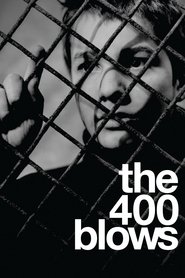
And the more you know the facts of Truffaut's life, the closer to reality the film may be understood to come. Truffaut's own best friend in boyhood was named Robert Lacheney, and it would be Lacheney who would one day provide Truffaut with the money to make Les Mistons, one of Truffaut's first short 16mm films. Lacheney worked as production supervisor on The 400 Blows as well, and he would remain Truffaut's closest friend throughout the director's life.
11:26 · jump to transcript →
-
The money being used in 1959 in France, by the way, is the old franc, that is to say, two decimal places more inflated than the current French currency. In giving Antoine 100 francs, Monsieur Douanel is giving him approximately 20 cents. So the 500 francs Antoine finally gets would be worth about a dollar. Robert Lacheney had this to say.
16:05 · jump to transcript →
-
I did my best even if it was already 1958. I'd never thought of keeping a diary of the time, which is a pity now. He also asked me for whatever snapshot I had, but since we were so poor then for a time, cameras were a luxury we couldn't afford either. We didn't have many documents really, but fortunately I always kept all of his letters. I kept every one of them, thinking that someday when we were 70, he'd come to my house and one evening by the fire,
43:52 · jump to transcript →
-
-
-
Francis Ford Coppola
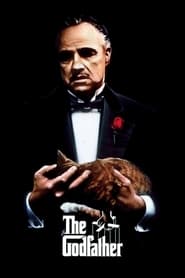
The Hollywood scene with Jack Waltz was pretty much shot as second unit. As I said, this was very low-budget production. That fellow walking is not... I hate to say this and ruin the illusion, but that was not Bobby Duvall. It was just some fellow we had walking in a couple of L.A. sets, and it wasn't really Gordy Willis or Dean Tavoularis working on it. It was just some cheap second unit. Now, the scene inside the stage is, in fact...
27:11 · jump to transcript →
-
Francis Ford Coppola
I'm looking at the shot laughing to myself because I'm sure Gordy Willis was annoyed that I had that camera so high and I'm sure that I had the camera so high to see the floor because we had stripped the floor. Dean Tavoularis wanted to show that original floor and there was some linoleum over it so we spent the money to take the linoleum off of it and show that.
1:25:44 · jump to transcript →
-
Francis Ford Coppola
of the 40s. The 40s represented for me a kind of growth of America and our system, our business system, and to a post-war position of importance that sort of paralleled the Corleone family. So I was very anxious to shoot it in period. Now this meant, of course, that the film was going to be more expensive in this little $2.5 million budget that they had allocated.
2:07:19 · jump to transcript →
-
-
-
Paul Davis
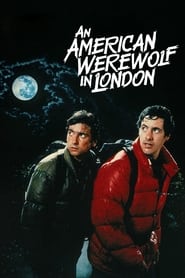
American wealth in London to Jenny Agutter saying that he wanted her to play Nurse Alex Price. But he didn't actually give her the script until he had the money to make it. So I think it was probably around November 1980 that she finally got the script. And she is admittedly not a huge horror fan. And had the script come from somebody else, she would have thought twice about it. Can I be of service, Nurse Price? Dr. Hush? Go about your duties.
18:08 · jump to transcript →
-
Paul Davis
guaranteeing you the the money for the movie once it's delivered with specific requirements so for this it was that it had to be an r rating um and PolyGram pictures it was Jon Peters and Peter Guber who who were big fans of john after the the blues brothers and an animal house uh
25:22 · jump to transcript →
-
Paul Davis
they understood it and had faith in john and they gave him the contract which he then takes to the bank to get the money to make the movie and then once the movie is delivered PolyGram then pay back the money to to pay off the to pay off the bank and that's how this movie was made and it's a really smart way to do it because it leaves the filmmaker completely financially responsible for the film you know you're signing the checks and
25:44 · jump to transcript →
-
-
-
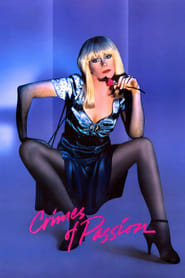
Did you find that we had any problems working on a limited budget? Well, I remember on the first day, this was the first day, I think, we fired the continuity girl because the clock was at different times. I can't even see a blinking clock there now. So that didn't get off to a very good start. But it was a very low-budget film. We couldn't afford the best, could we? No. So working under sort of pressure and...
16:59 · jump to transcript →
-
A warm mellow sort of, instead of the harsh reality of whoredom. Is the offer still good? No problem. I could use the money. You do? Terrific. No, no, that's great. You didn't think I had the nerve, did you? Neither did I. I guess it just comes with poverty.
21:23 · jump to transcript →
-
But the movie is basically an exploration of the psychology of sexuality. And I love how you just framed these two characters in terms of their beds, with her lying in this big bed, totally isolated. And it's cold. It's a blue light. It's lonely. Having just come from Grady, who has been spurned by his wife. Exactly. Why didn't you come to me, Phil? I would have loaned you the money.
40:25 · jump to transcript →
-
-
-
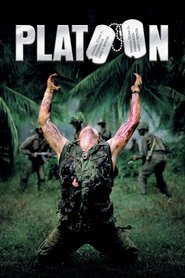
Oliver Stone
Arnold Copelson, John Daly, England, put up the money. That was quite something. Couldn't get the money for ten years, and a British company finally put it up and took a chance. Grandiose opening, opening invocation, sort of something from the Iliad or the Odyssey, but it's the Bible, I felt, would be, Rejoice, O young man, rejoice in thy life and the days of thy youth.
0:38 · jump to transcript →
-
Oliver Stone
He did everything almost first with his hands himself. But nobody got hurt in the special effects crew. Now here's our village. This one was a tough one because we had to build it. We stocked it with as many Vietnamese as we could get with a limited budget. And we found some of these people.
46:21 · jump to transcript →
-
Oliver Stone
But I missed it. Here, Barnes is giving the lieutenant a little grin. I love that focus pull. But Barnes is digging the oncoming tension. Now, obviously, the ambush is gone. They're not responding. This should have been really later in the day. I just, given the budget we had and the conditions, we just had to grab what we could when we could. We were running out of...
1:36:47 · jump to transcript →
-
-
-
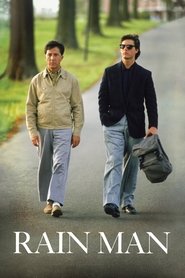
Barry Levinson
He doesn't get the money by 5.30. He's going to come and seize all the cars. I'm going to have to call you back.
4:07 · jump to transcript →
-
Barry Levinson
Who controls the money? You control the money?
13:49 · jump to transcript →
-
Barry Levinson
He'll go back to Walbrook or a better place. No, with the money, I will put him in a better place.
36:37 · jump to transcript →
-
-
-
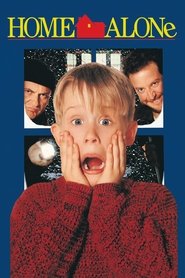
So this, uh.... What's interesting about a lot of this movie is we would always put fake snow down. The foam and stuff. - The foam, and that's really... We had a Wisconsin ski... A bunch of guys who worked for this ski resort in Wisconsin put down snow. But... - That poor statue. Yeah, the statue was a running gag, and this guy... A lot of this movie was made on an extremely small budget. At the time, the picture was at one studio... ...and that studio didn't wanna make the movie, because of a $2-million difference... ...and it went over to Twentieth Century Fox. And we still were... We still made the film for a little above $18 million... ...which at the time was still a small budget. So we had to make things stretch, which we'll talk about through the picture. One of the great things about working with Pesci, I have to say... .IS his improvisational skills were terrific. And it was because of his training with Scorsese that... ...even on a picture like Home Alone, really comes in handy. He's a very funny guy, Joe. - Yeah. And his comedic instincts were really something I'd never seen before. Little snippets in pictures like Raging Bull and Goodfellas. But his ability to improvise was just phenomenal. And then John Heard. I cast John Heard because John Heard was someone I was always a big fan of. He was in this picture... It was called Cutter and Bone. Now it's called Cutter's Way. And his performance should've gotten an Academy Award. I've never seen it. It's Jeff Bridges and John Heard, and he is just amazing in that film. I was a huge fan, and it was always a dream to work with him. He also did this old film called Head Over Heels. And he was kind of a leading man back in his day. He's just a wonderful actor... ...and another guy who didn't really know why he was in this movie. At the time, he was sort of like, "Why am I doing this?" I remember feeling a certain amount of discomfort from him. He was like, "Why do I have to do this? Why am I in this kids' movie?" You know? "I'm a good a--" Understandable. No one really knew what this movie had the potential of becoming. We had always hoped it would be successful, but we never knew. Um.... Pfft. I always knew. You always had an idea. - I always knew. Now, this scene. Do you remember coming in on a Saturday to rehearse this scene? Yeah. - We had to rehearse this because it was so... Which was so chaotic with everybody. We ate so much pizza. I didn't wanna eat lunch. And this is something that was interesting. We... You'll notice that there's a rare shot in the film where... There's your brother. - Yeah, there he is. How are you guys--? He's working now, right? He's doing very well. Oh, yeah. He's doing very good, very well for himself. Un, this is typical of the style of this movie. Not the vomiting, obviously... ...but the separation of actors in certain scenes. Because Macaulay's time was so valuable... ...we needed to shoot Macaulay separately... ...and sometimes other kids as well. So you'll always see... I tried to block sequences where I could sort of keep Macaulay off by himself... ...and keep the other actors in another space... ...so I could shoot people separately. Child labor laws again. - Child labor laws. And we're-- And Kieran had to reshoot the chair in the face, I remember. Oh, yeah. - Like, he had to come back later. He was upset he had to get his hair cut like Fuller again. Oh, he was? - Ha-ha-ha. Well, he-- We made a special, very light rubber chair... ...so when it... - Yeah, that's... Yeah. That's-- I remember that. Catherine O'Hara was someone who I had, uh... ...Just loved her work on Second City TV. - Yeah. I mean, I was, uh... Aside from Saturday Night Live at the time in the '70Os... ...Second City Television was the-- Sort of the place where you learned about comedy. And for me it was... I was just such a huge fan... ...SO It was, again, a real honor... ...to be able to work with her on both of these films. Yeah, no, she's incredible. Even just the stuff she's doing now. She's still--? Oh, it's great. It's great stuff. Both of his kids are still going to school here. I guess he missed the family.... You got a pretty good cast. Yeah, it's kind of interesting for a film that... But we treated it... The weird thing about this film... ...and the reason I think the film has kind of stood the test of time for a lot of kids... ... IS because we always treated it with respect. We never felt that we were making a movie for kids. We were making a movie for the parents as well. It had a lot of appeal. And you never-- You wanted to... You wanted the photography to have a certain elegance about it... ...and the camera to be moving. And it was really never... So many times today, people try to make kids' movies... ...and they always cheapen them. And we never-- I mean, certainly we got cheap with our jokes. Let's not pretend that we didn't. - Ha-ha-ha. Oh, yeah. No, I mean, it's Three Stooges, you know? - Anything for a laugh. I
7:04 · jump to transcript →
-
We shot a lot of this film on location in Chicago. This was shot at O'Hare Airport, actually. That was just chaos because it was still a functioning airport... ...while we were running through it. And the key is, here, is we were shooting... When we were shooting this first picture... ...N0 one knew who Macaulay was. In contrast with shooting Home Alone 2... ...where there were busloads of people following you around. That was crazy. - You suddenly became... ...one of the Beatles, um... ...which was a whole different vibe in terms of... We wouldn't have been able to shoot the way, you know... The way-- On this budget, the way we did. Duck into any airport and, you know.... I
16:25 · jump to transcript →
-
Again, l've-- Because of this film, I... - There was a whole speech there. Yeah, I think that's in the... We've got outtakes on this DVD... ...SO I think that'll probably be there, but the... I've not let my children ever buy a BB gun because of this movie. I had one. It got taken away. Did you? - Oh, yeah. Was it an airsoft gun or a...? It was a-- You know, you pumped it... But, you know, you could shoot pellets out of that thing. Yeah, I don't have that anymore. - No. Well, that's good. There's a reason why. When we shot-- John had written this movie within a movie... ...called Angels With Filthy Souls. And we actually had to shoot a film that resembled a film from the '30s... ...which unfortunately, you don't see on TV anymore. And there's not a kid in America... ...who would pop in an old black-and-white movie in 2007. Yeah. Just-- You know, Macaulay was a pretty sophisticated guy. He's watching old movies back then. - I was very worldly. But kids would do it back then. And the interesting thing is we got two Chicago actors to do this film... ...and we just studied our old '30s and '40s film-noir gangster pictures... ...and re-created them. And, you know, on this budget, it actually worked... ...because they were basically cardboard sets... ...and a few lights creating that old film-noir style. This is great. This stuff is classic. - Yeah.
23:25 · jump to transcript →
-
-
-
that's just not how studios work is and there's an extra problem here because it's obviously it's alien so it's a cash cow there's a lot of people and a lot of money involved but there's also a three-way dynamic because you've got brandy wine which is the production company which is david guyler and walter hill two men who do not take at all and then you've got fox who's putting up all the money and obviously it's their baby too they want and then you've got david fincher and
17:40 · jump to transcript →
-
Fox are idiots and things like that. It's amazing. It's great. He doesn't give a shit. But David Fincher was already a wealthy guy before he made the film. He had a production company making music videos. He was like loaded. So he didn't, I don't know. He didn't need the money to make this, you know, to be, you know, he didn't need it as a payday. He was just like, he loved alien. I'm sure he had his sort of misgivings of aliens and how it kind of changed things perhaps, or maybe set up these, you know, this family setting.
19:29 · jump to transcript →
-
sort of modern considering it was only i mean what was it six years after aliens came out yes you're correct yeah it does feel like a lot longer somehow when you look at it the aesthetic the i don't know that the finish the the look of every everything feels maybe because aliens is kind of a secret low budget movie it's i'm only slowly getting my head around because in my memory in my mind aliens is this huge extravaganza
40:31 · jump to transcript →
-
-
-
steaming toward another $200 million in the foreign box office. And the great thing about that is not the money specifically, but the fact that so many people have seen the movie. And when you make a movie like this, there's really nothing more important than people seeing and enjoying the film. That strange slurping sound you're hearing is not a problem with your sound system. It's just me drinking coffee. Okay, what can we say about this? I feel like I just shot it, like, a month ago. Extras are always a difficult...
0:26 · jump to transcript →
-
Run away or head towards? Well, no matter what, I'm sure that Greg is really happy that you brought that up. This is the shot I was talking about earlier that, you know, there was clearly rain in the background. As these lights pan, you would see the rain being, you know, backlit by the light. I think you're looking at other things at this moment. Yeah, you are. You are, and I think it all works out. If you notice, there's no... You can't see anything in that pit back there on that shot. We still want to spend the money.
19:07 · jump to transcript →
-
Well, it's a really great movie house because, I mean, it's just so excessive and so much fun. It's interesting, in the development of the script, this fight sequence that you're going to see in a few minutes was originally staged... Jonathan was going to have a casino, and that was one of the few concessions that was made to get the budget down a little bit.
24:39 · jump to transcript →
-
-
-
James Mangold
We begged and borrowed the entire way to get the pictures made. In Walk the Line's case, that was with Reese Witherspoon and Joaquin Phoenix both working for relative pittance and a budget of $25 million. And there wasn't a single studio except 20th Century Fox willing to make it. And the materials went to every single financing entity in Hollywood. Same, of course, as I said, is true here.
58:29 · jump to transcript →
-
James Mangold
Those tracks you see in the distance extending out of the town are nothing more than two by fours stacked one after another in a row. All that cutting off in the distance onto the hills. We literally just took black two by fours and put them crossways and painted silver two by fours and made them the other way. We couldn't afford to build any more than about a half, not even a half mile, a quarter mile I guess of track, actual track, which we built for the steam train to run on. Just enough for it to pull into town and just enough to pull out of town.
1:27:20 · jump to transcript →
-
James Mangold
That's about the fourth time he's gotten shot in the film. He's one of our band of stuntmen who we carry with us to every town, and he's literally been shot three previous times, and he'll get killed one more time in sequence shortly, as I'll point it out. When you're a low-budget film, you can't carry so many stuntmen and fly them in that you can each afford to kill them once and then bring a new guy in.
1:42:04 · jump to transcript →
-
-
-
Tim Lucas
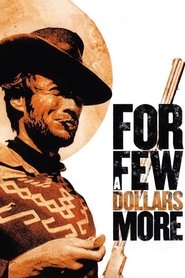
like it's there for no better reason than to be droll, but it's actually quite significant, as we will soon see. Sergio Leone was a master raconteur, and it was in this film, made in the wake of the immense European commercial success of Per un pugno di dollari, A Fistful of Dollars, that he could first afford to indulge himself as a storyteller. For this film, the budget jumped from $200,000 to $600,000.
1:59 · jump to transcript →
-
Tim Lucas
It was this crazy idea. And it stayed. And it stayed. To put his hands on the money inside. Get in there and grab all the money. Sure? You think that carpenter was lucky the way things work out. That he was lucky to go and joust that bank. It wasn't true. His good fortune stopped that day. Because later...
39:05 · jump to transcript →
-
Tim Lucas
When I first screened this film in preparation for this commentary, I looked at this explosion and immediately told myself it had to be a scale model special effects shot. And then Sancho himself appeared in the hole blown into the side of the building, which means this jail was actually built and blown up so that Sancho Perez could leap into freedom. Here you see the difference made possible by Leone's leap in budget.
1:04:57 · jump to transcript →
-
-
director · 1h 30m 4 mentions
A Nightmare on Elm Street (1984)
Wes Craven, Heather Langenkamp, John Saxon, Jacques Haitkin
-
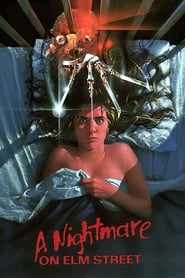
But, Heather, I don't think you fit in tonight. Well, I think the wardrobe kept mixing up Johnny's jeans and my jeans, so some days when my jeans look particularly tight, I think I'm wearing Johnny's leg right here. The day we did jean splitting, I think. I think it was one size fits all. I think the wardrobe budget was probably about 10 cents. Everything was from Kmart. Nike.
9:57 · jump to transcript →
-
We had a time when, I mean, the budget was, gosh, so small compared to these days. Right. We did it on the sushi budget of a real feature. But didn't Gregg Fonseca really make fine sense? Gregg Fonseca did incredible artwork. I thought he did, yeah. He just died last year, unfortunately. Went on to do Honey, I Shrunk the Kids and huge features after this.
12:54 · jump to transcript →
-
Was our steadicam operator a woman? Yeah, Liz Ziegler. Right. She's done a lot of big shows. And the whole budget for the whole film was a million... Seven? A million eight, I think. That's what I thought. And look at these beautiful outdoor shots you got, Jacques. I just think it's remarkable what you pulled off in the budget that we had or didn't have. Totally agree. I'm still doing it. That's the problem. If you do it once, they make you do it again. Good, Jacques Haitkin.
37:24 · jump to transcript →
-
-
-
Roger Moore
You certainly don't feel as if you're making a television series when you're making a big feature film. The big difference with television, because you film for television and you film for the cinema. The difference is budget and time. So with an episode of The Saint, we'd have eight or nine days shooting, and the same with The Persuaders.
1:01:18 · jump to transcript →
-
Roger Moore
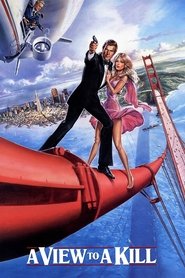
Bonds have gone on for so many years, and I think the answer is that the producers never cheat the audience. They spend the money and they put it up on the screen. You see it. Great sets, great locations. I'll send the large bag. OK. Bring out those pigeons!
1:44:45 · jump to transcript →
-
Roger Moore
and their million dollar budget. Amazing. You too, that way. As part of my career, the 14 years I spent doing Bond, making seven movies, of course it's very, very important.
1:48:23 · jump to transcript →
-
-
-
William Friedkin
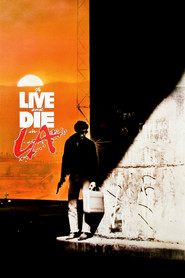
which you and I might take no notice of. The main title sequence tries to give a flavor of the world that the audience is about to experience. It shows several of the characters without any explanation of who they are or what they're doing. And it also shows the act of counterfeiting and the act of passing the money. The money is counterfeited
5:35 · jump to transcript →
-
William Friedkin
somewhere in an area where you'd need a police escort to get to most of the time today. And we met this counterfeiter and he took us through the process. And he had the paper, you know, which we paid for. It's a certain kind of, it's called rag. The paper's a certain number of rag, it's called. And certain kinds of inks and the money that he was making, these $20 bills,
13:13 · jump to transcript →
-
William Friedkin
you know, to accuse me of a crime or to question me about a crime. They just tried to browbeat me a little bit. There was no crimes committed. We made this money for a movie and then basically destroyed it all. We weren't counterfeiters. But the guy who made the money had been convicted of counterfeiting and did serve time. So the money in that film and the process is totally authentic.
17:59 · jump to transcript →
-
-
-
Eleanor Bergstein
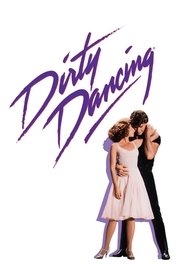
So at the end of that night, I said to Emile, we don't have it. It's not shocking and specific enough. It's just like a bunch of kids bopping around. And we had no time or money to go back. We were on such a low budget. And he said, are you sure? And I was sure. And as I said, it was nobody's fault. Sometimes these things just happen. And I remember calling my husband and telling him, he remembers this very vividly because I thought it was all lost. And I stayed up all night crying. And Lisa, my assistant, bathed my eyes with
15:22 · jump to transcript →
-
Eleanor Bergstein
someone who is really a decent, rather touching guy. He's just not Johnny for baby, but he's not a fool, and he's not a buffoon, and he's going to Freedom March, and he's afraid that people like him only for the fact that he owns two hotels. He plays him as a full character, and I have always loved his performance. I think it's just wonderful. Now, originally, we had to cut down on things because of the budget,
24:21 · jump to transcript →
-
Eleanor Bergstein
And we had had a long search in the woods for Penny. Oh, it had been a long thing, and Baby used her Girl Scout training. We couldn't do it, so we cut it down to Penny hiding in the kitchen because I've always loved hotel kitchens. I have a real softness for them. And I must confess, we didn't need the search in the woods. Now I'm embarrassed to think of how long it took me to cut it out. It's just fine to find her in the kitchen. It's, if anything, better. And I think sometimes when you have those budget constraints, sometimes it's really just hard.
24:50 · jump to transcript →
-
-
-
John McTiernan
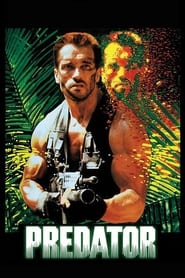
Carl Weathers got involved. I went looking for somebody to work with Arnold, to have an actor for him to work with because he... Particularly for an actor who's starting, the way Arnold was at that time. What... The best thing you can get him, is a good actor to work against. It will improve their performance enormously. So right from the beginning, I was campaigning to get, to get a real pro, in this, in Carl Weathers part. I finally, talked him into Carl, it was a budget consideration, they didn't really wanna do it, but I pushed.
4:41 · jump to transcript →
-
John McTiernan
I suppose it was also budget consideration, I think, they were quite happy when I said, "Well, all right, let's do away with that dozen opticals." I mean, it was a consideration all the way through this movie about how we do the optical effects.
7:42 · jump to transcript →
-
John McTiernan
It was a budget issue but it was also just, it was nearly impossible to get that, the real, heat vision shots.
35:53 · jump to transcript →
-
-
cast · 1h 36m 4 mentions
The Garbage Pail Kids Movie (1987)
Mackenzie Astin, Katie Barberi, William Morris
-
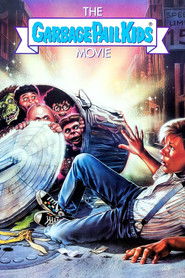
There it is. That's the money right there. Back left pocket, which is where I still keep all my folded signals. I remember this. It's so sad, but you love doing this. You love doing this. Are you kidding? I thought I was Harrison Ford. You did. You were all over this. I thought I was one of the Duke boys. He was doing stunts. Mac was doing stunts. He was very into this. That's the thing that's funny.
6:06 · jump to transcript →
-
This was done on quite a shoestring budget. I mean, we really, and we were tight at 90 days. Yeah, and it's all on the screen, ladies and gentlemen. There it is. That real dearth of capital behind the film is right there in the picture. We can see it all. No, but so with the thing that I was saying in mind about this being kind of a reverse mirror image of the anti-consumer message inherent to the cards themselves to begin with,
41:26 · jump to transcript →
-
That's him. This scene, honestly, though, Mackenzie, I won't lie, I watched this three more times again ahead of this just to, you know, reacquaint. And I got very emotional during this scene. Are you going to tell us about that? I just need to know because I'm already dealing with a budget on this. Just let us know. And if you're going to split the bill, absolutely 100%. You know...
1:30:06 · jump to transcript →
-
-
-
Ghost Town USA to having a huge football event, like, that was designed in the script? Oh yeah, that's from the script. The whole town is at the game. It didn't, it helped the extras budget though. I didn't have to populate the town at that point. This is a lot, this is really inspired by my life in Park Ridge, Illinois and some of my crazy friends. Honestly, some of these stories are true. Some of the interactions with the kids and all this.
3:43 · jump to transcript →
-
was ruined in Fango, but it didn't matter because it's the smoke that makes it. It's that steam that rises up. What was ruined about it in Fango? That was the shot, and you're sitting there going, like, I want to, it gave it away. But in Fango, that was the money shot. That ruined me from eating macaroni and cheese for two years. I'm not lying. It looks like mac and cheese with a little ketchup on it. Nope, no thanks. Oh, God, this moment is so great. So this is the same office that the doctor was in, and I was trying to make it moodier, even though it's a hospital.
25:32 · jump to transcript →
-
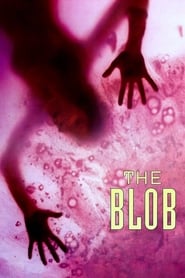
technical challenge or was there a thematic challenge possibly with the characters like balancing heroes? There were traditional challenges getting performances at 3 a.m. when everyone's freezing. What was unique about the film was the blob itself. I at least knew there was a risk every day of not getting the day, which you can't have on this. This was not a big budget film. And safety, just safety, water work, people slipping. I'm very, very safety conscious.
1:09:55 · jump to transcript →
-
-
-
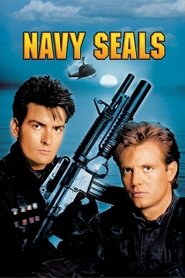
to situations that Chuck Farr would often find himself in in his early days as a screenwriter. Because for a while, his day job was still being a Navy SEAL. He was a Navy SEAL and remained so until he had gotten, you know, sold a couple scripts because he couldn't afford to quit his job. So as a Navy SEAL, he was constantly missing meetings with agents and producers because he would get called away on a mission. To save the country or something. Exactly. No excuse. So he would get called away on these missions.
7:29 · jump to transcript →
-
make all of these exploitation movies where he would give his director, he'd give his filmmakers like a fair amount of freedom. Basically, as long as they stayed on budget and delivered whatever the necessary genre elements were, they could kind of do what they wanted. And like the best directors to come out of that, like Demi and Scorsese, like really knew how to sort of kind of harness those genres to their own ends. But anyway, Corman saw in Teague, you know,
38:09 · jump to transcript →
-
And by the end of the year, Teague had another film in theaters, Jewel of the Nile, the movie I mentioned before, which was the Romancing Stone sequel. That movie gave Teague a massive hit on his biggest budget to that point, somewhere around $25 million. And so that really was kind of a big, big, big movie. Technically, on his resume, this is his next movie, Navy Seals. But he actually made a movie in between them.
1:04:11 · jump to transcript →
-
-
-
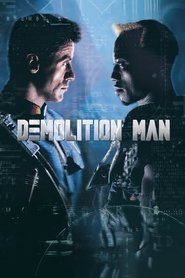
on the budget so we were able to work with General Motors who donated a lot of concept cars straight from car shows and also we designed a car with General Motors as the police car so we built about 12 of these cars which ran on a go-kart engine so they were very noisy but they looked very futuristic and this is also the first introduction here that there's
13:16 · jump to transcript →
-
Again, looking for locations anywhere I could find them because the budget on the film was approved originally at about $48 million. And then it, you know, it went up to $70 million. So we had to cut back on a lot of location shooting. I had locations scouted in different parts of the country where I would shoot plate shots, et cetera, et cetera. But we were...
55:46 · jump to transcript →
-
We had to shoot everything in California, basically. So we were able to find some very futuristic locations. That's something people don't understand is when the budget balloons and we think we have all the money in the world, you never have all the money in the world. I wrote Batman Returns. It was basically a $100 million budget. And we're still acting like we're shooting a Roger Corman movie because we're scraping. Well, Batman Returns was, if I'm not mistaken, that was all built.
56:10 · jump to transcript →
-
-
-
Tony Scott
and Patricia escapes with the money. But after spending my time, I shot the end of the movie. Chronologically, I actually shot the last scene in the movie at the end of production. And I fell in love with these kids. And I'm a romantic, as I was saying. I wanted to see these kids actually
37:43 · jump to transcript →
-
Tony Scott
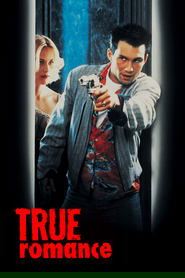
In terms of me and the movies that I'd done over the last few years, that's a relatively small budget. My first film cost $11 million, which is The Hunger. And this many years later, it cost $13.5 million. So that's a relatively small budget, but I managed to do it at that price because I shot it in a relatively... I shot it in 65 days.
1:11:11 · jump to transcript →
-
Tony Scott
Yeah, well, let me just tell you, if we get lost, that's your end. Hey, Floyd, why don't you get out of my beer, all right, and get a fucking job? This is a real live location, which is Dick Ritchie's apartment, which is a tiny location up in Hollywood Hills. Everybody thought I was mad. You know, I said, why can't you? You know, we couldn't afford to build it, is the honest truth. And they thought the location was too tiny and too small.
1:29:41 · jump to transcript →
-
-
multi · 1h 59m 3 mentions
David Naylor, Guy Hamilton, Tom Mankiewicz, John Barry + 14
-
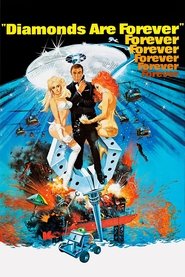
I didn't ask you how much it costs. He's the writer of the movie, Get Him a Suite. A company who just never stopped doing favors for everybody on the picture. And he always had a little bit in his budget for what he used to call morale. A native of New Brunswick, Canada, Harry Saltzman, the co-producer of Diamonds Are Forever, traveled to Paris at a young age and became manager of a circus. During World War II, by some accounts, he was an interpreter for Allied commanders.
46:37 · jump to transcript →
-
james bond sean connery would drive that red mustang they would give us all the cars as many cars as we wanted to for the demolition derby so ford supplied all the police cars all the smashed cars all the villains cars every car and there must be 80 cars that get it in this movie between all the chases they're all ford it was just a huge budget item
53:22 · jump to transcript →
-
I remember Cubby intentionally making sure that Bruce got a shot in every location that we were at so that they could extend his deal by six weeks so that he'd get paid for six more weeks. And he would say, for what we're paying him, what's the difference on this budget? And it means a lot to him. And unless you scheduled him an old pro like Bruce would know you were giving him charity and would have resented it.
1:30:06 · jump to transcript →
-
-
-
Roger Moore
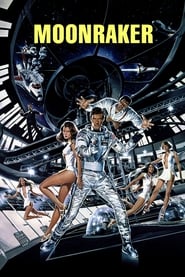
I believe that after The Spy Who Loved Me... ... which had been a big success at the box office... ...the budget was increased for this film. Which it had to be because it was... It really was larger. We moved from Pinewood to make Moonraker... ...and set up our headquarters in Paris.
2:03 · jump to transcript →
-
Roger Moore
Which I suppose was why he did this. It's sort of confessions of an English secret agent. Where we're shooting is Chateau Vaux de Vicomte... ...which is one of the most beautiful chateaus in France. And the man who built it... ...Was actually... ...I think, minister of finance in France. And he was so pleased with this magnificent chateau... ...he'd built for himself... ...he invited the king amongst all the other dignitaries... ...for the opening party. And the king said, "Where did he get the money for this?" And he slapped him and his wife in jail for the rest of their lives.
13:17 · jump to transcript →
-
Roger Moore
When I think-- Looking at this, and think back to the years before... ...when I did a television series... ...we'd had technical things like this... ... how amateur were the ones we had as compared to what Bond had. But, of course, there again, a lot of money was spent on Bond. And the one thing that I always say about the success of Bond is that... ... they never cheated the audience. When it came to spending the money... ... they put it up on the screen.
43:38 · jump to transcript →
-


Related topics
Other topics that frequently come up in the same commentaries.