Topics / Studio & business
Budget
118 commentaries in the archive discuss this, with 429 total mentions and 59 sampled passages on this page.
Filter commentaries
Filter this topic by the film's decade or the type of commentary.
By decade
Across the archive
ranked by mentions · click any passage for the moment in the transcript
-
-
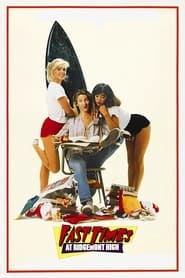
Oh, who was the karate kid but we couldn't afford him because we didn't have enough money? Ralph Macchio. Ralph Macchio. Matthew Broderick. Matthew... Did we see Matthew Broderick? I seem to remember that. There he is. There's that guy from the stereo store. Don't you think he looks like Richard Gere? Did you see his cute little butt? Okay, you guys. Let's talk about that fox that just walked in. We already were.
2:18 · jump to transcript →
-
That means one team has to win by more than 14 points to win the money. This dude was interesting. That was, yeah, an actual punk named Walter. I just liked his look, so we put him all over the place. Yeah. Here's where I really screwed up. Why? Well, okay, we went to the high school during a game and we shot all this game footage.
46:55 · jump to transcript →
-
That's good. I remember doing the research for the book. I was really struck at how everybody had jobs in the three years that I had been out of high school, or I think it was longer, four years or something. I noticed that everybody had jobs now, and there was this quest to get the money for records, clothes, and all that stuff, and it changed all their lives. Thank you.
1:06:04 · jump to transcript →
-
-
director · 1h 31m 3 mentions
Alex Cox, Michael Nesmith, Victoria Thomas, Sy Richardson + 2
-
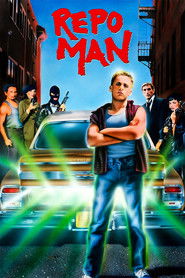
the little dangly pine tree, which was the only sponsor that you got for the film, besides Ralph's Markets. Ralph's Supermarkets donated some generic goods, including beer, and the Car Freshener Corporation donated about a hundred of these little Christmas trees without scent, so that we wouldn't have to smell them. That was our special effects, right? That was our entire special effects budget.
11:08 · jump to transcript →
-
I love this. They love this. They get run over and they, oh! My nephew got in a fight in Chicago in the movies about that. Why? Because they said I was stupid for throwing the money out the car. Oh, that's too much.
32:52 · jump to transcript →
-
See, it's a generic fetal nitrate. A metal hand. Can we feel it? You see, she's supposed to have a robot hand, you know, and that's not quite a robot hand. The budget didn't quite allow for that.
57:10 · jump to transcript →
-
-
-
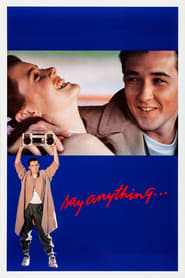
This is so great, the way this woman plays the scene with John Mahoney. What hurts most is not that she declines the card or even that their flirtation ends. What hurts most is the pity. The pity! The pity is so brutal. It's like, take everything, take all the money, just please no pity. And she... Oh, this is a guy...
1:14:09 · jump to transcript →
-
Sweetheart, no. Don't be ridiculous. I need to know the truth. Honey. I swear to God. I swear to God. Oh, my God. I found the money. Oh, baby. It just drains out of him. Look at that. Ooh, I was a lucky guy that day. What am I supposed to think?
1:22:21 · jump to transcript →
-
In the kind of terror that happens in a studio before they put a movie out and spend all the money to promote it, there was a real feeling at the studio at the time, like, who's gonna go see this movie? Is it for the family or is it for kids? There was a screening, and someone invited a writer who brought his daughter, and they just kind of quizzed them after the screening, and some people decided that it was gonna only appeal to kids. So the movie was never really... Kids? Kids? What do you mean, kids?
1:35:58 · jump to transcript →
-
-
-
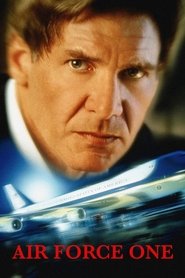
You know, we did not have to pay for this just for the pilots, you know, sleeping in core hotels and so on. And per diems, that's all. So that's really enormous help. Otherwise, the budget would go crazy with all these planes. And the next shot, again, is an effect shot. And this would be the model again. And then there's the capsule going out. And these clouds you see there, we shot these clouds, or I'd say boss films, shot these clouds.
24:14 · jump to transcript →
-
One of the dangers would have been, for me, dangerous to drop the dogfight. I was fighting hard to keep the dogfight in. And finally, they went back to the partners also, to Columbia and to Disney, because Disney, you know, is the film for international. And they all decided to spend the money for the dogfight. So I could do it. And this is a result now. And I think it's a pretty spectacular sequence. It's very, you know, it's not very long. It's, I don't know, like maybe two minutes or something like that, two, three minutes.
1:44:44 · jump to transcript →
-
where a guy honestly tells him why he was doing what he was doing. There's no time to say all that. So finally, we said, let's go just with the drama, with the incredible speed here and the pacing and the tempo and the time clock that the plane would crash any second that people can think about. He did it for the money or he did it for politics, whatever. Whatever the reason was, he just did it. And I think most of the people accepted that. Isn't this spectacular?
1:55:29 · jump to transcript →
-
-
-
Darren Aronofsky
hallucination part of the sequence. The whole score changes, as well as the sound design, as well as the camera work. This was all shot MOS. We couldn't afford to bring a sound rig down into the depths of New York City, and so we shot a lot of this with a Bolex, which is a very, very simple 16mm camera.
34:38 · jump to transcript →
-
Darren Aronofsky
um, spirals that he, um, sort of talks about, but we didn't have the budget to research and get any sort of spirals, and I tried going to the library and finding stuff. But even the internet didn't give me any help. So if you notice now, his POV has gone from like 18 frames per second to 12 frames per second. We just sped up, um, the speed of...
45:28 · jump to transcript →
-
Darren Aronofsky
And I was hoping that audiences, because they were sort of used to seeing the sort of continued hit montage, would have a larger sort of emotional reaction to the fact that it was broken. When you're shooting on a low-budget film, you get one chance to do this. The great destruction of Euclid. You've got to nail it. You've got to pray, especially when you're shooting such a tricky stock as Reversal, that the image is going to come out. And, you know, it's really, you know, faith and...
1:15:21 · jump to transcript →
-
-
-
Kat Ellinger
And as much as Baise-moi can be considered a statement in feminist terms and a statement about rape and a statement about female anger, for example, it wasn't part of any kind of intellectual movement. Some of these choices were made aesthetically and some were made because they were working on a very, very small budget of less than two million francs.
40:34 · jump to transcript →
-
Kat Ellinger
the mode of production was no longer limited to distribution via studios or these kind of established routes. You had a sense of anarchy come out. And so in America, for example, throughout the mid-'80s, you had the SOV movement, the shot-on-video movement, which, again, wasn't really a coherent movement, but very transgressive, very low-budget, very gory horror coming out of America.
45:58 · jump to transcript →
-
Kat Ellinger
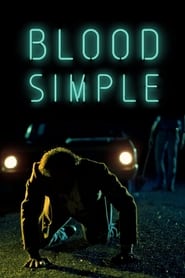
in the original novel and it is the sister character who tells them to go I think she's cleaning for him sort of tells them that the money's there but the way he says to Nadine you must have really suffered and he tries to be sympathetic to her now this scene is incredibly powerful because at first glance you think this guy
1:02:17 · jump to transcript →
-
-
-
It takes a long time to do human sound. Yeah, exactly. The Chops Aki movies I've seen before have had a lot more... They spend like three hours doing it. So this is new, I think, for the Chinese sound men and also for the sound crew here. The density and the variation is a lot higher than the big-budget film they did here. They all say that it's the most difficult film they've ever done. In terms of sound, I agree with that. Yeah, the sound.
20:04 · jump to transcript →
-
Sony Pictures Asia, Barbara Robinson, right, in Hong Kong. And then Tom Bernard and Michael Barker and Marcy Bloom here also got other, convinced the rest of the Sony empire, I think, to take on more. So. This all happened in pre-production, right? It all happened while you were in Beijing, while Bill was in Hong Kong, while Hsu Li-kong, the other producer, was in Taiwan. Presuming we will have the money someday. Yeah, you guys were. Doing this craziest Chinese film ever made.
1:42:36 · jump to transcript →
-
Movie magic. All right, that's one. What was number two? What was the other thing you learned? The other is when you have a few fighting sequences that match the Hong Kong standard for the 80s and 90s, you have nothing really left for the drama, for anything else. A good fighting scene can take you way up to Vermont to shoot. It's very time-consuming. It eats up most of your time, creative energy, and budget as well.
1:46:24 · jump to transcript →
-
-
-
Simon West
course the gag with the sequence is that you're supposed to think she's out on a mission and maybe even in somewhere like Egypt or some ancient temple but of course it's really just in her house in a training area this set was actually tiny originally I planned this to be a gigantic ballroom in the house with all these effigies and statues in but when we were cutting back the budget I had to reduce this set and it's actually
4:11 · jump to transcript →
-
Simon West
Well, one Tomb Raider is good, two, better. I couldn't afford to take the helicopters to Iceland, so when you see them taking off after they've dropped off their passengers, that shot is actually taken in England on Salisbury Plain, and then the opposing shot, when they're walking away from camera,
1:10:34 · jump to transcript →
-
Simon West
This is another of Kirk M. Petruccelli's amazing sets. Originally, this was to be set in Venice, as there were to be three pieces to the triangle hidden in three different tombs. To ease the budget, this was cut down to just two tombs, and I merely combined the idea of this planetary orrery machine with an icy tomb that I had set in Siberia. Chris Corbould again enhanced this set by the use of steam, water, bubbles, atmosphere,
1:15:59 · jump to transcript →
-
-
-
All the people lying down, all those corpses that you see in the church are actually volunteers who turned up for us and I think we gave them a free cup of tea or something, some huge generous offering to ask them to turn up for a couple of hours. They were students because we couldn't afford to hire extras in a conventional way. We didn't have the kind of money to do that. There were people who just turned up and helped us. The man who played the priest was an enormous help to us. He did lots of workshops with us early on about movement. He's a brilliant kind of movement artist.
15:18 · jump to transcript →
-
people pushing the car with her a hold of it, you know, and all that kind of stuff really. It's also the thing that led to a lot of these multiple endings because Jim has been shot and that was the key point. It was what happens from that moment in a way. Yeah. This was as far as we got with our first budget. In fact, this next shot was our last.
1:43:50 · jump to transcript →
-
Waking up. And Fox gave us the money to go to the Lake District and actually shoot this ending and another ending that you'll see on the deleted scenes, really. But to be fair, this was always, this scene, although in a slightly different way, was always in the original script, the idea of going to the Lake District. In the shooting script, it was there, yeah. But the film changed so much during the filming. I mean, quarantine and...
1:45:19 · jump to transcript →
-
-
director · 1h 45m 3 mentions
Eternal Sunshine of the Spotless Mind (2004)
Michel Gondry, Charlie Kaufman
-
But they said if you spend more than 5,000 feet tomorrow, you're sacked. It was really funny. Was that them talking or was that from the studio? Well, it's more from the Bond company. You know, they see the Bond company is a company who makes sure you don't go over budget. And they charge a lot, in fact. But there are people who like movies. Not all of them, but the ones we work with, they like movies. You know, we can talk with them. So...
46:59 · jump to transcript →
-
But it's the expense. If you spend the money for one week after one day of shooting, they talk to you and make sure you stop doing that. This is horrible, this image.
47:24 · jump to transcript →
-
So initially, this sequence was much more effective, the way it was written and the way we thought we would do it. And when we decided to go for New York and no Canada, we have to limit the budget and special effects. And I think it turned out to be more touching. It's less technical. Look, our files are confidential.
54:57 · jump to transcript →
-
-
director · 1h 34m 3 mentions
Scott Stewart, Jason Blum, Brian Kavanaugh-Jones, Peter Gvozdas
-
someone actually on the other end of that phone, and they're really having that conversation with him. And it really helped a lot. It created a real sense of immediacy and reality for the actors on set. Another interesting thing, the mother of invention phrase, which is when we're making movies at this budget level, you have to get really creative with how to make these things
19:51 · jump to transcript →
-
look good and seem like bigger movies and without a lot of resources. One of the big resources in the cinematography department are big lights. When you shoot a lot of a movie at night, if you're lighting up outside, you need big lights. Big lights are very expensive and we couldn't afford them. Boyd was very clever and what he did is he used the sun as a big light.
20:20 · jump to transcript →
-
We're making a very low budget movie version, which involved showing Sam and kind of paying off the idea of the Sandman Sam, the doppelganger Sam that has light for eyes. And you'll see that in the deleted scenes. And it's a very cool image, but it's pretty darn abstract. And so that's always the thing.
1:29:16 · jump to transcript →
-
-
-
But it seems to me that that was something that, you know, you could relate to Welles' theater work only in the way of reusing sets in very imaginative ways. Sure, sure, exactly. Yeah, this was not a big-budget film. He had gotten into trouble with Heart of Darkness because the budget estimates kept coming in so high. And he was careful about this one. He didn't waste any studio money. But one of the things that's, I think...
1:13:33 · jump to transcript →
-
He really didn't do that. Many other more successful directors wasted money. Howard Hawks went way over budget in several of his films. Hitchcock did. But Welles stayed within the financial parameters that were set for him. By the way, there's a point in which he...
1:14:27 · jump to transcript →
-
-
-
David Kalat
He complained that he had to make do with a smaller orchestra than he was used to in his classical works. And to show how chintzy the whole thing was, he directed the musicians while the Foley artists recorded the film's sound effects simultaneously on the same track. The movie studios pinched pennies like nobody's business, even on a project as unprecedentedly expensive as this. The final budget is said to have been 62 million yen.
1:22:13 · jump to transcript →
-
David Kalat
Let's say for argument's sake that Iwayo Mori had never returned to Toho and that some other studio executive greenlit this with the giant monster Tsuburaya's octopus and with little overt Atomic Age subtext. What if Tsuburaya had been given the money to animate his octopus Harryhausen style? Would that version of Godzilla have been half as meaningful? You wouldn't have had to change much in the past to significantly alter the way this came out, but little changes could have had an enormous impact.
1:33:26 · jump to transcript →
-
-
-
Tim Lucas
But Sergio Leone was probably the first Italian director to be indulged with a budget of more than $1 million. You might see crowds like this assembled for the Hollywood on the Tiber spectacles of the 1950s, but those were Hollywood films using Italy and its environs as a location.
1:20:10 · jump to transcript →
-
Tim Lucas
War is a poor alternative to self-centered profiteering, end quote. I have a feeling it's really going to be a good long battle. Blondie? Huh? The money's on the other side of the river. Well, where? Maybe I said the other side, if that's enough.
2:05:12 · jump to transcript →
-
-
-
became very unfashionable for a long time, wasn't it? It was like most science... And obviously it's cheaper to make a Mad Max-type movie than it is to make a 2001-type movie. So if you're envisioning the future... Well, you mentioned budgets. Now, one has to say, and I agree entirely, the special effects in this are still terrific. They're not as good as 2001 because he didn't have Kubrick's level of control, he didn't have Kubrick's budget...
34:02 · jump to transcript →
-
Considering that this whole thing is all to do with the fact that the company would rather return their spaceships to commercial use, presumably Neil is spending a huge budget just to save this one guy who, A, doesn't want to be saved, and B, is a murderer. And I like the fact that this film has a sense that there is a larger story going on out there
53:05 · jump to transcript →
-
-
-
Nick Pinkerton
We have also that massive success in the form of Dirty Harry, which made $36 million on a $4 million budget. Two years later, a sequel in which he would reprise the role of San Francisco cop Harry Callahan makes even more. And this puts him well on his way to being one of the most bankable actors going. So there we are. Another one of these deep-focus, short-lens shots.
32:41 · jump to transcript →
-
Nick Pinkerton
He did what he was allowed to do. I suppose if they'd said make it for $80 million, he'd have done it for $80 instead of $40. What I wonder is what would have happened in a case like that in the old days. What would Jack L. Warner or Harry Cohn have done? They would have been down there when the guy was $100,000 over budget saying, take a hike, kid. When I read that they wanted to go back and re-edit Heaven's Gate with the same care it took to make the movie...
1:33:08 · jump to transcript →
-
-
-
mystical sense to it which i wasn't aware of i must say at the time it was inevitable because the the space launch program was there also wasn't aware of the times when it came out it was probably for pragmatic reasons and then it was the film commissioner was one of the main reasons probably in the budget but but i guess it was really always going to be made there
1:13:24 · jump to transcript →
-
A director like Nick, I think, tries to open as much space as possible between the planned and the unplanned. Most directors don't do that. They don't like to for very good reasons. They have complicated time and budget scimitars hanging over their heads and a very specific story to be told in a specific amount of time.
1:40:26 · jump to transcript →
-
-
-
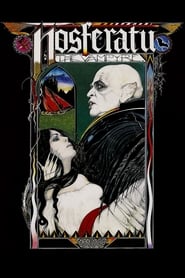
My name is Laurens Straub. I'm sitting here with Werner Herzog, writer, director and producer of the movie "Nosferatu" that you are currently watching. And we now want to talk about that movie. Werner Herzog and I have known each other for about 20 years and have worked together on many different projects. What do we see here? These are actual mummies in the Mexican city of Guanajuato. You have to realize that Guanajuato is located in a gorge. Because of that the cemetery was very narrow and there was no space. So they dug up the bodies every eight years or so, and because of different climatic conditions and the soil, they mummified without human preparation. They leaned them against the walls on both sides in a long underground hall and a hallway. I saw them there many, many years ago in the early 1960s. The story behind this is that I was in the U.S. on a scholarship but I resigned from it a few days in and gave up my legal status in the US because I had to earn some money. Out of desperation I went to Mexico because otherwise they would have returned me to Germany. I went to Central Mexico and Guanajuato and lived there for a while. I did all kinds of crazy things. For example, at rodeos, the so-called charreadas, I rode on wild bulls. Like a complete idiot because I don't even know how to ride a horse, but with the money I could live one week at a time. And there I saw these mummies. Are they similar to the ones at the volcano Vesuvius and formed from lava? No, those are real dried human beings. They barely weigh anything. They were in display cases so we had to take them out and carry them somewhere else. They weigh very little... 10, 12 pounds maybe. Is this something like a culture of death? No, it's completely normal. Isabelle Adjani. She is great at acting scared. That was a real and very large bat we brought in for this. The bat you saw earlier I could not shoot myself. The footage came out of a science documentary because bat's flapping motions are extremely fast, and this was shot with 500 or 800 frames per second. The bats had to be trained with food for that because it took very strong lighting, and normally they would not move under those conditions and not leave their hideout. Here we see Delft. In the Netherlands. That's my city. And I know when Jörg Schmidt-Reitwein teaches students cinematography he first introduces them to Flemish and Dutch painters. Why was Delft chosen as an alternative to Wismar where Murnau shot? Yes, but Wismar was not Murnau's location. I believe that was Lübeck. There is one single shot later in the movie where you see a few buildings that Murnau actually used and that are still standing. I used those as well. We chose Delft because the continuity of the architecture was uninterrupted and we only had to make very few changes in order to shoot there. We took down some antennas and moved a few cars. Other than that it was very easy to shoot there. The concept of "Nosferatu" was definitely to do a variation on Murnau's movie, not a remake in the classical sense. A Biedermeier image like this, for example, is unthinkable in a Murnau film. Moreover, this is in color and the movie's character is completely different. We had to show a very secure bourgeois world. We deliberately planned this, especially the furniture. That was done very thoughtfully by Henning von Gierke who is a painter by trade. With the furniture and the lighting, you can tell that a painter was involved. It reminds me of "Kaspar Hauser" which was done by Henning as well. What era are we in here? That is the Biedermeier era as you can see clearly by the costumes. We researched how to best do the building arrangement and the urban landscapes. Schmidt-Reitwein and I wracked our brains over that. I didn't simply want to recreate paintings. That was never planned. With one exception because we knew we had to work a lot in darkness with nothing but candlelight. Therefore, we studied the painter de La Tour and thought about how to do it if we only had one or a few candles. How do we light that? And Schmidt-Reitwein is exceptionally good at working with light and darkness. This is Roland Topor. - Yes. The famous illustrator, poet, and crazy man. Unfortunately he is already dead, I believe. Yes. - How did you find Roland? I coincidentally saw him in debate on French television. And he laughs in such a mad way. He laughs after every sentence he says. But in such a desperate and strange way that it impressed me deeply. Afterwards I contacted him I told him I was going to shoot a vampire movie and asked if he would play Renfield. Roland Topor immediately agreed. Unfortunately his voice is dubbed in some versions. And it is impossible to fully recreate his laughter. It was his strangest characteristic. What I love about this... I recently saw an exhibition with English surrealistic works from the 19th century. It reminds me of an old office, the cloth, and this blue. It was very carefully lit, and the costumes had to match. Bruno Ganz. And also the faces we chose. Those are not faces that fit into the 20th century. You have to carefully select actors who match. So Bruno Ganz is a great fit for this. The beautiful paper. - Yes. That was so much work, and it was prepared very, very thoughtfully. A beautiful country. Here I see a recurring theme of yours... maps. I already know that from "Aguirre" and other movies. In "Fitzcarraldo" geography is a crucial dramaturgic element. I'm a map fanatic. Oddly, I'm pretty good at determining locations ahead of time, too, because I understand maps. I know which formations you should find in a certain area. I was rarely wrong. It is always about uncharted territory, the Dorado, or doom. Yes, at home I don't have pictures on the wall. A few photographs every now and then, but generally, I can't stand my walls being covered in pictures. If there is anything on my walls of my home it's maps.
0:04 · jump to transcript →
-
This was your first film in English, the first with big stars and a big budget, correct? Well, not really. "Aguirre" is also a big movie with a big star and great effort. But I have to say, we shot "Aguirre" for about 700,000 deutschmark... $360,000. What matters is what you manage to get on screen with the resources you have. To come back to paintings, I like this vase. Yes. Okay. This reminds me of a painting by Seurat. I think the still life-like and emotional atmosphere is phenomenal. But be careful, I always want to show inner landscapes. This was done very quickly, by the way. On that day we happened to have some time and drove to the beach. It was freezing cold, windy. There was foam. We set up the camera in three minutes and sent the two actors, Bruno Ganz and Isabelle Adjani, into the image. We only told them that the music would most likely be slow and solemn. We already had received ideas for the music from Florian Fricke from Popol Vuh. These two, three shots here we did in 15 minutes. We never thought about paintings. It was born out of the situation... - Spontaneously. ...that we found there. Bruno Ganz has tears on his cheek because it was freezing cold. Lotte Eisner came to visit for a few days. We had to wrap her in 20 blankets because it was so cold. I was so proud that she could be there. She was very important for me and maybe for the new German film in general because she bridged the gap to the expressionistic movies back then that she knew very well. She also knew all the representatives of that time. She was friends with Fritz Lang, Murnau, Pabst. She knew them all. For us she was like a bridge to the generation of our grandfathers. We were a generation of orphans who did not have the generation of our fathers. Here I see your wife. Yes, Martje. Martje Herzog on the left. Essentially everyone who was there is in the movie at some point. Later you see the executive producer, the costume designer, the sound technician, and the gaffer. It was also a matter of how quickly can you get something done with very little money. This is the farewell. Bruno Ganz was actually pretty good at riding horses, which was great for me. Now he travels to Transylvania. The choice of the production company... Was this a Century Fox production? No, I produced it myself. Many people believe that 20th Century Fox produced it. But 20th Century Fox only bought an advance guarantee to the U.S. rights for very cheap. They only bought the rights for the U.S. A distribution guarantee. I believe this was... - German Romanticism. Well, you have to be careful. There is a hint of that, but I always try not to be connected with Romanticism because I myself have no real connection with that cultural epoch. Usually I refer to eras before that. The Late Middle Ages speak to me much more. They inspire me. This was shot in Eastern Slovakia. I was not allowed to shoot in Romania where I had scouted locations for months in the Carpathian Mountains. But you also have to see the context. That was when Ceausescu had just been awarded the honorary title of the new Vlad Dracula by the parliament. So he was named the new Count Dracula. That was an honorary title because the historic Count Dracul had been an important figure in the defense against the Turks. This is in the High Tatras, just 1,000 feet to the left was the Polish border. Bohemia? No, Slovakia. - Slovakia? Eastern Slovakia. This is a real group of gypsies that I had brought in from the very East of Slovakia. Among them are a few Czech actors. The gypsies actually speak their own language. Unfortunately I don't remember what it was called. ...my food.
8:53 · jump to transcript →
-
-
-
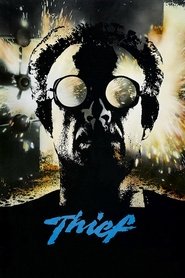
What is it? This is Joe Gags. $185,000 of my money. We have this problem. What problem? What are you talking about? He was moving my merchandise. So the money in his pocket when he went out the window is my money. This is a plating company. What are you telling me to shit? Shit? I want my money. Hey, I don't know what you're talking about, Mr. Frank Lala. Whatever.
19:58 · jump to transcript →
-
remodeled most of the character, but she was really upset that he had gone out, and they had all the money they needed, apparently, and this and that. And I told her to take it easy, and I spoke to John. I said, why, John? And he said to me, some guys like broads. And God, that was really, I mean, what an insight. I mean, he just had to do it. He had to do it, yeah.
2:02:28 · jump to transcript →
-
-
-
Peter Greenaway
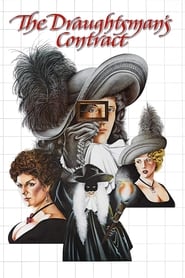
So we could see here all the foreign influences on the English aristocracy. The import of Indian tea, but served in Delftware, produced in Holland. It has to be said, the budget for this film, way back in the early 80s,
1:28:58 · jump to transcript →
-
Peter Greenaway
For a film of this complexity and this density and these production values, extremely small, and these objects on the table were the real items belonging to the house we used, and it was estimated that Christie's had insured those four items of ceramic on that table as ten times the total budget of our film. So we were very much indebted to the owners of the house to be allowed to use these real antique artifacts.
1:29:20 · jump to transcript →
-
-
-
So this is a terrific set. This is the one I pointed out to you earlier that we built-- Philip built right on the site of Piper Tech, up on the roof. And it looks-- It's totally believable, and yet, very flexible for filming. They actually didn't have anything like this that we could use... ...and we needed more space than what they had... ...so they let us use it. And then when the filming was done-- There's the building, right there, that we made. --We had to take the building away... ...because it really wasn't built up to code. Yet, we could give them all the aeronautics equipment-- The helicopter police-- --Give them all the aeronautics equipment that we had had to buy... ...for the movie. And they were delighted to have that... ...because the city budget wasn't so great. And a lot of their equipment was kind of out-of-date... ...and they couldn't afford it.
37:30 · jump to transcript →
-
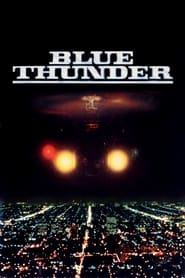
Here's another almost-- Antiquity. You have to really go a long ways to find drive-in movie theatres. And I think Frank and I laughed a lot... ...about the idea of burying a tape inside a dumpster. You know, this-- - This is stretching it a bit. We're really, really stretching it... ...that Lymangood would put this stupid thing inside the dumpster. I mean, it was a lot of fun because, here, look what-- Candy Clark getting to flip upside down and so on. But it was not the smartest place in the world to do this. When Columbia later decided to make a Blue Thunder television series... ...this truck is the very one that they decided to use... ...because they couldn't afford to fly the helicopter... ...so they had to do it all on the ground, which was another brilliant decision.
1:18:45 · jump to transcript →
-
-
-
Jim Piddock
are actors and filmmakers who do like their hand properties. And why not? You pay the rental, you want to see the money on the screen, as they say. Zhivkov pockets the lucre. We'll maybe see that lighter again as he dons his hat, yes. He's forgetting the lighter and one wants to cry out, Zhivkov, the lighter! Perhaps one imagines Fred Astaire and weeps for what might have been. And yet, this actor leaves us not
41:53 · jump to transcript →
-
Jim Piddock
We serve a rather different audience. I like to think it's a connoisseur audience, interested in the more artfully done sort of thing. And, of course, we couldn't compete in acquiring the Rambos anyway. We just don't have the budget. So we ferret out those movies that have fallen into the public domain, the older movies, sometimes movies from countries not on board with the International Copyright Convention. It doesn't mean they make bad films.
1:06:16 · jump to transcript →
-
-
director · 1h 29m 2 mentions
Jeff Kanew, Robert Carradine, Timothy Busfield, Curtis Armstrong
-
This little camera slide, though, that's a directing thing, which hopefully is good. And here come the flying basketballs to interrupt the dean's speech. And that's what would happen if you lived in a gym. Not a lot of guys left because a lot of people have found homes. And also because we couldn't afford to have that many extras every day.
16:37 · jump to transcript →
-
Here's a local guy that, we shot this in a Masonic hall, and this was the caretaker. So we put a jacket on him. Or maybe it was his own jacket. I don't think we had budget for extra jackets. Neil, gentlemen. We're trying everything. I think you can tell right there, but I've...
31:37 · jump to transcript →
-
-
-
The third day or something, he said, this is like a stupid thing to be doing. Nobody's ever going to be able to make sense of this on paper. Let's see if they'll let us take the money and make a demo of the movie instead. They didn't care what we did with the money as long as... As long as they didn't write or do anything. Yeah. You know what I need. This was actually shot during the demo shoot. So this is the earliest piece of film that's in this collection. You look so young. That was my real hair, too. Yeah.
4:51 · jump to transcript →
-
was fired for sexual harassment, and his job was filled by two women. So you know that there was a no-nonsense cloud hanging over that building, at least for a couple of days, and that's when we submitted our video. This is a scene where you can see just how small our wardrobe budget was, because I think most of us were wearing our own clothes at this point. I had dredged out this strange down coat that I'd bought to wear in New York a couple years before. We really were, you know, operating on a shoestring. We had this wonderful wardrobe lady named Renee.
26:16 · jump to transcript →
-






Related topics
Other topics that frequently come up in the same commentaries.