Topics / Writing & development
Adaptation & source material
141 commentaries in the archive discuss this, with 1,321 total mentions and 31 sampled passages on this page.
Filter commentaries
Filter this topic by the film's decade or the type of commentary.
Showing 37 of 141 commentaries
Clear filtersBy decade
Across the archive
ranked by mentions · click any passage for the moment in the transcript
-
-
Noah Baumbach
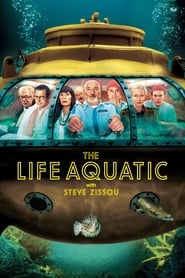
Let me tell you about my boat. This is something when you first brought the idea of the character and the story to me, this was something you always wanted to include. I remember you said, you know, idea of this character, originally named Steve Cousteau. We later made him Steve Zissou. Oceanographer. He has this show. And then you said, "I want to do this--" Visual. - This visual. So this set, this is sort of inspired by, you know, World Book Encyclopedia, and Time-Life books, and, you know... elementary school books with fold-outs. And so that's kind of where it comes from, but making it in three dimensions. And for me, it was just something that I was inspired by. And it was years and years ago that I was planning to do this. And it was very kind of thrilling to be able to build this set because it was such an unusual one. And so many people-- For us, the movie is about all these characters who we made up, but they relate to people we know and they're characters we really love. We don't really have a lot of bad guys or anything. We just have these people we connect with. And the idea of having them all in there at once in this environment, that sort of encapsulates something about the movie. I think it goes back to what you were saying about your-- That this is also about what you love about making movies, and how you feel, you know, sort of lucky and privileged to be able to do it. And here, you know, in a way, this is like your dream of, "If I could make a movie, I want to do this." I mean, you've had this for so long. - Yes. And we shot it... It was like shooting a play. Explorers Club? - Right. You were on the set. - Yeah. This is-- Yeah, I spilled an entire espresso on my shirt. During the filming of this scene? Yeah. I was so jet-lagged. I was listening with a headset and it somehow disconnected from the headphones, the little mic part, and it knocked the espresso out of my hand and all over my shirt. Yes. You know, I always like paintings. - You do have a lot of paintings in your movies. - Yeah. And those tell about the character of his mentor, Lord Mandrake, and then we have Zissou, and then we have... And this story was actually based on something a friend of ours had been talking loudly in L.A... Chris Eigeman. Chris Eigeman had been talking loudly at an Indian restaurant in L.A. He thought that there was somebody who looked like a famous action hero, and he was talking very loudly about what happened to this guy, and it turned out to actually be the guy, and Chris was humiliated. And we lifted it wholesale and dropped it right into the film. And at one point you were going to have Chris play the guy until then you decided to make him Italian. It seemed nice to be able to put it all in subtitles. The Explorers Club is also-- This place is inspired by a club in New York who actually let us use their flag, which you can see in the background. And it's the Explorers Club on 70th Street, a block away from where I used to live.
14:59 · jump to transcript →
-
Noah Baumbach
Okay, now we'd like to talk a little bit about how Noah and I came to write this movie together. I'd written my previous films working with Owen Wilson, but he was working more as an actor and less and less available. And then how was it that we came to work together on this project? Well, I guess I had shown you a draft of a script I'd written called The Squid and the Whale. I'd shown you a very early draft of it when you were just about to do Tenenbaums. And you gave me Tenenbaums, and I gave you Squid and the Whale. And you were... It was based on a lot of stuff from my real life that you had heard me sort of tell as stories, and you were very encouraging and, you know, offered to become sort of more officially involved as a producer, and sort of help me shape the script and get it made. And I think, you know, working here in Bar Pitti, we sort of discovered we really liked working together. Yeah, the other thing was we had a movie that we sort of started spontaneously inventing together, which we haven't even written. We've just kept it as notes for the moment. But it happened so naturally that I then asked you to work with me on the script for this, and then we began to meet and work on it each day. Yeah, and then, you know, I think what was nice about it is it was... You know, it really came very much out of our social interaction, which is probably why we work in a restaurant. It's a way to kind of pretend we're still just socializing, but call it work. - Right. And it makes it-- It makes it-- Then it makes it fun to-- You know, then we're gonna entertain each other as we're doing this. Right. - And we also feel inspired. It's a really hard thing to come up with a writing partner. I've only had one other writing partner, and that was like, you know, very kind of formative experience for me, for Owen and I to work together. - You grew up together. We grew up together, we learned to be writers together. That's also part of why, even though Owen's not working on the script with us in this, it's very important to me that he's in the movie because... Yeah, we always knew he was gonna be part of it, so he was always a presence. - Yeah, yeah.
49:52 · jump to transcript →
-
Noah Baumbach
We had-- This was actually something we did a little research on was sort of the more modern-day pirate situation, sort of inspired at least the sort of design of these pirates and the vibe that we get from these pirates. Yeah, I know we talked about the pirates being kind of-- Trying to make them feel like documentary style and that the movie would suddenly snap into kind of a William Friedkin-type of very real, very energetic. In the end, however, the pirates arrive while a guy's playing a David Bowie song on the deck of the ship, and Bill's sitting here in a blue-tiled-- There's so many things to undermine it, and it ends up being some-- And also, by the way, my idea of what the pirates would look like is not reflected in the film. This is what we kind of-- This was trying to do, but somehow it ends up being much-- They end up being funny and... We cast people who we had in Rome. They're not real pirates. They're-- And they brought-- You know, there's more about these-- You know, they brought themselves to it and the feeling on the set. And it ends up, I think, being different from what I envisioned and being more like the rest of the movie. I don't know. I think it affects different people in different ways. You're talking about... the editing style of the movie. I was thinking about it there with the quick cuts as the pirates come rushing in. Sort of... Another thing I've sort of thought about, which I didn't mention, is like when he opens the correspondence stock, and then suddenly we just cut right to the-- You know, rather than take the time to show him opening the-- Yeah. - You know, and-- You know, but at the same time, you like to do a lot of long takes and a lot of, you know, let the actors really kind of behave in scenes, and I think it's a-- We've talked about sort of a French New Wave style of editing... Yeah. - ...that we respond to, sort of, you know, just getting the boring parts out of the way, but taking time with the stuff you think needs to take time. And I feel for some people-- A movie like this, for a lot of people, I think it plays as deliberately paced. And then for other people, it seems like breakneck. But I think for a larger number of people, it's slow. But, you know, it's just sort of-- Now, here's something we do here. We go to a very... Very cool timing, in blue, for this section of the film. During this pirate attack thing here. And then it comes back to the warm, because most of the movie's time, very warm, very yellow, a lot of red. And... And in the end, I think the way the movie looks, it's also very saturated colors. The way most of the movie looks is sort of inspired by the way the Ektachrome stuff looks, which was not the original idea. It's just sort of what felt right as we went along. Although this sequence, to me, looks more like... Like Bud Cort looks like the way the photographs look, the way they're printed on the front page of The New York Times. - Right. The way that has some documentary kind of feeling. Yeah, there is that Friedkin feeling of sort of '70s color, or at least '70s color as we now experience it on television. Yeah. These things are filtered through things like that... I like how Bud does the Portuguese. Yes, Bud studied very carefully how to get his dialogue in Tagalog, I think, it's Filipino. He'd originally learned it in Indonesian, but then he had to switch. And he had it very precisely figured out, although we also had his Filipino translator on the set with us, who Bud ruled over and... ...is his sidekick.
59:21 · jump to transcript →
-
-
-
We always had in mind, uh... we are huge fans of submarine films. You know these films where everybody is locked in a very small, tiny place? And we love the idea to start a film doing something... trying to keep the detail of everything. People is... Watching, it's very interesting watching. Where are these people? This scene wasn't in the original script by Rowan Joffe. It's a very strange sequence about surviving. Critics and audience love these scenes. We also love these scenes. In the process of writing, we always thought that was... We wanted to make the film... all the film about this scene. And, uh... it was really a real challenge to... to make the rest of the film better than this. It was, from the very beginning, a real challenge. Especially because, I think, in this moment, we build the movie from probably, to me, the heart of the story which is the family. And how this family, how this husband and wife, are talking naturally about their children, and then we, as we see, we introduce other characters in this house. The story begins with them talking about their children and then we see how now they are not alone, they are living with more people in the house. And these characters now are introduced step by step. We are adding these elements of weirdness and strangeness. We think, at the very beginning, that this couple is alone, then we are introducing all the characters around the table. It's very... We love, Juan Carlos and l, we love, particularly, Luis Buñuel and his sense of humour and surrealism. Obviously, that wasn't about that, but we tried to bring to the horror movie some kind of weirdness in this moment. For example, in the moment when Shahid is reading the newspaper, it would be very, very easy to put a close shot of the windows locked. We prefer the audience notice this naturally, instead of working with them in this... in the sense of trying to give them the elements directly. Especially in this sequence, we can feel somebody who is not in the cottage - the boyfriend of Karen. And then through this conflict about if he's coming or not to the cottage, we see how now somebody is knocking at the door, it's a kid, and then we realise that there is something, something in the exterior, which is a kind of menace.
1:38 · jump to transcript →
-
In this part of the movie, we see London devastated and how now militaries are in control of the city. We introduce the character of Doyle, the sniper. In a way, I think that this beginning with the city, in terms of how we presented the city, we Start from the air with an aerial shot and then we landed on the rooftops with these snipers. And then, later on, we're going to see the city from the ground. This is a kind of trip from the air to the ground to see the effects of the infection, and how now the militaries are trying to rebuild and repopulate the area. This stuff with the militaries talking is inspired from the reality, because we made fantastic research with Alex, Alex Garland, about how soldiers speak in these situations and how the process... how the rebuilding process is absolutely based on real stuff. Yeah. It was really important to imply everything from reality, to move... forward in a situation that never happened, but has something in common with all the situations that happen in wars. In these shots of the airport, I think the work of Sean Mathiesen, the visual effects supervisor, is fantastic because we don't see anything in this airport. Everything is removed from the original shots because, in those shots, the airport was very busy with a lot of planes. And then in these shots, we see how now there is nothing in this airport. In this movie, it is particularly clear that the special effects is something crucial to get this feeling, to get this flavour of the emptiness of London. Yeah, the work of Sean Mathiesen is really notorious in this film. It's probably more difficult to remove than to add, and Sean made a fantastic work in these two ways, in these two senses. Most of the military presence is added visually by Sean and his crew.
12:25 · jump to transcript →
-
And this one was the original idea to show the iconic London through the eyes of the kids in this travel. I think it was important to find the right locations to show this abandoned London, but always from the point of view of the kids, which is a more character-driven style, which is something that we love. And, on the other hand, we can see this fantastic city which is London in an unnatural way. I mean without life, without anybody, which is, I think, one of the big images of this movie. Yeah, Tower of London is always dreamy, no? It reminds us of Peter Pan... Charles Dickens. This cemetery here is absolutely amazing.
32:12 · jump to transcript →
-
-
director · 1h 26m 5 mentions
Underworld Rise of the Lycans (2009)
Patrick Tatopoulos, Len Wiseman, James McQuaide, Richard Wright + 1
-
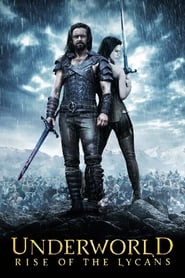
My name is Patrick Tatopoulos. I'm the director, this one. And I have something to do with the two other ones as well. Hi, Richard Wright, producer of all three. Gary Lucchesi, producer of all three. James McQuaide, VFX supervisor of all three... ...and executive producer of all three. See, we don't stray far from the family. We like to keep this in-house. - That's right. This is the first time you're gonna see a Sketch Films logo. I just want you to know that. - Won't be the last. My family and friends all cheered in the premiere at that. Viktor increased his army, creating... So, Patrick, do you remember the original concept... ... for how far we were gonna start, how far back we were gonna go? We were gonna go to the beginning of the story. I mean, the plague, with Corvinus and everything. But the thing is, we had a plan to actually shoot... ...some little elements of that and get to the little sequence at the beginning. So we'd see actually part of the plague... ...part of the first bite, you know, William. And, yeah, ultimately, we had to concentrate this... ...on something a little tighter, and that's what we got. You know, just ran out of money. And you know, when I first saw that baby right there... ...when I saw the dailies, I thought it was animatronic. When it was next to the werewolf. - It is. Actually, we were watching and... Real werewolf, though. - Yeah. I thought there's no way they're putting a real baby... ...next to a terrifying creature. What price stardom?
0:20 · jump to transcript →
-
Now, there's a very Underworld prop. Yeah, it shows up all over the place. - You know, this was something that.... There's many things to.... Actually, that I can actually address now. I'm hearing questions that are asked, and I don't really get to answer them. The.... The Sonja back-story... You know, Sonja was always the one that.... Well, Selene reminded Viktor of his daughter... ...and there was a similarity between them. And when we actually shot the death scene of Sonja... ... ln Underworld 1, we actually... People talking about, "Why is she blond?" "And now you've got Rhona Mitra, and she's got dark hair." "And couldn't the filmmakers just go back and watch the first film?" Of course we watched the first film. And it really just came down to a budget in the first one. And, Richard, you'd probably remember... ... that we literally, we had... We were given the okay to actually shoot that. One day. We got one day. - That back-story. One day, and no money, and one actress... ... that even remotely had an interesting look, but had blond hair. And at the time... Then we had, like, a day to find her too. And it bugged me at the time, I'm thinking: But it's supposed to be Sonja who reminded... Viktor. - Viktor. And so she has to have dark hair. And we asked the actress to dye her hair... ...she wanted more money. It was one of those things that you just think... And it just couldn't happen. We literally did not have the money to pay to dye her hair... ...and then have it coloured back again. And we didn't have time to build a wig that looked appropriate in one day. And so there we have it. And Sonja was more of a blond girl. And so that's.... I would actually now love to, in some version... ...take the death scene that we have now... ...and put it in Underworld 7. Funny you should say that. That's what I was doing all day today. - What do you mean? Recutting the genetic memories using footage from 3... For fun? - Yeah. For who? For a future... Exactly, just to have it in the bank. Cool. - Yeah. You know, there's a.... You know, I'd love to see this whole series all put together... ...because I think, unlike a lot of series... ... this actually does tie in fairly well, hopefully, to the other films... ...and actually arrange them in a proper timeline. With this one first. - Yeah, it really does. And therefore, kind of swap out... And also, just money-wise, we didn't have the ability... ...to do the kind of set and setting for her death scene in the original one. We had to revamp the crypt, which I never think really sold... There was an interesting thing when I watched it again... ...While we're doing this one, that there was actually Lycans... ...people standing around the room. Yeah. It was interesting. Actually, when you first talked to me about directing this one... ...I was thinking she was gonna be blond... ...because of that, because you had established that. I was not thinking. When I was starting to think about casting... ... I was like, "Oh, so she's Eastern European blond. That's what she's gonna be." - No, not at all. I was actually.... I was amazed at how many people actually, for a scene... ...that shows up for, you know, maybe 30 seconds... ...1n the original film, how much everybody really remembered... ... that she had, you know, blond hair, and.... I guess of course they're going to. For me, it's just... To do an entire film where the whole basis... ...of Viktor saving Selene is that there was such a parallel... ...to his own daughter that she had to be dark hair.
36:47 · jump to transcript →
-
Well, one of the things that makes Underworld so unique... ...1S that it's based on original material. There haven't been that many movies in the last few years... ...that have had two sequels to the original product... ... that weren't based on books or adapted material, you know. This isn't The Lord of the Rings. This is something that Len and, you know, Kevin Grevioux... ... sort of created out of their brains. And Len always had this great desire to make three movies... ...and son of a gun, we were able to. I love this wall. Today, I still get people, you know, say, "I don't get it. How did you go from being a prop guy doing, like, set dressing... ...to somebody handing you a comic book to direct? Like giving you the rights to a book, or giving you rights to a comic book." And I think a lot people just assume that it is developed... ...Off of a comic book already and it was already existing material. I think in fact the only reason I was able to direct it... ...1S because I had written it. Otherwise, I would not be here at all. - Yeah. lt would've gone to some other guy. We all had a good feeling about Len Wiseman when we first met him. I don't know what it was. I think it had a lot to do with your personality and your character. Well, being able to draw certainly helps too. You could show people what it is you wanna do. You'll find out soon enough.
40:45 · jump to transcript →
-
-
-
Tom Tykwer
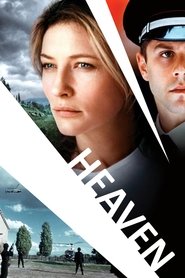
Kieślowski and his co-writing partner Krzysztof Piesiewicz. Both of them had written an amazing body of work before that. The famous series called Dekalog, based on the Ten Commandments. The trilogy of three colors, blue, white and red. And among others, a film called The Double Life of Véronique.
1:34 · jump to transcript →
-
Tom Tykwer
to say no. Well, I'm really curious to read this, but I'm definitely not the director, the right director for this project because I don't want to mess up the testimony of one of Europe's most amazing filmmaking heroes or legends. So having gotten rid of that pressure, I opened the book and I started to read it.
3:03 · jump to transcript →
-
Tom Tykwer
And actually the book, the screenplay started with the scene we're right now seeing. The very first page opened with this woman who looks pretty tense and obviously creates something that we very easily identify as a bomb. There is an atmosphere of danger and also of despair, but more an aggressive tension in the room that immediately
3:32 · jump to transcript →
-
-
director · 1h 42m 3 mentions
Len Wiseman, Patrick Tatopoulos, Brad Martin, Nicolas de Toth
-
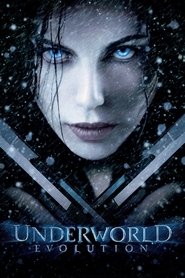
um tony in the medieval village right yeah that was the original beginning right and the problem is there there's you know screened it and with uh there's you know a lot of people not knowing who singe was if singe was a lichen and just the a little bit more of the background of of underworld one needed to be stated first the human descendant of corvinus yes all of this was created way after the fact because we shot it i mean you shot it
8:59 · jump to transcript →
-
with that original transition in mind. Yeah, what the original plan was, there was a sequence where we just held off on this. It was going to be the Underworld wrap-up, where Marcus, when he awakens, he bites Kraven's neck. Through those genetic memories of biting Kraven, he ends up getting what is basically the Underworld 1 wrap-up, and kind of last time on Underworld so that everybody gets to speed. And it just, it was a bit too long to wait for that to happen at that point.
9:27 · jump to transcript →
-
Well, there's the original original one, which was Selene as a child running into the barn, and then the medieval sequence, and then the eye. Yeah, the script went through many revisions. And Kate and Scott. I wish Kate and Scott were with us. Yeah. That's a big bummer. We had a really good time with them, and they're both... Kate's in Nova Scotia shooting a movie right now, and Scott, I believe, is...
9:55 · jump to transcript →
-
-
-
The acupressure. I don't know how that works, but it's always in the novel, always in the movies. This is the standard. If this were set in New York, it would just be focused on their sinuses.
35:36 · jump to transcript →
-
No, in the book, Yu Jiaolong, Jen's character is a tomboy. It's very male-ish, kind of very boyish, aristocrat woman. And I realized shooting in the desert, even if I beat her to death, I couldn't make her that way. And this is the scene I realized she is sexy, very feminine. So it sort of gives you bad ideas. It took you that long to figure it out, huh? Okay.
1:04:18 · jump to transcript →
-
-
-
Jonathan Lynn
This is the only scene in which we made substantial changes after our first test screening. In the original script, Oz, towards the end of the scene, made a long declaration of love to Cynthia. We had never questioned this, but when we saw it with an audience, we realized that it happened too soon. It was only his second meeting with her.
33:41 · jump to transcript →
-
Jonathan Lynn
It's in the same key as the original Max Steiner score. So we've got the old Max Steiner music and the Randy Edelman score playing together here and intertwining with each other. Looking for a new way to have a shootout, I thought it would be really good if Bruce shot in silhouette. Of course, the script called for this
1:06:17 · jump to transcript →
-
-
-
To me, I think that shot could have even been more effective. But you live and you learn, and it worked. This next sequence coming up is very interesting because it employs some photography from the first picture. This is new photography. When Steve conceived of this sequence, he always wanted to use photography from the original movie so that it would rhyme with it exactly. And you'll see that it does.
1:10:13 · jump to transcript →
-
you see how Oded has really learned how to ride the horse. He does a fantastic job in this sequence. And once again, when we get into the battle here, he's fighting things, and all these men are fighting things that aren't really there, which makes it very, very difficult. In this wide shot that's coming up here, if you were to see the original plate, there's all these guys in blue suits that are standing there
1:44:47 · jump to transcript →
-
-
-
Wes Anderson
And all the taxis in the movie are gypsy cabs, which is, you know, in New York, you have these gypsy cabs uptown, which they aren't actually officially called gypsy cabs, but that's what everybody calls them. We just decided to institutionalize it for the movie. These dalmatian mice are made with a-- You just-- Probably shouldn't say, it's probably-- They're made with a Sharpie, but I don't know if that's legal. That's supposed to be Royal's mother. And, uh, we had a couple of runs of trying to find one and make one. And eventually we had to just cast a nurse, dress the whole thing. We had to find the right painter. And it was a whole production just to make that portrait of the nurse, which you just see for a second there, but I really liked it. A lot of stuff that should be easy, like, you know, dressing somebody in a red Adidas warm-up, that should be a breeze. You should just go to the store. But then it turns out they don't make the right color. And the red is different than the one they used to make. The cut of them is different. It doesn't-- You know, you end up having to make everything if you want it to be right. Like, for example, there's stained glass windows behind them here. We had to make those stained glass windows because the windows in the house, which they're based on, are six feet up above. They're at the top of the windows, as a result of which we never would see them in the entire movie. So we had to make another set and lower them down, so you'd actually be able to see them.
27:08 · jump to transcript →
-
Wes Anderson
The text of these chapters is taken from the script, which I thought was right because I didn't think that... I thought the movie and the book should be the same thing, in a way. It's based on a fake book, but the book should only exist kind of as the movie. That's why, like, the words, "chapter one," "chapter two," aren't written on the pages. They're superimposed on it, so it can kind of only exist as a movie. A weird abstract idea, really, to no end, but that's sort of what I was trying to accomplish.
1:21:37 · jump to transcript →
-
-
-
filled the tank with powdered quinine and used our UV lights. And on the day of the shoot, got about 10% of the original effect and panicked and realized that for some reason it was only the tonic water that gave off that hue. And so I had every PA run out to every Costco in Toronto and came back with 800 bottles of tonic water and shot the scene. And I think it's quite effective. It's magnificent. When...
33:12 · jump to transcript →
-
We had to go another way because of some technical problems, but one of which arrived out of the original format we decided to shoot on. Going into the movie, we had always planned on doing it anamorphic, and although we weren't going to be the first submarine movie to be shot anamorphically, certainly I think Crimson Tide was shot anamorphically, which is a format.
1:21:25 · jump to transcript →
-
-
-
Barry Sonnenfeld
This is one of my favourite scenes. Tommy is just wonderful in this scene, and he doesn't have any dialogue. There are my favourite bike guys again. Rick Baker designed this little guy with those little hands. We've got the nitrogen tanks that you'll see all over New York City... ...that I'm pretending transport Men in Black throughout New York. That's part of their secret transit authority. Remember the use of cockroaches at the end of the first movie? Now it's all coming back to Tommy. He's rebooting. Danny's score here is beautiful. That's the original theme... ... from the first movie, where Tommy's old partner... ...asked him to neuralyze him on the rock in Arizona. And now Tommy's back, just with that smile. It's a wonderful moment. Fellas, I think he's telling the truth. - Then he's no good to us. Didn't I teach you anything, kid? - Pineal eye!
43:05 · jump to transcript →
-
Barry Sonnenfeld
What's the book say? - We're off book. I say split some wigs. Now, coming up is my cameo. We're watching Martha Stewart, of course. That's me. This is Tommy Lee Jones' daughter, Victoria... ...and on the right is Stephanie Kemp, the associate producer. Now, the problem right here is, until this shot... ...I did not know that I was losing my hair back there. So I said to ILM, since they're adding all those worm guys anyway... ...which are like $90,000 a piece... Here you go again. Why not give me some hair? But they wouldn't do it. And I begged them to do it. I think they wanted to charge me more money. This is a real wall that was able to go up and down like that. And I love that there's this tiny, little room... ... with this huge closet of special weapons in the background. And she can stay up as late as she want... Which is every kid's dream. This was a new set we bullt. We called it the impound set. It was the same set where we parked all the cars... ... where Will and Frank were walking towards his new Mercedes.
1:02:17 · jump to transcript →
-
-
-
It's definitely one of the first things that grabs you when you watch the animated series. It's very unusual, very well done. This was always very interesting to me, to create a world that wasn't a futuristic world that felt like this kind of dreamt-up world, but something that had some kind of reality based on the issues that we're dealing with today. So I always liked that little write-up and that this world of Bregna with this voiceover that
1:07 · jump to transcript →
-
It would be impossible to do that. And I thought that Enzo Angileri, who designed and cut this hair, thought that he did such a great, it was such a great throwback and homage to the original and yet something that we could work with. I just thought he did such a brilliant job. And it was also one of the first things that Peter Chung said when he came to the set was that he loved the hair, which was really great.
40:29 · jump to transcript →
-
-
writer · 1h 31m 2 mentions
Wes Anderson, Roman Coppola, Jason Schwartzman
-
Roman Coppola
I remember doing this scene was-- That driver? No, I don't remember the driver. Because he was-- That was a driver with henna hair who we always would see at the place where all the auto-rick drivers wait there. We would always see that same driver. He was our stunt driver for this shot. I remember this sequence, with the dialogue scene with the short story... Yeah. - ...we found a little hill so we could roll the rickshaw down the hill without having the motor on ruining the sound. Yes, that's right. We rumbled down the hill. And what's the name of that--? Of the boy on the bicycle? He was a... - Spot boy? He was a spot boy for us. He brought tea, chai, onto the set, and he was very bright. I'm trying to think of his name. One thing about Brendan's character, I just wanna-- Would just mention just as an homage is his hat-- There's a logo on his hat for Francis Whitman Industries, which is actually my father's business. I mean, he's retired now, but it was-- His business was called Mel Anderson Communications. That symbol was his-- It's his-- It's based on his logo. In this part of the train, we have Brendan's living quarters. I think this is the non-a.c. section. These cars on the Indian trains usually don't have windows. The engine, as you can see there, is-- The paint job on it is based on the Tata trucks that you see on the roads in India, hand-painted by the drivers.
27:32 · jump to transcript →
-
Roman Coppola
And that goes straight into this scene with-- This scene where we visit all our characters in the story while we're on this moving train, which, we built this set on the train. That's a door, actually, that you can see out. So this is actually where you are now, Jason. This is based on my apartment in New York. And, anyway, these-- - Yeah. All these rooms are built on this train with this dolly track in it.
1:18:31 · jump to transcript →
-


Related topics
Other topics that frequently come up in the same commentaries.