Topics / Production
Weather problems
136 commentaries in the archive discuss this, with 697 total mentions and 72 sampled passages on this page.
Filter commentaries
Filter this topic by the film's decade or the type of commentary.
By decade
Across the archive
ranked by mentions · click any passage for the moment in the transcript
-
multi · 1h 49m 8 mentions
John Cork, Ursula Andress, Eunice Gayson, Margaret LeWars + 20
-
in the Cold War drama, Action of the Tiger, as Terrence Young's daughter, Juliet Neeson, recalls. He'd worked with Sean before, Action of the Tiger, and Sean played a tiny little part in that. And apparently he came to him and said, you know, I think he'd read the script of Terrence's next film, which I can't remember what it was going to be in. Sean said, you know, can I be in it now?
23:42 · jump to transcript →
-
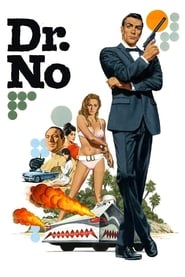
They went to Jamaica at a time when the weather was very inconsistent and they had storms and they had showers and they had rains. And they were on a tight budget, so it wasn't easy for them. They couldn't sit and wait for the weather most of the time. So it was quite varied in many ways. And Terence had a job because he had to manage to get quite a lot done within the period of the time.
59:01 · jump to transcript →
-
And in fact, they didn't. They left a great deal of the film, which they'd planned to shoot there, undone because of the weather situation that they came across. I mean, there were some times when they just couldn't shoot. Being a pilot, Timothy Moxon knows the Jamaican weather all too well. It rains all the time because of the Blue Mountains, the orographic lifting, you know, and it's torrential a lot of the time. So it's very verdant.
59:29 · jump to transcript →
-
-
-
Francis Ford Coppola
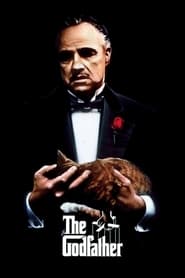
For the Italian people, that's a very religious, sacred... I had worked with Robert Duvall on a film called The Rain People. He helped us out. We had lost our actor in the role of the motorcycle cop, and Bobby Duvall helped us out and played that part, and I was so impressed with Bobby as an actor, how real he could be.
30:24 · jump to transcript →
-
Francis Ford Coppola
This is about the third week of The Godfather that all this happened and this scene was shot. Now this scene in front of the Best Company in the snow was the first shot of The Godfather. It's the first scene of the first day. And Al and Diane coming out of the shopping was shot in the morning, and then that afternoon we went over to Polk's Toy Store and we shot Bobby...
39:50 · jump to transcript →
-
Francis Ford Coppola
This scene was shot in an abandoned diner in New York. It was in Manhattan. It's actually the same interior from the exterior in the snow scene. I remember that the night we shot this, it was really starting to storm, and we were worried whether or not we could even get it because the power was going to get blown out and the wind was so high. And, of course, I love...
50:02 · jump to transcript →
-
-
-
Jim Piddock
Now, here's a technical aside. Though it appears that we're driving, this shot was actually achieved with the car stationary. And the illusion of oncoming traffic, you saw the headlights back there, the illusion of oncoming traffic created by a pair of lights being run at us as if they were headlights. And the sense of motion, it's enhanced by technicians who gently rock our, in fact, stationary car. And the rain, too, is an illusion created by a hose. Simple little...
1:37 · jump to transcript →
-
Jim Piddock
garden hose piddling down on the windscreen, and so we think we're driving in the rain. Now, these pass-bys had to be precisely timed to the dialogue, so this shot had to be done in reverse. That is, if you were there observing on the set, you would have seen these passing lights being pushed, in fact, away from us into the background, not coming at us, so that their moment of entrance, that is, their apparent moment of exit, as it were, could be precisely timed.
2:06 · jump to transcript →
-
Jim Piddock
So much more compelling than any special effect. Isn't that what the cinema is all about? Oh, some gaiety here, and now it seems that these two somewhat tiresome people are about to wind up their interview once again. The human face here, I think, is marvelous, isn't it? Is there anything more marvelous
8:46 · jump to transcript →
-
-
-
Oliver Stone
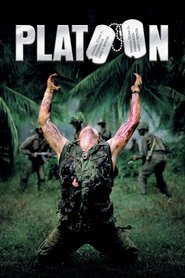
Beautiful Philippine foliage, colors, long lensing here in this valley. This is a shot done at the lip of night. One of my favorite shots. You see a storm coming up. Goddamn, man. What's O'Neal got, a nose up the lieutenant's ass already?
13:15 · jump to transcript →
-
Oliver Stone
Night ambush is something we all never liked. No matter how good you were, you'd come out there every night. You'd go out there from the perimeter. On the nights that you went out, and it was spooky. Because anything could happen out there at night. That's an optical we laid in. I wanted to get a sense of the rain that was coming on. Because I remember ambushes where we'd sit in the rain all damn night and be soaked to the bone.
15:04 · jump to transcript →
-
Oliver Stone
and not very nice. Looking through one of these stupid scopes, any Vietnam veteran will tell you early on from the 67 times and how it was difficult to see through these things at night. They always would get wet or smoggy or something. It never worked. So here we see a transition. He's tired and the rain is stopping. This is a dangerous time because the mosquitoes come out on full force. And they are serious mosquitoes over there. And you get bitten to death.
17:27 · jump to transcript →
-
-
-
Gary Goddard
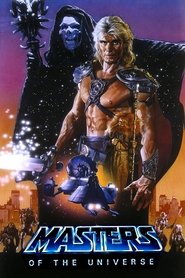
that will keep them believable. But it's very difficult to have people like Tila and He-Man, Beastman, whatever, walking down Sunset Boulevard at high noon. But at nighttime, with the streets wet, with a little bit of mist in the air, a little bit of wind, it can be believable. So the decision was made early on that when we bring He-Man and the characters to Earth, we're going to do it at night. We're going to use lighting to...
37:09 · jump to transcript →
-
Gary Goddard
theatrical lighting to this. Blue light on the house, warm lights inside. The calm before the storm. Let's go see. Not so fast, kid. Hello? Kevin, thank God it's you. Remember, the interiors now of this house
45:31 · jump to transcript →
-
Gary Goddard
Blossom, I think we've really got our act together here now. I think everything works well. The glint of the armor, the warm backlight on the vehicle, the cold blue light on the street. I think it sells the whole idea. I think I was saying earlier, we shot this in Whittier. We had to shut down the streets.
57:37 · jump to transcript →
-
-
-
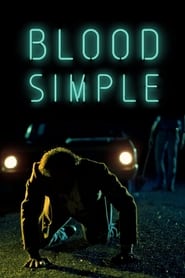
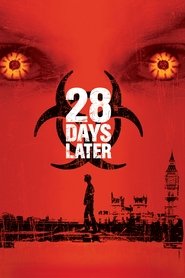
And we cut it eventually because it poured down that day, absolutely poured down, and we couldn't film it in any way that disguised the fact that it wasn't raining. It's important to the plot that it doesn't rain in London for quite a long time, as you'll see later. But we got permission from Docklands Light Railway to let us walk on the railway, which is very unusual in Britain to get that kind of permission. Very grateful to them for that. And this is his parents' home with a nice Volvo, which is a...
22:01 · jump to transcript →
-
moved by him really. Something I feel that you learn as a filmmaker is that you not to be frightened sometimes of being emotional. You have a tendency sometimes to be quite cold or cool. You're scared of being sentimental, but there's also a danger that you don't give people the emotional trip they sometimes want really, especially with a story like this. And Killian was playing it quite...
24:26 · jump to transcript →
-
As opposed to good TV drama, there's lots of that, but there's also bad TV drama, and some of this would be right at home there, I think. It's really towards the end of the scene where it begins to collapse. It was originally set inside the house, this, but because we were shooting sequentially, we were really bored by then, by the inside of the house, and we just thought, let's put it out on the balcony. And there was this storm coming as it happens, and we didn't want it to rain, obviously, because of what I've said, so we had to shoot it very quickly to...
41:34 · jump to transcript →
-
-
director · 2h 10m 8 mentions
Richard Curtis, Hugh Grant, Bill Nighy, Thomas Sangster
-
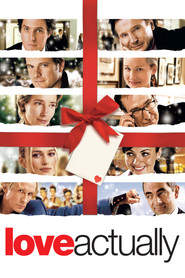
Hello, I'm Richard Curtis, I wrote and directed the film. I'm sitting here in a room in Soho with Bill Nighy... Hello. -... Thomas Sangster, and they have not seen the film before. That's the bizarre thing. This is going to be the first time they've seen it, DVDs are done so early. And Hugh Grant is late and stuck in traffic. - What's new? But we'll just chat our way through and slurp tea. In fact, Colin, my tea is cold now.
0:08 · jump to transcript →
-
We never decided... Here we go. Stop, Hugh's turned up. Okay, this is the first time they've seen the film. Don't be ridiculous. - No, it's true. I'm just recovering from the sight of myself in that dodgy shirt. Yes, you do, you look terrible. - Yeah, I know. See what I mean. When Hugh first got the film, you were quite cross about Bill's part, weren't you? I'm still quite cross about it. I still think it could be trimmed, to be absolutely honest. You felt that you would take some of the attention. This was a controversial piece of casting. What do you think about this guy, Hugh? Very bad. - Oh, yeah. No, no, no. No, he has been good. - Who is he? He just looks a little long in the fang. I love you. - I Know. SO... - Who's that girl? That's not part of... No, that's Sienna Guillory, who's... -/ think we're watching the wrong film. She's so beautiful it hurts. We in fact shot this scene later. We thought we wanted to know a little bit more about Colin. Oh, good God. Bloody hell. - That was a tough shock. I've never seen this scene. Let's see that... Can we wind back? Right, so... - So what's the idea, that she dumps him? Yeah. That's the girl who, with the brother, dumps... So here we have Liam. It's very odd, just looking at that phone, it was very odd, talking on the phone to Liam Neeson, trying to ask him if he'd do the part. It's such a legendary voice, it strikes you that you're probably talking to an impressionist, not to the real person. Understood. Emma"s very good with vegetables. - Yeah. You used to always have food in your films. Yes, I used to get letters about it from my Japanese fans.
3:45 · jump to transcript →
-
Come on and let it snow." All the people in the world I most admire are people who are honest, like this. I could never be. But it's the sort of John McEnroe type of John Lennon person who alarmingly manages to tell the truth in public situations. in public situations. I've never been able to pull it off. Yes, yes. I fear this is going to be a difficult one to play. Alex. This is when people start to be chilled by the authority of your performance, Hugh. It's when I'm chilled by the fact that you cut out the first half of the scene. Yeah. There used to be a bit where they discuss which record was gonna be number one at Christmas. Hugh said, "I've got a very, very important thing to discuss." But we cut it because it looked like the prime minister was just a joke. But we wanted to make you more serious. - A joke? This is an exact replica of the cabinet, I think. Yes, with some of the real cabinet members in there. See if you can spot them. See if you can spot the actual minister for transport.
22:16 · jump to transcript →
-
-
-
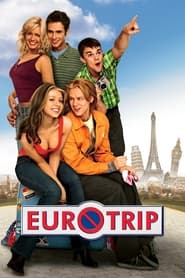
Well, actually, the kick in the nuts that was just on Scott's screen was something that we licensed. It's a piece of real videotape, but we couldn't find out who owned the rights to it in... I believe it was England, Japan and Germany. So if you're watching in England or Japan or Germany, you will probably be seeing something different. Very different. - We had to actually matte that out and replace it with something else for those regions. This scene. - This was-- Was this day two or day three? Yeah. - This was due to a schedule change. We had to shoot that scene... I guess we'll talk more. This is the first of many commentaries, so we'll hopefully get to different bits and pieces. This house, again, is in Prague. Next door to a farm and something that looks like Lenin's tomb. But this one little plot of land seemed like a backyard in America in Ohio and it worked for us. We shot this-- We were wise enough to shoot these night scenes during the shortest nights of the year, June 21st. Literally the three, whatever it is... the summer solstice or the equinox or whatever the hell it is... Literally the three shortest nights of the year. I think we had about five and a half hours of usable darkness each day. And it was cold. - It was freezing. Freezing cold. Kids in the pool and all those people, you can almost occasionally see them, sort of, shivering a little bit. And at one point, I remember, late in the evening... I think the second night was probably the coldest night and I was wearing my Himalayan explorer outfit because it was so cold and these kids in the pool and all these girls in tank tops... - And that guy. In between takes, they had to wrap him in blankets. These kids would all dive into their coats. And I remember late one of the nights, we said, "We have to shoot, everybody take your coats off," and girls were honestly crying because they were so cold.
6:02 · jump to transcript →
-
One other interesting note about this scene, that is a real keg with real beer, and Jacob Pitts, our delightful Cooper, really liked these scenes a lot. It's what we like to call method acting. That's one of the things we learned. Or simply drinking. - Aren't they the same? I guess we should introduce our cast, now that you've been watching for ten minutes. Scotty Mechlowicz as Scott Thomas. - Which is why we cast him. Make it very easy on ourselves. The beautiful and talented Michelle Trachtenberg as Jenny. And Travis Wester is her twin, Jamie. And that's Jacob Pitts going off to take a leak. And this was another one of our delightful cameos that we got because we were in Prague. Yep, that's Matt Damon, which... Everyone in the theater sort of goes, "It can't be. Is it? Is it really?" Why is his head shaved? He was actually in Prague shooting Brothers Grimm for Terry Gilliam at the time. And we actually went to college with Matt years ago. So we've been sort of friendly ever since. And he was in Prague and we asked him to do a day of work for us, and he agreed. The biggest favor ever. - Thank you, thank you, thank you, Matt. Yeah, Matt's just hilarious here. Matt's not watching this DVD. We're going to make him watch it. That'll be another commentary. That would be the biggest favor he's ever done. But the band was actually started by some other friends of ours from college. I guess this is as good a time as any... A couple of them were of Matt Damon's roommates in college. The band Lustra... - One of them. The band Lustra, good guys. And they wrote the song, which is really fun. We've known each other since college. I'm going to just talk now 'cause no one's listening to what I'm saying, because there's a naked girl on the screen. I wasn't listening. What were you talking about? Now this, in the unrated version that we're watching, she started off topless. In the theatrical release, if you saw it, we actually cut a different version where she started off with her top on and Cooper talks her out of her top. - He convinced her to take it off. And it was very strange, sort of, when you get into this whole nudity thing. Obviously, it's a hot tub scene, but somehow when her top was on and he talked her out of it, while it was a very exciting moment that he talked her out of it, it oddly made her dumber, even though she is sort of a stereotypical dumb blonde. - Right. And we always liked it this way, the way you're seeing it. We liked the scene to answer the question, "What is beyond gratuitous?" That's the answer. - There it is. And there they are. The answers. The other stuff we added back into the scene is just more of him screwing around with her. Because, to us, once you're at the nudity, it's how far he goes. This scene... - It's not about nudity. No, this scene was always about the crazy extent to which he got her to play with herself, as opposed to just getting her to take her top off. By the way, the banner in the background originally... This is what happens when you work in Prague. It's a big congratulations banner. The first day when we got there, it just said "congratulation," like one singular congratulation, which is a word we didn't know existed. Sort of a funny story about this scene, which, hopefully, we can tell. We were actually rewriting another movie, which I guess we'll leave nameless, that had a hot tub scene in it and we came up with this idea, which was the fact that a guy saying, "You have a smudge. You've got something on you." And we were really enjoying what we were doing so much that we didn't put it in that script. And we're like, "We'll use it one day." And here it is. Screw it. The movie was called Out Cold, I think. Yeah, exactly.
7:55 · jump to transcript →
-
And it was very fun and it all, sort of, interconnected, which was... Matt knowing the guys from the band made, sort of, I think, his performance more fun for him. The fact that the band that wrote the song was actually playing... Playing the song. It makes the scene look real. I hate these movies where you see four extras who were put there on the day, who can't play their instruments, pretending to play along. These guys were actually playing the real notes. There's Alec's least favorite thing in the movie. That purple toilet paper. The purple toilet paper which only exists in Europe kills me every time I see it. Also, watch this European toilet with the top flush. No toilet in America... - Like they have in Ohio. No toilet in Ohio flushes on top. But on the wall, by the way, were some comic books by some friends of mine, I'll shout out to them. One of the weirdest things about making a movie is everything has to be legally cleared. So if you see a book or a poster ina movie, everything has to be legally cleared, and we spent... Including this commentary, which no doubt will be censored. But everything you're seeing on the walls, toys, things on the table, whatnot, had to be cleared, and we spent more time clearing things and trying to call in favors from people we knew who had posters of things. There are actually... - Is this how real movies work? There were actually pieces of this scene that we had to cut because I remember there was a toy that didn't clear... and I'm probably not legally allowed to say what toy it was... sitting on Scotty's desk and we couldn't use... It was a toy from the movie Out Cold. But, yeah, I mean, we spent a tremendous amount of time trying to clear this, trying to clear college names. Also a special thank-you to my parents who went to the Cleveland Indians store when we had nothing to put on the wall. - And spent like drunks. Yeah, spent like drunks and shipped it all to Prague.
11:53 · jump to transcript →
-
-
-
I think the film has started here, hasn't it? It is a very subtle start here. We tried to create the sound of snow falling here, which was quite complicated when you come to think of it, because snow hasn't got any sound if you listen when snow falls, but inside your head it has a sound.
0:53 · jump to transcript →
-
It's sort of rotten, rotten blood inside that. Yeah, and he doesn't clean it very properly either. It's very basic. It's not so hygienical. No, it's not the issue here. In the background, you hear the weather report.
7:31 · jump to transcript →
-
which is very useful when you do the sound editing to have an everyday feeling to a situation. The weather report is very good. It makes you feel calm. And I was up there to visit when you recorded. I wasn't here that night that this was recorded, but it was extremely cold, wasn't it? The situation, yes.
8:00 · jump to transcript →
-
-
-
Tom Hooper
and the irony this was this was the one moment that it was very difficult to do the the singing live because of having to create the weather conditions of the storm we you know we had wind machines we had wave machines standing in real sea water and and so there was a lot of noise going on and it was an irony that almost the only the only scene where i found it very difficult to achieve live sound was the very beginning of the movie so the lip-syncing which i which i personally can't bear is makes a very fleeting appearance but luckily
2:52 · jump to transcript →
-
Tom Hooper
In the original musical, the musical began with those magical notes and began here. Everything before this was added by Trevor Nunn, John Caird, Cameron Mackintosh, when they recreated the show for the Royal Shakespeare Company. But it involves a plate shot in Oxfordshire of Hugh Jackman coming out of the church, throwing the parole document into a wind machine, and Zac Nicholson actually was walking backwards, climbing onto a...
14:22 · jump to transcript →
-
Tom Hooper
an unbelievable amount of fish imported into the set, which then slowly rotted. So when you went onto the set, it really did feel real, and we left the heating off to keep that cold feeling, so it was pretty unpleasant.
25:13 · jump to transcript →
-
-
multi · 1h 39m 8 mentions
The Grand Budapest Hotel (2014)
Wes Anderson, Roman Coppola, Jeff Goldblum, Kent Jones
-
Wes Anderson
Yes, I think maybe even one of them was The Mortal Storm. On Marty's list might have been The Mortal Storm.
10:21 · jump to transcript →
-
Jeff Goldblum
It was in one of those booths, and... Was it dinner or lunch? Maybe it was dinner. Yeah, it was lively. I was a kid. I was just kind of awestruck, although it wasn't the days of IMDb, and I don't think I knew who Farley Granger was or had seen any of his movies, and dah, dah, dah. But I'd seen Patch of Blue with my family when it came out in the '60s, so Shelley Winters-- I shouldn't tell this story either, but at one point, she sort of lifted-- Leaned to one side and loudly broke wind... - [commentators laughing] ...and didn't say a thing about it, nor did Farley. And I thought, "Gee, is this the way adult behavior goes? It's just all right around these parts?" And at a certain age, you know... I've realized otherwise since, of course. It was an anomaly. - [Jones] It's the Actors Studio training.
36:38 · jump to transcript →
-
Jeff Goldblum
I'm curious about-- In a lot of scenes, that snow, is that on-set an effect, or is that later snow?
39:35 · jump to transcript →
-
-
-
Tim Lucas
A rough sketch, if you will, for the story we're about to be told. But these three are bottom feeders, setting their sights a good deal lower than our heroes will do. This sequence also anticipates the opening of Once Upon a Time in the West, three outlaws on the lookout for a fourth, with no music on the track but the howl of wind and the crunch of boots on gravel.
4:47 · jump to transcript →
-
Tim Lucas
One of Leone's favorite films, a film he sometimes boasted of wanting to remake, was Gone with the Wind, another story that takes place in the Civil War. The war is on its last legs here, with these Confederate troops shown evacuating Santa Fe amid warnings of the imminent arrival of Northern forces. This is the regiment of General Sibley, and you'll remember that in the scene between Angel Eyes and Maria, he learned that the man going by, that the name of Ben Carson, the man who can lead into the treasure, is riding with this regiment.
38:21 · jump to transcript →
-
Tim Lucas
Tuco mistakes the sounds of approaching bombinations for an approaching storm, which coaxes a biblical analogy from him. He's actually a religious sort of fellow. This line lays some groundwork for his later relationship with his brother as well. Tuco is not a godless man so much as a man filled with hate for a god who could have allowed him to be abandoned at such an early age.
42:59 · jump to transcript →
-
-
-
Francis Ford Coppola
A playwright, I think he wrote A Hat Full of Rain, and a fabulous improvising actor and just a wonderful character. Well, you know, kind of right up there with the people from the cast of the first film. I believe he had a nomination for this picture. I'm not sure, but I think he did.
30:01 · jump to transcript →
-
Francis Ford Coppola
I take care of everything, he says. But this is cold Mario Puzo logic of how you reason with him, what that means, basically. There's a wonderful thing that Mario does in his movies where he has this speech where you give people instructions, like, tomorrow you go to the white building, the doorman will come up to you,
1:54:12 · jump to transcript →
-
Francis Ford Coppola
when thinking about it in cold reason, a sensible way to deal with the problem he had.
2:03:39 · jump to transcript →
-
-
-
John Mackenzie
But it was right through it, the bastards. It's always been plain manoeuvres. Used to have to hump this blinkin' great wireless about. One winter, snow, blizzards, freezing the bollocks off the ponies. I got lost. In them days you stayed lost till they nicked you for being AWOL.
29:52 · jump to transcript →
-
John Mackenzie
Put a frightless on me, wind me up. So he's emotionally distraught, and then the old guy comes in and says they're going to get rid of the body. Kept all incognito, they're going to collect the body in an ice cream van. There's a lot of dignity in that, isn't there? Going out like a raspberry ripple. They're going to store the body in the freezer down there. It's outrageous, some of the lines, you know.
31:23 · jump to transcript →
-
John Mackenzie
So, Charlie, how did you know about the bombs? It's our business to know these things. And Ricardo, a bottle of champagne. It's very cold. And this was actually a club called Régine's. Régine's started in Paris, but Régine's was all the rage in the late 70s, early 80s. Régine was a French woman who ran the smart clubs. I'm being frank.
57:58 · jump to transcript →
-
-
-
Paul Davis
Pleasant the weather is in Rome at the present time, thank you. So this sequence, this wasn't Wales. This was shot in Windsor Great Park. And it was actually quite late in the shoot. It was the 28th of February this scene was shot. It was all shot in one night. And by all accounts, if you ask anybody who worked on the movie, every single one of you would tell you that the night they shot the wolf attack,
12:41 · jump to transcript →
-
Paul Davis
was the coldest night that any of them had ever experienced. To the point that when they brought the rain trees in, the ice would just formulate around their jackets and you could just crack the ice off of it. You could break ice out of their hair. It was one of the bitterest... I think, if I remember correctly, when I was researching...
13:10 · jump to transcript →
-
Paul Davis
the book and the documentary, I found out that it was actually minus, it was recorded as minus 11 degrees on the 28th of February in London, where they filmed that night. So it was cold. And those poor guys, they were the only two that had to get wet under those, under the rain trees. And the scene was lit by the DP Bob Paynter,
13:38 · jump to transcript →
-
-
-
That's an 18- or 16-inch model that's chugging away from us there. On the set, of course, we had to keep blowing wind nonstop. We had smoke always. We had pigeons being thrown around. And it went on and on, the shoot on this thing, much longer than I expected. I was looking at it again here. I think there are probably as many shots in this short as there are in the entire rest of the film. And each one is complicated, folks.
8:05 · jump to transcript →
-
Oh, there's Venus. Oh, there's the wind blowing her. And then out of this, rises some sort of Eastern Buddhist nonsense going on. We're mixing religions, we're mixing philosophies. We've got television watchers, the true religion of our day. That's totally inspired. Why is he melting? What goes on here? The difficult thing with this animation is we actually were using not just cut-out animation, but we were using full-frame animation.
19:26 · jump to transcript →
-
and then it goes into Oliver. I don't know if you've ever done anything as long a sequence as this. It just goes on and on, building and getting better. I think this is one of my favorite bits of Eisen, I think. Those poor little kids in the bathtub, they start getting really cold by the end of the filming. Because every sperm is sacred
27:21 · jump to transcript →
-
-
-
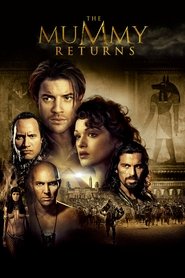
and he would be wrapped in blankets, freezing. But the minute I called him to camera, he'd just get up and do it. So he really gutted it out through that fight sequence. It's always fun to have sand blown on you, too. This was all shot in Morocco. These are called the Merzouga Dunes, some of the most spectacular dunes in the world. We shot a lot of The Mummy.
2:23 · jump to transcript →
-
And in fact, you know, if you were to study it closely, you could probably find a few places where it's raining because it's raining in most of this photography. We were very careful in cutting it to avoid any stuff where you could really see it. And then also on even a couple of effect shots later in the sequence, I'm not sure what ILM did to remove the rain, but they did somehow. It rained the first time on The Mummy we shot in England. We were there for four months.
17:11 · jump to transcript →
-
Run away or head towards? Well, no matter what, I'm sure that Greg is really happy that you brought that up. This is the shot I was talking about earlier that, you know, there was clearly rain in the background. As these lights pan, you would see the rain being, you know, backlit by the light. I think you're looking at other things at this moment. Yeah, you are. You are, and I think it all works out. If you notice, there's no... You can't see anything in that pit back there on that shot. We still want to spend the money.
19:07 · jump to transcript →
-
-
-
Andrew Niccol
Our marine coordinator actually found this one in Angola. It had an Indian crew. I didn't ask a lot of questions. If he could get it, he could get it. The ship almost didn't make it to Cape Town because it got caught in a storm off the coast of Namibia. It almost sank. We had a lot of near misses like that in the film.
18:59 · jump to transcript →
-
Andrew Niccol
The cinematographer Amir Mokri can't actually even watch this scene because the weather kept changing as it does in South Africa or in Cape Town. And the skies don't match, but of course only Amir is looking at the sky. This scene has an actual precedent.
19:29 · jump to transcript →
-
Andrew Niccol
perverted in some way. I don't know why I keep shooting next to the ocean. I had to loop this entire scene. But Bridget and Nick did a great job, you don't notice. And sometimes in looping you can even improve the performance. Also, I was shooting in the winter, which was a mistake. Not just because the water's freezing here.
30:09 · jump to transcript →
-
-
-
James McTeigue
Who's that? Don't piss me about. You show me ID, or I'll get Storm Saxon on your ass.
16:37 · jump to transcript →
-
James McTeigue
/'// tell you what I know. I'll tell you what I know. I'll tell you what I know. England prevails. Clear the halls. - Sir. Help, Storm, help!
18:04 · jump to transcript →
-
James McTeigue
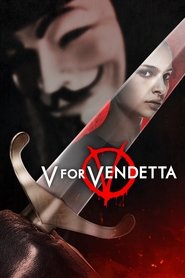
Right there. What's he thinking? Is he considering leaving her? After she just saved him? He's a terrorist. You can't expect him to act like you or me. Some part of him's human. And, for better or worse, she's stuck with him. I wanted the mood to almost stop, like she's being stopped. Or she's being trapped. And so I thought it was, like, good that she wakes up... ...she hears the music and then she comes out and, you know... ... she discovers the reality of her situation. And in some ways, you know, I wanted the music to draw her out. Because that was gonna be used as a recurring motif for later on. I think the Shadow Gallery is a, um.... And V is a custodian of many, many, um... ...art forms that have been either banned, that have been banned by the government. And so he's collected all these things together in this one space. So it's a place of refuge. And it's, in a way, it's a place of refuge for the viewer as well. As a result, because there are only two characters you see in the Shadow Gallery... . It's a place of intimacy. And it's where Evey and V start to connect as human beings, rather than.... You don't see the masked man, although, of course, he's still in a mask. You start to find out about the human being. It's also something that makes her.... It's a place that makes her understand the cause, I think. Because all of this art and literature and music and everything is there. You know, it's like the Churchill thing that he said during World War Il... ...when they asked him to cut arts spending... ...he said, "Well, then what are we fighting this war for?" It's like, you can't sacrifice... ... the very things you're fighting for. My favorite line in the movie... ... which obviously comes later in your chronology. But my favorite line is when V says... ...a revolution without dancing is a revolution not worth, you know, fighting. I think the other thing about the Shadow Gallery that I really liked... ...and it was a really nice part of the book, is... ... the art that they had in there. The books that they chose. The music that they had. And the things that they thought were gonna be banned. Which I thought were very interesting, you know, choices in the graphic novel. And then I just used an extension of that, almost. And it was a really good chance to put a lot of stuff in there that I like. And James won't brag about this, but, like... ... the jukebox... ... had, like, 300 handpicked songs... ...by James of, like, what he would save. It was all written out, like, very specifically. You were unconscious and I had to make a decision. I did have this crazy idea, at one point. I was gonna light the day scenes different to the night scenes. Just because I thought that V wouldn't perpetually live on, like, a... ...some sort of 24-hour clock. So I was gonna do this blue hue at one point... ...and then this, sort of, like, golden hue. But I went for the golden hue in the end. Because I thought the blue thing was a little cold.
25:55 · jump to transcript →
-
-
-
Rob Cohen
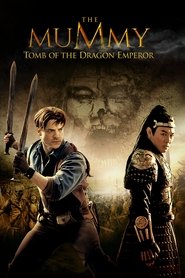
I definitely, I saw him in The Wind That Shakes the Barley and had to have him. And of course, the kid over his right shoulder actually is my son, Kyle, who was going to university in Shanghai at Fudan University. So I said, here, I'm gonna put you to work, make you a fly boy who's a bully boy intent on beating up Luke Ford now. That would be an interesting fight to wager on.
28:44 · jump to transcript →
-
Rob Cohen
It was first developed at ILM. So here we have a combination of aerial photography in mountains on the west coast of Canada, combined with full CG characters hiking through the snow. This, of course, was on stage with no glass in the canopy, I might add. That's all digital glass, digital plane, real plate.
53:36 · jump to transcript →
-
Rob Cohen
but everybody was sweating, so he didn't look any different than anybody else. We created the snow out of about 100 tons of Epsom salt. So all this crystalline stuff that looks like dry powder snow is Epsom salt, and the blown snow is a very beautiful device that will spin a liquid soap
1:02:14 · jump to transcript →
-
-
-
Francis Lawrence
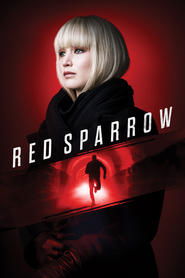
This is actually something that Justin and I, Justin, the writer, Justin Haythe and I debated quite a bit. We spent a lot of time thinking about Dominika"s living conditions. And part of it was from research that even though it seems like quite a glamorous job to be a principal ballerina with, you know, a real high-end ballet company in Moscow, that the living conditions would be quite modest. And I also thought it was important that they remain modest, because as she's fighting for survival, when she needs help from her uncle to survive, it's not about material things. It's not about getting a nicer place to live in, or keeping a nice place to live in, or keeping a nice car or anything like that. It's just keeping things as they are, in terms of the simple life that she actually has with her mother. And her mother is played by the great Joely Richardson, who was I think one of the last people we cast for no real reason. I think it was the last role that we got to. But she came in, and it was a bit tricky for her, and she was a trooper, because I think we cast her maybe 10 days or so before she started shooting, and she had a lot to do, you know? We had decided that her character, although you never hear it, had MS, and so we wanted her to meet with experts about MS, so she would know how to move, and how to make it look like she had trouble using her hands and trouble getting up. And she had to learn the subtle Russian accent that everybody had been training for, and she also had to learn how to play the violin. It's now a scene. I'm sure she's not happy about it, but we ended up cutting it 'cause she spent a bunch of time learning a song on the violin while giving a speech to Dominika. But she was a real trooper. She also did something interesting that I had never seen an actor do before, which was that she was really curious about the tone of the movie as she came in, and wanted to immerse herself in it. And so she came to Budapest a few weeks early, and she would come to set on days we were shooting other things, and she would just, kind of, watch and see what other people were doing, and see what I was doing, to get into the tone of the world a little bit. And I think it's honestly gonna be something that I carry into other movies that I do now, and inviting actors as they come in, so that nobody really starts completely cold again. Sonya? Hey. How are you? What is it? /'m scared. I went to see her at the hospital. The way she looked at me, she knows. She doesn't know. What we have done is a sin. They've always favored her. No one else ever got a chance. Is that fair? This was a fun sequence. This is another one of the dynamic sequences in the movie that really sets up the tone, and really specifically sets up how Dominika is truly an unlikely hero. I think without this, and this is something that we, you know, the producers and the studio and the writer and I debated about a fair amount, just in terms of how violent this sequence gets. Really sets up what Dominika's capable of. We shot this in a basement of an art school in Budapest, and Maria brilliantly changed this empty basement room, series of rooms, into a steam room, and locker room, as if it was at the bottom of a ballet company. And I think it looks really beautiful.
11:19 · jump to transcript →
-
Francis Lawrence
This moment here was also another piece that we kind of debated, this phone call. This is something that's quite easily lifted, and she could just go home after having seen the blood on her hands. But this idea that she could do something so violent in the steam room, but then have this moment of conscience and call the action in was very important. And then we have this moment here of finding her mother, which was the moment where she knows that the ballet company that's been supporting her has kind of pulled the plug on any money and any help for her mother, and she is gonna have to go and find help from her uncle. I'm going to take care of us. So one of the fun things about this job and in terms of the world-building, was finding all the various kinds of architecture that exist in this world. And this place here was actually in Bratislava. So we went on a search. We shot primarily in Budapest, but we also shot in Bratislava, which is in Slovakia, and Vienna, and London. And we went on a big search for buildings and sites that could feel like Moscow or places near Moscow. And Maria, the production designer, had found these great Brutalist buildings in Bratislava, including this one, which we decided would be perfect for Matthias's character's office building. Just a big monolithic, very Stark, stark building. The problem here was actually... We shot this scene very, very quickly, even though there's a lot of dialogue, because it gets front-lit quite quickly after about 7:00, 7:30 in the morning. This is near the end of our schedule on the movie. And so we Set this up at sunrise and dawn, with multiple cameras, and shot the whole scene within about 45 minutes, I think, 'cause otherwise, if the sun came up, it was gonna be really unflattering, and it wasn't gonna feel as bitingly cold as we wanted it to. Do this for your mother, Dominika. He has dinner at the Hotel Andarja every Friday at 9:00. A car will arrive at your apartment to bring you to the hotel. Now, you carry nothing with you. We will arrange a room and something for you to wear. This is back in Budapest, shooting in a hotel in downtown Budapest. We were originally modeling the idea of this hotel in Moscow, with the Metropole. Which is a classic, really upscale hotel that's been around fora really long time in Moscow. And then we, kind of, ended up going in our own direction. We searched, you know, in London for hotels, searched all over Budapest for hotels, and we pieced together various things, and we used the exterior of a hotel in Budapest, and we ended up using a room... This room is part of an abandoned building in Budapest. And Maria built that bathroom attached to the room in that abandoned building, and just did a great job. She brought in these great Italian scenics to create all that fake marble. It's actually just wood that's been painted, but just looks unbelievable.
16:11 · jump to transcript →
-
Francis Lawrence
And off to the side, in some side room, was this broken down bathroom that had this really strange tile. And you can see the tile here. We duplicated it. But it's based on a tile that was actually used in a bathroom. And it was this green, splotchy tile. And if you were to see the detail of it it actually looks wet, which I thought was really strange, because it basically makes it look like the bathroom is wet and moldy. And Maria and I really fell in love with it. And she did a mock-up of it. And at first, this is the only set that she and I went back and forth on a little bit. The rest we were in complete agreement right away. But this one, for a while, I was worried was too striped. It wasn't the color that bothered me, and it wasn't the tile specifically, but it was once you put all the tile together, it felt a little too designed for me. And what we ended up doing, and Maria ended up doing, was working on the contrast between the dark green stripes and the lighter stripes in the middle, so that it didn't become sort of too hypnotizing. It was almost gonna be too distracting before. I'll be able to take care of us now. You don't have to do this. Sparrow School. It was so well-described in Jason's book as being this place out in the middle of nowhere. And I think in the book, you actually have to take a hydrofoil over some sort of water to get there. But here we didn't do that. We just had that big snowy landscape with that drone shot of the car driving. But we found this place about an hour and a half away from central Budapest called Castle Dég that was a private estate at one point. And then I think, post-war, it became an orphanage. And oddly, I think an orphanage for Greek boys or something, which was really strange. But now it's, kind of, a museum and empty, and they really let us use it a bunch. And this was toward the beginning of our schedule. It was quite cold, and everybody was really sick. Pretty much people were sick from the first day we started shooting, but by the time we got here, which was about three weeks in, it had really spread like wildfire, and everybody was really sick. Which of course had to marry up with primarily shooting outside in sub-zero temperatures, which was pretty brutal. But I loved this location. And of course, this was the beginning of our work with Charlotte. I'm a huge fan of Charlotte's work, always have been. Loved her movies, think she's a fantastic actress. But the idea to cast her as Matron came when Justin Haythe and I were working on the script, and he had seen 45 Years, which had come out recently, and suggested I see it. And I did, and just fell in love with it, and just started to think about her. I mean, it's completely a different character, but just started to think about her for this role. And so we sent her the script, and at first she was interested and she was intrigued, but she thought that her character was a little thin. And Justin and I had some ideas, and so we ended up flying out to Paris where she lives and meeting her in an apartment that she uses to paint in. And we had a great little meeting. And I think sat with her for maybe an hour, hour and a half, and pitched her the take that we had on her, and some of the secrets that I have about her. So that if we get to make another one of these, that we can carry on into new stories. And then she said yes. And we got very lucky. And it ended up being really good for Jen, because she was there for one of Jen's, probably Jen's hardest scene to shoot in this movie, which was something that's coming up in, I don't know, 15 minutes or so. But it was great for Charlotte to be there for Jen.
28:11 · jump to transcript →
-
-
-
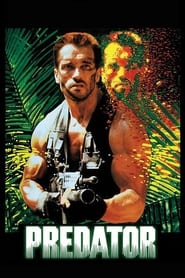
John McTiernan
This joke, is Shane's joke. It's entirely Shane's joke. Shane didn't write in an official way but he wrote in an unofficial way like the joke, the pussy joke. He was just there, and he would come up with stuff. Now, the heat vision here, when we first did the heat vision, they had a real heat vision. From the folks in New York City that did the effects stuff. And it was this enormous thing with the umbilical that was six-inches thick and it would, could only get maybe four-feet from the truck. And it really would see someone based on temperature. But there was this little tiny problem, which was the ambient temperature in Mexico was in the 90s. Consequently... People were the same temperatures as the background and they were perfectly camouflaged. So in order to deal with that, the splendid folks in the special effects field said, "Well, it's no problem. "We will put ice water on the jungle. "And we will have the actors stand next to a fire just before their, "the shot," So, they literally were doing that, and they spent about, I don't know, a week getting one shot, maybe two shots. It was just a nightmare, it cost a... Every shot cost a fortune. So, finally, I went off to a video special effects house. They did commercials and things. And I sat down for about three hours, we had to do this in secret. One of the studio...
32:42 · jump to transcript →
-
John McTiernan
In any case, I went off to a video post-production house that did, normally did commercials. And I took the film and I had them, the regular film, and I had them turn it into a negative and then they made it all blue and then isolate certain areas and attach false color to it. And we created most of the special effects. Most of the heat-effect shots that way.
35:24 · jump to transcript →
-
John McTiernan
That was one of the back to the drawing board parts. The only image of an alien life form that had captured the imagination or looked halfway plausible, or functional was this stuff that came from H.R. Giger. Illustrations that became Alien. You know, one of those images of the ultimately terrifying other life, only shows up once in a generation or more. You're not just gonna, you know, hire some cartoonist and say, "Come up with a next H.R. Giger." 'Cause H.R. Giger only comes along as I said, once in a generation. And I didn't see how you could do anything associated with it without just being that derivative also-ran. And, frankly, having seen what they did in the sequel, that's exactly what I thought. I thought it was, it was best that they didn't shoot it. Here you see Jesse actually carrying Painless. He had no ammunition at this point, that's why he could carry it. And there's obviously no battery connection and it wasn't operable that way. We shot this in Palenque, where we could get a real snake. The worry was that Painless would buck and get away from him, and spin. Even if you had everybody clear out in front for 50 feet, that the man firing it might not be able to control it. And that he could wind up in the way of all this wading and bits of brass and stuff that was flying out of the front end of it. So the first time, they fired it, they did a Iot of... They anchored it. And yet tried to give him a chance to figure out if he can control it, so it was like bungee cords and things. So that if it started to get out of control, they could yank it in and protect him. But to let him see, you know, what other... You know, what other concussive forces... You know, what happens when the thing starts spinning. We learned that there was enough gyroscopic force in the spinning of the cylinder, that it kept it online. That actually was very difficult to move it around or aim it, and in an odd way, it was very safe. You couldn't have it wind up aiming where you didn't want it, 'cause it wouldn't move. Because of all the gyroscopic force and the spin, but it took us a while of experimenting with it, and I think he first tried it out over, with the second unit. And it was like half a day, you know, we kept hearing reports of, "They're gonna fire Painless, "in 45 minutes. "Well, no..." It's like a count down to the moon launch or something, "They're gonna fire Painless." And I think later that afternoon it fired, and we were about a mile up the valley. I could hear tt. It sounds like, it's the loudest buzz-saw in the world. Some people, I guess, were concerned about how impractical it was, but the notion was that, Painless was... Look, it's a movie prop. You know, we never would've used it, but it's a lot of fun to watch. Here we got Bill Duke to fire Painless. You notice he is not walking while he does this. Now, this particular sequence, I made when I first went to work on this project, I had the feeling that people had a sort of perverse fascination with pictures of guns firing, literally almost a pornographic desire.
44:06 · jump to transcript →
-
-
-
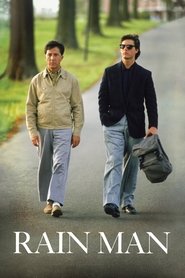
Barry Levinson
One of the things that always I thought that Tom did a very good job is he has to work between being emotional and being cold in a way, that in a sense he has just found out that his father has died, and yet he doesn't seem to indicate any kind of real feelings towards him.
7:54 · jump to transcript →
-
Barry Levinson
I mean, it leaves at midnight, Ray, you know, but Delta, how's Delta? Delta crashed August 2nd, 1985, Lockheed L-1011, Dallas-Fort Worth. Terrible wind. All airlines. 135.
45:37 · jump to transcript →
-
Barry Levinson
Same thing as the rain. You get a little wet.
53:25 · jump to transcript →
-
-
-
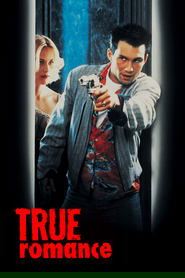
Tony Scott
The weather was warm, actually. The day we arrived, we did our location scout. The weather was unusually mild for January. And anyhow, we did our location scout, selected locations, and the night before we started shooting, it started to snow. And as we went into dark, it started to snow heavy. I thought, oh, this is going to screw us up. But I woke up the next morning in the dark and looked out and could see the...
4:23 · jump to transcript →
-
Tony Scott
The city had a whole different feel, and I thought, wow, this can work for us, not against us. So I redesigned that morning, I did my storyboards, and I redesigned the boards based upon shooting that day with Snow, and I think we captured something which was unique and very much in character with the rest of the movie, which was this opening title sequence in Snow. I think what also is a big part of the opening title sequence is the music, and the music was inspired by...
4:52 · jump to transcript →
-
Tony Scott
outside Christian's apartment, and let's play the scene on the catwalk underneath the billboard, and I think it just again gave it just a fresh twist. This scene was a particularly tough scene because it was night shooting in, I think, in February in L.A., and it's not as cold as Detroit, but it's still pretty cold, and night shoots are miserable anyhow, and it was a tough emotional scene for Patricia to get into. You know, she... I wanted her to peek here. This is one of her...
14:54 · jump to transcript →
-
Related topics
Other topics that frequently come up in the same commentaries.