Topics / Production
Shooting schedule
47 commentaries in the archive discuss this, with 74 total mentions and 48 sampled passages on this page.
Filter commentaries
Filter this topic by the film's decade or the type of commentary.
By decade
Across the archive
ranked by mentions · click any passage for the moment in the transcript
-
director · 1h 26m 5 mentions
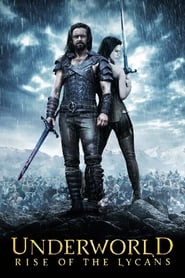
Underworld Rise of the Lycans (2009)
Patrick Tatopoulos, Len Wiseman, James McQuaide, Richard Wright + 1
-
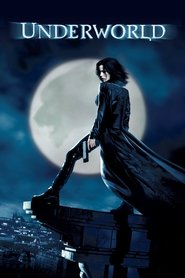
Now we're getting started on the sex scene, and.... Was it early on in the schedule or no? This is pretty late. - It was toward the end, actually. We felt like it was better for the both of them... ... to, you know. You take a chance some time. To get to know each other a little bit more, you know, to be.... Now, this scene, I gotta say, I have to say. I wanted to do more with it. You know, we had to kind of feel the moment... You got your shot in there at the end. You and I were like: But it was an idea, I mean, to have them... ...carrying on making love on the side of the rock face. On the rock face. I never completely understood where Patrick was going. It's a French thing, though. - Yeah, that's right. That's French lovemaking right there. - That's right.
13:36 · jump to transcript →
-
He's a consummate actor. He flew all night from Germany... ... from a Valkyrie premiere to come to our premiere. Did he? I didn't realise that. Remember that we had to let him go for two weeks... ...In the middle of the schedule to do... - Valkyrie? Reshoots? - Probably. No, he was going back to do something in England. Oh, yes, he was going-- Yeah. For the Richard Curtis movie. So he went around the world twice in like two weeks. Now this is Bill... This is Viktor biting Sonja. Genetic memories. It's all that visual language we used from Underworld 7 and 2. lt was something we had to kind of keep going. Father, please... I wanted to believe your lies though I knew it could not be true.
53:45 · jump to transcript →
-
Originally, I remember, it was gonna be raining... ... during that whole sequence, and we couldn't afford it. So it just rained at the end. It does rain. It does start raining, which is part of the gag. But it was supposed to be pouring rain the entire time, and we just realised... Now, budget-wise, are we--? Am I correct when I say 35? lam, right? Yeah, yeah. - So we're 35. Everybody always asking what if when I was... You know, checking out DVDs, I was always curious... ...at what the budget was. So we're 35 and... What was the first one? - The first one was 23. But that was when the dollar was a lot stronger. So in actual purchasing power... ...wWe really didn't have that much more this time. The dollar was I think at like 94 cents to the euro. And when shot this it was 1.50 to the euro. And what was the second one, 45, 48? The second one was 51. Fifty-one, right. - Yeah. But... - We got a lot for the money. We had fewer shoot days. We had fewer shoot days on this one than we did on the first one. First one, I think we had... What did we have on this, 55? We had like 60 on the first one. That's not fair. What's the deal? Just trying to make it interesting. Make it interesting.
58:23 · jump to transcript →
-
-
-
the whole thing in about three and a half months. And so we had to build everything in a concentrated amount of time leading up to the shoot. And so everything had to be figured out in advance, and he had to make decisions long before the shoot day. And because this was the first time he was sort of letting go of control on the effects and handing it over to myself and the team, he had to make a lot of decisions, like I said, in advance of shooting it.
12:19 · jump to transcript →
-
Again, this whole sequence was all within the first couple of weeks of shooting. And I don't think what Damien realized while we were shooting this film, again, in such a concentrated period of time, three and a half months, what it meant to prepare everything for literally like a daily shooting schedule of effects work. And so everything was being built
17:02 · jump to transcript →
-
Are you okay? Yeah. It's just this new medication I'm on. It makes me queasy sometimes. Oh. I need to be creative. Just to put it into perspective, there was probably about 10 days in the entire shooting schedule that we didn't
42:20 · jump to transcript →
-
-
-
Gary Goddard
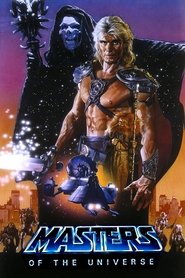
how we had to move the camera to tell the story in very condensed time. Even though this is one of the first shots in the movie, these were some of the last shots that we actually put on film. The schedule was very, very tight. We had to move very quickly. We had to consolidate our storytelling and try and get as much information in as few shots as possible, especially in some of these things here. I particularly like this effect that we're...
4:18 · jump to transcript →
-
Gary Goddard
the tail end of the schedule, we didn't get everything we wanted, but we did get a lot of use out of it, not as much as I'd wanted, but that's why you see so many levels there. They were designed for what the final battle would be. The eye in the back also, that was a last add in the original script that David O'Dell wrote. There really wasn't a ticking clock. I felt a need to put a ticking clock on this, and we came up with this kind of eye, this door on the universe. The eye opens on the universe. They're coming. Get back there. Keep working.
12:27 · jump to transcript →
-
Gary Goddard
I forgot all about it now till I'm watching it again. This was the second week of shooting. The first four days, five days were out there in the woods and also at the interiors of Courtney's house, which we'll see later. And this was the second week where we went to Robbie's and shot this. The reason we did these shots first is we were on a very fast pre-production schedule and they were literally building the sets
22:43 · jump to transcript →
-
-
director · 3h 29m 3 mentions
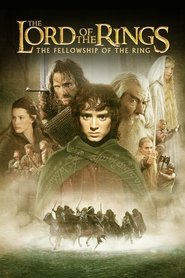
The Lord of the Rings The Fellowship of the Ring (2001)
Peter Jackson, Fran Walsh, Philippa Boyens
-
And we only shot a couple of takes. Scenes like that don't hit the schedule, do they? They don't hit the schedule. Or the call sheet. No, and the studio don't even know. Nobody knows they're there. You've just got to bang them out the day before and then go try and squeeze them in somewhere. Pages are distributed after lunch. Yeah. This was a sequence that we deleted from the theatrical version of the film. And it's actually a sequence in which a couple of stills, a couple of photographic images have appeared in lots of books and magazines. And I'm sure...
44:53 · jump to transcript →
-
One of the very first things we filmed, this was done at the very beginning of our shooting schedule, so we were all a little bit green and naive, and, you know, it's amazing when you start shooting a movie how awkward things are at the beginning, just from the point of view of directing the movie and getting your head into what you're doing, and I always look upon Weathertop as being one of those scenes, in my mind, that...
1:12:31 · jump to transcript →
-
something in which we planned for a long, long time. We knew what we were going into. We had a lot of it planned, but nonetheless, it was a seat of your pants operation, really, that we were revising the script. We were editing the movie as we were going, figuring out ways to improve it all the time. The art department got to the point that they started the movie with lots of sets built and complete, but of course, as the schedule moved on, they had less and less time because sets would have to be torn down
3:27:08 · jump to transcript →
-
-
-
Andrew Niccol
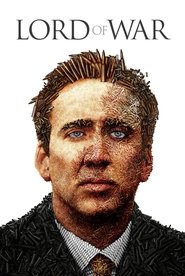
The unifying element is actually Donald Sutherland, who provides the Colonel's voice. Originally, I hoped to get Donald to play a role on screen, but the shooting schedule just didn't work out. However, he liked the script, so he wanted to participate in some way, and he generously agreed to lend his voice.
15:35 · jump to transcript →
-
Andrew Niccol
Coming up is the next in the long line of Vitaly's girlfriends. I noticed Jared never had any problems on these shoot days. Cape Town's full of beautiful models since that's where Europe and the US do fashion shoots in the Northern Hemisphere winter. That's a good moment, I think,
36:32 · jump to transcript →
-
Andrew Niccol
I say we had a very limited shooting schedule in New York. And so when Ava enters the container, it's a different container than the one that Yuri entered. It's actually recreated on a parking lot in South Africa.
1:34:36 · jump to transcript →
-
-
director · 1h 34m 3 mentions
Scott Stewart, Jason Blum, Brian Kavanaugh-Jones, Peter Gvozdas
-
was valuable to her in terms of what she liked about the film. She felt like it was something she could play. And there's a relatability to her that I think is super important. Yeah, and you can't pull these movies off unless the actors are on board with the schedule and stuff like that. And she didn't go back to her trailer between setups, and she was really in it. And you don't succeed on these kind of schedules unless the actors are really up for that, both when they're on screen and off.
15:52 · jump to transcript →
-
And it was, this is like turning into a Carrie Lovefest, but it was a pleasure working with her because a lot of times that doesn't happen and it was great how on board she was with the production schedule as well.
16:22 · jump to transcript →
-
But David used the sun and we just ended down the windows and colored them blue and And that was a way for us to shoot days most of the time in the movie. There was almost no night shooting True all night long night shooting should talk about Josh Stamberg who played a police officer in my first movie Legion as well And even though I originally wrote the role of Mike for him Karen's husband that rich Hutchman plays Josh decided
21:18 · jump to transcript →
-
-
-
Francis Lawrence
So this motorcycle sequence is actually one of the few... There's a few little things that we did as second unit. I'm not usually a huge fan of second unit, but this stuff we did, but we mapped it out very specifically. I worked with Chris O'Hara, a stunt coordinator, and Cam, who used to be my assistant, and also is now an associate producer on the movie. You know, both kind of worked really closely with me in storyboarding, and we would go out to locations and do little video-vis things. So we were really specific about the kind of moments we would need. You know, it was just always a bit tricky to schedule all those little pieces of them traveling down the street. And we used Jen's double, Renae Moneymaker, on the back of a motorcycle. Over the course of various nights over the schedule, Chris O'Hara and Cam sometimes would go out with the motorcycle and shoot these various elements that we put together. Ustinov dismissed his security, so I saw an opportunity, and I took it. Why would he do that? She asked him to.
25:45 · jump to transcript →
-
Francis Lawrence
So now we're in London, which was our last location of the shoot. This is where we finished off, primarily at the Corinthia Hotel. We also shot at Heathrow. I was amazed and very thankful that the people at Heathrow allowed us to shoot there. But we shot here at the Corinthia, which, funny enough, was the hotel that we would always stay at whenever we would go to London for the Hunger Games press junkets, so it was a hotel that we were all very familiar with. And also, funny enough, that the room that we shot in for the meetings, the hotel room we shot in, any time that we would go there to scout it, we had to rent the room out, and it ended up somehow, lining up with a school vacation or something. And so my kids would come out, and my wife would come out, and we would end up Staying in that room since it was rented anyway. So we would stay in that room, and then, you know, my family would leave and the whole crew would pile in, and we would do a tech scout... Of my hotel room. It was very strange. I'll just be leaving. I love this bar, too, and I love the way this bar looks. I will say, too, that Mary-Louise Parker was really fun to work with. I thought she did a great, great job. It's always weird. I mean, we shot for 85 days, and I mean, she had, I think, one evening of shooting with us kind of in the middle, when we did that embassy sequence in Budapest, but really, all of her work was at the very, very end of the schedule. And you can imagine that, you know, a crew who's been in three, four countries already is, you know, quite bonded, and she's done long-running television shows, and plenty of movies and things like that, so I think she quite understood. She kept saying that we were a cult by the time she got there. I think she was right, But she was great, and also brought in a great deal of levity, sort of a nice, little needed tonal shift for this portion of the movie. And it was fun working with Mary-Louise here, just in terms of the sort of drunkenness of it all. You know, we did many layers of it in terms of how paranoid she might be, how sloppy drunk she might be, and it was really fun to just kind of let her go and let her try different things. We ended up cutting a decent amount of dialogue out here, but there was some fun stuff. It went on for too long, but there was some fun stuff about why she's doing it, why she's selling the secrets, and, you know, there's some pretty basic ideas of why people do these things, why people become recruitable. Might be ideology, might be they've become disillusioned, and might be a different kind of patriotism. It could just be plain old greed. And I'm sure that if you are as important as you Say you are... then you don't want to waste any time. So, do you have anything to sell? I have the first set of discs with me. Today. I just want to be clear that I'm not doing this... 'cause I'm an ideologue or pacifist or something, you know. Where are the discs, Stephanie? Where's my money? What we always liked was this idea that she'd really sort of turned on her boss, that she always felt that she was much more deserving of the job, and smarter than her own boss, and had become really cynical about it. But I like that there's this sort of paranoia underneath all of it, too, this kind of nervousness about all of this that leads her to drink so much. And that was all Mary-Louise. Some fun stuff. I just need to authenticate them.
1:30:11 · jump to transcript →
-
Francis Lawrence
So that violin sequence that I was talking about used to take place right here. She used to come in here while Dominika was in the bathtub and tell her a story while she played the violin to cover up the sound. But we realized that we didn't need it. The president is furious about the loss of Boucher. Ciaran was also another great one to cast in this. I've been a fan of his for so, so long. And we were trying to get him for a long time and I think there was something with availability, and it wasn't looking good for a while. And then, finally, it worked out, and it was great. And he was kind of in and out a couple times. He didn't have too many shoot days with us, but he's such a fantastic guy and such a great actor. Have Matorin shadow her. If she is compromised, he will find out. The Americans will respond. Nothing we can't weather. And what of Dominika? I leave that decision to her uncle. Shall we tell the president you prioritized... the safety of your niece over the mission? So another one of the fun finds in terms of locations is this Vanya apartment. That blue stairwell that you saw earlier was actually the stairwell of that building. And the woman who exits the building as she enters was Maria, our production designer, another one of the small cameos in the movie. We used, I think, an apartment that had been turned into an office or something. and we brought it back into an apartment. But it had this great, really ornate, almost stained-glass lamp that was over a conference table that's up on the ceiling that makes it instantly recognizable, this place. It just seemed right for him. Again when you contrast how he lives versus how she lives with her mother, you can see they lead very different lifestyles.
1:48:26 · jump to transcript →
-
-
scholar · 1h 32m 2 mentions
The Night of the Hunter (1955)
Terry Sanders, Robert Gitt, F. X. Feeney, Preston Neal Jones
-
And your mother decided it might be best for me to let you know the news. The close-ups of Mitchum were done on a different day than the close-ups of Billy Chapin. When we examined the shooting schedule, it was rather weird the way some scenes were shot over two or three different times in the shooting schedule. They'd wait a few days and go back to it.
26:33 · jump to transcript →
-
restaurant. As the editor, Bob Golden, told me, we ate a lot of food, we drank a lot of booze, but we got the job done that way. I think the whole production of First Unit was just about six weeks, wasn't it? That's right, just about. 35-day shooting schedule, wasn't it? There's a line coming up here. She says, he was looking for love the only way you'd know how.
1:15:53 · jump to transcript →
-
-
-
Alan K. Rode
He would say, unless you're fortunate enough to have the financial wherewithal to replace a bad actor, you're stuck with them for the rest of the schedule. In an interview, Kubrick remarked about hiring the best actors, saying, there's little joy in trying to get a magnificent performance from a student orchestra, unquote. But there are no bad actors in any way, shape, or form in The Killing. The cast is absolutely brilliant.
3:10 · jump to transcript →
-
Alan K. Rode
Jim Harris knew that they couldn't make a movie of any quality for $200,000, so he scraped up another $130,000 from his own savings and borrowed the rest from his father. So the budget for the killing was $330,000 with a 28-day shooting schedule. What's interesting is Variety ran an August 3, 1955 squib claiming that United Artists agreed to finance the entire picture for $600,000, a story that is false.
44:33 · jump to transcript →
-
-
director · 1h 29m 2 mentions
Jeff Kanew, Robert Carradine, Timothy Busfield, Curtis Armstrong
-
This sequence probably took it. I seem to remember it taking like three weeks. I can tell you. Oh, you have the shooting schedule right here. I can't believe it. I pulled this out of a box. I said I didn't even know I owned it. All right. Carnival. Homecoming Carnival. We shot it fairly early while they were building sets. I remember it wasn't that long into the. Yeah.
58:33 · jump to transcript →
-
It's just like, oh, God, have we got it yet? Well, you know, how long was the shoot? Days, let's just say, 66 days or something? No. It wasn't that long, 40? No. 36 days? March 10th. 36 days. January 28th to March 10th. The choir singing We Are The Champions.
1:26:00 · jump to transcript →
-
-
-
and give them time, give them air, give them space to be able to develop the script so that it is production ready. I'd spend my mornings, most of the shoot days, looking at Clive's script, looking at James' script and trying to put as much of Clive's lines and character motivations as I could.
42:41 · jump to transcript →
-
on a small budget and a fast shooting schedule. So you've really sort of set the bar high for what you're trying to achieve in such a short space of time. Well, it was budgeted by Graham Ford, who had just come off Brazil, as the line producer on Brazil. And Graham did a budget, and it was way, way over a million. And the producer said, well, we can't go ahead.
53:47 · jump to transcript →
-
-
multi · 1h 54m 2 mentions
Jean-Pierre Jeunet, Hervé Schneid, Alec Gillis, Tom Woodruff Jr. + 5
-
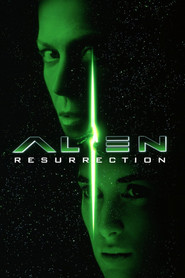
So this water stuff was supposed to take, max, how long? Cos they had it slotted for - what was it? A week? Was it a week and a half? And then it ended up taking twice or three times that long. I think it was two weeks on the schedule. For me this is what the movie was all about - the water. We met before the movie in swimming pools and learned how to underwater... how to use a hookah and how to scuba. It seemed like eternity when we were doing this, like we'd never get out of it. It seemed like we were doing it forever. This was actually the first thing we shot after we shot all of the underwater stuff. So this was the last underwater stuff that we shot. Yeah, this was the last of it, was setting up the sequence that took two and a half, three weeks to shoot.
1:08:18 · jump to transcript →
-
It wasn't easy to find a good ending. The first one from Joss Whedon was very expensive, on Earth. I know the studio wanted to finish on Earth. It was the first idea. I know the studio wanted to finish on Earth. It was the first idea. But I knew from the beginning it won't happen because it's too expensive. I preferred from the beginning to finish on the spaceship. I know it was a little bit too close to the second one and the first one too. I think it was more clean to finish like this, more than to have an ending, very cheap, on Earth. And, at the end, I prefer this ending. But we wrote maybe four or five different endings and... I had a crazy idea with a car crash but with spaceships. It was pretty funny but, one more time, too expensive. Dominique, I remember I didn't tell you "Ron Perlman is going to kiss you." It was a surprise. - Yeah, it was quite a big surprise. My love story with Ron is ending. Very good. It was meant to have another ending. When we really started preproduction, the ending was on Earth. Jean-Pierre was not happy with the ending so there were several options and at the end Jean-Pierre shot a studio version with the two girls on the earth after landing. Initially the Betty was to crashland on Earth. Because the whole idea was to actually move the whole Alien myth down to a new level and leave a door open, which was Earth. Which you sort of get at the end of this one, but it's still very ambiguous. But in that initial script, it wasn't. The whole idea was that you've now landed on Earth by the end, the last page, and you sort of know where the next film is gonna take you. And the green-screen shot was actually the last bit of shooting from, you know, the sort of main production schedule. And it was Ripley and Call crashlanding. And they come out, and they just sit there. And in the distance is a city. And they come out, and they just sit there. And in the distance is a city. And they haven't gone to it yet, and this is all about Call, has never seen the Earth because she's a robot. The studio, Fox, was really keenly amused with the idea that Jean-Pierre was French and that all of his sort of French-ness could be tapped into. And one of the ideas, for instance, they had at Fox was, why not crashland the Betty somewhere near dunes or something where all you see is part of the Eiffel Tower rising out of the sand? I can tell you something to finish. For the French crew it was an amazing adventure, and it was the best year of my life. It was SO... We lived... We were living during one year. It was... a special... a very... It was an incredible challenge? Incredible challenge. And we did it. It was good.
1:47:44 · jump to transcript →
-
-
-
This was kind of a last-minute.... Once things got going, the schedule kept getting tighter and tighter... ...and days were getting chopped, and locations changing and all that... ...we had to, almost on the spot, think of a way to get rid of Kahn. There was this elaborate scene that we storyboarded, just no time to shoot it... ...so I did a little bit of a jack-in-the-box little moment here. I like that it goes completely quiet too. Yeah, that was good. The sound guys over... We mixed this thing in Germany... ...and he showed it to me as an option, like: "What if we just take all the sound out?" It's cool, because when you're in the theatre, everything drops out. It almost sounds like the projector stops.
1:48:25 · jump to transcript →
-
I don't think I'm gonna have an experience like this again. I mean, it did feel like, you know, a family... ...and that it was a bit like making a student film... ...where everybody was really passionate. Everybody was. It was like everybody's first... It was my first time playing a part like that... ...and Speedman's, and Brad's first time stunt coordinating. Wasn't it? Yeah, and first time, I think, doing second-unit directing as well. lt was a first time for a lot of people. I think Bruton Jones, my production designer... ...who I had worked with on videos and commercials and things... ...fight there, had not done a feature. And, you know, it was Danny's first... Danny McBride's first screenplay. And it was the first time for a lot of people. It was really special, and it was really, really great. Thank you for being so nice then... ...and such an asshole now that you've gone all Hollywood on me. No, I had, really... Just the support and everything that I had from everybody.... And like I've told you, it's because when you have... ...from the actors and everybody... ...when they're trying to make the best project... ...and they're really as passionate as you... ... you can kind of just put yourself in this bubble with the actors... ...and it helps take away the stress and nightmares you're dealing with... ...with the studio and the schedule and all that stuff. And it was such a great help. Forrest. So everybody, thanks again... ...to all of the 12 of you who are listening to this track... ...and we will see you again. We'll probably see you on Easter... ...because that's probably Mom Wiseman, right? Yes. Thanks, guys. We'll see you again. - Bye.
2:05:41 · jump to transcript →
-
-
-
Not that cursing. - Still makes me laugh. This kid... I swear, if Nial lived in Los Angeles... - Comedy gold. ...he would be on every sitcom in the world. He's a Star. - Every week, you'd just see him on different sitcoms, playing this exact part. I think he worked, like, six days for us, and I think we probably paid him about $130. It was $166. His character Bert, because we paid him $166, we began to discuss all expenses in terms of Berts as a method of payment. A very expensive dinner might be a Bert. Yeah, or like, "Oh, God, that's going to cost us two Berts." And it was-- One of the great things about shooting in Prague was cheap labor, cheap construction. Later in the movie, we get to the Vatican. Good labor and good construction. Fantastic. - The artisans are unbelievable. Great infrastructure, just great people that make movies. I mean, we put a crew together out of, you know, just really very few people from out of Prague and they were just fantastic. Especially because we'd never done this before. Our background was originally sitcoms. We all worked together on Seinfeld. Also Conan, Saturday Night Live, and so... I'll never forget it. I'm sorry. Bruce, the drummer of the band, has to sit next to Kristin and Matt and they all have to have their shirts off and Bruce says, "I don't know if I want to, because I have a rash." No, he said, "I'm just getting over the shingles." Shingles. That's what he said. He said it in front of Kristin. Kristin was like, "Oh, God, what have I gotten myself into?" I'm like, "He's joking, he's joking. He's a very funny musician." Without shingles, I promise. Actually, I remember we shot Mieke talking in English and in German, and we decided to use the German with the subtitles. We didn't think German would sound sexy or attractive, but she's Jessie. Somehow, when it comes out of Jessica Boehrs's mouth, she sounds sexy. Yeah, she's so warm and charming that even German sounds great. This is Jeff's favorite thing in the entire movie, that stupid jackalope T-shirt, which is not funny, but he swears is a joke. I don't think it's a joke. I just think it brings pleasure to those who see it. To you. - It's really a terrible T-shirt, especially compared to the many good T-shirts. This is actually-- I would almost... This is my favorite scene in the movie. This is the scene where the movie, to me, works the best, where these two guys were just sort of dialed in and their relationship... It helped very much that we shot this scene way toward the back of the shooting schedule. Yeah, if you look at the first bedroom scene where we already were, which is one of my least favorite scenes in the movie... Day three, we did not know where to put the camera. We did not get... We didn't take a wall out that we should have. It would've saved us time. We should've taken a wall out to get a master shot, a shot that allowed everything to happen and the camera to get it. We did not get that shot and got everything in little pieces and just then edited together the little pieces, and it just created... It took the entire day, which it just shouldn't have taken, and in this scene, which is basically a month and a half later, probably, we shot it... - Yeah. ...we knew which wall... We took the front wall out from when Jacob first walks into the room. Got our master shot, a really nice master. I think they were there performance-wise, in terms of their friendship. And, if I may, the jackalope T-shirt... - And the jackalope T-shirt... Also, it's sort of what we learned doing this movie that... The longest we ever shot in one location on this movie was three days, and this was probably the third day we were shooting on this set and we learned how to shoot this set. We definitely learned how to shoot the set. What wall to move and how to shoot it. The larger issue, I think, would be that I think any other... any person who had ever directed would've known, get a master. And so, an excellent lesson learned. - Yeah. I also think the actors were more comfortable with each other, we were a little bit more comfortable, and also we knew the set and we knew how to shoot it a little bit more. And that was one of the hardest things about this movie is, every day, we were shooting one, sometimes two, sometimes three locations, and you didn't have any time to learn each set and learn how to shoot it and what the easiest way to shoot it was, and as soon as you learned, you were done shooting there. - We had a location fall out, a Vatican location sort of fall out, which is how that other bedroom scene got moved up. And the initial schedule was sort of built to accommodate a little bit easier scenes with guest casts, things that maybe weren't as important and then that bedroom scene kind of got moved up and I do think it suffers.
14:17 · jump to transcript →
-
The other thing I was gonna mention... We're constantly behind in the mentioning. Part of the reason we ended up in Prague and actually ended up with Allan was because of Neno. - Yeah. Neno Pecur, who was Croatian. We hired him as an art director to scout Prague and to scout the real European locales before we knew we were going to Prague. Basically, he would go to Paris and go, "This is what it really does look like." Then he went to Prague and said, "We could do something like this here." And from his pictures, we used some of his actual locations that he took photos of and made the decision to go to Prague. And then Neno has worked with Allan for many years as his art director, and he helped us get Allan. The two of them, their team... They brought Bill... Cimino. Our set decorator. - Cimino. That's right. Just fantastic and along with the guys from Prague. I think it's now time to mention, though, at the robot scene, which was the first time... We've been writers for a long time and you sort of go, "Look, I think we know what this is gonna be. This is gonna be really funny. It's gonna be a slow-motion kung fu fight scene between two people being robots." You write it and it seems funny. There's the old joke about the writer writes "Rome burns," and the director has to realize that. We were on the spot here because it was easy when we wrote it to just hand it off, but now we handed it off to ourselves. Actually, this is one of the things... - At one point, we cut this, actually. At one point... - We cut it from the script. We talked about cutting it. We were afraid we didn't know how to realize it. We just were like, "What is this? This could be bad." Left it in for a table read. - We left it in for the table read. And it got such huge laughs at the table read that we realized, "We gotta at least try and shoot it." We then initiated a worldwide search for a robot man. This is J.P. Manoux, who's an incredibly talented actor. We found him here in Los Angeles. Yeah. We looked at all these mimes... We looked at real French guys. - ...weird acrobats, and French guys whatever, and, of course, a guy from LA who was actually a friend of a friend and was in the Groundlings, of course, ended up being a really good guy. He is just outstanding. - And he came in with this ability... I mean, a lot of what you're seeing, like him laughing and just his attitude as a French guy, was in his audition. We were also very lucky that Scott... - Scott, exactly. ...knew how to robot. I guess Scott grew up watching Shields and Yarnell... No, no. J.P. - Was that J.P.? Scott had an acting teacher... - Who was in the Barney costume. Yeah. - Okay. And we went there on a Saturday to basically work it out. And we had blocked off an entire Saturday. We choreographed the fight with little bits of Enter the Dragon and some Matrix in about... Twenty minutes. - Yeah, like, 20 minutes. And the first time we did it in Our crazy wide shot... because we knew to get a master... the crew laughed, and we were like, "Oh, okay." It was also-- This was pretty early in the schedule. And I think it was maybe the first time the crew thought, "Okay, these guys actually know what they're doing." Like, "This is something we haven't seen." Wrongly, but they thought that. - But they assumed it.
29:59 · jump to transcript →
-
-
director · 1h 37m 2 mentions
John Cameron Mitchell, Justin Vivian Bond, Sook-Yin Lee, Paul Dawson + 1
-
And it makes you a little like, ooh. I was furious, because they didn't tell me they were taking it. I could have told them that the schedule was being pushed back. And meanwhile, you guys, do you all have hard-ons right now? What's going on? They're not just rosy-lipped, they're flushed, sweating, and their acting in that is highly...
34:51 · jump to transcript →
-
We had a wonderful mixer too, Laura Hershberg, who works at Skywalker, who did the mix for this, and also mixed Borat. She must have slipped him that wizard sleeve joke. She's seen a lot of asses here. And I love this little transition that John came up with. This is a nice shoot day too, isn't it, Justin? It was.
1:25:44 · jump to transcript →
-
-
director · 1h 42m 2 mentions
Len Wiseman, Patrick Tatopoulos, Brad Martin, Nicolas de Toth
-
the whole time through it. There's no way around it. I mean, it is an uncomfortable thing. We actually tried to push the scene till just as far down the schedule as possible to the fact of like, can we please do this when we're doing reshoots? You think that's bad. Try cutting it for the husband of the wife.
37:03 · jump to transcript →
-
it's amazing and i think from this this point on this is uh this was second unit so brad you want to talk about this oh yeah um i had the uh penis digitally erased right there yes i um first time i ran that scene for len i ran it with a lady in red playing in the background that's right now this was that we this was uh um i think it was right in the middle of the the schedule that and that's that's
38:09 · jump to transcript →
-
-
director · 1h 36m 2 mentions
Aliens vs. Predator - Requiem (2007)
Colin Strause, Greg Strause, John Davis
-
Guys, what's it like shooting for 52 days? What's it like towards the end of the schedule? How rigorous is it? It was pretty nuts because what we would do is we would show up on second unit, talk with the second unit director, go over stuff, go to editorial for a few hours, and then, like, our day would start. And then at the end of the day, when most people would probably want to throw themselves in front of a large bus or something, we would then have to go. We had to do dailies and do visual effects dailies. Yeah, I mean, it was insane. It's quite grueling. I mean, and you don't get the two days off on the weekend.
28:28 · jump to transcript →
-
working out when the rain starts and trying to cross your fingers and hope that it wasn't going to, you know, Mother Nature wasn't going to ruin a night of shooting because there was nothing else we could shoot. You have these things in the schedule called cover sets that are set up and ready to go as a backup plan. So if you're, you know, if it looks like the weather report says it's going to rain, you go to a cover set. But once you've shot all those scenes out, you don't have those in reserve anymore. So you're...
54:45 · jump to transcript →
-
-
multi · 1h 59m 1 mention
David Naylor, Guy Hamilton, Tom Mankiewicz, John Barry + 14
-
-
-
technical · 1h 35m 1 mention
Steven Lisberger, Donald Kushner, Harrison Ellenshaw, Richard Taylor
-
-
multi · 2h 34m 1 mention
James Cameron, Gale Anne Hurd, Stan Winston, Robert Skotak + 8
-


Related topics
Other topics that frequently come up in the same commentaries.