Topics / Writing & development
The screenplay
147 commentaries in the archive discuss this, with 1,188 total mentions and 9 sampled passages on this page.
Filter commentaries
Filter this topic by the film's decade or the type of commentary.
Showing 28 of 147 commentaries
Clear filtersBy decade
Across the archive
ranked by mentions · click any passage for the moment in the transcript
-
-
Stephen Prince
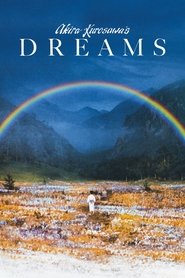
Hi, I'm Steven Prince. Kurosawa wrote the script for Dreams right after he finished Ron, but he was having trouble getting financing. This had been a problem for some time. He'd made only four films in the past 20 years. But now things were about to turn around. Dreams became the first of three films that he made in quick succession right at the end of his career. Kurosawa's admirers, Steven Spielberg and George Lucas, helped to make Dreams possible.
0:07 · jump to transcript →
-
Stephen Prince
The house is a replica of the one that Kurosawa lived in when his family moved to Tokyo's Koishikawa district when he was in primary school. And the first edit is an axial cut to a closer view on the camera's line of sight established in the previous image. It's a very characteristic kind of Kurosawa edit. In his screenplay, Kurosawa describes this boy as being himself at a young age. And the mother here corresponds with Kurosawa's mother,
2:43 · jump to transcript →
-
Stephen Prince
Honda's movies, like this episode, climax with frenzied crowds running from the monsters, clogging the highways in their efforts to get to safety. Honda assisted Kurosawa on Dreams and is credited as directorial consultant. He'd been working with Kurosawa in this role since 1980 in Kagemusha. He did a number of things for Kurosawa on these later films, adding or revising ideas in the script, serving as a second unit director,
1:14:31 · jump to transcript →
-
-
-
Alexander Payne
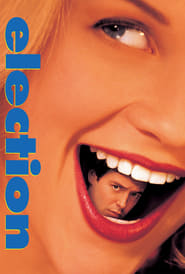
Another visual theme that's in the script and that I wanted to bring out a lot in directing is trash and throwing things away, since that's, in fact, later in the film, the climax of the film or the big turning point. So we establish it early on. And if you watch the film, there's kind of an obsessive use of garbage cans and the theme of people throwing things away. This guy, the janitor, actually was the janitor at our offices in Omaha.
3:06 · jump to transcript →
-
Alexander Payne
The me that nobody else knows. Okay, here, get down. Get down. This was in the script that Dave would drive a Mustang. Jim Taylor and I thought that he would think it's really cool to have an old Mustang. Three times a lady
11:01 · jump to transcript →
-
Alexander Payne
This bee sting is not in the novel. When Jim Taylor and I were writing the script, we kind of thought, well, he's back there and calling out for Lyndon. Somehow we just thought something new has to happen. There's got to be some new element. We thought, almost as a joke. Well, it was a joke. How about if he gets stunned by a bee? That kind of the most ridiculous thing that happens out of the blue. And sure enough, it stuck. And it gave us something to work with and embroider with as the end.
1:02:27 · jump to transcript →
-
-
-
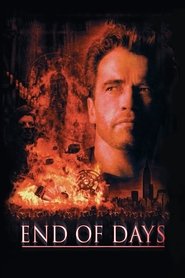
They had given us the design for the new 2000 ball in time for us to build it. Now, I will say that when I first read the script, my initial reaction was that Arnold must die. In the original script, he didn't die.
1:52:27 · jump to transcript →
-
Arnold, being Arnold, said, OK, if you really think so, let's, you know, I'll try it. And Armyan Bernstein Bernstein, producer, who I just think is the greatest in the world, said, OK, if you really think so, just let's do it both ways. So we did it both ways. We did it the way it was in the script and we did it this way. I felt passionately that it shouldn't be that way. Armyan Bernstein agreed and then Arnold agreed as soon as we saw it together.
1:52:57 · jump to transcript →
-
-
Related topics
Other topics that frequently come up in the same commentaries.