Topics / Editing & post
Pacing & rhythm
91 commentaries in the archive discuss this, with 233 total mentions and 35 sampled passages on this page.
Filter commentaries
Filter this topic by the film's decade or the type of commentary.
Showing 20 of 91 commentaries
Clear filtersBy decade
Across the archive
ranked by mentions · click any passage for the moment in the transcript
-
-
gap or something. So we had to constantly use the same 20 Czechoslovakian stuntmen who were really good. This sequence actually changed a great deal editorially. This wasn't initially Brendan's introduction. There was a sequence where we learn a little bit about his backstory and why he's there with the French Foreign Legion. And also the introduction to Beni is more involved. It was cut out for time purposes. Mainly for pacing. It didn't
7:52 · jump to transcript →
-
Right, exactly. The scene needed to get going, we needed to get into the movie, and this opening sequence took a little bit too long. The other thing that happened in the sequence, too, is that those guys on the hill, the Medjai, that was actually inserted into the sequence in post-production and was not originally there. It was used, hopefully, to clarify the fact that they were different from these Tuareg warriors.
8:22 · jump to transcript →
-
This scene actually used to go on a little longer. In fact, I think it will again for the television version. They used to explain all the plagues, like they'd name them. And for pacing's sake, we decided to cut them out. And also we figured, you know, most of the audience...
58:12 · jump to transcript →
-
-
multi · 2h 19m 4 mentions
Martin Scorsese, Nicholas Pileggi, Ray Liotta, Lorraine Bracco + 9
-
So I got as much of it in the book as possible. That, of course, was exactly what Marty was looking for for a film. Because that particular book, you can go and you can make about an infinite number of films because there are many other stories in the book and that sort of thing. But I chose it to go a certain way. And it was all based on the rhythm of Henry Hill's language. That is a part of the whole mob world, the way these guys tell stories about themselves.
6:50 · jump to transcript →
-
You know the look of the movie. You know the rhythm of it. And that's something very interesting and very good for a director of photography to know. Without using a gun,
35:08 · jump to transcript →
-
Called my manager and I said, you know, I think this is one of the best movies I've ever seen, and I'm really good at it. Director of Photography, Michael Ballhaus. I'll never forget that moment when I saw the movie when I was done here in Los Angeles. I looked at the movie and it was so fascinating that I sometimes forgot that I shot it. And just the way it was edited, with the music and all, it had such a perfect rhythm that I got drawn into it in a way.
2:09:32 · jump to transcript →
-
-
-
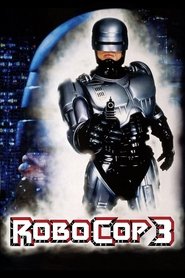
for the sake of rhythm, Stuart and I cut down quite a bit of the kind of backstory that Chris Stallone had. But I think it improves the film tremendously. Yeah, when we get to it, I'll show where the daughter scene happened. I mean, you'll see like, oh my, you know, even though it was a fine scene, you just can't stop the movie like that.
1:04:26 · jump to transcript →
-
Sorry, laughing at the scene and taking time to enjoy myself. What you see in the cut is probably one-tenth of the material that was shot for their virtual sex scene. And it was decided to, again, for pacing reasons and also for graphic nudity, it was decided not to include it in the cut. Always a wrong decision, but it's fine. We got a nude wrong number coming up, so I forgive you. And her speech here is like,
1:11:02 · jump to transcript →
-
And Snipes goes, hey, did you ever figure out how the three seashells work? And you guys cut the line. And then there's a seashells at the very end of the movie where it says, how do the three seashells work? And nobody laughs. And I thought if you would have kept the middle reference to the seashells, you would have got a laugh at the end. But no, you didn't do it. We had no choice. The running time was just not, it was, the first cut was too long.
1:27:12 · jump to transcript →
-
-
-
Now, the sort of lyrical way that this child speaks, of course, is his natural way of speaking. And Tom was searching for a voice for Forrest. And when he heard this young boy speak, it clicked. And I think he matched that rhythm as the older Forrest.
12:57 · jump to transcript →
-
And then we cut the movie with all that film narration that we had. And then once we had to really start to fine cut the movie and hone it all down, then Tom went back again and we wrote new narration to link scenes, take things out, tighten things up, you know, weave in and out of scenes. There's a scene in there where he's talking about Bubba's mama not ever having to work in anybody's kitchen anymore.
34:06 · jump to transcript →
-
that you can scrape the thing together and make it work. So it's like, damn. I could have really done this better. But everybody was too slow, and it took too long. And somebody didn't realize that, oh, we didn't put gravel over there, so the camera truck got stuck. And that cost you an hour. And it's like, oh, man. There's all these things that really make making movies
1:09:01 · jump to transcript →
-
-
-
But what I was saying about the director, I just found my notes on it. I literally just wrote down very, very quickly a couple of thoughts I had. The pacing is weird as hell, I find. When there's something going on, there's a couple of long sequences in particular where the alien's running about and they're running about and stuff's happening and it's great. But when stuff isn't happening and it's a character scene, the pacing just never seems to be...
56:22 · jump to transcript →
-
chasing someone, the guy comes up into the foreground and shuts the door. There's really good comping on that. It sells it really well. I think it's just down to the angle you're shooting it from and the complexity of what the alien's doing. If it lingers on too long...
1:23:40 · jump to transcript →
-
that shot, it gives it away. I think that shot we saw, it hangs on it too long. And it's not lit right either. And that shot, that scene there is a prime example because there's all this fire around and looked in detail. I dare say they've done something clever to try and reflect that fire in the surface of the monster. But whatever it is they did wasn't working for me.
1:24:02 · jump to transcript →
-
-
-
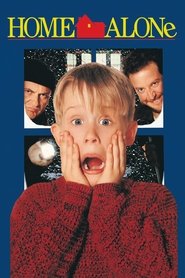
Um.... This was, uh... You know, it was interesting, every time we'd preview the film... The film used to be much... Not much longer... ...but significantly, 10 minutes, which in a film like this... In a kids' movie, yeah. And it-- There was a lot of you looking around the house, looking for... And it just... We just needed to tighten it up. This was a sequence that was really harmed, really... I mean, not hurt, because it worked in the film... ...because it's really what the genesis of the film was about. But one of the things I wanted to do, was I wanted this furnace to come alive... ...to really chase you across the room. - Ha-ha-ha. And I wanted it to turn into, like, this CG furnace that got up on all fours... ...and chased you to the stairs. - Wow. And later I'll talk about it. There was a fantasy sequence that was gonna cost over a million dollars... ... that was cut from the film that I was always depressed about. But see, we ended up putting two guys with strings and a couple of lights... ...because we had no money. Again, it all comes back to your performance... ...because you're the guy who makes this all work... ...because of your reactions... ...because people believe you're in this situation, you really... You make all of these things that were a little ropey at the time... ...to say the least, you make it work. Like this. Well, I'm glad I could help. - Thank you. Look at this expression. This is truly... I remember the audience when they saw that the first time. That was one of the times where they started to burst out laughing. And we'll talk about some of the screenings for this film later. It was unlike anything I'd ever seen. - Oh, really? When this film was first screened for an audience, it was incredible. I
19:54 · jump to transcript →
-
Again, we're back in that real neighborhood, which probably looks... Pretty much the same, I bet you. - ...pretty much the same today, yeah. Winnetka. Now, Joe used to tell me... I don't know how I can tell this story without swearing... ...but it's an important story because he said to me one day: "You know how I go through the script, how I do it? I look at the script, and I look at the lines." And I'm like, "Yeah?" And he... I said, "Well, how do you memorize the lines?" "Well, I substitute the F-word after every line." Ha-ha-ha. - And I'm like, "What?" "So if it says, 'Go into the house, you idiot,' I say: 'Go into the effing house, you effing idiot,' and then I develop a rhythm." And I'm like, "Wow." And then he read me that scene. - This whole... It sounded like it was from a Scorsese movie.
54:40 · jump to transcript →
-
-
-
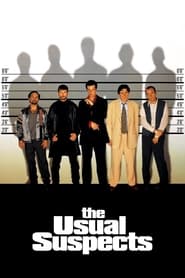
I directed the movie. I mean, those were all my choices. And I think this is one of the best casts that I worked with. I mean, in terms of the amount of talent, and I feel like I didn't give them enough to do. But boy, it was an embarrassment of riches, this cast. I wonder if you could talk a little bit about Daniel Von Bargen. He recently passed away not too long ago.
11:23 · jump to transcript →
-
And you are the latest in a long line of Robocop movies to be set in Detroit and show Detroit for the horrible, vicious wasteland that it is. And yet you didn't film in Detroit. This one was Atlanta this time. You're in Detroit as we speak, aren't you? Yes, I am. And I have a bone to pick. They tried to put a Robocop statue up here not too long ago. And my whole thing was, that's not exactly an inspirational figure.
27:55 · jump to transcript →
-
-
-
Originally, the crane was sort of a central piece to this whole thing. And the notion of ropes entangled, we thought, very interesting for the story. And this was sort of a... This was supposed to be done over black, but we thought this would be more interesting. Well, we removed the scene. Chris wrote a fantastic deposition piece, which it was a bit too long for, but that sort of encapsulated the idea.
4:52 · jump to transcript →
-
Again, the Herald Examiner building built into a police station, quite finely by Howard Cummings. The brilliant... This is the ever wonderful Dan Hedaya. I'm thinking about this scene. This is hard because it was just a long, long shot. This was originally three scenes cut down to two pages. The script had timed far too long, and while I was...
18:08 · jump to transcript →
-
-
-
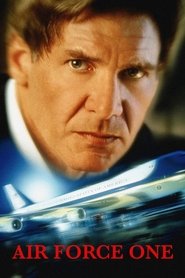
Well, it's again a little bit in the line of fire because he takes the bullet and throws himself into the line of fire here. He takes the bullet for the president. Instead of a Secret Service guy like Clint Eastwood taking the bullet for the president here, it's a plane taking it. It has kind of a little bit of an irony to it. I always liked that a lot. But he gets it, of course. He will not be too happy too long.
1:46:52 · jump to transcript →
-
where a guy honestly tells him why he was doing what he was doing. There's no time to say all that. So finally, we said, let's go just with the drama, with the incredible speed here and the pacing and the tempo and the time clock that the plane would crash any second that people can think about. He did it for the money or he did it for politics, whatever. Whatever the reason was, he just did it. And I think most of the people accepted that. Isn't this spectacular?
1:55:29 · jump to transcript →
-
-
-
Darren Aronofsky
Wait a minute. Columbia University, that is. Some people don't catch that. This is a really nice piece of music that Clint wrote that I tried to use a lot through the film. And we tried a lot to repeat lots of shots in the film. A, it's economical, but B, it sort of creates this sort of rhythm.
10:26 · jump to transcript →
-
Darren Aronofsky
So this, I guess, you know, the pace starts to pick up. We're starting to approach the inmost cave, as they say in literature. Max, for the first time, rips open some of his cardboard coverings that keeps his windows sealed shut so that, you know, his computers can function without daylight and without the extra heat. That was actually shot through an actual microscope. We shot it at NYU. A friend of mine, Ari Handel, is...
42:29 · jump to transcript →
-
-
-
multi · 2h 24m 1 mention
Alex Thomson, Terry Rawlings, Alec Gillis, Tom Woodruff Jr. + 3
-
-
-
-
-
multi · 1h 54m 1 mention
Jean-Pierre Jeunet, Hervé Schneid, Alec Gillis, Tom Woodruff Jr. + 5
-
multi · 2h 12m 1 mention
Andrew Sarris, James Ellroy, Brian Helgeland, Michael Nathanson + 10
-
-


Related topics
Other topics that frequently come up in the same commentaries.