Topics / Editing & post
Pacing & rhythm
91 commentaries in the archive discuss this, with 233 total mentions and 25 sampled passages on this page.
Filter commentaries
Filter this topic by the film's decade or the type of commentary.
Showing 15 of 91 commentaries
Clear filtersBy decade
Across the archive
ranked by mentions · click any passage for the moment in the transcript
-
-
Eleanor Bergstein
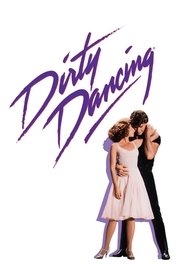
The reason for that is that I had divided the music into clean teen and dirty dancing. Clean teen was the kind of music that Baby was listening to until she found her own rhythm, which was the dirty dancing rhythm. And when we started with the clean teen and the first place we got into the dirty dancing was partly into the movie, it was too big a shock. So we needed a kind of presentiment that it was coming.
1:44 · jump to transcript →
-
Eleanor Bergstein
are kids you've seen all around. And you got to really get used to them because you saw them around in their chambermaid things. And so you just got used to them as part of the scenery there. And we gave them little stories for each other. You know, you were with him at the beginning of the summer. Now you're interested in him. So they had whole personalities and stories. And they therefore did relate as real people. Something else which you'll see is they're often practicing the step they do at the end, which is the Cuban rhythm thing that Johnny refers to later on.
31:44 · jump to transcript →
-
Eleanor Bergstein
So you see them at various places and sides of the frame practicing it so that when they come down the aisle at the end, it doesn't come out of nowhere if you look very closely. You see that all along they've been practicing it, and that's what at some point Johnny says to Neil, oh, you know, we've been practicing this Cuban rhythm kind of thing, and Neil says, no, do the pachanga. So they really have their own story, their own kind of dancing that they want to do, and at the end they're really totally confirmed with this, and this is the place that starts the...
32:14 · jump to transcript →
-
-
-
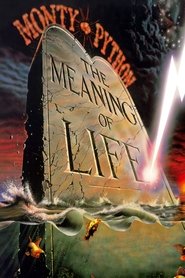
it now attacks the main film, which is like, I can't even remember what scene that's after. And it wasn't working. It's a very different rhythm than Python material. And the others in the group just kept saying, you've got to cut it shorter, you've got to cut it shorter, it's not working. And I kept cutting it shorter and shorter and shorter. And the shorter it got, the less good it got. And that was a major problem because it was sort of the point when it's going to come out of the film, we're going to throw this whole thing away. And then, I don't know, I had to,
10:52 · jump to transcript →
-
That's the fastest speed there is, so remember when you're feeling very small and insecure. It's very funny to hear all this scene. I keep watching John. He's very doing nothing, but he's doing everything in the background. Pray that there's intelligent life somewhere up in space because there's bugger all down here on Earth. You have to bring the sound of the fridge closing before the fridge actually closes so that it fits it in with the rhythm of the song. Yeah. Yeah.
1:14:41 · jump to transcript →
-
I was a bit too busy to notice, but Terry's piece expanded and expanded until finally it was the 15, 17 minute piece that it is now. And when we played it originally in this position, it just didn't work. It just was too long and just didn't fit in. And people were looking at the film and saying, oh yeah, it's a quite funny film, but that pirate sequence doesn't work. And then Terry said, well, he'd always thought it would work at the beginning.
1:15:38 · jump to transcript →
-
-
-
Barry Levinson
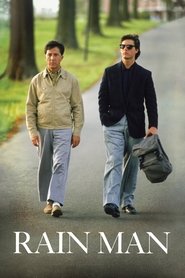
The aspect of the drum, which plays throughout the movie, has a certain kind of rhythm to it. And then ultimately, Hans Zimmer's score, which is very percussion-oriented, has no strings at all. One of the things we talked about very early on is I didn't want any kind of strings at all in it, because I thought it would make the movie too melodramatic.
2:03 · jump to transcript →
-
Barry Levinson
By this point in the movie, as I say, we were shooting in continuity. They were really beginning to get into a rhythm with one another. Very, very kind of good, natural rhythm. We are not going to Cincinnati, and that's final. Raymond, that is final. Did you hear me? Come on!
56:20 · jump to transcript →
-
Barry Levinson
Okay, just do what I'm doing. Okay? Let me see. You feel the rhythm of the music?
1:39:41 · jump to transcript →
-
-
-
William Friedkin
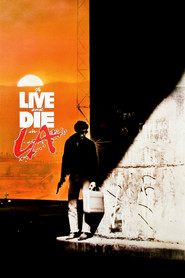
Two people are sitting and talking and there'll be a shot over this person's shoulder followed by a close-up of the person who was in the over the shoulder. Then the camera turns around and shoots the other person the same way. There might be a long shot followed by close-ups or over shoulders. Today you can look at a lot of films or most television shows and you can sit there and snap your fingers to the rhythm of the cut. You know from experience
1:30:58 · jump to transcript →
-
William Friedkin
pulls me in the cutting room in various directions. So I use the editing room as much in a creative way as I try to do with the shooting. And we determine the pace and the tempo and the length of the shots and the ultimate story in the editing room as we're doing it. It's like playing jazz. You have a theme and variations in your head,
1:34:54 · jump to transcript →
-
-
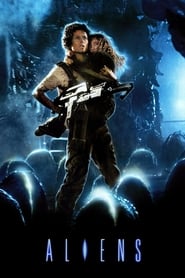
multi · 2h 34m 2 mentions
James Cameron, Gale Anne Hurd, Stan Winston, Robert Skotak + 8
-
Bill Paxton
and the grips shook the set and the set collapsed on us and split open my scalp. So I'll always remember that line. It caught fire and the roof came in all on the same day. And it hit Jim in the head. I saw blood spurting out of his head. It was where Sigourney was supposed to be sitting, so it was good it hit Jim and not her. We'd have gotten a day off. Think they did that on purpose? No. - I'm just asking. At that point, maybe they would've. In the pipe. Five by five." My favorite line. These shots, it's just me shaking the back of the magazine of the camera. The poor camera operator had a bruise around his eye, cos sometimes I'd whack the magazine too, just to give it a sharp jolt. This is all my shake of the camera. The operator can't do it himself. It just gets into this bouncy rhythm if the operator tries to do it. It has to be imposed from the outside and then they fight it, which is the natural reflex. Such a wonderful sound design in this movie. Much of which was generated in our living room in England. At the time, people really weren't using synthesizers in England to create sound effects for films, and we had a Fairlight synthesizer in our living room. A lot of the sound effects were generated by Bob Garret, Randy Frakes and Jim in our living room near Pinewood, including the sound of the alien queen. It really was a home movie.
41:08 · jump to transcript →
-
Bill Paxton
Bill, isn't there dialogue that you have on this that people have used in video games? Yeah, I think so. "Game over, man" and things like that. You get anything for that? - I don't think so. I'm not even getting anything to sit here and do this commentary. They expect us to do it for no money. You got a beer out of it, though. No, it's just fun. I got a beer out of it, so that's cool. This was an amazing set, this concourse A. And it was long. And later on when all hell's breaking loose, Jim had that little video camera. He had everybody on the crew having coffee while we would run at him and do different things. It was SO amazing to see this gigantic set, one of the biggest sets I'd ever seen, and there's Jim by himself with this little camera. When did the bust-out almost happen? He was gonna move the movie. When did that happen? I remember there were some problems. There were some union problems. The crew weren't used to working the same way. With Jim. They weren't used to working. That's unfair. They were craftsmen, but they had an indentured way of doing everything. Jim needs something, he just grabs it. If he needs a light moved, he'll grab it himself. We punched a hole through somewhere cos he needed to run a line. He didn't wanna wait around. He just said "Give me a hammer." But this was an ambitious schedule. Jim was running from stage to stage. I think we had about three big sound stages with giant sets. And then there were two sound stages with miniatures. And then there was a stage with all those tunnels. I remember them putting you in that damn tunnel. That pipe. We had gone to the power station to shoot the atmosphere-processor scenes and come back to the set after it had been wrecked. So we're into Adrian Biddle's photography here. He was the second DP. I encouraged Adrian, to save time, to use as much built-in lighting as possible. This is lit by the fluorescents in the set, with just a little additional lighting. Adrian liked to work on a raw and edgy look and work with the practical lights a lot more. This is another thing that is important. With a lot of science fiction movies that are all interior, you often lose track geographically of where you are and it becomes incredibly confusing and it's hard to build the tension and the suspense. Jim was aware of this from the script stage and made sure that we established through the helmet cams, through the motion trackers, where they are, and then ultimately, later on, where the aliens are. Even in this version, you're left to fill in what happened. We don't see the baittle. We'll see plenty of battles later and this is promising you that. We have a shot coming up here where there were acid holes - acid... holes... eaten into the floor by these so far unseen aliens. And, of course, these sets were not double-deck sets. Jim wanted a scene where a character looks down through one of these holes. I think Bill spits down into it to give some perspective. So this down-view we shot on our miniature stage. We layered the set and photographed that. This is where you spit and they did it in miniature. They even did a miniature spit. - Is that what that is? To get that spitting effect, it was actually not spit. It didn't work very well, so it was a combination of milk... Milk and water in an eyedropper right underneath the lens. The complaint from the studio was that the film went on too long without anything really happening. I was winding the suspense tighter before you actually saw anything. The studio said we were just jerking around. Too many movies that I see now, it's all upfront. You start seeing stuff right away and there's no sense of a build. So this is the miniature APC that was built by Bob and Denny Skotak. Pretty good size. I remember it being five or six feet long. Most people don't twig that as a miniature. That's the real APC pulling in. They matched the lighting pretty nicely. I think Jim did some of his live-action stuff undercranked. He ran the camera slightly slower on the APC so that it felt slightly more as if it were a miniature but you knew it was real because you could see people interacting with it. So if any of the miniature stuff didn't quite work for whatever reason, it took the curse off that cos it felt that the two were blended together. I think he wound up undercranking because the APC, the full-size one, didn't move as fast as he wanted it. I think it could only go eight or ten miles an hour. One difficult thing about making this movie was 7erminator wasn't out in England and the perception of Jim Cameron, who looked about 20 when he directed this movie, and myself as the directing-producing team was met with a great deal of resistance because back then the system in England was that you had to put in years and years to rise up to the level of being a producer or a director. And we were simply not treated with a great deal of respect and it was very hard every day of the shoot. We were being second-guessed and every decision we made was questioned and the tremendous thing, of course, having Stan on the film was that... I was old. - No. ...was that you were a cheerleader for both of us. By demonstrating the respect and enthusiasm that you did, I think other people gradually relented. I knew it was the best thing for me and for everybody on that set. There are people that you know, no matter how they do it, what they're doing is special. This particular directing-producing team had been a win for me in my career and stayed that way. I never thought our facehuggers looked as good as the one in A/en. We had to make lots of 'em and they had to run around and do things, but, texturally, the one in the first film looked great. It really held up. The bits of oysters and stuff inside it looked great. But I did wanna see the disgusting thing that had been down the inside of Kane's throat in the first film. You never see it in the movie, in A/en, so I figured we'd gross everybody out. All of Giger's designs have a real sexual undercurrent to them. And that's what horrified people about the alien as much as anything, is it worked on a kind of Freudian subconscious level. And Ridley and Giger knew that and they went for that. This film was never intended to be as much of a horror film as the first one. It was working on a different thematic level but I still wanted to be true to some of those ideas, some of those design concepts. It would be natural to assume I'd wanna work with Giger, but it just didn't occur to me at the time. Maybe it was because we really only needed to design one new creature and I had already designed her by the time I wrote the script. The alien queen. I guess maybe it was my own ego as an artist. I just felt like he'd made his stamp and I knew from what I'd read that he had to do everything his way and I had a very specific idea for the alien queen to extrapolate beyond what had been done before. I got the impression from what I read that I wasn't gonna get the dynamic character that I wanted. In a funny way, part of what attracted me to doing this film was the opportunity to do cool design stuff. So maybe I was just a little bit too in love with the idea of designing the creatures and the weapons and doing all that stuff.
47:57 · jump to transcript →
-
-
-
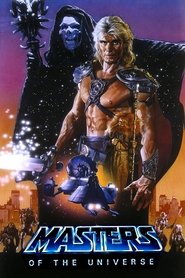
Gary Goddard
Wildor? It tasted good. Wildor? Oh, I'm going, I'm going. Now you'll see that we're losing light if you watch carefully as this scene progresses. It took much too long to get this set up. Should have been a simple day. Didn't turn out to be a simple day. So we start out, it's kind of light. You'll see if you look carefully by the end of the scene, it's getting a little dark.
24:41 · jump to transcript →
-
Gary Goddard
I actually didn't want to cut away from him at all. I wanted to stay on him. This is exactly what I said. I want this energy coming right out of his nose and eyes and stuff through his hand. I want him bathed in this power, this energy, as if he's coming into his own. And I think he does a brilliant performance. The cutaways, I reluctantly agreed to. The studio felt we needed him, but I really felt this was a scene where we could stay with Frank for the whole performance. I think if I do it all over again, I probably would have stuck with that. There's these few cutaways that slightly break the rhythm, I think.
1:28:29 · jump to transcript →
-
-
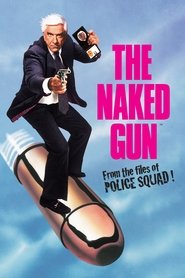
director · 1h 24m 2 mentions
The Naked Gun: From the Files of Police Squad! (1988)
David Zucker, Robert K. Weiss, Peter Tilden
-
It would... It costs too much? Am I making this up? Oh, they have to be here? I'm buying it. They're there too long, so... You can only work a limited number of hours. So you'd have half-empty stands. I think it had to do also with the sexual content. And you'd have a lawsuit. Exactly. Just like we're going to have when this DVD comes out. Yeah, so we get some humans with short hands. This was a big coup getting all these guys. It's hard to believe they were all out of work at this time. Today's ball game.
1:03:47 · jump to transcript →
-
You would have to pay the hermits? Because we actually wanted it faster. The original song was too slow. Are you buying that? No, I had no idea. I don't know. I couldn't remember the reason why we recorded it. It's the best I could come up with on short notice. I think this is a better recording. The Alamo Society. That begins to explain some of the...
1:24:25 · jump to transcript →
-
-
-
director · 1h 31m 1 mention
Alex Cox, Michael Nesmith, Victoria Thomas, Sy Richardson + 2
-
-
-
-
-
-
cast · 1h 36m 1 mention
The Garbage Pail Kids Movie (1987)
Mackenzie Astin, Katie Barberi, William Morris
Related topics
Other topics that frequently come up in the same commentaries.