Topics / Production
Make-up & prosthetics
114 commentaries in the archive discuss this, with 417 total mentions and 61 sampled passages on this page.
Filter commentaries
Filter this topic by the film's decade or the type of commentary.
Showing 28 of 114 commentaries
Clear filtersBy decade
Across the archive
ranked by mentions · click any passage for the moment in the transcript
-
-
Paul Davis
trumpet that was played backwards and they added reverb but the sound on this is is remarkable and and of course john was so enamored with it that he reused it in michael jackson's thriller along with some of the makeup appliances actually so can you see anything no
15:36 · jump to transcript →
-
Paul Davis
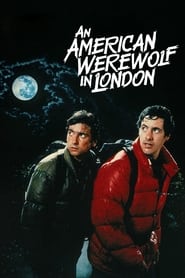
apartment that she's in on her own, so she kind of made up that this character obviously came from a wealthy background. It's one of the greatest scenes in the movie. I remember asking Rick Baker about that makeup, because David Naughton has always maintained that it was, you know, out of everything that he endures with the werewolf transformation, he always maintains that that makeup in the woods is
28:35 · jump to transcript →
-
Paul Davis
was the most painful. And Rick never really understood that because it's literally like opera pancake makeup with dark circles around the eyes, contact lenses and dentures. And it turns out that it was actually the dentures and the contact lenses that were the most painful for David because he doesn't really wear contacts during the transformation. That's all him. Did you talk to the police?
29:05 · jump to transcript →
-
-
-
Tim Lucas
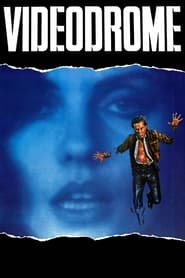
from the ear piercing to the metallic tendrils we later see attaching Max's gun to his hand and wrist. Debbie herself told me that having Videodrome follow her collaboration with Giger felt to her like, quote, a very strong coincidence, unquote. Until I came into possession of Michael Lennick's call sheets for Videodrome, I assumed that the ear piercing we see on screen was real, but the call sheet for November 26th specifically calls for bleeding earlobe makeup.
16:58 · jump to transcript →
-
Tim Lucas
Here we have a complementary masturbatory metaphor to the earlier one, which was penetrative. This one is receptive. When Max begins to scratch his itch with the nozzle of his gun, the rash suddenly ripens into a vagina of the viscera. This was a full-body foam latex appliance that covered the actor, who was ensconced within the sofa at a roughly 45-degree angle with only his head and arms exposed.
43:19 · jump to transcript →
-
Tim Lucas
The engorgement of the appliance was achieved by a couple of EFX guys blowing into tubes behind the sofa. This scene was originally written to take place in Max's bathroom, in his bathtub, but I was told that the actor had some serious qualms about sharing bathwater with a live television set, even though it had been thoroughly waterproofed.
43:45 · jump to transcript →
-
-
-
Gary Goddard
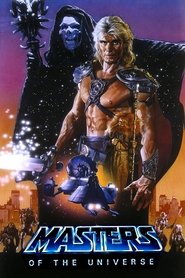
Tila, Man at Arms, He-Man, and we get kind of the scope of the devastation. And now we're going to meet Gwildor. That's Billy Barty. And Billy was a fantastic trooper. I'm not sure how old he was, but I'm sure he was in his 60s at least when he was doing this. And we bundled him up. We carried him around. He had to put on, you know, three and a half hours of makeup every morning. He did a great job.
7:00 · jump to transcript →
-
Gary Goddard
Mike Westmore. He did a great job with the makeup. There's a great variety of things we had to do. We had a question in our, you know, we went through many, many versions of this skull to figure out, is it a real skull? Because again, it was a cartoon character before. Do we make it a real skull? If it's a real skull, it's a hard skull. Then it's like a mask and you don't get Frank Langella's performance. On the other hand, we used some very latex rubbery masks and they were too rubbery. They look almost comical. This is a
13:38 · jump to transcript →
-
Gary Goddard
that Stuart Ziff created. It's gonna create the window right there. I wanted a kind of a prismatic effect in the air that you're seeing there, and now it's gonna join. You're gonna see it bend time there, it's bending time. And now it's opening up the doorway. And now they're gonna say, let's get through there. Mike Westmore, the Gwildor makeup, I wanted to get as much as Billy's performance as well.
15:13 · jump to transcript →
-
-
-
And now you say he's a big producer. He is. I keep seeing that name. I didn't realize it's the same. Just before they shot this scene, I remember Ken coming into the trailer in makeup and asking someone to shave his rear end. And I remember being embarrassed the whole time we shot this. You and me both. I didn't want to be here.
48:46 · jump to transcript →
-
The person we admire most in the world is makeup artist and creature creator Rick Baker. His wonderfully gruesome slime bladders and slobber tubes in American Werewolf in London won him a richly deserved Oscar. That is why we admire... I was so impressed with these two and the way they worked together in the show and both of them individually and then together. They took it to the woodshed themselves and worked it out. This has made me laugh a lot.
50:11 · jump to transcript →
-
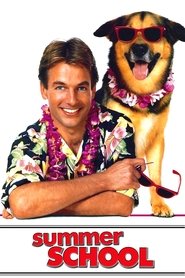
Yeah, it was. White, white pants, white shirt, white hat, white shoes. It was summer. Yeah, summer. I didn't have to think. We shot this sometime like September, October, as I recall. November, maybe. But I remember when the kids all get made up here. I remember that you shot that on purpose on Halloween so they could take the makeup home. Oh, I don't remember that.
56:26 · jump to transcript →
-
-
director · 1h 29m 6 mentions
Jeff Kanew, Robert Carradine, Timothy Busfield, Curtis Armstrong
-
Oh, you poor bastards having to sit through this. Now, they told me they were going to put good violin over me, and you guys had to sit through me practicing. I remember that. And here's a semi-scripted, semi-ad-lib card game, which became a running bit between Booger and Takashi. Yeah, you guys made that up. That was improvised because once we were in the place, he just came through and told us to make up something. Yeah.
21:01 · jump to transcript →
-
Whose idea was it to keep your glasses on in the shower? This little scene was not in the script, but it seemed that after this little spat in the shower, we needed a healing moment between our heroes. And so we just set up the camera and said, why don't you guys try to make up before you go to bed? And they ad-libbed this right down to that little tandem eyeglass removal.
21:58 · jump to transcript →
-
The whole point, which I had at the time, which was Booger wasn't really a nerd, really, at all. He was the least nerdy of the bunch of them. He just couldn't find a home anywhere. So he had to live somewhere. So you guys, the nerds were the only ones who accepted everyone without question. Right. Without judgment. Here's a continuing. Yeah, this is, you know, we just keep doing these little things that we would make up. Okay. Here we go. When do I deal? Well, you've got to win a hand first. I told you we'd find a better place.
30:08 · jump to transcript →
-
-
-
Richard Donner
Right. That was... When you look at John Forsythe behind that makeup, you think it's makeup, but it's not. He was quite old when we hired him for this role, you can see, and we changed it to fit his character. First, we thought he was young.
20:55 · jump to transcript →
-
Richard Donner
That's not makeup. When you see him nowadays, cleaned up, that's makeup, and that's done by Burman. Tom Burman and his wonderful wife. That's one of the great makeup effects houses. A bit of a genius. He also did the upcoming character you'll see and all the little characters in the belly of the upcoming character you'll see, and went on to do a lot of wonderful things. He also went on to do, in Goonies for me, Sloth. A great big character. Tom and his company are really great.
21:20 · jump to transcript →
-
Richard Donner
See, that's makeup. John Forsythe there.
42:43 · jump to transcript →
-
-
-
William Friedkin
Then I'll go out and figure out what sounds I want and go out with one recordist, often not even to the same location, and make up a soundtrack from scratch the way we make up the picture from scratch. Live sound isn't very good on a chase scene. Usually the length of shots is not very long at all. You can't sustain a chase scene in a long setup.
1:22:44 · jump to transcript →
-
William Friedkin
Well, to get a blood effect. And I've used it often. It came to me out of desperation when I did the French Connection. And the guy in the first scene, the undercover French cop, is shot in the face. We had elaborate makeup made for that guy. And the standard way to do it was you'd make a mask of his face.
1:43:30 · jump to transcript →
-
William Friedkin
put a part of his face, and then there'd be these little monofilament wires, and on cue, when the guy's supposed to be shot, the makeup artist would pull away the piece of makeup, and blood would be behind it and spurt. And we had a great makeup artist on French Connection who tried to accomplish that, and it never worked. It always looked phony. And finally, just out of inspiration, a gift from the movie god,
1:43:53 · jump to transcript →
-
-
-
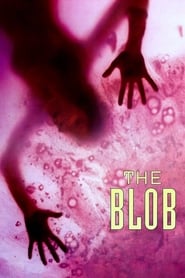
Good evening, everybody. Welcome to the blog. We're already off to a great start. I already regret inviting you. That was my blog voice. That's all I got. And next to Mark, we have makeup effects maestro, creature effects maestro, and all-around great guy, Tony Gardner. Hello, everybody. And we also have... This is like the dating game. I know. Door number three. And the man, the myth...
0:44 · jump to transcript →
-
And this is acid, literally acid on a styrofoam countertop. Now, that was a rule. Like, who came up with the rules of the blob? By the way, the use of no score in this is masterful. Because when the reveal hits and the sting happens. There it is. There it is going up over his face. That shot. There's a makeup on him, but all that stretching is the real face. Yeah, there's a whole rig that he's in that's rolling across the floor. Look at that. When she's running up to him, she looks like miniature. Miniature.
26:31 · jump to transcript →
-
So it was a warehouse, but it was all right. So watch this now, folks. This is just so interesting. I have to narrate this a little bit. So full scale set. Right. But when Jeffrey DeMunn and one of Tony's better moments with the makeup prop effects comes floating up, it's well set up in that you want these two to get together, but not this way. We anticipated. She's trying to call the guy to save her. And he ends up as blob bait on her phone booth. Then Eric Allard.
44:43 · jump to transcript →
-
-
director · 1h 30m 4 mentions
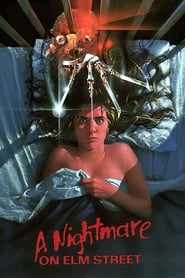
A Nightmare on Elm Street (1984)
Wes Craven, Heather Langenkamp, John Saxon, Jacques Haitkin
-
I remember the guy that was up on the big condor, the big light tower, was always worried he was going to get shot at. What a brilliant tackle! What the hell are you doing here? Came to make up, no big deal. You my home? Of course. Oh, what's that? Intense, huh? I still have this.
9:11 · jump to transcript →
-
You wake up, you think you're safe, and then it gets worse. How many minutes is this? It seems like it's already been about 10 minutes long. I'm already scared. This sequence also was the first to be censored in the film. I wonder why. I don't know. These people are so sensitive. That was a pretty bad prosthetic, actually. I know. Oh, see, that, to me, was brutal. Yes. That's awful. Now, here we're in...
17:02 · jump to transcript →
-
She was never quite satisfied with her makeup, so she would usually go and fiddle with it after the makeup and hair were done with her, so we never knew quite what she would look like when she got to the set. Did she do anything after this? I know she was in The Driver, which I enjoyed immensely. Yes. It's hard to actually imagine that John and...
19:18 · jump to transcript →
-
-
-
Roger Moore
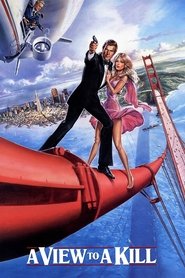
and all these prosthetics on my face. And they had 35 seconds to get them off so that I could then be 30. And then they had 40 seconds to get them back on. And by the time we'd done two dress rehearsals, they'd taken all the skin off my face. I had the one hand that was made up old and the other hand that was made up young. So when I had to do a fight with this hand that was made up old, would I use the left hand?
22:33 · jump to transcript →
-
Roger Moore
180 visiting journalists, all of whom wished to do an in-depth interview with me. At one point I said, we can make up our mind what we're going to do. We can just do publicity or make a movie. There's no point in having the publicity unless we've got something to show for it. At the end of the day, I really didn't have time.
1:02:16 · jump to transcript →
-
Roger Moore
Bizarin sent along his gorillas to help you make up your mind. They have.
1:19:02 · jump to transcript →
-
-
-
Oliver Stone
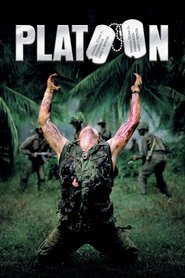
It's a very interesting new technique. It was used at that time in 1986 when we shot the movie. It involved applying a glue-like prosthetic to his face and giving it that shape within an hour. And I think we got it down by the end. We got it down to about half an hour of work. So it's an amazing amount of...
12:22 · jump to transcript →
-
Oliver Stone
I mean, the conventional way would have taken hours to put that makeup on. It did have a tightening effect and a deleterious effect on Barringer's skin, so we used it sparingly so that he would not... In other words, we would ask him to put the scar on when we did all as much work as we could on the right side of his face so that he wouldn't have to walk around with it all day long. I think in front of the men, it's necessary for me to give the orders.
12:42 · jump to transcript →
-
Oliver Stone
No wind, no wash. Good wounds, good makeup. A lot of these guys, they're really struggling. Some of them are getting out, though, and they're happy. Some of these actors are finishing today, you know, too. We shot in sequence. So they're getting home, going home. They're getting out of this mess. Yeah, that happened.
1:17:34 · jump to transcript →
-
-
-
I don't think she found it fun in the end coming at 6 o'clock or 5 o'clock in the morning to have her makeup applied. This is Paul Bown, is that right? Correct. And that's Doo-Doo, Paul Mari, who is an old college friend of mine and we made the antagonist together. And, yeah, Phil Davis. Phil Davis, he'd just done Mutiny on the Bounty with Mel Gibson.
31:24 · jump to transcript →
-
Yes, he designed the Max Headroom mask. In fact, Christopher Tucker was also involved behind the scenes on the creations of the creatures. I think he did all the moulding and the prosthetics work. So Peter and his team designed it, created it, did all the sculpting, and then the actual manufacturing...
1:09:08 · jump to transcript →
-
of the prosthetics was done by Christopher Tucker, who did The Elephant Man. Yes, absolutely, yeah. I think Peter Litten had worked on a film called Don't Open Till Christmas beforehand as well, kind of a Christmas-themed slasher movie, which is magnificently tasteless for a British film. Was that Dick Randall? Yes, that's right, yeah. Yeah, Dick Randall, yeah. I met Dick.
1:09:35 · jump to transcript →
-
-
-
Eleanor Bergstein
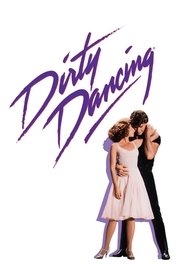
does an absolutely beautiful job. And as I said, the conditions were very, very, very hard to make this. This is the famous watermelon line. And they worked very, very, very hard. And she's in almost every scene. And it was exhausting. And she was a real trooper. She was absolutely wonderful. Make up to you every night. Make up to you when you think about it. I want a picture of everything. All right, cause, cause, cause, cause, cause I'm a love man.
18:36 · jump to transcript →
-
Eleanor Bergstein
The last morning after the wrap party, Emile said, we don't have enough for the teaching sequence. And we woke Jennifer up, and she was such a trooper. She came out. She did these things. It was just Emile, Kenny, Jennifer, and the camera. Even the makeup department wasn't up yet, which is why we have some sequences from the back, because I was standing behind her holding the makeup case. And Emile was absolutely right. We didn't have enough, though. It's so hard to tell. And I remember waking Jennifer up.
34:36 · jump to transcript →
-
Eleanor Bergstein
such care. Now, I sent Cynthia back to makeup four or five times in this because I said, remember, she has just come from really serious, annihilating surgery. And finally, you've got to get the makeup off her. And finally, they said, that's what she looks like without makeup, Eleanor. And the fact is, Cynthia with no makeup at all looks so radiant that she looks like she's going to a ball. So we finally had to paste her face down.
51:31 · jump to transcript →
-
-
cast · 1h 36m 3 mentions
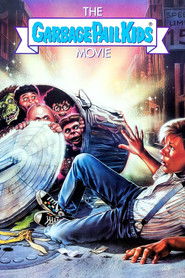
The Garbage Pail Kids Movie (1987)
Mackenzie Astin, Katie Barberi, William Morris
-
This makeup knew that I was still, after we broke up, I was in my sadness. They got me the Polaroid of you in the tub. They snubbed that to me, and I still have it to this day. Incredible. Incredible. And I believe illegal if you carry it across state lines. I haven't, though. I mean, it's complicated.
21:32 · jump to transcript →
-
stuff that gets scooped in there and then you add water and stir? Well, no, yeah, that was part of the process, but they also had, remember slime? Remember that toy slime? Yes, yes. My job was very specific, William. My job was to cut up the pieces of sponge, of sponges that they used on actors, like the makeup department, that had been colored with food coloring to resemble different pieces of semi-digested food.
1:09:27 · jump to transcript →
-
And that's what I'm talking about. Like they were very, they were very well organized. Phil was at the head of that. Everybody, all of the, all CG, I mean, I'm sorry, all animatronics, all art, all makeup, all wardrobe, they all kicked ass. They were all very good at their jobs. They all worked very hard on a very small budget. Everybody did their very, very level best on this project.
1:34:25 · jump to transcript →
-
-
director · 1h 24m 3 mentions
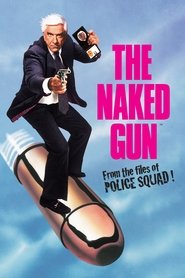
The Naked Gun: From the Files of Police Squad! (1988)
David Zucker, Robert K. Weiss, Peter Tilden
-
You just tell them what it is? You say you'll get it to them, you'll get on the pages, and by the time they get there to make up, it's too late. So that's what happened to Bob Costas in BASEketball. He was so appalled. It's a version of rope-a-dope. Did Houseman live to see the movie in the premiere? I don't think so. I don't think so. A lot of physical comedy. Pretty good.
33:19 · jump to transcript →
-
Because in the early days, we used to all have these... Mark's brother's life? Plungo, Checo, Skepto. I was Checo, Jerry was Plungo, Jim was Skepto. Mine was the only one that stuck. There was a lot of testing that went on with the exact makeup that Leslie needed for the... That's right. Big laugh for the pistachios. All through this. Big laughs. Lots of laughs. It was tricky because...
43:19 · jump to transcript →
-
Because the Mariners were nothing then. They made us take the Mariners. To get the Angels, we had to take the expansion team. Did you have to pay for the team, or is it promotional for them? Well, they actually gave us, I don't know, like 200 season tickets to the Mariners game, which is the equivalent at the time of 20 cents, or worth 20 cents. But we gave them away to charity. We wanted to use the Brewers, and they wouldn't let us. Go figure. But we were able to use real teams, because otherwise you'd have to make up fake teams and...
1:01:23 · jump to transcript →
-
-
-
Well, later on you find out that this is a guy who says that he's lost all his time. So if you look at the problem being a guy or this paradox of a guy who is trying to make up for lost time, it doesn't really make sense that a guy would talk slowly, a guy who's basically in a big hurry. But my reason was that if you talk distinctly and clearly and slowly and have no contractions, that you never have to repeat yourself and therefore you would
21:54 · jump to transcript →
-
I think there's an austerity to the elements that make up the suspenseful tension that I like as more of a critique of
1:02:15 · jump to transcript →
-
-
-
had to ship down to London for tons of blacking, black makeup and black wigs. The very few ethnic actors we had, we had to put in the front, and then everybody in the background was just blacked out. Terrible. But the great thing was, it was a beautiful and sunny day the next day, and suddenly it looked a little bit more like Africa.
52:31 · jump to transcript →
-
And one of the reasons why they're so good is because of the costumes. They're so meticulously researched and done by Jim Acheson, who's won three Oscars for costumes. But just look at Eric's shirt there. It's so correctly tailored for the period. And Graham's costume and makeup, it makes him into a period character. It's meticulous costuming, brilliant stuff. Any other problems I can reassure you about?
54:38 · jump to transcript →
-
-
-
Jim Piddock
altogether, though, of course, for the sense of the frame, has been composed to exclude the nether regions. Always a sensitive time on the set, of course, the nudity, sometimes an occasion for embarrassment, although this actor, very manly. In fact, I understand that on the set as he stood up, the makeup girl fainted. And now we're in another place, an envelope. We'll get a look at the characters here in a moment. More people, a new place, the plot thickens.
6:00 · jump to transcript →
-
Jim Piddock
A little suggestion goes a long way to my mind when you're dealing with a murdered man come back to life. The studio rather embellished these gruesome bits to make up for the time they'd lost cutting the whole Zhivkov episode. But more is not better when you're dealing with wanging a fellow over the head with a shovel. The mind can picture those things so much more compellingly than even the most gifted cineast. Well, this is my argument with the filmmaker who'll show you all the squishy body bits, be it...
51:29 · jump to transcript →
-
-
multi · 2h 34m 2 mentions
James Cameron, Gale Anne Hurd, Stan Winston, Robert Skotak + 8
-
Bill Paxton
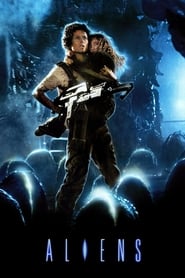
These shots of the aliens hanging from the ceiling are just shot upside down. It's just guys standing there in an alien suit. And we set up some alien puppets made out of foam and filled them with gak and guts and yellow goo, and blew the hell out of them, as I recall. Made a big mess. Miniscule things we had to do, like creating burn appliance make-up for when the acid would hit. Here's a case right here. Alien comes up, splats, and the blood is right here. Quick cut. Quick cut. But prosthetics used. John Richardson was the physical effects supervisor. I was at his shop on the lot, and they were testing one of these flame-throwers and it was a real flame-thrower that they had built. This thing would go about 20 or 30 feet. So every time you see flames coming out, it's the real thing. It was a little scary. When we did the fire in the APC, there was something used to age the set, some kind of wax-based substance that the art department had dabbed on to make the set look more like a used military vehicle. And the heat caused it to vaporize and the actors got this strong sense that they couldn't breathe. It caused their throats to close up. Bill tells the story Jenette is going "Ugh!" And Bill remembers thinking "She's coming up with some great stuff." And she really couldn't breathe. I don't remember what we did. Probably just kept shooting. I think we just kept the fire out of the inside, kept going. Because the full-size APC was incapable of spinning its wheels, all those shots of Ripley when she hits the gas and you see the wheels spin and smoke are all the miniature, because the full-size vehicle again weighed some 20 or 30 tons. We had put A-B smoke... A solution on the wheel and B on the ground. And as the tire turned, it would mix that A and B together and give the smoke. We had somebody holding back the front of the APC for a moment, so that the tire'd spin, then we'd let it go. That A-B smoke is really toxic. We don't like to breathe that stuff.
1:17:31 · jump to transcript →
-
Bill Paxton
So the whole high-tech war has degenerated to the point where they have to follow the little kid or they're gonna die. Movie air ducts are always big enough to get through. It bears no resemblance to the real world. The theory is that the audience has never been inside an air duct. Air ducts are not big enough to walk through. But it's a conceit. It's also a conceit taken from the first film. Supposedly, the way I survived in the colony was going around everywhere in the air ducts. We supposedly played a game and part of the reason I was called Newt is because I was so quick in the air ducts and no one really liked me on the colony because I beat them at the game. Fortunately it ended up saving us from the aliens at this time. For this air-duct set, we had vertical air ducts so that we could actually drop the aliens down with the monofilament, so that you would feel - and you'll see it in here - feel them crawling on the ceilings and the walls, that bug aspect of them. My cameo's coming up. - Who were you? Vasquez had never fired a handgun. Jenette Goldstein hadn't. She was living in England. Not a lot of handguns. For the wide shot she was great, but for the close-up of her killing the alien, her recoil wasn't accurate. Unlike today, when I'm on a set, I dressed up in suits on this film and the crew couldn't believe it... That's me. That's me. - All right, girl! All of the close-ups of the handgun firing at the alien was me. People couldn't believe it, since I always dressed up in suits. I needed something to give myself the appearance of authority. When I came in in the fatigues and fired a gun... They saw the real Gale. - They were pretty surprised. Jim told me that I was in my office and the crew were saying "What are we gonna do?" "Who here has ever fired a handgun before?" And he said "My wife has." He said "I'm gonna go get her and she's gonna do the shot." And I did. Jenette has very fair skin, freckles and had hair down to her waist and blue eyes. So somehow we managed to see that if we cut all her hair off and gave her dark make-up and brown contact lenses, she was actor enough to actually pull off this Hispanic character. That was a tough actual physical effect. There was nothing optical. That fireball came flying through that corridor. We didn't have digital anything back then. We didn't have digital fire. This is cool. It was a chute. It was about three stories high and it had a big old curve at the end. I Kept sometimes messing up so that I could redo it. Important survival tips in this film. Never grab the jacket. Grab the hand. Unless you have a Newt-finder device in your pocket, then you're OK.
1:58:34 · jump to transcript →
-
-
-
And interestingly, he and René both did work for Star Trek as well. Right. Got covered in lots of makeup. I do remember one scene that was cut, but he wasn't in it. It was Jeremy going to the doctor because he wasn't feeling well and the doctor couldn't find any life signs. And it became more and more perturbed.
26:48 · jump to transcript →
-
He's really an improv specialist, and so a lot of times we would flounder over the way a line was working, and he'll just say, I'll make up something. And I said, what's it going to be? And he said, I don't know yet. And then we'd roll, and he would do it. There was a little thing there. Yeah, little baby things. But he would come up with something on the spur of the moment.
45:18 · jump to transcript →
-
-
-
John McTiernan
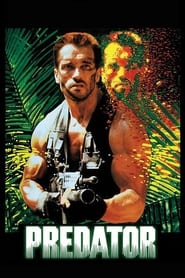
He is a wonderful actor, he is clearly too old for this part. But, we put an outrageous amount of tan makeup on him,
4:15 · jump to transcript →
-
John McTiernan
Down in Palenque, the second time we went down, we didn't need to make up the jungle, so we didn't have an art department, you know, we worked with local,
1:05:16 · jump to transcript →
-
-
-
I remember poor Eric had to wear all that makeup and dye his hair so he didn't look like a redhead. He didn't like that much.
3:01 · jump to transcript →
-
But I don't remember why. - We didn't. This was just... My hair looks different. His makeup's different. Plus, I remember.
1:26:26 · jump to transcript →
-
-
-

Related topics
Other topics that frequently come up in the same commentaries.