Topics / Production
Make-up & prosthetics
114 commentaries in the archive discuss this, with 417 total mentions and 16 sampled passages on this page.
Filter commentaries
Filter this topic by the film's decade or the type of commentary.
Showing 7 of 114 commentaries
Clear filtersBy decade
Across the archive
ranked by mentions · click any passage for the moment in the transcript
-
director · 1h 28m 5 mentions
Don Coscarelli, A. Michael Baldwin, Angus Scrimm, Bill Thornbury
-
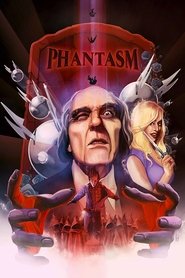
Oh, man. Can we fast forward through this section? Derby. What inspired the derby in this scene? Yeah, I don't know. Where did that come up? Not me. Well, that was our Jack of All Trades costume designer, who also happens to be my mother and was also the production designer and makeup. She came up with that, I guess. Very An Souchant. Now, Bill, you wrote this song, didn't you? Yes, Michael, I did. Uh, we, uh...
16:12 · jump to transcript →
-
Don had approached me. We hadn't really talked about the tune. We talked about it this day, just before we shot it. And while they were setting the shot, I was sitting in the trailer with my guitar and Shirl Quinlan was in there, who was a lovely friend and a lovely lady. Did my makeup, her makeup every day. And I remember just playing the tune. I only had eight bars.
16:39 · jump to transcript →
-
is when you're making a film on such limited resources like we did, in terms of all the effects and the fact that we just don't have any kind of special effects team, whether that be makeup or prosthetics or rigging, you're so dependent on your actors and that's why you're so fortunate in the making of this film with Mike and Bill, Reggie and Angus, is that
27:43 · jump to transcript →
-
-
-
Francis Ford Coppola
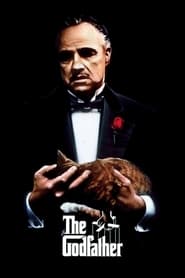
to actually turn black in front of the camera. And the way we did that is we put some special makeup that when a fine mist of water is sprayed on it, it would look as though the face was turning black from suffocation. I don't know if it worked, but it was very elaborate. We put the special makeup and we sprayed water while they were strangling him.
43:13 · jump to transcript →
-
Francis Ford Coppola
We had a very good makeup artist on the film, Dick Smith, and we really wired Al's jaw. I tried to make the notion of his suffering from a real punch from a strong man. Normally people get punched in movies and it's like the next day they're just talking. We really asked medical help as to what it would be like and we temporarily wired his jaw so he couldn't talk.
1:10:41 · jump to transcript →
-
Francis Ford Coppola
I accepted these three things from Marlon. So I then called up Marlon Brando and suggested maybe it'd be nice if I did like a little makeup test or something. I could come over your house and, you know, he said to me, all right. So I got some of my friends from San Francisco and I had heard that Marlon Brando does not like loud noises. That's why he wears earplugs often. He doesn't like all that loud shouting on the set and everything. So I said to the fellas who were going to go with me and, uh,
1:34:53 · jump to transcript →
-
-
-
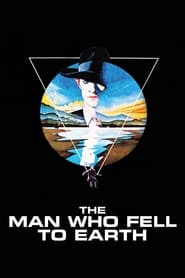
The weight of the sky is just something indescribable. I mean, it's a magic place. It really is New Mexico. I'd never seen real cowboys, and I mean, these cowboys were nothing like the film cowboys. They were skinheads with tattoos and rings through their noses and ears, and they would dance with their spurs on. We went to a nightclub, and a makeup artist came with us. His name was, was it Justin?
25:25 · jump to transcript →
-
makeup artist, and his wife, Marilyn, this gorgeous wife that he had. He was sort of a slightly fey young man. And a cowboy came over to us and he said, how long are you all in town? And he hid behind me and said, just the week. It's just as an old village in England in the medieval times, immediately someone comes in.
25:56 · jump to transcript →
-
Some of the makeup took several, well, not several hours, a couple of hours. It wasn't bad. I think the wig could have been improved upon, but that's hindsight. The main problem was because of an early start to get the makeup on, I couldn't even begin to go out drinking with the English crew the night before. Nobody's a freak. What do you see in the cards?
53:16 · jump to transcript →
-
-
-
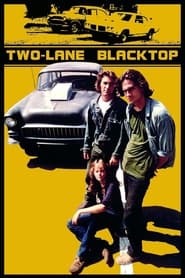
with the cast and the crew. How much of a crew was there, first off? Let me ask you that. It was the most minimalist crew that we could get away with with a full IA deal. They allowed us not to have a hairdresser, not to have a makeup artist. These were, like, major, major concessions. But we had, instead of having one of the small production units...
1:06:54 · jump to transcript →
-
I don't know about you, but sometimes you just find that the lighting or exposure or something makes it very difficult for the flesh tones. But nobody wore makeup in the picture. I think that pancake makeup stands as a barrier between the actor and the audience. And so I got everybody to get a little bit of a tan, and we didn't have any makeup.
1:31:49 · jump to transcript →
-
And sometimes, in spite of that fact, it looks like somebody's wearing makeup, and that always annoys me. And I don't know why that happens. Sometimes it's just a combination of things. Yeah, the balance of the light inside and out. You know, I pretty much shot all of Rudy's screenplay. I think maybe, you know, two or three scenes were cut out before we began shooting. But...
1:32:19 · jump to transcript →
-
-
-
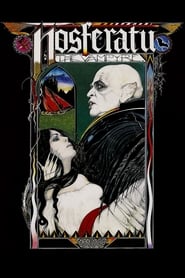
This was all designed. These were empty entrance halls. The clock on the right was built by a man who I always liked to have with me on shoots... Cornelius Siegel, who was a mathematician and a physicist by trade. He was very good with his hands. Henning von Gierke then took care of the details. But it really worked. He built it in two weeks, and it was a very good clock. I love Kinski here so much. How long did this makeup take? At least four hours every time. He was exceptionally patient with these things. Fingernails, teeth, and ears. The ears had to be molded from latex every day because they broke when they were taken off. He was amazingly disciplined. Who did the makeup? That was a Japanese lady named Reiko Kruk. She was much more than a makeup artist. She was a great artist. Kinski respected her very much. There were never any fights between them. Almost every day Kinski started some scandal or was screaming at the top of his lungs. He broke furniture. Those were daily occurrences. But with the makeup artist, there was always Japanese music playing, and for four hours Kinski was completely quiet and concentrated.
27:21 · jump to transcript →
-
Only 16 people? Yes, "Fitzcarraldo" was shot with 16 people. Imagine. Or movies like "Even Dwarfs Started Small" were always less than 10 people. But they require enormous logistics with the costumes and makeup... Right. Which we will see when the rats are in action. We had 11,000 rats from Hungary that had to cross all the borders that still existed in Europe. That was an awful ordeal. This theme I also know quite well from Bruges and Geneva when the scientists there... With the early anatomical studies and the human... I love this. The knowledge about science and Enlightenment in this movie and the perplexity at the phenomenon that is the human being, I do think that is a typical theme for you. Yes, and for vampire movies, too. There is always the dichotomy of Enlightenment and the inexplicable and sinister that resides somewhere within us. The genre has played with that since it first appeared in the literature. Since "Frankenstein." Especially since the English Romanticism, Bram Stoker, Murnau, and whoever else. "...
1:05:31 · jump to transcript →
-
-
-
Related topics
Other topics that frequently come up in the same commentaries.