Topics / Creative decisions
Influence & homage
102 commentaries in the archive discuss this, with 264 total mentions and 64 sampled passages on this page.
Filter commentaries
Filter this topic by the film's decade or the type of commentary.
By decade
Across the archive
ranked by mentions · click any passage for the moment in the transcript
-
-
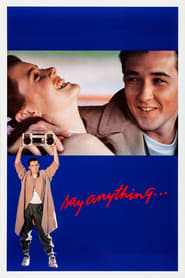
That's also the reason I got the part. I'm such a ham. You are such a ham. - I'm such a ham. But what's amazing is, at the time... ...I was only the father of an infant, really. My daughter... - It was Rory's age. They were both born same month. Yeah, and, uh.... So I was, uh.... I thought, "Well, he's-- This kid is really kind of over-the-top... ...In terms of the way he treats his family. He's kind of a brat." Little did I realize then, after four children later, that this is kind of par for the course. This is the way kids just treat their parents. John knew what he was talking about. - Oh, yeah. He had lived through it. John-- The meetings on this film... We would be in preproduction before we'd shoot... ... then I'd have to go to... John was a night owl, so I'd have to go to John with a... John Hughes' house from about 9 at night to 5 in the morning. I would get home and get in a half-hour's sleep and go back to the set. It was just insane, and he liked to work those hours, and we'd... That's how we basically worked on the script... ...and worked on the production design. It was literally a 24-hour-a-day job. Now, oddly enough, you know, which is gonna sound odd to some people... .all of this sort of imagery... ...Was inspired by David Lean's Great Expectations. So I was-- Obviously, we didn't fully get to that point... ...but some of the black-and-white photography in that film... ... really inspired this sequence for me.
11:55 · jump to transcript →
-
That was the key. Some reviewers at the time... Some people complained that the film was too violent, you know? Yeah, I remember that. - But that is... I think that's what made it funny to adults as well as kids. It's because there's this theory about soft comedy and hard comedy... . ll talk about in a bit... ...but it's like, when it hurts, the more it hurts, the funnier it is. It's Three Stooges, you know? - Itis Three Stooges. It is, and I was always reluctant to say I was inspired by The Three Stooges... ...because I was more inspired by the Marx brothers. But nevertheless, when you see The Three Stooges, you realize it is that kind of pain... And it's funny today. It's fun-- It just-- There's something about people getting hurt. Now, these are our stuntmen. This was just Leon. And the hook. Try to get the crowbar to fall at the right time. Oh, yeah. - I remember this.
1:17:40 · jump to transcript →
-
Again, you can understand why an Academy Award-winning actor... ...would be a little concerned that he's doing something like this... ...at this stage in his career. But, uh, it's important to always get back there... ...and remember how much fun you had doing these kinds of goofy, silly things. This was our little homage to Raiders of the Lost Ark.
1:20:11 · jump to transcript →
-
-
-
He's very complimentary about this movie and about Chuck Farr. And he said that actually all of these guys were based on real guys initially, were inspired by real guys that Chuck Farr knew. And he actually got to meet them and hang out with them at least one night. But something that happened with all the guys in this movie is they were hanging out with Navy SEALs all the time. So whether it was those original guys
14:27 · jump to transcript →
-
the inspiration for the lead character of current who is Michael bean, but he has kind of a light funny side and he has the more serious all business side. And so they ended up splitting those into two characters, which is how we get the two leads or that's supposedly the story. Um, but, uh, and then I don't know if we should talk about, uh, Wally Kilmer now. Oh, is she, uh, is she coming up?
22:32 · jump to transcript →
-
the inspiration for like the modern triathlon, that that was just, you know, a 10 mile run followed by a 10 mile swim, you know, followed whatever that went on and on and on. Like it's there's so few people who can do it. And then also the
42:47 · jump to transcript →
-
-
-
Michael Mann
wanted to know in the preparation for the role was what were her attitudes towards courtship, towards marriage, towards what do I do with my life? To what extent am I influenced by what my father thinks or what is expected of me because of my station? And so when Hayward advises her that what her father thinks and what he thinks
13:39 · jump to transcript →
-
Michael Mann
Much of the war paint that you're seeing among the Huron was inspired by the artwork of Catlin, that's C-A-T-L-I-N, who moved throughout the plains, I believe, around the 1820s.
1:13:36 · jump to transcript →
-
Michael Mann
The design on these canoes is an homage to Wyeth. It's lifted right out of his work. When you fall into British hands again,
1:19:49 · jump to transcript →
-
-
-
actual computer generated effect so um this is uh based this was inspired by a kurt vonnegut novel where uh i think it was a sirens of titan where there's a substance called ice ice nine that that's cat's cradle buddy okay it's cat's cradle okay don't try to try not don't try to out vonnegut me stay in your lane buddy
9:54 · jump to transcript →
-
So Ice Nine was the inspiration for this substance. Oh, no shit. You never told me that. That's amazing. That would instantly create the solid stasis for the character. We got some great people working on this movie. Bob Ringwood, David L. Snyder, and we just saw Stuart Baird, who I compare to Dr. Smith in Lost in Space. He was a...
10:17 · jump to transcript →
-
we came up with, which was basically a teleporting, there was an interesting Philip K. Dick novel where you have a psychiatrist in a briefcase called Dr. Smile. So the inspiration for this was from Philip K. Dick and it gives you this kind of inspirational greeting and you're able to talk to the computer here and be motivated. Yes, I want an ego boost button on my ATM.
23:17 · jump to transcript →
-
-
-
Tony Scott
The city had a whole different feel, and I thought, wow, this can work for us, not against us. So I redesigned that morning, I did my storyboards, and I redesigned the boards based upon shooting that day with Snow, and I think we captured something which was unique and very much in character with the rest of the movie, which was this opening title sequence in Snow. I think what also is a big part of the opening title sequence is the music, and the music was inspired by...
4:52 · jump to transcript →
-
Tony Scott
The music that was used in a movie called Badlands, which was a composer called Karl Orff. And when I met with Hans Zimmer and talked to Hans about the music for the movie, I said, I want to pay homage to Badlands. Badlands is one of my top five favorite movies. And so therefore, I didn't have any qualms about wanting to pay homage to that particular film. So that's why we took Karl Orff as a basic idea for our music.
5:20 · jump to transcript →
-
Tony Scott
It is a classic in Mexican standoff, and I say I was inspired by a lot of John Woo's movies. I looked at Better Tomorrow Part II, I think, was the one that inspired me the most. It was actually Quentin who said, you got to look at a lot of John's movies, yeah. So we cut from the insanity of all the guys screaming to the bathroom with Elvis. And this is the first real look we got at Elvis, or the closest we got to seeing Elvis, is a very soft focus shot of Val Kilmer in the bathroom mirror looking like Elvis, but it's so soft that...
1:48:18 · jump to transcript →
-
-
-
You just have to feel it. You're just there on the set. You know, that's not working. It's got to be like this. You're doing that too self-consciously. You've got to do that straighter. The humor comes from the fact that you don't understand you're being funny. It's all inspired by the screenplay, definitely. It's inspired by the screenplay, but then I think what the director does is he has to hold on to it and keep it from falling off. Of course, the movies that work best are
10:21 · jump to transcript →
-
That was inspired by finding this piece of footage where he turned around in the Oval Office and looked back at the camera. And so we said, okay, that's where we could put the punchline of a joke. And then we figured out this whole peeing thing, which backed into that piece of film. So it was a very complicated process, constantly changing, going back and forth.
31:20 · jump to transcript →
-
The scene, like, you know, Mama always had a way of explaining things, you know, in between lines of dialogue. So I had to get a rough idea of how Tom was going to do that. And I had those with me, and we tried our best during the shooting to build in those pauses. Then, like I said, I had Tom perform on film because, see, I was inspired by Amadeus.
32:44 · jump to transcript →
-
-
-
three of the Spice Girls got tired of waiting in line to be part of the open casting call and said, screw this, we're going to start a band. And they always talk about it. They always credit it as how they got together because three of them met just waiting in line for the open casting call. Oh, there's our homage to Clockwork Orange right there. Yep. You mean the bowler hat? Yeah, the bowler.
12:14 · jump to transcript →
-
A little homage to Spielberg jumping across the moon. That's cool. Backwards E.T. The too hip for Spielberg moment. That's awesome. How sweet is boo-boo? I know. Then we get into the banquet. This was fun. I like my little flip, too. I like my little...
1:15:21 · jump to transcript →
-
Just something you've never seen before was the hope. Well, that's what I was going to say. You know what? It's not art if people are comfortable with it. Then that means they've already seen it. Then that means, who cares? It's another plaid shirt, you know? But like you said, love it or hate it, but just don't go, eh, okay, don't say that, you know? Yeah, that was all I wanted. That's why, you know, when Jamie and... You see my homage to Michael Jackson tape on my fingers I have in every movie? That's where he came.
1:17:17 · jump to transcript →
-
-
multi · 1h 54m 3 mentions
Jean-Pierre Jeunet, Hervé Schneid, Alec Gillis, Tom Woodruff Jr. + 5
-
This gun - "Taxi Driver" guns we called them - they were inspired by Robert De Niro's wonderful Taxi Driver shoot-out, where he's actually got a device like that.
17:40 · jump to transcript →
-
At the beginning I thought "Okay, they are going to fire me after one week." And, no, because it's like another movie. After a while, you are inside and you work, you're friends with good guys. And it's just a process. Like when I did my first short film. But when I made a short film, we were five. And for Alien Resurrection, 905 people. But, then again, it's the same thing. And I'm very proud, because for me, it's my own thing now. I am very proud because I did it. It was so heavy, so big, and the inspiration was Giger, and he is very happy about the film. I know, because I met him recently in Paris, and I'm very happy and proud of that. You wonder about what it's like to direct a film in a language that isn't really your mother tongue. And you wonder whether or not somebody fully understands, um... It's interesting. Something I've wondered. I don't know if Jean-Pierre is actually familiar with all of the actors
1:27:28 · jump to transcript →
-
You are going to see in a couple of minutes the nest. It was a kind of homage to Giger because in the script it was an action scene and I didn't like it. I prefer to imagine this disgusting nest with tails and parts of alien. It was really disgusting with lots of slime and Sigourney loved that, to jump on this very disgusting nest. I love this idea when she catches the tongue. It hasn't happened yet, but this whole business about getting Ripley away from the rest of the pack... She falls into this ocean of alien... alienness which I quite like, actually. And she's supposed to sink into this like into an ocean, which was a precursor to this bit at the end of the film where they were floating in alien goo and the aliens swam in it like crocodiles. This shot seems very easy. It was a nightmare because it's a Steadicam. You can't see the crew, you can't see cables. You can imagine the nightmare because we turn around Sigourney and Winona.
1:28:42 · jump to transcript →
-
-
-
and the moon was put in and it was processed to look like day, as was this shot. To look like night. To look like night, rather. And if, in fact, if you go back to the beginning of the picture, you'll see a shot from the sequence with Ardith Bay. We used the same close-up twice. That we stole from this scene. Again, trying to clarify that problem in the first scene, which... But you don't notice because one's during the day and one's at night. Now, all this is, if you know, sky replacement. This was a, we shot this early in the morning.
36:34 · jump to transcript →
-
almost everything in here you're going to say pulled it out of our ass weren't you? Yeah, I was going to say that. Almost everything in this movie is based on some sort of fact, but actually we just stole that name from Sam Neill played Colonel Brydon in The Jungle Book, and I just thought it was a little homage to my own movie. We originally, or for a time rather, we had the front end of the scene cut off, you know, again for pace reasons, but what it did was it removed the
1:08:47 · jump to transcript →
-
I love these shots, this one and the next one of the chariot taking off. They're totally reminding me of, I don't know, Ghostbusters or something along those lines. Really 80s fantasy visual effects shots. Right, a lot of stuff with the soldier mummies and the priest mummies. I was always a big fan of Ray Harryhausen's movies, especially Jason and the Argonauts, the big skeleton battle in that movie. In fact, I used Ray Harryhausen's name several times in the script just to pay homage to the man who...
1:50:39 · jump to transcript →
-
-
-
I went to New York with Dino, and I was very nervous. This was Tony, Anthony Hopkins. The thing I did know and what I was confident about was the type of movie I wanted to make. Like I said, I went in there knowing the tone of the movie, my approach to the movie, how I wanted to not show any of the gore. I didn't want to make a horror film. I wanted to make a film that was psychological, emotional, and smart. That was what was on the page. And the only scene that Tony had a concern with when I sat with him was this scene right here. Tony was concerned that as originally written, his attack on Graham here was too graphic. By the way, it's an interpretation because 10 directors would direct a scene in 10 different ways and show various degrees of violence. It's about showing the details of the guts falling out of his stomach, or the blood, how much blood to show. And I chose to play it mostly on their faces. Once the attack happens... Here's my little homage to Silence. You see the... - I see the bug. You like that. So I chose to play the violence part of this scene on their faces. I love this book. This is an original. My prop guy, Brad, found this original book from France, Larousse... When I read it, I had no idea what the hell it was. It's the bible of cookbooks. - Yes, I learned that quickly. He found this real old French cookbook. There was a lot of dialogue about how do we sell his moment? It's really just a subliminal thing. It wasn't really supposed to be so pointed where it was like, "Oh, sweetbreads." I thought sweetbreads was brains but it's not. It's actually... Thyroid. -... thymus. I learned so much about anatomy on this film. If you work on a Lecter movie, you learn a lot about cooking. I thought Edward was fantastic. There is a tremendous intensity of performances in this movie. And really a dream cast as Brett already said. If you could have anybody in the world for these parts and be lucky enough to get them. It's pretty much what happened to us. Great actors want to play good characters. They want to play great characters and all of these characters, down to Freddy Lounds, and other smaller roles, were just written so well. They were interesting and dynamic. And these actors were interested in playing this. To convince these actors to do a third in the series, all that went out the window when they read the script. Certainly once they started working. There's our cold opening. I'm very proud of this title sequence because it was actually done two days before we had to lock picture. My editor, Mark Helfrich actually was the brainchild behind this because... You re-shot the journal here in a very interesting way. Initially, this was done in a much more straightforward way with the images very flat against the screen. Yes, a lot of times. Mark is kind of... Everybody on my team, from my AD to my production designer, are filmmakers. Mark is a filmmaker in his own right and he just understands the visuals and storytelling. I love how, you know... But this was written. - Yes, it was. But the way that the camera roams over these pages and when we go in very close and it gets grainy, the camera movement left to right, up and down, is all not scripted, of course. This is something I don't really have the patience for. Mark kind of took this book that he was fascinated by. I think he has a copy of it in his closet at home. He just knew every page, every frame and went with Dante and literally just shot. This is a wonderful opportunity. This kind of title sequence is sort of old-fashioned in a way. But it's a wonderful opportunity for a screenwriter to get information in quickly to cover a lot of ground between the arrest of Lecter and where we are when the movie is going to start. Covering a period of several years, you are doing that without any dialogue just by these images. It's a very useful shorthand. Danny did the same thing that Ted did with the script in this sequence that Mark did with the visuals in this sequence. Danny did the same thing with the music. I think the music here is so fantastic. It's very much like a Bernard Hermann score, which I knew was a big inspiration for Danny. Danny is a big fan of Bernard, and this was his chance. He's done darker scores, but they've had a kind of lightness, or comedic darkness to it. Danny did something here that kind of made people's skin crawl in the theater, like, "You're in for it. "If you're gonna sit through this movie, you'll experience some stuff. "Shit's gonna go down."
6:02 · jump to transcript →
-
And here we had sort of a challenge as we were working over the script and getting ready to make the movie, because we're going here to a second house of murder victims. You don't want it to be repetitive, and you've got to find a way to make it quite different and move more quickly. Mark Helfrich, the editor, had some wonderful ideas for increasing the pace of this, which was a little bit longer. In the script, initially, I believe Graham goes into the house and has a few moments in it. Anything repetitive will never be in the film with Mark's editing. So we eliminated a couple of brief moments of him going into the house because it was too much like the other house he went into. And you try to move ahead to what's really new, dramatically, in the story. I love this shot. Jimmy Muro, my Steadicam and first camera operator, did this as one. A lot of good shots in this movie are in one, which I love, you feel like you're with him. And this was built. It's like the most incredible tree house in the world. It took about a week to build it. -/t looks pretty real. The tree is real, but we built the tree house. A platform, so that we didn't have to have Edward climbing up there. And it was awesome. It was so much fun that it was scary. Now he's looking from the killer's point of view at the murder victims' house and figuring out that the killer must have sat in the same place. But you cut the shot where he imagines the killer's point of view here. Yes. - Why was that? I cut it because I didn't want people to think he was psychic. I was worried that the audience... No. It was scripted that he would see in a sort of flashback what the killer saw, which was the woman walking past the window. I was really worried about it. I mean, it worked. I was worried that some people might be confused about his visions. I only wanted the visions when he was drinking in his hotel room alone. Where people sometimes have visions, you know? This was a great location. There was a real house here that was from 1770, that was the home of two congressmen. This is outside Baltimore, I guess. - Yeah. And here's the house that we built that we transitioned here... To a house built. ... that was inspired by the house from 1770 that they wouldn't let us use because... This entire house was built just for the movie outside of Los Angeles. - On the Disney Ranch. And here we have Kristi Zea in full-blown design glory. This is the voice of Ellen Burstyn, believe it or not, uncredited. That's interesting. You didn't know that? -/ did know that. I had Kristi do the still photographs because she's so great. In every single shot here, you see hundreds of separate decisions made by Kristi Zea and her team. Take off your nightshirt, and wipe yourself... I love this upstairs kind of lair of Dolarhyde. This was a big debate about the voice and... Now! - Please! Yeah. Should we... What are these voices? ls it Grandma's voice that has been transitioned into the Dragon's... Is it the imaginary voice of the Red Dragon? Originally, it was scripted that we heard the Red Dragon's voice in Dolarhyde's head. I got great actors reading the Dragon's voice, but I just could never make it work. I just felt it became hokey. It was a potential for people laughing where you didn't want them to. This is a CGI shot where we erased his teeth. So that you just see gums. - Yes, you just see gums.
39:12 · jump to transcript →
-
He didn't take this character for granted in any way. He tried to find every possible nuance within him. Mrs. Jacobi in human form. Do you see? - Yes. I love the William Blake stuff. The painting and the inspiration for him. It goes much deeper in the book. Personally, I always thought we shouldn't see any more photographs here. I would not have shown these photographs. I would have only shown reactions on their faces, but it's the kind of thing you go back and forth on forever in postproduction. No what? Not me. Philip was really terrified here. Both these guys together, the excitement of having two great actors in the room. Ralph talks about how when you're working with great actors, it raises your game. You give a performance you didn't even know that was in you for that day. Yeah. I am the Dragon... This is the performance. You are privy to a great becoming... It's his monologue. ...and you recognize nothing. You are an ant... Is he saying this right into the camera, or is he saying it to Philip on the set? Philip's there. It is a little close to eye line, because I feel like... The camera is pushed almost into his face. He has to ignore it while performing. And then I love this move, which comes around. I like the light on his eye. You owe me awe.
1:15:36 · jump to transcript →
-
-
director · 4h 13m 3 mentions
The Lord of the Rings The Return of the King (2003)
Peter Jackson, Fran Walsh, Philippa Boyens
-
to pull a mat off the edge of people's hair and replace the sky above them, especially because sometimes the sky tends to burn out and you lose your edges around the hairline and it gets a bit tricky. This was inspired by a scene in the book of Frodo swatting invisible flies, walking along, which I always remember that passage and wanted to portray it in the movie. This particular scene is Sean Astin's last scene that we ever shot.
3:15:14 · jump to transcript →
-
This was another moment which I always imagined too, which is just this fade to black. So I wanted a real feeling that it might've been the end and I wanted this long black patch. And then I just wanted this image. This was an image that was based or inspired by a painting that John Howe did. It was this moment, this exact moment. And I remember seeing the painting. It was while we were in pre-production on the film. We hadn't shot anything yet. And that painting just gave me
3:39:17 · jump to transcript →
-
No, well he did obviously meet with her afterwards. But beforehand it was just this instinct, it was pure instinct that she would be the right person and she so was. Into the West was a song that was actually inspired by a young man called Cameron Duncan. Going into our last...
4:04:24 · jump to transcript →
-
-
-
Andrew Niccol
This opening shot looks like a production designer's fantasy, but it's inspired by an actual photograph by a photojournalist after a gun battle in Monrovia. There really was a carpet of bullets like this. I suppose it's obvious, but a military consultant pointed out to me that for every bullet that kills or wounds the enemy, thousands of rounds of ammunition are expended.
0:40 · jump to transcript →
-
Andrew Niccol
Unfortunately, Kalashnikov kids like these are all too common in Africa. Both sides use child soldiers. In Liberia and Sierra Leone, where much of the film takes place, this was very common. Some of them wear wigs, or masks, which is inspired by old West African tribal superstitions.
58:14 · jump to transcript →
-
Andrew Niccol
the idea that even shredded paper can be put back together if given enough time. This jail set also looks like some sort of homage to Gattaca.
1:07:59 · jump to transcript →
-
-
-
Again, in this part of the movie, we linked the family concept with the introduction of the kid arriving to London. And how now they are prepared to... to start a new life in their city which is now... with the presence of the militaries, trying to help these people to live again in this part of the city, which is the Isle of Dogs. This is the main location that we used in the movie as District One, the place that now the Londoners, the newcomers, are trying to live. Probably American audiences are not going to notice, but the T-shirt that Mackintosh Muggleton is wearing is a Real Madrid T-shirt. We are not supporters of Real Madrid, but this is one of our things we add from Spain. Yeah, this is a kind of homage of our country.
14:58 · jump to transcript →
-
This is the iconic London we talked about. We were inspired by the Charles Dickens movies, by the photography of the Second World War, the bombing of London. Most of these scenes were shot in... at sunrise. That means six o'clock in the morning, five o'clock in the morning. It was the only way to get control in these places, because, as everybody knows, London is a very busy place and the only way to, you know, to deal with a city that... That was the Millennium Bridge. ...there is no life there. This is the theatre, the district of theatres. In a way, we are making a trip through the city, through this iconic city, which is London, and... discovering every place through the eyes of the survivors, or through the eyes, in a way, of the infected people taking over the place.
1:08:18 · jump to transcript →
-
Well... - And cut. That's the end. We hope you enjoyed it. Our Spanish crew was really small. One was obviously Jesús Olmo, he's a co-writer with us. He's one of the infected which are... In the car park when the infection is triggered, you see a lot of people getting infected, and Jesus was one of them. I think it was a kind of homage to his work in this movie. The other one is Kote Camacho. Kote Camacho was the storyboard artist. Absolutely amazing work. This is work... Normally, you don't see the images but it's underlying every time in any moment of the film. We worked with him shot by shot, and his work was really amazing, and I really want to thank him. This film would be impossible without Fred Chandler. Fred Chandler is a Fox executive in postproduction. And he really not only helped us to bring to the film all his knowledge and all his... his... great approach to the genre. I think his experience is pretty important, you know, if you want to... Specifically, when you are dealing with a lot of elements in terms of visuals, effects and audio, music. So I think Fred was very precise, you know, and he helped a lot in this postproduction. And, for me, the most, and for Juan Carlos I think it's the same thing, the most important help was from DNA and Fox. From DNA, from Andrew Macdonald, Allon Reich and their crew. A fantastic crew. They were very supportive, and Andrew and Allon, not only extraordinary people but also very creative at the same time, very supportive to all our crazy ideas. and always trying to bring the logic to these crazy ideas, so I think we made a fantastic team together. We'd love to make more movies with them. And also, obviously, the people from Fox were very supportive, having in mind we had to do all this postproduction in barely two months. Thank you for everybody, because I think we had an amazing crew, and, you know, having in mind the difficulty of the postproduction... So they... they did an amazing job, so thank you to everybody. Thank you for listening to us. And I think our movie is a good example of all the things that we wanted to make, and I hope you enjoyed it.
1:33:23 · jump to transcript →
-
-
director · 1h 36m 3 mentions
Aliens vs. Predator - Requiem (2007)
Colin Strause, Greg Strause, John Davis
-
our nickname for the Predalien. And he's establishing his dominance over the little newly shedding warriors. Bitch-smacked the warrior around and then gets to have his way with the homeless lady. And this is one of the homage shots, the original Predator. It's very, you know, the whole layout and composition of the shot was very similar to the opening of the original film. And again, obviously, this is a visual effects. You want to talk about Hydraulx a second, guys?
19:22 · jump to transcript →
-
So I like this scene a lot because it's not too often you get to use the word dickhead in a movie. We're sort of bringing that back. That's a real throwback to it. Yeah, it was like, well, it's also how me and Greg talk to each other. We always call each other, like, asshole and stuff like that. So, like, in the sewer scene, he's like, oh, you're accused, asshole. You know, that was very much influenced by the way we talked to each other. So we were going over the script stuff for Shane. We're like, that's some of the brotherly kind of stuff you got to put in there. And, by the way, this was unusual in that
1:00:37 · jump to transcript →
-
It's like, it was impossible. We would have needed two weeks to film that scene. And it was like, and we literally had a day to film it all. So that's why, that was actually the original reason why we picked the APC more than just homage to aliens. It was like, we needed a contained set with no rain in it that we could actually shoot. And we kind of didn't like the idea of a minivan. No, yeah, minivans, we hate minivans. Which is one of the things when you're going to have military vehicles in a movie, it's always very difficult.
1:17:48 · jump to transcript →
-
-
-
Matthew Vaughn
And here, this is our love letter to a John Williams-style score. Obviously heavily influenced by Superman. And I think this scene illustrates how difficult to get this movie right, because if we pitched it one degree left or right, this would really be an embarrassing piece of crap to watch.
11:28 · jump to transcript →
-
Matthew Vaughn
internalize it so that you can see it instead of externalizing it and not feeling real. We gotta get the hell out of here! Here's my homage to a classic Superman superhero shot.
1:04:58 · jump to transcript →
-
Matthew Vaughn
Because I'm sure we've all been in a discotheque in our youth and liked the strobe coming on and doing stupid things to it. So that was really the inspiration to this. And I've got to say, even watching it now, I'm amazed I did this scene. I think it's cool as hell. We
1:28:48 · jump to transcript →
-
-
-
It's hard. It's hard. He can't fix everything. Yes. And you're feeling that, like he saved her. First of all, I love this car. When you chose this car, you chose this car. I'm so glad we have. It's Paris. Look, we love Rendezvous. McQ and I, we love movies. We watch movies all the time. Check it out. It's Claude Lelouch's Rendezvous. And so the thing is, is that it's also, you know, our whole homage...
1:03:25 · jump to transcript →
-
So we still got the jump, but we got it with character and not spectacle. And not spectacle. And seeing something that... His performance here. Performance is wonderful. And then this, remember, we originally... Dude, I love your design, though. Always, you write it, you're like, okay, no, he's staring at me when I get there. And it's just so funny. Every time, we get a laugh. And I was totally inspired by that, just in the writing of the scene.
1:37:24 · jump to transcript →
-
You're there going, you're going to be okay. We're going to get through this. It's going to be all right. We're going to live. Come with me if you want to live. And you can see, I would not be the filmmaker that made this movie had I not been making movies with you since Valkyrie. And you can see a clear delineation between the first film I made and the three subsequent films I made with you. And so all of those things that you're saying, which are on the one hand very kind, they're also greatly influenced by...
2:22:39 · jump to transcript →
-
-
-
Francis Ford Coppola
Obviously, Johnny Fontane was inspired by a kind of Frank Sinatra characters. And my impressions of the young Frank Sinatra was of, you know, girls screaming when he crooned. And so I had the teenagers jumping up and down and screaming while the scene was going on. But again, I remind you that the shot of Al and the shot of Kay were shot at night and just lit to match with the party. Gordon did a very
19:07 · jump to transcript →
-
Francis Ford Coppola
culminates in his massacre at the toll gates and you know it's no secret that this scene really was inspired by Arthur Penn and his wonderful movie Bonnie and Clyde at the end of that film when Bonnie and Clyde are are killed and I'm a big admirer of Arthur Penn and you know as my dad used to say steal from the best and
1:56:45 · jump to transcript →
-
-
-
Nick Pinkerton
homage, Douglas Sirk's 1955 film Captain Lightfoot, an adventure movie concerning early 19th century highwaymen in the foothills near Dublin, Ireland, starring Rock Hudson as Michael Martin, a.k.a. Lightfoot, and Jeff Morrow as John Doherty, same name as the Eastwood character here, a.k.a. Captain Thunderbolt. The source material was a book by W.R. Burnett, though Martin lore had a real historical basis. Michael Martin
41:12 · jump to transcript →
-
Nick Pinkerton
Grilling him is Rhode Island-raised soul singer Claudia Lennear, a former Ikette who was on the road with Ike and Tina Turner. She was apparently the inspiration for both the Rolling Stones' 1971 Brown Sugar and David Bowie's 1973 The Lady Grinning Soul. And in the year after the release of Thunderbolt and Lightfoot appeared in a Playboy pictorial titled Brown Sugar, her lone solo album, Phew!,
55:26 · jump to transcript →
-
-
-
Paul Davis
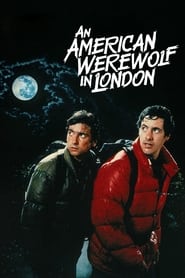
here we're gonna have one of the uh one of the it's now become a huge horror trope i mean john took this from repulsion but i think everybody who who does this little trick now with the mirror does it as an homage to an american wolf in london
43:02 · jump to transcript →
-
Paul Davis
just turned around a corner and gone from Piccadilly Circus to Clink Street, which is down by Borough Market. And this street looks completely different now, but it's still there. You can still go down and pay homage to the final resting place of David Kessler. There was a moment here that was actually cut, where one of the police officers actually chases the wolf first.
1:31:44 · jump to transcript →
-
-
director · 1h 30m 2 mentions
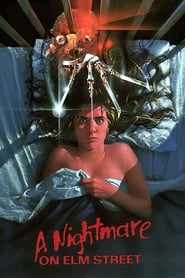
A Nightmare on Elm Street (1984)
Wes Craven, Heather Langenkamp, John Saxon, Jacques Haitkin
-
Was that a series of articles? Yeah, it was three articles spread over a year and a half. And the LA Times never correlated them. They never commented from one article to the next. Incidentally, that movie was Sam Raimi's, I believe, Evil Dead. Because he had to put a poster of one of my films in the basement of one of his films. Who's an homage to whom? Sam Raimi. This is so romantic that he climbs up my rose trellis.
34:55 · jump to transcript →
-
She's having a spasm. She's off the scale. That's my homage to The Exorcist. We couldn't afford to fly her. The famous gray streak.
50:23 · jump to transcript →
-
-
-
It was like a rock musical or whatever. So that's a fucking nonsense, really, if you don't mind my French. The actual look of it was influenced by a French graphic artist, illustrator called Nicollet and Caza. And it was something that Clive and I had discussed and looked at their works, Nicollet and Caza.
12:14 · jump to transcript →
-
cemented in some critics' minds the idea that the film was influenced by pop video, that that kind of music seemed to have that sort of MTV vibe to it in a way that you'd not anticipated. Yeah, undoubtedly. I mean, nowadays, it's very modern, this kind of music, isn't it? It's in practically every film. Well, the guys that were in Frere ended up forming, as you probably know, a group called Underworld.
1:21:41 · jump to transcript →
-
-
-
Gary Goddard
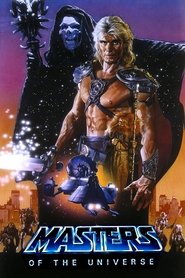
These guys are mine. This was inspired by one of the renderings that Claudio Mazzoli did, a production designer. Skeller's coming into his own, making preparations for the moment the great eye opens. Chosen by destiny! Frank delivers just a great performance. The details, the costume, look at the staff he's holding, every element, every amount combines now to the total end result. Witness to it.
1:27:27 · jump to transcript →
-
Gary Goddard
It was done two months after the production shoot. Now here, this was a little homage to Wizard of Oz. The idea here was this is, you know, after the battle, everyone's returned. You can see everybody's cleaned up. Detectives decide to stay there. Life is better on Eternia. Why would he go home? Gwildor is a bit of a tribute to the Cowardly Lion, the bows and the hair. And in fact, there was a larger scene here.
1:36:54 · jump to transcript →
-
-
-
I had that sort of... I had that in me, but I didn't do it, you know, I didn't do it as much. And then I really started hanging out with women more during the making of the movie. And I was kickboxing all the time, so I wasn't really... I just was... I got inspired by seeing in the reaction women had to Lloyd that, man, maybe they don't need Fabio. You know what I mean? Like, they... They... Certainly they like good-looking...
49:53 · jump to transcript →
-
And that's how we came up with the end of the movie. And it's a little bit of an homage to The Graduate that ends on the faces of two people facing a dare-to-be-great situation. But it ends on them waiting. Yeah, it ends on them waiting. Where's the ding? It's coming. Any second now. Any second now.
1:34:28 · jump to transcript →
-
-
-
Paul M. Sammon
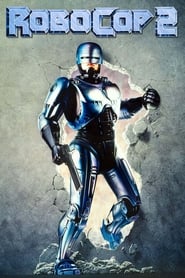
for Roger Corman, and John is a, John loves Roger Corman. He learned everything he could. So that was a little homage to John Davison's background on that monitor. Let me clear my throat. Okay, now I don't sound like I've got five bullfrogs. Yeah, so this shootout here, again in downtown Houston with the Little League team was very much a Frank Miller kind of thing. And it's very funny because this is RoboCop not being violent.
52:34 · jump to transcript →
-
Paul M. Sammon
And, of course, all of the machinery we're seeing here is, at that time, state-of-the-art. Now, this is a prop, and it's an interesting one because anyone who has seen aliens will remember the facehuggers that were in the glass containers. I can't help but to think that this was something that was influenced by that. However, this was done by Rob Oteen's crew.
1:12:04 · jump to transcript →
-


Related topics
Other topics that frequently come up in the same commentaries.