Topics / Creative decisions
Influence & homage
102 commentaries in the archive discuss this, with 264 total mentions and 39 sampled passages on this page.
Filter commentaries
Filter this topic by the film's decade or the type of commentary.
By decade
Across the archive
ranked by mentions · click any passage for the moment in the transcript
-
-
I mean, I would imagine... Back then, I mean, the PG-13 rating was not even 10 years old at that point yet, so I would imagine it's difficult to try to figure out when to pull back and when to, you know, try to push it to as far as you can, certainly in a movie like this. I imagine that's a challenge. This is my Empire of the Sun homage here. This is completely Empire of the Sun. You know, because we want to love this... We'll talk about Remy Lyon's character, Nico. We'll talk about her more, but I really wanted us to love her, and this...
5:57 · jump to transcript →
-
Donald Wilkes' character from the movie Angel, which had come out in 84. The hooker with, you know, the high school student by day, hooker by night movie. You're referring to Angel 1. There were actually, I believe, four of them. Yeah, there had been four, yeah. And so I always thought it was strange. Like, someone was paying homage to that, I think. Maybe I'm reading too much into it, but I always thought that was like, well, that's interesting. They look exactly the same. See, now, if we did this now...
1:09:19 · jump to transcript →
-
-
-
that we don't have a rap like that. And I believe that. I think that's probably not true. But for our story with the escape scene with all these hostages flying off the plane, we just invented that. But they don't have that now. This press conference, by the way, was a little bit inspired by that Alexander Haig press conference in 1981, remember? When Ronald Reagan got shot. Yes, especially at the beginning of it.
1:18:47 · jump to transcript →
-
The secretary there was talking about, I have no idea what happened, I don't know, blah, blah, blah. It was done basically, you know, it was very much inspired by that. Alexander Haykin of press conference. Great job here again with Glenn. And you see also, if you take, again, the work of the first assistant director, if you get the right extras, look at how real I think this press conference really feels. And they're all extras. They're not even actors, they're extras.
1:19:16 · jump to transcript →
-
-
multi · 2h 12m 2 mentions
Andrew Sarris, James Ellroy, Brian Helgeland, Michael Nathanson + 10
-
how brilliant the song choices were in the soundtrack. And they made the transitions from character to character really punch home. But I thought the actual theme was such a beautiful combination of something that was fresh because you hadn't heard it for a while, but it was something that was so completely influenced by the period that the film was set in. I'll take the results.
36:38 · jump to transcript →
-
Here. As I say, I think the inspiration from Robert Frank and seeing these old photographs and working with Janine and obviously with Curtis, one day I remember telling Curtis, hey, you know, Curtis, it could be maybe a good idea
1:22:50 · jump to transcript →
-
-
-
Darren Aronofsky
like that, a rotary phone, to sort of create this timeless space. We were sort of inspired by Terry Gilliam's Brazil of taking old technology and reinventing it for the present. We didn't have anywhere near his production value, but we tried to learn from a master. That's Joanne Gordon, who is my mom's best friend, helped raise me, and was actually craft services on the film, playing the mean landlady.
5:04 · jump to transcript →
-
Darren Aronofsky
Sean is really deep in it here. I mean, the amazing work he's doing here. You can't pay for a look like that. You gotta work for it. The whole phone in the background is, for any of you film buffs out there, is a lift or an homage to Sergio Leone in Once Upon a Time in America.
58:13 · jump to transcript →
-
-
-
Kat Ellinger
Things like Last House on the Left, for example, which was inspired by Bergman's The Virgin Spring. The male family member or the boyfriend or the husband or the father wanting to take back that honour as if it's a family thing. You know, it addresses that. That's what sends Manu over the edge. And then with Nadine, it's the constant criticism. It's the showdown between the flatmate. Now, this is exaggerated.
20:33 · jump to transcript →
-
Kat Ellinger
that punk period, or was coming of age in that punk period, and pay homage to that. Certain aspects of that are played down in Baise-moi, but the music is still there, played down compared to the book. But it is still a really huge part of Virginie Despentes and her work, her writing, and her film work.
55:16 · jump to transcript →
-
-
-
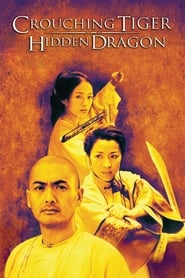
I admit, arguing to keep this in. Music up. But it's really, to me, this is almost, this is my homage to Hong Kong cinema right here. Forget the martial arts stuff. But it was fun to go full throttle on this kind of thing. As I said, very operatic.
1:07:57 · jump to transcript →
-
We talked before about tradition. And there's this one, obviously the wonderful, the homage that's being made here is that wonderful sequence in King Hu, I assume in King Hu, Touch of Zen, which had that great, great fight sequence in the bamboo forest. Of course, they were always on the ground in the bamboo forest. In the middle section sometimes. A little bit. Well, he used to use those trampolines. He would position trampolines just outside of frame.
1:35:27 · jump to transcript →
-
-
-
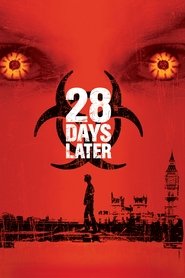
which was sort of influenced by stories that we'd heard about, particularly like stuff you read about Rwanda and places like that with corpses ending up in churches and things like that. And we thought it'd just be a dumping house for corpses, some kind of mortuary or makeshift cemetery for the corpses. And it gave us the next kind of... It felt like the film was evolving then out of the circumstances and that he was understanding as he went along in the way that
14:20 · jump to transcript →
-
the clear, the digital house, we'd paint them out, the neon lights. So they're actually self-lit by the lights in the supermarket store. So we didn't have to do any lighting, but they just took it all out in post and we tried to avoid it as much as possible. That was a little Homer Simpson homage there. And in a way, the whole scene is a respectful nod towards George Romero's Dawn of the Dead set in a shopping mall, which is...
47:53 · jump to transcript →
-
-
-
Tom Tykwer
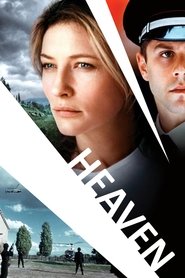
but still to me as i'm considering myself something like a spiritual agnostic this is not a religious movie it is a movie that is heavily influenced by spiritual knowledge that of course recurs to to religion and to theology and of course there's a many theology
1:10:56 · jump to transcript →
-
Tom Tykwer
But they don't go into the confession booth. They don't follow the rituals. They just are inspired by them, which is a small but important difference to me. We've just seen that scene with the shaving of the heads, which is a rather shocking element when you read a screenplay. You know you have an idea of an actress, because I was very early thinking of Cate to play Filippa.
1:11:50 · jump to transcript →
-
-
-
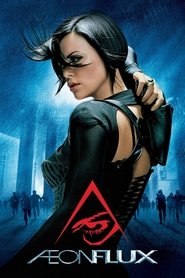
And the interior of this location was inspired by a fencing facility that we location scouted that was adjacent to the Olympic Stadium from the 1930s. But we weren't able to shoot in that location, but we did replicate it in CGI and on the stages at the Babelsberg Studios, which have quite a history. Mm-hmm.
9:40 · jump to transcript →
-
It would be impossible to do that. And I thought that Enzo Angileri, who designed and cut this hair, thought that he did such a great, it was such a great throwback and homage to the original and yet something that we could work with. I just thought he did such a brilliant job. And it was also one of the first things that Peter Chung said when he came to the set was that he loved the hair, which was really great.
40:29 · jump to transcript →
-
-
director · 1h 37m 2 mentions
John Cameron Mitchell, Justin Vivian Bond, Sook-Yin Lee, Paul Dawson + 1
-
Some of James' film we shot before principal photography, like his face in the water and the band-aids and all kinds of little bits and pieces. I remember me biting my nails and letting them bleed. How much was inspired by Jonathan Coet's Tarnation? Well, you know, Paul documents his life also with photography over the years, and there was a little bit of that and a little bit of Jonathan...
51:17 · jump to transcript →
-
was perfect. You're doing an homage there. That was a filmic reference. I didn't want to tell you because I didn't want to make you self-conscious about laying, but it happened anyway. Remember, it just fell out of your panties. Look at how gorgeous Justin looks. This is not a shot of Justin. That's Justin. That's Kurt and Bart. I have to say, yes, thank you, Kurt and Bart. They did a good job on making me these fantastic costumes. I was so jet-lagged and tired and
54:03 · jump to transcript →
-
-
-
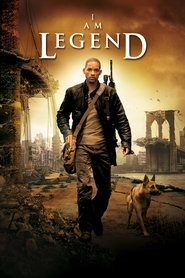
influenced by the Blair Witch Project for this sequence. And I think one of the key ideas was that the actors in that film were really horrified in all of those sequences. They weren't the hero that were going up against the villain, you know, with courage. But here we have Will petrified, and you just never see that. And I think we are just living in this world in his shoes, and if he's petrified, we have to be petrified. Remember we had a version of this sequence years ago that was in the U.N.?
28:06 · jump to transcript →
-
Or are you excited to see somebody? And what's funny is it all informs the behavior in the scene, but then it all landed exactly back to the way that it was written, Wishes. It now exists again in its simplest form, yet the performances are now influenced by all of that play and workshopping, and I really enjoy that. And it's a scene that I'm really proud of just because I think it's entirely accurate.
1:07:18 · jump to transcript →
-
-
director · 1h 26m 2 mentions
Underworld Rise of the Lycans (2009)
Patrick Tatopoulos, Len Wiseman, James McQuaide, Richard Wright + 1
-
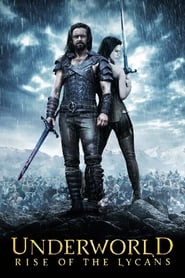
We went for, like, one... One big transformation that I really like is the one where, you know... ...when Lucian regresses. We often see transformation one way, from a man to wolf. This time, it was like from the creature to the man. I was really pleased with that. Michael again gave us the whole choreography there. Beautiful shot. And Dan built us so many corridors. This is all like... I mean, we had a big chunk of corridors. We kept playing, turning around corners. lt was actually quite a big set. It was huge. lt was a three-storey set... ...basically all the way up to the ceiling of the thing. And with short ceiling on the lower floor... ...and then in the dungeon chamber, two storeys. And again, that's the big set. - The courtyard set. And this next action sequence too is an example... ...of just really squeezing everything out of what you've got... ...to make a sequence. I think we had, at the time... ...maybe two practical arrows that came in and maybe two hallways. And one real firing arrow, and just... We were able to be creative and make a whole sequence out of it. Well, this was one of the sequences that benefited the most... ... from Clint coming back with more money. I'm so glad we did that shot of the man in the face too. It was... - Excellent. Again, only one crossbow actually fires. Everything else was, you know, just editorial. You know, there's a huge culture of the weaponry... . like the machine gun in Underworld 7 and 2... ... that when you do a period, you just have bows and thing. lt was important that we have big bad-ass crossbow. They were more like machine guns than anything else. Just because I'm sure the audience liked what you had... ...with the guns, and the rifle and the other one. And that sort of like replaces it in some ways. The very powerful... We played with sound a lot there. So they look like when they shoot, they're really massively powerful. Same arrows. - Same arrows, yup. And who did the CG for the actual men that are getting pierced? We did extensive post vis with a company called Proof. And they had never done final VFX shots. Oh, Proof did that. - They came in and did the finals. They did a great, tremendous job. - Yeah, they're great. No! My lord. I wanted to do that shot so it feels like how big the corridor. I think it's kind of cool to see them walking across. It's a bit of an homage to Jacques Tati. Some things he's done, we see people walking for two hours before they... It's risky, but it sort of worked well with Bill in the foreground.
43:56 · jump to transcript →
-
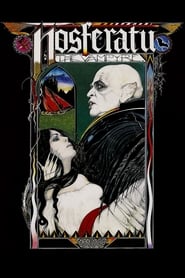
That, if anybody is interested... I called that on the day when I saw that bloody scar. That was actually the same one that Guy used for Singe. For Singe. When he gets busted by... - Exactly. When Viktor punches him in the crypt in number one. You see, if you never said that, nobody would have known. Now they... Hey, cost-effective. - That's right. There's a lot of recycling like this in makeup effect. If you're clever, you know... - Of course. I love this scene between them. - Yeah. And just the tension and, you know. And the next time you see them together... ...when they go in that room is one of my favourite moments. That one was like the little homage I wanted to make... ...at Murnau's Nosferatu. You know that creature that comes into that room. It feels like you don't know if he's gonna strike at him or stuff. And then we were really worried about this whole daylight. Forest daylight. Not Knowing what colour to get. We'd never gone outside before in the Underworld series at all. It just popped out and felt kind of, we had our... ...Xena conversations and worries. You know, with the combination of just... The costumes could only be but so different, you know. These guys are supposed to break out of prison and grab what they can... ...from the other soldiers. And then putting them in the forest. You know, Lucy Lawless comes in and it's all over. So we finally got, like a... Went with a bit more of a green stylized than normal daylight. That's the shot. What's funny is that Steven and Bill were actually very, very close friends. And they had dinner every night together... ...and in between takes they'd be sitting there talking to each other. And then get time to get back on the set. And then Bill would be bullying... I need to make a-- Oh, yeah, here. Just to make a little note, we haven't talked about the music here. Paul Haslinger was just... That was a challenging one. You don't wanna be too over-the-top with the music. Yet you wanna create a little suspense. And I think... He did the first Underworld as well. He did the first one as well. - Yeah. I love that. That was a... It's a perfect display of what Viktor is about and what he's like. And then Tannis' reaction to that I really loved. This was another shot that was vastly improved... ... after Clint fattened the visual-effects budget. Before it was like three guys standing around. It was seven guys. Don't be... - There was smoke, no flame. And no fire. It was nothing. The whole mountain behind Michael was CG.
47:34 · jump to transcript →
-
-
-
Len Wiseman
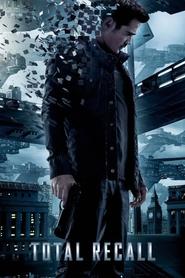
real hand, but just, you know, putting another layer of skin and putting that LCD underneath. Pulling that nasty piece out there. This was also, you know, for those of you who have seen the original, I don't think it's that hard to make the connection of this as a bit of a twist on, you know, an homage to the pulling that device out of Arnold's nose. That always creeped me out when I was, what, 15?
38:22 · jump to transcript →
-
Len Wiseman
but it would be, you know, you guys are more the judge. I'm too, you know, I'm so close to it that, of course, it all makes perfect sense to me. So I'm going to have to ask you to step through the scanner again, please. This was a definite homage to the original. I wanted to switch it up and, you know, lead it up and tee it up as the red-headed lady that we're a bit familiar with and do a switch on that idea. How long is your stay? Three days.
45:19 · jump to transcript →
-
-
-
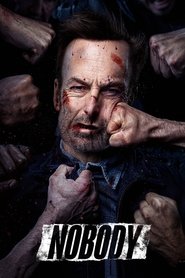
Now, speaking of best idea wins, this little montage that you just saw was completely packaged, not written into the script. We did want a character who was a bit numb from suburban life, from being a dad, and working a steady and difficult job, kind of hiding out in the suburbs, this fellow. So we wanted to start there. But we really just wanted to start with this sequence where there's a break-in in his suburban house, which is the part of this story, one part of this story, that comes from my real life. I have had two break-ins in my house, with people in my house, one of which, I won't go into the details, but was extremely traumatic for my family, and remains that way and will for the rest of our lives. So I had that inside me, and the feelings of... The complicated and difficult feelings that it conjured up inside me are still with me, and were some of the inspiration for even creating this story in the first place. Although, again, I have to give credit for the story to Derek Kolstad. I did share with Derek when we met that I wanted to do an action movie, and I shared that I felt that my time on Better Call Saul, a TV show, had set me up for a potential audience around the world who understood me as an earnest character who was a Striver, maybe willing to reach above his talents and able to get knocked down and get back up. And so this starts with a simple home break-in, and we can see these two criminals are very nervous and seem to be out of their element as well, but also can't quite tell what they're up to. But this character says no to them taking the wedding ring. So there's something more to him. Do you remember the wedding, if I may interject? Yes. - That it was only the watch... I think it was on set that once we put a light, the flashlight onto the ring, it was kind of like, "Wait a minute." Yes. They were just gonna take the watch, which he says "means something to me." But then I think it was Kelly who said, "What about the ring?" I mean, it's gold and it's gleaming in the flashlight. You have to say something about it. And then for the character to push back on that while he's got a gun in his face tells you there's maybe more to this guy besides for the fact that he wants his marriage to work and has committed his full life to being honest and stay married. It tells you maybe there's more to him than he looks like.
3:18 · jump to transcript →
-
I love what goes on here. He gets home. If you remember the criminals from the night before, this frightened, scared, nervous couple, they grabbed the coins and whatever garbage is in that little bowl, and every family's got a bowl or a countertop like that, where they drop their keys, they drop their change, and maybe the little girl's kitty-cat bracelet would go there if it was on the floor or if that's where she left it 'cause she washed her hands or something, and everyone can relate to that. And he finds out they may have taken her kitty-cat bracelet, and that's really all it took for him to go, "Here we go." It's the excuse. As we were talking about, the sort of... Some of the more unique elements of the action genre we did here, what always really attracted me to the script was that a lot of it is driven by Hutch's inner conflict... Yes. ... father than bad guys going, coming in and, you know, doing something bad to him. It's not a revenge film. - Yeah. It's all about Hutch, you know, for 20 years, which we make quite clear in the speech later on, in the basement, that you make, is that he overcorrected. He became a regular dude, and he's just very unhappy, and all the violence stems from being unhappy because the first time Hutch smiles... You know, part of the inspiration for this journey, emotional journey, and the character, as I shared with everyone, was my personal experience and the feelings of frustration that don't go away. And the questioning you do as a dad if you have a break-in. And if it's traumatic, a feeling of "What else could I have done?" You can't help going over those moments and thinking about other things you could've done. Here he's looking for a tattoo. Tattoos are a big deal in this movie. They're the symbol that unlocks a lot of doors. In this case, obviously, I'm looking for the tattoo that was on the wrist of the woman who broke in as part of the couple. But here Hutch's tattoo will send a signal to this guy. Here he wants a fight. He just wants a fight. Yeah, well, you probably shouldn't flash cheese like that around here, bro. There are three types of people... But part of the inspiration I wanted to share here is an interesting one. Years ago, when I was in college, this would have been about 1983, I saw a speech by someone named Abbie Hoffman. Do you know who Abbie Hoffman was, Ilya? I'm drawing a blank. Yes. And you know a lot of history. Ilya, by the way, is Russian. If you didn't know.
19:26 · jump to transcript →
-
-
-
Tim Burton
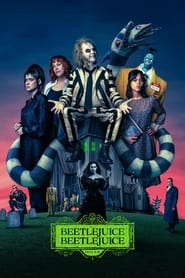
when I should have been doing something else, thinking of those and, you know, asking people, how would you or not like, how would you not like to die? All that kind of stuff. And one of the first characters I decided was I wanted to do the winner or loser of a hot dog eating contest because I was inspired by Joey Chestnut in his annual 4th of July hot dog eating contest wins. 75 hot dogs or 76 in 10 minutes, I think is, I don't know, but it's up there. So, and I actually wanted to get him to play that character
19:31 · jump to transcript →
-
Tim Burton
I need a hard target search for two suspects. It's like a dead version of Chips or Adam-12. This is Wolf, you know, sort of inspired by those kind of cop shows or Hawaii Five-O and Adam-12 or Chips. Leave no gravestone unturned. Help sift through the sands of Titan if you have to. Men, this is what you've been training your entire deaths for. And remember,
1:10:10 · jump to transcript →
-
-
-
scholar · 1h 32m 1 mention
The Night of the Hunter (1955)
Terry Sanders, Robert Gitt, F. X. Feeney, Preston Neal Jones
-
-
-
-
multi · 1h 43m 1 mention
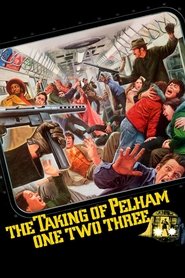
The Taking of Pelham One Two Three (1974)
Nathaniel Thompson, Steve Mitchell
-
-
director · 1h 28m 1 mention
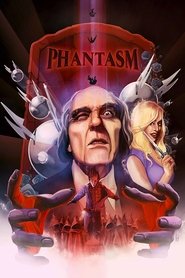
Don Coscarelli, A. Michael Baldwin, Angus Scrimm, Bill Thornbury
-

Related topics
Other topics that frequently come up in the same commentaries.