Topics / Performance
Directing actors
29 commentaries in the archive discuss this, with 39 total mentions and 32 sampled passages on this page.
Filter commentaries
Filter this topic by the film's decade or the type of commentary.
By decade
Across the archive
ranked by mentions · click any passage for the moment in the transcript
-
-
The way I work with the actors, I usually like to spend some time with them, to talk with them. I need to see how they feel about everything, how they feel about life and what they like, what they love, what they hate. And I also like to listen to their story. And during the conversation, I would like to watch their face, their eyes, and try to find out the special quality from them. And then to figure out to use a...
58:14 · jump to transcript →
-
I think the actors is the most important thing in a movie. They are the soul of the movie. So I respect them a lot, and also work with the actors with love. I see everyone as a part of my family. I see them as a friend. Sometimes I see them as my own children. So since you have so much love on them, then you will know how to take good care of them.
59:46 · jump to transcript →
-
The way I work with the actors, you know,
1:00:44 · jump to transcript →
-
-
-
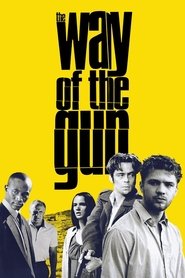
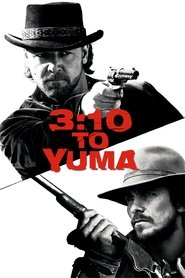
Well, this is very interesting. When we started planning this, my brother Doug is a Navy SEAL, and I brought him in to work with the actors and train them with guns and get them sort of used to the correct handling of guns to the point where it was second nature. And you'll see that Ryan is exceptional in his gun handling. The bit on the ear, it was earlier, where he touches Nicky in the ear. Right. That's a great touch, and that was Ryan's idea.
13:56 · jump to transcript →
-
bad directing. It's not anybody else's. It's bad writing and it's bad directing. The actors were struggling so hard with the scene and there were so many things going on subtextually and I had worked so hard to explain to them all the mechanics of what the scene really meant that nobody knew what the hell we were doing anymore. And this is a scene that's been sort of stuck in your craw for, what, nine years now? Oh, this is written in another script a long time ago.
1:01:00 · jump to transcript →
-
Juliette and Dylan the night before and took all of Dylan's research and all of Juliette's research and all of my research. You can't get two obstetricians to agree on anything that happens during childbirth. And I sat down with the actors and said, Juliette, you're in labor. Tell me what you're feeling. Dylan, you're a doctor. Tell me what you're going to do.
1:30:08 · jump to transcript →
-
-
-
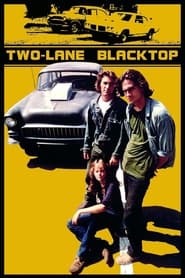
And if you can't make out the actors, then you can be pretty sure it's stunt drivers. But so much of the picture was shot with the actors actually driving, James or Warren, camera inside the car or just looking in either the driver window or the passenger window. And many times, if the angle allowed it, I was...
17:59 · jump to transcript →
-
composition and work with the actors within the space? Well, it was an interesting choice. I think part of it was economic because it was two perfs instead of four, so we were getting twice as much on every roll of film. So, you know, it was cheaper to shoot. But I think, you know, that long, thin...
31:07 · jump to transcript →
-
-
-
Tom Tykwer
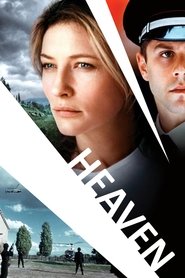
familiar with the Italian and on top of that I had a director from Italy called Alessandro Fabrizi who is himself a theatre and film director and who worked with me in all the dialogues endlessly and also of course helped me in working with the actors, the Italian actors, understanding what you can do with language in the Italian and how you can improve
40:10 · jump to transcript →
-
Tom Tykwer
you cut things out, you put them back in, you reconsider, you even reimagine dialogues. There's a lot of dialogue that was even written only in the editing process and that was put into the film for like six months after shooting by doing additional sound recordings with the actors. Really tiny things, but also major things that gave the film
50:50 · jump to transcript →
-
-
-
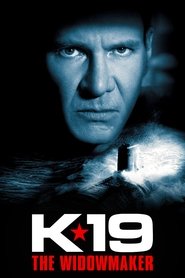
The thing that was so important, and I think Catherine can agree with me on that, is it certainly set us in a mindset of what these men must have gone through and the conditions they lived in, and that kind of helped us visually, hopefully, apply some of that to the picture. And thematically, and certainly with all the work with the actors and the characters and having some sense of the stamina and rigor that these men had.
11:21 · jump to transcript →
-
the reactor, how to then stage the scene and mechanically what the logic was. I find when I approach anything I have to have some kind of logic in hand. It has to feel somehow real and otherwise it's very difficult to block something and therefore shoot it and work with the actors and so there has to be kind of a groundwork and since
34:41 · jump to transcript →
-
-
-
James Mangold
does amazing work, and I think part of what makes her work so amazing is it's not selfish, meaning it's not show-offy only for herself, but that she has a real partnership with the actors and myself and Kathy, finding answers that work for the actors. I think that very often people don't understand what an incredibly critical role costume design is in the development of character for actors. Part of it has to do with the chronology of how a movie happens.
1:13:51 · jump to transcript →
-
James Mangold
Three quarters of this film is handheld, and it's very hard to hold a widescreen frame, especially as close as we are sometimes, and keep these compositions with the kind of integrity that they have. Also, the kind of handheld work that I prefer isn't so shaky that it's kind of in your face or reminding you all the time that it's handheld. It just has a kind of intimacy to it. You feel the camera is right in there with the actors instead of locked down on something.
1:38:40 · jump to transcript →
-
-
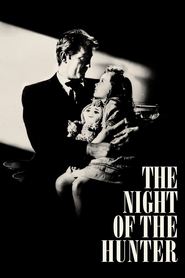
scholar · 1h 32m 1 mention
The Night of the Hunter (1955)
Terry Sanders, Robert Gitt, F. X. Feeney, Preston Neal Jones
-
-
-
-
-
-
multi · 2h 19m 1 mention
Martin Scorsese, Nicholas Pileggi, Ray Liotta, Lorraine Bracco + 9
-
-
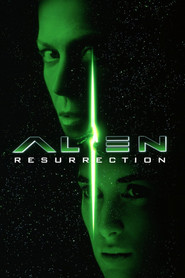
multi · 1h 54m 1 mention
Jean-Pierre Jeunet, Hervé Schneid, Alec Gillis, Tom Woodruff Jr. + 5
-
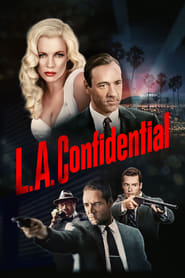
multi · 2h 12m 1 mention
Andrew Sarris, James Ellroy, Brian Helgeland, Michael Nathanson + 10
-
-
-
-
director · 3h 43m 1 mention
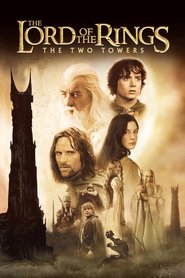
The Lord of the Rings The Two Towers (2002)
Peter Jackson, Fran Walsh, Philippa Boyens
-
-
-
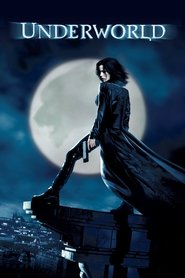
director · 1h 42m 1 mention
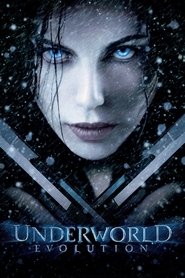
Len Wiseman, Patrick Tatopoulos, Brad Martin, Nicolas de Toth
-



Related topics
Other topics that frequently come up in the same commentaries.