Topics / Cinematography & lighting
Coverage
52 commentaries in the archive discuss this, with 110 total mentions and 20 sampled passages on this page.
Filter commentaries
Filter this topic by the film's decade or the type of commentary.
Showing 12 of 52 commentaries
Clear filtersBy decade
Across the archive
ranked by mentions · click any passage for the moment in the transcript
-
-
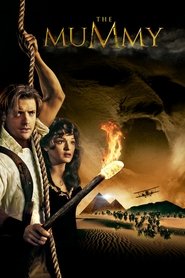
Now, this next scene is another little fun thing. John Hannah was just petrified that this next shot would never work. He knew I wasn't going for any coverage. It's all done in one big one-er. And he was so nervous that he would come across badly or that it wouldn't work. There was no coverage.
1:24:28 · jump to transcript →
-
It was a big winner for audiences in every screening I ever saw. Sometimes you just got to go for it and do it with no coverage. This was one of those times. If you notice, Daniels's right arm, he's always having, it looks like he's always hiding it or playing with it.
1:24:47 · jump to transcript →
-
This was really difficult. That was Rachel acting to a blue screen out in the desert. This was a very complicated shot, sequence to shoot, just because of all the special effects and the mechanical effects involved and the amount of coverage. It was just, it seemed like, as well as we had it storyboarded and figured out, it always seemed like a jumbled mess until the special effects were completely finished.
1:33:36 · jump to transcript →
-
-
-
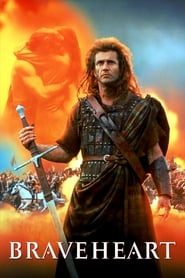
Except I'm not on my island. And Stephen of Ireland was referred to in the epic poem of Blind Harry the Minstrel about William Wallace. He figured big in it. He was kind of like the right-hand bodyguard watching over the shoulder of Wallace. And, uh...
1:09:45 · jump to transcript →
-
to display exactly what was going on, almost like sports coverage, so that there wasn't a dull moment where you lose interest because you don't know what's going on, where it just turns murky. So that was very, you know, we got a table and little plastic soldiers and myself and the stunt coordinator and the first AD and the camera guy and all the heads of department got together and we planned this battle. And we made it up as we went along. I mean, of course, we borrowed from medieval battles.
1:21:27 · jump to transcript →
-
But for time, we'd just do handheld stuff, you know, like this. And we were running out of day this day, and we just had a lot to do. John Toll is the master at handheld. He's able to anticipate stuff before it happens. He did a lot of it in the actual battle. And kind of knows, has a sixth sense about where something is going to happen next so that his movements are coordinated with the movements of everyone else, and it's not planned.
2:09:23 · jump to transcript →
-
-
multi · 2h 19m 2 mentions
Martin Scorsese, Nicholas Pileggi, Ray Liotta, Lorraine Bracco + 9
-
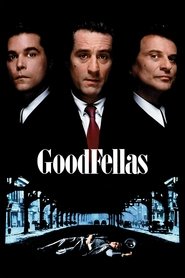
this gentleman on stage, Henny Youngman, then he forgot his lines. That happened a couple of times. So that was kind of unfortunate. Take my wife, please. And that's a four-minute shot with no coverage. You can call it daring, or you can call it that he knows exactly what he wants, and that's what he gets. And there are other scenes.
34:21 · jump to transcript →
-
late at night they were all people who had to get up at seven in the morning and go to work and they were screaming stop shooting go home we're sick and tired of you and Marty's mother came over and said look you got the master shot why don't you why don't we go home and he said go over there and stand in the corner it was the first time she ever saw him as a director instead of as her son
57:53 · jump to transcript →
-
-
multi · 2h 24m 2 mentions
Alex Thomson, Terry Rawlings, Alec Gillis, Tom Woodruff Jr. + 3
-
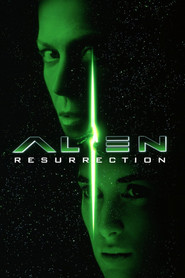
The light coming from the top was a 4K xenon lamp, which gives you very straight beams, which I thought would be quite a good idea. I shot it up through a mirror because you can't tilt them down or the condenser burns. But we had a mirror above the set and I shined it from the floor onto the mirror. This autopsy scene was a favorite of Fincher's, too, because we had created a body of Newt that had multiple layers of tissue, skin and musculature that could be cut through, and the bones opened up. It's a lot of graphic coverage that's not in the final movie. The body of Newt was actually based on... Alec and I had done a life cast of Carrie Henn during Aliens, and while we were in London Bob Keen's shop actually had a casting of the head. We were able to get that and remold it, so we were able to duplicate what the actress had looked like some five or six years previously. There is intercutting here with the real girl as well. She has a lot of fuzz on her face. - Yeah. Backlit fuzz.
17:31 · jump to transcript →
-
There was a makeup on that guy's face, too. But it was hard to see. Well, that's a classic example of less is more, like the hugger in the original Alien. It was a few frames, but it sticks with everybody forever. Yeah, that was great coverage and editing. It really makes the puppet work well. We always depend on editors and sound-effects people to make us look great. You watch this stuff in dailies and you go "How's it ever gonna work?" And then the sound effects of whipping tails... Jim Cameron used to say that as a way to make us feel better after a shot - I think he thought he made us feel better - "Don't worry. This is all 70% sound effects." I guess that means we only accomplished 30% of our goal!
39:02 · jump to transcript →
-
-
-
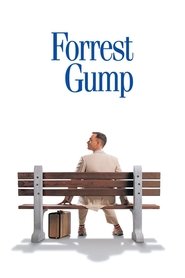
Any of the scenes like with Tom and Gary in his apartment or anything like that, I would never waste an artist's time to draw coverage and over the shoulders and things like that. But whenever you have to do something that you have an army of people that have to work on the shot, it's always a good idea to have storyboards. Being there and seeing these actors pull this stuff off was really a lot of fun.
1:07:34 · jump to transcript →
-
My ultimate vision for everything is ultimately compromised. And I think that that's what you have to do as a filmmaker. You have to just turn it over. You have to give up. Because in the morning, you're going to the set, and you've got this long list of 20 setups to do this sequence really great and get all the coverage you need and have everything you need. And then by lunch, you haven't gotten one single shot yet. And you just start crossing them all off. And at the end of the day, you've been able to scramble and get four setups.
1:08:31 · jump to transcript →
-
-
multi · 1h 54m 2 mentions
Jean-Pierre Jeunet, Hervé Schneid, Alec Gillis, Tom Woodruff Jr. + 5
-
Can you imagine? This is almost 20 years later. She's still playing Ripley. Yeah, and you have to understand, this is take after take, after day after day with this emotional commitment. Very, very heavy. All the permutations from where that character started in the Ridley movie to where she sort of journeys, leading... This is, like, the culmination of it all. The future and the present and the past all sort of melding together. And you're right, she really... You see sequels, you see people kind of walk through them. She's... you know... She has a notebook filled with... She keeps herself up to the moment, connected with her character, for every take, every scene, every day of shooting. It's an amazing thing, especially in a genre like this, in sci-fi. It's not like Terms of Endearment here. But just as an acting exercise to play the same character for almost 20 years, as you grow as an individual and you see that character in so many different situations and grappling with technologies and the relationship of where she finds herself with regard to her humanity. It's fascinating and she is in this film. Her commitment to it is off the chart. These were the victims of the chestbursters. We had to come up with a very simple way to do this because of the numbers of them. We sort of took our cue from those T-shirts that came out after Alien and Aliens that just had these rubber bones applied to them and we made these slip-on appliances that had the broken-out ribcage and all the guts. We made a male and a female version and I think there were a couple of guys that ended up getting women's torsos on them. They were lucky. There he is, ladies and gentlemen. The beautiful and talented Mr Leland Orser. My friend and, if you knew him, yours. This is Leland Orser. I love this actor. I saw him in a very small character in Se7en of David Fincher. For this scene I used maybe four cameras because I had just one day to shoot this. I remember. I hate that because I prefer to shoot with a short lens very close to the character but I had no choice for this scene. I had quite a lot of material for this one. This is pretty rare I use many cameras, because I prefer to make a storyboard to be very precise, and usually for all my films I put maybe at the end one minute and a half in the garbage, especially with Amélie, the last. But I remember at the editing room you didn't have a lot of material. I prefer to shoot exactly what I need and it's better for everybody. You save money. You save time. You save energy. I don't understand a director - they make some film with three hours and you have to cut one hour at the end. It's so silly. I prefer to think before. That's the reason I like to make a storyboard, because it's a pretext to find ideas when you have the time to think. Because when you are on the set it's too late. You have to run. The master is the clock. It's too late to find ideas.
1:01:40 · jump to transcript →
-
This shot was a complicated one, to be able to get inside the mouth. There he is. Oh, look at that. Oh, it's beautiful. Birth is a lovely thing, isn't it? It's a miracle, really. - And that's the end of me. It started with the camera in my throat, pulling it out, and then reversed the film. Oh, is that how they did it? - Yeah. This scene was gonna be shot upside down. All these cocooned humans were actually upside down above a pool of blood and guts and alien goo that was quite liquid. As we drew closer to the end of the shoot, which pretty much happened chronologically, Ripley was supposed to be upside down on the wall, free herself and wind up on the floor. The reason is it became too complicated and too costly to turn the set into a liquid set. It would have had to be waterproof and that cost too much money. But the whole idea is the queen was lying in that pool of goo. All you saw was her belly just stick out of the water and she gave birth like that. Ripley fell into the pool, freed herself and then battled a few aliens. But there were all kind of logistical problems. If the actors were hanging upside down, you'd have had to have had swiveling panels on the walls so you could relieve them from that position every few minutes. So it was just too costly to build. When you have some close-up on Sigourney, the set was unfinished, and she had to imagine exactly what's happened in front of her. I remember we worked exactly like for a silent movie. I spoke with her. "And now the newborn moved, and now the queen is going to die." And she listened to me. It was pretty funny to make. Pitof made all this, this scene with the newborn. So this is the birthing of the newborn. The concept behind the newborn was to show a creature whose genetic makeup had been as affected as Ripley's had been, but in the opposite way. Instead of it being a human tainted by alien DNA, it's an alien that's been tainted by human DNA. Even down to the eyes. The big concept change on this was to show an alien creature that had eyes. So much has been made of the fact that these things don't have eyes and there's no way of telling how they're aware of what's going on around them. But because this thing had been tainted, Jean-Pierre's feeling was that the eyes would be a great way to lock that whole idea in. A rather momentous event in the Alien saga. This was a big day. We had 30 puppeteers to do the queen and the newborn. The newborn was completely hydraulic. I think we had ten puppeteers on the newborn and maybe another ten on the queen. We had another handful inside that egg sac. I think it was 30 puppeteers. - I guess it was 40. Yeah, 30 or 40. I had five cameras. It was a crazy day. Pitof, you directed most of this. We did some stuff with Sigourney like this over-the-shoulder stuff, but then everything else was broken down into pieces. You told me the story of Sigourney when she acted with gorillas. Exactly. She made a film with gorillas and she knows you have to avoid to look on the eyes of the beast as always and she looks on the side. Was that an accident? I don't remember if it was something that was directed or... Sometimes we'd get weird little lurching movements. I can't remember. Oh, there's that tongue.
1:33:55 · jump to transcript →
-
-
-
-
-
-
-

Related topics
Other topics that frequently come up in the same commentaries.