Topics / Cinematography & lighting
Coverage
52 commentaries in the archive discuss this, with 110 total mentions and 17 sampled passages on this page.
Filter commentaries
Filter this topic by the film's decade or the type of commentary.
Showing 12 of 52 commentaries
Clear filtersBy decade
Across the archive
ranked by mentions · click any passage for the moment in the transcript
-
-
William Friedkin
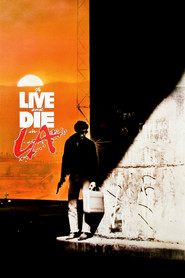
And he wasn't very happy about that. Robby Müller is the kind of a guy that likes to envision a scene and the light that it's going to play in. And if it's natural light, you can't keep moving around to cover it. But often you need coverage in an American film to keep a scene moving. So there are several sequences that we shot that just didn't work because I didn't get coverage on them.
1:14:39 · jump to transcript →
-
William Friedkin
I think about my shots in my head. And I often, you know, I'll think about how I want a scene covered or if I want coverage at all or where. And I may even...
1:28:24 · jump to transcript →
-
William Friedkin
write down some notes for myself so I don't forget the coverage the next day after I've worked it out the night before or even weeks before. And then I'll come to the set and tell the whole crew what I want to shoot. I'll say we're going to cover the scene this way, this is what's going to happen. I'd like to pick up the following setups and I will encourage the crew and the cast to make suggestions and I'll very often alter my plan
1:28:35 · jump to transcript →
-
-
-
Peter Greenaway
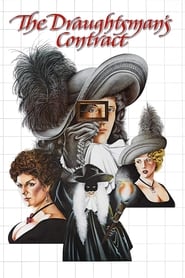
with enthusiasms for the French Revolution in France's greatest enemy, which had been Great Britain. And William Beckford created this large estate called Fonthill Abbey, which on the opening night he invited Lord Nelson and his mistress Emma Hamilton to come and be the master and mistress of ceremonies. And the original intention was to create a scenario which was very much related to this place,
13:24 · jump to transcript →
-
Peter Greenaway
It suddenly becomes apparent that in all the relationships between the draftsmen and the women of the household, the owner of the house is absent. Various comments are being made about this, and gradually it'll be established that probably the master of the house is away in Southampton, probably on a sexual adventure
35:24 · jump to transcript →
-
-
-
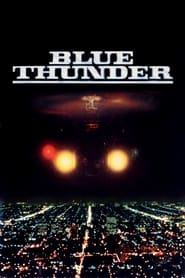
Terrific shooting, colonel. It was beautiful. Beautiful, was it? Goddamn it! I had another stoppage. Interesting that... This is in the early days of Steadicam, which was being used a lot. But John Alonzo felt that he could operate hand-held... ...better than any Steadicam. And so what we're watching here, for the next several minutes... ...is all completely hand-held by John Alonzo, out in the desert. It no more looks like hand-held than something on a dolly... ...but he always felt that he had a flexibility to it... ...and he was able to manoeuvre quickly. So I would just turn him loose on these scenes. Stage the scene and say, "John, you shoot it." And he would go along and shoot the scene beautifully... ...get all the coverage. I almost could've gone home or taken a nap... ...while he was doing this. John said he was built for hand-held. Because he was not very tall... ...and he said his centre of gravity is low to the ground. And a taller person has real trouble staying as steady and stable... ...as he could do. But this is-- It's just wonderful, as I'm watching here... ...how steady the hand-held is and how manoeuvrable it is. We're on a rough desert floor... ...and no special kind of plywood floor laid down for him... Twelve sharp. On a hard surface, he had his little apple-box dolly too... ...that he would scoot around like a monkey with. Yes, apple boxes are kind of hard wooden boxes... ...that we'll use on a movie set for all kinds of things: For people to sit up higher or prop something up. And they're used all the time. And John attached casters to an apple box... ...and he would sit-- if it was on a concrete floor or a hard surface... ...he would sit on what he called his "silly dolly"... ...and push himself around with his feet. And it was another kind of wonderful operating trick that he had.
35:07 · jump to transcript →
-
Let's see what's on HBO tonight. Now, this movie is filmed in widescreen. Sometimes that's called Cinemascope, or anamorphic. And 35 mm film is not wide enough to contain this frame. It wouldn't fit. So Panavision and some other people... ...invented lenses that actually take this image that you're looking at... ...and squeeze it to the width of a 35 mm frame... ...which is almost half as wide as what you're looking at. If you hold up a piece of anamorphic film to the light and look at it... ...all of these guys would be tall... ...and skinny and mushed together. The whole image would suddenly get all squinched. When you project the image, then you have to have a similar lens... ...that unsqueezes the image. But this was an effort to make big, widescreen movies that-- Not necessarily in Cinerama or techniques like that... ...but that you could make on ordinary film, and have an experience that was... ...different from what you're seeing on television. It had a different aspect ratio, real wide screen. And the challenges of shooting it are quite interesting... ...because those lenses require a lot more light... ...and give you a lot less depth of focus. So you're always kind of struggling with it. It's a very special kind of look that I actually prefer. And it gives you some real challenges in composition and so on. But you don't see too many pictures shot in anamorphic nowadays. They have another process called Super 35... ...that isn't quite so difficult to shoot. I think, Frank, we did Bird on a Wire in Super 35. Right. Well, from the standpoint of coverage in this movie... ...it was an editor's tour de force almost. It was covered so well. You mean, in terms of you having the footage that you needed. Yeah. We had very, very, very few problems. Well, thank goodness we had enough time to shoot this movie... ...so that we could get the coverage that we needed... ...because it was so tricky to tell this story along the way.
51:44 · jump to transcript →
-
-
-
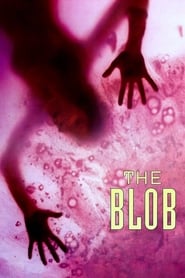
Robert Axelrod, that's who was in my Faith No More video. Do you remember him? He was one of the scientists. There's the blob. We forgot about it. Oh, yeah, that's right. Now he's coming back behind everybody. When you have a scene like this, though, like in terms of coverage, you know. Yeah, it's tricky. There's a trick. Eyelines. There's a lot of axes. There's a lot of eyelines. Look at that reverse gag. Simple reverse gag. Yeah.
1:18:49 · jump to transcript →
-
But you shouldn't be scared. But then you also run the risk when you have that master, having been through this myself, you run the risk of just becoming coverage friendly instead of going like working dynamic. I was an assistant director briefly on it. I say briefly because it's the only time I was ever fired. I had to fire somebody on Bay City Blues, which was a brief baseball series. And the angles, getting the angles in that series.
1:28:18 · jump to transcript →
-
-
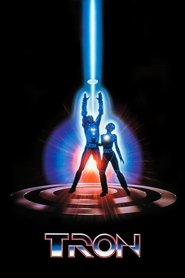
technical · 1h 35m 1 mention
Steven Lisberger, Donald Kushner, Harrison Ellenshaw, Richard Taylor
-
-
-
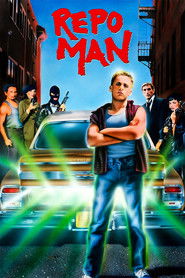
director · 1h 31m 1 mention
Alex Cox, Michael Nesmith, Victoria Thomas, Sy Richardson + 2
-
-
-
cast · 1h 36m 1 mention
The Garbage Pail Kids Movie (1987)
Mackenzie Astin, Katie Barberi, William Morris
-
director · 1h 24m 1 mention
The Naked Gun: From the Files of Police Squad! (1988)
David Zucker, Robert K. Weiss, Peter Tilden
Related topics
Other topics that frequently come up in the same commentaries.