Topics / Cinematography & lighting
Coverage
52 commentaries in the archive discuss this, with 110 total mentions and 21 sampled passages on this page.
Filter commentaries
Filter this topic by the film's decade or the type of commentary.
Showing 11 of 52 commentaries
Clear filtersBy decade
Across the archive
ranked by mentions · click any passage for the moment in the transcript
-
-
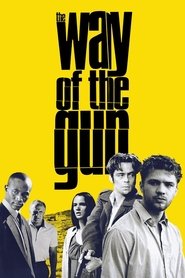
was shot at three separate times of day. Juliette's, all of Juliette's coverage in this scene is shot at 10 o'clock at night on a process trailer in a parking lot, and I am standing to her right, just outside the door. Wow. And I'm watching the monitor and jostling up and down with my fat ass on the trailer to create the motion of the car. That's good. Dick Pope's great. Dick's phenomenal. And who was the lighting guy?
23:26 · jump to transcript →
-
the surrogate mother notion. And here's Geoffrey Lewis. Steals a show. Always. Just point a camera at Jeffrey. This was one of the scenes where Ken, well, in every scene, Ken Kokin would say, you've got to do more coverage. You've got to do more coverage. And I said, this is one instance where we will not need the coverage. Just let Jeffrey run. We both had worked with Jeffrey before. I was just going to bring that up. A pilot that we did.
32:49 · jump to transcript →
-
Dylan and Scott Wilson. Scott actually pushed me to add coverage to this scene. Originally, I was only covering the scene from this angle in my rather foolish obsession
50:49 · jump to transcript →
-
-
-
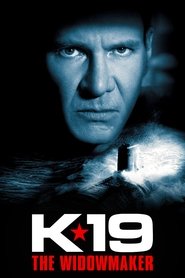
So although we had a lot of... As we talked about earlier, we shot so much of it in the main C3, the main control compartment, that that in itself was a challenge to keep the scenes different and alive and not have the same coverage each time we arrived there. When we did get out of the submarine, we had a couple of really interesting...
41:04 · jump to transcript →
-
Of course, you could build scaffolding on the submarine itself, but then, you know, once you get out in the open water, the ability to take away that scaffolding or move around on it certainly limits the amount of shots you can or the coverage and necessitates bringing it back to the harbor to remove that stuff. So Mark Manchester and Greg Musson, our two key grips, came up with a wonderful solution to that dilemma, and we got this vintage...
1:03:43 · jump to transcript →
-
And what an honor to work with somebody that's gifted as Walter. I was quite intimidated at the beginning, thinking that I would be getting notes on a daily basis of what was wrong with the coverage. And it was so wonderful to see somebody that has such passion and is still so young-minded that whatever we presented to him, he was excited about and encouraged us to continue on those trains of thought and work the scenes, made these scenes really unique and covered it in a unique way.
1:11:07 · jump to transcript →
-
-
director · 4h 13m 4 mentions
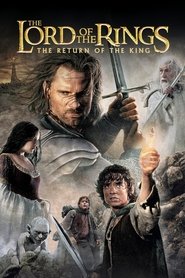
The Lord of the Rings The Return of the King (2003)
Peter Jackson, Fran Walsh, Philippa Boyens
-
Of course, this was just a little bloody tin shed, wasn't it, near the airport. It's always difficult to make studio sets look like they're really exteriors. It's always to do with the lighting, because you can't actually get the huge degree of light that you have from the sun. And the lights of the studio are too close. They're not as far away as the sun, so the angle of the light feels all wrong, and the coverage of the light, and it just, they always look a bit fake. But, you know, we did our best here. We've put a lot of smoke into it,
1:48:38 · jump to transcript →
-
And Kieran did Frodo pretty much, didn't he? Billy worked very closely with Fawn, who was a female, a lady. And Billy really got on well with her and instructed her how to walk like him and perform like him. And she was very, very good. Some of these shots of Gandalf were little pickups that we did because we had all these wonderful big wide shots, great vistas, but we didn't really have much coverage of Ian himself.
2:29:54 · jump to transcript →
-
because that's all we had time for. We started by shooting the closeups of Sean and Elijah and we shot them together. So we had one camera, our A camera on Elijah and our B camera on Sean, which you don't normally do. Normally you shoot one actor and then you turn the cameras around and you shoot the other actor separately, but I didn't have time for that. So I actually did what they call cross coverage where you're shooting them both simultaneously. And we did three takes.
3:24:03 · jump to transcript →
-
-
-
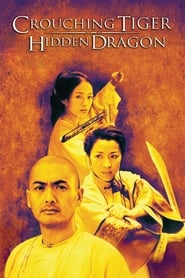
Actually, the first time I saw that weapon, that's the shot I had in my mind. Right. Sticking in someone's head. Yeah, sure. Why does his head look so much like a, I don't know, like a pumpkin or something? Yeah, back to the master thing. Yeah. It's utterly very important. I think in the, at least in the martial art film, or in the Jianghu world,
38:19 · jump to transcript →
-
and what kind of rules I have to follow, what kind of guidance I took from him, take that as your honor. But it's also about the level of skill and keeping your skills below those of your master, because if you're better than your master, how do you master? Because the master is always hiding the highest skill to himself or herself. Right. That's why the Chinese get worse and worse from 3,000 years down. Because it's a tradition.
39:13 · jump to transcript →
-
-
-
Jonathan Lynn
and that means you have to shoot a lot of what we call coverage, different sizes, different angles. I worried about whether people would be concerned about why they were visiting a jazz club like that in the middle of the day. Nobody's ever worried about it at all. In all the other takes, we had a sign outside the club that said lunchtime jazz,
45:13 · jump to transcript →
-
Jonathan Lynn
Because there are no laughs in this scene, I was able to shoot it in a sort of a long, lingering crane shot. I didn't have to do any coverage because I didn't have to risk... I didn't have to, you know, envisage the possibility that something might be unfunny and have to come out.
1:14:21 · jump to transcript →
-
-
-
This is a great editorial thing. This line... I feel like I need a shower. ...' I need a shower" was on camera. Some lines you don't need to see the actor Say. No, of course not. So, yeah, I'm okay with it. I wish we had something better, but there's only ten days till the next full moon. We've got to rattle his cage. For me, the next shot coming up Is... This is one of the most beautiful shots, with this golden light on the street here. - We talked about cutting this at one point, but I like this little scene with the newsie here. I'm not sure that the audience can really follow exactly what's going on here, which is that this is a place where you can get a newspaper before anybody else can get it, which turns out to be important to the plot. I'm not sure they can follow that. Originally, it was written in an airport. - At an airport terminal. I just like the moment he gets here to be menacing. You told me what? It's another guy, part of the Ratner ensemble of actors, Gianni Russo, who was actually Carlo in the Godfather, who was married to Sonny's wife. I love this car. The Hoffman mobile. It scrapes the bottom. This is fun because it played in one. I shot coverage of it, but it just... Camera moves in... It's more of a surprise. This is great. His getting knocked out. Look how much acting went into that arm. This is just a fantastic set. Here's a chance to see more of the set, and a very difficult scene for the two actors. Difficult to play. It's very stressful and emotional, and to get the intensity they need for it, it took take after take probably. I got yelled at at least four times by Philip during this scene because he was in his underwear, glued to this chair. He wasn't actually glued. - Some kind of glue. Not stuff that ripped his hair out. - It's not much fun to sit there. It was uncomfortable, I can tell you that. It's not fun for Ralph, who had to be naked in so many of these scenes.
1:10:28 · jump to transcript →
-
Really, in the next scene, about how to link these together. It's amazing when you're pressed for time, how you come up with creative ideas, and I end up shooting this in one. This camera just moving around, building tension, and it worked so well. I didn't originally intend on doing this, but I had no time, so I couldn't do the coverage. I had to figure out how to do this in one, tell the whole story, then I went back, and shot the overhead shot later. The overhead shot is actually two extras, right? These are body doubles. That's one double. Mark really wanted it. He said, "You gotta show this tattoo. "You gotta go back and..." I was against this whole thing, even the spit. Here we are again with something we went back and forth on, whether it's necessary or useful to show that.
1:17:29 · jump to transcript →
-
-
-
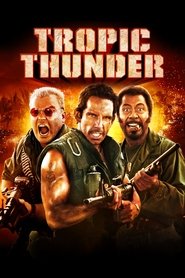
This was a tough one. This was a tough one because we had a lot to... You know, every scene, there were a lot of actors in every scene, so we had a lot of coverage we had to get. But we rehearsed it. We went out and rehearsed it. We rehearsed it in the jungle. Yeah, we went out to the location and rehearsed it. Two-hour drive to the jungle. Yeah. And you know what? It worked. We were mentally prepared. Yeah, this was... God bless the 4x4. It's four patties of meat.
24:25 · jump to transcript →
-
Diplodocus. Don't be so diplomatic. What you got going on with the TC, brother? Got three projects in the pipeline. I want to work with that motherfucker. You got for sure at least one in the pipeline. I want to work with Bill Hader. Look at him. Look at him, right over the shoulder. He's a young buck, but he's got it. Bill Hader's really one of the most talented guys. He's the shit, man. He's got the goods. Yeah, and as an impressionist, it's insane. You can do an impression of anybody and find an essence of them. McConaughey's bringing it right here, too.
1:08:02 · jump to transcript →
-
-
-
-
-

Related topics
Other topics that frequently come up in the same commentaries.