Topics / Cinematography & lighting
Camera movement
102 commentaries in the archive discuss this, with 295 total mentions and 69 sampled passages on this page.
Filter commentaries
Filter this topic by the film's decade or the type of commentary.
By decade
Across the archive
ranked by mentions · click any passage for the moment in the transcript
-
director · 1h 36m 4 mentions
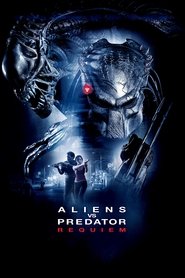
Aliens vs. Predator - Requiem (2007)
Colin Strause, Greg Strause, John Davis
-
Exactly. Here's actually a lead into one of our favorite parts of the new, the sort of new tone of this film versus the last one, which is we get to have an eight-year-old boy here that soon... Yeah, I don't like killing a kid in the beginning of the movie. ...soon bites the dust. And this is actually kind of a fun scene to shoot, too, because we actually had a helicopter in the techno crane for shooting where this crash site was. It was basically like a clear-cut...
4:13 · jump to transcript →
-
I don't know. This is very good work. Again, another night. Another cold night. Yeah, luckily we weren't in the rain yet. But once the rain started, you know, once you're just out there in the cold nights, it's fine. But the rain, I mean, even with the best rain gear, that stuff gets in and your hands turn numb after 10 minutes. I don't even know. We had some great camera assistants. And these guys, a lot of the camera work's handheld. I don't know how they got two. We had these great operators.
31:47 · jump to transcript →
-
And it's colder water. So it would have been better if it was like real rain actually hitting these people instead of this misery that we unleashed upon them from a giant crane. Yeah, on some of these scenes, it doesn't look cold because we had little fans hanging off just off the side of frame to blow their breath out of frame quickly so you didn't see it. But a lot of these, it's a lot colder than it appears. It's not always so glamorous making a movie, is it? No.
1:00:07 · jump to transcript →
-
-
director · 1h 34m 4 mentions
Scott Stewart, Jason Blum, Brian Kavanaugh-Jones, Peter Gvozdas
-
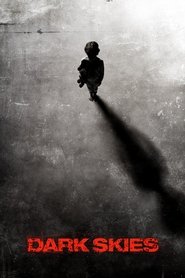
So here's an example of what we call the gray point of view, this drift through the house that had these nodal pans, you know, which were floaty but somehow precise. And I stabilized all of these shots because, you know, when you shoot with a Steadicam, you get a natural, you do get a bit of shake. And so we try to make them even more perfect by stabilizing them in post. And we did have earlier sequences that had versions of that kind of moving through the house.
38:46 · jump to transcript →
-
You know, cinematically, it's interesting when you try to do these slow creeping shots versus handheld shots and what those feel like and how those mean. And this was, you know, it was always sort of choosing your time to which one was most appropriate to use and what it would mean. And once again, a live conversation, both actors were present that are talking to her on the phone. And then we get into this montage here, this sort of, you know, it's the obligatory, you know, web search.
43:43 · jump to transcript →
-
but still do it on this very, very rapid schedule. So here, once again, you know, very first person point of view and this, you know, all handheld camera all the way through this. And, you know, part of the idea was, you know, the dogs, the progression of dogs barking in the neighborhood. You know, as we learned from JK that, you know, the dogs keep them up at night, you know, when they, the greys come around. And so here we are, we have our first jump scare of the sequence.
47:21 · jump to transcript →
-
-
-
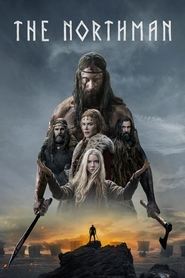
It was raining while we were shooting it. The snow is artificial, but you can't see the rain. But we were pushing the dolly down the hill, and then we had to then, at the very bottom of the hill, push it forward. And it took a whole lot of muscle to make that work. And then this camera move here...
19:38 · jump to transcript →
-
This was also a very difficult shot to achieve, and putting a dolly on a Viking longship is not easy. And the guys behind Alex had to, like, duck and throw his oar out of the boat in order to achieve this shot.
22:57 · jump to transcript →
-
worked so hard with me and Jarin Blaschke, the DP, on being able to articulate our vision. And with the horse falls and all this stuff, I mean, it was a nightmare. And we spent, I don't know how many times we visited this location with a viewfinder, restaking all these buildings so that they would all be built in such a way that we could achieve this shot and move the dolly through it and have enough room for the horses and see down the different alleyways to get enough depth.
26:53 · jump to transcript →
-
-
-
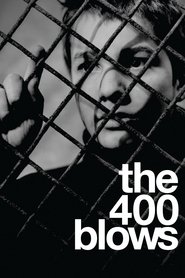
Note that the signature shot, that is, where the director places his own name, occurs at the unique moment of perfect framing by the base of the Eiffel Tower. The film on many levels will seek such a balance of the unsteady handheld look of cinéma vérité, the disorderliness of life itself, and yet the perfection of form, the balance that comes only from art. It's one of the light touches of mastery that gives The 400 Blows its charm. As if it were a novel and he its author, Truffaut dedicates his film to his mentor, André Bazin,
2:35 · jump to transcript →
-
Many of the director's choices in this film were dictated by budgetary constraints, for the film was produced independently. Thus, the choice of black and white film stock, which came to be associated with new wave films, was essentially a matter of economy. Similarly, the handheld camera, which permitted shooting in narrow locations and made the quick pans back and forth in this classroom scene feel natural, was less costly to operate than the bulky camera setups of studio filming.
4:44 · jump to transcript →
-
I discovered with a sense of wonder that very lightweight technique of filming. The camera was handheld, three quarters of the time. Until then, my experiences had been with what we called heavy video on TV. In other words, those enormous cameras that you needed three or four people to move left and right. I found the freedom of this new way of shooting terrific. I remember vividly...
34:24 · jump to transcript →
-
-
-
Tim Lucas
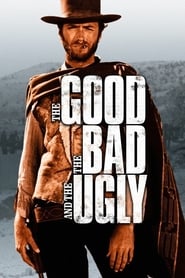
It's at this point that two continuous scenes were cut from the U.S. version. In the first, Angel Eye's pursuit of Bill Carson leads him to the ruins of a raided fort. This scene contains some of the most beautiful cinematography in the picture, notably a camera move around Angel Eye's head that seems to use the brim of his black hat as a dolly track. In this ruin, he meets a wild-eyed drunken Confederate sergeant played by the wonderful Spanish character actor Victor Israel.
45:45 · jump to transcript →
-
Tim Lucas
Essentially, Blondie has been rearmed, but his gun is at rest. He's been given a reprieve of sorts, and he now has the luxury of time in which to think of a way out of his predicament. This shot is the film's equivalent of the inexpressibly moving crane shot that introduces the town of Flagstone in Once Upon a Time in the West. We open with this vignette of the Matthew Brady-like Civil War photographer.
1:35:43 · jump to transcript →
-
Tim Lucas
What we see is already invested with depth of focus and breadth of composition. It feels quite complete. We need nothing else. And then the camera crane rises to reveal an unexpected extension of depth and composition that is absolutely majestic. This railroad station sequence was filmed at the La Calahorra station between Granada and Almeria.
1:36:07 · jump to transcript →
-
-
-
Francis Ford Coppola
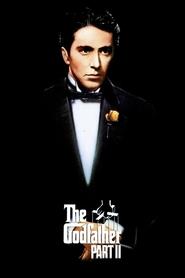
way to kind of pull back to the old loyalties. Of course, Fredo has married some floozy wife who embarrasses him in front of all the guests by drinking too much and flirting with all the men. I mean, the family is really starting to break down in this period. Fredo's wife was played by Marianna Hill and looked beautiful in that extraordinary gown.
28:23 · jump to transcript →
-
Francis Ford Coppola
I very much enjoyed this section of the film, this historical setting, period setting, wonderful actor, great villain like Gastone Moschin. I thought imaginative shots and in terms of these big dolly shots through this wonderful Dean Tavelera set, telling the story in an interesting way, you know, how the neighborhood was owned by a local
1:51:20 · jump to transcript →
-
Francis Ford Coppola
I guess we were on a dolly on a building across, you know, either on track. In this case, the camera was on the dolly track. And maybe it was on a dolly track across from the building so we could move with it. Fanucci had a good costume. I like his costume here. These are, of course, the puppets.
2:00:17 · jump to transcript →
-
-
-
John Mackenzie
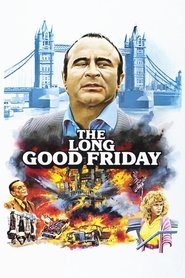
This has been all smoothed out, but it was a nightmare to do. And the mounting of the camera, you maybe see sometimes when you do the long shot, I had to mount the camera in such a way that it was separate from the car. You've got to be careful you don't get a slightly seasick effect. This was quite an interesting effect. Yeah, we did that about three times. He nearly hit us the first time. We're on a low crane arm and he comes straight at us. And the timing of taking the camera up so the car can drive underneath,
34:49 · jump to transcript →
-
John Mackenzie
This is all done on one camera. And you see it's gone up and over and behind. Now it comes around again. If it's on a crane, it can't go to the left there because we've seen that there's no rails there. This is Phil Mayhew again, who was operating while adding cameraman. But what is quite interesting, now we're starting to go to the left. So it's sort of really doing the impossible. And it goes on and on and on. It's all one shot. But what in fact happened
1:36:49 · jump to transcript →
-
John Mackenzie
is that he was on a crane, but he was sitting on the front of the crane, holding the camera handheld. So the camera would go up and over and back. And then when it went sideways, he stepped off the platform of the camera on his feet and moved sideways with it. You can see how steady the shot is. It's quite amazing. So what looks extremely simple is very complex.
1:37:19 · jump to transcript →
-
-
-
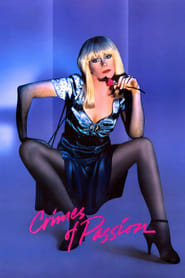
You know, this is... She realizes now she's been exposed, that he knows the truth of both her identities now. I don't want to make any trouble. I promise. I have to go to work. It won't take long. Please. Thank you. See, I think the beauty of her performance is that we see so much tension beneath the surface whenever she's Joanna Crane.
1:13:01 · jump to transcript →
-
I can't think of a better way to start a friendship. We haven't met. I'm Bobby Grady. Joanna Crane. I saw it on the mailbox. What are you, about 30? Still call yourself Bobby? I'll grow up when I'm ready. Oh, I think you're ready. Are you alone? Aren't we all? It's interesting framing of that shot. The two of them from a distance. And they're both going through their own...
1:14:28 · jump to transcript →
-
I'm sorry for busting in on you like this. I really appreciate you listening, and I won't bother you again. Uh, Bobby, if you, um, if you ever really need me, talk whenever I'm here. I know. Answering the phone to Anna Crane speaks to her, um, the, uh, her very constrained, very businesslike approach to, uh, to her life, again, as an avoidance of intimacy.
1:15:25 · jump to transcript →
-
-
-
Eleanor Bergstein
And considering what they've seen and where they've been, there was no other song that could work for this. So no matter how many songs people tried to convince me to use because they didn't think Cry To Me was well enough known, I just couldn't do it without this. And there's this lovely Traveling Dolly shot. And it wasn't on the first record, though it was on the second record that RCA put out, and people went into the...
56:58 · jump to transcript →
-
Eleanor Bergstein
And they started crawling around, and we did this wonderful scene. Now, I don't know how film-aware the people are who are listening to this, but there's something called video taps. And that is something that shows you what's going on by your camera, what's going on in a room. There's a Steadicam here, which is a man with a camera strapped to his shoulders. So he is the camera.
1:06:47 · jump to transcript →
-
Eleanor Bergstein
So I followed the man with the Steadicam, which is a man. As I said, it's a man who is a camera. And I followed him around and reported back to Emile. And when it was all over, I looked back and realized it was an entire mirrored room. So my terror was that when the dailies came, which would be two days later and there was no way to go back to this scene, that you would see the little picture of me huddled behind the camera and it would ruin the set. So I remember when we saw the dailies...
1:07:37 · jump to transcript →
-
-
-
of course, was situated in the interior, isn't it? Right. It's when we saw this big pit later that we realized, looking there, that it was so sensational and so beautiful that you had to find something. We found this crane above, isn't it, that would drop the steel stuff on RoboCop. But... Here's the Rob Bottin third act face. And we should mention it here because this is a pretty cool thing. Watch. And watch, again, the way it's revealed. First time you see it, it's distorted, which I think is beautiful. And now look at the full work of it.
1:21:23 · jump to transcript →
-
You mean the more of a kind of a Leone feeling of the guys coming at each other down the street? Of course you couldn't because it was not the style of the movie. You know, you couldn't slow it down. You had to go for the story continuously. And also, yeah, you really feel like this thing wants to wrap up now pretty quickly. This is a great location. Yeah. Now, you know, we had all this wonderful plan for when the crane cab blows up.
1:31:40 · jump to transcript →
-
that you would see, you would hear the bullet coming through. He would go, where is it coming from? Where is it coming from? And then you would have an outside shot of the windows where they all went red as it blew up inside him, and then it would explode. Well, look what you get. But that's pretty cool that we got that. Well, we invented that basically when we came there, isn't it? They had a crane, didn't they? Something like that, yeah. But the idea of using it, and look at this shot here. This is really a great shot where you really think, my God, Jesus, look what happened to him.
1:32:04 · jump to transcript →
-
-
multi · 2h 24m 3 mentions
Alex Thomson, Terry Rawlings, Alec Gillis, Tom Woodruff Jr. + 3
-
There's a miniature shot of the alien running up, then it cuts to a close-up of Tom. We did do a fake head of Charles Dance - it's coming up here in a minute - where the creature punches a hole in his head. And we had to do a head cast of Charles in an extreme expression. And as I recall, he was great about it. He's actually, for as serious as this character is, he was a very jovial guy. Yeah, I guess it was like an animatronic head, dripping. In order to do this movie, we built a complete silent motion-control dolly that could go at running speed, which we wound up never needing to use. You could actually run with it at high speed and it would repeat, and it was quiet enough to shoot sound. Of course, when we got to England to set it up for the first shot, nothing worked. We were tearing our hair out and found out the system wasn't grounded because they had run an extension cord into the hallway. But then, once we found that, we didn't have any problems. But that was in order to enable us to shoot scenes with pans and tilts, and then scale those moves to shoot the scenes back at the studio with a rod-puppet alien one-third scale... with a moving camera, so it wouldn't skate around in the scene. I think this rod-puppet technique is very interesting. I think it still has some validity now, even in the digital era. Yeah. - And probably now, I don't know... Well, I guess you'd still have to do the motion-control stuff to match moves. Or track it now. If you're gonna do a CG character, you can track it. But you wouldn't be able to track like that with a miniature puppet, would you? You'd have to use motion control. It's a real mechanical lollapalooza. But there is a nice presence to it that really looks like a physical thing. It gets around some of the difficult issues of CGI, in that the lighting is playing on it. And the director can direct it. Fincher could come by and direct the puppet. Five guys, you know, operating this character against bluescreen, there were some pretty bizarre mountains of equipment to get these shots working. And flags, and stands, and wires everywhere. And flags, and stands, and wires everywhere.
1:04:35 · jump to transcript →
-
I loved that Steadicam stuff down the tunnels, and the points of view of the actual creature. And the way they worked it so they could switch from 24 frames to three, just like that. Incredible. Yeah, and it'd spin round.
1:58:38 · jump to transcript →
-
Claustrophobic shooting, in all those tunnels for weeks. This alien point of view was shot with a prime 10-millimeter lens, which is distorting, and we did a bit of Steadicam. The Steadicam operator was running down the corridors to get a sense of speed. He did a marvelous thing, which I thought was very clever, that he flipped the camera over whilst he was running, which I had never seen before. A very effective move, and, of course, with the running, sometimes the lamps were kicked by the actors or by the crew running. It was quite a difficult operation. Blood spattering, here. Fast and furious. I think we had a dummy for this. All you see is his legs, but... That's good there. Another matte shot. Many elements for that shot.
2:03:48 · jump to transcript →
-
-
-
Then you see it's a crane shot, a moving camera, but still the background, the building is painted. Here, you see? The whole, yeah, LAX. But the whole back there, the thing is a painting, the building. It was just nothing there, just dark. So they sent you where, to the end of the runway? It was a special, yeah, a special area of a very more quiet, deserted area of the airport. And we shot it there. Where did the jet come from?
11:43 · jump to transcript →
-
I've ever done in a film. And he has done quite a bit. And here you see the president is a little bit shocked about what he just did. He shot somebody. He shot somebody, but out of a reflex, out of a situation where he just had to react. And he's really kind of shocked about that himself. But what could he do? Here's a nice steadicam shot.
45:19 · jump to transcript →
-
And in the next shot, it's an amazing shot, one of my favorite shots. It's a Steadicam shot in that whole prison here. And it goes wider and wider and wider. And the sound is building. This is a hellhole of a prison. And you think stuff like that you can only find maybe really deep, deep in Russia. You find it in Ohio. Is that a prison they use now? It is closed since, I think, five years or six years.
1:33:23 · jump to transcript →
-
-
multi · 1h 54m 3 mentions
Jean-Pierre Jeunet, Hervé Schneid, Alec Gillis, Tom Woodruff Jr. + 5
-
Sylvain Despretz, he works a lot with Ridley Scott's design, this chair. I love the idea with the weapons hidden on the char. These were tough shots - to show enough of the alien, but not give it away. The problem with the alien suit is that if you show too much of it, it's very clearly a guy in a rubber suit, but for wider shots, it was done effectively. Where you see the shadow, it was a matter of lighting so it wasn't revealing the body, but only the shadow across the grid. As an actor, I haven't seen often the monster on set. Remember, Jean-Pierre? As an actor, I haven't seen often the monster on set. Remember, Jean-Pierre? I remember, we changed the sense of the scene during the editing. He was supposed to listen, or to see an alien, and we put some different sound to explain the aliens are escaping from the cell. That's true. I don't like to do that, because an actor plays something, and if you change the sense it's not good. But that was good, because it added to the pressure he had to face, knowing that the complete ship was coming under the aliens' control. Another stupid idea. I love that shot, the Steadicam, where we speed the picture. Pitof put some flames from the guns, because the guns didn't work. Never. The actors had to pretend to shoot. It was a bit breakable as well.
43:33 · jump to transcript →
-
You are going to see in a couple of minutes the nest. It was a kind of homage to Giger because in the script it was an action scene and I didn't like it. I prefer to imagine this disgusting nest with tails and parts of alien. It was really disgusting with lots of slime and Sigourney loved that, to jump on this very disgusting nest. I love this idea when she catches the tongue. It hasn't happened yet, but this whole business about getting Ripley away from the rest of the pack... She falls into this ocean of alien... alienness which I quite like, actually. And she's supposed to sink into this like into an ocean, which was a precursor to this bit at the end of the film where they were floating in alien goo and the aliens swam in it like crocodiles. This shot seems very easy. It was a nightmare because it's a Steadicam. You can't see the crew, you can't see cables. You can imagine the nightmare because we turn around Sigourney and Winona.
1:28:42 · jump to transcript →
-
The eyes of the newborn slid in and out. And now the love scene. On this shot you can see all the newborn. It's the only shot because we erased in postproduction the crane. Here he is taking a couple steps. He was supported by a boom and rod-operated. Dave Penikas was the mechanical supervisor on this, and Yuri Everson supervised a lot of the construction steps of it as well. It's difficult because of all the hydraulics involved in making it move, and having it move so closely to the actress, both Winona and Sigourney. We had a lot of safety concerns in building this thing mechanically, and also in the operation of it. We ended up with two computers to operate this creature, one at the puppeteering end and one on the puppet, to continually make sure the data being fed to the puppet was not able to be misinterpreted and have something move in a completely opposite direction. Jean-Pierre really wanted to convey a confusion and sadness from the creature, where he doesn't understand why he's being sacrificed like this. We had a variety of puppets ranging from our hydraulic character to rod-operated puppets. I think there was maybe three different phases of puppet here. So now this is the ending I found at the end. You can understand it was the ending for the General Perez, for Dan Hedaya. During the shooting I wasn't sure it was working. Now when I see it I think it's good. Because Tom and Alec had to find some new technology very quickly because we found this idea very late. And all the stuff coming out of the newborn have been shot in liquid to have this zero-gravity impression and a lot of different things. I thought that that was all digital, those shots right there. No, that's photographed and it's digitally... It was mixed digitally but all the elements are elements I shot... You need a tank for this zero-gravity feeling. Right. But it had a lot of layers together to have the amount of stuff.
1:44:06 · jump to transcript →
-
-
-
What we're putting shot here is a very complicated visual effect. We had a track in from a still photograph, the comet and the moon, and then add that to a very complicated crane shot so there would be no movement. I thought it was very important photographically in this film
3:10 · jump to transcript →
-
This is Arnold, and this is Arnold being hoisted up 50 feet in the air with all these rain machines going on. This was done with a large crane called a techno crane, which was on top of another crane called a Titan crane, which allowed us literally to go from the ground to over 50 feet in the air.
1:27:02 · jump to transcript →
-
and you didn't want to see him put in this position. You'd be amazed what you agreed to when you're on fire. Don't do it, Bobby. You're better than this. You're better than him. You know, considering how you've lived your life when this is all over... I love long lenses. I guess you could see that because this film was shot with long lenses. It's gonna happen. Why shouldn't you have the best seats? Look what it does, though, when you take a close-up and you push in on somebody and you... Everything in the background is soft and the eyes are pin sharp.
1:36:45 · jump to transcript →
-
-
-
You'd see that a lot on Entertainment Tonight. Yeah, yeah, yeah. It was fun. Actually, that shot's coming up. I think it's the next shot. Yeah, this shot right here. Great hanging rig there that Simon Crane, our stunt coordinator, he'd just come off of Titanic and Saving Private Ryan, and it really looks like someone got hung. Brendan was just about to pass out there. Interesting, geeky, technical note here. Most of the scene is looped,
22:21 · jump to transcript →
-
It's always good to go dragging cranes around in the desert. Yeah, I had a world-class crew, just fantastic crew. Didn't matter what I asked them to do, it would always be done within 15 minutes. I'd say, oh, I want to dolly up this sand dune. I want to crane over that mountain there. And everything was rigged so quickly. It was just fantastic. And this was, we got up at 2.30 in the morning to shoot a lot of these shots because the desert photographs beautifully from about 4.30 in the morning till 8.30. But at 8.35, as soon as the sun crests,
34:43 · jump to transcript →
-
You did not see much of this. Winston! Hey, Winston! Poor Winston. Bernard was quite a trooper. We had to actually kind of crane him into that cockpit, and he actually stayed in there as we sunk it. And he trusted us not to kill him, which I thought was rather nice of him.
1:35:01 · jump to transcript →
-
-
director · 3h 29m 3 mentions
The Lord of the Rings The Fellowship of the Ring (2001)
Peter Jackson, Fran Walsh, Philippa Boyens
-
Probably due to budgetary cuts. Budgetary cuts? Not enough. Not enough. Low left. The intention with the fighting was to make you feel like you were part of it. I wanted to really get in there with the camera. It was all shot handheld. I often used to shoot this fight on Saturdays
2:14:35 · jump to transcript →
-
He is quite empathetic when he drives. Yeah, yeah. Which is, I think... It is in the book. It's a testament to Randy Cook, is it not? Yes. Did Randy drive like this? Well, Randy, who's our animation supervisor, I mean, he and I are big Ray Harryhausen fans, and we always regarded this as being our Harryhausen scene, that the one thing we're doing differently is we're using handheld cameras, whereas the old Harryhausen movies, like Jason and the Argonauts and Sinbad, the cameras were always locked off, completely static.
2:16:55 · jump to transcript →
-
because it was the only way that those effects could be achieved in those days. But we thought it would be great to do what's essentially a wonderful Harryhausen monster fight, but do it with handheld cameras, so you get much more of that documentary sort of feel. So if you look at the troll fight, every single shot, the camera's handheld, and it gives it that little bit of life and energy. But, you know, the gags are all Harryhausen gags, really. You know, throwing stones at monsters, he did that. You know, throwing spears, jumping on their backs.
2:17:23 · jump to transcript →
-
-
-
If you can convey information through something as simple as that, that's the best way to do it. It gets a lot across very quickly. The audience fills in all the gaps around that quite quickly. And I think it's something to do with confidence, really. Knowing how much and how little you can put in. And this is that, what do you call this? It's not a tracking shot, is it? What do you call this? You know what I mean? You left me lots of space to sort of piss around. It's just a pan. It's an interminable pan.
19:12 · jump to transcript →
-
And Anthony's kind of following this cab in another cab. And Andrew's up on a crane, I think, getting a wide shot. So you can give... This is actually picked up later. We did this somewhere else later. But it does affect the actors to see something for real rather than just paint it all out afterwards. You do see it affect them. It helps them enter the world of it. This was very tricky, this, because how do you show it?
1:01:03 · jump to transcript →
-
city burning from a huge distance and still make it look dramatic still justify the long uh pan yeah tails actually love it long tilt the long tracking shot upwards yeah so um
1:01:33 · jump to transcript →
-
-
director · 4h 13m 3 mentions
The Lord of the Rings The Return of the King (2003)
Peter Jackson, Fran Walsh, Philippa Boyens
-
But when we put it in the movie where it was, we thought it had to push in, otherwise it wasn't really working properly. To take you into the hall. She was watching them leave in one and then watching them arrive in this film. This was actually a rebuilt Edoras because this entire party, or the banquet scene as we call it, didn't actually exist in our original script and we'd never shot it. And we had this giant big set of this golden hall that we'd built. Fortunately, when we were done with shooting, we put it in storage.
18:43 · jump to transcript →
-
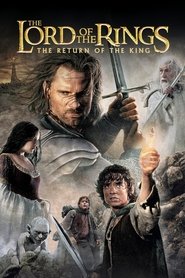
This is one of my favorite shots, the creeping down one, which was an idea that we had on the set. We were playing around with the wide-angle lens and the camera on a crane, and we were just looking for interesting angles. And we came up with this angle, and then we decided to make it to really feature it as a shot. This is an image that's off one of Alan Lee's paintings, isn't it, on the Two Towers cover, looking up the staircase. I like the fact that the spider's being really creepy and sneaky.
2:23:14 · jump to transcript →
-
We're moving on to our next film. And you literally, the other films do fade away eventually. You know, especially some of the other early films we've made. And you literally, you know, hardly ever hear of them again. But this one isn't going to be like that. This one is going to be their big front and centre forevermore. Absolutely. So you're going to lose the footage where you push in through the door and you go through and you follow Sam.
4:12:35 · jump to transcript →
-
-
writer · 1h 31m 3 mentions
Wes Anderson, Roman Coppola, Jason Schwartzman
-
Roman Coppola
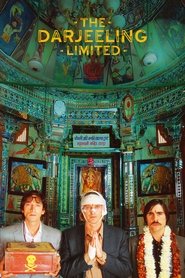
In this moment, we used something that our key grip, Sanjay Sami, called a "rickshaw dolly," but Bill Murray's character-- We turned the camera around backwards so the dolly grip and the actor are the same person. So Bill Murray's just running freely with his-- With the dolly, which is made to look like suitcase handles. Yeah, that was very clever, that his arms reaching down, that appear to be holding the handles of the suitcase, are in fact the arms of the dolly itself. Yeah. That's one of those things where we are just spoiling the illusion for people.
1:29 · jump to transcript →
-
Roman Coppola
So this scene is a... Here the conflict is brewing among the brothers, the suspicions and the questioning. And I remember we decided that-- I thought there was something nice about working in the compartment and not having cuts. And sort of-- You know it's a real space, and we'd also get this building kind of tension that's happening here. So anyway, to shoot this, I remember we built a mock-up of this compartment on the... At our art department, which was actually at the-- Which was actually, like, on train tracks. It was some kind of train-- At the train station. Yeah, it was like a train station. We built a train station in it, in fact. And I remember we rehearsed that shot-- It's one of the few times I remember actually rehearsing an entire shot with a dolly and the camera and everything on a completely different location. You know, in a-- You rarely rehearse with a crew present before you start a movie. But that one, we wanted to make sure we'd be able to do it, because the space was so compact, just because it's a real train rolling along.
16:18 · jump to transcript →
-
Roman Coppola
And that goes straight into this scene with-- This scene where we visit all our characters in the story while we're on this moving train, which, we built this set on the train. That's a door, actually, that you can see out. So this is actually where you are now, Jason. This is based on my apartment in New York. And, anyway, these-- - Yeah. All these rooms are built on this train with this dolly track in it.
1:18:31 · jump to transcript →
-
-
-
Let's not do it as something that's just going to get cut out on a DVD. And that dictated the entire emotional arc of the story. It really allowed that emotional arc that we were always talking about, which was how do we get, without compromising what mission is, build in more emotion. Emotion. You know, how do we take them and pull back who Ethan is, where he's at,
1:59 · jump to transcript →
-
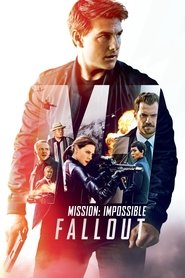
And we were originally gonna have a crane that you were gonna get on and swing over. And when I was scouting that roof, I went, wait a minute, this looks like it's 10 feet away. Of course, everybody in London knows how ridiculous that is. And again, 360 degree geography. We started on that roof, this roof right here. This is where it happens. This is part two of a two-part shot that we stitched together. And Tom's ankle is broken. This is shot five months after. Here it is, this. This is the start. And here's where it happens.
1:34:06 · jump to transcript →
-
and what needed to be made clear. And also, we'd spent a couple of weeks in the editing room during the break. That's right, during the break. We had a hiatus. To go through how... We had a hiatus when Tom broke his ankle and it allowed us to cut... Time to cut working. Yeah. But what I love about a mission movie also is you could go cashmere, push in the computer screen, and then cut to these beautiful shots. This is actually, we're shooting in New Zealand for cashmere. There was a whole great scene that you wrote and shot
1:43:24 · jump to transcript →
-
-
-
Nia DaCosta
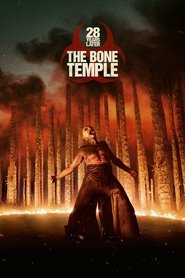
So, there are a bunch of whip pans in this movie, which I don't usually do. But we have this rig, basically like a modified Trinity, that was really fun. And Simon Wood, our Trinity operator, who's amazing, he also does Steadicam, he does B-camera sometimes. But he basically changed the rig up because I'd asked for some different specifications and we ended up being able to do this really cool whip pan that sort of slams to a stop really directly on either side of the whip. So we thought, "Let's use that for the Jimmies," 'cause that's very much their vibe. Just madness and whip pans.
3:29 · jump to transcript →
-
Nia DaCosta
Cause the crowd all love Pulling Dolly
11:02 · jump to transcript →
-
Nia DaCosta
So, Jem Morton, my amazing key grip, he figured out how we could shoot, 'cause I wanted to shoot in front of them, but we were literally off of a cliff. So there was no way to, like, stand someone up in front of them to get a shot. So what he did was he built this amazing deck and he got the crane out there, like, as you can see, it's a drop-off there. So he got the crane out and had the arm out, and he gave us just a lot of flexibility here, which was great. So we're shooting a lot of these frontal shots off the crane. But that's like the least of what Jem Morton can do. He's just phenomenal. So I think this is our third film together, which is great. Aye, it
57:33 · jump to transcript →
-
-
-
Leila Bennett, who plays the comedy maid, was also the comedy maid in Doctor X. And I think her best performance was as Daffy Dolly in a version of A Study in Scarlet, which came out about this time.
15:50 · jump to transcript →
-
stuck with a stiff he just let them go yeah but that's the great thing about this film is that he's now backed up with the mgm set department so these sets look lavish they look they look a picture's quality and the photography the cinematography the camera moves around the actors yeah and you suspect that you know all he was interested in was getting this you know these performances out of these guys in front of the camera but look you know a lovely tracking shot bring him across the room but i mean
22:13 · jump to transcript →
-
-
-
And this is one of the few scenes in the movie that it was shown twice from two different vantage points. Now, one thing that was very interesting, you were talking about the optical printer before. This is one good example of it. Because somewhere in the middle of this upward crane,
1:16:56 · jump to transcript →
-
is using an optical printer and then going back to the original crane shot. Right. It's changing into several upward crane shots and making them look like one. Yeah, you know when Welles...
1:17:19 · jump to transcript →
-
-
-
Alan K. Rode
And as Sterling Hayden grabs a bottle of suds, check out this tracking shot following him through the apartment. The design of this shot, using the lens and other aspects of the photography, created tension between Kubrick and his DOP, Lucien Ballard. Second build, Coleen Gray, is getting dressed. Since the production code couldn't show them in bed together, this shot of her finishing dressing with an assist from Hayden establishes the intimacy of their relationship.
6:44 · jump to transcript →
-
Alan K. Rode
Kubrick didn't attribute his directorial skills and style to many others, but he was profoundly impressed by the director Max Ophuls. In an interview after he filmed Paths of Glory, Kubrick said Ophuls was his favorite director and he had watched Ophuls' Le Plaisir countless times. Ophuls was renowned for his supple camera movement and we see that influence in Kubrick, particularly in his early films like the dolly shot following Hayden through Unger's apartment.
48:41 · jump to transcript →
-

Related topics
Other topics that frequently come up in the same commentaries.