director
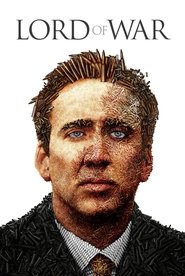
Lord of War (2005)
Release Lord of War 2-Disc Special Edition DVD (Lions Gate Home Entertainment, 2006)
Andrew Niccol discusses the independently financed shoot across New York, Cape Town, and the Czech Republic, including access to military equipment and the opening bullet sequence. He explains narration, camera movement, research, practical risks, and digital effects. He also describes retaining the nightmare montage and refusing a redemptive ending for Yuri because of the film's account of the international arms trade.
- Duration
- 1h 59m
- Talk coverage
- 72%
- Words
- 11,930
- Speaker
- 1
Guided collection
Depicting presidential power and the arms trade
Wolfgang Petersen explains the aircraft, sets, models, effects, and military advice used in Air Force One. Andrew Niccol describes locations and equipment used to depict international arms dealing in Lord of War. Compare how these production choices support each film's account of political power.
Part 2 of 2
- 01 Air Force One 1997
- 02 Lord of War Now reading
Commentary density
Highlights
Featured in
Topics
People mentioned
The film
- Director
- Andrew Niccol
- Cinematographer
- Amir Mokri
- Writer
- Andrew Niccol
- Editor
- Zach Staenberg
- Runtime
- 122 min
- Also on
- OneSheet ↗
- External
- IMDb ↗ TMDB ↗ Find on Amazon ↗
Transcript
11,930 words · 113 flagged as film dialogue
You know how difficult it was to get Lord of War made from the opening credits. When you see presented by, in association with, in conjunction with at the beginning of a film, usually means the production was financed outside of the Hollywood system, which isn't surprising since no one can accuse this of being a typical Hollywood film. I still don't know who these people are.
This opening shot looks like a production designer's fantasy, but it's inspired by an actual photograph by a photojournalist after a gun battle in Monrovia. There really was a carpet of bullets like this. I suppose it's obvious, but a military consultant pointed out to me that for every bullet that kills or wounds the enemy, thousands of rounds of ammunition are expended. Coincidentally, the neighborhood where this was filmed is one of the most dangerous in Cape Town. The local film people tried to discourage me from shooting there, but it was too perfect to pass up. Eventually, what we did was bribe the gang that runs the neighborhood. We actually paid them to act as security. This bullet sequence was done four months after the main unit was completed, and after we'd already cut the film together. It was always in the script, but I'd run out of money, and I couldn't afford to do it with the main unit. I had to beg my French producer to let me go back to South Africa and do it. To his credit, he eventually agreed. It still had to be done very cheaply, and I had to call in a lot of favors.
There are times when people work for nothing on a movie. In this case, people actually paid the production to work on the sequence. The background plates were done in three days without a motion control camera, which is something of a miracle and something none of us want to try again, especially my gifted cinematographer, Amir Mokri, who had to operate himself. Most of the bullets are CGI, and the sequence owes a lot to the talent and tireless work of Yann Blondel of L'E. S. T.. It's a visual effects company based in Paris. Obviously, the sequence is the lifespan of a bullet as it journeys from a factory in Ukraine, eventually ending up in the head of a child soldier, and it also mirrors Yuri's journey, Nicolas Cage's character. He also starts life in Ukraine and eventually is responsible for the death of child soldiers. Hopefully this sequence sets the tone for the film. I wanted the film to be subversive. It's the reason this peacenik anthem is playing in the background. It's the same with Yuri's narration in the film. The narration was...
necessary because it's just an efficient way to span 20 years and it allowed you into the thoughts of a very private man but also in a subversive way i wanted this to be a how-to film on gun running part drama and part instructional video i mean we used to joke also that the sequence had to be so long to fit all the producers names like i say to this day i don't know who all of them are. There's a transition coming up from the death of a child soldier that only came to me at the last minute. I'd been scouting Brighton Beach for days before I realized that the pier I was standing on was shaped like a cross. I mean, one thing is getting the idea, but executing it's another. Shot required placing a 100-foot crane on a very rickety wooden pier. In the original script, we got to see Yuri's childhood in Ukraine. Ten-year-old Yuri comes up with the idea to pretend to be Jewish to escape the Soviet Union. But that part of the story had to be cut for budget reasons.
Also the movie and this commentary would probably be three hours long. We shot all of this footage in a Brooklyn neighborhood in Brighton Beach called Little Odessa where you almost only hear Russian spoken. It has a lot of texture and character which comes free like that train that went by then. We didn't control the train. We didn't ask for permission to shoot it. We just knew they showed up every 10 minutes. By the way, that business of Russians pretending to be Jews to escape the Soviet Union is true. The two actors who play Yuri and Vitaly's parents are actually husband and wife. They're from Armenia, so I apologize to the Russian audience watching that. They speak Russian with Armenian accents. The rest of you probably won't notice. And there really are Russian mobsters in Little Odessa. Some of them actually wanted to be in the film. Although I always find it's better to cast that kind of role with actors. Real people often don't seem to be very authentic for some reason.
And this palace restaurant across the street is an actual hangout for mobsters, although we changed the name. And this 80s scene allowed me to indulge my obsession with classic cars like this Lincoln Continental. Now, once Nicolas Cage walks into the restaurant, it's almost three months later, and we're on a soundstage in Cape Town. in South Africa, and if you look carefully, the two actors playing the Russian mobsters inside the restaurant filmed in Cape Town are different from the actors who got out of the car in New York. Had something to do with the price of a plane ticket from New York to Cape Town.
It hit me. It couldn't have hit me.
We didn't... We intentionally try to change the characters too much over the 20 years the film takes place. Those fashion changes often look very contrived and financially we just couldn't afford to. My schedule was actually so tight that I could be shooting a scene in the early 80s and an hour later a scene in the late 90s. So it was impossible to make those changes, even if I'd wanted to. Again, the exterior of the scene was shot in New York, and the interior is on a soundstage in Cape Town. Shooting out of continuity like that is one of my least favorite things about filmmaking. The Uzi machine pistol. It's my favorite gun in the film, I think. I took an instant sort of liking to it. It's so lethal, yet it's so compact. It's no wonder gangsters love it. You can fit it in the glove box of your car. I'm not a gun lover, but I felt I had to at least have an appreciation of them to make the film. I've been involved in four other movies that don't have a single gun in them, which is something of a crime in Hollywood.
Here I was making up for it, I guess. This family restaurant that the Orlovs had was an actual Russian restaurant. Again, we changed the name and to keep this plot point about converting to Judaism, we made it kosher. We must have done a decent job because several Jewish people actually walked in during shooting thinking a new place had opened. I like this cramped kitchen. We hardly dressed it because it was already so authentic. And that borscht in that pot that was actually made by the owners of the restaurant. It's sort of this thick soup that's generally full of beets and onions and anything else you've got. It was such a cramped restaurant that for this scene we actually had to put a camera out on the street to film part of it.
This is still in Brighton Beach. We were originally gonna shoot this scene on the beach, but there was a lot of summer crowds and actually paparazzi stalking Nick Cage at the time with his new fiance. So he went to this rooftop. I think the result's probably better. You get the feeling that the brothers have been going to this private place since they were boys. I find I do a lot of rationalization like that on movies when things go wrong. It was quite windy on top of the roof, so I had to loop some of the lines. I don't like to do that. Often I keep noisy dialogue, because you lose so much recreating this performance in a studio months later. We?
I need a partner.
Amir Mokri and I used a lot of silhouettes in this film. There's something evocative about them. Also something to do with Yuri just being this shadowy figure. He's in every scene of the film as well, so you don't have to see his eyes every moment.
Again, I didn't dress the rooftop. That old chair Yuri is sitting in was actually there. I gave the production designer the day off. This is the Berlin Arms Show, shot naturally in Cape Town. It's actually an air museum at Cape Town Airport. A lot of the other military hardware was rented from the South African Army. For those of you who think this scene's over the top, just pick up any gun magazine and look at the scantily clad women. For some reason, guns and girls always go together. I was particularly flattered when Ian Holm agreed to do this role. He's probably the only actor in the film my mother had ever heard of. She'd always say, sweetheart, don't tell Sir Ian what to do. Actually, I took her advice. There's some cursing coming up, actually, in Russian. And I softened some of the translations for the Russian curse words. because in English they seem too harsh. But we found the Russians generally have better curse words than we do.
Bullets change governments far surer than the votes. You're in the wrong place, my young friend. There's no place for amateurs. Curious how you always revert to your native tongue in moments of extreme anger.
There was going to be a scene where the brothers had sex with UN peacekeepers on their travels, but for budget reasons I never got to shoot it. It's a shame because I like the symmetry of having sex with gun girls and then with peacekeepers. I know Jared Leto probably would have liked that symmetry too. That's actual footage of the bombing in Beirut.
This Beirut set was brilliantly constructed by my production designer, Jean-Vincent Puzos. He made it out of a demolished fertilizer plant at the back of the studio lot in Cape Town. And the way he put together these piles of M16s was also a stroke of genius. There's no back to the piles, so you could halve the number of guns you needed. And also the piles are on wheels, so I could maneuver them and film them at any angle. It's beautiful and also practical. This character here, Colonel Southern, was actually played by several different actors. Since I never show his face, I could use a number of featured sort of extras. The unifying element is actually Donald Sutherland, who provides the Colonel's voice. Originally, I hoped to get Donald to play a role on screen, but the shooting schedule just didn't work out. However, he liked the script, so he wanted to participate in some way, and he generously agreed to lend his voice.
Coming up is one of my favorite sort of visual moments in the film. There it is with Yuri, scrabbling in the dust for his money. It really is sort of dirty money. It's a simple way, says everything about his character. Speaking of money, there's sometimes a lack of money can be a blessing on a movie. In this scene coming up here, I wanted to convey North Africa and South Africa, but I didn't have the money build a mosque or anything, so I just laid out a field of bricks, because bricks are cheap. You put 10,000 bricks on the ground and suddenly you're in North Africa.
I sold Israeli-made Uzis to Muslims.
And this montage of locations just shows the varied scenery you can find in South Africa, the desert, this jungle here. and coming up the mountains of Afghanistan. It was harder to find authentic looking extras, but I had a great extras casting director, Mito Skellern, who did an amazing job finding faces to populate the various countries that Yuri visits in the course of the film. That's not one of the extras.
In the mid-'80s, my weapons were represented...
This cheap piece of sound design here... ... where the bullets turn into sort of cash registers... ... sort of again says everything about Yuri's perception of his business. I actually had some of the best sound designers in Hollywood. Dane A. Davis and Eric Lindemann, who worked on The Matrix. Yuri back in New York. These contrasts are great. when you go from the most barren locations to the most urban. It was difficult to get permission actually to film near major landmarks after 9-11. And there was a lot of negotiation to get this location under the Brooklyn Bridge.
I also packed six different briefcases, depending on who I was that day and the region of the world I was visiting.
It's easy to write in a script, you know, exterior, freighter, Atlantic Ocean, but it's another thing to do it. The only thing worse than shooting on the sea is actually shooting in the air. And in this film, I was foolish enough to do both. Originally, I wanted to have a much larger container ship, but renting these ships is incredibly expensive. Our marine coordinator actually found this one in Angola. It had an Indian crew. I didn't ask a lot of questions. If he could get it, he could get it. The ship almost didn't make it to Cape Town because it got caught in a storm off the coast of Namibia. It almost sank. We had a lot of near misses like that in the film. The cinematographer Amir Mokri can't actually even watch this scene because the weather kept changing as it does in South Africa or in Cape Town. And the skies don't match, but of course only Amir is looking at the sky. This scene has an actual precedent.
gunrunners really do try to change the registration of their ships at sea. They don't do it in such a hurry, but that's the creative license. We were fortunate that the South African Navy allowed us to use one of their frigates for this scene. It's the first time they've ever allowed one of their ships to be used. for a movie shoot. Originally, they turned us down. They said they had none available, but I pointed out that there were six of them parked outside my hotel room. And they didn't seem to be fighting any war, so they eventually gave us one. It's the sort of scene where you start to wonder if you're really making an indie film. Someone said during the shoot that the movie was like a John Sayles idea with Jerry Bruckheimer production values. There's a moment coming up soon where you see this painter on the back of the ship in a wide shot and the paint is digitally added later. There it is. This is where it's a good idea and a bad idea to have Zack Steinberg, editor of the Matrix films, editing your movie because
It was a great idea of Zach's to add the painter, but it's not a good idea for your budget. Ethan Hawke is one of those actors who'll do whatever it takes for a role. This was Ethan's first day of shooting in South Africa. Ethan, welcome to South Africa. Now get into that inflatable in six-foot swells and act. Sure, Andrew. It was actually very rough out in that water. One of the marine coordinators got seasick and that's when you know you've got problems. I like this meeting between Yuri and Valentine. They never say a word to each other. It felt more ominous to me and smarter not to have that typical tough guy dialogue. This idea of smuggling guns... And potatoes, they seem bizarre, but it's actually based on the real precedent. South Africa, but it's supposed to be in Colombia, of course. Yuri speaks five languages during the film. We had to find a language coach for each one, which is not so easy in South Africa. He speaks Spanish, French, Arabic, Mandarin, Russian, of course. When I added Arabic at the end of the shoot, Nick just rolled his eyes and stared at me for a moment. went off and started practicing Arabic.
Whoa, whoa, whoa.
This is a South African actor, Tony Caprari. Makes a good Colombian. Hardest thing to find in South Africa is authentic American voices. Malfi!
The first and most important rule of gun running is never get shot with your own merchandise.
People always ask what the actors snort in scenes with cocaine. We actually used vitamin B powder.
Despite the complaints of the actors, I was probably doing them a favor. Stop! That narco gorilla
had his facts right. After shipping it stateside, the return on that blow...
For some reason, I had a lot of trouble getting the design right for these coffee cans. Making movies is a dangerous occupation for a... An obsessive-compulsive.
To this day, I don't know what Vitaly was running away from. Maybe just from Vitaly.
I found him 12 days, 2,000 miles... When I suggested Nick hold this rooster in the bus, he did it right away. Not every movie star would do that. Normally, they're worried it's gonna peck their face or something and destroy their careers.
Coming up is one of the funniest scenes in the film for me. Jared always makes me laugh no matter how many times I watch this scene. On the day he actually wanted to do this scene in a dress, I thought it was weird enough already.
Yeah, I don't know how many times a map of Ukraine has been made out of cocaine.
The fuck is that? Ukraine? I was young, but I remember. Look, I start in Odessa, right? And then I work my way to the Crimean. You're gonna be dead before you fucking reach Kiev. Come on, we're going home. You fuck! You fucking fuck! You fucking fuck!
This is also the great thing about Jared. He will go down and snort powder off a dirty old carpet. This here is actually the first day of shooting in South Africa. We used Cape Town Customs House to play JFK Airport. We almost got away with it, I think. And here's the first legal day of shooting in New York. and Vitaly's first snort of vitamin B. Even on this day, I think you can feel the brotherly love between Nick and Jared. I didn't pay much attention to the fact that their looks are very different. It was all gonna be how they played it. I've seen actual brothers in films who can't pull off being brothers as well as these guys.
Good brother, Yuri. Good brother. All right, get out of the car. Get out of the car.
Right from the first day of shooting, I should have realized I was being far too ambitious with this movie. Coming up is a drive-by shot we did prior to main unit filming. We called it a camera test. It's just a way of conning the producers.
However, I wasn't entirely free.
The billboard in this shot is actually digitally composited into the shot.
In my neighborhood, they say the good get out. In our own ways,
we both conquered the world. My wife says this looks nothing like St. Bart's. But this hotel called Elliman House was the closest thing in Cape Town to my idea of an idyllic Caribbean hotel. The locations guy said it was impossible to shoot at Alleman House. It was so exclusive, no one had ever shot there before. I had a bet with him that I could convince them to let me use it. I had a feeling I'd win the bet because I knew that one of the investors in the film owned the hotel.
I like Grace Jones' La Vie en Rose in this scene. It has a sort of campy, seductive quality that's perfect for Yuri's seduction of Ava. And also, like a lot of the songs in the film, it also marks a time period. This sort of montage says a lot about Yuri's character, I think. His love is always tainted. perverted in some way. I don't know why I keep shooting next to the ocean. I had to loop this entire scene. But Bridget and Nick did a great job, you don't notice. And sometimes in looping you can even improve the performance. Also, I was shooting in the winter, which was a mistake. Not just because the water's freezing here. But the days were so short.
Successful relationships are based on lies and deceit. Since that's where they usually end up anyway, it's a logical place to start. Right there, right there. Hold it. Oh, my God.
Nick is very charming here. We always said the devil is charming.
I knew Ava was not the kind of woman to be seduced by a ride in a private jet unless you own the jet. This is your plane?
This Learjet is actually too small to shoot in. Jean-Vincent Puzos and his art department had to build this slightly enlarged interior. They did it for almost nothing. I don't know how, actually. All the skies are composited into the windows. but I buy it and I know it's fake. One of the few scenes we cut out of the film was Yuri and Ava's wedding. It was supposed to follow this scene. It was shot at the same synagogue where Yuri meets his first gun-running contact. But the wedding scene sort of slowed the pace of the film, even though it has a funny moment. where Vitaly fires a salute with an AK-47. But I ended up doing this composite shot. You go from this kiss to the New York balcony
This is actually quite a good example of movie insanity. Because the camera's pushing through a window of a jet on a set in South Africa. And then it's morphing onto a rooftop shot in New York City. And here, when the couple goes through the doors of their apartment, they're back in South Africa.
So here it is, New York. And now we're a month later in South Africa.
Thank you. Thank you all.
This is probably the most elaborate set we built for the film. The apartment's actually far grander than the real apartments in the New York building where we shot the exterior. I tend to like large spaces. Go! Go! I'm most comfortable in airplane hangers and cathedrals. So we built this huge set. Very elegant wedding. I always felt Yuri probably hired the guests to make it look like he had friends.
It'd be nice to have a couple more guests from my side of the family.
His character obviously has this good instinct for the finer things in life, which is partly, I think, what he's addicted to.
I know you, Yuri. I know you're not everything.
He has the good taste to play Louis Armstrong at his wedding. There's
a lot of questions. I don't want to hear you lie. You take risks. Just promise me you won't risk us. That's the trouble with falling in love with a dream girl. They have a habit of becoming real. I've never been so glad to see Vitaly. You fucking beautiful... Brother, brother, thank you so much for giving me such a beautiful sister. He was out of rehab and out of...
If things get serious, you can always rely on Jared to liven them up. This next shot coming up, Central Park here, I did over the phone. We needed a winter establishing shot, and someone did me a favor. This is my son, Jack. It's not the kind of Hollywood nepotism that you might expect. I didn't intend to use him. In fact, I had three other South African babies ready to shoot, but they kept crying or falling asleep. So I called my wife at the hotel and got her to bring Jack to the set. On his first take, he stood up on cue. I probably traumatized him here. Having Nick cursing so much. Probably have to pay therapy bills later on.
Your son is walking. That's incredible, honey.
I like that Yuri and his father sit in the hallway to have their heart-to-heart. We looked all over the set for a place to stage this scene, but we weren't comfortable and we ended up in the hallway. Doesn't really make sense, but who cares?
Coming up is the next in the long line of Vitaly's girlfriends. I noticed Jared never had any problems on these shoot days. Cape Town's full of beautiful models since that's where Europe and the US do fashion shoots in the Northern Hemisphere winter. That's a good moment, I think, Yuri nods to his father. I'll take care of it. For me it shows he's really the head of the family. Especially since he's buying off his family members and everyone else in his life. This was filmed the same day as Vitaly's first visit to rehab. We just added the snow.
The scene always gets a big laugh in screenings. When you realize that Vitaly is on a first-name basis with the orderly at the rehab center.
I miss you. I miss you. Be careful, Yuri. Those things you sell kill. Inside. You're high. That's true. Hello, Christian.
We investigated actually shooting the scenes in Ukraine, in Ukraine, but we realized we couldn't afford to pay the bribes. So we shot in the Czech Republic at the Milovice military base. It was the Red Army's headquarters during the Soviet occupation of Czechoslovakia. And at its height, Milovice was the home to about 100,000 Russian military personnel. We built the gate and the wall there and the office here for his uncle, because the base has fallen into disrepair since the Red Army. Obviously went home in 1991.
As of last week, Moscow's in a foreign country. New flag, new boss? There is no new boss yet.
Eugene Lazarov, who plays Yuri's uncle, is actually one of Russia's most famous actors. He was always getting stopped in the street in Prague and asked for autographs. Nicolas Cage was less well known.
This armory here was built inside a hangar which once housed Russian MiG fighters. And all these Kalashnikovs you see are real. I bought 3,000 real AK-47s for this scene because real guns are cheaper to get than fake guns. The guns come from an actual arms dealer. It was an eye-opener to me that I could lay my hands on so many weapons. You could never get insurance in the U. S. to stage a scene with movie stars near so many live guns, but I guess the rules are different in the Czech Republic.
Your stocks are dangerously depleted,
Dimitri.
You should order more from the factory. Someone will work it out. Whatever then. We'll cut them in.
Nowadays, when you write in a script tanks as far as the eye can see, you have one or two tanks and you digitally replicate them. I actually had real tanks as far as the eye could see. They're Russian T-72 battle tanks that again belonged to a private Czech arms dealer. A month later, they were sold to Libya. The production actually had to alert NATO because from a satellite photograph, It might look like a military buildup in the Czech Republic. There were so many tanks there.
The most sophisticated fighting machines, built for a war with America that never happened.
When Nick says here, get down from there, son, it's not a figure of speech. That is actually his son. Strangely enough, for a kid growing up in LA, Weston Cage spoke Russian.
This shot is one of my favorites, I guess. Yuri sitting on a fallen statue of Lenin, adding up his profits on a calculator. The statue actually wasn't very hard to find since all the public statues of Lenin were removed after the collapse of the Soviet Union. That one you just saw was actually stood in a town square in Prague.
I always enjoy these scenes between the old guard and the new guard. The way Yuri jokes here to Simeon about pacifists not being the most reliable of customers and boasting that you're not a true internationalist until you've sold guns
to kill your own countrymen.
Ian Holm' character here looks at Yuri like he's the devil incarnate.
You look a little lost, Simeon. Is the world changing too fast?
I'm here, Hunter. Of course he wants to do a deal with the devil.
You've gotten so rich selling for the CIA, you can't seem to get that ideology completely out of your head.
And all this is true. During the Cold War, arms dealers, brokers like Simeon here, Ian Holm's character, usually worked for the CIA or the KGB.
And when the wall came down, cowboys like Yuri came into the picture and of course their only allegiance was to money. This restaurant itself is a long way from Ukraine. It's a museum in Cape Town. Instead of cussing each other's throats,
it may be beneficial if we work together. What do you think?
What do I think? I think you are the amateur now.
Coming up is the sex scene. There was a discussion over whether to leave the sex scene in the film or not. We're thinking maybe it's better that Yuri should remain faithful to his wife, but I left it in because I wanted him to have that complexity, that he had compartmentalized his life in this way.
You know, Yuri loves his wife, but he still has sex with other women. It's more true this way. You know, he can't be an arms dealer and a choir boy in the rest of his life.
And Ukraine wasn't the only former state with an unpaid army and stockpiles of guns.
It's also amusing to me that he's, even though he's making love, his, uh, his thoughts are still on the guns. I wanted this to be an ode to the AK-47. With all the high-tech weaponry in the world, it's a testament to this gun. It was invented in 1947, and yet it's still the weapon of choice in most wars today.
It will shoot whether it's covered in mud or filled with sand.
Amir Mokri, the cinematographer, and I have a lot of experience making commercials, which probably helped in the making of this scene.
The Kalashnikov has become the Russian people's greatest export.
I wanted it to be lovingly shot, almost like a car commercial.
One thing's for sure, no one was lining up to buy their cars.
This scene was shot in Cape Town Harbor because when I decided that the Czech Republic should stand in for Ukraine, I realized I'd chosen a landlocked country. So I needed a harbor and we timed the scene blue to keep it looking like the other scenes in Ukraine.
It wasn't easy actually to find this Russian Mi-24 helicopter to match the one in the Czech Republic. But it's an example of life imitating art. Soviet helicopters ended up in Africa for the same reason Yuri's munitions end up in Africa. Because at the end of the Cold War, there were warehouses full of weapons. and no one minding the store. This helicopter actually fought in Afghanistan. It has some markings on the side that indicate how many kills it got.
All right, let me see your papers. No, no, no, put that away. Let me see your papers.
It's Nick Cage's son again. This legal loophole that Yuri uses in this scene is based on actual incidents I came across when researching the film. Arms dealers really do try to pass off military helicopters as rescue helicopters. In fact, during shooting, Mark Thatcher, son of former... British Prime Minister Margaret Thatcher. Actually, he was on trial in South Africa, accused of this very crime. Apparently, he had sold some helicopter gunship that was bristling with armaments and claimed it was an ambulance helicopter.
Oh, absolutely. This is a military aircraft. Not anymore. Listen to the nephew. What can they do with military hardware but convert it to civilian use? The only way you could die from this baby now is if a food drop hits you. And this stuff over here? Is that going to Burkina Faso as well? To a different client at a different address. That's just a coincidence, is that it? You take me for a complete fucking fool! Not complete, sir. And while I hesitate to tell you your job, I must point out that when shipped separately, the weapons and the aircraft both comply with the current Interpol trade standards and practices.
This is the first of those sort of fencing matches that Agent Valentine and Yuri have in the course of the film. Ethan's character, this Interpol agent, doesn't truly exist since Interpol often uses the local armed forces. in each country, but I needed a unifying character.
Valentine wasn't the only one trying to put me out of business. My uncle had turned down a half dozen rival arms dealers, sometimes with offers better than mine.
I don't make a habit of filming explosions in my movies, and this is actually the first one I ever shot.
Naturally, the first car I blew up had to be a Rolls Royce Silver Spirit. Production manager kept asking, couldn't Yuri drive a Jag or a Mercedes? And this shot coming up is digitally composited together so I didn't have to cut away after Uncle the Bean Tree gets in the car.
Even your enemy was admiring that car. Mm.
Hopefully it appears as if he's actually been blown up. When the actor Eugene Lazaroff saw the shot, he said, in this thick Russian accent of his, oh my God, I'm dead.
I try to avoid dissolves in my movies. There's something old-fashioned about them. I think there are only about three in the film, but that smoke made a useful transition. When Yuri calls Ava, she was supposed to have a baby in her bed there, her son sleeping with her. But all the babies, even my son, started crying. It never got to happen. I thought of adding the baby digitally later, but we didn't have the budget for it. That's the problem now, that you can do so much digitally, it's tempting just to keep going. And there are probably, there are many digital fixes in this film that the viewer would never notice. But because you can, you do.
Coming up, this shot of the ship leaving harbor. You can see Cape Town's famous Table Mountain in the background. Again, I was going to remove it digitally, but that budget thing again.
One of the greatest heists of the 20th century.
And this is the same doc we just left from Ukraine, but dressed differently for West Africa, obviously. It had to be redressed overnight, I think, as well. It's amazing what you can do with dirt and bark and different extras and a few tree trunks. And this is the entrance of Andre Jr. , played by this talented young actor, Sammy Ratibi. who I brought from Los Angeles to South Africa. This gold-plated AK-47 he carries throughout the film was specially made in Johannesburg. And it's a detail, again, I found in research. Uday Hussein also had a gold-plated AK-47. Even the cheerleaders are actually based on a precedent. There's a well-known African dictator who had this weakness for Western culture. Pontiac's being driven by a guy named Gugu Zulu. who's the most famous motor racing driver in Africa. I promised the owner of the Pontiac I wouldn't drive the car too hard, and then Gugu showed up. The exterior there of André Baptiste Palace was just some art center in downtown Cape Town, but it actually looks remarkably similar to the Presidential Palace in Liberia's capital, Monrovia.
There is no substitute for the six inches of muzzle energy of the . 357 Magnum. And of course, it will never...
Andre Baptiste Senior is played by this British actor, Eamonn Walker. And he's, again, a composite dictator, the way Yuri's a composite arms dealer. And he's sort of based on a number of real-life African dictators. I had to avoid using real names since some of these dictators are alive and apparently they're sensitive about their image. But also this story is bigger than just one dictator. I use gun.
I think you and I, we can do business.
For these Monrovia streets and the exterior of Hotel Africa, where Yuri stays during his frequent trips to Liberia, the production took over a few blocks of a Cape Town neighborhood and transformed them into war-torn Monrovia. That toy gun is also based on actual toy guns made by African children. always in the shape of an AK-47. This was my first time shooting with a vulture. This is, according to the animal wrangler, vultures are untameable. But it was actually very cooperative. We were concerned it was gonna bite off a finger of the extra who was lying in the street pretending to be dead. But the vulture was actually more interested in what it was being fed, which was, believe it or not, baby vultures. Don't ask me why. I used current events like the Simpson trial as a useful way of marking the time period. It also shows the preoccupation of the West with one murder. when half the rest of the world is at war. The moment gets a big laugh in screenings of the film, especially in L. A. When the screenwriter writes that he finds
a young Iman and a young Naomi in
his bed, casting better live up to it. Liya Kebede and Jasmine Burgess two of the most beautiful models in the world. Liya Kebede is on the right there. She's originally from Ethiopia and is a goodwill ambassador for the World Health Organization. I have a feeling the scene will be replayed many times by certain members of the audience.
What if I have AIDS? Don't you worry. You worry too much.
It's a beautiful point she makes here about
why do you worry about something that can kill you in ten years when there are so many things that can kill you today.
Unfortunately, Kalashnikov kids like these are all too common in Africa. Both sides use child soldiers. In Liberia and Sierra Leone, where much of the film takes place, this was very common. Some of them wear wigs, or masks, which is inspired by old West African tribal superstitions. because the soldiers believed that the bullet with your name on it wouldn't recognize you if you were disguised. Yeah, warlords took advantage of tribal beliefs like this to encourage children as young as eight to fight on the front lines of battle. All these fighters would give themselves colorful titles like General No Mother and No Father or General No Living Thing. They all seem to be generals. In this scene, I really feel the arms dealer and the dictator are bonding. They genuinely seem to like each other. Only an actor like Heyman Walker could make you fall in love with such a ruthless dictator. He has these eyes that are hypnotic. Maybe that's how he got the role. Maybe he hypnotized me.
I can get you armored personnel carriers. They'd greatly reduce your casualties.
And uncut diamonds really do look like that. Quite underwhelming, actually. If you didn't know what you were looking for, you could just mistake them for stones.
Warlord. Thank you, but I prefer it my way. Conflict diamonds are a common currency in West Africa. Also referred to as blood diamonds, since bloodshed is what they generally finance.
Back in New York. For me, this is a good example of Yuri's perverse love. He always wants to make his wife happy, so he buys her art. But he also, it's a way of keeping this bird in a gilded cage, keeps her out of the limelight if he's the one buying her art. Bridget Moynahan's particularly good in this moment. She's ad-libbing to a non-existent art dealer on the other end of the phone. But I really believe her conversation. Of course, here's Vitaly with another dubious girlfriend. Even though she's sort of a drunk floozy, she nails Yuri in this scene when she says
you have a beautiful everything.
That's the thing with Yuri, of course.
My first painting. I'm officially an artist. This calls for a drink.
It's all superficial to him.
Yuri, this is, uh... Candy. Ah, candy.
I really feel Vitaly's resentment towards his more successful brother in this moment. It's just a look that Jared gives. Sort of some pain in his eyes. This is one of the most revealing moments in the film for Yuri's character, and very cinematic. I like that he's able to compartmentalize his life like this, where he can take a toy gun from his kid's toy chest and toss it away. He's so protective of his own family, but also responsible for the destruction of so many other families. So he's not most people's definition of a family man.
How are you, brother?
This is one of my favorite scenes in the film. I think some of Jared's and Nick's best moments.
Someone has to do it.
I especially like Nick's righteous indignation in this scene. His rationalization about what he does. Comparing it to the carnage caused by car salesmen and cigarette salesmen. The kitchen set has an interesting intimacy for me. It's like all big houses. You only end up in a couple of rooms. There's an ad lib in the scene that's coming up.
The repetition of the question, why, came from Nick. He just sprung it on Jared during a take and it gives the scene an interesting energy. I think you definitely feel what a loser Vitaly believes he is.
Why are you so fucked up all the time?
Because I am. Shooting love scenes is always difficult, especially with movie stars. The trick is to make it sexy without being too explicit. since most movie stars have nudity clauses in their contracts as thick as telephone directories. This moment when Yuri says, truce, is one of those lines you know the studio's gonna put in the trailer. And they did. In the original script, I was going to cut to Ethan Hawke's character up in this helicopter. But we had to scale back the shoot in New York. The helicopter's actually digital.
Of course, a new breed of gun runner requires a new breed of cop.
But looking back, I'm still surprised by the amount of production value we did get in this independent film. And I still don't know how we talked them into shutting down Park Avenue for us. Take him
on a tour of New Jersey.
It took a while to come up with the container as Yuri's secret office. Now I see it, it seems so obvious. He's in the transportation business, after all, and it's just one of his empty containers. You feel like he could pick up his office at any moment and put it on a ship, sail away with it.
Yuri, there are men going through our garbage cans.
Something about the sequence that reminds me of Gattaca. Not just that Ethan's in it. I guess it's the fraud and how meticulous this investigation is.
the idea that even shredded paper can be put back together if given enough time. This jail set also looks like some sort of homage to Gattaca.
This Russian-made Antonov 12 cargo plane was actually owned by one of the most notorious arms dealers in Africa. It had been flying real guns into the Congo a week before I used it in South Africa to film fake guns. The Russian crew said, oh, it looks authentic. I had less than a day to shoot all these aerial shots. The camera platform is actually a Learjet because a helicopter can't fly fast enough to keep up with the fighter jet and the Antonov. It's made even more complicated because we're trying to communicate with a Russian crew in the cargo plane who speak very little English. During the shooting, I had one of those moments directing where you lose all sense of reason. I encouraged the fighter pilot to get closer and closer to the Learjet. That shot there, actually. I wanted it to look more dramatic when the fighter jet comes into frame, but eventually the jet's tail got two feet away from the nose of the Learjet. I used the shot, but it was out of focus because no one expected the fighter jet to get so close.
After that, my camera crew barely spoke to me again, till we were safely on the ground. Coming up is one of Nick Cage's ad-libs that I call mad-libs. It's one of the reasons you cast Nick in the first place. He just started shouting at the pilot, who had never acted before,
you're the shit, you're the shit. Of course, Alexa.
The pilot probably thought he was nuts. This highway that the plane lands on, it's actually a remote landing strip in the Western Cape of South Africa. We covered it with dirt. We added grass and shrubbery on the sides of the landing strip to sort of create a more natural look. Some of these shots that you see, like this one, are done in camera, where the people in the plane are in the same shot. And others like these are composited together.
In one shot, coming up, the plane, when the plane touches down, the plane's actually out of control. And it smashes into a camera. This is the shot here. Destroys the camera, which was fortunately being operated remotely. The extra, who almost gets decapitated by the propeller, was appropriately named Lucky. For those who are horrified about the baby and want to report me to child services, it's just a wheel, not the plane that's coming towards the child. Dust was digitally added later.
Wait! There's not going to be any evidence!
All the extras in the next scene are locals from the surrounding community. None of them had any film experience. And whatever you may think of this film, you've never watched a scene quite like this. Handing out guns to children, even though most of the guns were fake, seemed just so crazy. The crew sat back during the scene and sometimes just in awe at the madness of it because it was also such a big scene. And we sort of said to each other, well, we're not likely ever to do anything quite like that again. And sort of in a macabrely sort of absurd way, it's quite beautiful. Also the energy that Nick puts into it and the fun that the extras are having. The extras also spoke a number of different African dialects, so we had second ADs screaming instructions in five different languages. It was just chaotic.
What a cargo crew at Heathrow Airport does in a day took a bunch of malnourished Sierra Leone locals ten minutes. By the time Agent Valentine got there, you could find more guns on a plane full of Quakers.
Coming up here is Valentine's second-in-command, who's played by a well-known South African actor, Tony Kgoroge. I'm probably mispronouncing his name. But he has one of the most prophetic lines in the film, I think, when Valentine says,
He'll get what's coming to him.
Mbizi, the character replies,
I'm not as certain. He's gonna get what's coming to him. I'm not as certain.
This scene itself is a reason to go to Africa. You can just tell that this isn't California. I also like that Yuri and Valentine have this philosophical debate in the middle of nowhere. Antonio Pinto, the composer, composed a score for this scene. Very beautiful. score, but in the end I didn't use it because I wanted just to hear the emptiness. Just the natural sounds of Africa. I love the righteousness of Valentine. All the facts that he spews in this rant are true. But it's just part of his vanity, the vanity of his character that he has to spell it out like this. I also like that Valentine always looks so tortured in this film. And Yuri's always so cool. Even though Valentine is the one doing the chasing.
Since you're so concerned with the law, you must know that I'm legally permitted to hold you for 24 hours without charging you. You might ask why I would do that.
A rare moment of doubt there for Nicolas Cage's character.
So, I will see you in 23 hours
In 55 minutes. Coming up, there's a time-lapse shot that's actually fake. The plane that you see being taken apart is being taken apart digitally.
It's like parking your car in certain neighborhoods in the Bronx. You just don't do it.
The arms dealer I rented the plane from probably wouldn't be too happy if I took it apart for real. Once again, it was done by Yann Blondel from L'E. S. T. in France. Ironically, this plane crashed a month later in Uganda, carrying what was described as a suspicious cargo, and all the crew were killed. Not the same crew who flew the plane for me in the movie, but it makes the scene more poignant for me now when I watch it.
The scene here still gives me the chills. It's the moment where Yuri crosses the line, where he pulls the trigger. He would always say, I never pull the trigger, but here he does with a little help. Such a surreal scene. surreal yet real since, as I mentioned, a well-known dictator in Africa does get his girls to dress up as cheerleaders. In screenings, you could hear a pin drop during the scene.
I'm here to supply his enemies.
Everyone's just so good in it. Eamon is just so perfectly menacing. Your uncle,
when he tried to kill you.
And the cage seems genuinely scared. In Amir's lighting, it's perfect. Even the way Jean-Vincent Puzos's wallpaper is peeling is perfect.
No. No, no, I... You don't want him dead. You just... don't want to have to do it yourself.
And Ian Holm is an incredible pro. The fact that he'd let someone like me tie him up and shoot him in the head is something. The bullet hole that comes up here is made digitally, but you really feel it's three-dimensional. It's little details like that throughout the film that, as I say, the things that are possible digitally now, hopefully the audience doesn't notice.
dancing you probably have to cut it out of a film if there was a Hollywood studio involved but for me it adds a texture and in strange way says that life goes on or it's more like life is short you might as well enjoy it but I question whether or not to include the scene with brown brown this mixture of cocaine and gunpowder Because I was concerned that the audience would think I made it up for the purposes of the movie. But they really do use Brown Brown to get child soldiers high in West Africa before battle. And so they won't have any fear. Of course the gunpowder has no effect except psychological. That barman there is another of South Africa's leading actors. Jerry Mofokeng. And the young soldier. Another one of those great faces that Mito found for me.
Even before that night, I started doing a lot of cocaine in West Africa. I never tried Brown Brown before.
We filmed this... drug-induced nightmare in Khayelitsha, which is the biggest and poorest township in South Africa. A lot of the white South African crew had never been there. We shot it using an old-fashioned day-for-night technique for cost, but also for creative reasons. Amir and I wanted to give the sequence a different look from the rest of the film. The woman who played this prostitute, Carlin April, is a good actor. I just wish I had more for her to do. And this young girl in the scene actually does have an arm. I just digitally removed it. I just couldn't bear the thought of a casting session with actual amputee children. where some of them would have to be rejected. So I just spent the money to fake it. Coming up, there's a great improvisation by Nick Cage. He actually pulls the gun to his own head. And even though the gun isn't loaded, it scared me on the day.
In this part of the montage, we only had one hyena, which, since hyenas normally run in packs, I digitally replicated it into three. I guess there was a hyena shortage in South Africa at that time, but it's seamless the way it's done. You know, at one point also, I was going to cut out Yuri's entire sort of nightmare montage and go directly from the shooting of Simeon to Yuri's son shooting with his finger you know it seemed very logical and would have sped up the film and even looked like it was designed that way but movies aren't logical and I needed the consequences of Yuri's actions in Africa to hit home and Yuri had to sink to the depths that would later on justify him going legitimate.
I understand that your parents died tragically. The illegal firearms used to murder your mother and father were procured from men exactly like your husband. I'd like you to leave.
These two scenes the scene and the one that follows, Bridget's best work. Ava? In this scene in particular, she makes herself or allows herself to be so vulnerable.
Ava, what's wrong?
Again, I used to have music over the scene, but someone advised me just to trust the scene, which was good advice. I
can't live in this house.
Often the score can be used as a crutch, and the scene didn't need it. It could stand on its own merits.
Don't be so melodramatic.
It's a melodramatic movie. I'll have to just remember.
I told you, these people, it's political. They lie. They're liars. Look at me. Look, they lie to make themselves look good, okay? You can't trust them. It's not just them. Don't worry, your family didn't say anything. They didn't have to. I sell people a means to defend themselves,
Ava. That's all.
Yuri, I see the news. I see those pictures. The guns are bigger than the boy. There is nothing illegal about what I do. I don't care if it's legal. It's wrong.
Nick was very good here in that he... He didn't warn Bridget that he was going to shout and... It shocked a different level of performance out of her, I think. It was an interesting technique.
Please, stop.
And here, Nick's line, when he says,
I'm good at it,
is something that came out of the rehearsal. I like to rehearse. Some people believe it takes away some spontaneity. But that's not my experience. Often an actor will accidentally change a line, misspeak, and improve it in some way. And I immediately write that into the script, that improvement into the script, and claim it as my own.
I feel like all I've done my whole life is be pretty. I mean, all I've done is be born. I'm a failed actress. Not much good as a mother. Come to think of it, I'm not even that pretty anymore. I have failed at everything, Yuri. But I won't fail as a human being. My enemies had finally found a weapon that could hurt me. For the next six months, I stopped running guns.
This music here is a piece of score that I think works very well. It's a very simple, almost optimistic piece of music. Antonio Pinto composed it and recorded it right in front of me in his studio in São Paulo. The phone numbers I'll check out.
It's all on the level.
Even though Antonio's Brazilian, there's a sort of international quality that he brings to the film. He was able to compose Ukrainian music for the film and African music. He seemed to be able to bring a sort of global quality to it, which is Of course appropriate for an international arms dealer. I thought the scene when Baptiste drops by for a surprise visit could look sort of a little cliche and over the top until I stayed at a New York hotel recently and the president of an African state arrived with his entourage. He was on a visit to the UN. And he had drums and flowers and girls in native costume. I realized that my version was actually too tame.
So at the same time you thought you'd drop it on your arms dealer? Well, I was beginning to wonder whether that was still your profession. You know, you're a hard man to get a hold of all of a sudden. That is a shame. My son and I, we were hoping to do a little shopping while we were here in New York. You knew they were watching you? Yes. I know they blame me. They blame me for everything. Those hypocrites. They're on a hunt for a witch. We chant. Hostilities have escalated.
One thing I enjoy about... that Eamon actually found in the character is that... he always feels, even though he's a dictator and... responsible for mass murder, he's the one who always feels persecuted. And this manner of speaking... where he says, bath of blood instead of blood bath and hunt for a witch instead of witch hunt. It's actually based on a trait of an actual dictator, something very poetic about it. So I just, I used it for my composite dictator.
At four and a half months old, a human fetus has a reptile's tail, a remnant of our evolution.
Jeff Buckley's version of Hallelujah was suggested by our music editor, Julie Pearce. And the scenes were emotional without it, but even more so with it. I've
been here so long, you're starting to get on my nerves. This oil concession should be wrapped up by Thursday. I'll be back for the weekend. We'll go somewhere. The sea. That would be fun. Come on. Hey. You trust me, right? She looked me directly in the eye the way I've looked in the eyes of a thousand customs officials, government bureaucrats, and law enforcement agents. Yes, I trust you. And she lied without flinching.
She learned from the best.
Have a good shoot. There's not much of a tailing sequence coming up. Because both of the limos broke down. And I couldn't afford to go back and reshoot.
If you think New York is an expensive place to live, you should try shooting there.
I say we had a very limited shooting schedule in New York. And so when Ava enters the container, it's a different container than the one that Yuri entered. It's actually recreated on a parking lot in South Africa. She might have
understood if the combination was the last four digits of my social security number,
my birthday, even her birthday, but not Nicolai's.
My son's birthday unlocked with the government would later describe as a catalog of carnage.
New York and now South Africa. All these props and all these guns had to be recreated somehow to match the container we filmed in New York. I'm sorry to demystify the process, but if you're listening to this commentary, that's probably what you want.
This scene always reminds me of a scene from The Godfather. It wasn't intentional. It was just the way Nick played it. Must have been the Coppola genes in Nick Cage. Legit, huh? It's hard to believe.
That's because it's not true. Only you know, I'm leaving tonight on a job.
Something to do also with the way the camera's pushing in slowly. There's this green light from the fluorescence that's making the actors look ill, particularly Nick. We tried to keep the camera moving. more than I normally would in this film. Something to do with the way Nicolas Cage is always on the move, that we kept the camera on the move as well. Yuri travels, the camera travels. That's Yuri and Vitaly's parents crossing the street there. I would have shot a close-up, but there wasn't time. This was filmed at Cape Town International Airport. I like this juxtaposition of a UN peacekeeper's plane sitting next to an arms dealer's plane. The strange thing is this really does happen. Arms dealers and peacekeepers are often the only white people in these African war zones.
Welcome both of you. Welcome to democracy.
Ironically, the UN will sometimes rent an arms dealers plane to fly out their peacekeepers when a war zone gets too dangerous. They have no choice. The arms dealers are the only people who have transport. They fly in guns and they fly out peacekeepers.
I do this when they are watching all of my espies. Where there's a will, there's a weapon. Come on, where's my fucking money?
That's another line that you know they're gonna put in the trailer.
Where there's a will, there's a weapon. It is delivered. This is not for me. This is for my neighbors to the west. The west? We're going to Sierra Leone. Oh, yes. And my son. Baptiste Junior will go with you to make the proper introductions. We have no trucks. You will. As soon as we get the food out of them.
The image coming up of a skull as a signpost was discovered in research. RUF stands for Revolutionary United Front.
They fought this ten-year civil war in Sierra Leone, and they're known for their inhumane tactics, which included the mutilation of innocent civilians.
Often the most barbaric atrocities occur when both combatants proclaim themselves freedom fighters.
This warlord was played by Akin Omotoso, who's a very famous TV personality in South Africa. When we were shooting up in the desert, more people knew who he was than who knew Nicolas Cage. The interesting thing about this machete scene is it feels very violent, but you only see one strike. So most of it plays in your imagination. It only seems violent because of Vitaly's reaction and what you imagine. Gary,
I need to talk to you. Not now. Now. Excuse me.
We shot these scenes on the border with Namibia in 120 degree heat.
Fuck, we can't. What's the matter?
I still made Nick wear a business suit and Jared wear a leather jacket. It's because that was the uniform we'd gotten used to for their characters. And also because I'm a sadist.
What is the holdup? There is no holdup. I'll be right there. Vitaly is what we always know. We can't control what they do. Not today. We can today. We can.
Coming up, you see a beautiful goodbye in Vitaly's eyes. Of course, he can never actually say goodbye without giving away his plan to his brother, but there's just this sort of resigned nod that he gives.
I get the feeling that he knows these are the last words he's ever going to say to his brother.
I was so caught up in the deal. I never realized what was going on in Vitaly's head. Come to think about it, maybe I never understood what was going on in his head.
Like I say, I don't generally make a habit of filming explosions. And the one coming up was gonna be a very large one since nothing explodes quite like explosives. And this was the first explosion actually that Jared's South African stunt double, Warren, had ever been part of. And we only had one take where the stunt double had to run and fall down in exactly the right place. And you can do this digitally, but I didn't have the money or the time. and I sort of found myself conflicted. On the one hand, you want it to be dramatic and look dangerous, but you don't actually want it to be dangerous. There are actually a lot of times in the making of this film where people could have died and didn't. And unless someone dies in the making of this DVD, we would have gotten away with it. Jared Leto's characters almost always die in film. We joke that he should have it written into his contract. does die very well. At this moment I always feel like the life goes out of Yuri as well. Whatever's left of his soul dies with his brother. After this he's sort of just a walking dead. Sort of this
hollow shell of a man. This shot is very visually economical. In the background you see that half the guns are gone and in the foreground you see that Yuri's losing half the diamonds. It's great when a shot can do that. There was a line of narration here about, I think Yuri says there's a shortage of coffins in Sierra Leone because demand is so high. But I took it out because it was too flippant, even for Yuri. This shot coming up in the truck is actually a pickup. It was done in the Czech Republic because I didn't have time to do it in South Africa. I hesitated even to ask Nick to do it because it was tacked on the end of a day's work. But I didn't have a choice. But it's brilliant how Nick transports himself back to the death of his brother in West Africa when he's sitting in a totally different truck in the rain at night months later in the Czech Republic. And that shot there of Eamonn Walker was actually the way movies go.
It was the first shot in the filming and it's his last shot in the film. And it's his most emotional, which I'm sure Eamon wasn't too thrilled about, but he was too polite to say anything and he pulls it off brilliantly. Antonio Pinto's music holds these scenes together very well, I think.
Gary Orlov. We're with the Bureau of Alcohol, Tobacco, and Firearms. Let me guess. This isn't about the alcohol or the tobacco.
Both my sons are dead.
Ethan Hawke and I decided that Valentine would wear a suit for this final interrogation. It's sort of a sign of his character's vanity that he believes. He has his man, he's dressing for the part. Valentine probably thinks he's going to have his picture taken by reporters outside the jailhouse in a few minutes for his triumphant capture of Yuri Orlov. Huh?
Fake end user certificates, cut out companies... In Yuri's release,
It's based on an actual event. A notorious arms dealer living in Florida was about to be indicted on arms trafficking charges when he suddenly got his passport back and he was allowed to leave the country under mysterious circumstances. He was obviously more useful to some government agency outside of a jail cell.
Ethan does a great job here, I think. As you see it all slipping away from him. Most of it's just done with his eyes.
Are you paying attention? Or are you delusional? You have broken every arms embargo written. There is enough evidence here to put you away for consecutive life sentences. You are going to spend the next ten years of your life going from a cell to a courtroom before you even start serving your time. I don't think you fully appreciate the seriousness of your situation.
Your wife and son have left me.
There's a line that I cut out of this scene that maybe I should have left in. At the end of the scene, after Valentine says, I'd tell you to go to hell, but I think you're already there. I promise you. Yuri has a comeback and he replies, what if I'm not? What if I sleep fine at night? What if I sleep better than you? I think that's what really scares you. I understand you. And that was, I think, one of the reasons to make the film, was to explore that side of human nature. People who operate with just a different moral code. Who aren't encumbered with a conscience. That kind of ethical conflict that most of us have. If you ever ask the question, why do good things happen to bad people? The reason is they just don't think they're bad. And that's Yuri's character. That's why I couldn't give the audience a phony epiphany at the end of this film. I couldn't have Yuri seeing the light becoming a changed man. He just doesn't think there's any need to change.
And while the biggest arms dealer in the world is your boss, the President of the United States, who ships more merchandise in a day than I do in a year, sometimes it's embarrassing to have his fingerprints on the guns. Sometimes he needs a freelancer like me to supply forces he can't be seen supplying. So, you call me evil, but unfortunately for you, I'm a necessary evil.
It's a great double take from Ethan.
I would tell you to go to hell. But I think you're already there.
You get the feeling that his character's gonna leave that room and go and blow his brains out. It's intentional that you don't know exactly when the film ends. Sometime before September 11, 2001.
Because in actual fact, the war du jour or the latest terrorist attack has little relevance for the committed arms dealer. They know there's another war just around the corner. They can always safely rely on human nature, since we can't seem to stop going to war with each other. Some guy named Plato recognized us a while ago. said something about only the dead have seen the end of war. Took me two hours to say the same thing.
You know who's going to inherit the Earth? Arms dealers. Because everyone else is too busy killing each other. That's the secret to survival. Never go to war.
There was some debate over whether or not to include... These last cards coming up over the bullets, in the end I thought it added some context. As lethal as private arms dealers are, they're just bit players compared to the nations of the world. Also there's a beautiful irony that the Security Council is actually the Insecurity Council.
Thank you.
Keep exploring
Other commentaries on related filmmaking topics
-
8 shared topics
Dr. No (1962)
John Cork, Ursula Andress, Eunice Gayson
-
8 shared topics
The Godfather (1972)
Francis Ford Coppola
-
8 shared topics
Phantasm (1979)
Don Coscarelli, A. Michael Baldwin, Angus Scrimm
-
8 shared topics
Home Alone (1990)
Chris Columbus, Macaulay Culkin
-
8 shared topics
The Lord of the Rings The Two Towers (2002)
Peter Jackson, Fran Walsh, Philippa Boyens
-
8 shared topics
The Lord of the Rings The Fellowship of the Ring (2001)
Peter Jackson, Fran Walsh, Philippa Boyens