Topics / Editing & post
Visual effects & CGI
77 commentaries in the archive discuss this, with 310 total mentions and 36 sampled passages on this page.
Filter commentaries
Filter this topic by the film's decade or the type of commentary.
Showing 16 of 77 commentaries
Clear filtersBy decade
Across the archive
ranked by mentions · click any passage for the moment in the transcript
-
-
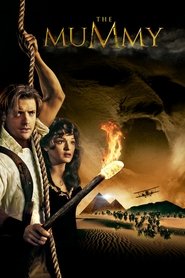
And this shot here done by ILM, it's a combination of live action and matte painting. The whole background, the moon, the sky, a lot of those statues are visual effects. I love this shot. This will be fun. This is Allan Cameron, my production designer at his finest. Alan also did The Jungle Book with me. This sequence was a problematic sequence editorially.
4:00 · jump to transcript →
-
John Berton, the visual effects supervisor, suggested to Steve at one point, like on take 35 or something, that perhaps the Medjai could be rewritten as hapless, which I think probably would have been a good idea. So the reason we cut the earlier intro of the Americans is because it made this poker game important for the bet that they make. But now we're meeting these characters for the first time, so it became a much more important scene, whereas before we'd already seen these guys.
25:12 · jump to transcript →
-
you know, an ILM computer-generated mummy, but, you know, we went with it, and I think the audience doesn't really bump. He's also juiced up a little bit. Are we supposed to be telling our flaws here, Bob, and, like, letting people know that there are times when we make mistakes? I think it's all right. Considering, you know, five months of filmmaking, there are only three mistakes, I think, Bob. Minor little things, nothing. You notice that box, that comes undone pretty easily also. I don't know if you noticed that or not. Just a little kick.
56:57 · jump to transcript →
-
-
-
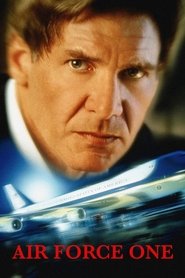
We had, of course, a computer-generated, what you do these days in filmmaking, as you know, a computer-generated Air Force One for very special shots that you could really not do with a plane or with a model. Here's Liesl, you know, that's the daughter. I found her with the help of the casting company. That's Jane Jenkins and Janet Hirshenson. I always work with these two ladies. They are absolutely wonderful, great.
16:09 · jump to transcript →
-
These planes, the F-15s, these are partly computer-generated planes and partly models. If they come very close to the camera, it will be a model. If it's not so close, generally, basically, the first one here, foreground, model. The others, computer-generated. So these elements are then together. In the shot, we just saw our Air Force One as a model, big model, foreground F-15 model, and the other planes are
25:13 · jump to transcript →
-
computer-generated, and the clouds are real, but shot at daytime and filtered down for night. Same here. And the background, you see this, this is really Rickenbacker again. You know, the lights down there, that's all real. So it's amazing what you can do these days, mix all these elements. And if you have some parts of these shots are really reality and moved and so, then the illusion is just perfect.
25:42 · jump to transcript →
-
-
multi · 2h 24m 7 mentions
Alex Thomson, Terry Rawlings, Alec Gillis, Tom Woodruff Jr. + 3
-
My name is Alec Gillis. I am the co-designer of the creature effects for Alien³ of Amalgamated Dynamics Incorporated. I'm Tom Woodruff, Jr. I'm Alec's partner in Amalgamated Dynamics, co-creator of the Alien effects, and I was in the rubber monster suit. I'm Richard Edlund. I was the visual-effects supervisor on the show. It's the last movie we ever did totally photochemically, actually. Right. This was on the cusp of the digital age. We did have some digital elements. When the alien's head cracks at the end it was a digital shot. That was the only one. Styrofoam floor. - Yes. We had a better Styrofoam floor for that where we'd covered it with metallic dust. It made a more interesting effect. I've always been a little self-conscious of those Styrofoam floors. Plus, that alien juice is pretty mean stuff. I think it's interesting that you can fly through space in a Styrofoam ship! Hey, there's a glimpse... Was that it? That scan, that was a fun scan. There it is - the multilayered sculpture. Are those your star fields too, Richard? - Yeah. I'm Alex Thomson. I was the director of photography on this movie, Alien³. I actually got involved because the original cameraman was Jordan Cronenweth, who did Blade Runner for Ridley Scott, beautifully in my opinion. But Jordan became ill in the first four days of shooting and had to leave the production. I was asked to take over, and I was honored to be able to try and match to his lighting. All I heard, and I wouldn't know if there was any other reason whatsoever, was the fact that Jordan wasn't well. We knew he had got Parkinson's. We knew he had that. You could see he wasn't a fit man obviously when I used to go and talk to him. He was a great character. I liked him very much. I knew him from Blade Runner. I'd met him on Altered States, too, cos Stuart cut that, didn't he? But I'm convinced it was the fact that he wasn't well enough to continue. I know it was a sad loss, but at the same time, I love Alex's work. I did Legend with him. I did Legend with him. Yeah, and I love him anyway. And I did The Saint with him. I love this shot, and I love the fact that it's a model. I just still feel that these miniatures have a quality that CGI spaceships just don't have. Do you think that, Richard, or is that just me? Am I being old-fashioned? Well, it can and it can't. I mean, it depends. On Air Force One I would never have made any models now. It depends on the kind of stuff. This is obviously special effects. These are models shot by the second unit, by Tony Spratling, up in the north of England.
0:59 · jump to transcript →
-
Yeah, there's that... There's all those cuts now. So now we're back into footage that was shot with the creature in LA. And this was actually... We built what we called a teenage alien and retrofitted it to use in this scene. Originally we built what we call a "Bambi-burster." That's the teenage alien which spits acid at one of the guys in the vent shaft and served us double duty here. And we built a little rod-puppeted version. This is a CGI version, which we had the benefit of the CGI in the 21st century here, which we didn't really. We built a rod-puppeted version, and we also tried a little dog in a costume. We tried a whippet in a costume. And he did pretty good at the audition. Then once you got him in front of the camera with all the rubber on, he kind of froze up a little bit. It was pretty funny. He was a nervous little doggy. And once we got him in situ, with all those frightening chickens around him in their cages, he kind of seized up and couldn't perform. But we built a Bambi-burster rod puppet, which was a one-to-one scale rod puppet, which had some mechanical stuff in it. I think we may have shot some elements with it. But it was never comped, it was never completed. The decision came down that they were going to go... Use the Rottweiler instead. And then when we got back to LA, we started building Rottweilers and mechanical dog parts and stuff like that for the scene.
29:33 · jump to transcript →
-
There's a miniature shot of the alien running up, then it cuts to a close-up of Tom. We did do a fake head of Charles Dance - it's coming up here in a minute - where the creature punches a hole in his head. And we had to do a head cast of Charles in an extreme expression. And as I recall, he was great about it. He's actually, for as serious as this character is, he was a very jovial guy. Yeah, I guess it was like an animatronic head, dripping. In order to do this movie, we built a complete silent motion-control dolly that could go at running speed, which we wound up never needing to use. You could actually run with it at high speed and it would repeat, and it was quiet enough to shoot sound. Of course, when we got to England to set it up for the first shot, nothing worked. We were tearing our hair out and found out the system wasn't grounded because they had run an extension cord into the hallway. But then, once we found that, we didn't have any problems. But that was in order to enable us to shoot scenes with pans and tilts, and then scale those moves to shoot the scenes back at the studio with a rod-puppet alien one-third scale... with a moving camera, so it wouldn't skate around in the scene. I think this rod-puppet technique is very interesting. I think it still has some validity now, even in the digital era. Yeah. - And probably now, I don't know... Well, I guess you'd still have to do the motion-control stuff to match moves. Or track it now. If you're gonna do a CG character, you can track it. But you wouldn't be able to track like that with a miniature puppet, would you? You'd have to use motion control. It's a real mechanical lollapalooza. But there is a nice presence to it that really looks like a physical thing. It gets around some of the difficult issues of CGI, in that the lighting is playing on it. And the director can direct it. Fincher could come by and direct the puppet. Five guys, you know, operating this character against bluescreen, there were some pretty bizarre mountains of equipment to get these shots working. And flags, and stands, and wires everywhere. And flags, and stands, and wires everywhere.
1:04:35 · jump to transcript →
-
-
-
Stephen Prince
is memorably evoked by the visual effects provided by Industrial Light and Magic, the company that George Lucas founded in 1975, and which helped lead Hollywood into the digital era. Kurosawa holds the shot there on the replica of the house that he grew up in. These brightly colored flowers that the I character walks through, and then in the reverse angle shot coming up, the rainbow and the mountains,
11:35 · jump to transcript →
-
Stephen Prince
provide an epic context for this iteration of what has always been the essential Kurosawa vision, of the self cast upon a lonely voyage of discovery. It's a very nice shot. Kurosawa uses visual effects very tastefully. The knife that he carries bears suggestions of suicide, lingering here as a possibility. Kurosawa's brother Heigo killed himself with a knife.
12:05 · jump to transcript →
-
Stephen Prince
And although the movie in release carried analog Dolby tracks, Kurosawa took advantage of the enhanced signal processing and noise reduction that Dolby had developed as a means of keeping analog sound viable as the digital era was dawning. The audio in Dreams has a much greater dynamic range than the older optical tracks did, and you can hear discrete sounds with a clarity unlike the mush and noise that you had on optical tracks when they carried too much audio information.
33:21 · jump to transcript →
-
-
-
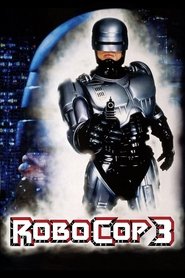
I mean, this always unnerved the – especially later on. It just unnerved the – It's immaculate. It's just – I mean, no CGI could be better than that. And I'm really – you know, there's a lot of problems I have with the screenplay. I'm really not proud of a lot of the choices. But one of them is we don't know – spoiler alert – we don't know he's a robot yet. No. And when we find out he is, it actually kind of works because of that.
54:01 · jump to transcript →
-
They did the Delta City commercial at the very beginning of the film, too. PDI was an effects house, and then they went on to start doing animation, CGI animation, and essentially became DreamWorks animation. And there's the morphing. Yeah, so this was new at the time. Right, right. And now you can do it on your laptop. I think you can do it on your iPhone.
57:45 · jump to transcript →
-
We would have digitally put in the sparks at the bottom of the gun so you knew that the bullets were keeping it aloft. But we did that practically. Everything in this movie is analog. It's all practical. So you weren't utilizing any CGI really at this point? Except for the stuff that... The morph stuff. Yeah. And Delta City at the beginning. This is a terrific stunt coming up. Watch this.
1:09:46 · jump to transcript →
-
-
-
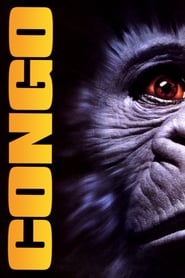
do what you tell them all the time. And all these people that she doesn't know are, it's going to be too much for her. That's not possible. And so that, and a couple of other things were like, this just isn't possible to really actually make now. And, um, cause he had tried not to hinder himself when he was writing, just like anything you come up with. He's, you know, he said, I wrote a hundred gorillas. Where am I going to get a hundred gorillas? You know? And so he, he had lots of things. They didn't have digital effects then. So, um,
36:51 · jump to transcript →
-
side of it. You know, the visual effects supervisor after they shot all of this. And he had won the Oscar for Cocoon and was nominated for Backdraft. One of the things you're going to see here, too, that Frank Marshall had asked for is if they could raise the roof on the mine to make it look a little taller. I mean, sound stages are pretty huge, but then you have lights and you have different things. And it was already just a huge, intricate set. So...
1:21:09 · jump to transcript →
-
And they did some of the usual stuff of just shaking the camera for the earthquake. Right. I mean, I think... And weren't you telling me at one point, like, the actual set was kind of built on, I don't know, gimbals or something that would make it kind of... Yeah, like air compressors or something. Yeah, yeah. So that it would kind of rock, you know, back and forth like a... Not a bounce house, but a lowrider maybe. Yeah. Yeah. So it's one of those cases where it's, you know, it's like a combination of the practical stuff and the digital. You know, again, you've talked about how this...
1:23:30 · jump to transcript →
-
-
multi · 1h 54m 4 mentions
Jean-Pierre Jeunet, Hervé Schneid, Alec Gillis, Tom Woodruff Jr. + 5
-
Hello. My name is Jean-Pierre Jeunet. I'm the director of Alien Resurrection. Hi. I'm Dominique Pinon. I played Vriess, the guy on the wheelchair. And I'm Hervé Schneid, the editor. My name is Sylvain. I was a storyboard artist and a concept artist on Alien Resurrection. This was designed, composed, shot almost entirely and never used, because we couldn't complete it for budgetary reasons. But initially, in the first opening of the film, we looked at the mouth. The mouth of an insect. Except we didn't know it was an insect. We mistake it for an alien creature. And the camera backs out and actually reveals a little bug. And in one camera move, as it keeps on backing up, we see a finger crushing that insect and sticking the insect into a straw. And splattering that insect against the glass as we recede... And we go all the way back into outer space and actually reveal a giant spaceship, which is where the story begins. I remember especially about the main credit. When I arrived in LA, I was waiting for an offer from the studio. You can imagine - a poor French guy like me, I was very scared. I was in a hotel, waiting for the answer, and I didn't sleep because of jet lag and because I was scared. I thought "OK. To prove to myself I am able to make this film, I have to find a good idea for the main credit, for the first shot." Immediately, I found the story of the guy alone in a big spaceship, with the milk shake and the pipe. He scratches insects, he puts them in the pipe, he blows the insect on the camera. I was very happy about this idea. I told this idea to the studio and they were happy, too. We began to work on it, but it was very very very expensive. One day, my line producer told me, if you could find another idea, because we have not enough money to finish this idea. This is a secret - I was pretty relieved. In fact, I think it was a little bit too funny for the beginning of Alien. I didn't say anything to the people. I said "You want to cut my idea?!" But, in fact, I was very happy, and I prefer the credit we have now. This is a model, and at this time, we hesitated about to use CGI or models for the spaceships. And Pitof preferred to use models. Maybe it was one of the last films with spaceship in model. That was very impressive. I came once on the set while you shot the models, and it was really big. - Yeah. Not really big. It's never enough big. And Pitof made a lot of parts, and he mixed the different parts.
0:03 · jump to transcript →
-
Dominique Pinon plays in all my films, and for me he is the perfect actor. He's so inventive, so nice, so perfect. It was amazing for me to bring this actor to the States, because Sigourney Weaver and the studio asked me to have Dominique Pinon. I told this story a lot of times, Dominique, but it's true: I didn't hire you, the studio wanted to work with you. I was very happy, obviously, but, I remember, when Sigourney wanted to call you by phone, and we called you in Paris and you didn't believe me. You said... "No. It's a joke." I remember very well that call, actually. The studio were a little bit worried about Ron Perlman. They appreciated the guy, but they weren't sure it was the right guy for the character. By luck, it was the first day of shooting and they saw the dailies. They came to see me on the stage and they told me "You're right. He is perfect." The set is basically what we call the Betty cargo bay, which is just a lovely, beautiful industrial piece of design. All the rust in the back of it. It's hard to convey just how incredible it was in real life, when you walk through it. It was just absolutely staggeringly detailed and gorgeous. Pitof, none of the ships were digital. That's all models? Pitof, none of the ships were digital. That's all models? I would like to make more digital stuff, but Nigel really wanted to have the real texture. I guess he was right because... They're beautiful. They are gorgeous. Is that background digital? Or was that a model also? The background is a mix with the digital and models. We had a model, but the size had been enhanced in postproduction. Also, it's a lot of layers of small things to make the texture real. So it's not just shooting the miniature as it is. There's a lot of work after that - to have the texture, to get the smoke, to give the depth, and all these things. Is shooting miniatures more time-consuming than doing it digitally? It was more efficient to shoot miniatures because the technology of digi was not as flexible as today. The idea about this film is that these guys are a bunch of hoodilums that are smuggling weapons on board a military ship. The thought was: they'll get strip-searched, and they have to have weapons at some point, so Jean-Pierre's take was that the only way you could bring weapons is by hiding them in plain sight. The two places where he thought you could hide them was a Thermos - which somebody is carrying, which turns out to be a gun - and the wheelchair. The thing about the wheelchair was designing it as a breakaway piece of technology, where every piece could reassemble itself into a weapon. Although the idea's really good, at some point the focus on that was a bit lost - you see all the characters breaking out weapons. I'm not sure how clear it is that they're recombining the wheelchair. But that's the way it was designed, as you could actually take pieces of it apart and snap them into weapons when the scene demanded it at some point. That little wheelchair was built on a structure which we called a mule, which is a six-wheeled radio-controlled robot which is a six-wheeled radio-controlled robot that's designed to lift enormous pieces of equipment in industrial settings. That mule was available to us, so Fox said: "If you can design the wheelchair around this, it'll save us money." So that's what we did.
17:58 · jump to transcript →
-
I remember, I had to fight against the studio to get the smoke on the knife, because it wasn't on the budget. Here, same thing, it's for real. Sigourney gets it through the hand. No. Of course it's a cheat. On one side it's a retractable blade and on the other side it's a real one. A CG blade. So we CG-ed the second part of the blade. And the smoke is CGI? - The smoke is CGI, too. Lot of times, those little effects - like that - are the ones that have the most effect. Yeah, because it seems to be normal. It would be possible to have a fake hand... They talked to us about that, and it was impractical and too costly, because to give the hand enough life so it didn't look artificial was a lot of work. And to make it move, then stop... Too limiting in your shot. That was a great approach. On the shooting, it didn't take a longer time than just to play it. So it was very cost-effective. Tom, didn't you get together with Sigourney about the style of her movements? Yeah, right, because of her alien heritage now as a clone. We talked a little bit about movements that she saw me doing in the alien suit. We tried to find a way to integrate some of those into her performance. There's some later where she's swimming, there were some movements we worked out. Also when she escapes from her cell, there's an element where we were figuring out: "What is it about the alien when it's retreating that's the most noticeable feature?" The tail. And without a tail, we ended up doing something where she kicks her leg out as she's moving into the chamber and escaping from her cell. In the preproduction, I did some research for Jean-Pierre on animals, to find out the way for the alien to move, to find a halfway between feline and insects. So we did a lot of research on footage, to have an idea of this hybrid between feline and insect. It was cool. I met Ron Perlman in The City of Lost Children - he played One. I love him. I can't wait to work with him again. This isn't a modest thing to say, but I like the way the guns look in the film. Jean-Pierre's idea was: he'd seen the guns get bigger - especially in the second film - and he thought it can get quite absurd if we go too far, so it'd be a nice idea to shrink the sizes again and have guns that are more about efficiency. He wanted guns that snapped when they fired. He wanted to feel and hear every bullet as it ricocheted and hit the floor. He wanted something that was a bit more credible than the giant "Rambo" guns. So we designed with that in mind. It was something that felt very basic.
35:17 · jump to transcript →
-
-
-
breakdown on the visual effects with Richard Edlund but the City Fantastic article had basically spoiled the movie they'd even reviewed basically the rough cut of it and talked about and they mentioned Hicks wasn't in it and all this stuff and people were furious that this magazine had basically spoiled it for everyone but yeah it's interesting reading it now because you know in hindsight what happens but at the time it must have been
24:28 · jump to transcript →
-
the trailer shot isn't it where just you know the bitch is back and you see you know it was obviously recognizes that she's got an alien inside of her um but people it's so funny like when i've posted stuff on socials about alien 3 people say oh the cgi in the film is terrible like there isn't a cgi there's actually one cg shot yeah you see the the skull go like crack about to break because of the from hot to cold whatever
1:05:02 · jump to transcript →
-
It's funny, isn't it? The Alien movies are such a great example of a series where all the ideas came from different places. That... When it jumps out there, the molten stuff looked like it was CG. But we're only told it's only this bit coming up when they drop the sprinklers, isn't it? Yeah, that's what they claim. That's it. But I never believe them when they say there's no VFX, there's no CG. It's in Cinefix they talk about that. There's a great book, actually, on Cinefix put all the Alien...
2:09:39 · jump to transcript →
-
-
-
At a party, after a few drinks, I told him I'm gonna direct a movie and you're gonna do the music and he said, sure, how many times have I heard that? And by next year, I made the movie and I called Kevin and I think his music is terrific and he still works and does great stuff. And those gunshots were not CGI as we do now. Well, there's Michael Prescott, my producing partner who came with me with the script and David Price.
7:46 · jump to transcript →
-
who I'm still friends with, who directed Children of the Corn 2. And matter of fact, I'm gonna have a barbecue at his house tonight. Excellent. And there's, I know that guy. I know that guy as well. So what I was gonna say, we actually did practical gunshots with blanks, and the last movie I did, we don't do that anymore. It's all CGI. So I miss being able to really shoot a blank.
8:12 · jump to transcript →
-
they'll say, no, he never did. But yeah, listen, the bottom line is they obviously had the power and they did let me keep it in. And here's Warwick going through the disintegration prosthetic makeup effects. There's the puppet stage. Yes. And the special effects for its day were good. But remember, this was 91, 92, and they didn't have the great CGI that we do now. Right. The optical effects were doing what they could. But they were very, very good for its day.
1:26:00 · jump to transcript →
-
-
-
actual computer generated effect so um this is uh based this was inspired by a kurt vonnegut novel where uh i think it was a sirens of titan where there's a substance called ice ice nine that that's cat's cradle buddy okay it's cat's cradle okay don't try to try not don't try to out vonnegut me stay in your lane buddy
9:54 · jump to transcript →
-
the kind of computer-generated action films, you can really see the difference in terms of the practical effects and the fact that that's really happening in front of the camera. But that explosion is computer, right? No, not at all. Oh, wow. No, the exterior is a fireball that was comped in in film, and the interior was all done practical. Oh, wow. This is a very abbreviated epilogue.
1:48:32 · jump to transcript →
-
-
-
But that was nothing with, I mean, visual effects, the cost of visual effects. Yeah, yeah, yeah, for what you got, no. I mean, because we did have to cut out a lot of things that we wanted to do. And now I look at things and think, oh, I can see, I'm just inside the tank and all the ad-libs you did, Lori, that were so brilliant. I was just a goofball. Yeah, but what joy is that?
27:22 · jump to transcript →
-
I had to use all my superpowers and all my meditation and all that shit because that was real. That wasn't CGI, you know? Yeah, exactly. Now, there was some tough stuff in that piece. Yeah. In that tube bit, yeah. I'm in the baseball bat bag. I'm going in the thing. That was horrible. Yeah, that was not fun.
33:46 · jump to transcript →
-
-
-
-
-
-




Related topics
Other topics that frequently come up in the same commentaries.