Topics / Editing & post
The editor
96 commentaries in the archive discuss this, with 231 total mentions and 51 sampled passages on this page.
Shape this trail
Narrow the evidence by film decade or commentary type without losing the topic's full archive context.
By decade
Across the archive
ranked by mentions · click any passage for the moment in the transcript
-
-
Tom Hooper
I mean, I have three cameras running on the song. The original master I planned was a slow track in from a medium shot to a close-up over the length of the song. And for a long time in the edit, we kept this tracking shot in. And I remember one day Eddie Redmayne came in, who's been a friend ever since Elizabeth I, when we worked together, and I showed him I Dreamed a Dream, and he was knocked out, but he said, why aren't we using the big close-up that he'd seen in the teaser trailer? And Melanie, my editor, tried the big close-up in, and...
28:52 · jump to transcript →
-
Tom Hooper
Interestingly, our original idea from rehearsal was that as she died, she would see Javert coming down, and so she would have a kind of tragic death where she died, realizing that her daughter was perhaps not safe. And I remember Cameron Mackintosh in the edit saying something very interesting about how we should allow her to have a peaceful death, a beautiful death. And I realized there was an echo between the death of Valjean and the death of Fantine, that this idea that
43:06 · jump to transcript →
-
Tom Hooper
you get purer and purer sound. So you introduce the rain at the beginning and with the movement she makes towards this building, it gets quieter and the sound gets purer. Again, this is an example where I didn't necessarily, you know, I wasn't totally committed from the outset in playing it in one. But we just discovered in the edit that this song had most emotion when you played it all on Eponine's close up rather than cutting out wide. Again, it's because when you go wide, a bit like in I Dreamed a Dream, you're not,
1:29:55 · jump to transcript →
-
-
director · 2h 10m 3 mentions
Mission: Impossible - Rogue Nation (2015)
Tom Cruise, Christopher McQuarrie
-
And you remember, right the last night of the mix, we went in and I flew in, I was shooting, we flew in, we went through the mix and I put in the... Yeah, we were like, there's something else, you were like, it needs something, what is it? And you said, get a microphone, I got it. And so, yeah, at 11.30 at night, you were making all these noises in the mic and 15 minutes later, the editor had dropped them in, did an amazing job. Amazing.
1:08:16 · jump to transcript →
-
This guy did an amazing job. I looked at him, great sound editor. And it was so disturbing the first time we heard it. We knew that was going to work. All of these little bubbles, everything you're seeing in the water, all of that is added after the fact because the water is so clear. Yeah.
1:08:41 · jump to transcript →
-
And this, you know, Eddie with the sound design, bringing the sound out, Eddie Hamilton, our editor, and pushing this to its absolute limit, that every time I watch it, I can't quite predict where it's all gonna kick in again. And this kind of gun plays a lot of fun, too, what Wade did with that. It's also, you said, look, I want you blocking her. Yes, you're blocking her, and then she's, and you're training the weapon, and it becomes, again, hand in glove. It's all behavior, and they all, each one knows what the other one is doing.
1:54:46 · jump to transcript →
-
-
-
Nia DaCosta
Be back soon. So in the movie, I really want to have moments where you see Jimmy Crystal looking like he idiot that he is, because that's how I feel about these kinds of leaders, like... Usually, like, with a cult leader or, you know, or a garbage, like, president or prime minister, whatever, the way that they get people to follow them isn't necessarily that they're intelligent in any way, shape or form. It's, like, the charisma, but also it's power. And I think... when you look at those people outside of that context, you also see how silly they are. And so there are moments in the movie where, even though he has a lot of power over these kids, I also wanted to show that he's a silly, ridiculous human being as well. So there are moments in here where you see a bit of that slip, and, also, he's funny, so you can laugh at him and with him a bit. So that was really important to me. But this is even more important. This... This, we did in the edit, which is having this moment where Samson's brain is rearranging. I mean, I think what Alex wrote was, like, "Samson's brain is rearranging," and we were like, "Okay, what's that gonna be?" And Jake Roberts, who's my amazing editor, and I, found this way of... showing that. And I love this scene. This was something that we... I did this in one way initially and during the shoot, which again made... Jack, as Jimmy Crystal, look a bit silly and ridiculous. However, my producer, Peter Rice, he was like, "I really feel like we should... "we need to see him in the temple, actually." And I was like, "You're absolutely right." So, we shot this, which I really love.
59:08 · jump to transcript →
-
Nia DaCosta
You must stand. His little smile here. Just amazing performances in this film, and this scene in particular, I just find so... wonderful. Loved shooting it. And also my editor, because we only had Alfie for three hours a night we had to shoot, like, really out of order. SO, like, I think, on the second day we were shooting this, my editor emailed me, and he was like, "Bro, where is the coverage of the scene?" I was like, "What do you mean?" He's like, "We don't have this or this..." And it was really great because he was just like... I was like, "That's because we don't have Alfie. "So we had to wait for Alfie." But also, it was really helpful just to, like, keep us all on the same page and get a good road map for making sure we get everything we need 'cause it's a complicated scene. It's a long scene, and a lot has to happen. And, you know, when you have one of your actors who can't be there the whole time, you know, it just makes it trickier. So, having a shot list, first of all, helps, but also having an editor who is so on top of it and who is so brilliant. Also, any director will say, "This helps bring everything together."
1:29:04 · jump to transcript →
-
Nia DaCosta
You have a bit of a score coming in here. Hildur Guénadottir and her music editor, Jason Ruder, who's amazing, just knocked it out of the park, I think, with this score. It's weird. It's different. But then also when the theme, which will kick in again in a few minutes, it's like this mix of, like, brutal and disturbing, but also beautiful. And I just love what they did and what we got to with this.
1:30:23 · jump to transcript →
-
-
-
Hi, my name is Jonathan Rosenbaum. I'm the author of Discovering Orson Welles and the editor of both This Is Orson Welles and two Orson Welles unrealized scripts, The Big Brass Ring and The Cradle Will Rock. And I'm James Naremore. I wrote a book called The Magic World of Orson Welles, and I edited a volume of essays called Orson Welles' Citizen Kane.
0:15 · jump to transcript →
-
John Houseman was a very important figure for Welles during the 30s and early 40s because he basically was the story editor on the radio shows, the partner in the theatrical productions, and in a way what he did on Citizen Kane was carry over the role of story editor in working with Herman Mankiewicz.
50:47 · jump to transcript →
-
-
-
Francis Ford Coppola
you know, there was something to what we were doing after all. I know Walter Murch, the editor in Sound, although he was not an editor at this point, he was more in Sound. I think The Conversation was the first film Walter
1:28:20 · jump to transcript →
-
Francis Ford Coppola
long movie with a bunch of guys sitting around in chairs talking. I remember the assistant editor who was rewinding the reel said, yeah, I guess you're right. But, you know, every film kind of creates its own identity and it's possible to rivet an audience even
2:49:29 · jump to transcript →
-
-
-
Nick Pinkerton
The car, incidentally, is a 1973 Buick Riviera. The cutter who is making this all come together so well is Clint's usual guy during this period, whose career goes back to the late 30s, who at this point had very recently handled the race scenes in the 1971 Le Mans with Steve McQueen. The first Eastwood film that Webster cut was 1972's Joe Kidd,
27:04 · jump to transcript →
-
Nick Pinkerton
had gone to Michigan State University, where he graduated with a BA in graphic arts and was the art director and managing editor of the school humor magazine Spartan. From there, Cimino proceeds on to Yale, where he picks up a BFA and MFA in painting. Interesting, because there are not a great, great number of filmmakers who come to cinema through painting. Kathryn Bigelow immediately comes to mind. I'm sure there are others. Um...
37:02 · jump to transcript →
-
-
-
Peter Greenaway
and the other extreme, which is to do with what Picasso would say, painting what you imagine rather than what you see. I would have found, as I suspect many other people would be, this is a rather insular, elitist academic persuasion, but I found it of sufficient interest to wish to somehow want to debate it in the wider circle, and since I had no intention of continuing to be a documentary filmmaker, film editor,
3:24 · jump to transcript →
-
Peter Greenaway
and I'm determined to confront that eventuality well protected. And who will accuse you? As a filmmaker and as a film editor, in the years before this film was manufactured, I had developed for myself, I suppose, a personal style which often consisted of massive over-editing. So often the shots were extremely short and the whole scenic appearance of the manufacturer of the film would be very quick and frenetic. But I was learning to
1:06:11 · jump to transcript →
-
-
director · 1h 30m 2 mentions
A Nightmare on Elm Street (1984)
Wes Craven, Heather Langenkamp, John Saxon, Jacques Haitkin
-
And the other person that should be mentioned here is Rick Shaine, the editor, who did a magnificent job cutting this film. Has there been any background in the text about Freddy Krueger at this point? Uh, no. No. What do you mean, in the text? I mean, who he was and...
27:21 · jump to transcript →
-
to harass us, not to be in touch with it. What was their response after they saw the first cut that you did? The first cut, the editor's cut, when I first arrived, they showed it to me and Bob turned around and looked at me and says, well, do you think we have a film here at all? I'll never forget that. That's a nice vote of confidence. And then he told me that he wanted a complete cut in two weeks. I think we ultimately did it in five weeks.
1:18:56 · jump to transcript →
-
-
director · 1h 31m 2 mentions
Alex Cox, Michael Nesmith, Victoria Thomas, Sy Richardson + 2
-
and funnier looking Rodriguez brother. The one with the hairnet. Right. Fox Harris, who is the first character that we see in the film. Is no longer with us. Is no longer with us. But I met Fox Harris when I and Nancy Richardson, the editor, were guards or caretakers at the actor's studio in Los Angeles.
0:46 · jump to transcript →
-
And Dennis Dolan, who was the editor, said, I really think you've got to pay off the death of Archie because otherwise there's something missing here. And it was really Dennis that came up with the idea that we would do this whole new ending to this scene where they open the trunk the whole way and Archie gets it. Yeah, well, at this point you were searching for this ending and you kind of didn't know what you were shooting, so it was all starting to get magic. You can almost see the stars. Oh, shut up.
58:36 · jump to transcript →
-
-
-
In fact, even the editing I had no control over. I wasn't allowed near the editing rooms. And I didn't know what I got until I got it. Right, that's very surprising. Why was that? Why were you not invited to the edit? Why were you not part of the edit? Well, the editor said, you know, you don't need to be here, George. On Rawhead, I insisted on being in the editing room.
1:23:03 · jump to transcript →
-
But yeah, so there was lots of things I had no control over. I presume the editor himself would not have been the person making the decision that you should be there. No, he was. I think it was him. Oh, was it? It wasn't the producers, I don't think. He said, I just want to get on with it, George, and deliver to you when it's finished. Right. I mean, did you have notes at the end?
1:23:26 · jump to transcript →
-
-
-
Eleanor Bergstein
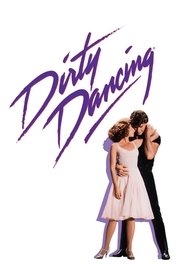
That absolutely happened, the crashing of the head. That was totally accidental, and we left it in. Now this, we had a wonderful editor, Peter Frank, but we were in such a short schedule, but we also had Girish Bhargava doing digital editing of our dance things, and it was Girish Bhargava who did this montage and did the finale. Girish Bhargava had worked with Emile on other dance things and did a brilliant, wonderful job on it, and I'll show you in a minute.
37:26 · jump to transcript →
-
Eleanor Bergstein
did this fabulous job for us and we changed it because he was a video editor and Peter was editing on film we had to change it back into film and it was a mathematical conversion and Emile and I kept saying it's wrong and people kept saying to us no no the numbers work it's right and we knew in our hearts that it was wrong and finally we got to this scene where Patrick jumped down and jumped up again without his feet hitting the floor
1:32:36 · jump to transcript →
-
-
-
Gary Goddard
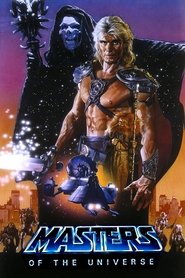
Ann Coates, editor of many films, Lawrence of Arabia among them. Richard Edlund had recently left the Lucas organization. We were able to bring him on to handle the effects. Bill Stout came on board as a production designer and did a fantastic job.
2:12 · jump to transcript →
-
Gary Goddard
You didn't have to do that. It isn't even in the box. She had a great quality about her, and she did a great job. Shooting this whole movie, by the way, it was great. This whole company, Courtney and Chelsea and Ann Coates, the editor, it was more like a family, and it was almost like a wonderful kind of magical summer that we spent together making this movie. I think we all had a great time. It was a lot of work, and it was a lot of long nights. Half this movie was night shoots, which we'll get into later.
20:47 · jump to transcript →
-
-
-
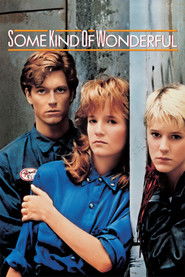
This montage, remember, was one of the first things Seth Flaum, who became an editor that I worked with for the rest of my movies, cut. Bud Smith was the lead editor, a famous editor, who did The Exorcist and a lot of big movies with Billy Friedkin, was the lead editor on this movie, and, you know, just an absolute genius, as far as I'm concerned. Seth was an apprentice or an assistant, and he and I would squirrel away working on things like this montage, and I thought he did such a good job, that I ended up doing the next five, six movies with him after this.
1:00:30 · jump to transcript →
-
Montages are funny, 'cause when you get them cut together, lots of times, they save your butt. They look like they're designed, but... At least, Seth, my editor, in this case, saved my butt, because it wasn't designed as well as it looks.
1:01:20 · jump to transcript →
-
-
-
Lachlan Craig. Now, I've often thought since making it, and in the edit, I thought, how am I going to get time out of this? And I figured I didn't need this scene. As all this talk goes on about, you know, doing this and doing that and, you know, how he picks the fight and all this kind of stuff, when it would have been really simple to just walk or ride up to the guy and just nail him over the head with a mace and say, okay, the fight's picked, and then ride off.
1:19:58 · jump to transcript →
-
I mean, I was lucky, yes, but, and fortunate, but to have an editor as good as Steve Rosenblum was to really bring his own thing to it. I mean, he took what I gave him and he managed to sort of make it better, you know, which is, when it comes right down to it, the edit's just the final rewrite. And he's a master of it.
2:03:35 · jump to transcript →
-
-
-
It is, and the whole idea about that is make it seamless. That's the goal, so that later on an audience forgets about all kinds of techniques you use to just follow the story and that you get the feeling of reality. That's what I always like, that you have a feeling of reality to it, that it feels real and not, oh, we watch a movie here, look at that, great shot, great effect here, great effect there. You should forget that. You should just go with the story and the drama. Who was your editor?
1:25:37 · jump to transcript →
-
Yeah, I mean, at least I try, because sometimes it's so time-pressed situation in post-production that you have, especially if it's sort of not so important dialogue with smaller parts, you give it to your editor, you know, who does the dialogue. But no, normally I would try to be always there, especially with the big parts and the important stuff, yes. Because it's, you know, it's acting. It's important to be there. That's a big part of post-production. Yes.
1:38:39 · jump to transcript →
-
-
-
Alexander Payne
I used many, many, many of the same people between Citizen Ruth and Election. The production designer, Jane Stewart, and the DP, Jim Glennon, and the editor, Kevin Tent, and the composer, Rolf Kent, and even the same assistant cameraman, and the same prop master, and a lot of the same grips and electricians, and Omaha crew people, a lot of the same actors. In a way, Citizen Ruth was something of a dry run for Election.
13:48 · jump to transcript →
-
Alexander Payne
Her dad's a golfer. Not that it's that important, but something. What happened at the speeches was an unconscienceable travesty. That little bitch Tammy Metzler wanted to make a fool out of me. Well, it wasn't going to work. If all those students who cheered for Tammy Metzler only knew how hard I worked for Carver. Like all the late nights I spent at the yearbook office just to give them their stinking memories. I actually was editor-in-chief of my high school yearbook when I was a senior, so...
45:16 · jump to transcript →
-
-
-
When I'm making the action sequence, I would like to use a different speed and a different camera movement to get a shot. Like if I have three or four cameras, okay, one camera maybe use 120 frames, and the second camera maybe 60 frames. The third camera maybe 30 frames, and the main camera stay on 24 frames. After I get all the shots at all the different speeds, and then I work it out in the cutting room.
46:30 · jump to transcript →
-
how I'm going to work. Until I see the real thing, then I could tell you, you know, okay, oh, this is right, this is wrong, and oh, maybe this is a little too much, you know, or this is not enough, you know. I usually will let the actors do it first, and then I will, okay, I think that is fine, you know, I think it's okay. Usually, I'm not going to say much. I just love whatever they do, you know. Even though the shot wasn't that perfect, even the performance wasn't that enough, but I could work it out in the cutting room.
1:03:33 · jump to transcript →
-
-
-
Jonathan Lynn
Or when we zoomed in or zoomed out, that's the camera moving, and there's a newspaper just spinning on a piece of black velvet. So we were able to do that sequence for about $1,000 instead of vastly more if we'd done it computer-generated or optically. And it was beautifully cut by my editor, Tom Lewis. That was an ad lib by Bruce, which is pretty funny, I thought. He just improvised that on that take, and only that take.
8:20 · jump to transcript →
-
Jonathan Lynn
I lent it to my neighbor. He went fishing. This neighbor. And they are very much in the style of the rest of the film, which is important. Jimmy Jones. We did a number of takes of Matthew nearly falling out of that chair and several when he fell out of it, which were hilarious. But somehow at this point we felt he was less of a klutz and we opted in the cutting room for the shot where Matthew nearly fell out of the chair. At last we thought he's learning something. He doesn't.
1:19:31 · jump to transcript →
-
-
-
One of the greatest compliments that I received after this picture was finished was from the editor, Walter Murch, and legendary Walter Murch, who just being in the same room with him is good enough, but let alone have him cut our movie for her, cut footage that I shot. But anyways, he was taken back by the depth of...
59:33 · jump to transcript →
-
There was a kind of calm that settled over us, and it was a great... Those were great, great, great days. Once we had all the footage, I would say that we were fortunate enough to work with the legendary Walter Murch, and this is an editor whose reputation certainly precedes him, and he...
1:08:20 · jump to transcript →
-
-
-
Noah Baumbach
This to me, this scene where Owen is shining his shoes, was sort of one of the key scenes of the movie of their relationship. He asks him very directly about... why he never sought him out. And there's something in the dynamic between Bill and Owen in real life that's reflected in this. When we were shooting this scene, Owen, who went to military school, he said they had some stuff for him to shine his shoes with, and Owen said, "We always just used a cotton ball." So we said, "Well, get him a cotton ball." And then he sat there, and while we shot this scene for a couple of hours, he shined those shoes the entire time. In between the takes, he was shining the shoes the whole time. He was very carefully shining the shoes, and he was, I feel like, connecting with something from his past. And I love both of them in this scene. This is one scene where I feel like they've really brought more than what was written or anything. And then, of course, we have this correspondence doc which has now arrived. Which, again, I guess it sort of plays into Zissou's need to sort of name things, and classify things, identify things. It's also a correspondence doc, a sort of, you know-- I get fear of intellectualizing too much, but it is sort of almost like a uniform. It's a way to identify yourself in a formal way. Yeah, and in this case, he's renaming him in a way he prefers. Right, it's a way for Zissou to kind of, yeah, exactly, create his idea of Ned. Now, you know, sometimes I feel like maybe we needed to give more time to Jane. There's a backstory for Jane about an editor that she's had an affair with, who's the father of the baby. It's really just barely hinted at. But hopefully it's enough to say, well, here's this mystery of what's going on in her mind.
31:02 · jump to transcript →
-
Noah Baumbach
See, Renzo, this is what I'm talking about... The character of Renzo, the editor, is played by Pawel Wdowczak, who is our sound man. And so he's the sound man on camera during the documentary stuff whenever we see him, and he's also the sound man of the film, which sometimes is very difficult because he's gotta do the sound, but he's also gotta look right. But he's a great-- He's from Poland, and he's worked on all of my films. And he has a wonderful spirit about him. And we wrote Renzo for Pawel to play. Yeah, we always had that idea. I don't know if you wanna talk a little bit about sort of like using... You know, what is it that it does for you as a director to, like, have-- You know, to have people who sort of mean something to you in your life or in your work actually then on-screen in some way. Yes. Well-- Yeah, because sometimes I feel like on a commentary like this, I'm saying, "This guy is Tony Shafrazi." - Right. "This is Isabella Blow." - And it can sound kind of superficial, "These are people I know I put in the movie." But I think that, you know, there's something-- For me, I-- For me, you know, I've worked with virtually the same crew on all my films, many of the same actors, and the parts that we've written are generally, you know, a lot of personal experience that goes into these characters, you know, that's-- Because these movies aren't adapted from something else, they're just made-up, and they come from, you know, our lives, and then other inspirations. But for me, they're also movies about people who are struggling with their relationships and their affection for each other, and they're always all kind of a group of people who are sort of locked together in one way. I feel like they're movies that are also made by a group of friends. As much as they're about a group of friends and their struggles, it's made by a group of friends. And that's why I often like to have people who are familiar, and when they show up on the set, it's like a reunion, you know? And it always means something to me to see those people in the film and to feel them interacting, and often there's a lot of non-actors in the midst with people who have a lot of experience acting. That's sort of what it's about for me. - Yeah, and I think-- I mean, from my experience directing too and doing that, it can-- You know, I think in any way, as a director, that you can kind of emotionally connect yourself to the material, you know, in both very deliberate, literal ways, and also in ways of, you know, just sort of having people you care for in front of the camera or, you know-- Or wearing clothes with colors that mean something to you or whatever. I think any of that can help if you're making films that are kind of personal in any way. - Yeah. One thing we didn't mention 'cause we were talking through the balloon scene, but that is sort of Steve facing very-- When she says that he-- She had a picture of him in the pose that he's in in the balloon, and him dealing directly with the image of himself and the sort of self-made, you know, version-- Self-invented. - Self-invention. Well, that line that he says, "I never saw myself that way," something like that, "I don't see myself that way, I never did." In fact, he meant to, you know. He tried to see himself that way. He made himself that way. He just never bought it. - Right. And-- Yeah, I mean, I think it's... You know, something-- You know, that we were sort of both putting ourselves in the shoes of Jane, who, you know, like us, would have had a picture of one of these guys tacked up over a bed or over a desk, and, you know, but also been thinking, "But these guys exist. These are real people who've got their real lives." And I think we've both had the experience of what it's like to get to know one of your heroes. - Right. And it's always nothing like what you would have imagined. But the one thing I will say is, sometimes, you know-- Something happens, you're disappointed. But generally what happens is, your hero was interesting in one way or another. And you learn about them and, you know... I feel like I wouldn't be disappointed with what Steve Zissou is. I would just feel sympathetic for somebody like that because, you know, he's a character, and he's filled with conflict and contradiction and capable of all kinds of terrible behavior. But there's something unique about him and, you know, I don't know. Right. Well-- And, you know, once you're dealing with this person as an actual person, you know... - Everybody has his reasons. They're gonna be bringing all this other stuff you're not gonna get from watching the specials. Yeah, more or less standard boilerplate, I guess. Here they go to Alistair Hennessey's sea lab, a high-tech facility. All Hennessey's stuff is chrome and black and white as opposed to Zissou's colors. Everything Zissou has is faded and dated and old and doesn't work properly. And Hennessey's stuff is computerized, flat screen, everything. But we built this on the tank in the back lot of Cinecittà. And... And... It was quite an experience working at Cinecittà. The place is sort of steeped in Fellini. Even today, people talk about Fellini every day on this... At this studio. And the stage where we filmed, the boat chopped in half, was Fellini's stage, Stage 5. And somehow, we always felt this movie owed some great debt to Fellini. Yeah. Well, and again, we talked about Fellini and Antonioni, which, you know, in a kind of-- In one way is also the difference between kind of highly artificial, you know, shooting on sets, Cinecittà, and then the Antonioni way, which at least I associate more with, like, shooting on the open water and, you know, the real-world landscape is sort of a character. And Zissou sort of deals and operates in both worlds. Here, again, we use the cross section as when they go up the... Which is a kind of a fun way to play out the scene. Have it be one continuous take. This whole thing is one continuous take, and then there could be-- They have a lot of places to run around, and I feel like the actors always bring something into it when they have this kind of room to play the scene. What I like about this too-- It's sort of like in movies now, cameras go through walls anyway, but they're not sort of acknowledging... You kind of accept it and it doesn't take you out of the reality. And I feel like, you know-- I think it's the same effect, but at the same time, it's really acknowledging that they're on a set. Right.
42:13 · jump to transcript →
-
-
-
Andrew Niccol
Jerry Bruckheimer production values. There's a moment coming up soon where you see this painter on the back of the ship in a wide shot and the paint is digitally added later. There it is. This is where it's a good idea and a bad idea to have Zack Steinberg, editor of the Matrix films, editing your movie because
21:00 · jump to transcript →
-
Andrew Niccol
Jeff Buckley's version of Hallelujah was suggested by our music editor, Julie Pearce. And the scenes were emotional without it, but even more so with it. I've
1:32:43 · jump to transcript →
-
-
multi · 1h 3m 2 mentions
Star Wars: Clone Wars, Volume Two (2005)
Genndy Tartakovsky, Bryan Andrews, Paul Rudish, Darrick Bachman
-
His antics seemed so goofy, so gleeful that his plan seemed so working that it gave us a lot more confidence to play him the way we were playing him in this, based on what George seemed to be doing in the next one. You must control yourselves. You must stop. I will defend myself. Paul Douglas, who's our editor, did all these flashes on the computer and all these light effects.
52:10 · jump to transcript →
-
But if only he would have talked about his feelings to the band. It all stems from his own mistrust in himself. So all this lighting and color was all done with me and the editor. Just to give this more drama. Because it's a big climax sequence and we're literally out of time. Maybe we have two weeks to deliver and we want to do all these different lighting things.
59:24 · jump to transcript →
-
-
director · 1h 37m 2 mentions
John Cameron Mitchell, Justin Vivian Bond, Sook-Yin Lee, Paul Dawson + 1
-
Again, that was stuff that you told us to scream at each other. We thought that it was going to be before the beginning of the scene. This is trying to get us into the mood, and then you used it in the final cut. You never know. You sneaky little thing. You know, Brian Cates, master editor, he used every ounce of common sweat in the editing of this film. So the screams that we used to give you guys energy...
42:33 · jump to transcript →
-
When we were shooting this, PJ watching this for the first time... It was extremely emotional. It was very intense. Marin, our assistant editor, edited it secretly. He was with me that day, and after the tape, I would break down because it was like watching your lover's suicide tape again and again and again, and yet so beautiful. Cyril's classically rendered cacophony
1:23:52 · jump to transcript →
-
-
-
Again, the work of Chris Gill, the editor, is really, really amazing. We found together all these great ideas, because that wasn't exactly in the structure of the original script. Yeah. The parallel editing is improving a lot the tension of this sequence. And... This sequence was really difficult to shoot. It was made in one day. That was the first day of the premiere of Catherine's play.
42:06 · jump to transcript →
-
Aerials are really, really nice. It's the way to see how they escape. And in this moment I think, clearly, we see how these people are attacked by not only the infected - militaries are another menace in this movie. So now they are in the middle between two menaces. Now, the running away, it's so difficult. Two weeks after the final shooting, the editor, Chris Gill, showed us this sequence, basically by him. And it was very close to this thing, and we were, "Wow". "We probably can have a movie here." He was also the editor in the first one, Danny Boyle's film. We mainly worked with most of the crew of the first movie.
1:17:49 · jump to transcript →
-





Related topics
Other topics that frequently come up in the same commentaries.