Topics / Editing & post
The score
117 commentaries in the archive discuss this, with 416 total mentions and 39 sampled passages on this page.
Filter commentaries
Filter this topic by the film's decade or the type of commentary.
By decade
Across the archive
ranked by mentions · click any passage for the moment in the transcript
-
-
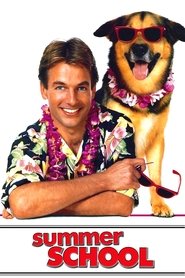
I'm not sure I agree, but it's possible. This man should not be teaching. Proof is right here in these test results. Look for yourself, Mr. Shoop. Passing is 70. Average score here was 63. They failed. That is not true, Mr. Gills. You mean we passed? Well, no, no, not all of you. But that's not what's important here. Larry, what from an 18 to a 51?
1:30:01 · jump to transcript →
-
No previous test score because you ditched every test, but a 38. Honey, that's terrific. We'll get him next time. Kevin. Yeah. From a 48 to a 75. Yeah! I'm back on the team! Yeah! Yeah!
1:30:59 · jump to transcript →
-
-
-
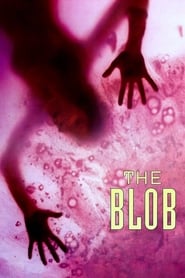
And this is acid, literally acid on a styrofoam countertop. Now, that was a rule. Like, who came up with the rules of the blob? By the way, the use of no score in this is masterful. Because when the reveal hits and the sting happens. There it is. There it is going up over his face. That shot. There's a makeup on him, but all that stretching is the real face. Yeah, there's a whole rig that he's in that's rolling across the floor. Look at that. When she's running up to him, she looks like miniature. Miniature.
26:31 · jump to transcript →
-
I think this is some of Michael Hoenig's best work in the movie. Like at this point, you know, that percussion, like that hits for when the truck comes out. It strengthens Shawnee's part too. He did a great job, our composer. No shortage of cliffhangers at this scene. Everyone's on the edge of their seat. This is really a miniature. This one kind of feels good. This is the water tank that never happened. We had the...
1:25:08 · jump to transcript →
-
-
director · 1h 24m 2 mentions
The Naked Gun: From the Files of Police Squad! (1988)
David Zucker, Robert K. Weiss, Peter Tilden
-
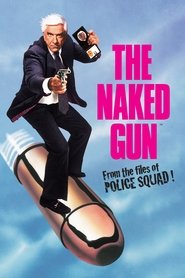
An excellent musical score by Ira Newborn. Yeah. Steering clear of the jokes, yet conveying the appropriate drama of the scene. Oh, that's right. With music, you have to be very careful about comedy. Bob's his agent, too. Available for bar mitzvahs, weddings. Now, I think you see this joke coming a couple of miles ahead of time. For some. There were some people who were surprised. I think you give people a lot of credit. I think they just watched the movie in the moment. Don't you think? Such as we're doing now. Yes, absolutely. Here's...
45:37 · jump to transcript →
-
Oh, women didn't like it. Women didn't like it. We cut the puking down. Women liked it better. Score shot up. We went to the bank. And you took out all the puking. Yeah. There's no puking. It's a very short scene now. It's a short scene. Barely in there. So that was like minutes longer with puking. Way longer. The concept was... Now look at that. Is that not a great rendition of the Queen's face? If you get in a fight in a rendering plant, you're not only in that horrible putrid smell, but you're getting slugged in the stomach.
53:16 · jump to transcript →
-
-
multi · 2h 19m 2 mentions
Martin Scorsese, Nicholas Pileggi, Ray Liotta, Lorraine Bracco + 9
-
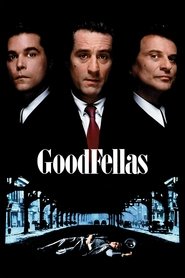
It was a real score.
1:28:25 · jump to transcript →
-
I wanted the soundtrack to the voiceover to become, especially by that point, the last day as a wise guy, by that point to become almost like a piece of music. It even doesn't matter what he's saying anymore. It's just rattling words, rattling words until finally the cop
2:02:44 · jump to transcript →
-
-
-
So as we come to the end here, I guess I should talk a little bit about the composer of this movie, Jerry Goldsmith, who is another one of the top. In fact, maybe I'll go so far as to say maybe the top guy in this movie in terms of his credits and career. I mean, he had one of the most incredible careers of any composer in the history of American movies. I mean, I don't know of anyone except for maybe John Williams. Yeah. I mean, if somebody had to name five.
1:40:31 · jump to transcript →
-
He would be on practically everyone's list of top five. Has almost more classic scores to his name than anybody else. Just to name a few, Planet of the Apes, The Ballad of Cable Hoag, Patton, Chinatown, The Omen. He won an Oscar for that. Alien, Poltergeist, Gremlins, Hoosiers, Total Recall, Basic Instinct, Air Force One, L.A. Confidential. He was a real favorite of Joe Dante's. Dante had him score just about every movie he ever made.
1:40:57 · jump to transcript →
-
-
-
And there's Kenneth Kokin's credit. Yes, our co-producer. We have a neat little group. Kenneth Kokin, our co-producer. Chris and John Ottman, editor and composer. And myself. And we've known each other for a long time. Chris and I went to high school together. And I know Ken and John from film school at USC. San Pedro last night. The idea for the titles... We debated that one forever, as to exactly how to do that.
1:48 · jump to transcript →
-
This is, um... I originally conceived this scene to Tchaikovsky's first piano concerto, but... I remember that. ...knew ultimately that we would go with the score, once the theme, once I found a theme for Keyser. I did everything. Pretty much, that was a hard push. This scene was also
1:27:58 · jump to transcript →
-
-
-
Hi, I'm Peter Hyams. I directed the film and photographed it. I think perhaps the most important part of the opening titles is the music. John Debney is a composer I worked with before, and what we both strove for was to make a signature very early on in the film. I wanted the signature to be religious,
1:33 · jump to transcript →
-
politics or painting or photography thousand years have ended 27. it ends in a football score i was an art student my whole life can't say i ever got very good except i did it a lot and studied it a lot and those painters whose works i loved were the people who used shadow and light and light sources if somebody's interested in cinematography i really think
26:20 · jump to transcript →
-
-
-
Ron Howard
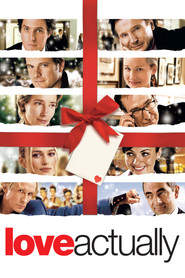
James Horner's score for this film was really a delight. He had a great time working on it. Lots of odd instruments sprinkled into fairly traditional orchestrations.
16:29 · jump to transcript →
-
Ron Howard
But he just seemed to thoroughly enjoy the whole experience. He has such range as a composer. This is the same guy who did Braveheart and Glory and Apollo 13. And yet here, he's completely capturing the spirit of Christmas. Also wrote all the Christmas songs that the Who's sing.
16:51 · jump to transcript →
-
-
director · 2h 10m 2 mentions
Richard Curtis, Hugh Grant, Bill Nighy, Thomas Sangster
-
The music, by the way, is by Craig Armstrong, fantastic Scottish composer, used to be in Massive Attack, used to be in Texas. Moved on. And we had lots of discussions about... We chose him 'cause he does this beautiful, melancholy music, but then of course I kept on wanting perky little tunes like this. And it was a struggle for Craig to be optimistic, but I think I have maybe changed his life by showing him a happy way. I've done that a bit with you, Hugh, haven't I? Yes, you have. You have. You've opened my eyes.
18:47 · jump to transcript →
-
All I want for Christmas Is you Yes! There we go! - Look at him show off. We're rocking now. Brilliant. That took me ages. I kept coming in late all the time. Was that the most complicated bit? Yeah, I think so. I had to come in right on the cue.
1:52:16 · jump to transcript →
-
-
multi · 1h 3m 2 mentions
Star Wars: Clone Wars, Volume Two (2005)
Genndy Tartakovsky, Bryan Andrews, Paul Rudish, Darrick Bachman
-
Mainly the reason for that is because his son was excited about to see how Ki-Adi-Mundi was going to get out of it and how it was going to finish. So we, our first order of business was to settle the score and see, you know, finish the story. Paul, you want to talk about how the face on the gunship came about? Just, you know, thinking about, like, cool World War II P-51s and, you know, Apache helicopters and stuff, and you'd like to put the shark mouth on there and sort of like, let's do a tricked-out paint job for the tricked-out ARC troopers and...
0:33 · jump to transcript →
-
And it just gets to be a lot. And now we've got moving fights through trains, and it just gets really intense. In the meantime, the time is shrinking, the time is shrinking, and the time is shrinking. This is another one of those scenes where the soundtrack really ends up selling it. Yeah, the music is incredible. And just the sound of the trains and everything. Yeah.
45:46 · jump to transcript →
-
-
-
I think John Murphy, the composer, understood very well the use of the intensity and the silence, which I think is one of the... It was the concept with the music, you know? The silence is quite important in the story to deliver the idea of the emptiness. And the intensity of the music, as well, to convey that feeling about the... that the infection is so dangerous and... The combination between the music and the silence builds - moments like this one, for example - moments of pure horror. That was one of the most difficult sequences to work with, what with extras, what with... you know, a very small place. 300... sometimes 400 extras in a garage. Especially because... I say the same, you know? To see the panic and how people are losing control is always difficult because, in a way, you're forcing the extras and the actors to feel something disgusting, which is this kind of panic moment. In these tiny places, we were with two units, because it was really difficult to accomplish... to achieve everything in four days. So in one part, Juan Carlos was shooting these massive sequences, and I was in a very tiny room working on the gory sequences. It was really funny.
47:38 · jump to transcript →
-
It's driving them crazy, because, you know, it's so difficult to see who is infected and who is not infected. And, again, a character taking a difficult decision, which is one of the leitmotifs in the movies... in the movie. A right decision or a wrong decision? But always it's a decision that implies destruction. Yeah, and all these decisions have been taken from the fear. The fear is... Everything is around the fear here. Everybody takes a decision in this... in the presence of the fear, which is moving everything forward. When you're watching the movie you understand why people take these decisions, because I think when we feel this fear in the real life, you're in trouble. It's not a cold decision, it's not a decision taken from a quiet moment. It's... when you're surrounded by something really powerful as the infection. This tune, this theme, was taken - musically - was taken from the first movie. This is a tune we always loved from the first movie, from John Murphy's soundtrack. And we had no time for John's... He had only two weeks to compose the music of the film. This is absolutely amazing to say that, but it's the truth. And we decided to bring this theme again back here in this sequel, and to work it in different ways. For me, it's hypnotical. I... I like the way we use it here. I like the way that John orchestrated and arranged absolutely in a different... It's different from the first one. We are going to hear this tune four times in the movie, in key moments. This is one of them. And that... this sound, this music, reminds that the infection is a building process. The infection is spreading. That's why the music is building up and, you know, getting this kind of big, intense moment with the guitars, which is the best combination with the infection around. On the other hand, the music has a kind of heart, emotional heart, which is telling that this movie is about character, it's about people... who try to survive. Now there's the moment of Doyle's dilemma. Another decision to take, another difficult decision to take, which is to put out of his misery his colleague.
54:07 · jump to transcript →
-
-
-
Rob Cohen
All that stuff you hear in the soundtrack was stuff that I did with sound designer and sound effects editor Bruce Stambler, who's done xXx, The Fast and the Furious, Stealth for me, the wonderfully vivid sound environments that are created around those films. The soundtrack is literally half of your impact in the viewing.
1:20:21 · jump to transcript →
-
Rob Cohen
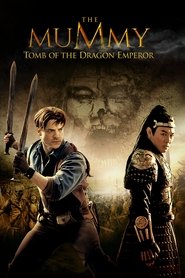
that I've had all my life, as I've explained to you. So when I heard that even though it was Mummy 3, as it was called then, it had the allure of a chance to do an epic fantasy in China. And my friend Randy Edelman, who wrote the score, did a beautiful thematic job and with some additional cues by John Debney, a terrific composer as well.
1:42:59 · jump to transcript →
-
-
-
Len Wiseman
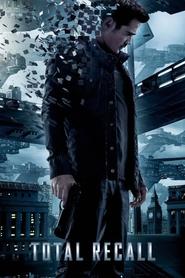
Got a medic down in here. I haven't talked much about music. I've been focused on the director's cut side of it, but Harry Gregson-William had done the score for this, and I really love the combination of the technical side.
1:48:42 · jump to transcript →
-
Len Wiseman
That right there, just to go back, I don't know how many people catch that. He checks her hand again. He just checked. It was just a detail. Actually, that was Colin's idea that I thought was genius. You know, when he finally meets up with Melina, he's just like, just let me check the hand just to see that this is really the person. There's just too many twists and turns going on that he just wants to make sure. And some people catch it, some people don't. But Harry Gregson Williams did the score that the combination of having this, you know, kind of very
1:49:14 · jump to transcript →
-
-
-
Francis Lawrence
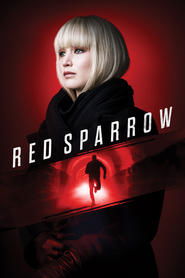
These kind of moments are always sort of fun to me, too, with playing around with editing. When you can sort of play with time a little bit, and make it feel like she might still be in the room as Marta's coming upstairs. But really she's been long gone and quite safe. That was him at the Embassy. It was. Playing hard to get, are you? No substitute for a good old-fashioned blow job in my experience. He's not like that. One of the things I often thought about with this movie, and I think I talked about it a little bit in the beginning, in terms of the screen direction thing, was Hitchcock, right? That this was not an action film. It's a mystery and suspense thriller. So to sort of play around with tension was really fun. You can even hear the Hitchcock reference a little bit in some of the music that James Newton Howard composed for the film. And not particularly in the beginning and the very end, in terms of the big, operatic ballet pieces, but in the more thematic material that's in the body of the movie, you can hear that influence, the Bernard Herrmann influence to the music. This is, I would say, I think it's my sixth movie with James. He started working with me on I Am Legend, and we haven't stopped since, in terms of movies. So he did all the Hunger Games movies with me, and Water for Elephants. And I wanted to bring him on here. He had quite a job. I mean, there's a fair amount of music to it, but it was also just really a unique opportunity for music. If you just look at the opening and the end sequences, the music there is really tricky. We had basically choreographed those ballet pieces, to pieces of The Firebird. But we knew we were never gonna do The Firebird. We were not specifically doing The Firebird. It was just inspired by The Firebird. So we maintained a very specific beats per minute, but the idea was for him to create a solid piece of music for those first I don't know, 10 minutes of the movie, that were gonna carry us through, that were gonna work for the Dominika sections, that were gonna work for the Joel sections, that were gonna have some sort of tension. It's also gonna feel like a ballet, because I wanted it to feel like a dance, and then it was then gonna lead into a ballet that was gonna truly work for both, the dance and also for the pieces of Joel running. And then we sort of do something at the end, and I'll get into that at the end. But the idea that there's almost a mirrored, book-ended dance sequence when she sets her plan into motion at the end, a new kind of ballet score comes up and plays to the end of the movie.
1:04:15 · jump to transcript →
-
Francis Lawrence
I love this idea too with music. That you hear this music that's this kind of dance that is playing into the dance that she's doing, and her plan. But it also kind of works almost as source and not just a score. So when you see the record playing it's like as if he's also listening to the music as well. And I just love that moment of him leaving his door open expecting to be arrested at any moment. And, you know, us getting to play with the expectations of the audience there.
2:05:15 · jump to transcript →
-
-
multi · 1h 25m 2 mentions
Marcel the Shell with Shoes On (2021)
Dean Fleischer Camp, Jenny Slate, Nick Paley
-
Mm-hmm. Generous hole. So are we recording this, or is this what we're going to want? God, I love this music so much. Yeah, yeah. Rich Vreeland is the composer, and he is such a genius, and he's like...
6:36 · jump to transcript →
-
He's incredible at everything that he's made that I've heard, but none of it sounds anything like this, and none of his other work sounds anything like anything previous. For example, he made the music for It Follows, and then I think got a call from the people that were making Stranger Things, and were like, we want you to do the score, because we want it to sound like It Follows. He's like, no thanks. Wow. I know. That's an artist. Cool.
7:05 · jump to transcript →
-
-
-
-
multi · 1h 43m 1 mention
The Taking of Pelham One Two Three (1974)
Nathaniel Thompson, Steve Mitchell
-
-
-
-
director · 1h 30m 1 mention
A Nightmare on Elm Street (1984)
Wes Craven, Heather Langenkamp, John Saxon, Jacques Haitkin
-
director · 1h 29m 1 mention
Jeff Kanew, Robert Carradine, Timothy Busfield, Curtis Armstrong
-





Related topics
Other topics that frequently come up in the same commentaries.