Topics / Editing & post
The score
117 commentaries in the archive discuss this, with 416 total mentions and 64 sampled passages on this page.
Filter commentaries
Filter this topic by the film's decade or the type of commentary.
By decade
Across the archive
ranked by mentions · click any passage for the moment in the transcript
-
-
Paul M. Sammon
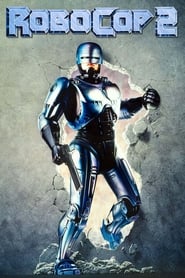
And we finally found a piece I cannot remember where. By the way, the music on RoboCop 2, people have asked, why did not Basil Polidorus do the music for RoboCop 2 when he did such a great score for Robo 1? The answer is quite simple. Because the film came together so quickly, Kirshner really did not have a lot of choices as to the crew members. John Davison was the one who was primarily responsible for putting a lot of the package together.
1:34:43 · jump to transcript →
-
Paul M. Sammon
And Kirshner actually wanted Leonard Rosenman because he had worked with him and he was friends with him. And Rosenman was a very respected composer who had done things like East of Eden and Rebel Without a Cause. So basically what happened was that Leonard was John's concession to Kirsch to allow him to have a creative element of his own. So that's why it wasn't anything against Basil Polidorus.
1:35:13 · jump to transcript →
-
Paul M. Sammon
I just put my hands over my face and I thought, oh my God, a choir? A heavenly choir? But what can I say? One of the things that I wasn't happy with, although the score does work occasionally. Jane Bartleby, who you just saw, by the way, was the reporter at the very end.
1:52:21 · jump to transcript →
-
-
-
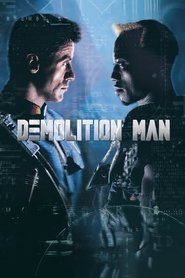
score that makes his features i think this is one of his first i'm wondering if this was his first score because i hired him based on um again there was a lot of resistance to hiring elliot because he was not the conventional choice for this kind of film but i really loved his his music yeah no he was did really interesting work i think he's part of our team of trying to make it a little different than a joel silver movie
48:26 · jump to transcript →
-
Typical Joseph movie. Married to Julie Taymor at the time. Yeah, I think he did a score for her before this movie. You may be wrong. Oh, yeah. And here we go. So this is all disinformed the way I designed the museum so that the sequences could take place. So we had the glass floor, which exposes the old downtown L.A.,
48:55 · jump to transcript →
-
two hours and 37 minutes oh my god really yeah well it's funny that the premiere that last line kind of didn't get the laugh we wanted and joel silver goes what it comes up to me goes what if we put a laugh track at the end no one will know will they just have the audience laughing at the last line we'll just put it on the soundtrack i'm like that's good for premiere but like if it's one person at the 4 30 show in anaheim like you know it's not gonna it's gonna be weird
1:27:40 · jump to transcript →
-
-
-
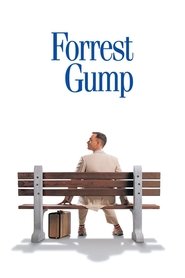
And we said, okay, now how are we going to do this blend of score and records? It came down to this wonderful kind of template, which is, Alan said, I'll underscore all the emotion and the records can play the landscape. And that's what we did with the music. The records play the action, like when Forrest is running and stuff like that. And Alan comes in when...
21:41 · jump to transcript →
-
You know, so, you know, like Vietnam is basically all scored by records until the guys start dying. Then Al starts, you know, sneaking in. And so that's how, you know, that's how we did the movie. And when he's running across America, it's all records. So the records played the landscape as if it was part of set design. And then Alan just played all the emotional underpinning of the characters. We were just out there hanging out there. I just...
22:09 · jump to transcript →
-
I think here's where the score by Alan starts to bring us into a level that just becomes more and more throughout the movie from here on out. The first time I ever watched the movie from beginning to end, I had Alan there. I had Alan there, I had my editor there, I had my assistants there, and I had...
51:17 · jump to transcript →
-
-
-
Kat Ellinger
I come here today not just as a film historian, not just as somebody who generally specialises in exploitation film, especially that from the rape revenge genre. I also come here today as a survivor of rape. Baise-moi on that score is a film that is highly personal to me. It says so much, not just about rape, but
0:21 · jump to transcript →
-
Kat Ellinger
think in the case of Virginie Despentes she came out of punk she came out of this movement and music if you look at the soundtrack to this for example i think she again some of the aspects of that that are in the book so nadine for example was really obsessed with music and there's even a scene in it where she goes and she kills a shop assistant she goes in to get a walkman
53:57 · jump to transcript →
-
Kat Ellinger
and ends up killing him and taking, like, five Walkmans. No, she goes in to buy batteries, sorry. Ends up with all these Walkmans. But soundtrack is, like, really important to Nadine, as it is to Despentes. If you look at her later works, so the film that she directed after this, in her last film, Bye Bye Blondie, from 2012, that is also a very punk film.
54:22 · jump to transcript →
-
-
-
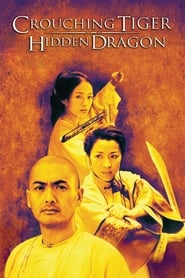
I told him this is a very sensitive movie, although it's a martial art film, that he could do it once, then end up doing it twice. Everything else is out of his character. It's very mellow, very movie music. It's interesting because Tan Dun being such a great composer in the world of classical music, both Western and Eastern, and he was kind of a scary prospect for some of the people in the production because, well, you could do an imitation of some of his music. It's a lot of...
0:49 · jump to transcript →
-
Now you're kind of full throttle in terms of the floating and stuff. How'd you come up with the score? Well, I always fantasize about using the drums, the percussion in the fighting sequence. I tried in the last movie, Ride with the Devil, but it sort of collided with the gunshots. Didn't work out as well as here. Right, because they're not shooting at you. Yeah, they're not shooting, they're not...
18:20 · jump to transcript →
-
I remember the other thing that was a little nerve-wracking about this was we were recording score in Shanghai, and we got to this last piece with all those glissandos and the percussion that you'll start to hear, it will start to kick in. And it sounded very, by itself it sounded very funky, but I think once you see it against picture, it really works emotionally. Well, I also altered the glissando a little bit. That's right, yeah, in the mix. I think it really helps, so it doesn't sound like...
1:53:31 · jump to transcript →
-
-
-
Ridley Scott
bad guys. Criminals have family and brothers that they love. So now we have something with a true, something really to settle, a score to settle. I always liked this shot where he comes out of the dark on the close shot. It looks like
1:20:30 · jump to transcript →
-
Ridley Scott
- Hans' score, which I think is beautiful. And this is the fourth film that I've done with Hans.
1:34:19 · jump to transcript →
-
Ridley Scott
are viewed as being romantic with the soundtrack. I like the shot of the bridge and the score with it. Here he is tidying up because he's a very neat man. Of course, he's taking something else for the journey. Right.
2:01:44 · jump to transcript →
-
-
director · 3h 29m 3 mentions
The Lord of the Rings The Fellowship of the Ring (2001)
Peter Jackson, Fran Walsh, Philippa Boyens
-
And one of their key and mandatory notes was, you must have a prologue, which was for us sort of like, oh, God, we're back there again. It had become a sort of hell for us. And so we found ourselves in England recording the score with an Avid machine jammed into one of the rooms in the house. Our editor, John Gilbert, came over with a bunch of footage.
1:59 · jump to transcript →
-
And it was up to us at that point to construct the prologue. And this had to happen sort of during the time we were also doing the score. It was a big strain. It was quite a hard thing. And basically the exact cut that's in the movie now is what got done in London during that period of time.
2:25 · jump to transcript →
-
In a way the inspiration for the soundtrack here was really a Heavenly Creatures inspiration that the scene at the end of Heavenly Creatures when the mother is being led down the track by the two girls we used the humming chorus and we sort of took all of the sounds away and in a sense I kept playing that in my mind over and over again when we were filming this and so you know in some respects I
3:09:31 · jump to transcript →
-
-
director · 3h 43m 3 mentions
The Lord of the Rings The Two Towers (2002)
Peter Jackson, Fran Walsh, Philippa Boyens
-
Two minutes, two and a half minutes by 737 is taking off about 50 feet away. It was like roaring. The actors just had to keep on going. And if you listen to the real sound, because obviously this soundtrack has been enhanced and changed and there's additional, you know, there's other dialogue been put over the top and so it's all been cleaned up, but the original location sound is just interrupted by the roar of aeroplanes all the time. They could have been Nazgul. Well, they could have been loud Felbys, couldn't they? Yeah.
51:06 · jump to transcript →
-
And during Christopher Lee's speech here, I wanted him to have reactions because those Eureks are cheering at what he's saying. And so we got all the crew together, all the grips and gaffers and everyone we could find in the studio, about 30 people. And I got them to cheer Christopher every time. He said, if you hear this with the original soundtrack, because this is obviously ADR, you get to hear all those guys clapping and cheering. That's Nuremberg, really. That was the obvious influence for this stuff. That sort of imagery is so potent in it.
2:05:10 · jump to transcript →
-
was what voted the sexiest man in australia yes which is why i suspect he was possibly chosen for the role yes definitely now he's also one of the funniest guys you'll ever meet he's very funny it's always very difficult to have waterfalls in films because from a sound point of view the noise that a waterfall makes is a horrible roaring kind of white noise and when you're mixing the soundtrack you never kind of quite know how much waterfall to have because even though it's right behind them
2:16:35 · jump to transcript →
-
-
director · 4h 13m 3 mentions
The Lord of the Rings The Return of the King (2003)
Peter Jackson, Fran Walsh, Philippa Boyens
-
and Gollum goes into this slight reverie, this moment, and that was the cue for the flashback. And for length reasons, we didn't put it in the theatrical The Two Towers, and then we thought, by the time we were cutting the extended edition of The Two Towers, we had got the idea at that stage to maybe save it for this movie. We'd done the big James Bond kind of pre-credit sequence thing on The Two Towers with a big fight, and I didn't want to have to sit and dream up another big slam-bang action scene for this film, because it felt like we'd been falling into a pattern.
2:47 · jump to transcript →
-
down on the docks, and all of the original soundtrack, because what you're listening to here is not original, it's all added, the dialogue's added later, but the original soundtrack, you can actually hear the sound of trains, because right outside there was a big container wharf, and there were these trains that were running backwards and forwards with containers, loading them on and off, and shunting engines, and it was as noisy as all hell, but it was actually, it was the biggest...
44:26 · jump to transcript →
-
I just love the majestic size of the sequence and how it does a beautiful musical track through here. Ah, stunning score. And finally, Aragorn is back in the story. That was one of our...
1:06:45 · jump to transcript →
-
-
-
James Mangold
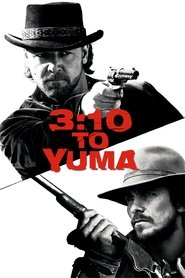
It's also a good place to talk about that, which again, we very much wanted to reach into the references to the Spaghetti Western and the Great Italian Westerns as much as the American ones for the kind of score we were doing on the film. I didn't want the film musically to feel overblown. In a way, every Western made for the last 20 years always feels like it's very, quote, important.
32:15 · jump to transcript →
-
James Mangold
And sometimes the Westerns we really love, when you think of them, they are important cinematically, looking back in history, but they didn't act important. They told their story and the music didn't announce their importance. It really followed the lines of the character story and the flow and the jazz between the characters. Marco's score really captures that, I think, and is a real tip of the hat to the great scores by Ennio Morricone, as well as others, without mimicking them.
32:45 · jump to transcript →
-
James Mangold
One of the things you try and do with sound in a movie is decide when you wanna do, I think, make a really good sounding film, is you have to decide whose turn it is to sing, if you will. And this is one of the moments where we decided that sound effects were gonna become less important, and we were gonna let Marco Beltrami's score really come front and center. In the previous parts of the gunfight, we had had hardly any music, and he had played a secondary role to the sound effects. But here it's his turn.
1:46:55 · jump to transcript →
-
-
director · 1h 36m 3 mentions
Aliens vs. Predator - Requiem (2007)
Colin Strause, Greg Strause, John Davis
-
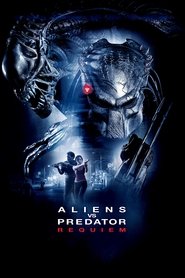
And that's the real address. That's the real address, yeah. We were shooting it. It was the one thing we didn't look at when we were prepping the house. And that door opened, and we're like, oh, that's really long. And then we're thinking about, should we digitally paint that out so it doesn't look so crazy? And we're like, yeah, we'll just better put the money somewhere else. Exactly. Now, this is the part where Brian Tyler called originally. I don't think he made it on the CD with this name, but he called the score in this section...
17:32 · jump to transcript →
-
Bum Feast, right? Bum Feast, yes. I think he had to change. I think they made him change it for the CD. Yes, Brian was our composer. Did a fantastic job on this movie. And it was a really fun process for us to work with Brian because he's got his own recording studio, and it's in the back of his house. And it's a really fantastic studio. He's got all the instruments there. And as he composed, we went to the house probably about 10 or 15 times.
18:00 · jump to transcript →
-
the music and also we didn't want any contemporary music in the film so we actually you know already needle drop stuff from you know and this is the only place there is contemporary but it's not used as score and it's actually Brian and it's Brian Tyler actually playing the guitar it's like his actual original music and it was just kind of a cool thing to actually say like there's everything in here is done by our composer and there's not a single note from anyone else in this again I loved going into our composer's house he had
44:57 · jump to transcript →
-
-
multi · 1h 33m 3 mentions
Wes Anderson, Peter Becker, Roman Coppola, Jake Ryan + 3
-
Jason Schwartzman
No, I'm actually at my friend's house. This guy named Julian Wass, who's a composer, and he did the music for this movie The Overnight.
1:10:16 · jump to transcript →
-
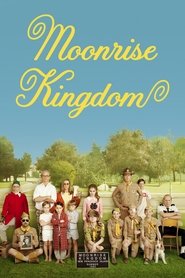
Wes Anderson
Oh, yes. - And I'm-- We're gonna put the movie out on a soundtrack, and I'm over here, just gonna do a song with him for the soundtrack.
1:10:27 · jump to transcript →
-
Peter Becker
So where I was going with the music set of questions had to do with Randy Poster, Alexandre Desplat. And, presumably in this case, Britten is almost like your third composer. He came with the package. - [Anderson] Yeah. We sort of started with Britten. And there are some Britten pieces that I just started listening to anything I could get a hold of because I didn't know the whole body of work. And many of these pieces, some of my favorite ones are ones I just found trying to say, "Well, how could this fit into the thing," during the script-writing phase.
1:20:20 · jump to transcript →
-
-
-
And Antonio Pinto's score, which was absolutely crucial to the scene as well, as were all his cues throughout the film. Amy's writing comes in here as well, her notebooks, her diaries, which I think are really amazing. I find it so powerful just looking at her handwriting and seeing how she came up with the process of creating these songs and crossing out things. And also when she sings it, she sings it differently. It's an ongoing process of the songs developing.
33:05 · jump to transcript →
-
That's Amy's humour again. It's still there. It makes everyone laugh. But we very consciously were evoking, taking the audience back to that jazz. We used jazz score here as well to put you back in to that moment where she had kind of felt like she perhaps got to the limits of the kind of pop
1:46:08 · jump to transcript →
-
as it plays out now, but those piano notes are the first sound in the film, and now it comes back in again and develops and evolves into a very huge and beautiful piece of lamentful music. It's difficult, difficult to come up with, you know, do you have a composer when you're making a film about a musician like Amy? Her music is so iconic, do you just make it with Amy's music? But I always felt we needed something else to kind of move away from her music and to keep that special and to underscore key elements, and so...
1:57:37 · jump to transcript →
-
-
-
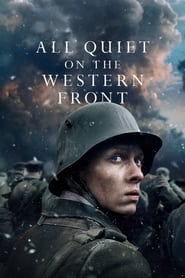
Edward Berger
that gets thrown on the ground. And we read the name of the kid that got disposed of. But luckily for the German army, they had another uniform. That's the cynicism of it. I mean, you've heard the music by now. This amazing sound that Volker created.
12:43 · jump to transcript →
-
Edward Berger
He recorded it. I showed him the movie when it was pretty much locked in this state. And Volker Bertelmann, our composer. And I told him four things. First of all, I wanted something that sounded different from anything else that I've ever heard before. And also anything else that he'd ever done before. Secondly, I wanted a sound...
13:12 · jump to transcript →
-
Edward Berger
And I wanted a drum that is not like a beautiful marching military drum, but almost like a guy with two left hands. A person that can't play the drums was supposed to play the drums. Of course, we never found one. It was the most difficult piece of the score to record, this drum, because I was so specific about it. And I think we recorded about 50 different drum sounds until I finally was like, OK, this is the one. I want this one.
36:21 · jump to transcript →
-
-
-
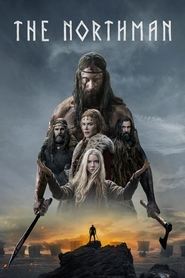
Those trunks were incredibly heavy and broke the floor on a take when they were dropped. The gentleman that's holding that hawk is Robin Carolan, the composer of this movie. The music that we just heard, you don't really see the musicians in the hall with the way we've edited it.
4:58 · jump to transcript →
-
hockey or irish hurling or scottish shinty and it was super violent there are some scholars who believe that they didn't score points the way the way that we do and that it was just like you know you were playing with the ball but it was really about who's the last man standing and that's it
1:08:22 · jump to transcript →
-
by James Harrison and his team, and particularly Damien Volpe, who worked with me on The Lighthouse and my short films, is certainly, like, cool. And the score here is pretty interesting. That whirring sound is based on a bull roarer, which is a Viking Age instrument, but then Robin and Seb's
1:26:03 · jump to transcript →
-
-
-
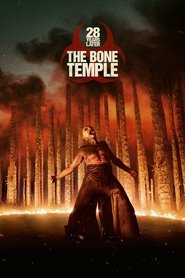
Nia DaCosta
And this is the first time we hear the theme, or the second time we hear the theme, that Hildur Gudénadottir, our composer, wrote, which I absolutely love. ...clouding it, not replacing it. This is the beginning of a slight shift in Samson's look, which we do throughout the film.
19:17 · jump to transcript →
-
Nia DaCosta
And he had this great building... And here, we reprised the barn score. The daytime barn score. As we're... Now we're talking about... So that wasn't supposed to happen then. Anyway, yeah, the whole thing was supposed to collapse in a very specific shot. It didn't. And then they were like, "Well, it's going to collapse when it collapses." Because again, the building was really burning, and it collapsed in the middle of that shot. And thankfully, my amazing camera operator was like, "I got it." I think that was Sean, actually. And then Fran, who... who pulls focus for him, was like, "I got it." So it was just really... It was all really great. Now we have some Radiohead, which I love, and some more of this wonderful time-lapse footage that we have throughout the film.
54:46 · jump to transcript →
-
Nia DaCosta
You have a bit of a score coming in here. Hildur Guénadottir and her music editor, Jason Ruder, who's amazing, just knocked it out of the park, I think, with this score. It's weird. It's different. But then also when the theme, which will kick in again in a few minutes, it's like this mix of, like, brutal and disturbing, but also beautiful. And I just love what they did and what we got to with this.
1:30:23 · jump to transcript →
-
-
-
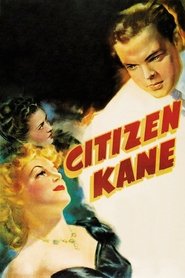
The film was scored in a different way than Hollywood went about scoring movies. Usually the standard way of doing it is to get a full edited assembly and show it to the composer, and then the composer works on that. But Welles didn't do that. He gave Herrmann sequences. And this was Herrmann's first glimpse of the film. It was just this, this montage of stuff going up to the castle. And it was on the basis of that that he composed this
1:06 · jump to transcript →
-
Yeah, so you can't even see the, well, at first you can't even see the audience. And this was one of the things, I guess, that Bernard Herrmann had a lot of fun with because this is a completely mythical opera. So Herrmann is writing a kind of a pastiche of an opera score.
1:29:46 · jump to transcript →
-
-
-
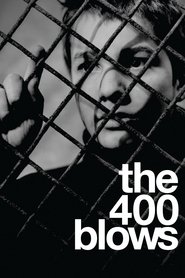
There is thus what dramatists call an antithesis between the season and Antoine's actual sentiments, which are of course being magnified by the mournful flute and guitar on the soundtrack. We see the milk being delivered, a sign of very early morning, outside a cheese store. Witnessing Antoine's first theft, we cannot judge it harshly, because this boy is neglected. He's deprived of affectionate interest on all sides.
39:09 · jump to transcript →
-
Note that we will hear only the crickets and Antoine's footfalls during his run, so we can deduce that they have been added to the soundtrack by Foley artists in post-production. Live sound would give us the engine noise of the truck on which the camera is mounted, so Truffaut is using his art to conceal itself here. The upcoming continuous shot of Antoine running lasts one minute and 21 seconds, making it the longest single shot in the film.
1:36:03 · jump to transcript →
-
-
-
So Eddie wrote out Criswell's lines on big pieces of cardboard. But Criswell couldn't read the cue cards without his glasses on. So he looked kind of cockeyed, which pissed off my cameraman, Bob Caramico. He told him Cris watching you is acting like watching paint dry. And Eddie was getting drunk all the time. Bob Dertano told me not to lend Ed any money because you'd never see him again. Ed would get drunk. Well, Eddie naturally...
33:21 · jump to transcript →
-
Ed is like in front of him with the cue cards. Yeah. With the dialogue on the cards. And you can see he's reading it. Yeah, I don't know if I read that quote. Is that too much for him to memorize a few pages? I don't know if I read the quote, but Steve Apostolof is still angry now when he talks about this. Anyway, everybody, thanks for listening.
1:30:28 · jump to transcript →
-
-
multi · 1h 59m 2 mentions
David Naylor, Guy Hamilton, Tom Mankiewicz, John Barry + 14
-
As I say, being only 27 years old now, I was writing a James Bond movie with Sean Connery, no less. Composer John Barry remembers the first time he played the title song for producers Cubby Broccoli and Harry Saltzman. Cubby was very good about music. He had a good ear. He knew when he heard a song or a melody. He always had very good instincts about that. Harry was absolutely toned up.
6:08 · jump to transcript →
-
But they were very humorous. The villains were humorous in the early ones. And even when the tarantula was crawling on him and he started pounding the tarantula, the score went with the pounding. I mean, it was done with a tongue in cheek. And I found that they got very serious after a while. And Sean, as it turned out in Diamonds Are Forever, there was a lot of humor in that, and he was so thankful for it.
1:49:06 · jump to transcript →
-
-
-
Paul Davis
It's a beautiful score of Elmer Bernstein. There's very little music, scored music, in an American Werewolf in London, because it's probably most notable for the use of songs that all have moon in the title. Not something that was anything significant on John Landis' part. He just says that it was a stupid thing that an 18-year-old writing a screenplay does.
5:56 · jump to transcript →
-
Paul Davis
Again, beautiful score by Elmer Bernstein, which was recorded at, I believe it's Olympic Studios in Barnes, which is, you know, the Beatles recorded there, the Stones. And Elmer Bernstein really wanted to write the music for David's transformation. And John knew...
47:57 · jump to transcript →
-
-
-
I wanna say something about the music here. Electronic music really didn't exist in movies... ...very much at all. High-tech music was pretty low-tech at the time. And Arthur Rubinstein, who did the score... ...was actually trying to mimic a German group... ...who did wonderful electronic scores. But the equipment that we had in Los Angeles at the time... ...was very, very primitive. I mean, they were literally putting microphones in 5-gallon glass jars... ...putting the glass jar underneath the piano and playing it... ...to get, you know, wacky sounds. And they would record all kinds of things... ...that we could never really hear in combination. We would hear just a bass track, or a treble track, or, you know... ...assorted noises, but have no idea what the whole score sounded like. Only Arthur knew what it sounded like. And so we didn't know till we got on the final mixing stage... ...in the weeks before release what this music score... ...was gonna come out like. It could've been terrible. It could've been good, you know. But it was anxiety-making. --
25:56 · jump to transcript →
-
This music has been used over and over and over... ...in various commercials along the... - Oh, yeah. Well, Arthur Rubinstein told me that-- First of all, he got a lot of work on other movies out of this movie. And he would go in to see the other movie he'd been hired for... ...and they would've used this score... ...to put temporarily on to their movie.
1:47:46 · jump to transcript →
-
-
-
And it's good, old, romantic, sweeping music. And basically that's what this is, is effectively a silent movie dominated by this incredible score. Myrtle Devenish is the only woman in it. Myrtle had been kind of my good luck charm. She had been in Brazil. She was the secretary of typing for Mike Palin's Torturer. She'd been in Time Bandits. She was just...
4:06 · jump to transcript →
-
They're harder to do than you can imagine. I forgot, we had another set here. We had this bit here, the modern building. Now that I'm looking at this thing, I realize why it costs so much. It just keeps expanding. It goes on and on, endless shots. The good thing on this DVD is the soundtrack is much better than it was in the original film.
10:00 · jump to transcript →
-
-
-
who went on to have a huge, huge hit with Born Slippy in the 1990s. And I presume that they had some fondness for their recollection of having done the soundtrack to Underworld, given that they renamed their band Underworld. They had a fallout with the management. The management owned the name Freur, so they had to change it to Underworld, and that's why they chose the name from the film. Yeah. I think it's one of those instances where if...
1:22:06 · jump to transcript →
-
If it was too late to make changes with the soundtrack, then obviously you just had to roll with it. But it would be fascinating to see what a different kind of score would do to the overall mood of the film. Sure. I mean, it's grown on me, you know. I'll admit that it has grown on me. There are places where I wish it was different. There are places where I really like it. But, yeah, again, it's just one of the things I had no control over.
1:22:34 · jump to transcript →
-


Related topics
Other topics that frequently come up in the same commentaries.