Topics / Editing & post
The score
117 commentaries in the archive discuss this, with 416 total mentions and 72 sampled passages on this page.
Filter commentaries
Filter this topic by the film's decade or the type of commentary.
By decade
Across the archive
ranked by mentions · click any passage for the moment in the transcript
-
scholar · 1h 32m 4 mentions
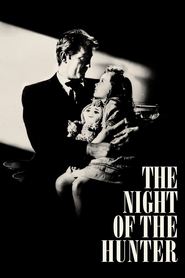
The Night of the Hunter (1955)
Terry Sanders, Robert Gitt, F. X. Feeney, Preston Neal Jones
-
Bob Gitt. And Preston Jones. This film is all about good and evil, light and shadow, love and hate, and that duality is heard in Walter Schumann's score right at the beginning of the credits. We started with the demonic theme for Preacher, and now you hear the angelic theme, which is the lullaby for the children.
0:39 · jump to transcript →
-
Robert Golden, the editor, felt that Walter Schumann was next to Lawton, the most important person on the film. And I'll try to say some more things about the score later. Lawton perhaps felt that the most important person was Lillian Gish, who's the first person we'll see after the credits. Lawton was trying to recreate the power of the silent era, especially D.W. Griffith, and he loved Lillian Gish. Now, Terry, the
1:02 · jump to transcript →
-
Now, unusual for the time, and really for any time, Lawton had his art director, his editor, and his composer on the set with him, working as part of the creative unit all the time. Lawton didn't want Bob Golden to do any editing until all of the film was shot. This is the one scene in the picture that Bob Golden did start editing ahead of time because they wanted to be sure to clear it with the Breen office. It's a dicey, very dramatic scene.
29:22 · jump to transcript →
-
-
-
That's what this movie is. You mentioned folk songs. That's interesting because we should talk about Peter Schickele, who wrote the score, who is also, of course, PDQ Bach and had a successful... Yeah, you'd better explain who that is because the waters have kind of closed over. They have. Who knows who he is now? So they were a series of popular arrangements of Bach which enjoyed a vogue.
17:00 · jump to transcript →
-
The use of music in science fiction cinema is a whole fascinating subject, isn't it? Probably the most influential musical score in science fiction in the 1950s would be Louis and Bebe Barron's Electronic Tonalities on Forbidden Planet. And that sort of established that...
17:45 · jump to transcript →
-
John Williams' Star Wars score, which is... It's not classical music, is it? It's old-time Hollywood music. It's also pure 19th-century symphonic music. Now, you mentioned Kubrick's use of music, which is interesting to compare with this. So when Kubrick uses Also sprach Zarathustra, he's using music which is about rebirth. This is a film which is almost, correct me if I'm wrong, totally lacking in a philosophical dimension. Oh, I think it has a philosophy, but it is very much a...
18:53 · jump to transcript →
-
-
-
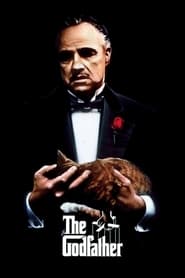
Francis Ford Coppola
basically making a mistake, but I guess no one else notices it. It's an interesting story. I chose to work with Nino Rota to write the score, and the studio was not very comfortable with this choice.
24:43 · jump to transcript →
-
Francis Ford Coppola
The Last Godfather, we actually went back to each of those places again, and if you see the pictures, you'll see a continuity of them over and over again. Interesting thing about the love theme from this movie, it's very famous now, but the composer was having a terrible time coming up with something. I had wanted a theme that was a little almost...
1:43:38 · jump to transcript →
-
Francis Ford Coppola
and the other had like a BB in compressed air, so on the cue for the effect, the ball bearing or the BB was shot outward, and the air blew any shards of the plastic lens away from the eye, and then the blood came out second. This was A.D. Flowers dreamt this up. I thought, very, very ingenious way to do that.
2:40:15 · jump to transcript →
-
-
director · 1h 28m 4 mentions
Don Coscarelli, A. Michael Baldwin, Angus Scrimm, Bill Thornbury
-
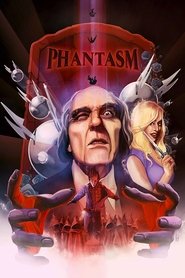
Actually, the score that we play over this, the cue, is the main title theme. And originally, there was some other music scored by the composers Fred Myrow and Malcolm Seagrave. And in listening to the whole, the score as a whole, I realized that the real guts of the music is that main title theme. And so we just took it and put it over the scene because I really felt that this is where the movie gets going and where the real
30:33 · jump to transcript →
-
This is a good time to talk about Fred Myrow and Malcolm Seagrave, the composers of the film. Fred has been a guru to me for many years, has taught me a lot about film. And one of the things that I learned in this scene he taught me was the fact that you don't always have to add music to create an effect. You can actually take it away. Because if you listen to the soundtrack here, what happens is we have an atmosphere playing. And right now, we start to take the atmosphere away so the ear starts to reach, listening and listening for the effect of it.
46:40 · jump to transcript →
-
And how we would shoot that, you know, Mike still keeping them on fire. I think we, uh, didn't they shoot the, uh, the smoke right up into your clothes there just before the takes? Yeah. So you actually looked like you were burning. And this is the door to their planet. Yeah. These guys are all ready to go. You can hear the dwarves talking there. If you listen to the soundtrack, they're, like, saying no. No.
1:12:39 · jump to transcript →
-
-
multi · 2h 34m 4 mentions
James Cameron, Gale Anne Hurd, Stan Winston, Robert Skotak + 8
-
Bill Paxton
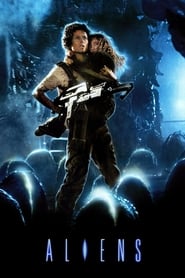
James Horner came up with this music sting here and I always thought it was totally over the top. When I saw the whole film put together with the score, I thought "No, that's what we need." I thought "How can you sting somebody opening their eyes?" But it works. Oh! Mm-hm. She shouldn't have had the bangers and mash. Kill it. Fry it. Come on. What are you doing, Hicks? Bad-ass nasty shot. That's a nasty shot of that thing. That's a good shot of it there getting fried. Gosh. Here they come. I think our chestburster looks a little cooler than the one in the first film. Stan Winston's guys really did a good job on it. John Rosengrant and Shane Mahan. Look who's back. Another one of our problems to solve for this movie was creating the whole army of warrior aliens and being legitimate to the original movie but having to improve on it for movement and for the look of being able to study them. In the original A/ien they were rubber suits and very difficult for the actor to move around in. And yet he was very tall and very skinny. And Jim wanted to do a lot of very interesting moves with the warrior aliens, so we came up with a technique to create the suit that really involved a lot of spandex and pieces on it. And then we designed the set pieces for the aliens to fit into the walls, like the one that is behind him there, so that the camouflage would work. An enormous amount of wirework for all of these stunt alien performers, which required that the alien costumes be extremely user-friendly. This was inspired by the scene in the first film where Dallas is in the air vents and they see the signal moving and get a little freaked, and Veronica Cartwright says "Get outta there" and he makes the wrong move and gets killed. That's one of the most suspenseful scenes in the first film. I took that idea that they're getting these readings that are getting them spooked and then they make some bad moves. Form follows function. This is a perfect example of it. You start with what it is you wanna achieve, and once you have that, you can design it, so the actions and the performance is consistent with what you want in the finished film. Believe it or not, very few people work that way. They just wanna come up with something that's cool, and then you spend hours and hours trying to get it to work for the ultimate film. I happen to agree with Gale. My background is as an actor. I really come from a place where the creatures and the characters are wonderful to look at, but it's always about their performance. We have to figure out how they're gonna be able to act, and create a good performance, or it's a waste. And so that's really always at the top of the priority list when we're creating any creature - what is it gonna do and how is it gonna do it? What he does is create a character, and that's why I think his work is So unique. When you look at a film, you can always tell who's done the creatures, if they actually have a character. Because he creates a character that can act and perform. The whole film builds to this moment, where the power transfers from the authoritarian structure to the individual who takes action. Ripley's not supposed to do anything. She's just there as an observer. We're coming up to a sequence where Sigourney takes control of the APC and this sequence is comprised of live-action shots, but as it comes down this hallway and is banging into pipes and walls and sparking, that's all done in miniature. In some cases, the cameraman - cos the set was mounted at an angle - was on a cart, a wheeled cart, and was rolling backwards as the radio-controlled APC was coming at camera. There was a point when he was just put into free fall, rolling backwards downhill, photographing what was in front of him as he went backwards. Here we go. - This is the shot. This is also miniatures. There was a shot with the full-size when the brakes didn't work, and took out the camera, and luckily it was a remote-operated camera. It was the shot where we were actually crushing an alien warrior, when it broke through. This is the shot, actually, when it took the camera out. Then there's another shot where it takes down an alien.
1:12:00 · jump to transcript →
-
Bill Paxton
Look at this. Big old queen inside that little elevator. We'll just keep it dark inside. It's a black curtain at the back of it that she's coming through. You think it's all lost and there it is. It's hard to imagine how fast that actually moved in real time. Any time the miniature is supposed to be traveling fast, it had to be traveling three, four, five times as fast. This down-view was extended with mirrors on the stage floor. It was not apparent in the shot with the fireball coming up, the earlier cut, as you see this set continuing very far down, but those are mirrors on the studio floor. IIn addition to the pyro, we used flashbulbs, buried in the set, to give extra flashes. This is another instance where the score is so terrific as well. When we were in the scoring stage, this was the last cue that Jamie had finished. And then there was no... It was like "OK. And then what?" "I didn't get around to the last cue of the film." And in a miraculous burst of creativity, he generated the final cue overnight. I didn't know how to work with an orchestral composer when I made this. I don't think James knew how to work with directors that well. I think he was a brilliant composer, but he had a lot to learn and so did I. By the way, that nuclear explosion is a big light bulb. Literally, a light bulb covered with cotton. We didn't have any budget for a big effect there, so we just made something up. But it didn't create problems between us personalitywise but I went to the scoring session expecting to hear the movie, and an orchestra started to play stuff that didn't work. The music was beautiful, but it didn't work on a scene-by-scene basis. I didn't know what to do. There was no second round. It was like "Here's your score." And James went off to another film. We wound up doing an awful lot of music editing and moving stuff around. He was never happy with the outcome even though he got an Academy Award nomination cos it didn't reflect what he had created, and I didn't like the process. So when we got together on //fanic, I said: "What can we do so that doesn't happen again?" "Cos I like your music and I want you to do this film." So we worked out a methodology by which we'd communicate better. And that was a great experience, by contrast.
2:20:46 · jump to transcript →
-
Bill Paxton
Interesting that we chose not to score this. I just felt it had a greater sense of reality and it might seem a little over the top if it was being driven by music, whereas it plays very real, somehow, without music.
2:27:49 · jump to transcript →
-
-
-
Oliver Stone
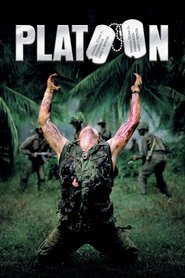
I looked for a man with a death's head. Crossing Dollies, I remember we did that at the airport. That was an interesting shot. And Adagio by Samuel Barber sort of came about because we wanted a noble theme, a solemn theme, an austere one. And in the temp dub, while we were editing the film, we cut it to Barber. We asked our composer, Georges Delarue,
2:32 · jump to transcript →
-
Oliver Stone
French composer who worked with Francois Truffaut to follow this style of this. And he worked very hard, Georges, and worked very difficult hours to match the majesty of Barber, but it's impossible. We ended up using much of Georges' music in the movie, and we'll see that later, but this opening theme could not be matched, so we went with the adagio from the temp job and we left it into the final
3:00 · jump to transcript →
-
Oliver Stone
These soldiers, I would say, were not politicized in any sense. They knew the war sucked. They had that feeling already. And, you know, Muhammad Ali characterized it. I ain't got no dispute with the gooks, he said something like that, with the Viet Cong. I ain't got no dispute with the Viet Cong. And he went to jail for it. And these guys all knew the score. They knew that the war was a lot of bogus political maneuvering.
32:02 · jump to transcript →
-
-
-
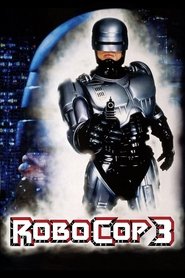
to explain what the deal was and that he really wished he could do this movie, and that really meant a great deal to me. So we were on the lookout for a new robo, and a lot of this is, by the way, Connie Palmisano, second unit, and I'm really pleased with it. Another little interesting bit of trivia, this chase scene before Basil did the score,
14:08 · jump to transcript →
-
You know, you have temp music in movies before you have the final score. And this was scored to Predator, which is ironic since I've just written the new Predator film that Shane Black is directing. And Shane Black is one of the cops in the car you're about to see. So what goes around comes around. It all comes back.
14:35 · jump to transcript →
-
It's interesting when I've talked to you, you didn't have as much of a relationship with Barry Dvorzen on Night of the Creeps. It was a little more with Bruce Broughton on Monster Squad. But it seems like you and Basil had a little bit more of a relationship on this movie than you did with your composers on the other two. I think it was comparable to Bruce. The difference with Barry on Night of the Creeps was that was an electronic score. Right. So apart from my initial...
1:16:49 · jump to transcript →
-
-
multi · 2h 12m 4 mentions
Andrew Sarris, James Ellroy, Brian Helgeland, Michael Nathanson + 10
-
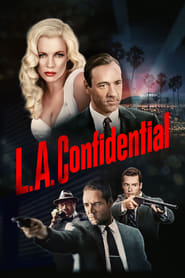
This is a period of music that I know he loves. Curtis, with that 100% concentration, was able to create and ask for the score that kind of matched these cues. Jerry Goldsmith did the score, and the source cues to me, well, the score was fantastic, and I have the CD, and I listen to it, and I play it all the time. When other people are around, they always go, where is that music from? And the thing about it was that
25:32 · jump to transcript →
-
I was really thrilled with the score. I mean, I knew, you know, we obviously had a sense of the variety of songs that Curtis was going to use in the film. But once we heard Goldsmith's score, I think that just sort of was the solidifier, you know, that great sort of lone trumpet and that orchestra that he uses really
31:58 · jump to transcript →
-
It just sort of encapsulates the style and the class, but also the sort of loneliness as well of the place. So I was really thrilled. I loved it, you know, and I still do. I still love the soundtrack. Sir, I took the call. It's my case.
32:27 · jump to transcript →
-
-
-
Taylor Hackford
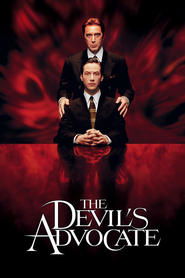
We shot this scene in Bellevue Hospital in New York. It was a particularly exhausting time. We did not shoot this scene, this film, in continuity. You never shoot a film in continuity. You're jumping around here and there. We were shooting through a weekend. It was cold and freezing outside. We'd done the scene on 57th Street, which you are about to see, the day before. The day before that, we'd been up on the rooftop shooting... ...the initial scene between Al and Keanu. This was on February 10th and 11th in the middle of the winter. Everyone is exhausted. We'd been shooting for months. And now these two people have to do a very difficult and emotional scene. Now, they're both drained in a way they would be drained in this scene. You know, you work with what you have. But, it is again, another culminating scene... ...an expository scene that takes us out at the end. That you discover these revelations and it happens like an avalanche at the end... ...of this film, one after another after another. I haven't mentioned James Newton Howard yet, who is the composer. James is a fabulous, fabulous artist.
1:53:49 · jump to transcript →
-
Taylor Hackford
I actually gave him his first big break in films on Everybody's All American. We got back together on this film, and he has repaid me immeasurably on this score. I think he created a brilliant score for this film. There's a lot of music. It's a very difficult piece to do. The music has to be the emotional core of the piece. It has to establish how everyone is feeling. And I think there are moments of grandeur, of huge, huge cues... ...and, at the same time, there are many very quiet, very sad moments. And I think the music that's happening in this scene actually complements it... ...and adds to it fantastically. Now we're coming out onto the street. Kevin is going to see Milton. He sees Pam, and if you listen to this cue, it's been one cue... ...going all the way through. It's a long, long, long piece of scoring... ...where you go from the church to the street, to the hospital, to the death... ...and then you come into the scene, between Kevin and his mother. Now we're beginning a chorus with a boy soprano...
1:55:06 · jump to transcript →
-
Taylor Hackford
...and we are going to forget conscience. Conscience doesn't exist. "It's a bag of bricks. Drop the guilt." So at this moment, now it comes down to Connie Nielsen and Keanu... ...and our special effects. I want to give credit to Glen Eytchison... ...who helped us design the bas-relief. Ray Prado, who designed it. All of these ballet dancers, they're actually dancers that we shot under water... ...and then were able to key in for the background. I don't think this has ever been done. I noticed some photography of ballet dancers shot under water. It gives a support to the body. They're very interesting. We shot these people in advance. We carved the bas-relief using... ...their likenesses. Then I had to shoot each one of the sequences... ...and the movement that they do, early and then we keyed them in... ...and they came alive in the background then through the digital process. You can see this in the background right now. Those are people under water that we made work... ...and then inserted them into the sequence. These are the ways that you have a problem and try to solve it... ...and to try to make it languid and seductive. And now Keanu has his moment of choice. How does he beat the devil? By killing himself. He destroys the instrument of the devil. I thought this was something... ...that I haven't seen before in a film. Where you have that moment... ...where he's admitted his own guilt... ...he realizes what he's done, and now he beats the devil. He fools Al Pacino, who wasn't expecting this. Now you see the devil for what he really is. He gets angry and he's destructive, and he destroys his own daughter. The people that are dancing up there and being very seductive... ...you know, turn and burn in flame. And this is our moment of kind of orgasm, if you will, where the devil... ...kind of shows his true colors. And, at the same time, he's very, very... There's something sad and tragic about him. He's tried so hard for a thousand years. He's right on the verge of success. And, in fact, now he's got to go back to the beginning, back to start all over again. And what we did is that we went back. You know, he looks like Keanu. If that's his father, he would. And, in fact, we go back and look at Lucifer... ...and come down in this wonderful moment of phantasmagoria. And then, shock of all shocks, we're right back at the beginning of the film. That moment that he was looking in the mirror and making a decision... ...of what he's gonna do. Whether you want to interpret this as a flash forward: He looked in the mirror and he had that moment and all this happened. You know, when people talk about drowning they say their whole life... ...goes in front of their eyes. That could've happened. Or maybe, in fact, it did happen, and because he beat the devil... ...he was granted another reprieve. He has to go back and see what he'd do the second time. I'll let you have either one of those interpretations. But in reality here, it was important, because this is a moral tale... ...to return to the beginning and realize that decision that one makes. Every day we make decisions in our lives. We make decisions and then justify them. And we say, "Well, maybe I crossed the line there, but what the hell... "...it doesn't mean anything." These things mount up, until finally you're morally bankrupt. And at this point, he's back at the beginning, which most of us don't get. He gets a second chance. He has to now decide what's the right thing. But he's looking, you know, at the person that he destroyed. He looks at that sweet face, and he realizes, "My God, she's alive." And at this point he says, "I am now"... ...meaning, "I'm all right, I am now. "I thought I destroyed you. I thought..." You know, it's a reprieve. And in a film, it... This is an allegory. It's a moral tale. You know, you come to the point again, he's got to make the same decision... ...at the beginning that he made. And will it be the same or will it be different? And he has his moment of choice. Again, the score, James Newton Howard used the same cue... ...that he used in the courtroom when he had to make his choice about... ...whether to call Melissa Black or not, which, I don't know whether... ...it's subliminal or not, will make you recall that moment. What is he gonna decide?
2:11:14 · jump to transcript →
-
-
director · 1h 31m 4 mentions
David Steinberg, Dave Foley, David Higgins, Jay Kogen
-
The director. Dave Foley, one of the stars and one of the writers, and Jay Kogen, one of the writers. And a big player. And he does play a very important role in the film. And so does David, by the way. I do. No spoilers. Oh, that's Dave's name. That's your name, Dave. Can we get any of the sound in the headsets? Softly. Do you want it brought up a little bit? This is our Lawrence Shragge. Right, Lawrence Shragge's soundtrack and the great sort of...
0:21 · jump to transcript →
-
Starting a movie where everyone hates the lead character. Doesn't test well? Does not test well, no. Everybody is told in a very blatant way, do not like this main character. When you are given a test score later, rate it low. Ah. Promotion's being announced today, and I think I know who's going to get it. I like that no one gives him any clue that they agree with him at all. On anything.
2:45 · jump to transcript →
-
He did a great job as Jimmy, yes. Yes. He carried the reality of every scene you were in. Mm-hmm. How could you let this happen? And you, what was the orchestra you... Seattle. We went up to Seattle to record the Seattle Orchestra, the score, the whole score, and singers. My idea. I thought it was a good way to throw suspicion off me.
1:06:57 · jump to transcript →
-
-
-
Alexander Payne
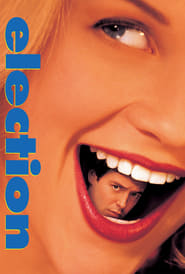
I used many, many, many of the same people between Citizen Ruth and Election. The production designer, Jane Stewart, and the DP, Jim Glennon, and the editor, Kevin Tent, and the composer, Rolf Kent, and even the same assistant cameraman, and the same prop master, and a lot of the same grips and electricians, and Omaha crew people, a lot of the same actors. In a way, Citizen Ruth was something of a dry run for Election.
13:48 · jump to transcript →
-
Alexander Payne
This scream, this Native American scream associated with Tracy, is from a 1966 spaghetti western called Navajo Joe, and it's music by Ennio Morricone, and I'm a huge Morricone fan. I don't know why, but somehow one day in the editing room, I just started, I was watching Tracy and just screamed that scream out, because I think I'd been listening to that CD recently.
24:18 · jump to transcript →
-
Alexander Payne
I know what it is to fight hard and win like when we almost went to state last fall and I threw the fourth quarter pass against Westside for the touchdown that won the game by three points. I won't let you down like I didn't then. I promise we can all score a winning touchdown together. Vote Paul Metzler for president. Thank you.
39:39 · jump to transcript →
-
-
-
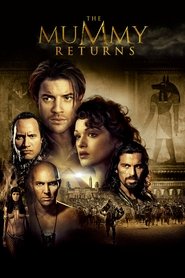
And this would be a good opportunity to mention the phenomenal score that Alan Silvestri did. The music here is particularly beautiful. Yeah, it's great. And what happens at a certain point there is the actors turn and the blimp become digital because the camera actually can't get that far off the soundstage. This shot here, that wide shot, was photographed by Greg Michael, the second unit director in Jordan.
1:02:08 · jump to transcript →
-
This next shot coming up is pretty neat because it has in-camera speed changes, which you'll see come up here, and kind of puts us in their minds. It's very subjective. And if you listen to the soundtrack, you'll see that the sound design does the same thing. Very effective. I really pushed Leslie on that because if I did a shot like this again, I would have more movement in the background so you could really feel the slowdown and speed up.
1:09:42 · jump to transcript →
-
Again, Alan Silvestri's score kicks in. Really terrific stuff. This is a classic Steve Sommers shot. The number of horsemen there is so outrageous. Ludicrous, some would say. In fact, there are exactly 10,000 horsemen there. The way that that was done, there were 200 men in a group, and it was photographed 50 times. There's a thing up at ILM called the Stephen Sommers scale.
1:16:46 · jump to transcript →
-
-
-
you know, finds him or herself in the apex of some kind of historical moment. And it's the innocence that is both challenged and sacrificed so that others may live. It's biblical. I mean, that combined with the haunting score, you almost don't need words to...
1:17:01 · jump to transcript →
-
to get the message of this movie and to feel the pain and suffering that these guys and the heroism that these guys are and went through. I was so fortunate to, we were so fortunate to be able to find a young composer named Klaus Bedelt who really had, was just, is just beginning and
1:17:28 · jump to transcript →
-
uh... a normal lens and uh... and uh... the film uh... the super part comes from uh... using part of the film negative that normally would be reserved for the soundtrack and so in the end you're forced to squeeze the film back down to allow for that soundtrack and that's where we ran into a little bit of a problem with the AC process but uh... we resolved it one way or another and uh... i think the movie looks pretty good i think the movie looks magnificent i was
1:22:47 · jump to transcript →
-
-
-
Andrew Niccol
You can just tell that this isn't California. I also like that Yuri and Valentine have this philosophical debate in the middle of nowhere. Antonio Pinto, the composer, composed a score for this scene. Very beautiful.
1:14:47 · jump to transcript →
-
Andrew Niccol
score, but in the end I didn't use it because I wanted just to hear the emptiness. Just the natural sounds of Africa. I love the righteousness of Valentine. All the facts that he spews in this rant are true.
1:15:16 · jump to transcript →
-
Andrew Niccol
Often the score can be used as a crutch, and the scene didn't need it. It could stand on its own merits.
1:26:43 · jump to transcript →
-
-
director · 1h 37m 4 mentions
John Cameron Mitchell, Justin Vivian Bond, Sook-Yin Lee, Paul Dawson + 1
-
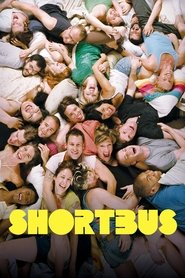
three hours in West End Avenue. Who's this artist? Ezra Ray. Ezra Ray, who are in Saddle Creek. A friend of mine used to produce some of their songs, which is how I met them. I didn't meet them, but I met one of them, but I didn't. I was listening to the soundtrack, the Shortbust soundtrack last night. It was really...
16:54 · jump to transcript →
-
that he's there. This is Reg Vermieu. Gentleman Reg. Gentleman Reg is his band, who he has a song on the soundtrack that's actually playing right now. And he's not an albino. He's not an albino, but he's representing. If you look, there is pigment in his eyes. Yeah, he's sort of related to an albino, but not quite. He's like half albino. He's albinesque. He's albinesque. I hope albinos aren't offended by that, but I don't know. I played straight in my day.
23:25 · jump to transcript →
-
bed of the craft service was Jasper James, who has a song on the soundtrack, brilliant performer, whose pussy I ate, and we were very shy with each other, but then felt closer after. I just noticed everything matches. The remote, your shirt. Yeah, we all wear sort of coordinated to a color. It's a palette. Right? Mine was...
1:09:19 · jump to transcript →
-
-
-
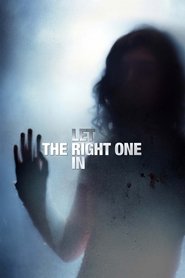
because it gives him some kind of pleasure just pondering these things. The body of Himmler. Is that what we see up there? Yeah, you see Himmler committed suicide when he was caught. And here in the background we also hear an original song by Per Gessle. You know, this is the singer and composer in the famous Swedish group
16:47 · jump to transcript →
-
He gives us a little smile again. One of those. But it is in fact a quote from Romeo and Juliet. Well, it's just this one in the movie. Romeo and Juliet by August Strindberg, the Swedish author, you know. Yeah. The music is so beautiful here. Johan Söderqvist, the composer, has one of his highlights here.
59:03 · jump to transcript →
-
And this is Agnetha Fältskog, former singer of ABBA, singing for us. Yeah, an own composition. She's a very good composer, Agnetha Fältskog. And this is recorded somewhere in 68 or 69, I think. It's a beautiful song. It's very typical Swedish Channel 3 radio sound.
1:05:57 · jump to transcript →
-
-
writer · 1h 35m 4 mentions
Simon Barrett, Adam Wingard, Greg Hale, Eduardo Sánchez + 5
-
much more physical way than I think you expected. Man, I can write so much VHS fan fiction now from this commentary. By the way, that was not the clearest explanation of this, but maybe we'll get into it more, and no, we probably won't. You know what's funny is I helped them score that desk a little bit. We took a bunch of knives and stuff and were rubbing it, and like...
7:08 · jump to transcript →
-
The guy who does that band, it's a side project of his. His name's Steve Moore, and he's a great composer. He's actually going to be doing our next film we're doing. Yeah, The Guest, which we start shooting in a month. Yeah, I don't know if people pick up on it, but she is supposed to have recently tried to kill herself, which is what's going on with that bandage and the blood on there. You can't really see it that well. I keep going past it really fast, but Tom, the production designer, is really proud of the photograph to the left.
20:52 · jump to transcript →
-
And then James Gammon, who's a composer that we know, a very talented composer, did this little thing for us very quickly. And then, yeah, and we've got no comments on it. It was like all this debate as to whether or not we did it or not. Yeah, I mean, I think, you know, in these movies, I think it's just kind of like, you know, it's entertainment, the entertainment value. I don't know if Trump's anything. So I hope you enjoyed it. Yep, it was a lot of fun to make. See you later.
39:33 · jump to transcript →
-
-
-
Alan K. Rode
As we view footage shot at the Bay Meadows Racetrack in San Mateo, California, accompanied by the booming brass of Gerald Fried's score, I'm author Alan K. Rode discussing Stanley Kubrick's legendary caper film, The Killing. Kubrick was just 27 years old, and The Killing was really his second bonafide feature film. It's been said Kubrick's movies are about mastery that fails. The Killing certainly fits that category of a masterful caper that goes, well, to use a cliche, to hell in a handbasket.
0:02 · jump to transcript →
-
Alan K. Rode
The horses are approaching the starting gate. And as we see more of Singer's film from Bay Meadows, Gerald Fried's score adds so much to the killing. Fried was another old Kubrick friend from the Bronx. He went to movies with Kubrick, remembering, our discussions after seeing them were primarily listening to Stanley kind of smirking at the tasteless sentimentality of most pictures. Fried was originally an oboist who attended Juilliard, and he composed the music for all of Kubrick's early films.
54:27 · jump to transcript →
-
Alan K. Rode
Day of the Fight, Fear and Desire, Killer's Kiss, The Killing, and Paths of Glory. Fried also composed some wonderful scores for early horror films like I Bury the Living using a harpsichord. He later composed the music on the original Star Trek TV series and shared an Emmy with Quincy Jones for the score of the groundbreaking miniseries Roots. And Fried is still living at age 94.
54:56 · jump to transcript →
-
-
-
Double Life of Veronique. And Kieslowski talks about how important it is for not just the actors, but everybody, the director and the cameraman and the composer, for everybody to get in touch with their unconscious. And that's a hard thing to do. And so anything that interferes with that, I think, is detrimental. Yeah.
57:08 · jump to transcript →
-
I don't know if these guys, you know, you get a sense that they're almost like an old couple in a way, that they're kind of shorthand with their talk. They don't have to talk as much because they kind of know everything that's going on there with each other. Well, I always likened the dialogue to an effects or a music score.
1:12:15 · jump to transcript →
-
propels something. Here it doesn't do anything other than act as a kind of score. Right. Well, you still have, I mean, this movie lives on in a whole other subculture besides film people and film fans because you've got the car, the people who are fans of the car who are in love with the movie, but also I think that
1:13:10 · jump to transcript →
-
-
-
You told me, let's have it so that he's going to party with the waves. Uh-huh. So we were working on it to the very last minute, getting that whole sense of he's going to party with the waves and all that, which is so great. And then, you know, we had to put it on cue cards for him. And there was something about what he did that day. It just felt like, whoa, this is really good. So I asked for the cue cards, and they're,
33:22 · jump to transcript →
-
Do you remember what this restaurant was? I think I know it. It's like a big German restaurant, I think, in the valley. Very woodsy-looking and, you know, theme restaurant. Now, I don't know if you remember our situation with our composer who didn't pull through with any compositions, but...
38:15 · jump to transcript →
-
You saw the future of rock. You definitely did. Well, the 10 seconds of punk. And Walter, the punk extra. Yeah. And then here it comes again. I think we just have to deal with the fact that you made a movie which has the most complete collection of Southern California singer-songwriter music maybe ever in a soundtrack. That I didn't want to be using.
58:04 · jump to transcript →
-
-
-
Jim Piddock
He's gone, in a sense. Well, well beyond words, like a great composer. Although the great composer will always need his notes. So I suppose the analogy doesn't quite hold in that sense. There's the dog again. Wonderful, natural motion. You really would never know, would you? It's remarkable. Anyway, as I was saying, the great composer will never get beyond music, whereas the great writer may sometimes soar well beyond words. And this may be why many consider writing to be the higher art. At any rate, here...
24:22 · jump to transcript →
-
Jim Piddock
what do you call it, not the fairway, the Grand Promenade, the Midway, that's what they call it, the Midway. There's a sort of test your arm affair and you can win prizes by hurling a softball at pyramids of milk bottles and she jumps up and down and points at the ceramic walrus. Something about it has struck her fancy and she simply must have it. That makes no sense, but you know how lovers are. All done in pantomime with calliope music on the soundtrack. Very effective silent storytelling.
1:03:22 · jump to transcript →
-
Jim Piddock
To wit, for his own childish score-settling reasons, Mr Adrian Butts is trying to scuttle the deal. And Forever Young is about to lose all the Merchant Ivories. And Merchant and Ivory and the woman Ruth Prawa Javala have probably not even heard about our offer and are being put to unwitting use in the service of an appallingly petty personal vendetta being waged by a sibilant little rodent named Adrian Butts. Well, we'll see about this.
1:14:53 · jump to transcript →
-
-
-
Gary Goddard
And I like that shot. We moved from a, I don't know if you noticed, we just moved from a medium shot into a tight two shot with them as they move forward. If you really look at this whole sequence, I think we tell this whole story in three shots, if I remember correctly. The first one that came in that grabbed them, then this one. Now we follow them to the car, I believe. Yeah, I like the way that moves. If you listen to the back and the soundtrack there, that's my voice somewhere in there. I can't remember where, but...
40:33 · jump to transcript →
-
Gary Goddard
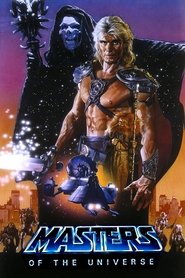
prior to the scoring being done so it would appear fairly realistic rather than having him hum something or whistle something and filling it in later. So that theme, I met with Bill Conti early on and we established that theme. That became the theme for The Cosmic Key and became one of the key themes for the movie itself when the score was being done.
1:19:51 · jump to transcript →
-
Gary Goddard
and Robbie's eyes, and these fantastic creatures come into different scenes, and you don't question it. You go, well, you don't say, that looks weird, that looks stupid, that looks dumb. I think Bill Stout's contributions in terms of the design and the costumes and the look, I think the cinematographer's contributions once we got the look right, I think that Bill Connie's score was a big help.
1:42:59 · jump to transcript →
-
-
-
Barry Levinson
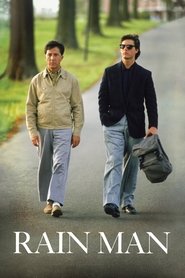
The aspect of the drum, which plays throughout the movie, has a certain kind of rhythm to it. And then ultimately, Hans Zimmer's score, which is very percussion-oriented, has no strings at all. One of the things we talked about very early on is I didn't want any kind of strings at all in it, because I thought it would make the movie too melodramatic.
2:03 · jump to transcript →
-
Barry Levinson
The piece of music here is Scatterlings of Africa, which is a piece of music I heard, and somehow I thought that it was appropriate to the movie. And what it did was inspire the score that Hans Zimmer ultimately did, which is kind of an African sound, again, because it is rhythmic and it's percussion-oriented. And as it turns out, that is something that autistics respond to because of the rhythms of it all. So, as I say, I thought that it seemed appropriate to us and it kept us away from that.
8:18 · jump to transcript →
-
Barry Levinson
This sequence was really designed, in a sense, to see through the eyes of an autistic, the things that would draw his attention. So we look at the road as he may see it. And then again, as I said earlier about scatterlings of Africa, which was used at the beginning of Palm Springs, now in Hans Zimmer's score,
1:18:46 · jump to transcript →
-
-
-
Stephen Prince
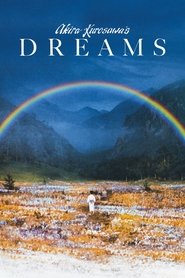
the metallic chinking of the ice axes carried by the men, the wind, and the sound of their labored breathing. Each of these has a crispness and clarity that enables them to stand out as discrete elements, even though the soundtrack is a richly layered blend produced by mixing them together. When Dreams was released in 1990, cinema was making a transition to digital sound.
32:54 · jump to transcript →
-
Stephen Prince
Kurosawa plays their sorrow by focusing the soundtrack on the isolated ting of a single small bell hanging from a plant that she carries. The design in The Peach Orchard and this scene in Redbeard are very similar. But in Dreams, Kurosawa creates the sense of an empty sound space in which the isolated effect of the bell carries a stronger charge than he was able to achieve in Redbeard. Kurosawa had always been a filmmaker keenly interested in sound.
34:39 · jump to transcript →
-
Stephen Prince
and Kurosawa's visual treatment presents them as if they were an ensemble in a play wearing masks. So the episode then is a kind of warrior ghost play, not done in the style of Noh, but influenced by its general template. He salutes their passage and the music score provides some martial notes on the trumpet.
1:01:44 · jump to transcript →
-
Related topics
Other topics that frequently come up in the same commentaries.