Topics / Writing & development
Rewrites & drafts
57 commentaries in the archive discuss this, with 99 total mentions and 26 sampled passages on this page.
Filter commentaries
Filter this topic by the film's decade or the type of commentary.
Showing 17 of 57 commentaries
Clear filtersBy decade
Across the archive
ranked by mentions · click any passage for the moment in the transcript
-
-
run into the crowd as they're coming towards us and start punching the women as hard as you can. And he said, well, they'll kill us if we do that. And I said, well, they're going to kill us anyway, but they're going to have to go home with the women and we're just going to have to go to the hospital. And at least you'll steal their victory. You're going to lose, but you can take away their victory. Right. Let me ask you, with the first draft of the script, where the whole thing had that other, the meaning of the scene is different.
1:47 · jump to transcript →
-
Francesca, we didn't want her to be sort of the classic gum-chewing gun moll, which a lot of, the role just so dangerously sort of lends itself that way, and we wanted to give her a great deal more sophistication. In early drafts, I went back and reread the first draft a few days ago, and she really is much more like psychotic almost.
9:01 · jump to transcript →
-
bring itself in. And in the very first draft, there were hints of a romance between Chidduck and Robin that I thought were interesting. I mean, I see why you dropped it eventually. Not really a romance. There were hints, I guess, I guess what there were was just affections, that she had Chidduck's affections. Right, that in the first scene, he's talking to her and speaking very affectionately to her, and we get the sense that he's about to make the move on her. Right. That you're feeling that it's kind of this disgusting
10:22 · jump to transcript →
-
-
-
was the layering after layering of wuxiapian tradition, the kind of generic tradition. They don't say things like that. They don't talk like this. So it was, I remember after the first draft. I don't know why they don't talk like that, or the writer never wrote it. But when you're facing not only Western audience, but the modern Chinese audience, that's not sufficient, what it used to be. But it's hard. I remember after the first draft, and people would say things like, well, this is great, except he just wouldn't
32:16 · jump to transcript →
-
He just wouldn't talk. And finally I realized the equivalent would be if a Chinese writer wrote some kind of contemporary law and order courtroom drama in which the DA comes into the judges' chambers and bows like nine times before he speaks to them. It's great, but I don't think he'd do that. I wrote basically Martians. So it was really interesting to see the process of the rewrites, both from Hui-Ling Wang and with you and the whole team.
32:44 · jump to transcript →
-
But here's an introduction of a theme that was nowhere near the first draft of the script, which is so central to the movie and obviously to the tradition, which is, of course, the question he's just about to ask her. Which is coming up.
37:29 · jump to transcript →
-
-
-
I have a screenwriter friend who said, "What has become of this prop?" I think the editor has it. I'm sure Dino has one. This book? - Yeah, there are two of them. Universal maybe has one. I should have one. - Yeah, and I should have one. You and I should have one. Why don't we have one? We could auction it in 20 years. Anyway, talk a little bit about how you got Ralph Fiennes into this cast. Like I said, I went after the actors that everyone told me I couldn't get. "Ralph's never going to do a movie like this, he's a Shakespearean actor." Basically, I sent him the script. And he loved it so much he agreed to fly in and meet with me. I gave him my vision of it. I told him he was not going to live in a haunted house. He told me he was very attracted to the idea of playing a monster who had a soul. That he had some kind of inner life and was not just a bogeyman. He loved the relationship between him and Reba, Emily Watson's character. He loved that there was humanity in this horrible person doing horrible things, but there was humanity in him. Here's a great sequence. We should talk about the way you staged it. This was originally written, if you remember, as an outdoor exercise scene. I said to Ted, "I can't see Hannibal Lecter "even if there were guards all around and they cleared the whole yard, "I can't see him in an exterior location, out of prison." The scene was originally through a fence. A sort of dog run or something, or a big mesh fence. And the dialogue between Will Graham and Hannibal was through a fence. It was an electrified fence. But I said, "Then there's no threat." There's no real threat. And I said, "Why don't we put him on a dog leash?" And I found this location, which is in an actual location for the mentally disturbed. There are mental patients all over this building. This was another case where Kristi would talk to Brett, and then she would send me drawings for the design for this knowing that it might help me as I thought about the scene and wrote it. Kristi had a lot of fun with the look of this scene and so did Dante. Dante did an amazing job because his interpretation put a lot of smoke in here so that the white lights would... Dante liked the way Lecter goes in and out of the brightness so that he almost seems to be a ghost. Which is like evil light as well. He said, "Evil light doesn't only have to be dark. It can be white as well." This leash thing, I love. He meant to use the bolt cutter to enter the house, but he didn't. That shot I did earlier, where you see the line saying, "Do not cross." It was the last shot of the night, and I almost forgot it, but I said, "In this whole scene, when I shot it, I don't remember seeing the floor. "I have to establish it so that the audience knows there's a do-not-cross line." Why is he standing there? The original idea for the scene was that you'd think it was a dream sequence. If you look, it's shot very close. The way you shot Edward's entrance into the room, we don't know at first where he is or whether it's a dream. And here comes Lecter walking towards him with no bars between them. Then we pop out and reveal that he's on a leash. It's a great moment in the film. When I was working on the first draft, I just thought, "This is a scene that's not in the book." Most of these Lecter scenes are not. I thought, "If I were directing this movie, I'd like to get away from that cell for once. "And give the actor a chance to use his whole body. "And have nothing between the two actors." To me, it was really the parallel of the scene with Jodie and Tony at the museum in Memphis, in that big cell that Kristi designed, which was amazing. I needed a set piece as magnificent as that, 'cause that really opened up the movie. I thought you'd be very grateful not to have the Plexiglass between them for once. And to have them be able to move together, walk together. Sometimes just the technical challenges you face force more creativity. It was only his first time. Already in Atlanta he did much better. Rest assured, my dear Will, this one will give you plenty of exercise. I love Will's reaction to that line. Edward's great when he's not saying lines, actually. You know, the mark of great acting is: How interesting is an actor when he's only listening? He's a very good listener. - Jodie Foster is a great listener. She listens with such intelligence and such engagement, and Edward can do the same thing, and so can Tony. It really is a hallmark of great acting. You see that a lot with Ralph Fiennes here. He doesnt have a lot of dialogue. He's listening, thinking and reacting. It's a very poignant performance by Ralph. It's easy to play the monster. It's hard to be the guy who's a horrible monster... It's hard to make the audience care about the character instead of just dismissing them. This is Azura Skye who is one of my favorite young actresses, who was in 28 Days. She had a small part in Bandits and she was awesome. Again, the importance that Brett gives to casting every part, even if it's an actor who only has a one-page scene. You want somebody who looks like they could star in their own movie. If this movie suddenly became about this bookstore, it would be interesting for the next 90 minutes. Even the voice of the girl on the phone, I cast the voice very specifically. Did you drive the studio crazy by waiting to cast some of these parts for so long? Till the last minute, yeah. ...darn it, she never did. I'm just a temp. Linda will be in on Monday. I have to catch FedEx in about five minutes. I hate to bother Dr. Bloom about it because he told Linda to send it and I don't want to get her into trouble. This was hard for timing because it's one shot and it's a lot of dialogue, and I wanted the camera to land at the right place. The camera and the lens that you pick help with the emotion, intensity, and realness of the scene. Is it hard to move in like this without changing lenses and keep the focus? Yeah. Especially anamorphic. The focus on this move is impossible. Mike Weldon was the AC on this movie. He's a genius. Anamorphic is the wide screen? Anamorphic is wide screen, but there's not a lot of depth of field at all. So it's impossible to focus when you're moving into a subject. It's just the hardest thing ever.
43:19 · jump to transcript →
-
I've always tried to hang on to what that cougar looked like. But by now, to tell the truth... This was made-up stuff that was not in the book. But I knew that they were going to have that scene later with the tiger, the sedated tiger, and I wanted to set up some deeper meaning to that scene for her. So I added this little section. You don't say much, do you? There was actually a scene that was left out. That was his arrival, but Mark thought it was unnecessary and Nis... - When they first arrived and walked into the apartment for the first time here. One of the things that amazes me about Ralph is that he... The script so often gives him so little to work with. The character is painfully shy, he speaks in monosyllables. This was a scene that I used to test the actors. - I remember seeing the test at the auditions. This is the scene that helped me decide that the actors that we tested werent right for the role because they can get the Dolarhyde torturing Freddy Lounds scene, but to have a vulnerability here... But you still have to fear this guy. It's a tremendous feat of acting to accomplish as much as he does with so little to say. My biggest worry going into production was that we would not be able to find an actor who could do everything that this part needed. This is a part where the actor has to bring so much, and the script doesn't help him as much as it does other actors. This is really where you see his imperfection, which is his cleft lip, which Matthew Mungle, who is a brilliant make-up artist and effects make-up artist did such a realistic job of. I tend to do a Iot of tests for hair and make-up and the tattoo. We spend a Iot of time. When you work with Dino and Martha, do they want input into those kind of choices or is that left mostly to you? I love working with Dino. Not only is the guy a legendary producer, but it's great working with Dino and Martha together because... It's a whole other energy. - Each one has their own opinion of things. Right. They are a great producing team. -/ never work with a producing team. - They are very shrewd about script. You did a lot of work with Dino and Martha before I even came on board and you delivered a first draft, basically, that was shootable. - The first draft was green-lit by the studio and it had a lot to do with Dino and Martha's notes because they are very shrewd about what the audience needs to know, and when they need to know it. The sense of the rhythms of the story, and the rhythms of the acts, they have a really good grasp. This is my favorite section of the film. This is where the pace really... It seems like it really takes off here. This is Run from Run-D.W.C. who unfortunately, I cut out of the film, not completely, but... That was him. - That was the top of his head? That was a wonderful appearance. The story really takes off here. The pacing of this section, to me, is very exciting. The music and the editing. This is where I was telling Harvey, "Can you do it twice as fast?" Harvey tends to pause in the strangest places. But it always comes out very natural. He's a brilliant actor. You had always wanted to work with him? - Always, yeah. You had always wanted to work with Harvey. Ever since I was a kid, I was just... I grew up on him. ... possibly from the Tooth Fairy. This was a Dante shot. - It's a spin. "Let's go around him." I said, "I don't want to get dizzy." He said, "No, it's an urgent scene." It does create the urgency of what's going on here, that events were spinning out of control as suggested by that. Because of 9/11 we couldn't fly a helicopter through the Washington skyline. So that was one of our few CGI shots. It's really called a composite, because we shot a plate and then we took a shot of a real helicopter. This was done on the set. Ralph read this on the set. - Standing next to them? Not when we were doing the scene, but he just read it once and this was the take we ended up using. This is a one-take performance. He was just so in the mode. He reads this letter very well. I love all this sort of hi-tech, FBI forensic stuff, and it's something that we couldn't get a whole lot of into the script because of just sheer space considerations. So where we could do these kinds of things, it was really fun. I love that shot, and that shot... All the shots of Lecter in this... Brett, you love all your shots. - I know, not all of them, but those specific ones. I like all the lighting changes through this. This is Tony Hopkins' stand-in. This is the only... I wondered why he had a British accent. I wondered why the superintendent of a hospital in Baltimore had a British accent. He migrated. This is Ken Leung who's been in three of my other movies. On the right? He's a great stage actor from Broadway, and he was the villain in the first Rush Hour, and he was in Family Man. He's just a... He's very good with this part. - He's excellent. He's really very real. ...are transparent to infrared. These could be the tips of "T's" here... This whole sequence is quite close to the book. Tom Harris is very well-grounded in all of these procedures. It's just a real gift to the screenwriter to have an author have done so much research, and be so on top of these things. ...they made that up. Three "T's" and an "R" in "Tattler." How do you communicate through a tabloid? You got what? News stories. This scene was much longer really, but we realized in the playing of this scene that the audience... This is an example where the audience was ahead of everybody. We shortened it because the characters just seemed like they were... The audience already knows who Dolarhyde is at this point. We held him back for as long as we could, but once we've shown him, the audience is just getting ahead of you. - That's my favorite shot!
55:10 · jump to transcript →
-
I'm leery of letting Lecter's message run without Knowing what it says. The movie's really cooking now for me, at this point. You hope it has a continuous build. You introduce all the characters, you introduce, you know, the potential danger to Reba, you've got the FBI hot on the scent. I sent Kristi down here. I was unavailable to shoot this shot and she just did a fantastic job. - Kristi was the second unit director on this? Yeah, she did a great job on that. Very simple one shot, telling the whole story, cut into the insert, and then we're off to the races. You can feel the whole story shift gears here. This was another digital shot. He actually had a phone at his ear and we erased it. Amazing! That is amazing. This is another thing that Mark pointed out about the story. I didn't shoot this correctly, so you didn't know it was a cookbook. But you can tell it's a cookbook. - Now you do, but when I shot it, you didn't know it was a cookbook because the shot was on his face. So we did an insert. Okay, Lloyd. This is an example of Dino's and Martha's kind of shrewdness about storytelling. I wanted Mark and Mark wanted to lose... And myself and Andy Davis, kind of my creative producer, as well, and part producing partner came up with the idea of just cutting to the chase, and not hearing the message. Not hearing Lecter's message about "Marathon, Florida, kill them all." I am sure I asked you. - We talked about it again and again. Dino says, "Yeah, but the audience needs to know. "It's more frightening." It's more frightening for them if they've heard Lecter's entire message. This is another example of a scene that wasn't in the script, but after I saw the movie with an audience, forget about what they write... This was actually the last scene shot. This was added later. It was added later because I thought... Originally, it just cut to this next shot, where the helicopter arrives. He gets the phone call, cut, and they're safe. They were too safe, too quickly. -/ called Ted, I said, "Maybe we can put some suspense in here. "This is a psychological thriller that has suspense in it." The studio loved the cut of the movie so much that they gave me the money to go back to do it. Sometimes you don't know until it's assembled. You say, "Something's missing here." We had an opportunity that we didn't take advantage of to have a little more tension. I had food poisoning on this shot, I remember. On this shot? - I was So Sick. -/ did not feel good. - This is a great location. This was originally written to be at the... - This is where I am gonna shoot Superman. It's Smallville. I'm gonna just... - That's Smallville? I'm sorry. Mary-Louise is very, very good in this movie. Mary-Louise Parker, and again, is not really given that much to work with by the script. So she's got to make the most of every moment. Actually, in the first draft, the draft I read... Once I got Mary-Louise, I said to Ted, "Let's give something for women to really..." Let's give her a really dramatic moment that began the evolution of the ending of the movie as we revised it where she ends up shooting Dolarhyde herself. There's Barney, we had to get him in there. - That's Frankie again. ... your latest rejection slip from the archives. It was brought... I love this scene. It goes over a lot of people's heads. I don't know why. Sorry.
1:04:16 · jump to transcript →
-
-
director · 3h 29m 2 mentions
The Lord of the Rings The Fellowship of the Ring (2001)
Peter Jackson, Fran Walsh, Philippa Boyens
-
It is when he grabs that ring and does not allow the ring to control him. So that it is, in a way, that's his great enemy. And that scene, that rewrite, as I said before, the great scenes, they write themselves. And that was an easy write. Once we knew, we wrote it, and we knew that we were going to hear Gandalf and we knew exactly what he was hearing in his head. I remember we did it in like 10 minutes. This sequence of Sean...
3:16:07 · jump to transcript →
-
Tackling this huge task was, it found its own path, it found its own level and it was extraordinary the places you found yourself in with the old laptop open and pages and books scattered around and there were many times where Fran, Peter and myself found ourselves on the sides of volcanoes with people walking around in prosthetics trying to do rewrites and some hotel rooms.
3:23:06 · jump to transcript →
-
-
-
Tom Tykwer
On the other hand I had people like Anthony Minghella and Sydney Pollack. Anthony being very helpful especially in the beginning also when we were rewriting the screenplay because of course we did an intense rewrite. Meaning I took the script which was taken from Polish to French, French to English and then I took it and took it from English to German.
37:59 · jump to transcript →
-
Tom Tykwer
understand this whole idea of what it means to find the movie in the material and to actually understand that cutting the film means in fact to really not only rewrite it but ultimately to write it for the first, even if it's the second time, over again. So editing is something like a writing situation.
50:21 · jump to transcript →
-
-
director · 3h 43m 2 mentions
The Lord of the Rings The Two Towers (2002)
Peter Jackson, Fran Walsh, Philippa Boyens
-
it just makes because i think you know if a culture like this is believable then you somehow it makes the whole film believable it it's it's a case of trying to remove that fantasy science fiction kind of artifice from the movie and give it a grounding in some sort of history and it's so important because you want to make this stuff feel authentic as authentic as possible but do not trust this scene had to do a lot but actually wasn't subjected to a lot of rewrites was it we
34:50 · jump to transcript →
-
and gets to show them off. That's why they're in the state they're in. It's the amount of money this guy spent on his clothes that bankrupted the kingdom. They could do with a gap branch opening up in Idris, couldn't they? They sort of need something to get away from the browns and greens. And look what the poor woman is reduced to. This was a quick rewrite, wasn't it? Quick rewrite, get it to the actors, shoot it. Is it one of those slippers under the hotel door 10 o'clock at night before we shoot it?
1:34:16 · jump to transcript →
-
-
-
-
-
director · 1h 45m 1 mention
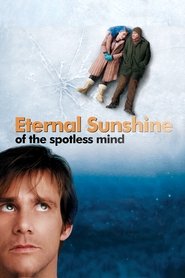
Eternal Sunshine of the Spotless Mind (2004)
Michel Gondry, Charlie Kaufman
-
-
-
-
director · 1h 37m 1 mention
John Cameron Mitchell, Justin Vivian Bond, Sook-Yin Lee, Paul Dawson + 1
-
director · 1h 36m 1 mention
Aliens vs. Predator - Requiem (2007)
Colin Strause, Greg Strause, John Davis
-
-
director · 1h 26m 1 mention
Underworld Rise of the Lycans (2009)
Patrick Tatopoulos, Len Wiseman, James McQuaide, Richard Wright + 1

Related topics
Other topics that frequently come up in the same commentaries.