Topics / Writing & development
Rewrites & drafts
57 commentaries in the archive discuss this, with 99 total mentions and 22 sampled passages on this page.
Filter commentaries
Filter this topic by the film's decade or the type of commentary.
Showing 14 of 57 commentaries
Clear filtersBy decade
Across the archive
ranked by mentions · click any passage for the moment in the transcript
-
-
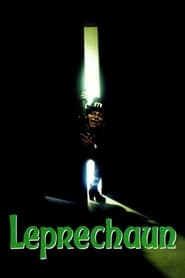
And as you can see, I really didn't want to take ourselves too serious. I really wanted to have not a straight-ahead horror movie, which my first draft of the script that Trimark bought, that was very horrific and no personality in a leprechaun. He was just kind of a killing... There's Gabe's credit. He was just a killing machine that became a monster, and then through rewrites and prepping this thing,
6:54 · jump to transcript →
-
I think we also ran into some time problems. We didn't want too short of a movie. Again, it goes back to I love to cut things, so this sequence did give us a couple of minutes of time. It's funny, when I look at it, I'm always wanting to recut everything and rewrite everything. I hear dialogue, I'm going, wow, why did I write that dialogue?
43:59 · jump to transcript →
-
And the Fuck You Lucky Charms at the end was written in a draft in 1988. My very first draft of this was actually written in 1988, and it's in there. I just checked. So that rumor I've dispelled now. I thought this was funny. Oh, there's also another.
46:51 · jump to transcript →
-
-
-
Paul M. Sammon
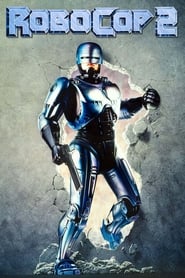
Frank Miller was rewriting the script on a daily basis. And by the way, there is a rumor that he was off the film. He was not. He was there. He was enthusiastic. He was right across from my office. I was right next to John Davison's office, right next to Kirsch's office, right next to Miller's office. Frank was literally writing every single day and running dialogue down and scenes down to the set. So this was a film that was written as it went along, which is never a good idea.
47:29 · jump to transcript →
-
Paul M. Sammon
And you can see all the videotaped stacks in the back, and boy, do I get nostalgic for a past that was more analog. Although, hey, believe me, I love digital just as well. And, of course, this is where Robo starts to interrogate a corpse. Now, this is actually a holdover from Frank Miller's second draft, which was done in April of 89 when Tim Hunter was still on. The Tim Hunter...
53:32 · jump to transcript →
-
Paul M. Sammon
So unfortunately, by the time Kirshner came on and there was the unfortunate diminution of Lewis's character, all of that got lost. So a lot of the human element that was in the second draft of Frank Miller's for Tim Hunter totally changed when Irv Kirshner came on. But again, that was not because of anything aesthetic. It was just time. They had to really basically write the script around the story.
54:22 · jump to transcript →
-
-
-
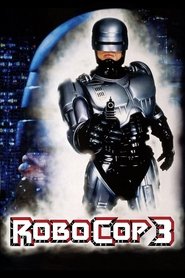
By the way, this is a lot of exposition that's happening here right now. If I had it to do over again, I think maybe a little less exposition and a little more cut to the chase here. So Shane was really busy. His star was ascending. I think he was writing Long Kiss Goodnight. And so it sort of fell by the wayside. And then a couple of months later, Michelle called me and said, would you like to direct this movie too? We'd like you to rewrite it and direct it. And I was a huge fan of the Verhoeven film. Huge fan.
2:23 · jump to transcript →
-
Did you have any interaction with Frank Miller at any point? Yes, yes. He knew I was a big fan. I did a rewrite, and I gave it. Here's my James Bond set. I said to Hilda Stark, I said, I want a James Bond set. Right. Watch Dr. No. And she said, okay, okay. There's another one coming up later. There's at least two, maybe three James Bond sets in this movie. Yeah, no, Frank was fantastic. I did a rewrite of his.
24:40 · jump to transcript →
-
first pass and then I gave it back to him and said, here's my rewrite, rewrite me. And it was, I remember it fondly, our relationship, you know, having Mexican food and talking about this movie and talking about comics and all that stuff. I think ultimately though, I don't know that he's a screenwriter. I don't mean that in a disparaging way because he's a great writer.
25:07 · jump to transcript →
-
-
-
In the script, you kept asking me, change this transition. In one scene, Fenster's there, and in the next scene, he's dead. And through every rewrite, I left this transition in until one day and you didn't say anything. I was thinking about, because Chris and I have a tradition, we bring our films home to our town to show them in a theater.
1:04:53 · jump to transcript →
-
I actually never expected that line to make it past the first draft, and draft after draft it kept getting by, and... I loved it.
1:17:56 · jump to transcript →
-
-
-
Yeah, this is a scene that Rachel and I were both very nervous about. We kept writing and rewriting it, and, you know, it's when you have your heroine and she's drunk.
52:09 · jump to transcript →
-
Or female lead, not heroin. Never mind. When you have your female lead and she's drunk, you're always a little nervous about scenes like this. You want to make sure they work like gangbusters. And we really took some time and kept rewriting it and rewriting it and massaging it. And at the end of the day, Rachel did such a terrific job. The audience really went for it, especially these lines that are coming up.
52:22 · jump to transcript →
-
-
-
-
-
-
-
-
multi · 1h 54m 1 mention
Jean-Pierre Jeunet, Hervé Schneid, Alec Gillis, Tom Woodruff Jr. + 5
-
-
director · 1h 31m 1 mention
David Steinberg, Dave Foley, David Higgins, Jay Kogen

Related topics
Other topics that frequently come up in the same commentaries.