Topics / Performance
Rehearsal
77 commentaries in the archive discuss this, with 193 total mentions and 26 sampled passages on this page.
Filter commentaries
Filter this topic by the film's decade or the type of commentary.
Showing 13 of 77 commentaries
Clear filtersBy decade
Across the archive
ranked by mentions · click any passage for the moment in the transcript
-
multi · 2h 19m 9 mentions
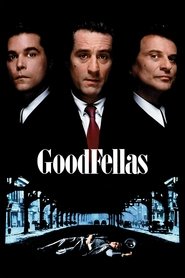
Martin Scorsese, Nicholas Pileggi, Ray Liotta, Lorraine Bracco + 9
-
provoking Henry, saying, Do you think I'm funny? Why do you think I'm funny? Ray Liotta. It was in rehearsal. We were talking, and Joe was telling a story about he was with somebody, and the guy was saying something funny, and it's just something that happened to him. It supposedly is a true situation. I know that, to a certain extent, I mean, just the way he moves and what he says, I know it's true. So Pesci has too much of a familiarity with what happens in that scene. It's too real.
19:56 · jump to transcript →
-
I mean, it is his book. It's his painting. In fact, when I shot the film, except for opening up the story at times for dialogue that we felt we could add, myself being one of the co-writers, could add primarily in rehearsal, really. Except for those moments. The rest of the film, I was usually in a very grumpy mood doing the film because it had already been done. It was on the page. I mean, it seems...
25:34 · jump to transcript →
-
and got everybody laughing because it's not easy to laugh truthfully. Everybody can go, ha, ha, ha, ha, ha, you know, like Burt Lancaster, but it's not from inside. So knowing this and I could see that in the rehearsal it just wasn't happening. And so I took out a little page out of my own little director's book and Martin let it all happen. That's the kind of great director he is. And he saw me doing it. I sort of took over in a way as instigator of the emotional condition.
35:37 · jump to transcript →
-
-
-
Tony Scott
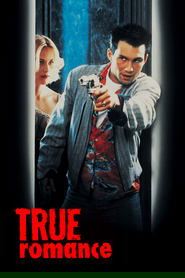
So here's the infamous scene between Chris Walken and Dennis Hopper. And again, I can only applaud Quentin here because this scene was totally on the page. We did a half day of rehearsals for the scene. And the actors, what Chris and Dennis brought to the scene was...
47:41 · jump to transcript →
-
Tony Scott
And there's a funny story here, because we rehearsed the scene, and when you're shooting on a set like this, you've got a choice. You say, okay, I'm going to shoot the left end of the trailer first, or the right end, because it took us four hours to take the end of the trailer off, redress it, and then put it back on again. And at the end of the rehearsal, we decided we were going to shoot Chris first, shoot the left end of the trailer first,
48:38 · jump to transcript →
-
Tony Scott
That wasn't on the page. That came out of rehearsals. When we were doing rehearsals, the guys were laughing so hard that we never got through one rehearsal in one pass because they thought the tone that they were giving in the scene was so good and so outrageous and so funny that they broke out laughing every time. And see, it's amazing. You look at Chris Walken's side of the scene, and this is the second day of shooting.
55:49 · jump to transcript →
-
-
multi · 2h 12m 5 mentions
Andrew Sarris, James Ellroy, Brian Helgeland, Michael Nathanson + 10
-
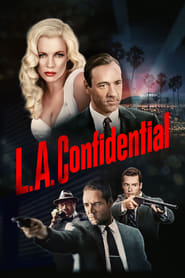
thing that happens in film is when they occur on screen while you're doing a take. That to me is, if you rehearse just enough, and you have just enough sense of where you might want to go in a scene, the magic happens when the camera rolls. Only one, up the stairs.
48:28 · jump to transcript →
-
you know what to do when this actor wants to rehearse a lot and this one doesn't want to rehearse much at all like how do you how do you balance that out and he's uh he's very skilled at that oh
51:55 · jump to transcript →
-
The rehearsal process was quite funny, really, because it was Russell and I and Curtis and Brian Helgeland sitting in a church at the top of Highland in Hollywood for about seven weeks, while Curtis was also casting the other characters. So we would sit around a table and talk about character and really figure out the relationship between the two and this, that, and the other.
52:52 · jump to transcript →
-
-
-
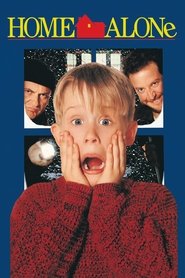
Hey, that's you. - That's me. So this was, uh-- I guess we... We could start about... Talking about the beginning of how this whole movie came about, really. I was in dire straits at the time, in terms of my career. I had just come off of a complete disaster, a big bomb. I didn't know if I was gonna direct again. I thought I'd have to go back to writing. So I was in Chicago staying at my in-laws' house... ...and my first daughter was just born... ...and John Hughes sent me, out of the kindness of his heart, two scripts. One was called Reach the Rock and the other was called Home Alone. One of them, it was rumored... I think it was this one. was written over a weekend... ...which some critics would probably jump on the bandwagon... ...and say, "Well, we always knew that." - Exactly. Ha, ha. So I read Home Alone and immediately responded to it. I thought it was just a great, great piece of material. And it talked about some of the things that I was interested in making a film about. Now, we had a meeting, I remember, in New York. I just-- It was-- You and my father were talking most of the time... ...and I was just imitating everything you were doing. Everything I was doing. - Yeah. You'd drink your water, I drank my water. Like that. I think I did that... I think I way overdid it. I think I just kept doing it the whole, like, hour. Well, you know, the interesting thing is we... Again, it was the kind of situation where we looked at hundreds of kids, again. And I was like-- Even though I didn't know if I'd ever direct a film again... ...I was like, "Well, you know, Macaulay was in Uncle Buck... ...and I don't wanna just cast him based on John Hughes producing the movie... ...because then it looks like I'm gonna give in to John Hughes and be a wimp." And I met all these... I met hundreds of kids. And when I met Macaulay, there was just no one else who came close... ...to what we needed for this film. I mean, really, in terms of an actor... ...a Child actor, at the time, you were the most unique, original kid I'd ever seen. So that was pretty... - Oh, thank you. I mean, I totally agree with you, but thank you anyway. But it really is-- It's sort of, uh... Because it was the fact that you, um... The camera loved you, obviously. You see the shots from the film. The camera loves you, but at the same time, uh... ... you were relatable to every kid in America... ...because you weren't an idealized version of a kid. Kids are used to-- Accustomed to seeing this ridiculously... Shirley Temple, and the curls and the whole thing, you know. And there was just something enormously real about you. That, and I could remember my lines and I had a lot of energy. That is true. You did have a lot of energy. Almost a sad amount of energy. It was, I mean.... Still do too. Uh, now, do you remem--? Like, this particular scene. We're starting from the beginning of the film. And I'm curious, because there were so many scenes in the film... We were talking before we started. where we would shoot your coverage first and then send you home... ...or I'd still be in jail. - Child labor laws. Yes, I'm still well-versed in the child labor laws. So there are obviously certain elements of the film-- Like this. Do you remember this being shot? - No. Because you weren't here. - I remember we did the whole... There was a whole sequence with, you know... ...people coming up the stairs, down. - Right. He's there, and the pizza guy's there. I remember that, and just like, you know, trying to coordinate that whole thing. But, no, in general, there's a lot of stuff... There's a lot of holes in it... In my memory. And this guy went on to do something on Nickelodeon. My kids know him. Yeah, Pete & Pete. - Yeah, Pete & Pete. Is it still on the air? - No, no. It lasted a couple years. It was actually a really kind of neat show. Yeah, my kids loved that show. But what was interesting about the whole look of this film... I guess we could talk about it a little bit. You'll even notice... Some people will think, "Well, this wasn't intentional." But we intended the film to feel like Christmas sort of. I wanted the house to feel very warm. You look at... - Greens, reds. Macaulay's wearing greens, a green and red shirt. There's a green and red jumper sweater on this guy back here. The wallpaper is all... - That's very clever. All conveying a warmth of Christmas and something that, uh... It just was interesting to us. So it wouldn't be over-the-top, but it'd feel warm. I wanted the house to feel like a warm place. Joe Pesci. What do you remember about Joe Pesci? What is, like, your first--? My first-- Gosh, I don't even... I have-- I still show this. I have a scar on my finger. - Uh-huh. We'll get to that part near the end... - Ha-ha-ha. ...when, you Know, he says, you know: - Okay. "I'm gonna bite each one of your fingers off, one at a time." During rehearsal, he actually bit my finger a little harder than I think he thought. I still have a little scar on my finger. It's my little Joe Pesci tooth mark. I'm telling you something, I believe... And I know Joe would probably get a little upset with me about this... ...but there was a little professional jealousy from a lot of the actors on set... ...because you were the star. There's this little kid who was the star, who we were all paying attention to... ...who was carrying the film. And there was a lot of passive-aggressive stuff going on. And I don't think Joe meant to bite through your finger... But, heck, you know, you never know. He was not particularly happy during the course of making this film. And I don't-- I think he would probably say the same thing. He had just come off of Goodfellas and Raging Bull, and he was... I don't know, did he win the Academy Award? He won for Goodfellas. His acceptance speech was, "Thanks," and that was it. Okay. Well, there you go, so, um.... And when he... I remember I was such a fan of his. Asking him to do the Goodfellas... The clown speech, you know. "Make me laugh," you know? "What do--? Am I funny to you like a clown?" And he would do that every day, and it was great. But at the same time, I could feel it from the actors. Because there's always a sense of rivalry between actors. There was this feeling of, you were the star of this movie, and that was un... That was not really common at the time. - Yeah, yeah. It created an interesting tension on the set, I have to say. Yeah, see, I never really felt that, but I was 9. Everyone around here knows he did it. It'll just be a matter of time... ...before he does it again. What's he doing? He walks up and down the streets every night... ... Salting the sidewalks. Maybe he's just trying to be nice. No way. See that garbage can full of salt? That's where he keeps his victims. The salt turns the bodies... ... Into mummies. Wow. - Mummies!
0:21 · jump to transcript →
-
So this, uh.... What's interesting about a lot of this movie is we would always put fake snow down. The foam and stuff. - The foam, and that's really... We had a Wisconsin ski... A bunch of guys who worked for this ski resort in Wisconsin put down snow. But... - That poor statue. Yeah, the statue was a running gag, and this guy... A lot of this movie was made on an extremely small budget. At the time, the picture was at one studio... ...and that studio didn't wanna make the movie, because of a $2-million difference... ...and it went over to Twentieth Century Fox. And we still were... We still made the film for a little above $18 million... ...which at the time was still a small budget. So we had to make things stretch, which we'll talk about through the picture. One of the great things about working with Pesci, I have to say... .IS his improvisational skills were terrific. And it was because of his training with Scorsese that... ...even on a picture like Home Alone, really comes in handy. He's a very funny guy, Joe. - Yeah. And his comedic instincts were really something I'd never seen before. Little snippets in pictures like Raging Bull and Goodfellas. But his ability to improvise was just phenomenal. And then John Heard. I cast John Heard because John Heard was someone I was always a big fan of. He was in this picture... It was called Cutter and Bone. Now it's called Cutter's Way. And his performance should've gotten an Academy Award. I've never seen it. It's Jeff Bridges and John Heard, and he is just amazing in that film. I was a huge fan, and it was always a dream to work with him. He also did this old film called Head Over Heels. And he was kind of a leading man back in his day. He's just a wonderful actor... ...and another guy who didn't really know why he was in this movie. At the time, he was sort of like, "Why am I doing this?" I remember feeling a certain amount of discomfort from him. He was like, "Why do I have to do this? Why am I in this kids' movie?" You know? "I'm a good a--" Understandable. No one really knew what this movie had the potential of becoming. We had always hoped it would be successful, but we never knew. Um.... Pfft. I always knew. You always had an idea. - I always knew. Now, this scene. Do you remember coming in on a Saturday to rehearse this scene? Yeah. - We had to rehearse this because it was so... Which was so chaotic with everybody. We ate so much pizza. I didn't wanna eat lunch. And this is something that was interesting. We... You'll notice that there's a rare shot in the film where... There's your brother. - Yeah, there he is. How are you guys--? He's working now, right? He's doing very well. Oh, yeah. He's doing very good, very well for himself. Un, this is typical of the style of this movie. Not the vomiting, obviously... ...but the separation of actors in certain scenes. Because Macaulay's time was so valuable... ...we needed to shoot Macaulay separately... ...and sometimes other kids as well. So you'll always see... I tried to block sequences where I could sort of keep Macaulay off by himself... ...and keep the other actors in another space... ...so I could shoot people separately. Child labor laws again. - Child labor laws. And we're-- And Kieran had to reshoot the chair in the face, I remember. Oh, yeah. - Like, he had to come back later. He was upset he had to get his hair cut like Fuller again. Oh, he was? - Ha-ha-ha. Well, he-- We made a special, very light rubber chair... ...so when it... - Yeah, that's... Yeah. That's-- I remember that. Catherine O'Hara was someone who I had, uh... ...Just loved her work on Second City TV. - Yeah. I mean, I was, uh... Aside from Saturday Night Live at the time in the '70Os... ...Second City Television was the-- Sort of the place where you learned about comedy. And for me it was... I was just such a huge fan... ...SO It was, again, a real honor... ...to be able to work with her on both of these films. Yeah, no, she's incredible. Even just the stuff she's doing now. She's still--? Oh, it's great. It's great stuff. Both of his kids are still going to school here. I guess he missed the family.... You got a pretty good cast. Yeah, it's kind of interesting for a film that... But we treated it... The weird thing about this film... ...and the reason I think the film has kind of stood the test of time for a lot of kids... ... IS because we always treated it with respect. We never felt that we were making a movie for kids. We were making a movie for the parents as well. It had a lot of appeal. And you never-- You wanted to... You wanted the photography to have a certain elegance about it... ...and the camera to be moving. And it was really never... So many times today, people try to make kids' movies... ...and they always cheapen them. And we never-- I mean, certainly we got cheap with our jokes. Let's not pretend that we didn't. - Ha-ha-ha. Oh, yeah. No, I mean, it's Three Stooges, you know? - Anything for a laugh. I
7:04 · jump to transcript →
-
Hi, pal. We outsmarted you this time. Okay, he's about to bite my finger. Now, how is it possible that he almost bit through your finger? It was a rehearsal. He didn't bite through it. He just... - But you still have a scar. I still got a little scar there. - Yeah. But it was only in the rehearsal, it wasn't in the take. Now, Marley, here.... Here's a really poor example of stuntman... The stuntman who hits... - Oh, it looks nothing like him. It's just like a 14-year-old guy. Look at that. It's just-- It's one of the things on a low-budget film you can't control. So he was a good stuntman. Unfortunately, he was still in high school. Pretending to be a 75-year-old guy.
1:29:42 · jump to transcript →
-
-
-
to set up and rehearse, and the frequency of visits from Joel and then the studio executives, and then even Lisa Hansen, who was the head of the studio at the time, dropped by to casually say, are we going to have a shot today? So that was a very tricky shot to set up. Oh boy, the things I don't have experience. And this is Sandra Bullock, who plays Lenina Huxley, which is
11:53 · jump to transcript →
-
And we rehearsed it with a stuntman. And the stuntman was injured because of this rap. This is the conveyor belt scene. So that was actually shot in the studio. Oh, I get it. Yeah, I was wondering. But this shot as well was with a camera car being on a trailer. And I think we did some of it with rear projection, like old school rear projection as well with the two real actors.
1:33:31 · jump to transcript →
-
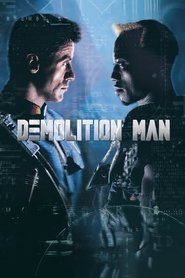
using some elements from the other sets and reusing a lot of elements and then staging these scenes inside the convention center and this is where huxley is forced to resort to violence and she's good at it what did sandra bullock get to think of this finally going to do some action she rehearsed i mean date again working with the same martial arts
1:38:50 · jump to transcript →
-
-
-
the first introduction to Malcolm McDowell I have a very strong memory of, which is this was the first scene I shot with Malcolm. We'd been rehearsing together, and he was fantastic and very enthusiastic about doing the show and very happy to be off. He'd just done Star Trek, and he was happy to be doing something much more in tune with his past. But he walked on set in the scene and said...
7:42 · jump to transcript →
-
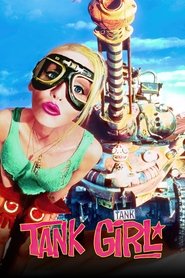
Those are my Michael Jackson tape fingers. I have Michael Jackson tape fingers and I'm League of Their Own too. Because that's how nerdy I am. And here's the Ripper dance, which Ice-T was like, there's no way I'm dancing. Ice-T was like, yeah, I'm not doing that. I'm just sitting in the chair and that's it. And I'm like, okay. Because Adam's like, he won't come to the choreography scenes, the choreography sessions, rehearsals. And it's like, okay, now I know why.
1:17:43 · jump to transcript →
-
-
multi · 1h 54m 2 mentions
Jean-Pierre Jeunet, Hervé Schneid, Alec Gillis, Tom Woodruff Jr. + 5
-
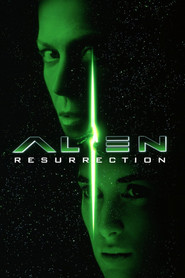
I do have to ask, you know, why they would transport a little cube of jelly as opposed to a container of liquid. That's a big question. - It was square. That's a real big question. But anyway, the effect is funnier. - Yeah. At the beginning it was more complicated, but because of the time-consuming... The effect was very simple. We just had the glass with water, and then the cube, and then to check a little bit the water to have some effect, and a quick morphing in post. It's efficient. I love this one. I remember the story about the lemons. Dan Hedaya found this idea during the rehearsals. It was a good idea, but he had to eat lemons all the day. At the end of the day he was sick, because he ate maybe five, six lemons... to match the shots. But Michael Wincott had to smoke all day. Yeah, but it's not foreign for him. -
22:12 · jump to transcript →
-
So acting like you can see something when you can't see something. That's great. Was it a practical? - Yeah. We built some wax aliens to blow up for that moment when they blow up. The explosion's practical and the bubbles are real. Everything was really here. Tom was in this underwater - in the suit as well - for a couple of shots. That's a beautiful shot. - How deep was it? 15 feet? In a closed set. You couldn't swim to the surface if you wanted to. The difficult thing about this was that the rehearsals you performed with a mask on and breathing from a breathing apparatus. They were all calm. You were marking what you were going to do in that particular shot. You were gonna swim from here to here. This was your action. When they were satisfied that everybody knew what it was they were supposed to do, there's a countdown from six where you're asked to take six deep pulls of the oxygen. When you get to two the mask comes off. Then you're blind. The mask comes off then so there's no bubbles in the shot. You hold your breath for as long as it takes for them to slate, then start the action. In postproduction we put some noises, some voices, and we recorded the voices in a swimming pool with pipes, like... ...to put the pressure, to feel the pressure. This thing - there was no escape from this. You swam up into that thing. The only way to get out was to swim back down and out. Waiting in the wings would be stunt doubles with hookah masks for us, once the shot was completed, to give you air. In rehearsal you could go longer. It was calm, you were swimming gently. Once you were acting and the energy was up you used more oxygen and there was less time to stay under. Virtually every shot in the sequence you're in jeopardy, so the stakes are high. You're operating on pure adrenaline, which is not the case in a calm rehearsal. And then you got Jean-Pierre on a microphone screaming: "I want to see bubbles because they are making it look like you are afraid." So the bubbles are created by you getting rid of your whole store of oxygen and you're only good for about half of what you were during rehearsal. Made it difficult. I don't know about you, Leland, but I for one ran out of air on five separate occasions. Yes. - And started for the surface. Unfortunately the surface was a ceiling because this is a kitchen set. So there was no escaping it unless you knew where the escape routes were, and since you're blinded and disoriented as to where you are at any given time... I was literally saved five separate times by stunt divers who saw me panic, saw me swim for the surface, saw I wasn't gonna make it, followed me and stuck this thing in my mouth. We each had one assigned to us. I just remember the one time that the guy who was assigned to me that day decided to take a bathroom break during one of the takes. I ran out of air and there was nobody there. Remember? It was your stunt double who gave me... I shared air with you guys. He was so used to saving my life that he was just on guard.
1:11:06 · jump to transcript →
-
-
-
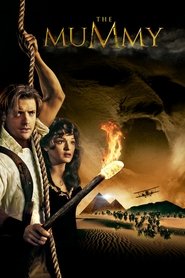
The way those shots are accomplished is that they're rehearsed initially... ...with Arnold Vosloo in the scene with her... ...so that the eye line is figured out... ...and exactly what the performance is and the timing. And then the actor, Rachel, in this particular instance... ...has to go it alone and work without anything else in the scene. And, of course, the mummy is added in post-production.
1:13:56 · jump to transcript →
-
We rehearsed this scene over and over without the rat. And then we put the rat in for this take. And Rachel, you know, here she is, she sees the rat, feels the rat, she sees the rat, and she turns and the rat happens to jump over onto the female mummy. And right as I called cut, the female mummy flapped off the altar screaming. She wasn't expecting the rat to jump onto her. She was petrified of it. But I thought she was a real trooper to just sit there and not move until I called cut.
1:40:13 · jump to transcript →
-
-
-
-
-
-
Related topics
Other topics that frequently come up in the same commentaries.