Topics / Performance
Rehearsal
77 commentaries in the archive discuss this, with 193 total mentions and 29 sampled passages on this page.
Filter commentaries
Filter this topic by the film's decade or the type of commentary.
Showing 17 of 77 commentaries
Clear filtersBy decade
Across the archive
ranked by mentions · click any passage for the moment in the transcript
-
-
Eleanor Bergstein
We spent days and days rehearsing the dirty dancing steps, and we had a theory. We had eight dirty dancers who we had cast in New York, and Kenny Ortega, our wonderful choreographer, and I had danced for them, and we'd hired these kind of gypsy dancers who were great, who you will see. And then we had a whole crew of dancers here in North Carolina, and we, for three days, shot the dirty dancing sequence. When...
13:58 · jump to transcript →
-
Eleanor Bergstein
said there was a rule that said the guys couldn't contact the girls for six months after film and the guys I remember came up to us and said is this six months after we've started rehearsing or six months after the film comes out and of course we had no right to enforce any of these things but it was really rather sweet that they were trying to be this careful and specific about it. I think
17:10 · jump to transcript →
-
Eleanor Bergstein
Jennifer is absolutely wonderful. We had had a camera running in the dance department all the time that we were doing rehearsals, which was very useful, because when Jennifer went back to dance, she said, I was never that bad, and we had to show her the early sequences to show her. There is Cynthia, who is so beautiful. I think it's just wonderful. And now comes the sequence that I think everybody remembers so well, when a baby comes up. Now, we were talking about casting earlier,
17:38 · jump to transcript →
-
-
-
one thing holly's such a great actress and she was uh but she was afraid she couldn't cry on cue so during the rehearsal period and we had an we had a big rehearsal period on this there's polly's credit a big rehearsal period on this um she would have me just at times without warning take her into another room and ask her to cry just so she could be ready for this
7:37 · jump to transcript →
-
I want him to like me, there was no little, he's a big deal. There was none of that. These are deeply trained actors who just did their work together. I don't hate them. Well, they say if you can reach even one person, it means something. I think we did three weeks rehearsal, but Bill didn't rehearse, which turned out to be good. He had something else that he was doing. It turned out to be really good because he came in and he was playing catch-up, which was good for his character.
13:03 · jump to transcript →
-
We rehearsed this scene so thoroughly, and there was so much passion in the rehearsal as well. It was always this, you know, mountain there to be climbed. And everything was to sort of just put life in it and to sort of...
1:32:53 · jump to transcript →
-
-
-
Roger Moore
and all these prosthetics on my face. And they had 35 seconds to get them off so that I could then be 30. And then they had 40 seconds to get them back on. And by the time we'd done two dress rehearsals, they'd taken all the skin off my face. I had the one hand that was made up old and the other hand that was made up young. So when I had to do a fight with this hand that was made up old, would I use the left hand?
22:33 · jump to transcript →
-
Roger Moore
To do a fight, you have to choreograph it the same as you would a dance routine. You can't just go in there and sort of wave your arms around. You have to know where you're going. You set points to move to. So, first of all, the camera's got to be able to photograph it, the second camera, because usually in a fight, you have it covered by two or three cameras. And you rehearse. And hopefully, you...
1:16:11 · jump to transcript →
-
Roger Moore
rehearse enough so that nobody gets hurt. It's not always the case. Oh, hell. Sorry, Granddad.
1:16:39 · jump to transcript →
-
-
cast · 1h 36m 3 mentions
Anthony Michael Hall, Judd Nelson, Jason Hillhouse
-
Judd Nelson
There's Judd. Right on. I told the story when we did the interview before with Jason, that you came to the audition just so ready, man. You were just there. You were already there. That's a long time in high school. - Yeah. All seven years of high school really paid off, and you got a great role. Judd, you were great. I remember from the day you came in for the audition, you just came in, like, "What movie? Can we start, or what?" Even these rehearsals, 'cause, John, if you remember, man, we did rehearsals in this space 'cause this art department had constructed this. And it was inside a gymnasium, so we had the benefit of working as if it were a stage, and it was already there, ready for us. It was cool, 'cause the studio took over the school, in a way. So, we could turn their gymnasium into this library. However, at the time, there was a USFL football team, the Chicago Blitz, they were practicing and using the school as their home base. So, they practiced in the big gymnasium. Not anymore, it became the library, and they went to the old, small gym, or had to go outside. And it was Chicago, and it was really cold, and they hated us. These hulking dudes would be like, "Get out of the way." I miss Paul, man. Paul was great. - Yeah, he was a cool guy.
4:49 · jump to transcript →
-
Judd Nelson
See, this is where it was cool where we had John. He was definitely a collaborative director and sought to get the best out of us all, and was looking for behavior, you know. So, I think, the wisdom of he and Dede Allen and their choices in making this all work, 'cause we had so much footage, it was great to see. All these years later, we take it for granted, what we see the final cut to be. But the truth is that, like we were talking about, Dede would come to the set and she would closely work with John. And also, he gave us the freedom to play and just have fun. And certain things, like the stuff you're seeing with Judd spinning around. I'm sticking a pen in my mouth, stupid stuff. We had no idea whether it would arrive in the film or be a part of it. I didn't. We were just having fun. But once we knew what the space was, we had the parameters. Rehearsal was key. - Yeah, it was like shooting a play. That's how I recollect and look back at it. We shot this play for 35 days and we were... Mostly in sequence. - Yeah. Yeah, we were fortunate to be extracted from Hollywood, and all of a sudden in this suburban gym of Illinois, not far from where John had grown up. So, it was a fortunate thing that we felt like we were shooting a play, 'cause we also had a week of rehearsal, which was... No, we had more than a week. - Was it more? We had more than a week. In fact, we weren't done with our rehearsal time when Hughes went, "We're ready. Let's go." All the work we've done keeping our faces in the industry since and maintaining our careers, it's still... To this day, I don't think I've ever had that since. So, it was a real... A real rehearsal. - Yeah, it was a real luxury. It was also a lot of fun, 'cause it really bonded us and gave us a chance to get a sense of where we were all at, and also made the work better, yeah. And we built real history, as opposed to that you believe you've made up a history. We actually had real experiences. Even if it's something as simple as dinner four nights in a row, you at least have some real past and things will reveal themselves to you further along in the work. And Hughes really wanted it to sound authentic. So, he never limited us. If you came up with something, you never felt like, "Oh, wow, "we took it beyond the text." Big deal. And he was always looking for it to get to that point, anyway. The freedom that he gave us, the idea that he would trust us like that, which is the point of the film. Just because they are 17 years old doesn't mean they are 17 years dumb. There's a weird thing, though, about rehearsals and stuff like that, where you think... You even said, "I've never done that before or since." It always seems to work out when actors and stuff get those chances. You hear those stories over and over. But, for the most part, people, they just don't do it. Yeah, in terms of genre, too, this is something that broke a mold, in a way, 'cause it was, in the industry talk, a talking heads film. It's really about a bunch of people sitting around, talking. So again, the play analogy comes into play. We really felt like... I remember rehearsing, and we were in these positions. I remember walking into that space, and John going, "Okay, you sit over here." We would rehearse these scenes. So, by the time we shot them, we all had a good sense of each other. We were a solid group, and we also knew where we were going with it. Now it looks like a luxury, but to this day, I've often looked back and thought about that, that it was great intelligence in just doing that, putting us in together. We sat in a room... - I thought they were all gonna be like that. I really did. I look back on that and that is a high-water mark in terms of the importance of having everyone being on the same page. Right. If you get rehearsal time and if you shoot in sequence, it's not like you are trusting the other actor to know that in the scene before this they actually threatened to kill me. So, it's a little bit heavier. You don't have to do that because before we shot this scene, we shot the scene where he threatened to kill me, so we know that. It's a great collaboration. You don't realize it till you're blessed enough to work in the business. When you're on the set, you see that there's... You know, sometimes the best idea will come from the script supervisor, or sometimes it's the guy at the crafts service table. It's a great collaboration, even though it's a director's medium. I think that sense of support was instilled in us with John, 'cause he gave us these roles and we all knew what we were doing, but he always was collaborative that way. I think that was his intelligence, too, that he allowed his scripts to transcend even the beauty that they had, because he hired people that he believed in. But there's a great collaboration, always. When you're talking about rehearsal, you're talking about the five of you guys. Were Paul and Kapelos kept away a little bit, to let you guys have your thing, a little "us vs. them" a little bit for that? Well, that was happening right away. Also, 'cause Paul wanted to hang with us, so that was perfect, 'cause it gave us the power to say, "No." So, we could. But you guys rehearsed those scenes, right, with you and Paul? But he wouldn't necessarily be sitting there on a day when... Just the five of us. - ...it was the five of us in that rehearsal, if we were gonna get to that stuff. We wouldn't do necessarily whole read-through of it. We would be taking it from the first scene and rehearsing it till it made some sense to us, and John knew, basically, how he wanted to see it and how he wanted to shoot it. It's a business, at the end of the day, like anything else, so there's always such a sense of the clock and rushing, so, as Judd said, a high water mark in our careers to start with this great project, and we had these great roles and a well-developed script. But he was smart enough to sit us all down and get our input and let us work through it. So, once we got on our feet with this and we were shooting the scenes, we had a closeness and a vibe already flowing between us. But it's funny you said that, 'cause I thought the same, too. I thought it would be like this after, and usually the director is the most stressed-out, doesn't know what the next shot is. It's like the world changed after this. But part of it was the good fortune we had to be in Chicago and do this. It was at the beginning of his career, after Sixteen Candles did pretty well, even though it was a small film. I think I remember him telling us that his intent was to do this first. I think the studio was gonna make this film first and they flipped them. So, we were fortunate to be away from everything and... Flipped it and Sixteen Candles, you mean? Yeah, exactly, in terms of the making of the films. So then we did this project second, and then we were, again, just in Chicago, and that sort of remote quality helps it, too. It's a lot of the fun of it. 'Cause then you came back here to do Weird Science, right? Yeah, that was fun. There is something about that, pulling it out of Hollywood. That's clichéd, "Hollywood's bad and you can't get anything done." But there is something to be said about that. Well, the story takes place there, and that's where he lives. Why not put it there? It's easier, it makes the most sense, and for the actors, it's one less thing you have to imagine, and hope everyone else is imagining the same thing. In fact, it is the same room where we're gonna go every day. It's a school. - Right. I remember, I went to some local schools, too, in that area at the time. It was fun just to get a sense of what... 'Cause I hadn't had that kind of upbringing. I grew up in New York City at a liberal arts high school. It was a different experience. It was a boys' reformatory, wasn't it? I was away a lot and... Very religious, wasn't it? - That's part of the fun, actually, just to get out of the mix, to be somewhere else. As an actor, the gift is getting the job, and then the sense of exploration is enhanced, I think, by being somewhere on location. It's fun. Makes it part of joining the circus, I guess. So, what, you guys went to an actual school, went in, mixed with the kids, did that whole... Yeah. Yeah. - I did some of that, yeah. Yeah, Hughes arranged it for us to go. I know that Ally, Emilio and I went to this high school, and the principal knew, but most of the teachers didn't, and it worked out perfectly. It was a school that had two halls, one called Jock Hall and one called Freak Hall. And I was like, "Are you kidding me? That's perfect." I just waved to Emilio, "See you at the end of the day," and then went over to the other side. It's great 'cause I was over 18, so I met some guys and I could buy them beer. I was like, "Yeah, I got an ID that'll work. Come on, let's go get some beer." Just treating it so poorly, it was perfect. You didn't get put in detention at that school, did you? No, but I did get sent to the principal's office, the one guy who knew that it was okay for me to be there, so it was perfect. I hadn't found my classroom yet, out of Freak Hall, and I didn't have a classroom, so I was always going to be found out there. Bender, that's school property there, and it doesn't belong to us. It's something not to be toyed with. That's very funny. Fix it. You should really fix that. - Am I a genius? No, you're an asshole. - What a funny guy. Fix the door, Bender. Everyone, just... I've been here before. I know what I'm doing. No. Fix the door! - Shut up! God damn it!
8:42 · jump to transcript →
-
Judd Nelson
I never did it, either. At this point, too, just where the industry was, there was no video village, so one of my best memories is of John being there. He would just sit behind the camera. He would be sitting on the floor with us, just like the camera operator would be on the floor to get these low angles. He was really there, part of it all. It was great. Was he a good audience? - He definitely was. Yeah. And he was a real audience. He wanted to be moved. In fact, that was a great lesson, to see a director lens his project like that, to be that invested in it. It was cool. It's a tricky thing where you have a director and sometimes it can be, everything you do is great. Like they want you to feel comfortable and they want you to feel like, "Everything you do is great!" But there's a bullshit meter that I think you get as an actor, where you go, "No, it wasn't." And you gotta get that level of trust, where if John says it's good, it's good. Yeah. - That kind of thing. Was he pretty good about that, too? Without telling you, you suck or something. No, that's the thing, you have to be very pragmatic as a director, always aware of the clock, so in lieu of all that, I never felt like he was rushing us. It was just the opposite. I think he would work on your performance with you. It was cool. And he would give us the freedom to try things. He would allow us to know that we maybe tried something that was no good, too. If you did something that was no good, he wouldn't say, "That's not very good." He would look at us and be like, "Yeah, I guess that one wasn't so good." You know what I mean? He would let us find it for ourselves. There's a paternal instinct, I think, that directors need to have. But with him, he felt more like a big brother. He wanted us to shine. He wanted to see us get the best out of it. So, he was never really precious about his words or anything, which I found to be really cool. - It was cool that even after all that rehearsal, even once you get on set, the crew's around, the pressure is on a little bit, like you said, time is a factor, trying to get the day. And he still gave you time, even after all that. You know that classic image of... It was a saying of, I guess, Jack Lemmon's, where he talked about "magic time." John was a director that appreciated that. When the camera's rolling, he was the first audience. He was the guy right there with you, watching as if it was one of your parents in the bleachers or something. So, that was a really cool thing because he was the writer, and, of course, in that sort of paternal spirit, we wanted to impress him, him to be happy with what we were doing. At the same time, it was never any finger pointing. He just guided you through the performance. And he had a great way of, I think, empowering all of us to put our best foot forward. It was cool. His scripts have a lot of heart, and Hughes has a lot of heart. He can hear the truth, I think, and if we did something that had strayed that sounded like that color of truth that he wanted, then it would stay. He also was... I just found him very encouraging. Yeah. - As a person and as a director. And that's like a captain. If the director is the captain of the ship, I would like the captain to be encouraging if we're gonna come upon some high seas or dangerous times. Crunch time, you want the captain to not be treating you like you're something he wants rubbed off the bottom of your shoe. Because I think we would have done anything for him. I think we probably still would. It's interesting, too, because in the structure of the film, it all leads back to these scenes. I guess for everybody it becomes therapy at the end here, where we're all sitting around literally like a group therapy, as is the image of the wide shot. - Yeah, that trust is important. You want your other actors to be alive in the scene. And because this, in real time, came later for us, as it does in the movie, shooting in sequence, you don't have to earn the respect from the people around you. Right. - It's already done. Suddenly, the only redemption that we can find is with each other, and that's the surprise, I think, at this point. Where everyone is peeling away, becoming naked to each other. I think that's part of the reason why it's so important, too, the way they cut this. Emilio is doing the thing, and the camera pans around him, right? And then we go and we get everybody's reaction shot while he's still talking because you guys are going through it, too. - Yeah. He's like this... He's like this mindless machine that I can't even relate to anymore. "Andrew! You've got to be number one! "I won't tolerate any losers in this family. "Your intensity is for shit! Win! Win! Win!" You son of a bitch.
1:10:08 · jump to transcript →
-
-
-
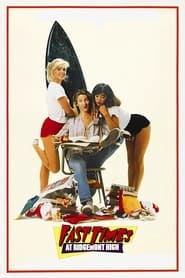
He would write me these little notes that was like, you know, aim, you know, costumes went very. Wow. And then when we were going to rehearse, and I had never rehearsed before, so I didn't know what you were supposed to do. And I thought, okay, let's just all go to high school and we'll have a pretend class. Oh, wow. I didn't call it rehearsing, I called it pretending.
28:03 · jump to transcript →
-
How great. And so he said, well, okay, but I don't want to be in the class. I want to like, you know, barge in on it. And he decided him and his friends would like disrupt it and they'd bring Chinese food. And that was the only rehearsal we did. That's right. So his thing was he felt the other characters looked at Spicoli a little bit as a nuisance. Yeah. And so he was a nuisance to them. To them.
28:28 · jump to transcript →
-
-
-
I said, yeah, you know, that's fine, Steve. Let's rehearse it a few more times. And each rehearsal that he did, he'd bring it down more and more and more until we got to this. But you know what? He came in and he said, your secretary gave me the wrong scene to read. And I thought, fuck. You know what? We've only got one day to shoot this. It's winter. It's a dual aspect, Windows.
14:56 · jump to transcript →
-
I had no rehearsals with anybody. I didn't know what I was going to get until I got there. There was no time for rehearsals. I would have loved to have seen that performance before we were on set shooting it. That was the first time I saw it. It was almost too late to do anything about it at that point. This is what you're going to get, George. This is what you got.
44:31 · jump to transcript →
-
-
cast · 1h 36m 2 mentions
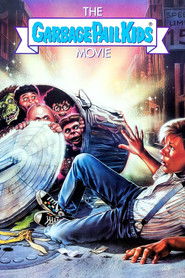
The Garbage Pail Kids Movie (1987)
Mackenzie Astin, Katie Barberi, William Morris
-
All the, you know, their vision being completely... Vision and sound. Non-existent. And the screenplay and some of the production value. It really was the blind leading the blind. It really was. But yet, we could not see and we walked forward. Did you have... We could not see. Did you have a lot of rehearsal? Speaking of all these things with all the heads and not being able to see, did you run through a lot or was it kind of just going for it?
19:41 · jump to transcript →
-
Well, I mean, I believe we rehearsed and shot like pretty much anybody rehearses and shoots, you know, on a motion picture. I mean, they did cover us. You know, we had our masters and we had our tights and we had our medium shots and what have you. But there was not a lot. I remember the, I don't think there was a table read. Was there not? I don't remember. No, not that I can recall. Yeah. I don't remember a table read. So this was Alligator and he was played by a fantastic actor.
20:09 · jump to transcript →
-
-
director · 1h 24m 2 mentions
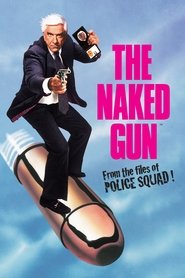
The Naked Gun: From the Files of Police Squad! (1988)
David Zucker, Robert K. Weiss, Peter Tilden
-
But Leslie's great. He never lets on that it's a comedy. He just... And was unaware we were shooting most of the time. Yeah. He thought this was a rehearsal. But he was terrific. Does he take a lot of takes to get it right? Okay. No, no. No, it's not him, but we do a lot of takes. Yeah, because? Mostly we can't remember which ones are the good ones.
39:24 · jump to transcript →
-
Remember they tried to build some baseball launcher thing? The ex-German rocket scientists we had in the effects department. That thing never worked. Probably just threw them up in the air. Is that the one we labeled the pigeon shooter? The pigeon shooter, yeah. That scared some people. They thought we were actually going to shoot pigeons with it. Those were the days, huh? Oh, you remember this? We rehearsed this. Well, do you remember we came in with all the dailies for this and the editor said, what's a rundown? Oh, yeah. It's like, uh-oh.
1:12:55 · jump to transcript →
-
-
-
-
-
-
director · 1h 31m 1 mention
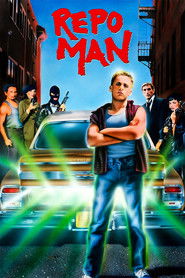
Alex Cox, Michael Nesmith, Victoria Thomas, Sy Richardson + 2
-
-
-
-
Related topics
Other topics that frequently come up in the same commentaries.