Topics / Performance
Rehearsal
77 commentaries in the archive discuss this, with 193 total mentions and 48 sampled passages on this page.
Filter commentaries
Filter this topic by the film's decade or the type of commentary.
Showing 24 of 77 commentaries
Clear filtersBy decade
Across the archive
ranked by mentions · click any passage for the moment in the transcript
-
director · 1h 37m 11 mentions
John Cameron Mitchell, Justin Vivian Bond, Sook-Yin Lee, Paul Dawson + 1
-
Between your lips and attached underneath your leg. It's always clear. It was hard to get a take without me, especially, cracking up during it. I think that was, in some ways, the most fun moment of the shoot. There's Lindsay Beamish. This is Severin. Lindsay Beamish, we met later in the rehearsal process in Los Angeles when an actor dropped out
2:16 · jump to transcript →
-
This is Ray Rivas, who is the most awesome performer playing Shabbos Goy. He's amazing. He's funny as hell. Remember the rehearsal where he got shot the week before? Yeah, he got shot. We're going to talk about that in the deleted scene. But he is a performance artist. He told me that he did a performance in that exact space in Dumba where he was, like, hanging from hooks and...
23:52 · jump to transcript →
-
We had more time to rehearse with you guys. These guys, Jan and Shanti, really jumped right into the short bus stew. Didn't hold back. In the middle of an orgy. Yeah. It was so funny when you were talking about watching the group sex there. Remember it?
31:00 · jump to transcript →
-
-
-
rubber sword there. Always amusing to... Try to cut around. Yeah. Also, when Freddie gets thrown across the room there, he suddenly becomes giant for a shot. That was his double. If you go back, you look at that sword under the... the old sword under the armpit stab. It's funny, though, with the sound effect, it's really effective. The actors here rehearsed and rehearsed, but on the day Ade nailed...
30:29 · jump to transcript →
-
Big shots like that, you don't think about, but not only do they have to be lit and we have to rehearse it and get everything ready, but then we have to light all those flambos and light all the torches and wet down the floor. And sometimes by the time you're done, the floor is dried up or the fires have gone out. It's a funny thing about torches. You see all these people use torches in movies and you think, well, they last forever. Those torches, any kind of torch like that, they'll stay lit maybe three or four minutes, max.
37:27 · jump to transcript →
-
Doc's hand shakes there. He's afraid. This shot, it's funny because this shot is slightly out of focus at the beginning. And we picked it. It was actually just a... They filmed it, but it wasn't actually supposed to be a take. It was a second unit shot because it was a motion control camera that took a full day. This shot right here took a full day to do. And so second unit got it. And we decided the best take was their rehearsal take.
55:23 · jump to transcript →
-
-
-
And then he showed up for rehearsal six weeks later looking like that. He had put on 25 pounds of muscle. Like that? Like that, yeah, no, that, exactly. And there was a gang bang triple play. By the way, is the Andrew Davis name on the cover any sort of, was that just a coincidence? Is there an Andrew Davis name on the cover? Yeah, and the one cover of The Girl, one of the bullets on the front page is a blurb about Andrew Davis. Does he owe us money for that? I don't know. I don't even know if you know him, but I wondered if that was any sort of illusion.
7:06 · jump to transcript →
-
In the script, they sort of spoke a lot more of their thoughts than you needed to show in the movie. Well, again, there was a series of scenes. You cut back to this diner. I love this lady. She doesn't care less about getting them coffee. And by the way, to any first-time director, whenever you're directing a scene with extras in the background, after the first rehearsal, or during the first rehearsal, don't even watch the actors. Watch the extras.
50:18 · jump to transcript →
-
I don't, I'm a vegetarian. She ate 75 shrimp. Wow. Because this is one scene that I did cover. I even shot a third angle. Sure, this one. And the poor girl doing take after take after take. And I went up to Taye. I don't know if I should tell this story. I went up to Taye after we rehearsed the scene. And I'm going to clean up the language. And I said, we've got a problem.
54:17 · jump to transcript →
-
-
-
Jonathan Lynn
shoot big and difficult scenes a little later on in the schedule when the actors know each other well enough and when the crew will be working together, but we had no choice. Miraculously, we shot this whole scene within a 12-hour period on the first day. And we had rehearsed it first. The actors were just wonderful, remembered everything we'd rehearsed. Whatever. It seems that our dentist friend here knows where Yimmy is. Oh.
25:41 · jump to transcript →
-
Jonathan Lynn
when we rehearsed. And then we spent about two hours discussing exactly what had happened so that we could reconstruct it correctly and shoot it. That little moment took a very long time on the day, but it almost invariably gets a round of applause when it's seen with a big audience. The other reason
1:30:56 · jump to transcript →
-
Jonathan Lynn
we were able to shoot the film fast is because we rehearsed for a couple of weeks with all the cast. And because as a result, I was able to have a complete shot list in my head before we started the movie. We didn't storyboard anything. It wasn't all drawn out. But I think we began the movie on day one with my knowing effectively every shot in the film. And that saves an awful lot of time.
1:31:25 · jump to transcript →
-
-
-
Simon West
And we attached the ropes to it and then got 200 or 300 local Cambodian extras to tug on those ropes. And it was going to be a one-take thing. It took days to put those blocks in. And I was leaving the following day. So we had one chance to pull this thing down. And we rehearsed them and rehearsed them. And I had four or five cameras on it and one Steadicam.
41:53 · jump to transcript →
-
Simon West
camera in the middle amongst the guys and the idea was that the Steadicam was to run down the middle between the guys just at the moment the blocks were pulled out and fell to the ground and as I said we rehearsed this over and over again to make sure all the extras knew what was going to happen. At the last minute they got overexcited and when we gave the signal to pull they pulled so hard that they all fell backwards and knocked the Steadicam
42:17 · jump to transcript →
-
Simon West
As I said, I came up with the idea of the swinging log quite late while we were already shooting. And so the set wasn't actually built with the log inside it. And so it was a late addition. And Angelina hadn't had time to rehearse jumping on this log and riding it. And so I had the stunt doubles.
51:12 · jump to transcript →
-
-
-
Ron Howard
Josh Ryan Evans plays the young Grinch. Terrific young actor. And he spent some time with Jim Carrey, who had already begun developing the character, of course, in rehearsals. But it was really fun on these days to see
28:20 · jump to transcript →
-
Ron Howard
We'd rehearsed it. We knew the material was good. Jim had a great handle on it. But seeing it in character, in the cave, it just became a real highlight in the film.
39:54 · jump to transcript →
-
Ron Howard
again, didn't exist in the book whatsoever, but they're a real outgrowth of what we've developed through the first half of the story and provided a great performance opportunity for Jim and for Taylor. Look at that walk. Jim is so physical. When we were rehearsing this movie, of course, without the costumes, air-conditioned sets, Jim in a T-shirt and jeans,
41:25 · jump to transcript →
-
-
-
And by the meantime, she's just exactly similar quality of Audrey Hepburn. And she looks so elegant. That's what we need, elegant and sexy, you know, and smart. And then to pair with Tom, it just looked like the golden couple and the very charming couple, you know. So we are very excited about her. And then we did some, a little bit of rehearsal before we start shooting. And we put Tom and Thandie in front of the camera.
15:06 · jump to transcript →
-
I usually like to give them a lot of creative freedom. And I like them to improvise their dialogue and changing, you know, something. And I respect their ideas, you know. And I try to find a way to work it out, try to find a way to work into the scene. And I like instincts. I like they do everything by their own instinct. And I hate rehearsal. You know, I've never liked to do any rehearsal in advance. On a set, all I need is just a rough,
1:01:13 · jump to transcript →
-
rehearsal and, you know, walk around on the set and make everybody understand what the scene is about and make everybody feel comfortable on the staging. And then we just shoot it. I like happening. I like something unexpected thing happen. In face-off, even in this movie, I also did the same thing with Nicolas Cage, John Travolta, Tom Cruise, and Dougray Scott, and everyone. You know, I have never...
1:01:41 · jump to transcript →
-
-
-
follow the story and feel it emotionally without the use of dialogue and without the use of music, just with behavior. It was a big challenge but a lot of fun. We started moving to a place where during rehearsals we were almost trying to understand the scenes without the dialogue to just sort of finally get to what the behavior of a scene was and how much of the storytelling is really in that and I think
10:02 · jump to transcript →
-
We are all used to a lot of, especially in American movies, we're used to a lot of words. And it was really exciting to strip them down in rehearsal, in the making, and even in the editing of the movie, just to let the composition, performance, and story architecture sort of shine through. Yeah, but we had to be very, very specific too in the creation of the scenes and the layout and what kind of information emotionally we're sort of doling out. You know, are we doling out the feeling of family?
10:31 · jump to transcript →
-
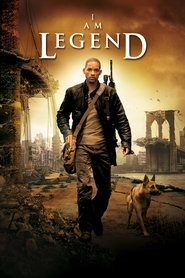
This was the Bob Marley virologist philosophy, which is something that we sort of came up with as we were working through sort of character and theme and early version of the screenplay and then in rehearsals. Yeah, and we're all big Bob Marley fans. And I remember, I think, I think Will came up with starting the use of it, just he was looking up Legend, I Am Legend, and came up with, saw Legend on the internet and Bob Marley's album, you know, Bob Marley's album, and brought it up and started thinking about it and
1:16:53 · jump to transcript →
-
-
-
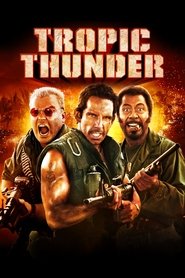
I feel like everybody got along pretty well in this movie, and there wasn't a lot of... There was nobody... I don't think we could have made the movie if there was anybody who wasn't on board for the whole experience. I think it was for everybody, Nick Nolte and... I was never late at the movie. No, you weren't, just today. Just rehearsals, too. You fucked up in a couple of the rehearsals early on. That's true. This was another sequence that felt like we shot it for seven years. LAUGHTER
23:57 · jump to transcript →
-
This was a tough one. This was a tough one because we had a lot to... You know, every scene, there were a lot of actors in every scene, so we had a lot of coverage we had to get. But we rehearsed it. We went out and rehearsed it. We rehearsed it in the jungle. Yeah, we went out to the location and rehearsed it. Two-hour drive to the jungle. Yeah. And you know what? It worked. We were mentally prepared. Yeah, this was... God bless the 4x4. It's four patties of meat.
24:25 · jump to transcript →
-
It's a great jam. Brandon T., God bless him, man. He helped us get the balance right. He did. So we didn't have people coming after us. Not that we wasn't sensitive. We have a moral psychology of sorts. No, but it was really important, obviously, to have his point of view. And when we were in rehearsals, we changed that scene around to make that feel right. That's where Jack says he wants to wear the entrails of the cloven-hoofed animal like a leotard. I don't think anyone... I don't know that it's actually a side effect.
54:05 · jump to transcript →
-
-
-
E. Elias Merhige
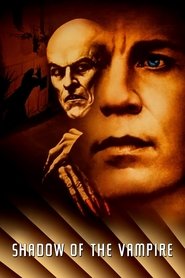
The interesting thing here is that I asked, it had been raining for hours and hours when we were shooting, and I had asked my production designers and art director's assistant to go down and ask a farmer for some grass. And you see this area here that they're all walking on. Instead of grass, they put down all horse manure. And while I was rehearsing with the actors, I was trying to figure out what smelled so bad.
22:46 · jump to transcript →
-
E. Elias Merhige
In other words, all you have to do is, as they say, relax, and the vampire will do all the work. You had me leave rehearsals in Berlin just to do that. Hey, watch it! Now, this is one of my favorite moments where you have Cary, you know, taking his measurements for focus, and you have Willem very vainly and enjoying himself completely.
1:13:54 · jump to transcript →
-
-
-
Wes Anderson
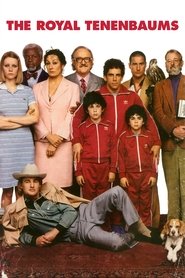
Luke had to take three or four months off to grow the beard. So he was the-- Luke and I were the only ones who actually-- Luke and Seymour Cassel and I rehearsed together. We got a chance to work together because Luke was free. Because he couldn't get any other work with that beard.
26:17 · jump to transcript →
-
Wes Anderson
Most movies, somebody gets shot or somebody dies, things happen that are very dramatic, more dramatic than real life. In the movies we'd made before, the only time anybody dies is if it happened a few years before the movie starts. And one thing I really wanted to do is to make a movie where it was going to be possible for someone to die. Because in the other movies we'd done, it just didn't seem like it could happen. It was a tonal violation of the movie. I sort of felt like, it was like we wanted to stay on the surface of some stuff. Not that those movies are superficial-- I don't think of them that way. --but that there's a lightness to them that it's hard to break out of. And this one, I think, is probably a lot darker. And, you know, there's somebody who tries to commit suicide, and there's death that really occurs in the movie. There's wounds that are kind of deep and sharp that I don't know if you find so much in the other movies, where they're wounded people, but there's not as much violence to the emotions in a way, maybe. This is a scene where... There's certain scenes where Gene Hackman would show up and we'd do our rehearsal, and he'd have a kind of different approach. Uh, what it usually was was he'd wanna do a scene moving fast. And you'd see him do it, and I'd throw out the whole plan I'd had and have a new way to kind of shoot the scene. That's the best thing that can happen. Somebody comes in, and you say: "Throw out whatever we thought of before. This is better." And his thing was to just bring a real charge into something. Richie!
1:14:24 · jump to transcript →
-
-
-
And we had rehearsed the scene for a couple of years, so. You got it right. You got it right by now. We got it right by now. So we didn't have to do anything digital, which was, I think, really great. And we kind of tried to do that as much as possible in this film to try and stick with as much reality as we possibly can instead of just throwing a green screen up or taking the easy route out. And I like that.
4:31 · jump to transcript →
-
into one of the hardest places I think a producer can be in, which is where your actor gets hurt. I herniated a disc doing a back handspring on our tenth day of filming. Yes. It was an accident. It wasn't even while we were filming. I was just kind of rehearsing, and my foot slipped, and I landed on my neck. And I think, you know, once we realized what it was, and I realized...
21:12 · jump to transcript →
-
-
-
James Mangold
Meaning that when an actor first comes on board a film in the period where they're first starting to rehearse, the other thing that's happening so that the costumes are ready when the movie begins is that they're being fitted and trying things on. It obviously happens weeks and weeks before the first frames get shot on the film. So what that does and what that means is that those first fittings are incredibly transformative for the actor. They become a chance for them to walk
1:14:19 · jump to transcript →
-
James Mangold
Well, I did what you said. I read that Bible from cover to cover. Took me three days. She never came back. Now, two things I want to say about this piece of Russell's here. One was when I rehearsed it with him and he was sketching in this book, what I thought was so powerful was the way
1:40:11 · jump to transcript →
-
-
writer · 1h 31m 2 mentions
Wes Anderson, Roman Coppola, Jason Schwartzman
-
Roman Coppola
So this scene is a... Here the conflict is brewing among the brothers, the suspicions and the questioning. And I remember we decided that-- I thought there was something nice about working in the compartment and not having cuts. And sort of-- You know it's a real space, and we'd also get this building kind of tension that's happening here. So anyway, to shoot this, I remember we built a mock-up of this compartment on the... At our art department, which was actually at the-- Which was actually, like, on train tracks. It was some kind of train-- At the train station. Yeah, it was like a train station. We built a train station in it, in fact. And I remember we rehearsed that shot-- It's one of the few times I remember actually rehearsing an entire shot with a dolly and the camera and everything on a completely different location. You know, in a-- You rarely rehearse with a crew present before you start a movie. But that one, we wanted to make sure we'd be able to do it, because the space was so compact, just because it's a real train rolling along.
16:18 · jump to transcript →
-
Roman Coppola
I really liked this temple. We went many times to this temple in the center of Jodhpur. I think we brought the cows ourselves. Okay. Spray in face. - Spray in face. This was shot much later, as I recall, actually at the location where we had the final convent, if I remember correctly. Yeah. - Yeah, outside of Udaipur. I remember when we were scouting, there was a day when it looked like this. It was all women. And I don't remember what the occasion was, but we recreated what we saw there. We invited back all the people who had been there on this day that we had scouted at the location and this ceremony was happening. This is a scene I remember we rehearsed in the temple itself and really kind of found the scene, the three of us sort of improvising it and acting it out. And we had a little text we were reading from, but sort of, you know, realizing it just the three of us. Yeah. When we were writing the script and we went to India on our reconnaissance mission, it was like a writing session and it ended up being a location session. And we found this temple and went back and shot there many months later. But as Roman said, this is-- We were walking around, we found this, we went in, we took our little micro scripts out, we rehearsed the scene to see if it was working and saw what worked and what didn't. And then we actually became so attached to this place that we went back and shot the real scene there.
23:08 · jump to transcript →
-
-
-
means bath in Swedish. This is one of the most complicated track shots in the film. We had a lot of differences to avoid the reflections in the windows here. We had to rehearse it for like three hours before shooting it. And actually, this is, it's in the movie too, but actually Mr. Avila, the gym teacher here, he's actually the only good adult in the book.
1:42:11 · jump to transcript →
-
This was, of course, this sequence was very complicated to do, to work underwater. And I think we made this in like two days, this sequence. And it contains a lot of complicated shots and a lot of rehearsals to...
1:43:18 · jump to transcript →
-
-
director · 3h 29m 1 mention
The Lord of the Rings The Fellowship of the Ring (2001)
Peter Jackson, Fran Walsh, Philippa Boyens
-
-
-
director · 2h 10m 1 mention
Richard Curtis, Hugh Grant, Bill Nighy, Thomas Sangster
-
director · 4h 13m 1 mention
The Lord of the Rings The Return of the King (2003)
Peter Jackson, Fran Walsh, Philippa Boyens
-
-
director · 1h 45m 1 mention
Eternal Sunshine of the Spotless Mind (2004)
Michel Gondry, Charlie Kaufman
-
-



Related topics
Other topics that frequently come up in the same commentaries.