Topics / Performance
Non-actors / first-timers
20 commentaries in the archive discuss this, with 34 total mentions and 30 sampled passages on this page.
Filter commentaries
Filter this topic by the film's decade or the type of commentary.
By decade
Across the archive
ranked by mentions · click any passage for the moment in the transcript
-
-
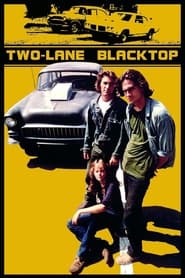
and, you know, it's real people doing what they know how to do. You know, one of the things that drove a lot of people crazy was the fact that we didn't cover the races the way movies were used to doing it, just, you know, staying in the car, you know, cutting, you know, to a moving shot with the car and so forth. We just...
0:45 · jump to transcript →
-
So now we're coming upon one of my favorite day players in the movie. Tell me where you found this guy. Well, he actually wasn't one of the real people who worked in the same role that he's playing in the movie. But he was from the area, and I don't know exactly how we discovered him or auditioned him, but he actually gets mentioned as one of the stars of the movie because he comes so early in the credits. So when you see the...
6:25 · jump to transcript →
-
This is so, so amazing. I remember when I talked to Chris Hillman of the Byrds, he said, yeah, I think I went and auditioned for that. I'm sure he did. Yeah, I think that all the musicians at the time were really, really into trying to get into Two-Lane Blacktop. So tell me how this came about that you decided to go with non-actors. Well, I didn't. I never made the decision to go with non-actors. Every role was cast independently.
18:57 · jump to transcript →
-
-
multi · 2h 19m 3 mentions
Martin Scorsese, Nicholas Pileggi, Ray Liotta, Lorraine Bracco + 9
-
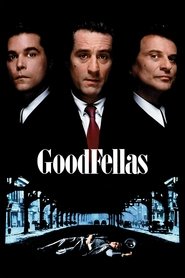
You gotta see this show. What a performer. He does these impersonations. I swear, you would think it was the real people. Oh, it's unbelievable.
1:01:26 · jump to transcript →
-
most powerful way to go, just not to do anything. And it's very hard for actors in general to feel that they're doing enough, whereas all they have to do is nothing, and that's all that's needed. And that in itself is something to learn or realize as an actor, especially in films. So sometimes when you use non-actors, they don't even think that way, and you can get a very strong presence without any of the
1:07:17 · jump to transcript →
-
It's the quality of these guys is so good that you go through this, even if it's sometimes a little harder to work with these gentlemen than with professionals. Actor Frank Vincent. And the less actors you use, the more real you can get reality because you get real people. They don't even know they're acting. Writer Nicholas Pileggi. But a lot of those guys in the back were not really professionals. They would just... Marty picked them up for character, for face.
1:08:28 · jump to transcript →
-
-
-
Noah Baumbach
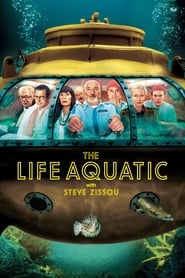
See, Renzo, this is what I'm talking about... The character of Renzo, the editor, is played by Pawel Wdowczak, who is our sound man. And so he's the sound man on camera during the documentary stuff whenever we see him, and he's also the sound man of the film, which sometimes is very difficult because he's gotta do the sound, but he's also gotta look right. But he's a great-- He's from Poland, and he's worked on all of my films. And he has a wonderful spirit about him. And we wrote Renzo for Pawel to play. Yeah, we always had that idea. I don't know if you wanna talk a little bit about sort of like using... You know, what is it that it does for you as a director to, like, have-- You know, to have people who sort of mean something to you in your life or in your work actually then on-screen in some way. Yes. Well-- Yeah, because sometimes I feel like on a commentary like this, I'm saying, "This guy is Tony Shafrazi." - Right. "This is Isabella Blow." - And it can sound kind of superficial, "These are people I know I put in the movie." But I think that, you know, there's something-- For me, I-- For me, you know, I've worked with virtually the same crew on all my films, many of the same actors, and the parts that we've written are generally, you know, a lot of personal experience that goes into these characters, you know, that's-- Because these movies aren't adapted from something else, they're just made-up, and they come from, you know, our lives, and then other inspirations. But for me, they're also movies about people who are struggling with their relationships and their affection for each other, and they're always all kind of a group of people who are sort of locked together in one way. I feel like they're movies that are also made by a group of friends. As much as they're about a group of friends and their struggles, it's made by a group of friends. And that's why I often like to have people who are familiar, and when they show up on the set, it's like a reunion, you know? And it always means something to me to see those people in the film and to feel them interacting, and often there's a lot of non-actors in the midst with people who have a lot of experience acting. That's sort of what it's about for me. - Yeah, and I think-- I mean, from my experience directing too and doing that, it can-- You know, I think in any way, as a director, that you can kind of emotionally connect yourself to the material, you know, in both very deliberate, literal ways, and also in ways of, you know, just sort of having people you care for in front of the camera or, you know-- Or wearing clothes with colors that mean something to you or whatever. I think any of that can help if you're making films that are kind of personal in any way. - Yeah. One thing we didn't mention 'cause we were talking through the balloon scene, but that is sort of Steve facing very-- When she says that he-- She had a picture of him in the pose that he's in in the balloon, and him dealing directly with the image of himself and the sort of self-made, you know, version-- Self-invented. - Self-invention. Well, that line that he says, "I never saw myself that way," something like that, "I don't see myself that way, I never did." In fact, he meant to, you know. He tried to see himself that way. He made himself that way. He just never bought it. - Right. And-- Yeah, I mean, I think it's... You know, something-- You know, that we were sort of both putting ourselves in the shoes of Jane, who, you know, like us, would have had a picture of one of these guys tacked up over a bed or over a desk, and, you know, but also been thinking, "But these guys exist. These are real people who've got their real lives." And I think we've both had the experience of what it's like to get to know one of your heroes. - Right. And it's always nothing like what you would have imagined. But the one thing I will say is, sometimes, you know-- Something happens, you're disappointed. But generally what happens is, your hero was interesting in one way or another. And you learn about them and, you know... I feel like I wouldn't be disappointed with what Steve Zissou is. I would just feel sympathetic for somebody like that because, you know, he's a character, and he's filled with conflict and contradiction and capable of all kinds of terrible behavior. But there's something unique about him and, you know, I don't know. Right. Well-- And, you know, once you're dealing with this person as an actual person, you know... - Everybody has his reasons. They're gonna be bringing all this other stuff you're not gonna get from watching the specials. Yeah, more or less standard boilerplate, I guess. Here they go to Alistair Hennessey's sea lab, a high-tech facility. All Hennessey's stuff is chrome and black and white as opposed to Zissou's colors. Everything Zissou has is faded and dated and old and doesn't work properly. And Hennessey's stuff is computerized, flat screen, everything. But we built this on the tank in the back lot of Cinecittà. And... And... It was quite an experience working at Cinecittà. The place is sort of steeped in Fellini. Even today, people talk about Fellini every day on this... At this studio. And the stage where we filmed, the boat chopped in half, was Fellini's stage, Stage 5. And somehow, we always felt this movie owed some great debt to Fellini. Yeah. Well, and again, we talked about Fellini and Antonioni, which, you know, in a kind of-- In one way is also the difference between kind of highly artificial, you know, shooting on sets, Cinecittà, and then the Antonioni way, which at least I associate more with, like, shooting on the open water and, you know, the real-world landscape is sort of a character. And Zissou sort of deals and operates in both worlds. Here, again, we use the cross section as when they go up the... Which is a kind of a fun way to play out the scene. Have it be one continuous take. This whole thing is one continuous take, and then there could be-- They have a lot of places to run around, and I feel like the actors always bring something into it when they have this kind of room to play the scene. What I like about this too-- It's sort of like in movies now, cameras go through walls anyway, but they're not sort of acknowledging... You kind of accept it and it doesn't take you out of the reality. And I feel like, you know-- I think it's the same effect, but at the same time, it's really acknowledging that they're on a set. Right.
42:13 · jump to transcript →
-
Noah Baumbach
Willem is very touching here. Yeah, Willem brings something to it. Now, I mentioned Noah Taylor. Noah has obviously played a lot of much bigger, fuller roles. And he's a really wonderful actor. In our movie, he has a line here, a line there. But his presence on the set was quite strong and he was very-- He was really valuable to the movie in ways that you wouldn't know. He was sort of the one who-- There are a lot of non-actors in Team Zissou and he was the one-- A lot of people who had never been on movie sets and certainly a lot of people who had never been sent away to location for periods of time, and he was their guide for that, and he was kind of their acting coach too. And he was-- He was a great person to have on the set. Well, pretty much everyone... Cast and crew really committed to, you know, be sort of immersed in this for months. There wasn't-- I guess some actors came in and out a little bit, but certainly most of Team Zissou had to be there for the whole shoot. Yeah. See, in the background here is a cane with a dolphin, albino dolphin handle. Zissou has albino dolphins, but it's-- What you can't see is engraved in it is "T.E. Mandrake," Zissou's mentor. Right, we saw in-- The picture was behind Hennessey, when they were on the boat, in the background. Right. And actually the person who sort of plays that part in the photographs is Jacques Henri Lartigue, a French photographer who I've always admired. But the person we wanted to use was Nic Roeg, the director Nic Roeg, who we weren't able to get over to Italy. It was all kind of last minute, and he-- But you were always gonna pose him in the same position that Lartigue is in that picture, right? Holding the... Well, yeah, we were gonna pose him-- No, I mean, we were gonna pose him in the water... standing in the water with a fishing net and a kid running behind him, something like that. What the painting is, when you see the painting. Now, this shot in the hallway, by the way, is the only shot in the movie where we actually use the camera to suggest that the boat is moving. It kind of rocks back and forth, which is funny because we watched a lot of different movies that are about-- Set on boats and set underwater, those things, and they all use a different technique. There are lots of different-- They gimbal the whole set, or they make the camera move. The Black Stallion was one of the ones we liked, and those scenes on that one, they don't do anything to suggest. They just trust that you know we're on a boat, and it works the same way as any of the others, except for one shot where they look down a hallway when they rock the camera. I don't know why they had one shot to do that. I think because the boat is sinking, and they wanted to just get that feeling. But we did the same thing. We never did anything to suggest we were on a boat in terms of movement. But for one shot, we made it rock back and forth. I remember when we were looking at some of those undersea movies or movies-- People on boats, The Abyss commentary taught us the term "dry for wet." Yes, yes. The Abyss taught us dry for wet. The other person I learned dry for wet from was Roman Coppola. Who, Roman, early on I asked his advice about some of the things, and Roman was very excited about the movie. Roman knows a lot about things like stop-motion and dry for wet, which is shooting underwater without water, using smoke and lighting to suggest that you're underwater. Which you can only do with miniatures, you can't use actors. You can't use people, although it's been done. In wet-- In crazy suits. - Really? The way you'd shoot, like, the moon.
1:09:43 · jump to transcript →
-
Noah Baumbach
So now they're on their way out of Ping Island. Bill Murray's running to the safe, this yellow safe with Ned's inheritance in it. I always wonder if we're clear about things like the issues with Ned's money and all that kind of stuff, but I guess it's all in there. Yeah. I always like what Scott Rudin, the producer, does. Scott said about... I remember when he read the draft of the script, where we had come up with that idea of the hole in the back of the safe, and he said, "Well, he's looking for the money, but he finds Ned." And I always thought, wasn't that a touching idea, you know? I hadn't consciously thought of it. - He had a real way with words. Cody is left behind. I think you came up with the name Cody. Cody was... Well, there's some debate about who came up with the name Cody, but as we alluded to and as, I guess, basically suggested by the fact we're doing this commentary at the restaurant that we wrote it in, Cody's a regular here who we run into, and so... And at one point, I think it was literally like, I said to Noah, "What's your dog's name?" Doing Jeff's dialogue, and Noah thought for a moment and responded, "Cody." Cody. As he stared at Cody through the front window. It was the summer. I feel like I've said enough... What's that stand for over there? That's Esteban. It was working okay until late last night, but now the whole tracking system's gone completely on the fritz. Screw it. We'll sell it for scrap, along with the boat and the submarines. I'm going home. One thing about Willem is, Willem was always on the set. You know, he was there for the whole movie, and he doesn't like to hang around in his trailers. So he weaves himself into scenes, such as this one, where Owen says, "Ho," and Willem is standing in the background there. And you'll see, when they do the Team Zissou "ho" with the hands thing, Willem does it out of focus deep in the background. Did he do it in rehearsal then you included it? I don't remember. You know what? I think he was back there and I may have mentioned one thing to him. Well, it adds this whole other thing. And it's also, we know that Klaus feels left out, so at this point, though, it's almost a little bit of menace in the background, even though he's... This, again, also is something you do a lot, which I like, is this-- But he's also been touched by Ned, including him already. That's true. He hasn't saluted him yet. - He hasn't acknowledged it. I was gonna say, the thing I like that you do a lot, that I mentioned earlier, but this very deliberate cut to an insert of a written note, which it sort of has a... It has a kind of energy. It sort of brings energy to something that would be normally just static and feel like just, you know, information. Well, you know, one thing I always think of is, I remember reading Pauline Kael somewhere, Kael who really brought me into a certain kind of movie watching. You, your parents were well-versed in films and introduced you to all kinds of films, and your mother was a critic, and your father had done some film criticism as well, right? But I kind of got that stuff from reading Pauline Kael, some of the same kind of, you know, somebody's gotta tell you about it. Right. - And I got so many things from her. And I remember, you know, she certainly made me interested in Godard. We seemed to keep talking about him. And she talks about how Godard's movies are filled with... They're literary. They're filled with words. There's titles on the screen and there's letters and there's writing everywhere. And there's people quoting, people just reciting from books. And, you know, this movie here, now we're looking at another letter. It's filled with writing, something... And I like the-- I mean, it's sort of, again, something maybe, you know, he might do, but is... I mean, we see Ned reading a crumpled-up letter that's obviously been around for a long time, but then when we go to the insert, we go to the original letter in a very formal way, with the pencil above it and-- In fact, I think... One of the letters is situated in the environment where Zissou would have written it, and Ned's is situated in this place where Ned would have written it. Like his desk when he was 11 and a half. And it brings-- I mean, it's something that we've talked about, I mean, sort of how you use words and letter writing, and, you know, we were talking about, how in Adele H, when people write letters, they actually speak to the camera and they're often superimposed over other images. We should probably be talking about this scene. Well, actually, that shot of the feet falling was something I had thought of a long time ago, and Roman shot it for me. It was shot a couple of times by different people, and then when Roman got there, we talked about it, and Roman went out and shot it perfectly. And then we do this odd effect of, you know, the red and the thing-- I don't know what I was really thinking of, but something going into silence and, you know, trying to prepare the audience for the fact that we're gonna kill him, which is hard to do, actually. For me, I mean, I feel like I get so attached to these characters, and, you know, we're not really working from something that begins with a plot. It's more like, you know, trying to bring these people together, and I may be, you know what, probably overly sentimental about it, and probably indulgent about it, but it's hard for me to get to separate-- I feel like they're real people to me. So it's hard to kill them. But it was one of the ideas. We talked about people who read the script. Peter Bogdanovich, our friend, he was upset that we killed Ned. I think my brother Nico, who the intern is named after, also felt sort of... Was unsure about it, and I think, you know, it is a choice. That scene where he's in the water was crazy because the sea was rough, and we had this fire in the water, and we're all standing out there, and underwater are all these tubes with gas to make these fires and things, with hunks of cement and wire. But it was fun, and it brought this crazy energy to it.
1:33:50 · jump to transcript →
-
-
-
-
Alexander Payne
real teachers in scenes calling for teachers and students calling for scenes with students. In general, I like casting like that, smaller parts. For policemen, cast real policemen, and for doctors, cast real doctors, and I just like doing that. And I very much like mixing professional with non-professional actors. I think it makes...
1:12:19 · jump to transcript →
-
Alexander Payne
And this isn't just me. You see it a lot in other filmmakers, too. It's not original. But I agree that often non-professional actors can make professional, famous actors look more real. And the presence of those professional actors makes the non-professionals look as though they're acting better than perhaps they really are. And it's just a fun thing to do. You see it a lot in Milos Forman films. And I find a lot of inspiration in Milos Forman films.
1:12:43 · jump to transcript →
-
-
-
You know, we wanted to shoot this in front of Grand Central. It was one of the trickiest things. The city had never shut this viaduct down before, and we needed it for six days. So they let us do it over three consecutive weekends, six days. So we would actually shoot for two days, go away for a week, shoot for two days. We really lucked out again with weather. You know, there was one moment where you see the mannequin move, and we had actually had a little thing running where we cast people to play our mannequins. And in the background of some shots, you can see they're real people playing the mannequins and not
46:17 · jump to transcript →
-
and we said it in the room with those guys, that there's kind of an amazing quality to the empty city shots with the augmentation that they did there, and also to some of the close-ups, which you would just think would be the hardest thing ever. And so some of the close-ups in the ending and of the girl on the table are just insane with the quality of the skin and the breathing and the performance and the light. And then you get some of these medium shots are just funky, and it's actually based on real people
1:00:57 · jump to transcript →
-
-
-
something horrific that happened to real people. And many of the real people were around the cast and the crew. Which, even if they weren't there, it would have been quite an extreme experience for those actors and for the crew as well. But they were there. And this is that transition moment just about to start. Yeah. I remember from here on out, I was like, yep.
27:53 · jump to transcript →
-
um we couldn't get hold of the original uh footage so we needed to recreate it and we shot uh were you one of these guys that was yeah so so we shot with a drone um so you see real people because digi doubles uh that is say digital doubles uh still never look quite right people's
1:04:47 · jump to transcript →
-
-
-
-
-
-
-
-
-
-
-
-
director · 3h 43m 1 mention
The Lord of the Rings The Two Towers (2002)
Peter Jackson, Fran Walsh, Philippa Boyens
-
-
director · 1h 36m 1 mention
Aliens vs. Predator - Requiem (2007)
Colin Strause, Greg Strause, John Davis

Related topics
Other topics that frequently come up in the same commentaries.