Topics / Production
Make-up & prosthetics
114 commentaries in the archive discuss this, with 417 total mentions and 52 sampled passages on this page.
Filter commentaries
Filter this topic by the film's decade or the type of commentary.
By decade
Across the archive
ranked by mentions · click any passage for the moment in the transcript
-
-
Ridley Scott
prosthetic baby, a mechanical baby, which was made up by the team who also did my prosthetics for Mason Verger and Krendler. Because that always became a big problem as to how the heck do I have this baby because the baby's involved in a shootout. You know, it's very easy for that to slip by in people. In fact, when we were editing and planning, I kept having to remind myself that
10:31 · jump to transcript →
-
Ridley Scott
Just make up. You don't need to see that much. It's painful just to watch it. Oh, those guts, you mean? Oh, it went to the butcher shop. Sheep, I think. Now, immediately people don't scream and go, oh, my God. And I originally had it here, the guys, security guys downstairs, one says, students.
1:19:01 · jump to transcript →
-
Ridley Scott
And this is always the moment which is, I think people think, you're not going to do that, are you? And then we did. And there it is. That's real. I mean, organic. It's not prosthetic. That's sheep's.
1:58:42 · jump to transcript →
-
-
-
Now, if you notice, in the previous sequence and this whole sequence, every time our actors are outside, it's not raining. Whenever they're inside, it's raining. And that's mainly because I didn't want to take the time to have to redo everybody's hair and makeup between takes. So when they're inside the house, it's pouring rain. As soon as they come outside, it stops raining. When they're in the car, it's pouring rain. When they get outside, it stops. It just saved us a lot of hair and makeup time.
34:41 · jump to transcript →
-
all special effects shadow work and stuff like that. This is another one of these duplication shots. It's photographed out in the desert in Morocco. A lot of the hills that you see in the background have been added in. The horses are shot in multiple passes to make up this giant army. And of course the animation of the scorpion shadow in the foreground.
1:39:29 · jump to transcript →
-
I remember Rachel's makeup person running up and putting lip gloss on. I'm like, she's dead. She's dead. Need that lip gloss. I think it's interesting in a scene like this where John Hannah had to, you know, carry Rachel and take after take. Now, Rachel's obviously very light, but nonetheless, very impressive for John doing that.
1:41:38 · jump to transcript →
-
-
-
You can see the tattoo on her arm has had the lady's breasts blacked out. It's going to go down well in America, that kind of thing, yes. I think it was make-up, wasn't it? Again, her humour. She's there. She's still there underneath, you know. The way she comments on Justin Timberlake's record title is brilliant. Such a shame she wasn't there. I think, you know, she would have got to meet Tony Bennett that much earlier.
1:26:01 · jump to transcript →
-
sort of doing selfies and looking at herself. That photo booth on her laptop. Yeah, exactly, photo booth. That's what I was thinking of. But again, she's looking directly. Under the beehive and under the make-up, that's actually what she really looks like. I think that's the thing. It's just the power of a close-up, isn't it? There's so much other footage that we saw, which is much darker, and there's a lot more going on, but there you just see how vulnerable she really is. And we're back to her eyes again, and she's actually looking in the mirror there, really, isn't she, if she's using that photo booth thing? It's just actual Super 8 footage shot by Blake Wood, her friend.
1:35:49 · jump to transcript →
-
She is, you know, she's a Jewish girl from North London. And I think that idea of there was an image, there was an image, and we really wanted in this film to remove the beehive, move the make-up and get to the heart of who she really was underneath it. And this is what Amy really looks like. I think that was an important thing for all of us to understand and to get across to the audience. And another moment where you don't really see moments like this in too many films, do you, really, where it's just a shot of some sand. But...
1:38:16 · jump to transcript →
-
-
director · 2h 43m 3 mentions
Mission Impossible Dead Reckoning Part One (2023)
Christopher McQuarrie, Eddie Hamilton
-
a long, long time. This is all happening, so Shea Whigham is wearing a wig here, because he was playing G. Gordon Liddy. I didn't even realize that until you said it. It's the most terrible. It's one of those things where people just don't notice. Yeah, and they had the hair and makeup, this is not to make very clear, they had three days to get a wig ready, and they were mortified, and I said, don't worry, we'll fix it. This was an interesting thing, where you added the Rome really at the end, because. Just so that you, well, we originally had a shot that showed it. Yes.
46:24 · jump to transcript →
-
Hair and makeup are done with Hayley, all of which is very subtle. And the wardrobe on Hayley. The wardrobe is sensational. And all of it is just playing to her strengths. And it wasn't until much, much, much later that we found the music. Do you remember? Oh, my word. The music in the nightclub. Yeah. We originally had a track which the dancers had choreographed their movements to.
1:19:10 · jump to transcript →
-
Great cinematography is relying on great production design, and great production design is relying on great locations. And costume design, hair and makeup, it's all working together to make the image you see. And it's a really important thing to remember that when you're looking at the work of one sensational person, one sensational performance, one sensational credit,
2:37:32 · jump to transcript →
-
-
-
Before Nosferatu. I mean, that must be a bigger thing than what everybody said. London After Midnight, at the time, was not thought of as one of the better Browning-Chaney films. Although it was the biggest hit. Well, I mean, there's been rumours of its rediscovery over the years and various rules, and obviously they've all come to nothing. But my sense is that the reason that survives is because of the stills that were left behind. And Chaney's make-up is pretty remarkable of all his creations. Yeah, and...
6:06 · jump to transcript →
-
And again, let's talk a bit about Carroll Borland. I actually had the pleasure of meeting her towards the end of her life at one of these conventions. And she still wore that hairstyle. She still had the same hairstyle. She still had the dark makeup. It was the year before she died in, I think it was 1994. And she had some interesting stories to tell. I mean, God knows where her career went after this film. It is, because...
35:07 · jump to transcript →
-
-
scholar · 1h 32m 2 mentions
The Night of the Hunter (1955)
Terry Sanders, Robert Gitt, F. X. Feeney, Preston Neal Jones
-
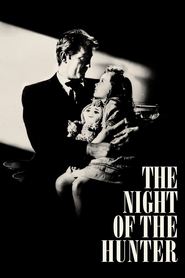
Now, of course, we're leading up to the most famous image in the picture. And once again, we're going to hear the waltz in a totally different arrangement. And it was shot in a tank using a dummy. And they very carefully made a face mask of Shelley Winters, a makeup man named Maurice Siderman, who had worked with Cortez and Wells on Magnificent Emerson. And worked on Citizen Kane. Aging Charles Foster Kane. He's the one who aged Charles Foster Kane. He created the
42:14 · jump to transcript →
-
of Shelly Winters that makes this scene so effective. It's incredible. I remember meeting him. He's a fantastic makeup person. And also way ahead of its time, Lawton really went for the full effect. He could have had the willows and the hair obscuring the wound in her throat, but you'll see that he, that's revealed in the shot as well.
42:44 · jump to transcript →
-
-
multi · 1h 49m 2 mentions
John Cork, Ursula Andress, Eunice Gayson, Margaret LeWars + 20
-
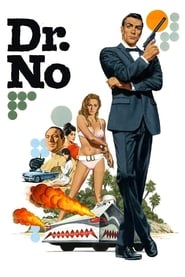
cameraman, I was an ex-Warwick man, makeup people, all that, all ex-Warwick people. There was an ex-Warwick crew. I think Warwick Films should have got a royalty on all the baths. They provided most of the talent. According to Fleming biographer Andrew Lycett, upon its completion, President John F. Kennedy asked for a screening of Dr. No in the White House cinema. Kennedy had been a fan of Fleming's novels since reading Casino Royale in 1955. In March 1960, when Kennedy was running for president,
1:17:28 · jump to transcript →
-
The final part where he realizes that he has a chance of blowing the complex up, the Dr. No's complex, he turns the wheel. And he turns the wheel, and he turns it and turns it, and so we obviously have to tell the audience that this is really bad news and that he is beginning to, something is going to erupt. When you see the film, it's very easy to assume that the sound on the handle was of course the sound that belonged on it, that the machine he used had a sound, but of course it wasn't. It was just a built appliance on the set.
1:43:05 · jump to transcript →
-
-
-
I mean, you know, I tried to explain to her that if we use suntan lotion, she wouldn't die. She wouldn't suffocate. I don't understand. Okay. But the snake pit, which is what I call the makeup department, was telling her, oh, you're going to die. You better have special insurance. Then her agent called me just as I was ready to shoot the scene and said, Steve, I want you to have a doctor and an ambulance on the set. I said, she's not going to die. Don't be stupid.
30:11 · jump to transcript →
-
What the hell do you need me for? Your father can make ten pictures for you. And she said, because I want to do it on my own. She told me she didn't want to do any nudity in the film. She also brought her own hairdresser and her own makeup man. And her own star. I don't know what that means. Maybe a star for the dressing room? I don't know. But interesting. He also said he never got any... I don't know which interview this is in.
58:29 · jump to transcript →
-
-
-
Tim Lucas
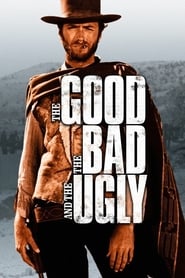
When Tuco enters Blondie's room, one of the first things we see is an impressive, all-but-life-sized carving of Christ on the cross, the very image that caused his knees to bend just a minute ago. But now his back is turned to Christ's suffering as he barrels on into his next deception. The makeup artist responsible for these blisters on Clint Eastwood's face was Rino Carboni. Carboni had previously worked on the other two Dollars pictures. He's credited as Sam Watkins on A Fistful of Dollars.
1:06:17 · jump to transcript →
-
Tim Lucas
as well as Sergio Sollima's The Big Gundown. Carboni subsequently became Fellini's make-up supervisor, working on all of his films from Satyricon onwards. He also contributed to Louis Malle's Black Moon and Volker Schlondorff's The Tin Drum.
1:06:46 · jump to transcript →
-
-
-
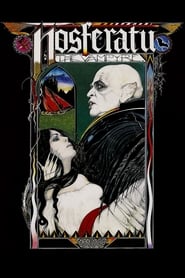
This was all designed. These were empty entrance halls. The clock on the right was built by a man who I always liked to have with me on shoots... Cornelius Siegel, who was a mathematician and a physicist by trade. He was very good with his hands. Henning von Gierke then took care of the details. But it really worked. He built it in two weeks, and it was a very good clock. I love Kinski here so much. How long did this makeup take? At least four hours every time. He was exceptionally patient with these things. Fingernails, teeth, and ears. The ears had to be molded from latex every day because they broke when they were taken off. He was amazingly disciplined. Who did the makeup? That was a Japanese lady named Reiko Kruk. She was much more than a makeup artist. She was a great artist. Kinski respected her very much. There were never any fights between them. Almost every day Kinski started some scandal or was screaming at the top of his lungs. He broke furniture. Those were daily occurrences. But with the makeup artist, there was always Japanese music playing, and for four hours Kinski was completely quiet and concentrated.
27:21 · jump to transcript →
-
Only 16 people? Yes, "Fitzcarraldo" was shot with 16 people. Imagine. Or movies like "Even Dwarfs Started Small" were always less than 10 people. But they require enormous logistics with the costumes and makeup... Right. Which we will see when the rats are in action. We had 11,000 rats from Hungary that had to cross all the borders that still existed in Europe. That was an awful ordeal. This theme I also know quite well from Bruges and Geneva when the scientists there... With the early anatomical studies and the human... I love this. The knowledge about science and Enlightenment in this movie and the perplexity at the phenomenon that is the human being, I do think that is a typical theme for you. Yes, and for vampire movies, too. There is always the dichotomy of Enlightenment and the inexplicable and sinister that resides somewhere within us. The genre has played with that since it first appeared in the literature. Since "Frankenstein." Especially since the English Romanticism, Bram Stoker, Murnau, and whoever else. "...
1:05:31 · jump to transcript →
-
-
-
Well, later on you find out that this is a guy who says that he's lost all his time. So if you look at the problem being a guy or this paradox of a guy who is trying to make up for lost time, it doesn't really make sense that a guy would talk slowly, a guy who's basically in a big hurry. But my reason was that if you talk distinctly and clearly and slowly and have no contractions, that you never have to repeat yourself and therefore you would
21:54 · jump to transcript →
-
I think there's an austerity to the elements that make up the suspenseful tension that I like as more of a critique of
1:02:15 · jump to transcript →
-
-
-
had to ship down to London for tons of blacking, black makeup and black wigs. The very few ethnic actors we had, we had to put in the front, and then everybody in the background was just blacked out. Terrible. But the great thing was, it was a beautiful and sunny day the next day, and suddenly it looked a little bit more like Africa.
52:31 · jump to transcript →
-
And one of the reasons why they're so good is because of the costumes. They're so meticulously researched and done by Jim Acheson, who's won three Oscars for costumes. But just look at Eric's shirt there. It's so correctly tailored for the period. And Graham's costume and makeup, it makes him into a period character. It's meticulous costuming, brilliant stuff. Any other problems I can reassure you about?
54:38 · jump to transcript →
-
-
-
Jim Piddock
altogether, though, of course, for the sense of the frame, has been composed to exclude the nether regions. Always a sensitive time on the set, of course, the nudity, sometimes an occasion for embarrassment, although this actor, very manly. In fact, I understand that on the set as he stood up, the makeup girl fainted. And now we're in another place, an envelope. We'll get a look at the characters here in a moment. More people, a new place, the plot thickens.
6:00 · jump to transcript →
-
Jim Piddock
A little suggestion goes a long way to my mind when you're dealing with a murdered man come back to life. The studio rather embellished these gruesome bits to make up for the time they'd lost cutting the whole Zhivkov episode. But more is not better when you're dealing with wanging a fellow over the head with a shovel. The mind can picture those things so much more compellingly than even the most gifted cineast. Well, this is my argument with the filmmaker who'll show you all the squishy body bits, be it...
51:29 · jump to transcript →
-
-
multi · 2h 34m 2 mentions
James Cameron, Gale Anne Hurd, Stan Winston, Robert Skotak + 8
-
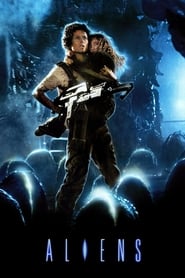
Bill Paxton
These shots of the aliens hanging from the ceiling are just shot upside down. It's just guys standing there in an alien suit. And we set up some alien puppets made out of foam and filled them with gak and guts and yellow goo, and blew the hell out of them, as I recall. Made a big mess. Miniscule things we had to do, like creating burn appliance make-up for when the acid would hit. Here's a case right here. Alien comes up, splats, and the blood is right here. Quick cut. Quick cut. But prosthetics used. John Richardson was the physical effects supervisor. I was at his shop on the lot, and they were testing one of these flame-throwers and it was a real flame-thrower that they had built. This thing would go about 20 or 30 feet. So every time you see flames coming out, it's the real thing. It was a little scary. When we did the fire in the APC, there was something used to age the set, some kind of wax-based substance that the art department had dabbed on to make the set look more like a used military vehicle. And the heat caused it to vaporize and the actors got this strong sense that they couldn't breathe. It caused their throats to close up. Bill tells the story Jenette is going "Ugh!" And Bill remembers thinking "She's coming up with some great stuff." And she really couldn't breathe. I don't remember what we did. Probably just kept shooting. I think we just kept the fire out of the inside, kept going. Because the full-size APC was incapable of spinning its wheels, all those shots of Ripley when she hits the gas and you see the wheels spin and smoke are all the miniature, because the full-size vehicle again weighed some 20 or 30 tons. We had put A-B smoke... A solution on the wheel and B on the ground. And as the tire turned, it would mix that A and B together and give the smoke. We had somebody holding back the front of the APC for a moment, so that the tire'd spin, then we'd let it go. That A-B smoke is really toxic. We don't like to breathe that stuff.
1:17:31 · jump to transcript →
-
Bill Paxton
So the whole high-tech war has degenerated to the point where they have to follow the little kid or they're gonna die. Movie air ducts are always big enough to get through. It bears no resemblance to the real world. The theory is that the audience has never been inside an air duct. Air ducts are not big enough to walk through. But it's a conceit. It's also a conceit taken from the first film. Supposedly, the way I survived in the colony was going around everywhere in the air ducts. We supposedly played a game and part of the reason I was called Newt is because I was so quick in the air ducts and no one really liked me on the colony because I beat them at the game. Fortunately it ended up saving us from the aliens at this time. For this air-duct set, we had vertical air ducts so that we could actually drop the aliens down with the monofilament, so that you would feel - and you'll see it in here - feel them crawling on the ceilings and the walls, that bug aspect of them. My cameo's coming up. - Who were you? Vasquez had never fired a handgun. Jenette Goldstein hadn't. She was living in England. Not a lot of handguns. For the wide shot she was great, but for the close-up of her killing the alien, her recoil wasn't accurate. Unlike today, when I'm on a set, I dressed up in suits on this film and the crew couldn't believe it... That's me. That's me. - All right, girl! All of the close-ups of the handgun firing at the alien was me. People couldn't believe it, since I always dressed up in suits. I needed something to give myself the appearance of authority. When I came in in the fatigues and fired a gun... They saw the real Gale. - They were pretty surprised. Jim told me that I was in my office and the crew were saying "What are we gonna do?" "Who here has ever fired a handgun before?" And he said "My wife has." He said "I'm gonna go get her and she's gonna do the shot." And I did. Jenette has very fair skin, freckles and had hair down to her waist and blue eyes. So somehow we managed to see that if we cut all her hair off and gave her dark make-up and brown contact lenses, she was actor enough to actually pull off this Hispanic character. That was a tough actual physical effect. There was nothing optical. That fireball came flying through that corridor. We didn't have digital anything back then. We didn't have digital fire. This is cool. It was a chute. It was about three stories high and it had a big old curve at the end. I Kept sometimes messing up so that I could redo it. Important survival tips in this film. Never grab the jacket. Grab the hand. Unless you have a Newt-finder device in your pocket, then you're OK.
1:58:34 · jump to transcript →
-
-
-
And interestingly, he and René both did work for Star Trek as well. Right. Got covered in lots of makeup. I do remember one scene that was cut, but he wasn't in it. It was Jeremy going to the doctor because he wasn't feeling well and the doctor couldn't find any life signs. And it became more and more perturbed.
26:48 · jump to transcript →
-
He's really an improv specialist, and so a lot of times we would flounder over the way a line was working, and he'll just say, I'll make up something. And I said, what's it going to be? And he said, I don't know yet. And then we'd roll, and he would do it. There was a little thing there. Yeah, little baby things. But he would come up with something on the spur of the moment.
45:18 · jump to transcript →
-
-
-
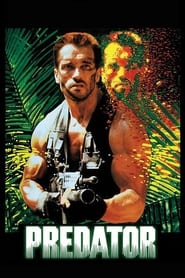
John McTiernan
He is a wonderful actor, he is clearly too old for this part. But, we put an outrageous amount of tan makeup on him,
4:15 · jump to transcript →
-
John McTiernan
Down in Palenque, the second time we went down, we didn't need to make up the jungle, so we didn't have an art department, you know, we worked with local,
1:05:16 · jump to transcript →
-
-
-
I remember poor Eric had to wear all that makeup and dye his hair so he didn't look like a redhead. He didn't like that much.
3:01 · jump to transcript →
-
But I don't remember why. - We didn't. This was just... My hair looks different. His makeup's different. Plus, I remember.
1:26:26 · jump to transcript →
-
-
multi · 2h 19m 2 mentions
Martin Scorsese, Nicholas Pileggi, Ray Liotta, Lorraine Bracco + 9
-
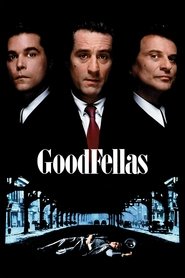
So when I picked out my clothes and my hair and my makeup and jewelry, I always kept Elizabeth Taylor in there somewhere. And I also used a lot of music to put me in those frames of mind. I used a lot of Bette Midler in The Rose. She sings about when a man loves a woman.
51:04 · jump to transcript →
-
When I watched the movie this morning, and I just fell in love with him all over again. I really did. I have to say, I think he's extremely gorgeous, sexy, exciting man. And I'm sure that the real Henry Hill for the real Karen Hill was all of those things. And I think we got that right. Every day when we walked into Hair and Makeup, we were Karen and Henry.
1:40:09 · jump to transcript →
-
-
multi · 2h 24m 2 mentions
Alex Thomson, Terry Rawlings, Alec Gillis, Tom Woodruff Jr. + 3
-
There was a makeup on that guy's face, too. But it was hard to see. Well, that's a classic example of less is more, like the hugger in the original Alien. It was a few frames, but it sticks with everybody forever. Yeah, that was great coverage and editing. It really makes the puppet work well. We always depend on editors and sound-effects people to make us look great. You watch this stuff in dailies and you go "How's it ever gonna work?" And then the sound effects of whipping tails... Jim Cameron used to say that as a way to make us feel better after a shot - I think he thought he made us feel better - "Don't worry. This is all 70% sound effects." I guess that means we only accomplished 30% of our goal!
39:02 · jump to transcript →
-
We had the one on the ceiling? - Yeah. Tom could actually run through shots in his suit. I remember you standing there with your Adidas shoes on, other than the alien suit. They were Nikes. I still get sponsorship money from Nike. But we built at one-third scale. There it is. That's the suit still. This was a fun shot where you can see the alien up on top tearing into this guy. We were up there for a good part of the day because I had to have leg extensions on because there's one leg hanging over the wall. We got to a lunch break, and I stayed up there in costume during lunch. And this is the mechanical Bishop. This is one we built animatronically. We talked with Fincher and decided to go animatronic on this, as opposed to makeup, so that we could really crush the head in. The idea was that she jump-starts him by hooking him up to some battery devices. Parts of this are... That's our gelatin guy again, a dummy guy. That's my hand, right there. We built one in London for these connecting shots, but we didn't feel that we would have the opportunity, the resources to build it quite the way it needed to be to do lip-synch and this kind of facial emotion, so when we got back to LA we built one. Dave Nelson was the mechanical designer. David Anderson did a sculpture of the Bishop character, basically working from reference from an old head cast, but it's got about, I think, 25 servo motors in it. Fincher really wanted you to feel real pathos for him, he kept saying like Robert Kennedy when he was shot. We had all the white blood pumping out. It was a great sequence, guys. - Real hand in the foreground, um... Again, translucent skin materials. This was urethane. This was before silicones. We really started using silicones with animatronic skins on Death Becomes Her, which was about six months after this. So this was urethane. It was stiffer, but still had some translucence. There was a beautiful profile shot of this that Fincher opted not to cut into the film, but it really showed the translucence of the skin. There's a scene in here where the Bishop doll is all trashed up. I did that voice for the doll. I was quite pleased with this practical lamp, which is creating the source of light on Sigourney's face, as you Can see by the moving shadow on her forehead, created by the practical lamp. I'm pleased because normally you'd like to film a scene with the lamp itself but the source becomes so bright it flares out the lens and doesn't give you the effect required, so you have to augment it with another kind of lamp. But you really get the feeling that she's lit by this lamp. The separation between the shadow side of her head is created by just lighting a bit on the wall behind her, so that you see the shape of the head. I think it's quite an effective shot. Not on this particular picture, but when you have actors with false hairpieces, often you can see the join. You have to help it with the lighting by just shading it a bit or changing the angle of the light so that you can't see the neck join, in a wig for example. And quite often contact lenses are quite noticeable. If the light's at an acute angle, you see the edges of the contact lens, so you've got to help that as well. Those little things, you know. You have to keep your eye on the actors all the time because they're not aware of how they look, and also they get so absorbed in playing the part that they forget quite often their instructions about lighting. You can only suggest it, you can't tell them what to do because you're there to help them.
55:01 · jump to transcript →
-
-
-
Michael Mann
Extras that came to work for the big scenes, if they were daytime scenes, we anticipate starting to shoot about 9.30 in the morning, had a report about 2 a.m. to go through the hair and makeup and tattoos. Obviously, it was quite complicated to take about anywhere from 1,200 to 2,000 extras and then ready for shooting.
39:36 · jump to transcript →
-
Michael Mann
Right here, there's a father shamelessly putting his daughter, who's in the light blue dress in the background, in the film. She was 12 at the time we made the film and went to work with me every day and worked in wardrobe, getting extras ready with makeup and put in the same 16- and 17-hour days that everybody else did. And then she and many other people became extras.
52:14 · jump to transcript →
-
-
-
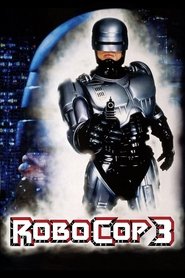
And so it was really about finding a good actor who could do it. And Bob, he had a humanity to him, and that was really what it came down to, is that you need to see the man inside the machine or the movie doesn't work. And did anyone properly prepare him for the rigors of having to work with the suit and the makeup? No. The answer is no.
15:32 · jump to transcript →
-
Was... We were mentioning Rob before. Was he present on set a lot for this, or did he have a crew mostly handling everything? He had his crew, but he was there for... Not for Robo, because that was a well-oiled machine, and Stephan Dupois did the prosthetic makeup on Bob Burke later, when he's got the helmet off. And the Robo team were basically in charge of making sure that that suit always looked good. By the way, I changed the color on Robo in this movie. I...
36:41 · jump to transcript →
-
-
-
The most effortlessly complex actor. That's probably the most perfect description I've ever heard of Gabriel. Gabriel is also the most popular man on the set whenever Bryan would yell cut, hair, makeup, you name any sort of woman on the set that was working in any capacity would flock around Gabriel with Baldwin standing ten feet away going, when you're done with Mr. Byrne, I'm here.
16:00 · jump to transcript →
-
Kevin did some interesting things with the cerebral palsy visiting the center to learn more about it. He also, I remember, the bottoms of his shoes, he filed them so that when he walked, you know, as they would be filed down by walking for months and months, you know, with a palsy. He also... He also brought in some interesting photographs of prosthetic hands that looked like they'd been through meat grinders and napalm accidents. Yeah, we decided not to go with that, but we instead put a piece of appliance... We actually...
24:12 · jump to transcript →
-
-
-
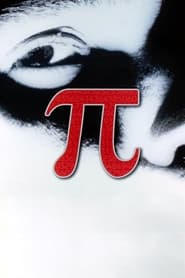
Darren Aronofsky
The shot was actually shot without our makeup artist. She had to leave early and it required some makeup because I had to put blood onto Max Cohen's nose and I was convinced that Ariella was gonna beat me up the next day, but she turned out to be real nice about it. And the voiceover you're hearing was written by me and Sean. It was a collaboration that we started about eight months
1:49 · jump to transcript →
-
Darren Aronofsky
She was the makeup and special effects person. Don't taste this stuff. It's dangerous. And I looked at Sean and winked at him, and Sean winked back to me, and I knew he would. It really matters because you really see his saliva making contact with the substance. But that's Sean. Full method. Full method. Fully, deeply committed. It doesn't matter if he's going to get cancer on the tip of his tongue. He goes for it. That's probably the second shot of the film that we ever shot.
40:55 · jump to transcript →
-
-
-
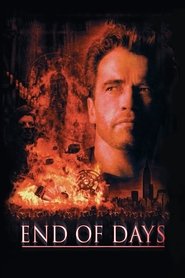
I've never seen anything like this. I think this is written in... And, frankly, that's just very good prosthetic makeup. Look at the skin tone and look at the skin patterns in that chest. That's really good. ...of his prison. Uh, this next part is not clear. I think it's in English. It says, Christ... Christ in New York.
45:45 · jump to transcript →
-
Uh, we spent the night, New Year's 1999, in Times Square with... multiple cameras. So there are shots in this film, but you'll see, have half a million people in them. By the way, that stitching is done by the makeup guy, Jeff Dawn. How long? He's really quite wonderful. You almost slept the whole day. You're lucky to be alive.
1:28:36 · jump to transcript →
-


Related topics
Other topics that frequently come up in the same commentaries.