Topics / Cinematography & lighting
Lighting
110 commentaries in the archive discuss this, with 371 total mentions and 43 sampled passages on this page.
Filter commentaries
Filter this topic by the film's decade or the type of commentary.
Showing 21 of 110 commentaries
Clear filtersBy decade
Across the archive
ranked by mentions · click any passage for the moment in the transcript
-
multi · 2h 24m 14 mentions
Alex Thomson, Terry Rawlings, Alec Gillis, Tom Woodruff Jr. + 3
-
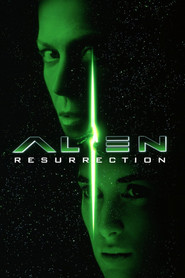
My name is Alec Gillis. I am the co-designer of the creature effects for Alien³ of Amalgamated Dynamics Incorporated. I'm Tom Woodruff, Jr. I'm Alec's partner in Amalgamated Dynamics, co-creator of the Alien effects, and I was in the rubber monster suit. I'm Richard Edlund. I was the visual-effects supervisor on the show. It's the last movie we ever did totally photochemically, actually. Right. This was on the cusp of the digital age. We did have some digital elements. When the alien's head cracks at the end it was a digital shot. That was the only one. Styrofoam floor. - Yes. We had a better Styrofoam floor for that where we'd covered it with metallic dust. It made a more interesting effect. I've always been a little self-conscious of those Styrofoam floors. Plus, that alien juice is pretty mean stuff. I think it's interesting that you can fly through space in a Styrofoam ship! Hey, there's a glimpse... Was that it? That scan, that was a fun scan. There it is - the multilayered sculpture. Are those your star fields too, Richard? - Yeah. I'm Alex Thomson. I was the director of photography on this movie, Alien³. I actually got involved because the original cameraman was Jordan Cronenweth, who did Blade Runner for Ridley Scott, beautifully in my opinion. But Jordan became ill in the first four days of shooting and had to leave the production. I was asked to take over, and I was honored to be able to try and match to his lighting. All I heard, and I wouldn't know if there was any other reason whatsoever, was the fact that Jordan wasn't well. We knew he had got Parkinson's. We knew he had that. You could see he wasn't a fit man obviously when I used to go and talk to him. He was a great character. I liked him very much. I knew him from Blade Runner. I'd met him on Altered States, too, cos Stuart cut that, didn't he? But I'm convinced it was the fact that he wasn't well enough to continue. I know it was a sad loss, but at the same time, I love Alex's work. I did Legend with him. I did Legend with him. Yeah, and I love him anyway. And I did The Saint with him. I love this shot, and I love the fact that it's a model. I just still feel that these miniatures have a quality that CGI spaceships just don't have. Do you think that, Richard, or is that just me? Am I being old-fashioned? Well, it can and it can't. I mean, it depends. On Air Force One I would never have made any models now. It depends on the kind of stuff. This is obviously special effects. These are models shot by the second unit, by Tony Spratling, up in the north of England.
0:59 · jump to transcript →
-
You notice in these sequences, the camera is near the ground so the ceiling becomes more important than the floor and one is shooting up people's nostrils. This was an approach David Fincher wanted, which I think is terribly effective indeed and makes it more distinctive than the other three, rather, in my opinion. I tried to keep it fairly shadowy, so that it looks moody. Where I could, I brought the light from the top because it's unusual for the light to come from the floor, but one had to be careful about it obviously. The difficulty was getting light into the eyes so we could see what the actors were thinking but not at the expense of the mood. I remember at Pinewood Studios when the sets were going up, Fincher would have us walk through the sets just looking at the scope of them. It was truly amazing to see these things go up. Norman Reynolds is a great production designer. He builds the world. It's very difficult to control him cos George would tell him on Star Wars "Don't build that. We're gonna paint it", and the next day - "It's too late. It's built." When they sent us over, we said "Why are we going to London?" They said "It's the sets, the set design, the artistry and the craftsmanship." And it really was very true. British actors is another good reason to go there. Somehow the British accent does a lot for these movies, I think. Vincent has had a deep, abiding interest in Luddite monks, and had done a great movie called The Navigator, where these monks dig their way through the earth, coming out into the 20th Century. It was a great movie. But, anyway, the original idea was that this was a wooden planet built by the Luddites and in the bottom of the planet, symbolically, the reactor was kind of hell. The technology that kept this thing going was emanating from the bowels of Lucifer. What drew me to the project first was that it wasn't a retread kind of sequel. It was a completely new idea, and some of it survived in the final script. David was entirely in control from the beginning. He put his stamp on it. He was the director and nobody ever questioned it. He was completely in control of the set and everybody hung on his words. He was definitely doing it. There was no weakness in it at all. He was very, very confident in what he was doing and wouldn't be swayed. He had this vision and that was what he was going to do. He came under quite a lot of pressure from 20th Century Fox to hurry up or do it the quickest way or the most expedient way, but he wouldn't listen. He would do what he wanted to do, quite rightly, in my opinion. As I say, his compositions are marvelous and the use of the frame, and so on. David had been a cinematographer before he became a director, so he knew lighting. He knew what was good and what was bad. That's not to take away from David Worley, the operator. His contribution was enormous as well.
10:16 · jump to transcript →
-
The light coming from the top was a 4K xenon lamp, which gives you very straight beams, which I thought would be quite a good idea. I shot it up through a mirror because you can't tilt them down or the condenser burns. But we had a mirror above the set and I shined it from the floor onto the mirror. This autopsy scene was a favorite of Fincher's, too, because we had created a body of Newt that had multiple layers of tissue, skin and musculature that could be cut through, and the bones opened up. It's a lot of graphic coverage that's not in the final movie. The body of Newt was actually based on... Alec and I had done a life cast of Carrie Henn during Aliens, and while we were in London Bob Keen's shop actually had a casting of the head. We were able to get that and remold it, so we were able to duplicate what the actress had looked like some five or six years previously. There is intercutting here with the real girl as well. She has a lot of fuzz on her face. - Yeah. Backlit fuzz.
17:31 · jump to transcript →
-
-
multi · 1h 54m 6 mentions
Jean-Pierre Jeunet, Hervé Schneid, Alec Gillis, Tom Woodruff Jr. + 5
-
Darius came to the set as it was being built, and Nigel would explain some of his intentions. Darius made suggestions and they created opportunities for lighting. They were like two siblings, plotting. It works well.
6:12 · jump to transcript →
-
I remember these signs - this is the psychological tests - and Jean-Pierre had something specific in mind, in terms of the primitive drawings of apples and pears and cows and cherries and things. He went through an amazing amount of artists trying to get primitive-looking drawings of fruits and little tidbits. It turned into such an assignment. He couldn't find anybody who could nail that style. Which had something to do with what he had seen as a Child - basic, primitive illustrations, which actually come back in his film Amélie. We get a sense of that naive, childlike graphic thing, which comes from a children's book, which, I think, is a really big deal in Jean-Pierre's imagery. I love Dan Hedaya. I love the Coen brothers' movies. You remember, he played in Blood Simple, the first movie of the Coen brothers. Interesting casting. I wondered if Jean-Pierre would have picked Dan Hedaya had Jean-Pierre grown up in America and seen Cheers. I love the lighting. You had a lot of lights coming up from the floor. Exactly. We used an optical process, and the folks were very nice with me because they made all the prints in the world with the process. And it was very expensive. And they made maybe 3000 prints with the process. The name of the process is ENR. It was invented by Storaro, the Italian DP.
8:49 · jump to transcript →
-
I love this shot because it's a simple effect. The ball is on the hand at the beginning of the shot, we do just a pan, and it works. I remember, Sigourney Weaver didn't believe me. She told me "Jean-Pierre, it doesn't work. It's so silly, so weird." I said "Believe me, I am sure." But I was pretty worried about this shot. And it works. There's a shot that you could claim, Pitof, as a digital shot, except it's real. When she throws that ball? It's amazing. This shot was supposed to be digital. What Jean-Pierre wanted is to make an impossible throw. Sigourney did it for real. This shot is real. Look at that. How many takes? I think it was six takes. - Six takes. Yeah. I was here when we shot that, and I feel in her eyes that something was weird. And she made it. Wow. - I had a little problem with Sigourney. The ball is going out of the frame and then back in the frame. I said "Sigourney, I'll fix that and I'll make a perfect path." So you feel the impression that the ball is always in the frame - like this ass - and... That's a silicone butt that we made. That's my favorite shot. I love this part of the film. And... Tell the story of this shot, Hervé. That's one of the famous Jean-Pierre Jeunet's favorite scenes, where somebody's putting polish on his shoes. When I got the rushes, I said to Jean-Pierre: "Well, you remember you did already that scene before." And you just didn't realize it. You didn't remember. The design of the wheels, something Eric Allard had developed way back, right after Short Circuit. Each wheel, instead of treads, they had ball bearings that would roll independently, so it could turn and maneuver. I think he had it patented, and I think NASA was using the design as well. This is a stupid idea. When you arrive in the States the first thing you see is the TV, because you don't sleep. And what do you see on TV? This kind of show. This miniature was not very big. This was pretty small - three meters diameter. That's nine feet to you non-metric folk. And this - you composited Aliens. Exactly. That's miniature and greenscreen. A very composite shot. Was a lot of passes to have the light and the texture and the depth and the atmosphere. For the alien, obviously, it's man in suit. It's very difficult to shoot an alien with a man inside, because it looks like a man inside. You are obliged to shoot very close. Here's Tom Woodruff. - Here's Tom. You were talking about being on the set. Here's the deal for me: being on set in these suits, it's even more claustrophobic than being on set, because I'm literally... I've got some slots for my eyes and breathing, but there's no real interaction between what I'm doing and anybody else on set, in terms of talking or just getting a break. I can interact with the actors and they can respond during the course of the action, but then, once the shot is over, it's like total isolation. But people love you when you're in the suit, Tom. Brad Dourif was great here. It was creepier for me on my side of the glass than it was for him being on his side watching me. I like Brad Dourif in this film. Yeah, he's twisted. Wonderfully imaginative actor. Brad and that creature were dating for a few months right after they completed this scene. I love what Darius did - the slime. He put a lot of care into shooting these and designing the lighting. He, at times, would almost build a cage of fluorescence around the alien, so that you'd get a million little kicks off of the slime. so that you'd get a million little kicks off of the slime. He kept coming back to us and asking for thicker slime, because the stuff in the other movies was too runny. He wanted a quarter-inch build-up, so we went to a slime that was almost like gel. It really had a different look. It was a pleasure to work with Winona Ryder. I remember, sometimes I tried to direct her, and she told me: "Jean-Pierre, take it easy." "I have a lot of imagination. I'm going to give you some improvisation." Remember, at the editing room, everything worked, all the time. In this scene, Winona was feigning drunkenness so she could slip out. Since she's a robot, she can't be drunk. This is a nice shot with the 10mm. It was a very short corridor and it looks so huge. This is a matte painting from a French guy, Jean-Marie Vives. He worked on Delicatessen and City of Lost Children, too. It's fascinating how there's a hint of City of Lost Children in the look of the sets. That's what I love about style, ultimately it just permeates everything that somebody does. That's a clever idea. That's gotta be Jean-Pierre. Very Jean-Pierre. It's great. This set is pretty high, and we used it again at the end of the film in the chapel. The same set but horizontal. - Really? Yeah. - I didn't know. When Jean-Pierre started the movie, he spoke little English - he always had an interpreter with him - and by the end spoke better English than me. Than I. - You see? That's what I'm talking about. It's amazing, because he didn't speak a word of English when he started. Sigourney Weaver loves to have the director very close to her. She hates when the director is very far away behind the video. It was a very good relationship, because, I remember, after a take she looked at me and it was unnecessary to speak. Just one look and we knew if the take was perfect or not. It was unnecessary to speak about the take - just a look. This is a scene that's almost vaguely erotic between Ripley and Call, the two females discovering each other inside of that tube.
27:46 · jump to transcript →
-
-
-
This shot here is another ILM matte painting composite shot. And it was done, actually finished before that previous shot. So you can actually see some differences between the two and the lighting.
1:12 · jump to transcript →
-
Joe got run over by a camel. That wasn't supposed to happen. Would you do that for any amount of money? I mean, I'm sorry. They get thrown off a camel and get trampled by it. It doesn't seem right. Shooting inside this volcano was a little difficult just because of the lighting. We were always losing lighting, and it was just changing dramatically throughout the day. So, as you can see... White sky, blue sky. White sky, blue sky. Sort of like...
39:25 · jump to transcript →
-
Jaws. But in the desert. But in the desert. In fact, when we were shooting this scene, sequence, we shot one side and it was so beautiful. The lighting was just, the sun was just so perfect.
39:55 · jump to transcript →
-
-
-
Actors are using flashlights in a movie. They're using flashlights for the same reason we use flashlights, which is they can't see, except with the flashlights illuminating. So this scene was basically lit with flashlights and some sneakily hidden bounce cards. Well.
25:23 · jump to transcript →
-
Beautiful mystery to them. I love churches. I love the architecture of churches. I love the way light plays on churches. I'm always astounded as to how badly churches light themselves. So we had to completely change the way this church was lit. Lovely church. Just harshly and flatly lit. And again, I think that architecturally a church is so dramatic that it was...
35:26 · jump to transcript →
-
You snooped through her stuff without asking to? When I was looking for something. What are you looking for? A connection. I spent a lot of time on the color of these walls because I was going to put, obviously, skin tones against them. And I wanted them to be warm and complement the skin tones. Well, not really. It's mostly just kind of like a hobby with her. You're always trying to make things look like they're lit.
52:58 · jump to transcript →
-
-
-
the chairs and all the devices were custom made for the film. And often they tend to reuse things. And in this film, we were able to create original, a very original look. And I wanted it to be very monochrome. I hired Alex Thompson, whose work I really liked from David Fincher's Alien. And he was just marvelous to work with. And the lighting and the camera was fantastic.
17:24 · jump to transcript →
-
Everything was built. I don't think there were any locations on that film. They didn't love you as much as Tim at that point. Yeah. So when you have to use locations, it gets very complicated to maintain the tone and maintain the feeling of being in this future. Yeah. I remember the first time I met David Snyder, he goes, every inch of the movie is future. So nothing is left to chance. And a lot of that is the color palette and the lighting. Yeah.
56:37 · jump to transcript →
-
Getting out of a manhole. See, again, the art direction here, all that I had at my disposal here, these backlights, these fluorescent lighting units, and you can see how using these all over the city in every location really tied it together. And here we go with war. Yeah, that's great. No explanation given. Show the elevator, show the car. We don't need to know how it actually all worked, but it's good.
1:30:40 · jump to transcript →
-
-
multi · 2h 19m 3 mentions
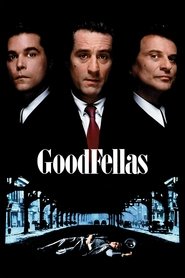
Martin Scorsese, Nicholas Pileggi, Ray Liotta, Lorraine Bracco + 9
-
Robert De Niro mentioned me after something wild, and I met Marty, and then like eight months later, you know, I would meet him every now and then, but it was a long, long process. It was horrible. But it was a real, I think I was one of the first people he met, and then maybe eight or nine months later, I finally landed it. Because at that time, like I said, I'd only done three movies. One was popular. The other two I thought were good movies, but weren't exactly lighting the box office on fire.
37:05 · jump to transcript →
-
how this looks here, that's what I want to see on the screen later. So I worked a lot with available lights, with light fixtures. It was not the kind of normal movie lighting that I was planning on this. It was basically trying to keep the same atmosphere that these places had. And I think it worked pretty well. It should never look, in a way, never look lit and never look like beautiful because it wasn't.
1:47:34 · jump to transcript →
-
I think it was the day after, and I'm not a smoker, but I think I was the only one on the set that Marty allowed to smoke real cigarettes. And I don't think I'll ever do it again in a movie, man, because take after take, and if you're just lighting one. So my voice and everything was hoarse, and Henry's brand wasn't exactly what it would have been the brand that I chose.
2:03:58 · jump to transcript →
-
-
-
But there's a bunch of shots when they're running about in the corridors later on where... It's on the ceiling. Yeah, it's on the ceiling and it gets the door slammed in its face a couple of times. And I would have bet money that those were CG. Not because they don't look like rod puppets, but because it's lit so horribly. It's exactly that early 90s CG, which they still do it now. They just can't help but...
1:06:17 · jump to transcript →
-
Such an art, comping. I mean, we've talked about this before, but what people might not realize, and I think it's still the same now, is that to create a CG monster in a scene like that, more time will be spent on the 2D, which is the comping, than on the 3D. So the CG monster needs to be created. It'll have a whole lighting guy come in, a surfaces guy, and all these people. But to then put it in the scene...
1:22:17 · jump to transcript →
-
that shot, it gives it away. I think that shot we saw, it hangs on it too long. And it's not lit right either. And that shot, that scene there is a prime example because there's all this fire around and looked in detail. I dare say they've done something clever to try and reflect that fire in the surface of the monster. But whatever it is they did wasn't working for me.
1:24:02 · jump to transcript →
-
-
-
In the picture. Oh, that's right. You've got to stop hiding behind me. It's true. She did. She would do that. She would hide behind you. She would find the only... And Gail, the cinematographer, would say, you can't find the only dark spot in the room. You actually want to be lit and on screen. I told her. I said, you won't be in the movie if you can't see the camera, okay? So if you can't see the camera, then move to where you can see it.
25:22 · jump to transcript →
-
If I want to see the girl next door, I'll go next door, you know? I want to see, you know, this big, beautiful, well-lit, you know, film that you made, you know. That, I remember that. So we were at this mine, this copper mine, to shoot a lot of these huge, so that a lot of the equipment was already there. And then Catherine just moved it around to make it.
37:39 · jump to transcript →
-
And I love the design of the nurse's hair. It just added to her coldness. And then we go to the scene where we meet Subgirl, and this is one of my least favorite scenes. Well, it was... Honestly, it was oddly shot and lit. And that's because... You know why? No. It's, you know, because I'm...
44:23 · jump to transcript →
-
-
-
Stephen Prince
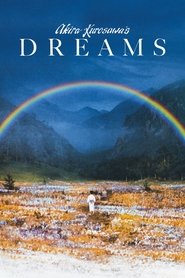
These two episodes bookending the film offer a rounded view of existence. This is exquisitely lit and staged as the fox procession comes out of the mist, accompanied by music on traditional instruments. There is a very elaborate folklore in Japan about foxes. They can be benevolent spirits if they are messengers of Inari, a kami or deity found in Shinto, Japan's oldest indigenous religion.
5:26 · jump to transcript →
-
Stephen Prince
So he goes to look for her and Kurosawa keeps the vase of peach blossoms in the frame. There it is again. And when he gazes around the corner, there she is, strikingly framed in the open doorway at the center of the screen and brightly lit in comparison to the darkened interior.
15:06 · jump to transcript →
-
-
-
Michael Mann
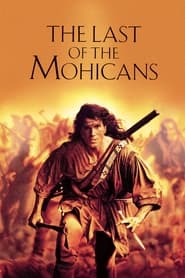
Dante Spinotti's lighting in all of these scenes is something I haven't talked about, but it's quite extraordinary. It's incredibly difficult to get enough illumination to expose film and have it appear as the very diminished and very kind of saucy light of fires and flame, as well as the warmth. And he did a
54:35 · jump to transcript →
-
Michael Mann
This is another wonderful piece of lighting by Dante Spinotti. It's moonlight over the water, and it seems to be generating enough illumination to shoot film by, and yet it feels totally natural. It's extremely hard to do. And I have been ordered to drive off the English squatters. They have consented to go. So now I call them enemies no longer. Magua took the hatchet to color with blood. Simon Schama, the British historian, wrote a...
1:08:05 · jump to transcript →
-
-
-
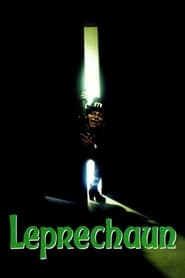
on some of the later leprechauns. But yeah, I have a thing about shoes, obviously. And there you go. That was a nice location and it was actually fun to shoot. There's our colors again. This location where when we get to the night shoots was really amazing how when it was lit up, it was pretty spectacular.
20:01 · jump to transcript →
-
It was nice. I was actually, after the fact, I was very impressed that I actually got through it, and it actually looked pretty good. There's the shoes. See, again, nice lighting by Levy with the light through the window, and, you know, the set looks good. Yeah, it's a very nice scene to introduce him in contemporary times. Yes. Here you go.
22:29 · jump to transcript →
-
-
-
City Hall. Los Angeles City Hall. And I want you to watch Gabriel Byrne's cigarette during this entire scene. And watch the smoke coming out of his mouth. This is the magic cigarette and the dragon exhale from Gabriel Byrne. Now it's not lit. Now he's exhaling. Well, let's talk about something else while we watch this sort of
25:58 · jump to transcript →
-
So it was real tough. And Ken Kokin did a lot of really good second unit stuff inside the boat, which we incorporated in the scene. It was tough because the boat, again, was much larger than we anticipated, so it filled our whole location, so we ended up literally lighting the entire harbor, which was great for depth, and Tom did a great job. And if you notice, you can see signs all the way across the harbor and read them perfectly clearly.
1:16:23 · jump to transcript →
-
-
multi · 2h 12m 2 mentions
Andrew Sarris, James Ellroy, Brian Helgeland, Michael Nathanson + 10
-
to imagine that we have a still camera in our hands, you know, like a Leica or Nikon. And once the scene are set, we turn around and we click in this direction, we click in that direction. We spent quite a bit of time going through the whole screenplay and discussing, you know, the way of lighting the movie. But basically it's sort of a routine that happens in other films too, except that each film has its own outcome.
1:23:10 · jump to transcript →
-
The scene between Guy and myself was a very long scene, and it went all night. It was a very powerful scene. There was a lot to be said, a lot of dialogue. I just remember cinematographer. I mean, the light that you walk into, and that's a lot 40s lighting and your beauty light and the way a lot of things are not done anymore. So that's so specific and so...
1:34:28 · jump to transcript →
-
-
-
Taylor Hackford
Again, we're back in Milton's apartment. There's another view. You get a real sense of the size and scope of this that Bruno Rubeo built. I think Bruno's design for this apartment is larger than life and... ...at the same time, it fits. Milton's apartment has to be. That bas-relief there and the way Andrzej Bartkowiak lit it... Andrzej, I think he's best known for his work with Sidney Lumet. But Andrzej is a fabulous collaborator. He understood the look that I wanted in this film. It's a very dark look, but a rich look, and he just came on the film... ...and gave me exactly what I wanted and I was deeply, deeply grateful. I think his lighting of this set is spectacular. Meanwhile, also, in the courtrooms, you get a sense of that deep, rich wood... ...and at the same time, everybody is visible. It's very nice work. The intercut between the office and the reservoir and the sense that... ...when you realize how many thousands of people run around this reservoir... ...in New York, it's a way of life. Eddie Barzoon lives there. As overweight as he might be, he still is out there. He's still a warrior. He still needs to have his stamina and he's out there working. But at the same time, what Milton is doing is basically showing a guy past his prime... ...out there still trying to be young and then we introduce the special effects. We introduce the supernatural. In this process, Milton is going through a sermon, a righteous sermon... ...a moralistic sermon about the way the world is today, about human beings... ...about the Eddie Barzoons of the world who, in fact, consume, consume, consume. Now, in the guise of criticism, Milton is celebrating the people that he... You know, he wants Barzoon to do this. He's encouraged Barzoon. He created an environment for Barzoon. But in reality, he is giving a very moralistic sermon here about the environment... ...about human beings being selfish and ultimately not caring about things. And then what I did with Richard Greenberg and Stephanie Powell... ...we basically worked with various special-effects houses in town. This sequence is very... It's in the daylight. It's a very real sequence. He's running, and the whole concept is: is this in his head or are these people... ...really disappearing in front of his eyes? Are they running towards him? You know, perhaps, Barzoon is going through some sort of hallucination. Actually, there are those girls. They're just girls running around the park. And meanwhile, Milton is building into crescendo and Eddie Barzoon... ...is accosted by some homeless men in the park. Now the key to this is important. If Eddie Barzoon just gave them his watch... ...if he just gave it up, but he's not. He's arrogant. He fights them. And, of course, they destroy him. And the question is: Are they real... ...or, in fact, are they messengers from Milton? You see those little looks on their faces and Barzoon looks up and sees that. It's a subliminal look, just a split second that Rick Baker... ...was able to do these masks that we then digitally seamed on their faces. They're really animated, and I think they did some fabulous special effects there. But, in essence: Did Barzoon just get killed in the park... ...or in fact, were those messengers of Milton? Again, the time lapse and the park and where this all happened, you just get... ...a sense that things are starting to move faster and faster and faster. Kevin is having less and less time. He's got to prepare a witness. He's going to trial. This is his key witness, who will prove the innocence of his client. He feels confident that she, in fact, is telling the truth up 'til now. That, in fact, they were having an affair. As difficult as that would be to admit to the public, it's a great alibi. The fact that she's having an affair with Alex Cullen... ...a man of questionable morals, it's clear. So Kevin is trying, at this point, to prepare his client... ...and let her know how difficult it's going to be with the opposition. They will try to trip her up. This is the preparation. When you go into a trial, a trial lawyer must spend hours and hours and hours... ...with a witness, preparing them. That's what's going on here. And, again, I thought Keanu was very good. He is basically setting her up and then he's springing on her surprise questions. I don't think he has any inkling that she's lying to him. He's just springing questions, at this point, that he thinks... ...the D.A. might ask. And he asks the question.
1:30:13 · jump to transcript →
-
Taylor Hackford
Now he realizes he's got no one. His own wife, who he needs to confide in right now, he finally is ready... ...to come home and talk, she's not there. She's vacant. She's gone. And at this point, the whole idea of this is to take Kevin inexorably towards... ...a decision. In this horrible moment here, of looking at her body... ...completely ripped open, you know, he's thinking she did this to herself... ...she is really crazy. And that was not an easy scene for Charlize to do, obviously... ...but I believed it was an important scene. I don't believe it's exploitative. I think it was important to kind of see that she has been ultimately raped by Milton... ...and finally by her husband. She's got nothing left. And now, in this terrific scene in the hallway at the hospital. She now has a moment of clarity. She's sedated, but somehow there's clarity that comes through. He's putting her into a psychiatric ward, and she's defining why... ...in a moment of lucidity, why this is happening. The fact that, "We both went after it." She's not saying, "You went after it. "We both went after it. Blood money. We drank it on down." That sense of a contract that was made, and a pragmatism, and a sense that... ..."We want success and what we give up for it doesn't matter. We want... "We have no social conscience. We have no moralistic conscience. "We have materialism as our God." I think in this instance, she's admitting it and Kevin still doesn't want to hear it. He doesn't want to hear it to the point where he's putting her in and... ...putting her in the ice box, as it were. You see the psychiatric ward there, he's gonna have her sedated. She is crazy, but ultimately, he doesn't opt to take her home and deal with her. Instead, he goes to Barzoon's funeral, which is filled with all the power players... ...and all the people from his law firm. Diana Barzoon... ...again, Judianna dressed her in this fabulous outfit, short skirt, hat. "Doesn't Diana look wonderful?" Jackie says. And, Alex Cullen comes with Alessandra, and, lo and behold, Alessandra is... ...no longer that little girl, that little, vulnerable thing. She's quite a dish. And Alex Cullen has been able to seduce the social worker... ...who before was very much against him. Now, Alessandra's sitting between them. And Kevin is looking at this shot. I think, Andrzej's lighting on Alessandra's back is fantastic... ...and there is a sense here that Kevin is starting to see for the first time... ...what was right in front of his eyes all along. Mary Ann, is just, she's beyond help, all right? Jackie's sitting there listening, and then... ...he's sandwiched in between these two... ...members of the law firm's female side. And, you know, I think that the words were particularly apropos here. Looking at the cleavage, looking at that look on Christabella's face... ...realizing this is the allure, this is what you get. You can have all the flesh you want. And he's in God's house. He's listening to this man eulogize Eddie Barzoon... ...and I think Tony wrote a fantastic eulogy here. If you listen to the words of the eulogy, it's very funny... ...because obviously this is a man that did not know Eddie Barzoon. And in the process of Kevin kind of being lulled into thinking... ...and looking at her back and seeing this unseemly hand of Cullen... ...on his stepdaughter's back, he comes up and, lo and behold, he sees Gettys. No special effects here. This is just cutting. You know, he has an apparition. Mary Ann's had all the apparitions 'til now. Now Kevin has one and he realizes, "Oh, my God, what's going on?" Again, is it psychological or is it meant to be happening? Milton's standing in the back of the church... ...and looking at all the iconography... ...around him of the angels. Of course, he's a fallen angel. And this scene, again, out in the street, on Park Avenue... ...is a scene that I particularly like, because when you have expository scenes... ...when you have to get a lot of information out... ...you try to shoot them in ways that are interesting and exciting... ...and not just have two people sitting there. In the scene with Milton and Kevin at the beginning of the film on the rooftop... ...it's of an expository scene, but it's done in such a way... ...you can't take your eyes off of the surroundings and the art direction. In this instance we're on the street and we start moving. Kevin wants to get away. He's panicked. He wants to run as fast as he can from that image of Gettys in the church. And meanwhile, you see Milton, he's in complete control. Vyto Ruginis, who's playing the federal attorney here, is a fabulous actor... ...again, from Yale, and, he was saddled with the horrible task of... ...having to give all this exposition in this scene. But the fact is, by intercutting it and intercutting it with Milton... ...you're getting these pieces of information about the law firm... ...and what Milton's really into, and then intercutting it with... ...Milton's delight at being in church with his former brethren, the angels... ...and playing with them, enjoying it. And in the process of Kevin discovering what's really going on... ...what Barzoon was trying to hide, why Barzoon was possibly killed... ...and inevitably not wanting to hear it, he's a lawyer. "What do you want from me?" He's just a lawyer. All this can be explained by the fact that he's just a lawyer. He's a businessman. He's doing his work. And then what happens in this instance is the federal attorney uses... ...a piece of information that he knows will stop Kevin. He's basically going to lower the hammer right now. He talks about Gettys, the fact that he got Gettys off... ...and now Gettys has killed a young girl. And he knows that will get to Kevin. Look at him. There's a little smile on his face. We're all capable of ego, and as he walks across the street... ...ready to lower the boom on Kevin, he doesn't look. Now how's that for a stunt? That's a real stunt. That isn't special effects. That's a real stuntman taking a hit. And it's one of the best I've ever seen, and I included it in the film without a cut. Basically at this point you can explain this death two ways. You can say that Milton stuck his finger in holy water and caused the accident... ...but I have a certain belief that Milton doesn't kill anyone... ...until they ask for it. Barzoon, if he'd given the watch up, maybe those guys wouldn't have killed him. In this instance, when Peter O'Guiness smiles and walks across, he's guilty of ego. We're all guilty of the ego of sin, the sin of vanity and ego. He has Kevin where he wants and he goes to reel him in... ...and he doesn't look left or right. Kevin goes to see his wife. He wants, again, to try to see Mary Ann, to connect... ...with the person that he can really care about, and what he finds is Judy Ivey. Judith Ivey, Alice Lomax, his mother, has come calling, trying to find him... ...finding out that Mary Ann's in the hospital. He's completely... She's thinking, "Why aren't you there? "Why aren't you at the hospital? What are you doing, Kevin? "This isn't the son I raised." And he comes and sees that his wife is so sedated on Prolixin. Prolixin is the kind of thing that they give to mental patients... ...to just completely knock them down. She's just incapable of communicating with him, or doesn't want to. You can see in Mary Ann's eyes that she really hates him for what he's done to her. And he's now gonna come into the hallway. And, again, these are moments that... ...we're trying, at the end of the film, to explain to you. You've watched the film almost for two hours now, and it's been... ...hopefully, intriguing, certainly mysterious. Now we have to come clear with what the film is really about... ...and who these characters really are. And the characters are not complete strangers to each other. They have had a past. Alice Lomax is explaining to her son that she isn't just the woman... ...that she is purported to be, that she has a past, that his father is not dead... ...that she didn't tell the truth about that. And, in fact, when she walked into that lobby of the apartment building... ...at the beginning and saw Al Pacino, she had an apparition. She saw the man that fathered her child, and she was looking right at him. I think Kevin's reaction here, I think Keanu's acting is wonderful. I think it's very real and I think you realize the pressure this guy's under... ...what he's been through, and everything that's now coming down on his head. I think he did a great job.
1:41:31 · jump to transcript →
-
-
-
-
-
-
-
director · 1h 31m 1 mention
David Steinberg, Dave Foley, David Higgins, Jay Kogen
-


Related topics
Other topics that frequently come up in the same commentaries.