Topics / Cinematography & lighting
Lighting
110 commentaries in the archive discuss this, with 371 total mentions and 16 sampled passages on this page.
Filter commentaries
Filter this topic by the film's decade or the type of commentary.
Showing 8 of 110 commentaries
Clear filtersBy decade
Across the archive
ranked by mentions · click any passage for the moment in the transcript
-
director · 1h 28m 7 mentions
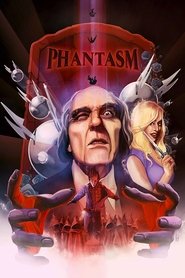
Don Coscarelli, A. Michael Baldwin, Angus Scrimm, Bill Thornbury
-
You know, the one thing that we really attempted in the photography of this film is we really tried to get motivated natural sources as much as possible. And even on a low-budget picture, we were always trying to work the lighting into how the film was made from the design point of view, even though the design was primitive in a lot of ways. And so fire came into a lot. You know, we tried to light a lot of the sequences, either with candles in that particular scene. We have a couple of scenes by firelight.
10:31 · jump to transcript →
-
you know, trying to make it like a creepy little storage room and kept it really dark. Here was our attempt at shooting using natural lighting again. We got the flame. We used like a little flickering effect, which is one guy walking along with the light sort of flickering it. It might have been a little obvious. I probably shouldn't have mentioned it. This was supposed to be a cat, but we didn't have a cat, so somebody, I think our...
33:00 · jump to transcript →
-
You know, we went to great lengths to actually rent this flashlight from a special effects house that had this really powerful beam. Because once again, trying to use the motivational lighting in the film. Have that lamp in the middle that's going to be an integral part of the fight sequence. Because he's going to turn the light on and it's going to be swinging around and give you some impressionistic lighting during the fight scene.
46:15 · jump to transcript →
-
-
multi · 1h 59m 6 mentions
David Naylor, Guy Hamilton, Tom Mankiewicz, John Barry + 14
-
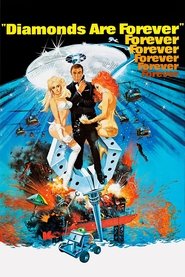
kind of patio windows. They came from a big manufacturer before they really got into vogue. And we bought all these units which was built into the set. And the interior of the set, you know, is well lit. But we wanted this kind of rostrum where the actual diamond satellite was being erected in the center. And I remember we wanted like a scaffold that was something different.
57:55 · jump to transcript →
-
And he said, what do you want? And I had no idea at that time of what to use. I knew Vegas quite well. And I thought, let's say we want to shoot in downtown Vegas for four nights or five nights because there's all that free lighting, which is terrific. And we do a car chase. Let's do what you couldn't do it in Piccadilly Circus. Let's do what you can't do in Piccadilly Circus. Let's do it in Vegas.
1:03:11 · jump to transcript →
-
You know, or if anything, start off the movie the way Bond starts today with something fantastic and then get into the story. But this turned out to be right in the middle of the picture, which is really not the way it's supposed to be. As cameraman Ted Moore discovered, one of the advantages of shooting at night along the Las Vegas strip is that no additional lighting was needed. This confused Harry Saltzman, as Peter Lamont recalls. Harry said to Ted Moore, you haven't got any lights down here. So he got his meter out and he said, no, it's F8.
1:05:05 · jump to transcript →
-
-
multi · 1h 43m 4 mentions
The Taking of Pelham One Two Three (1974)
Nathaniel Thompson, Steve Mitchell
-
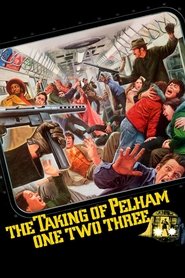
You know, it has that sort of work a day, you know, fluorescent lighting, you know, office chairs and desks that have probably been there for decades. You know, the New York City subway system has been around for a long, long time. This tunnel, by the way, is again in and around the Court Street Station. And as you said before, Nathaniel, there's a New York City Transit Museum. And this was the station's
13:52 · jump to transcript →
-
And as I said, of course, the Godfather. But Owen Roizman has said that when he went to that set, he didn't have to light it. They would turn the lights on and they had these fluorescent lights and they really did little or no lighting. They would use like a white bounce card occasionally, but the fluorescents were probably, you know, brighter than normal fluorescent lights, but he didn't have to light this. And, you know, one of the things about this movie is
25:04 · jump to transcript →
-
It's lit mostly from practicals. Now, when they're in the subway tunnels, you will see these little lights periodically going away from camera. And those are real subway tunnel lights. But what Roizman did, which was really kind of ingenious, at least I thought so, was he put in...
25:33 · jump to transcript →
-
-
-
like Fuad Said was a guy who had a little compact kind of van that was so well organized where a lot of equipment was like really, really packed into a small space. And a lot of little movies were made with his unit at that time. But we had, you know, the big studio trucks with, you know, all the grip equipment and all the lighting equipment and all of that.
1:07:23 · jump to transcript →
-
I don't know about you, but sometimes you just find that the lighting or exposure or something makes it very difficult for the flesh tones. But nobody wore makeup in the picture. I think that pancake makeup stands as a barrier between the actor and the audience. And so I got everybody to get a little bit of a tan, and we didn't have any makeup.
1:31:49 · jump to transcript →
-
-
-
My name is Laurens Straub. I'm sitting here with Werner Herzog, writer, director and producer of the movie "Nosferatu" that you are currently watching. And we now want to talk about that movie. Werner Herzog and I have known each other for about 20 years and have worked together on many different projects. What do we see here? These are actual mummies in the Mexican city of Guanajuato. You have to realize that Guanajuato is located in a gorge. Because of that the cemetery was very narrow and there was no space. So they dug up the bodies every eight years or so, and because of different climatic conditions and the soil, they mummified without human preparation. They leaned them against the walls on both sides in a long underground hall and a hallway. I saw them there many, many years ago in the early 1960s. The story behind this is that I was in the U.S. on a scholarship but I resigned from it a few days in and gave up my legal status in the US because I had to earn some money. Out of desperation I went to Mexico because otherwise they would have returned me to Germany. I went to Central Mexico and Guanajuato and lived there for a while. I did all kinds of crazy things. For example, at rodeos, the so-called charreadas, I rode on wild bulls. Like a complete idiot because I don't even know how to ride a horse, but with the money I could live one week at a time. And there I saw these mummies. Are they similar to the ones at the volcano Vesuvius and formed from lava? No, those are real dried human beings. They barely weigh anything. They were in display cases so we had to take them out and carry them somewhere else. They weigh very little... 10, 12 pounds maybe. Is this something like a culture of death? No, it's completely normal. Isabelle Adjani. She is great at acting scared. That was a real and very large bat we brought in for this. The bat you saw earlier I could not shoot myself. The footage came out of a science documentary because bat's flapping motions are extremely fast, and this was shot with 500 or 800 frames per second. The bats had to be trained with food for that because it took very strong lighting, and normally they would not move under those conditions and not leave their hideout. Here we see Delft. In the Netherlands. That's my city. And I know when Jörg Schmidt-Reitwein teaches students cinematography he first introduces them to Flemish and Dutch painters. Why was Delft chosen as an alternative to Wismar where Murnau shot? Yes, but Wismar was not Murnau's location. I believe that was Lübeck. There is one single shot later in the movie where you see a few buildings that Murnau actually used and that are still standing. I used those as well. We chose Delft because the continuity of the architecture was uninterrupted and we only had to make very few changes in order to shoot there. We took down some antennas and moved a few cars. Other than that it was very easy to shoot there. The concept of "Nosferatu" was definitely to do a variation on Murnau's movie, not a remake in the classical sense. A Biedermeier image like this, for example, is unthinkable in a Murnau film. Moreover, this is in color and the movie's character is completely different. We had to show a very secure bourgeois world. We deliberately planned this, especially the furniture. That was done very thoughtfully by Henning von Gierke who is a painter by trade. With the furniture and the lighting, you can tell that a painter was involved. It reminds me of "Kaspar Hauser" which was done by Henning as well. What era are we in here? That is the Biedermeier era as you can see clearly by the costumes. We researched how to best do the building arrangement and the urban landscapes. Schmidt-Reitwein and I wracked our brains over that. I didn't simply want to recreate paintings. That was never planned. With one exception because we knew we had to work a lot in darkness with nothing but candlelight. Therefore, we studied the painter de La Tour and thought about how to do it if we only had one or a few candles. How do we light that? And Schmidt-Reitwein is exceptionally good at working with light and darkness. This is Roland Topor. - Yes. The famous illustrator, poet, and crazy man. Unfortunately he is already dead, I believe. Yes. - How did you find Roland? I coincidentally saw him in debate on French television. And he laughs in such a mad way. He laughs after every sentence he says. But in such a desperate and strange way that it impressed me deeply. Afterwards I contacted him I told him I was going to shoot a vampire movie and asked if he would play Renfield. Roland Topor immediately agreed. Unfortunately his voice is dubbed in some versions. And it is impossible to fully recreate his laughter. It was his strangest characteristic. What I love about this... I recently saw an exhibition with English surrealistic works from the 19th century. It reminds me of an old office, the cloth, and this blue. It was very carefully lit, and the costumes had to match. Bruno Ganz. And also the faces we chose. Those are not faces that fit into the 20th century. You have to carefully select actors who match. So Bruno Ganz is a great fit for this. The beautiful paper. - Yes. That was so much work, and it was prepared very, very thoughtfully. A beautiful country. Here I see a recurring theme of yours... maps. I already know that from "Aguirre" and other movies. In "Fitzcarraldo" geography is a crucial dramaturgic element. I'm a map fanatic. Oddly, I'm pretty good at determining locations ahead of time, too, because I understand maps. I know which formations you should find in a certain area. I was rarely wrong. It is always about uncharted territory, the Dorado, or doom. Yes, at home I don't have pictures on the wall. A few photographs every now and then, but generally, I can't stand my walls being covered in pictures. If there is anything on my walls of my home it's maps.
0:04 · jump to transcript →
-
And now the hands. I told Kinski back then that his hands had to become spiders when he reaches for her, and he does it wonderfully. Lucy is sleepwalking. Also beautifully lit. Wonderful. Beautiful. The angel theme.
46:22 · jump to transcript →
-
-
-
-

Related topics
Other topics that frequently come up in the same commentaries.