Topics / Cinematography & lighting
Lens choice
52 commentaries in the archive discuss this, with 82 total mentions and 21 sampled passages on this page.
Filter commentaries
Filter this topic by the film's decade or the type of commentary.
Showing 13 of 52 commentaries
Clear filtersBy decade
Across the archive
ranked by mentions · click any passage for the moment in the transcript
-
-
Stephen Prince
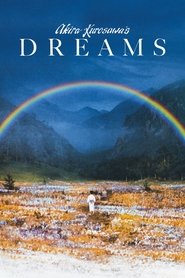
Actually, this first episode, Sunshine Through the Rain, is based not so much on a dream as on a tale that his mother used to tell him about fox weddings held in the rain. We see the familiar Kurosawa telephoto perspective here, which creates a foreshortened, flattened perspective. This rain is the sort that Kurosawa liked, heavy and steady.
2:19 · jump to transcript →
-
Stephen Prince
As we'll see, many scenes are shot with a camera in a lockdown position, filming from a distance, using long focus lenses, and watching while events pass by. This is very masterful widescreen composition. This is not the anamorphic 2.35 to 1 aspect ratio that Kurosawa used from the late 50s into the middle 60s.
7:54 · jump to transcript →
-
Stephen Prince
a change that was accelerated when he moved to anamorphic widescreen with The Hidden Fortress in 1958. The expansion in widescreen of a horizontal axis for composition pushed Kurosawa toward an intensified, two-dimensional presentation of action. And as the films after Redbeard in 1965 became more contemplative and their scenes more static, with fixed frames filmed by stationary cameras,
1:32:25 · jump to transcript →
-
-
-
He's looking at his life. Amazing. This geography here is just beautiful. Anywhere you could throw the camera on the ground, it would look fantastic. And if you got someone like John Toll throwing the camera on the ground, it looks more fantastic because it lends itself to that anamorphic frame.
15:55 · jump to transcript →
-
See, it's just built for that anamorphic frame. The whole landscape. Got lucky with some birds.
29:41 · jump to transcript →
-
horse floating on top of the water there. That tower was only about 30 feet high. And it was only a facade. We just made it look a lot higher up with cutting slow motion and wide angle lenses, you know, above and below. So it looked like he's falling about 200 feet almost, or at least 100. But at least we sort of tripled the height.
2:16:18 · jump to transcript →
-
-
-
which I remember reading about years ago and obviously doing the research, gone back into that and the feud he had with the studio over that. And I just can't, I can't see Richard E. Grant in that role. Can you? I love Richard E. Grant, but... Well, if we had him and Paul McGann, it would be with Dale and I too. And Ralph Brown. Yeah, yeah, exactly, yeah. This is it. I mean, this is... When Ollie and I record these commentaries, we generally put a little poster behind us on Zoom
29:07 · jump to transcript →
-
Every time it leaves the ground to bound, it's going to fall down. It's going to need constant bits to grip onto, which you frequently see there aren't. And then when the camera switches back to the right way up, it's clearly exactly how you would rotate a camera and nothing like what an alien would do as it leapt from the ceiling down to the ground and flipped around. It would be much faster. It would zoom down and then...
1:57:10 · jump to transcript →
-
-
multi · 2h 24m 2 mentions
Alex Thomson, Terry Rawlings, Alec Gillis, Tom Woodruff Jr. + 3
-
And then, of course, the scene with the ox bursting... I think that for the burst through, I believe we did 70 takes where we had a section of ox ribcage that was rigged to burst open in a very specific way, and I think that was the most takes that we did, our unit did - it was second unit - on Alien³ to get it right. And it's a very quick cut. You're trying to tell a story in the briefest possible time and six frames becomes very important. You can't just put anything on-screen. I think that was one of the lessons from Ridley Scott on the first Alien is that those quick cuts are almost subliminal, but they're so important. We used anamorphic lenses and the Cinemascope proportion 2.35:1, which is a constant decision on the part of 20th Century Fox. I like it because one can compose very well with the wide screen. I love the actual format. I think the images are quite nice. Also, when the curtain goes back in the theater and you see a wide screen, it means an event picture. It's not an ordinary picture. But it's tricky with the alien cos you can't show too much of it, otherwise if you see exactly what it is, it loses its shock value really. Although towards the end of the film we see the shape more, but they did a marvelous job with all that mucus and stuff.
27:48 · jump to transcript →
-
This stuff is pretty effective. Fincher just puts the anamorphic lens on sideways on the camera and you get that strange wide-angle look.
2:02:43 · jump to transcript →
-
-
-
Now, this is a matte painting. Craig Pangrazio made a series of matte paintings for the White Shots in Futuristic LA. Is it the LA Convention Center? That was the LA Convention Center, but with all these extensions. Oh, great. And I'm very proud of this scene because this kind of predates Zoom and teleconferencing. So I designed this so that...
28:38 · jump to transcript →
-
people in boardroom would actually be virtually, only virtually present. And all the stands and TV screens were on motion control motors, which you usually use for special effects to track the motion of Cocteau here. It's amazing. It's definitely outzooms a Zoom conference. Absolutely. And it makes it very theatrical. I was going after a very theatrical look for all the technology. If we have another play, I'm sure these things will be built.
29:04 · jump to transcript →
-
-
-
I'm not a big fan of Steadicam, and I use it very, very rarely, especially in place of a dolly, but sometimes it's to weave in certain areas in certain locations and to create certain effects you need to, but I usually have a zoom on all the time because I'm always switching lenses. That was a little... There's another scene where Stephen leapt across the room, beamed from one side of the room to the other. Now, if you look, the building...
1:09:26 · jump to transcript →
-
And the music takes an odd turn. I like these. Sean did these. These sort of whale song. This is what I did by sticking a light underneath Gabriel, sort of. And then I had my left hand on the fader of the light and my right hand on the zoom. And poor Tom Sigel trying to zoom in on a window and focus on an object that he couldn't see until the end of the shot. Actually, he has a focus puller and a big piece of tape. Sorry.
1:12:37 · jump to transcript →
-
-
multi · 2h 19m 1 mention
Martin Scorsese, Nicholas Pileggi, Ray Liotta, Lorraine Bracco + 9
-
-
-
-
-
-


Related topics
Other topics that frequently come up in the same commentaries.